


Derivati del Benzimidazolo e dell’Imidazolo
Il benzimidazolo è un composto costituito da un anello benzenico fuso con un anello imidazolico, una struttura a cinque membri contenente due atomi di azoto. I derivati del benzimidazolo, come l’albendazolo, sono noti per la loro attività antiparassitaria e antifungina, utilizzati nel trattamento delle infezioni parassitarie e di alcune malattie parassitarie negli animali e negli esseri umani. L’imidazolo, invece, è una struttura a cinque membri con due atomi di azoto, presente in vari composti biologicamente attivi. I derivati dell’imidazolo, come il metronidazolo, possiedono proprietà antimicrobiche e antiparassitarie. Questi composti sono impiegati anche nell’industria farmaceutica per il trattamento di infezioni batteriche, malattie parassitarie e alcune infezioni fungine, oltre ad avere applicazioni in chimica organica come catalizzatori.
Presso CymitQuimica, offriamo benzimidazoli e imidazoli ad alta purezza per la ricerca in chimica medicinale, farmacologia e biotecnologia.
Trovati 10354 prodotti di "Derivati del Benzimidazolo e dell’Imidazolo"
Ordinare per
Purezza (%)
0
100
|
0
|
50
|
90
|
95
|
100
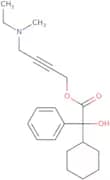
Oxybutynin impurity C
CAS:<p>Oxybutynin impurity C is a metabolite of the drug product Oxybutynin (CAS No. 1199574-70-3). It is an analytical standard for HPLC, and a natural impurity in the synthesis of Oxybutynin. This is a synthetic compound that has been shown to be metabolized through oxidation by cytochrome P450 enzymes, reduction by glutathione reductase, or conjugation with glucuronic acid. Oxybutynin impurity C has been used as an analytical reference material for drug development and research and development.</p>Purezza:Min. 95%cis-(±)-4-[4-[4-[4-[[2-(2,4-Dichlorophenyl)-2-(1H-1,2,4-triazol-1-ylmethyl)-1,3-dioxolan-4-yl]methoxy]phenyl]-1-piperazinyl]phenyl]- 2,4-dihydro-2-propyl-3H-1,2,4-triazol-3-one
CAS:<p>cis-(±)-4-[4-[4-[4-[[2-(2,4-Dichlorophenyl)-2-(1H-1,2,4-triazol-1-ylmethyl)-1,3-dioxolan-4-yl]methoxy]phenyl]-1-piperazinyl]phenyl]- 2,4-dihydro-2-propyl-3H-1,2,4-triazol-3-one is a drug product that is used as a research and development tool. It is an impurity standard for HPLC. This compound has a chemical name of cis-(±)-4-[4-[4-[4-(hydroxymethyl)phenyl]-1piperazinyl]phenyl]-2, 4dihydro 2propyl 3H 1 2 4 triazol 3one. The CAS number for this compound is 7485591 7. This compound</p>Formula:C34H36Cl2N8O4Purezza:Min. 95%Peso molecolare:691.61 g/molPregabalin impurity PD 0312236 and Pregabalin impurity PD 0312237 (mixture of tautomeric isomers)
CAS:<p>Lactose conjugate degradation product of pregabalin</p>Formula:C20H35NO11Purezza:Min. 95%Peso molecolare:465.49 g/molOxybutynin EP Impurity E
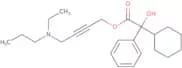
CAS:<p>Oxybutynin EP Impurity E is a research and development impurity standard that is used in the synthesis of Oxybutynin. It can be synthesized by reacting 2-chloro-4-nitroaniline with potassium tert-butoxide, followed by acetylation with acetic anhydride. The purity and structure of this compound have been verified by gas chromatography, mass spectrometry, and melting point analysis. This impurity standard has a CAS number of 1215677-72-7.<br>Oxybutynin EP Impurity E is used as a drug product for the treatment of overactive bladder, urinary incontinence, and painful bladder syndrome/interstitial cystitis. It also helps to reduce pain due to spinal cord injury or multiple sclerosis. <br>The pharmacopoeia name for this compound is 4-(2-Chloroethyl)-1H-imidazoleacetic acid. It has been found to be</p>Formula:C23H33NO3Purezza:Min. 95%Peso molecolare:371.51 g/molSolifenacin EP impurity F succinate
CAS:<p>Solifenacin is an anti-cholinergic drug that has been shown to have a potent antagonistic effect on muscarinic receptors. It is used in the treatment of overactive bladder, urinary incontinence, and irritable bowel syndrome. Solifenacin succinate is a metabolite of solifenacin and it has been found to be an antagonist of M3 muscarinic receptors. The presence of solifenacin and its metabolites in wastewater can interfere with treatment processes by inhibiting the removal of other organic chemicals such as tamsulosin hydrochloride. Optimisation studies for solifenacin production have shown that famotidine can be used as a process aid to reduce solifenacin impurities. Famotidine is also an antagonist of M3 muscarinic receptors and can be used to remove solifenacin from wastewater. Analytes detected in wastewater samples include solifenacin, famot</p>Formula:C27H32N2O6Purezza:Min. 95%Peso molecolare:480.55 g/molSolifenacin impurity C
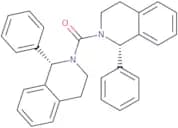
CAS:<p>Solifenacin impurity C is an impurity that is found in the drug product Solifenacin. It has been shown to be a natural metabolite and has been detected in human urine. Solifenacin impurity C is used as an analytical standard for HPLC analyses of solifenacin, and can also be used as a reference material for pharmacopoeia. The purity of this compound is 99%.</p>Formula:C31H28N2OPurezza:Min. 95 Area-%Colore e forma:White PowderPeso molecolare:444.57 g/mol6-Methyl-4-phenyl-3,4-dihydro-1-benzopyran-2-one
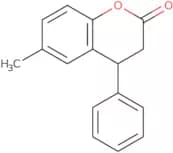
CAS:<p>6-Methyl-4-phenyl-3,4-dihydro-1-benzopyran-2-one is an analog of the natural product zearalenone, which can be used as an acid catalyst for the synthesis of various pharmaceuticals. It has a linear range and is structurally similar to a number of other analogs. The chloride ion is involved in the optimization of the extraction parameters and can be replaced by other c1-4 alkyl groups. 6-Methyl-4-phenyl-3,4-dihydro-1 -benzopyran 2 one is typically prepared using a preparative high performance liquid chromatography technique that involves dehydration.</p>Formula:C16H14O2Purezza:Min. 95%Peso molecolare:238.28 g/molOmeprazole Impurity 65
<p>Impurity 65 is an impurity of Omeprazole, a drug used to treat gastroesophageal reflux disease and peptic ulcer. Impurity 65 is a metabolite of Omeprazole that can be found in the drug product at a concentration up to 0.5%. It has been shown to have anti-inflammatory effects and can be used as a research and development standard for HPLC analysis. Impurity 65 is also used as an impurity standard in the USP pharmacopoeia and other pharmacopoeias around the world.</p>Formula:C17H17N3O4Purezza:Min. 95%Peso molecolare:327.33 g/mol2-[(4-Chloro-3-methyl-2-pyridinyl)methylthio]-1H-benzimidazole
CAS:<p>2-[(4-Chloro-3-methyl-2-pyridinyl)methylthio]-1H-benzimidazole is a drug product. It is an impurity standard for the analytical determination of 2-[(4-chloro-3-methylpyridin)-2yl]thiohydantoin in pharmaceuticals and other chemical products. This compound is also used as a research and development (R&D) metabolite and impurity standard for the synthesis of 4-(4,5,6,7-tetrahydrobenzo[b]thiophen-2-yl)pyridine. The CAS number for this compound is 103312-62-5./END></p>Formula:C14H12ClN3SPurezza:Min. 95%Peso molecolare:289.78 g/mol(R,R)-Solifenacin succinate
CAS:<p>(R,R)-Solifenacin succinate is a pharmaceutical agent that acts as an antimuscarinic drug. It has been shown to be effective in wastewater treatment, where it was found to reduce the amount of solifenacin and optimised organic chemicals in the water. This drug has also been shown to have antagonist properties against the muscarinic receptor M3.</p>Formula:C23H26N2O2•C4H6O4Purezza:Min. 95%Colore e forma:PowderPeso molecolare:480.55 g/mol2-[[(4-Methoxy-3-methyl-2-pyridinyl)methyl]sulfinyl]-1H-benzimidazole
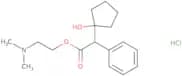
CAS:<p>2-[(4-Methoxy-3-methyl-2-pyridinyl)methyl]sulfinyl]-1H-benzimidazole is a synthetic, impurity standard that is used in the synthesis of drug products. It has been shown to inhibit the metabolism of drugs and may be used as a marker for drug metabolism. This compound may also be used as a marker in analytical studies to assess the purity of a drug product. 2-[(4-Methoxy-3-methyl-2-pyridinyl)methyl]sulfinyl]-1H-benzimidazole has not been evaluated for safety or efficacy.</p>Formula:C15H15N3O2SPurezza:Min. 95%Peso molecolare:301.36 g/molN,N-Dimethylaminoethyl-a-(1-Hydroxycyclopentyl)phenylacetate hydrochloride
CAS:Prodotto controllato<p>N,N-Dimethylaminoethyl-a-(1-Hydroxycyclopentyl)phenylacetate hydrochloride (DMAEA) is a drug that is used as an ophthalmic. It has been shown to be safe and effective in patients with chronic open angle glaucoma, and it may also have some efficacy for the treatment of other conditions such as uveitis and retinal detachment. DMAEA is thought to work by binding to the DNA in the eye’s optic nerve cells and blocking the production of leukotrienes. This drug has also been shown to have anti-inflammatory properties.</p>Formula:C17H26ClNO3Purezza:Min. 95%Colore e forma:PowderPeso molecolare:327.85 g/molN-Desalkyl itraconazole
CAS:<p>N-Desalkyl itraconazole is a triazole antifungal drug that belongs to the group of medicines. It is used in the treatment of systemic mycoses, including blastomycosis and histoplasmosis. N-Desalkyl itraconazole has been shown to inhibit the growth of fungi by interfering with their cell membranes and inhibiting their production of ergosterol. Calibration studies have shown that this drug binds to human liver microsomes and plasma proteins, as well as transporters such as P-glycoprotein. These interactions may influence its pharmacokinetics, which can be determined using a bioanalytical method.</p>Formula:C31H30Cl2N8O4Purezza:Min. 95%Peso molecolare:649.53 g/molDesdifluoromethoxy hydroxy pantoprazole
CAS:<p>Desdifluoromethoxy hydroxy pantoprazole is a synthetic compound that is used as an impurity standard for the drug product Pantoprazole. It has a purity of ≥98% and is stable under ambient conditions. Desdifluoromethoxy hydroxy pantoprazole is not active on its own, but it is a metabolite of pantoprazole. It can be used to study the metabolism of pantoprazole.</p>Formula:C15H15N3O4SPurezza:Min. 95%Peso molecolare:333.36 g/mol2-Methyl-3,4-dimethoxy pyridine hydrochloride
CAS:<p>2-Methyl-3,4-dimethoxy pyridine hydrochloride is an analytical standard that is used as a reference compound in the pharmaceutical industry to identify impurities in drug products. It also has a niche use as an API impurity and HPLC standard. 2-Methyl-3,4-dimethoxy pyridine hydrochloride is used as an intermediate for the synthesis of other drugs, including benzodiazepines and beta blockers. It is also used in research and development for its high purity. This chemical is natural or synthetic in origin but can be custom synthesized to meet specific requirements. 2-Methyl-3,4-dimethoxy pyridine hydrochloride also has CAS number 1210824-88-6.</p>Formula:C8H11NO2HClPurezza:Min. 95%Peso molecolare:189.64 g/molPantoprazole impurity
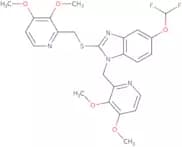
CAS:<p>Pantoprazole is a proton pump inhibitor. It is used in the treatment of gastroesophageal reflux disease and other conditions involving excessive stomach acid production. The chemical name for Pantoprazole impurity is (E)-1-(4-chlorophenyl)ethyl-3-[(pyrrolidin-2-yl)oxy]propanediol. This substance is an enantiomer of pantoprazole, which has been determined to be inactive. Pantoprazole impurity can be identified by its melting point, crystallizing habit, and optical rotation. Active carbon filtration can be used to remove this substance from the final product.</p>Formula:C24H24F2N4O5SPurezza:Min. 95%Peso molecolare:518.53 g/molDehydrodeoxy donepezil
CAS:<p>Dehydrodeoxy donepezil is an analytical standard that is used in the manufacture of pharmaceuticals. It is a synthetic drug impurity, and its CAS number is 120013-45-8. Dehydrodeoxy donepezil can be found in the API impurity grade of various drugs, including those that are manufactured by Custom synthesis and natural synthesis. The pharmacopoeia states that dehydrodeoxy donepezil has a purity level of 98% or greater. This product can also be found as a metabolite in humans, with its half-life being approximately 40 minutes.</p>Formula:C24H29NO2Purezza:Min. 95%Peso molecolare:363.49 g/molPantoprazole sulfone N-oxide
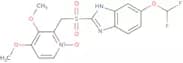
CAS:<p>Pantoprazole sulfone N-oxide is a prodrug that is converted to the active form pantoprazole in the stomach where it inhibits gastric acid secretion. Pantoprazole sulfone N-oxide has been shown to be genotoxic, and can cause polyvinyl chloride to degrade when stored together. Reconstituted solution of this drug should be used within 24 hours after reconstitution, as the chemical stability of this drug decreases rapidly. Validation studies have been conducted on different analytical methods for determining pantoprazole concentrations in reconstituted solutions, and these methods have been harmonized with those published by the United States Pharmacopeia (USP). The pump inhibitor activity of pantoprazole sulfone N-oxide has been demonstrated in dogs, and it is also useful for treating acid reflux disease in humans. Pantoprazole sulfone N-oxide is unstable at high temperatures (>25°C), so should not be refrigerated or</p>Formula:C16H15F2N3O6SPurezza:Min. 95%Peso molecolare:415.37 g/mol2-[[(4-Chloro-3-methyl-2-pyridinyl)methyl]sulfinyl]-1H-benzimidazole
CAS:<p>2-[[(4-Chloro-3-methyl-2-pyridinyl)methyl]sulfinyl]-1H-benzimidazole (CAS No. 168167-42-8) is a synthetic compound that is used as an analytical reference standard for HPLC. It is also used in the study of drug metabolism, and it has been shown to induce natural oxidation in vitro. 2-[(4-Chloro-3-methylpyridinium)methylsulfinyl]-1Hbenzimidazole is an impurity found in pharmaceutical products that are synthesized from 1-(2,4,6trichlorophenyl)-3-[(4chloromethyl)phenyl]urea.</p>Formula:C14H12ClN3OSPurezza:Min. 95 Area-%Colore e forma:Brown PowderPeso molecolare:305.78 g/molDonepezil benzyl bromide (donepezil impurity)
CAS:<p>Donepezil benzyl bromide is a by-product of donepezil hydrochloride, which is an industrially important drug used to treat Alzheimer's disease. It has been shown to be more efficient than its hydrochloride form. Donepezil benzyl bromide is a crystalline substance that is insoluble in water and soluble in organic solvents such as acetone or ethanol. The compound can be purified through recrystallization from an appropriate solvent.</p>Formula:C31H36BrNO3Purezza:Min. 95%Peso molecolare:550.53 g/mol

![cis-(±)-4-[4-[4-[4-[[2-(2,4-Dichlorophenyl)-2-(1H-1,2,4-triazol-1-ylmethyl)-1,3-dioxolan-4-yl]meth…](/_next/image/?url=https%3A%2Fstatic.cymitquimica.com%2Fproducts%2F3D%2Fthumb-webp%2FID27219.webp&w=3840&q=75)



![2-[(4-Chloro-3-methyl-2-pyridinyl)methylthio]-1H-benzimidazole](/_next/image/?url=https%3A%2Fstatic.cymitquimica.com%2Fproducts%2F3D%2Fthumb-webp%2FIC21227.webp&w=3840&q=75)

![2-[[(4-Methoxy-3-methyl-2-pyridinyl)methyl]sulfinyl]-1H-benzimidazole](/_next/image/?url=https%3A%2Fstatic.cymitquimica.com%2Fproducts%2F3D%2Fthumb-webp%2FIM21228.webp&w=3840&q=75)




![2-[[(4-Chloro-3-methyl-2-pyridinyl)methyl]sulfinyl]-1H-benzimidazole](/_next/image/?url=https%3A%2Fstatic.cymitquimica.com%2Fproducts%2F3D%2Fthumb-webp%2FIC21226.webp&w=3840&q=75)
