Chinoni e Derivati
I chinoni sono composti aromatici che contengono un sistema ad anelli benzenici con due gruppi carbonilici in posizioni specifiche, formando una struttura cicloesenica con ossigeno. Derivano da composti come l’antrachinone e la 1,4-benzochinone, che svolgono importanti funzioni biologiche, tra cui il trasferimento di elettroni nei processi metabolici. I derivati dei chinoni, come le idrochinoni e gli agenti antireumatici, trovano applicazione nell’industria farmaceutica grazie alle loro proprietà antiossidanti, antimicrobiche e anticancerogene. Inoltre, i chinoni sono impiegati nella produzione di coloranti e prodotti cosmetici.
Presso CymitQuimica, offriamo chinoni e i loro derivati per applicazioni in chimica organica, farmaceutica e nell’industria cosmetica.
Trovati 24205 prodotti di "Chinoni e Derivati"
Ordinare per
Purezza (%)
0
100
|
0
|
50
|
90
|
95
|
100
Patulin
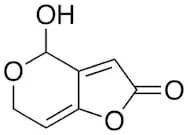
CAS:<p>Stability Hygroscopic<br>Applications Patulin (PAT), a mycotoxin produced by certain species of Penicillium, Aspergillus, and Byssochlamys, is mainly found in ripe apple and apple products. Patulin-induced genotoxicity and modulation of glutathione in Hep G2 cells. Patulin is an antibiotic. Patulin-induced nephropathy and gastrointestinal tract malfunction have been demonstrated in several animal models. The oral LD50 value of patulin ranges between 29 and 55 mg/kg body weight in rodents and 170 mg/kg body weight in poultry. The World Health Organization considers patulin cytotoxic and established a safety level of patulin in apple juice at 50 μM. At 100-200 μM, patulin can directly increase intracellular oxidative stress in HEK293 and HL-60 cells. In 1944, this compound was tested in a clinical trial for potential antibiotic<br> Not a dangerous good if item is equal to or less than 1g/ml and there is less than 100g/ml in the package<br>References Scott, P., et al.: J. Agric. Food Chem., 20, 450 (1972), Aden, D., et al.: Nature, 282, 615 (1979), Surralles, J., et al.: Mutat. Res., 341, 169 (1995), Alves, I., et al.: Mutagenesis, 15, 229 (2000), Liu, B., et al.: Toxicol. Appl. Pharmacol., 191, 255 (2003), Puel, O., Galtier, P., and Oswald, I.P. Biosynthesis and toxicological effects of patulin. Toxins 2(4) 613-631 (2010). Liu, B., Wu, T., Yu, F., et al. Induction of oxidative stress response by the mycotoxin patulin in mammalian cells. Toxicol Sci 95(2) 340-347 (2007). Chalmers, I., and Clarke, M. Commentary: The 1994 patulin trial: The first properly controlled multicentre trial conducted under the aegis of the British Medical Research Council. Int J Epidemiol 32 253-260 (2004).<br></p>Formula:C7H6O4Colore e forma:Off-White To YellowPeso molecolare:154.12Ref: TR-P206500
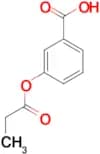
Prodotto fuori produzione3-[6-Chloro-4-(trifluoromethyl)pyridin-2-yl]benzoic acid
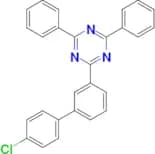
CAS:Purezza:95.0%Colore e forma:SolidPeso molecolare:301.64999389648442-(4'-Chlorobiphenyl-3-yl)-4,6-diphenyl-1,3,5-triazine
CAS:Purezza:98%Peso molecolare:419.9100036621094Benzovindiflupyr
CAS:<p>Benzovindiflupyr: a fungicide that inhibits SDH (IC50=5.2nM), halts S. sclerotiorum growth (EC50=0.011μg/ml), and protects crops like eggplants.</p>Formula:C18H15Cl2F2N3OColore e forma:SolidPeso molecolare:398.23


![3-[6-Chloro-4-(trifluoromethyl)pyridin-2-yl]benzoic acid](/_next/image/?url=https%3A%2Fstatic.cymitquimica.com%2Fproducts%2F10%2Fthumb-webp%2FF317175.webp&w=3840&q=75)