Sulfonamidi e Derivati
Le sulfonamidi sono composti che contengono un gruppo funzionale sulfonamidico (-SO₂NH₂), in cui un atomo di zolfo è legato a un gruppo amminico. Furono tra i primi antibiotici sintetici utilizzati in medicina, inibendo la sintesi dell’acido folico nei batteri, conferendo loro proprietà antimicrobiche. Sono utilizzate principalmente per trattare infezioni batteriche, sebbene il loro impiego sia diminuito a causa della resistenza antimicrobica. Oltre al loro uso come antibiotici, le sulfonamidi trovano applicazioni nel trattamento di malattie come la malaria e le malattie infiammatorie intestinali.
Presso CymitQuimica, offriamo sulfonamidi e i loro derivati ad alta purezza per la ricerca in microbiologia e lo sviluppo farmaceutico.
Trovati 2589 prodotti di "Sulfonamidi e Derivati"
Ordinare per
Purezza (%)
0
100
|
0
|
50
|
90
|
95
|
100
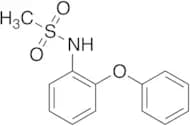
2'-Phenoxymethanesulfonanilide
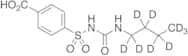
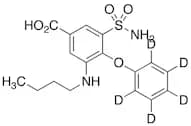
CAS:Prodotto controllatoFormula:C13H13NO3SColore e forma:White To Off-WhitePeso molecolare:263.314-Carboxy Tolbutamide-d9
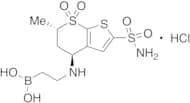
CAS:Prodotto controllato<p>Stability Hygroscopic<br>Applications A labelled metabolite of Tolbutamide. Formed by the cytochrome CYP2CIIC8 and IIC9 subfamily of P450 enzymes.<br>References Relling, etl al.: J. Pharmacol. Exp. Ther., 252, 442 (1990), Parent, et al.: J. Pharmacol. Exp. Ther., 261, 780 (1992), Ho, et al.: Life Sci., 52, 21 (1993),<br></p>Formula:C12D9H7N2O5SColore e forma:NeatPeso molecolare:309.39N-Desethyl-N-(2-boronoethyl) Dorzolamide Hydrochloride
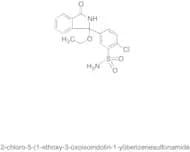
Formula:C10H17BN2O6S3•(HCl)Colore e forma:NeatPeso molecolare:368.2636462-Chloro-5-(1-ethoxy-3-oxoisoindolin-1-yl)benzenesulfonamide
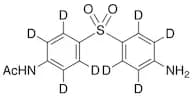
CAS:Prodotto controllato<p>Applications Ethyl Chlorthalidone is an impurity of Chlorthalidone (C427500). Chlorthalidone is used as a diuretic; an antihypertensive.<br>References Beisenherz, et al.: Arch. Int. Pharmacodyn. Ther., 161, 76 (1966), Zsoter, et al.: J. Pharmacol. Exp. Ther., 180, 723 (1972), Singer, J.M., et al.: Anal. Profiles Drug Subs., 14, 1 (1985),<br></p>Formula:C16H15ClN2O4SColore e forma:Off WhitePeso molecolare:366.82N-Acetyl Dapsone-d8 (Major)
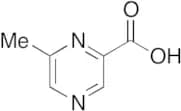
CAS:Prodotto controllato<p>Applications A labelled metabolite of Dapsone (D193250).A representative lot is 73% d8, 23% d7 and 3% d6 with no d0.<br>References Shin, I., et al.: J. App. Pharmacol., 10, 193 (2002), Bhaiya, P., et al.: Toxicol. App. Pharmacol., 215, 158 (2006), Paixao, P., et al.: Eur. J. Pharm. Sci., 36, 544 (2009),<br></p>Formula:C14H6D8N2O3SColore e forma:NeatPeso molecolare:298.396-Methylpyrazinecarboxylic Acid
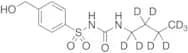
CAS:Prodotto controllato<p>Applications 6-Methylpyrazinecarboxylic Acid can be used to synthesize compounds that are active against M.tuberculosis H37Rv. Similarly, it can be used to synthesize compounds that are useful for the inhibition, prevention or therapy of tumor cell invasion, metastasis, inflammation, hepatitis, or liver dysfunction.<br>References Vontor, T., et al.: Cesk. Farm., 34, 441 (1985); Oka, K., et al.: Jpn. Kokai Tokkyo Koho, JP 2007210926 A 20070823 (2007)<br></p>Formula:C6H6N2O2Colore e forma:NeatPeso molecolare:138.12Hydroxy Tolbutamide-d9
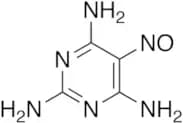
CAS:Prodotto controllatoFormula:C122H9H9N2O4SColore e forma:Off WhitePeso molecolare:295.405-Nitroso-2,4,6-triaminopyrimidine
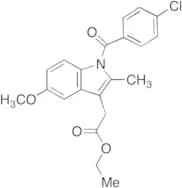
CAS:Prodotto controllatoFormula:C4H6N6OColore e forma:NeatPeso molecolare:154.13Indomethacin Ethyl Ester
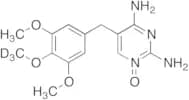
CAS:Prodotto controllatoFormula:C21H20ClNO4Colore e forma:Off-WhitePeso molecolare:385.84(4-Trideuteromethoxy) Trimethoprim N1-Oxide, ~90%
CAS:Prodotto controllatoFormula:C14H15D3N4O4Purezza:~90%Colore e forma:NeatPeso molecolare:309.34N-Des(5-methylpyrazinecarbonyl)-N-ethylcarboxyl Glipizide
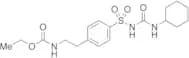
CAS:Prodotto controllato<p>Impurity Glipizide EP Impurity C<br>Applications N-Des(5-methylpyrazinecarbonyl)-N-ethylcarboxyl Glipizide (Glipizide EP Impurity C) is an impurity of Glipizide (G410225).<br></p>Formula:C18H27N3O5SColore e forma:NeatPeso molecolare:397.49Ibuprofen Ethyl Ester
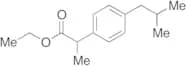
CAS:Prodotto controllato<p>Applications Ibuprofen Ethyl Ester is a derivative of Ibuprofen, a nonsteroidal anti-inflammatory drug (NSAID) that is known to inhibit PGH synthase-1 and PGH synthase-2 with comparable potency.<br>References Gnanarajan, G., et al.: Int. J. Pharma. Sci. Rsch., 1, 27 (2010); Busson, M., et al.: J. Int. Med Res., 14, 53 (1986); Meade, E.A., et al.: J. Biol. Chem., 268, 6610 (1993); Davies, N.M., et al.: Clin. Pharmacokinet., 34, 101 (1998);<br></p>Formula:C15H22O2Colore e forma:Colourless To Light YellowPeso molecolare:234.332,3-Dimethylaniline
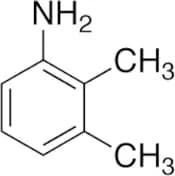
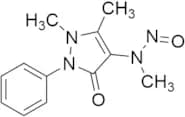
CAS:Prodotto controllato<p>Impurity Mefenamic Acid EP Impurity A<br>Applications Reagent used in the preparation of non-steroidal anti-inflammatory drugs, dyes and pesticides.<br> Not a dangerous good if item is equal to or less than 1g/ml and there is less than 100g/ml in the package<br>References Ivachtchenko, A., et al.: Bioorg. Med. Chem., 18, 5282 (2010), Rais, R., et al.: J. Med. Chem., 53, 4749 (2010),<br></p>Formula:C8H11NColore e forma:BrownPeso molecolare:121.18N-(1,5-Dimethyl-3-oxo-2-phenyl-2,3-dihydro-1H-pyrazol-4-yl)-N-methylnitrous amide
CAS:Prodotto controllatoFormula:C12H14N4O2Colore e forma:NeatPeso molecolare:246.27Mefruside-d3
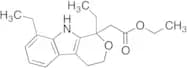
CAS:Prodotto controllato<p>Stability Hygroscopic<br>Applications Isotope labelled analogue of Mefruside (M205150), a diuretic used for the treatment of edema and hypertension.<br>References Johansen, A., et al.: Euro. J. Epidemiol., 27, 63 (2012); Hasegawa, Y., et al.: Blood. Press. Supple., 1, 10 (2010);<br></p>Formula:C13H16D3ClN2O5S2Colore e forma:White To Light BeigePeso molecolare:385.90Etodolac Ethyl Ester
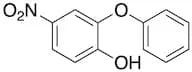
CAS:Prodotto controllato<p>Applications Etodolac Ethyl Ester is a useful intermediate in the preparation of the new antiinflammatory drug Etodolac. Etodolac Impurity.<br>References Mizuguchi, E., et al.: Heterocycles, 46, 149 (1997); Woods, M., et al.: Org. Process Res. Dev., 4, 418 (2000)<br></p>Formula:C19H25NO3Colore e forma:NeatPeso molecolare:315.414-Nitro-2-phenoxyphenol
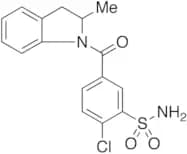
CAS:<p>Applications 4-Nitro-2-phenoxyphenol is a impurity of Nimesulide (N477500), antiinflammatory agent. Preferentially inhibits COX-2 over COX-1. Suppresses chemical-induced carcinogenesis in mice and rats. Inhibits LPS-induced TNF-alpha production. Also used in the preparation of benzoxirenes and the synthesis of trioxonins.<br>References Pairet, M., et al.: Inflamm. Res., 47, S93 (1998), Fukutake, M., et al.: Carcinogenesis, 19, 1939 (1998), Okajima., E., et al.: Cancer Res., 58, 3028 (1998), Azab, A., et al.: Life Sci., 63, 323 (1998)<br></p>Formula:C12H9NO4Colore e forma:Light YellowPeso molecolare:231.20N-(4-Chloro-3-sulfamoylbenzoyl)-2-methylindoline
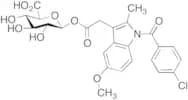
CAS:Prodotto controllato<p>Applications N-(4-Chloro-3-sulfamoylbenzoyl)-2-methylindoline is an impurity of Indapamide (I500100).<br></p>Formula:C16H15ClN2O3SColore e forma:Light YellowPeso molecolare:350.82Indomethacin Acyl-β-D-glucuronide (>90%)
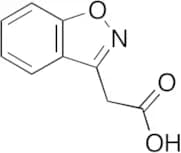
CAS:Prodotto controllato<p>Applications Indomethacin Acyl-β-D-glucuronide is a metabolite of Indomethacin (I641000). Acyl glucuronides have been implicated in the toxicity of many xenobiotics and marketed drugs.<br> Not a dangerous good if item is equal to or less than 1g/ml and there is less than 100g/ml in the package<br>References Abid, A., et al.: Biochem. Pharmacol., 50, 557 (1995), Gamage, N., et al.: Toxicol. Sci., 90, 5 (2006), Cerveny, L., et al.: Drug Metab. Dispos., 35, 1032 (2007), Hayeshi, R., et al.: Eur. J. Pharm. Sci., 35, 383 (2008),<br></p>Formula:C25H24ClNO10Colore e forma:NeatPeso molecolare:533.911,2-Benzisoxazol-3-ylacetic Acid
CAS:Prodotto controllato<p>Applications 1,2-Benzisoxazol-3-ylacetic Acid is a synthetic auxin and an intermediate in the synthesis of Zonisamide (Z700000).<br>References Branca, C., et al.: Plant Cell Tiss. Org., 21, 17 (1990); Branca, C., et al.: Plant Cell Rep., 12, 121 (1993)<br></p>Formula:C9H7NO3Colore e forma:NeatPeso molecolare:177.16Methyl 4-[b-(5-Methylpyrazine-2-carboxamido)ethyl]benzene Sulfonamide Carbamate
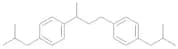
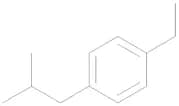
CAS:Prodotto controllato<p>Impurity Glipizide EP Impurity G<br>Applications Methyl 4-[β-(5-Methylpyrazine-2-carboxamido)ethyl]benzene Sulfonamide Carbamate (Glipizide EP Impurity G) is an intermediate in the synthesis of Glipizide (G410225).<br>References Bakshi, M., et al.: J. Pharm. Biomed. Anal., 36, 769 (2004), Youssef, N., et al.: Chem. Pharm. Bull., 55, 541 (2007),<br></p>Formula:C16H18N4O5SColore e forma:NeatPeso molecolare:378.401-Ethyl-4-isobutylbenzene
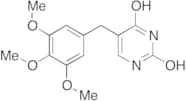
CAS:Prodotto controllatoFormula:C12H18Colore e forma:NeatPeso molecolare:162.275-(3,4,5-Trimethoxybenzyl)pyrimidine-2,4-diol
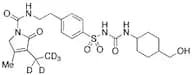
CAS:Prodotto controllatoFormula:C14H16N2O5Colore e forma:NeatPeso molecolare:292.29rac trans-Hydroxy Glimepiride-d5
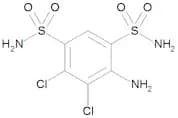
CAS:Prodotto controllato<p>Applications An active metabolite of Glimepiride.<br>References Muller, G., et al.: Diabetes, 42, 1852 (1993), Kramer, W., et al.: Biochem. Biophys. Acta, 119, 278 (1994),<br></p>Formula:C24H29D5N4O6SColore e forma:NeatPeso molecolare:511.654-Amino-5,6-dichloro-1,3-benzenedisulfonamide
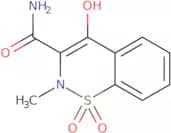
CAS:Prodotto controllatoFormula:C6H7Cl2N3O4S2Colore e forma:NeatPeso molecolare:320.174-Hydroxy-2-methyl-2H-1,2-benzothiazine-3-carboxamide 1,1-dioxide
CAS:<p>This is a white crystalline compound that has been shown to be effective against glutamic acid-sensitive L-amino acid decarboxylase. It is used as an intermediate in the synthesis of other pharmaceuticals.</p>Formula:C10H10N2O4SPurezza:Min. 95%Peso molecolare:254.26 g/molTorasemide EP Impurity C
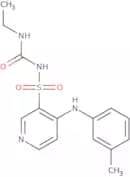
CAS:<p>Torasemide EP Impurity C is a drug product that is used as an analytical standard in the metabolism studies of torasemide. Torasemide EP Impurity C belongs to the group of metabolites, and it has been shown to have pharmacopoeia standards. Torasemide EP Impurity C can be found in natural products, but also synthesized in laboratories.</p>Formula:C15H18N4O3SPurezza:Min. 95%Peso molecolare:334.39 g/mol2-(4-(Benzylamino)-2-ethylbutyl)-5,6-dimethoxy-2,3-dihydroinden-1-one hydrochloride
CAS:<p>2-(4-(Benzylamino)-2-ethylbutyl)-5,6-dimethoxy-2,3-dihydroinden-1-one hydrochloride is a drug product used as an analytical standard for HPLC. It is a natural metabolite from the metabolism of lisinopril and other prodrugs. This impurity is found in drugs that are metabolized by cytochrome P450 enzymes including lisinopril, captopril, enalapril and benazepril. The impurity may be present in drugs with a niche market such as captopril and benazepril or drugs with a high purity such as enalapril. 2-(4-(Benzylamino)-2-ethylbutyl)-5,6-dimethoxy-2,3-dihydroinden-1-one hydrochloride is typically synthesized by the reaction of 4-(benzylamino</p>Formula:C24H31NO3•HClPurezza:Min. 95 Area-%Colore e forma:PowderPeso molecolare:417.97 g/mol2-Hydroxy-5-[2-[4-[[(6-methyl-2-pyridinyl)amino]sulfonyl]phenyl]diazenyl]benzoic acid
CAS:<p>2-Hydroxy-5-[2-[4-[[(6-methyl-2-pyridinyl)amino]sulfonyl]phenyl]diazenyl]benzoic acid is a synthetic drug product that has not been approved for clinical use. 2-Hydroxy-5-[2-[4-[[(6-methyl-2-pyridinyl)amino]sulfonyl]phenyl]- diazenyl]benzoic acid is a metabolite of the drug product, 3-(2,4,6,-trimethoxybenzoyl)-1-(pyridinium methyl) piperidine. This metabolite was isolated and characterized using high performance liquid chromatography (HPLC), gas chromatography (GC), and nuclear magnetic resonance spectroscopy.</p>Formula:C19H16N4O5SPurezza:Min. 95%Peso molecolare:412.42 g/mol3-[4-(2-Pyridylsulfamoyl)phenyl] sulfasalazine
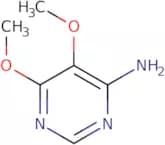
CAS:<p>3-[4-(2-Pyridylsulfamoyl)phenyl] sulfasalazine is an analytical standard and a metabolite of sulfasalazine. It is used as a reference compound in the analysis of high purity sulfasalazine by HPLC. 3-[4-(2-Pyridylsulfamoyl)phenyl] sulfasalazine is also used as an impurity in the drug product, API, and drug development. The CAS number for 3-[4-(2-Pyridylsulfamoyl)phenyl] sulfasalazine is 1391062-34-2.</p>Formula:C29H22N6O7S2Purezza:Min. 95%Peso molecolare:630.65 g/mol4-Amino-5,6-dimethoxypyrimidine
CAS:<p>4-Amino-5,6-dimethoxypyrimidine is a pyrimethamine derivative that has been used as an antimalarial agent. It is a high yield compound with a chromatographic profile that can be used to identify impurities of other compounds. 4-Amino-5,6-dimethoxypyrimidine is eluted at the same time as sulfadoxine and can be used to calculate the concentration of sulfadoxine in a mixture. It can also be used as a reagent for rp-hplc. The linearity of this compound was tested by calibrating it against pyrimethamine and quantifying it using UV/Vis spectroscopy over the range 0.05 to 1 mg/mL.</p>Formula:C6H9N3O2Purezza:Min. 95%Peso molecolare:155.15 g/mol4-Amino-6-chloro-benzene-1,3-disulfonic acid 1-amide 3-ethylamide
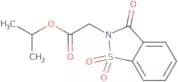
CAS:<p>4-Amino-6-chloro-benzene-1,3-disulfonic acid 1-amide 3-ethylamide is an analytical standard that is used in drug development and as a reference material. It is used to produce the USP/NF standard for HPLC and to develop new drugs. This compound is a metabolite of the drug clonidine hydrochloride. 4-Amino-6-chloro-benzene-1,3-disulfonic acid 1-amide 3-(ethylamide) is also known by its CAS number 166863–9. It has a molecular weight of 328.5 g/mol and it's been approved by the FDA for use in food animals. Impurities found in this compound are: methanol, acetone, formic acid, acetic acid, chloroform and sulfamic acid. This product can be custom synthesized or obtained from natural sources such as plant</p>Formula:C8H12ClN3O4S2Purezza:Min. 95%Peso molecolare:313.78 g/molSaccharin N-(2-acetic acid isopropyl ester)
CAS:<p>Saccharin is a drug product that consists of saccharin N-isopropyl ester and an impurity standard. Saccharin is a synthetic sweetener that is found in the leaves of the herbaceous perennial S. dulcis, which has been used as a natural sweetener for centuries. Saccharin can be metabolized by humans to form 2-acetic acid and 4-methyl-1,2,3-thiadiazole (MTT) as a byproduct. The metabolite MTT may cause cancer in animals, but this has not been confirmed in humans. The pharmacopoeia specifies the purity of saccharin as 98% or greater. Metabolite standards are also provided for research purposes.</p>Formula:C12H13NO5SPurezza:Min. 95%Peso molecolare:283.3 g/molN-Acetyl zonisamide
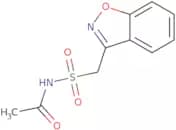
CAS:<p>N-Acetyl zonisamide is a drug that is used in the treatment of epilepsy. It has a broad spectrum of activity and has been shown to be effective against seizures caused by both genetic and acquired conditions. N-Acetyl zonisamide's mechanism of action is not fully understood, but it may involve inhibition of carbonic anhydrase, modulation of serotonergic systems, and antagonism at adenosine receptors. Zonisamide also binds to glutamate and dopamine receptors in the brain, which may contribute to its clinical effects.</p>Formula:C10H10N2O4SPurezza:Min. 95%Colore e forma:PowderPeso molecolare:254.26 g/molAceclofenac benzyl ester
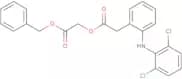
CAS:<p>Aceclofenac is a nonsteroidal anti-inflammatory drug (NSAID) that belongs to the propionic acid derivative group. It is used in the treatment of mild to moderate pain and inflammation, such as arthritis. Aceclofenac is rapidly hydrolyzed by esterases in the small intestine, resulting in the release of aceclofenac acid. Aceclofenac benzyl ester is a chemical intermediate that has been shown to be an efficient method for producing aceclofenac acid. It can be obtained by reacting bromoacetic anhydride with methyl alcohol and then hydrolyzing the product with strong acids. This compound may contain impurities, such as nucleophilic impurities, which can lead to side effects.</p>Formula:C23H19Cl2NO4Purezza:Min. 95%Peso molecolare:444.31 g/mol4-(Diethylboranyl) pyridine
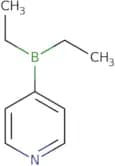
CAS:<p>4-(Diethylboranyl)pyridine is a nucleophilic, anticoagulant drug. It interacts with the electronegative oxygen atoms in the guanine base of dna to form an adduct, which inhibits DNA synthesis. The hexameric cavity of 4-(Diethylboranyl)pyridine contains boron and nitrogen atoms, which are important for its activity. 4-(Diethylboranyl)pyridine also has antibacterial effects against gram-positive bacteria by inhibiting bacterial protein synthesis. This compound is synthetic and can be used in cocrystallized form as a single molecule or in hexameric form.</p>Formula:C9H14BNPurezza:Min. 95%Peso molecolare:147.03 g/mol4-Hydroxy-N-2-pyridinyl-2H-1,2-benzothiazine-3-carboxamide-1,1-dioxide
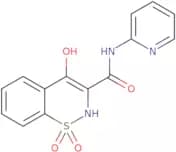
CAS:<p>4-Hydroxy-N-2-pyridinyl-2H-1,2-benzothiazine-3-carboxamide-1,1dioxide is a drug product that is used as an analytical reference material. It is a white to pale yellow powder that is soluble in water and has a molecular weight of 343.4 g/mol. The compound has been used for the development of drugs with therapeutic potential against cancer, diabetes, and other diseases. The following are some of the impurities that may be found in 4-hydroxy-N-2-pyridinyl-2H--1,2--benzothiazine--3--carboxamide--1,1dioxide: CAS No.: 65897 - 46 - 3 Molecular weight: 343.4 g/mol Melting point: Boiling point: Density: 1.7 g/cm</p>Formula:C14H11N3O4SPurezza:Min. 95%Peso molecolare:317.32 g/mol1-Hydroxy-ibuprofen - Mixture of diastereoisomers
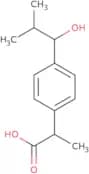
CAS:<p>Ibuprofen is a nonsteroidal anti-inflammatory drug that is used to treat arthritis, rheumatoid arthritis, menstrual cramps and pain. Ibuprofen is a racemic mixture of two enantiomers, ibuprofen and S (+) -ibuprofen. The dextran sulfate method is an analytical method used to determine the concentration of ibuprofen in biological fluids such as human serum or urine. This test can be done by first treating the sample with trifluoroacetic acid (TFA) to convert ibuprofen to its glucuronide conjugate. The glucuronide conjugates are then deproteinized with hydrochloric acid, which converts them into their corresponding carboxylated derivatives. This conversion allows for the separation of ibuprofen from interfering substances using preparative hplc and quantification using mass spectrometry. Toxicity studies have been conducted on bacteria strains and inflammatory bowel</p>Formula:C13H18O3Purezza:Min. 95%Colore e forma:White PowderPeso molecolare:222.28 g/molMethyl 2-sulfinobenzoate
CAS:<p>Methyl 2-sulfinobenzoate (MSB) is an analytical, research and development, and drug development impurity that is used as an API impurity and HPLC standard. It is a metabolite of sulfadiazine, which belongs to the family of drugs known as sulfonamides. MSB has been shown to have pharmacopoeia activity for the treatment of bacterial infections. It is a natural product found in plants, such as garlic and onion, or it can be synthesized from benzene and sulfur chloride.</p>Formula:C8H8O4SPurezza:Min. 95%Peso molecolare:200.21 g/molN-(4-Hydroxyphenyl)propanamide
CAS:<p>The N-(4-hydroxyphenyl)propionamide (HPPA) is a synthetic drug that binds to the human liver. It has been shown to be effective in preventing implantation of fertilized eggs, and can be used as a diagnostic agent for determining the presence of HPPA in human liver tissue. HPPA is also used as a diluent for other drugs. The HPPA binds to chromatographic components and can be detected using electrochemical detection, which allows it to be used as a targetable probe for cancer research. HPPA is also used to study iontophoretic transport of ions across reconstituted membranes in vitro.</p>Formula:C9H11NO2Purezza:(%) Min. 97%Peso molecolare:165.19 g/molHydrochlorothiazide impurity C
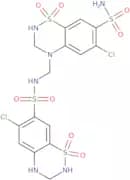
CAS:<p>Hydrochlorothiazide is a sulfonamide that inhibits the activity of the enzyme, angiotensin-converting enzyme (ACE), which is responsible for converting angiotensin I to the potent vasoconstrictor, angiotensin II. It also has antihypertensive effects by blocking the production of aldosterone, which causes sodium retention and leads to high blood pressure. It is a byproduct in reactions with substances such as valsartan. Hydrochlorothiazide may react chemically with other medicines such as ampicillin and cefaclor.</p>Formula:C15H16Cl2N6O8S4Purezza:Min. 95%Colore e forma:White PowderPeso molecolare:607.49 g/mol2-(4-Formylphenyl)propionic acid - Racemic
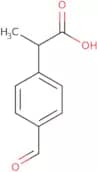
CAS:<p>2-(4-Formylphenyl)propionic acid is a racemic mixture of 2-formylphenylacetic acid and 4-formylphenylacetic acid. This compound is used in the treatment of bacterial infections and inflammation. It is an organic solution that can be injected, administered orally, or applied topically. The 2-(4-formylphenyl)propionic acid has been shown to have anti-inflammatory properties, but also has side effects such as skin irritation when it is applied topically. This drug can also cause nausea, vomiting, and diarrhea when administered orally.</p>Formula:C10H10O3Purezza:Min. 95%Colore e forma:White PowderPeso molecolare:178.18 g/molTorasemide EP Impurity D
CAS:<p>Torasemide EP Impurity D is a drug product or impurity. It is an analytical standard for purity testing of torasemide. Torasemide EP Impurity D is also a metabolite of torasemide and can be found in urine as well as other tissues. It is natural, but not naturally occurring. Research and Development studies of this impurity are ongoing to determine its pharmacological activity and niche applications.</p>Formula:C17H22N4O3SPurezza:Min. 95%Peso molecolare:362.45 g/molrac-Ibuprofen amide
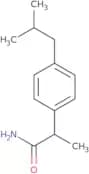
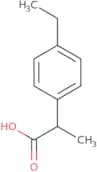
CAS:<p>Ibuprofen amide is a nonsteroidal anti-inflammatory drug that belongs to the class of amides. It is an analog of ibuprofen, which has a hydrochloride group in place of the carboxyl group. Ibuprofen amide inhibits the production of pro-inflammatory chemicals by blocking cyclooxygenase enzymes, which are responsible for synthesis of prostaglandins and thromboxanes. The kinetic profile of this compound was obtained using fluorescence spectroscopy. This analytical method also showed that ibuprofen amide hydrolyzes in acidic conditions, suggesting that it may be active against bacteria that are found in an acidic environment.</p>Formula:C13H19NOPurezza:Min. 98 Area-%Peso molecolare:205.3 g/mol2-(4-Ethylphenyl)-propanoic acid - Racemic
CAS:<p>2-(4-Ethylphenyl)-propanoic acid is a supplement that is used to relieve pain and inflammation. It belongs to the group of non-steroidal anti-inflammatory drugs (NSAIDs). This drug has been shown to be efficacious in the treatment of osteoarthritis, rheumatoid arthritis, and bronchitis. 2-(4-Ethylphenyl)-propanoic acid inhibits both prostaglandin synthesis and leukotriene synthesis by inhibiting cyclooxygenase 1, which converts arachidonic acid into prostaglandins, and 5-lipoxygenase, which converts arachidonic acid into leukotrienes. This drug has also been shown to inhibit COX-2 production in human monocytes. The active form of this drug is metabolized through a number of metabolic transformations including hydrolysis by esterases or glucuronidases, oxidation by cytochrome P450 enzymes,</p>Formula:C11H14O2Purezza:Min. 95%Peso molecolare:178.23 g/mol



![Methyl 4-[b-(5-Methylpyrazine-2-carboxamido)ethyl]benzene Sulfonamide Carbamate](/_next/image/?url=https%3A%2Fstatic.cymitquimica.com%2Fproducts%2FTR%2Fthumb-webp%2FM322900.webp&w=3840&q=75)

![2-Hydroxy-5-[2-[4-[[(6-methyl-2-pyridinyl)amino]sulfonyl]phenyl]diazenyl]benzoic acid](/_next/image/?url=https%3A%2Fstatic.cymitquimica.com%2Fproducts%2F3D%2Fthumb-webp%2FIH145662.webp&w=3840&q=75)
![3-[4-(2-Pyridylsulfamoyl)phenyl] sulfasalazine](/_next/image/?url=https%3A%2Fstatic.cymitquimica.com%2Fproducts%2F3D%2Fthumb-webp%2FIP145663.webp&w=3840&q=75)