Detergenti
I detergenti, classificati sotto tensioattivi e detergenti, sono composti essenziali progettati per ridurre la tensione superficiale in vari prodotti, facilitando i processi di pulizia ed emulsificazione. Questa sezione include una vasta gamma di tensioattivi, noti per la loro alta efficacia nel modificare le proprietà superficiali. Tra questi, i detergenti zwitterionici si distinguono per la loro natura più delicata e non denaturante, rendendoli ideali per applicazioni che richiedono un'azione delicata ma efficace. Questi detergenti sono cruciali sia in ambito industriale che di laboratorio, dove aiutano a pulire, emulsionare e stabilizzare i prodotti senza comprometterne l'integrità. La loro versatilità ed efficacia li rendono indispensabili in numerose applicazioni, dai prodotti per la pulizia domestica ai reagenti di laboratorio specializzati.
Sottocategorie di "Detergenti"
Trovati 747 prodotti di "Detergenti"
Ordinare per
Purezza (%)
0
100
|
0
|
50
|
90
|
95
|
100
Rhamnolipids C12-C12
CAS:<p>rhamose based 'green' surfactant</p>Formula:C30H56O9Purezza:Min. 95%Peso molecolare:560.77 g/molCYMAL-6 neopentyl glycol
<p>CYMAL-6 neopentyl glycol (CYMAL-6) is a monoclonal antibody that binds to the chloride channel protein in human cells. CYMAL-6 has been shown to inhibit uptake of chloride ions, leading to an increase in extracellular pH and an inhibition of cellular respiration. It has been shown to be effective in patients with pigmentosa or hematological disorders such as leukemia and lymphoma. The structural studies on CYMAL-6 have shown that this drug can be used as a fluorescent probe for the study of chloride ion channels.</p>Formula:C47H84O22Purezza:Min. 95%Peso molecolare:1,001.16 g/molNonyl b-D-thioglucopyranoside
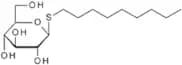
CAS:<p>Nonyl b-D-thioglucopyranoside is a methylating agent that can be used in the synthesis of oligosaccharides and polysaccharides. This compound is a fluorinated sugar that is used as an intermediate in the synthesis of saccharide derivatives. Nonyl b-D-thioglucopyranoside is also a highly pure, stable chemical that has been modified to meet customer specifications. It can be used for the preparation of glycosyl fluorides, which are used to modify monosaccharides and other carbohydrates.</p>Formula:C15H30O5SPurezza:Min. 95%Peso molecolare:322.46 g/molCYMAL-5 neopentyl glycol
CAS:<p>CyMAL-5 neopentyl glycol is a membrane protein that is n-glycosylated. Its deglycosylation has been shown to be inhibited by light exposure, which may lead to an increase in the population of this protein. CyMAL-5 neopentyl glycol is a ligand for the G protein coupled receptor and can be used as a fluorescent probe for labeling and staining. It has been shown that the binding of this ligand to the receptor alters its conformation, causing it to activate downstream signaling pathways. The crystal structure of CyMAL-5 neopentyl glycol has also been determined, revealing its large size and shape.</p>Formula:C45H80O22Purezza:Min. 95%Peso molecolare:973.1 g/molOctyl 2,3,4,6-tetra-O-acetyl-b-D-thioglucopyranoside
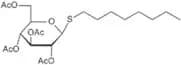
CAS:Octyl 2,3,4,6-tetra-O-acetyl-b-D-thioglucopyranoside is a chemical that is used to evaluate renal injury. It is typically detected in the urine of patients with renal injury and can be correlated with prognosis. Octyl 2,3,4,6-tetra-O-acetyl-b-D-thioglucopyranoside has been shown to be useful for the diagnosis of renal injury by detecting protein or body fluid in the reagents and assays. This substance is also used to detect protein in body fluids such as urine.Formula:C22H36O9SPurezza:Min. 95%Colore e forma:White PowderPeso molecolare:476.58 g/molHeptadecyl 2-acetamido-2-deoxy-b-D-glucopyranoside
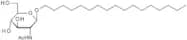
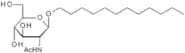
CAS:<p>Heptadecyl 2-acetamido-2-deoxy-b-D-glucopyranoside is a solubilized ion pair that can be catalysed by amines and immobilized lipase. It is also a hydrophobic fatty acid ester. Heptadecyl 2-acetamido-2-deoxy-b-D-glucopyranoside is catalyzed by an enzyme, lipase, to form the corresponding amide. This reaction yield is increased in the presence of hexane, which aids in hydrolysis of the ester linkage between heptadecyl and 2,2′-diacetylidenebis(3,4,6,-trimethylphenol). Heptadecyl 2-acetamido-2-deoxyglucopyranoside is used as a substrate for lipases to produce amides from amines. This product has been used in the production of</p>Formula:C25H49NO6Purezza:Min. 95%Peso molecolare:459.66 g/molDodecyl 2-acetamido-2-deoxy-b-D-glucopyranoside
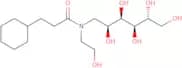
CAS:<p>Dodecyl 2-acetamido-2-deoxy-b-D-glucopyranoside is a synthetic glycosylate which has the potential to be used for the synthesis of various oligosaccharides and polysaccharides. It has a high purity and can be modified with various functional groups such as fluorination, methylation, acetylation, and click chemistry. Dodecyl 2-acetamido-2-deoxy-b-D-glucopyranoside is currently being researched as a treatment for cancer.</p>Formula:C20H39NO6Purezza:Min. 95%Peso molecolare:389.53 g/molCyclohexylpropanoyl-N-Hydroxyethylglucamide
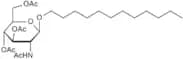
CAS:Cyclohexylpropanoyl-N-Hydroxyethylglucamide is a custom synthesis of a complex carbohydrate with high purity and high quality. This compound is an Oligosaccharide, Polysaccharide, and Modification. It is also a CAS No. 864434-14-0, Methylation, Glycosylation, Carbohydrate, Click modification, sugar and Fluorination. Cyclohexylpropanoyl-N-Hydroxyethylglucamide has been synthesized with Fluorination for use in the synthesis of new compounds.Formula:C17H33NO7Purezza:Min. 95%Peso molecolare:363.45 g/molDodecyl 2-acetamido-3,4,6-tri-O-acetyl-2-deoxy-b-D-glucopyranoside
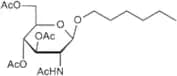
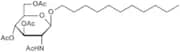
CAS:<p>Dodecyl 2-acetamido-3,4,6-tri-O-acetyl-2-deoxy-b-D-glucopyranoside is a kinetic probe that can be used to measure the activity of cellular enzymes. The production of this probe is mediated by the enzyme profile and is influenced by kinetic parameters such as the substrate concentration, rate of reaction, and the concentrations of reactants. The profile can be determined by profiling experiments in which cells are grown with varying concentrations of substrate or varying rates of reaction. Dodecyl 2-acetamido-3,4,6-tri-O-acetyl-2-deoxyb -D -glucopyranoside can be used to study microorganisms such as bacteria and photosynthetic organisms that use polypeptides for catalysis. This probe can also be recycled to yield more probes for future experiments.</p>Formula:C26H45NO9Purezza:Min. 95%Peso molecolare:515.64 g/molHexyl 2-acetamido-3,4,6-tri-O-acetyl-2-deoxy-b-D-glucopyranoside
CAS:<p>Hexyl 2-acetamido-3,4,6-tri-O-acetyl-2-deoxy-b-D-glucopyranoside is a compound that is used in the research of cellular biology. It was found to have a significant effect on gene expression levels. This compound has been shown to be able to alter the expression profile of cells and may be useful for understanding how different genes affect cell function. The high density microarray provides a highly sensitive and accurate way to measure changes in gene expression levels.</p>Formula:C20H33NO9Purezza:Min. 95%Peso molecolare:431.48 g/molOctadecyl 2-acetamido-3,4,6-tri-O-acetyl-2-deoxy-b-D-glucopyranoside
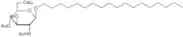
CAS:Octadecyl 2-acetamido-3,4,6-tri-O-acetyl-2-deoxy-b-D-glucopyranoside is a synthetic monosaccharide that has been modified with a click chemistry. It is also known as octadecyl 2-(N′,N′′-(diacetoxyacetyl)-2′,3′,4′,6′-triacetyl)alpha,alpha″-(1″→4″→1″)dideoxygalactopyranosiduronic acid. This compound is an oligosaccharide that consists of a chain of three sugar units and may have a glycosylation site at either position 1 or 4. Octadecyl 2-(N′,N′′-(diacetoxyacetyl)-2’,3’,4’,6’-triacetyl)alpha,alpha”-(Formula:C32H57NO9Purezza:Min. 95%Peso molecolare:599.8 g/molOctyl 2,3,4,6-tetra-O-acetyl-b-D-mannopyranoside
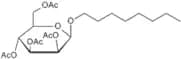
CAS:<p>Octyl 2,3,4,6-tetra-O-acetyl-b-D-mannopyranoside is a glycosylated monosaccharide. This sugar is synthesized by the enzymatic action of acetyl CoA:mannose 3-O-acetyltransferase and bromoacetamidomalonic acid in the presence of ATP. The product of this reaction is an acetamidomalonic acid derivative with a beta (1,2)-linked mannose at C2 and an acetylated alpha (1,3)-linked mannose at C4. The compound has been shown to inhibit the growth of bacteria that are resistant to penicillin, ampicillin, and erythromycin.</p>Formula:C22H36O10Purezza:Min. 95%Peso molecolare:460.52 g/molOctyl 2-acetamido-2-deoxy-3-O-(b-D-galactopyranosyl)-a-D-glucopyranoside
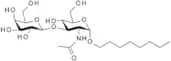
CAS:<p>Octyl 2-acetamido-2-deoxy-3-O-(b-D-galactopyranosyl)-a-D-glucopyranoside is a synthetic sugar that is used in the production of various drugs. It is used as an intermediate in the synthesis of a variety of drugs, including antihistamines, antidiabetic agents, and antihypertensive agents. Octyl 2-acetamido-2-deoxy-3-O-(b-D-galactopyranosyl)-a-D--glucopyranoside is also used to modify proteins and carbohydrates. This compound has been shown to be useful for the fluorination of saccharides and for click modification with an azide group.</p>Formula:C22H41NO11Purezza:Min. 95%Peso molecolare:495.56 g/molHexadecyl 2-acetamido-3,4,6-tri-O-acetyl-2-deoxy-b-D-glucopyranoside
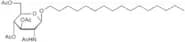
CAS:<p>Hexadecyl 2-acetamido-3,4,6-tri-O-acetyl-2-deoxy-b-D-glucopyranoside (HAT) is an antibiotic that belongs to the class of macrolides. It has been shown to be heritable and its heritability is dependent on the type of animal species. HAT also has a basic structure with substituents that are either acidic or hydroxylated. The heterogeneity in this compound can be seen by the different lactation periods for different animals. Regression analysis was used to find out if there was a correlation between the lactation period and the basicity of HAT. This study found that there was no such correlation and therefore concluded that there is no relationship between HAT's basicity and its heritability.</p>Formula:C30H53NO9Purezza:Min. 95%Peso molecolare:571.74 g/molHexyl 2-acetamido-2-deoxy-b-D-glucopyranoside
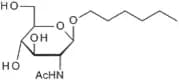
CAS:<p>Hexyl 2-acetamido-2-deoxy-b-D-glucopyranoside is a sugar that is used in the study of immune reactions. It can be used to measure albumin levels and tissue samples, as well as in animal experiments. Hexyl 2-acetamido-2-deoxy-b-D-glucopyranoside has been shown to have toxic effects on cells, which may be due to its ability to inhibit DNA concentrations. This substance also has a directional fluorescence, which means that it will emit light in one direction only when stimulated with light of a certain wavelength.</p>Formula:C14H27NO6Purezza:Min. 95%Peso molecolare:305.37 g/mol2-(N-Octylcarboamido)phenyl-2-acetamido-2-deoxy-b-D-glucopyranoside
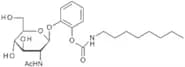
<p>2-(N-Octylcarboamido)phenyl-2-acetamido-2-deoxy-b-D-glucopyranoside is a modified carbohydrate which is used as a synthetic monosaccharide. It is also used in the preparation of Oligosaccharides, Carbohydrates, and Complex Carbohydrates. 2-(N-Octylcarboamido)phenyl-2-acetamido-2-deoxy-b-D--glucopyranoside has been fluorinated to 2-(N-[3,5-(diiodo)phenyl]carboamido)phenyl)-2-[3,5-(diiodo)phenyl]-acetamide.</p>Formula:C23H36N2O8Purezza:Min. 95%Peso molecolare:468.54 g/molOctyl 2-acetamido-2-deoxy-b-D-glucopyranoside
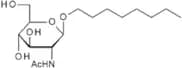
CAS:<p>Octyl 2-acetamido-2-deoxy-b-D-glucopyranoside is a lyotropic liquid that is flammable. It can be used to prepare potassium hydride, which is an organometallic. Potassium hydride reacts with organic acids and atorvastatin to produce argon gas. This reaction can be done in the presence of chlorine gas instead of air. Preparative methods for octyl 2-acetamido-2-deoxy-b-D-glucopyranoside include heating it in a vacuum or under argon gas and then reacting it with potassium tetrachlorocobaltate in water or ethanol solution.</p>Formula:C16H31NO6Purezza:Min. 95%Peso molecolare:333.42 g/molHeptyl b-D-thioglucopyranoside
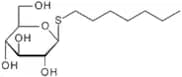
CAS:<p>Heptyl b-D-thioglucopyranoside is a small molecule that is used as a regulator of the phosphatase enzyme (PP1). PP1 is an important enzyme in the regulation of cellular signaling pathways. Heptyl b-D-thioglucopyranoside interacts with the regulatory domain of PP1, which is required for its activity. The ligand binds to an antenna on the regulatory domain and induces conformational changes in the protein, leading to increased phosphatase activity. This small molecule also has two binding sites for ATP and L-phenylalanine, which are required for its regulatory function.</p>Formula:C13H26O5SPurezza:Min. 95%Peso molecolare:294.41 g/molTetradecyl 2-acetamido-2-deoxy-b-D-glucopyranoside
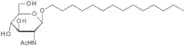
CAS:<p>Tetradecyl 2-acetamido-2-deoxy-b-D-glucopyranoside is a custom synthesis, modification, fluorination, methylation, monosaccharide and synthetic compound. It is the CAS No. 152914-69-7. It is a saccharide composed of glucose that has been glycosylated with tetradecyl acetate in the alpha position and aminated with ammonia in the beta position. This product is also classified as a complex carbohydrate.</p>Formula:C22H43NO6Purezza:Min. 95%Peso molecolare:417.58 g/molDecyl 2-acetamido-2-deoxy-b-D-glucopyranoside
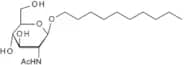
CAS:<p>Decyl 2-acetamido-2-deoxy-b-D-glucopyranoside is a glycoside that is found in the cell walls of photosynthetic organisms. It is one of the main sugars found in bacteria, fungi, and plants. In these organisms, it is linked to amino acids through amido bonds. Decyl 2-acetamido-2-deoxy-b-D-glucopyranoside has been shown to be a substrate for galactosidases, β-glycosidases, and α mannosidases. The thermal analysis of this compound shows an exothermic transition at around 200°C that may indicate its involvement in a chemical reaction. This compound also has lyotropic properties and can form micelles in water with high concentrations. The thermal parameters for this molecule are <br>T(transition) = 220°C<br>ΔH(transition) = -6 kcal/</p>Formula:C18H35NO6Purezza:Min. 95%Peso molecolare:361.47 g/molUndecyl 2-acetamido-3,4,6-tri-O-acetyl-2-deoxy-b-D-glucopyranose
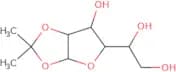
CAS:Undecyl 2-acetamido-3,4,6-tri-O-acetyl-2-deoxy-b-D-glucopyranose is a custom synthesis and modification of a carbohydrate that is used as a saccharide. It can be found in polysaccharides and oligosaccharides. This product has been modified with fluorination, methylation, glycosylation, and carbonylation. Undecyl 2-acetamido-3,4,6-tri-O-acetyl-2-deoxyb -D -glucopyranose is not currently CAS No. 1737252401 but is available for purchase on request.Formula:C25H43NO9Purezza:Min. 95%Peso molecolare:501.61 g/mol1,2-o-Isopropylidene-α-D-glucofuranose
CAS:<p>1,2-o-Isopropylidene-α-D-glucofuranose is a potent inhibitor of xylan, which is essential for the growth and development of cancer cells. This compound has been shown to inhibit the activity of several kinases involved in cancer cell proliferation, including protein kinase C and acetylcholine kinase. 1,2-o-Isopropylidene-α-D-glucofuranose exhibits anticancer properties and induces apoptosis in human cancer cells. It is an analog of aprepitant, a drug used to prevent chemotherapy-induced nausea and vomiting in cancer patients. This compound may have potential as a therapeutic agent for the treatment of various types of tumors.</p>Formula:C9H16O6Purezza:Min. 95%Peso molecolare:220.22 g/molRhamnolipids C8-C8
CAS:<p>Rhamnolipids C8-C8 are a group of lipids that are produced by the bacterium Burkholderia cepacia. They have been shown to have a strong ability to bind to and remove substances from water, such as heavy metals, lignin, and polychlorinated biphenyls. Rhamnolipids C8-C8 can be used in industrial settings for wastewater treatment or in the environment for bioremediation of pollutants. The physicochemical properties of rhamnolipids C8-C8 are determined by their composition of fatty acids and their degree of unsaturation. These properties can vary depending on the origin of the bacteria producing them.</p>Formula:C22H40O9Purezza:Min. 95%Peso molecolare:448.55 g/molDecanoyl-N-hydroxyethylglucamide
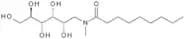
CAS:<p>Detergent with CMC of ~ 39mM</p>Formula:C18H37NO7Purezza:Min. 95%Peso molecolare:379.49 g/molN-Nonanoyl-N-methylglucamine
CAS:<p>N-Nonanoyl-N-methylglucamine is a nonionic surfactant that has been shown to be effective in the treatment of some inherited blood disorders. N-Nonanoyl-N-methylglucamine is used as a red cell membrane stabilizer and has been shown to increase the proton concentration in human serum. It also increases the transfer rate of p-nitrophenyl phosphate from erythrocytes to plasma. This drug has been found to have enzyme activity on soybean trypsin, model system, and epoxidase activity. N-Nonanoyl-N-methylglucamine has shown to be an effective protective agent against sodium citrate induced hemolysis and monoclonal antibody mediated cytotoxicity. It also shows kinetic data for protein synthesis and gene expression at different concentrations.</p>Formula:C16H33NO6Purezza:Min. 95%Colore e forma:PowderPeso molecolare:335.44 g/mol4-Methylumbelliferyl α-L-idopyranosiduronic acid methyl ester
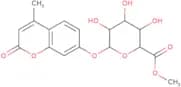
CAS:Please enquire for more information about 4-Methylumbelliferyl α-L-idopyranosiduronic acid methyl ester including the price, delivery time and more detailed product information at the technical inquiry form on this pageFormula:C17H18O9Purezza:Min. 95%Peso molecolare:366.3 g/molOctyl D-glucopyranoside
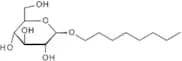
CAS:<p>Octyl D-glucopyranoside is a glucoside that is used as an analytical reagent. It has been shown to have detergent properties and can be used for the extraction of proteins. Octyl D-glucopyranoside also has a high binding affinity for guanine nucleotides, protein, and glycol ethers. The rate constant for the reaction between octyl D-glucopyranoside with the guanine nucleotide was found to be 0.25 x 10^(-5) s^(-1). This product can be used in biochemical research and chromatographic analysis.</p>Formula:C14H28O6Purezza:Min. 98 Area-%Colore e forma:White PowderPeso molecolare:292.37 g/mol1-Oxododecyl β-D-glucopyranoside
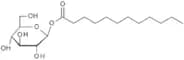
CAS:<p>1-Oxododecyl β-D-glucopyranoside is a synthetic compound that is used as an intermediate in the synthesis of oligosaccharides, monosaccharides, saccharides, and other carbohydrates. It has a purity of >98% and can be custom synthesized to meet your specifications. 1-Oxododecyl β-D-glucopyranoside is also available for purchase with fluorination, glycosylation, and methylation modifications. The CAS number for this product is 64395-92-2.</p>Formula:C18H34O7Purezza:Min. 95 Area-%Colore e forma:PowderPeso molecolare:362.46 g/molTween 65
CAS:Tween 65 is a polyoxyethylene sorbitan monooleate (polysorbate) surfactant that is used as a film-forming polymer and dispersing agent in solid preparations. Tween 65 has been shown to inhibit the proliferation of prostate cancer cells, which may be due to its ability to bind to anti-prostate specific antigen (anti-pcsk9) antibody causing the antibody to aggregate and form a particle. This process inhibits the interaction between the antibody and its target, preventing it from binding with PCSK9 protein. The addition of propranolol hydrochloride has been shown to increase the effectiveness of Tween 65.Polysorbate 60
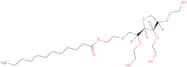
CAS:<p>Polysorbate 60 is a polyoxyethylene-polyoxypropylene block copolymer that is composed of two different saturated fatty acid chains. It has been used as a surfactant and stabilizer in the manufacture of pharmaceuticals, foods, cosmetics, and other products. Polysorbate 60 has been shown to inhibit the growth of epidermal cells by binding to epidermal growth factor (EGF) receptors on the cell surface. The effects of polysorbate 60 are also mediated through hydrogen bonding with the EGF receptor. The pharmacokinetic properties of polysorbate 60 have been studied in vitro using human serum. This polymer is used as an excipient in solid dispersions for oral administration and can be administered intravenously or subcutaneously. Polysorbate 60 is chemically stable at acidic pH levels and hydrochloric acid does not affect its structure. Polysorbate 60 also has protease activity against trypsin at high temperatures,</p>Formula:C64H126O26Purezza:Min. 95%Colore e forma:Light (Or Pale) Yellow To Yellow Solid Or Liquid (May Vary)Peso molecolare:1,311.67 g/molOleylamine, min. 95%
CAS:<p>Oleylamine, min. 95%</p>Formula:CH3(CH2)7CHCH(CH2)7CH2NH2Purezza:min. 95%Colore e forma:colorless liq.Peso molecolare:267.49Benzylcetyldimethylammonium Chloride
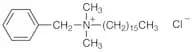
CAS:Formula:C25H46ClNPurezza:>97.0%(HPLC)Colore e forma:White to Almost white powder to crystalinePeso molecolare:396.10Dodecyldimethyl(3-sulfopropyl)ammonium Hydroxide Inner Salt [for Biochemical Research]
CAS:Formula:C17H37NO3SPurezza:>98.0%(HPLC)(N)Colore e forma:White to Almost white powder to crystalPeso molecolare:335.55Polyoxyl 20 Stearyl Ether
CAS:Polyethers, nesoiFormula:(C2H4O)nC18H38OColore e forma:SolidPeso molecolare:314.5463Oleoyl Polyoxylglycerides
Fatty substances of animal or vegetable orgin and mixtures thereof not elsewhere specified or includedColore e forma:Clear Amber LiquidPolyglyceryl 3 Diisostearate
CAS:Polyethers, nesoiFormula:C18H36O2(C3H8O3)xColore e forma:Yellow LiquidGlyceryl Monolinoleate
CAS:Oleic, linoleic or linolenic acidsFormula:C21H38O4Colore e forma:Yellow Liquid May Solidify At Room TemperaturePeso molecolare:354.27701Propylene Glycol Dicaprylate/Dicaprate
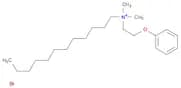
CAS:Fatty substances of animal or vegetable orgin and mixtures thereof not elsewhere specified or includedFormula:C10H20O2·C8H16O2·C3H8O2Colore e forma:Colorless OilPeso molecolare:392.313791-Dodecanaminium, N,N-dimethyl-N-(2-phenoxyethyl)-, bromide
CAS:Formula:C22H40BrNOPurezza:97%Colore e forma:SolidPeso molecolare:414.4631Ref: IN-DA00IKEP
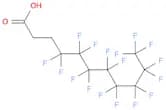
Prodotto fuori produzione4,4,5,5,6,6,7,7,8,8,9,9,10,10,11,11,11-Heptadecafluoroundecanoic acid
CAS:Formula:C11H5F17O2Purezza:97%Colore e forma:SolidPeso molecolare:492.1291Dodecanoic acid, 2,2,3,3,4,4,5,5,6,6,7,7,8,8,9,9,10,10,11,11,12,12,12-tricosafluoro-
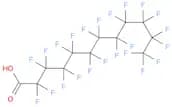
CAS:Formula:C12HF23O2Purezza:95%Colore e forma:SolidPeso molecolare:614.0984Sodium Dodecylbenzenesulfonate (hard type) (mixture)
CAS:Formula:C18H29NaO3SPurezza:>95.0%(T)Colore e forma:White to Light yellow to Light orange powder to crystalPeso molecolare:348.48Sodium Dodecylbenzenesulfonate (soft type) (mixture) (62%, wetted with Water)
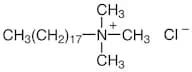
CAS:Formula:C18H29NaO3SColore e forma:White or Colorless to Light yellow powder to lump to clear liquidPeso molecolare:348.48Trimethylstearylammonium Chloride
CAS:Formula:C21H46ClNPurezza:>98.0%(T)Colore e forma:White powder to crystalPeso molecolare:348.06Ref: 3B-S0087
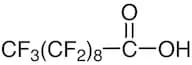
Prodotto fuori produzioneNonadecafluorodecanoic Acid
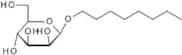
CAS:Formula:C10HF19O2Purezza:>98.0%(T)Colore e forma:White to Almost white powder to crystalinePeso molecolare:514.09Octyl b-D-mannopyranoside
CAS:<p>Octyl b-D-mannopyranoside is a sugar that belongs to the group of complex carbohydrates. It is used in chemical synthesis and is commonly used for click modification, fluorination, glycosylation, carbamoylation, methylation, and other modifications. Octyl b-D-mannopyranoside is a white or off-white powder that can be dissolved in water or alcohols. It has a molecular weight of 536.88 g/mol.</p>Formula:C14H28O6Purezza:Min. 95%Colore e forma:White To Off-White SolidPeso molecolare:292.37 g/mol





![Dodecyldimethyl(3-sulfopropyl)ammonium Hydroxide Inner Salt [for Biochemical Research]](/_next/image/?url=https%3A%2Fstatic.cymitquimica.com%2Fproducts%2F3B%2Fthumb-webp%2FD3860.webp&w=3840&q=75)