Detergenti
I detergenti, classificati sotto tensioattivi e detergenti, sono composti essenziali progettati per ridurre la tensione superficiale in vari prodotti, facilitando i processi di pulizia ed emulsificazione. Questa sezione include una vasta gamma di tensioattivi, noti per la loro alta efficacia nel modificare le proprietà superficiali. Tra questi, i detergenti zwitterionici si distinguono per la loro natura più delicata e non denaturante, rendendoli ideali per applicazioni che richiedono un'azione delicata ma efficace. Questi detergenti sono cruciali sia in ambito industriale che di laboratorio, dove aiutano a pulire, emulsionare e stabilizzare i prodotti senza comprometterne l'integrità. La loro versatilità ed efficacia li rendono indispensabili in numerose applicazioni, dai prodotti per la pulizia domestica ai reagenti di laboratorio specializzati.
Sottocategorie di "Detergenti"
Trovati 746 prodotti di "Detergenti"
Ordinare per
Purezza (%)
0
100
|
0
|
50
|
90
|
95
|
100
Taurolithocholic Acid Sulfate Disodium Salt
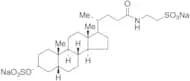
CAS:Prodotto controllato<p>Stability Hygroscopic<br>Applications Disodium salt of Taurolithocholic Acid Sulfate, a metabolite of bile acids. Sulfation is a major metabolic pathway involved in the elimination and detoxification of bile acids (BAs).<br>References Kawamata, Y., et al.: J. Biol. Chem., 278, 9435 (2003); Alnouti, Y., et al.: Toxicol. Sci., 108, 225 (2009); Griffiths, W., et al.: J. Lipid Res., 51, 23 (2010); Huang, J., et al.: Xenobiotica, 2010, 40, 184 (2010);<br></p>Formula:C26H43NO8S2·2NaColore e forma:NeatPeso molecolare:607.73N,N-Bis[3-D-gluconamidopropyl]cholamide
CAS:<p>Stability Hygroscopic<br>Applications Homogeneous nonionic detergent with bile acid hydrophobic group. Useful in solubilization of functional opiate receptor.<br>References Hjelmeland, L.M., et al.: Anal. Biochem., 130, 485 (1983), Buhler, H., et al.: Biochim. et Biophys. Acta., 1075, 206 (1991)<br></p>Formula:C42H75N3O16Colore e forma:White To Off-WhitePeso molecolare:878.06Triton X-100
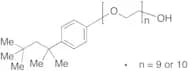
CAS:<p>Applications Triton-X 100 is a non-ionic surfactant. Used in the enhancement of film porosity in conducting polymers.<br> Not a dangerous good if item is equal to or less than 1g/ml and there is less than 100g/ml in the package<br>References Tevi, T. et al.: Synth. Mat., 191, 59 (2014); Zhang, L. et al.: Nano Lett., 14, 4189 (2014);<br></p>Formula:C14H22O·(OCH2CH2)nColore e forma:ColourlessPeso molecolare:250.38Octyldecyl 2-acetamido-2-deoxy-b-D-glucopyranoside
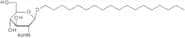
CAS:<p>Octyldecyl 2-acetamido-2-deoxy-b-D-glucopyranoside is a custom synthesis and modification product. It is a high purity, complex carbohydrate with saccharide units that are modified with fluorination. This product has been modified using methylation and click chemistry to produce an oligosaccharide. Octyldecyl 2-acetamido-2-deoxy-b-D-glucopyranoside can be used as a glycosylation substrate in the synthesis of polysaccharides.</p>Formula:C26H51NO6Purezza:Min. 95%Colore e forma:White/Off-White SolidPeso molecolare:473.69 g/molN,N-Bis[3-D-gluconamidopropyl]cholamide
CAS:<p>N,N-Bis[3-D-gluconamidopropyl]cholamide is a potent inhibitor of the cytochrome P450 enzyme. It has been shown to bind to peptides and monoclonal antibodies. This drug also inhibits the acyl chain elongation in the chemical process that produces prostaglandins, leading to their depletion. N,N-Bis[3-D-gluconamidopropyl]cholamide is also an inhibitor of plant α subunit, which is involved in the synthesis of fatty acids and phytohormones. This agent has a high affinity for solanum tuberosum (potato) and can be used as a marker for this species. The kinetic energy of particles enhanced by N,N-bis[3-D-gluconamidopropyl]cholamide was found to be dependent on the fatty acid content of the molecule. The optimum</p>Formula:C42H75N3O16Purezza:Min. 95%Colore e forma:PowderPeso molecolare:878.06 g/molOctyl a-D-thiomannopyranoside
CAS:<p>Octyl a-D-thiomannopyranoside is an oligosaccharide which is a member of the mannose family. It is a high purity, custom synthesis that has been modified with fluorination and glycosylation. This product can be used for Click modification, fluoroethylation, methylation, and carbohydrate modification. Octyl a-D-thiomannopyranoside has CAS No. 163955-47-3 and is synthetically produced and can be used for oligosaccharide, monosaccharide, saccharide, carbohydrate complex carbohydrate research.</p>Formula:C14H28O5SPurezza:Min. 95%Peso molecolare:308.44 g/molHexyl b-D-maltopyranoside
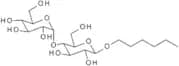
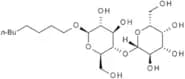
CAS:<p>Hexyl b-D-maltopyranoside is a biopharmaceutical that is used in drug development. It is used as a ligand for the μ-opioid receptor, which is a class of opioid receptors that are activated by morphine and endogenous peptides such as endorphins, dynorphins, and enkephalins. This ligand can be immobilized on a surface for use in immunoassays or other methods of detection. Hexyl b-D-maltopyranoside has been shown to have pharmacological effects in animal studies, although it has not yet been approved for clinical use in humans.</p>Formula:C18H34O11Purezza:Min. 95%Colore e forma:White PowderPeso molecolare:426.46 g/molOctyl-b-D-glucuronide methyl ester
<p>Octyl-b-D-glucuronide methyl ester is a synthetic molecule that can be used for a variety of purposes, including modification, fluorination, methylation and monosaccharide synthesis. This product is also available in various concentrations. Click modification, oligosaccharides and polysaccharides are all possible uses for this product. Octyl-b-D-glucuronide methyl ester has been shown to have many applications, such as glycosylation and sugar synthesis. This product has been shown to be useful in the production of complex carbohydrates.</p>Purezza:Min. 95%Decyl β-D-maltopyranoside
CAS:Non-ionic detergent; solubilises proteins for SDS-PAGE analysisFormula:C22H42O11Purezza:Min. 97 Area-%Colore e forma:White PowderPeso molecolare:482.56 g/moln-Dodecyl-beta-D-glucopyranoside
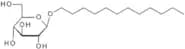
CAS:<p>Non-ionic detergent; solubilises membrane-bound proteins</p>Formula:C18H36O6Colore e forma:White PowderPeso molecolare:348.47 g/molDodecyl b-D-thiomaltopyranoside
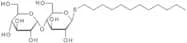
CAS:<p>Dodecyl b-D-thiomaltopyranoside is a surfactant that is used in the formulation of multilayer tablets. It is a glycosidic surfactant and an adsorbent. Dodecyl b-D-thiomaltopyranoside has been shown to form micelles in solution and on electrodes, with the size of the micelle depending on the concentration. The surface area of micelles can be increased by increasing the concentration of electrolytes. Dodecyl b-D-thiomaltopyranoside may also form monolayers at low concentrations, which are less effective for adsorption than micelles.</p>Formula:C24H46O10SPurezza:Min. 95%Colore e forma:PowderPeso molecolare:526.68 g/molAcidic Sophorolipids non-acetylated
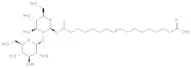
<p>Acidic Sophorolipids non-acetylated is a disaccharide consisting of β-1,2′ linked glucose residues with an unsaturated (cis-9) 18 carbon fatty acid chain. Acidic Sophorolipids are produced by various yeast species, notably Starmerella bombicola. Acidic Sophorolipids are amphiphilic molecules and therefore possess the attributes of surfactants; however as bio-surfactants they have several advantages over synthetic surfactants including low toxicity, biodegradability and the potential for low cost manufacture. The mixed acetylated version is also available.</p>Formula:C30H54O13Colore e forma:White PowderPeso molecolare:622.74 g/molHeptyl b-D-glucopyranoside
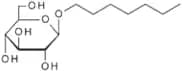
CAS:<p>Heptyl b-D-glucopyranoside is a natural product that belongs to the class of 5HT agonists. It was originally isolated from plants and has been shown to have antiinflammatory activity. It has also been observed to have effects on human serum, lymphocyte transformation, high salt, polymerase chain reaction (PCR), and kinetic energy. Heptyl b-D-glucopyranoside is synthesized by reacting heptanol with 5-hydroxybenzaldehyde in the presence of an acid catalyst.</p>Formula:C13H26O6Purezza:Min. 95%Colore e forma:White PowderPeso molecolare:278.34 g/molOctyl 4-O-(b-D-galactopyranosyl)-b-D-glucopyranoside
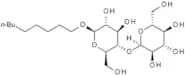
CAS:Octyl 4-O-(b-D-galactopyranosyl)-b-D-glucopyranoside is a galactose derivative of octyl 4-O-(b-D-glucopyranosyl)-b-D-glucopyranoside. It has been used to immobilize the enzyme phospholipase A2 in an exothermic reaction. This product is a white solid that is soluble in water. Octyl 4-O-(b-D-galactopyranosyl)-b-D-glucopyranoside has been shown to be effective against mycobacteria such as Mycobacterium avium complex and Mycobacterium tuberculosis, but not against other bacteria. This product may be useful for the treatment of mycobacterial infections because it exhibits excisional activity and can cleave phospholipid membranes.Formula:C20H38O11Purezza:Min. 95%Colore e forma:PowderPeso molecolare:454.51 g/molNonyl b-D-maltopyranoside
CAS:<p>Nonyl b-D-maltopyranoside is a high purity custom synthesis sugar. The CAS number is 106402-05-5 and the molecular weight is 396.2 g/mol. This product has been synthesized using Click modification, Fluorination, Glycosylation, Synthetic, Methylation, Modification, Oligosaccharide, Monosaccharide and saccharide. This product can be used in the preparation of complex carbohydrate.</p>Formula:C21H40O11Purezza:Min. 95%Colore e forma:White/Off-White SolidPeso molecolare:468.54 g/molHeptyl 2-acetamido-3,4,6-tri-O-acetyl-2-deoxy-b-D-glucopyranoside
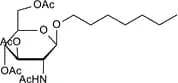
CAS:Heptyl 2-acetamido-3,4,6-tri-O-acetyl-2-deoxy-b-D-glucopyranoside is a chemical compound that binds to the promoter region of genes and regulates their expression. It has been shown to regulate gene expression levels in a variety of cells, including humans. Heptyl 2-acetamido-3,4,6-tri-O-acetyl-2 deoxy -b D glucopyranoside binds to the promoter region of genes and alters their expression levels. The regulation of these genes can be used for research purposes or as a potential treatment for disease.Formula:C21H35NO9Purezza:Min. 95%Peso molecolare:445.5 g/molOctyl 2,3,4,6-tetra-O-acetyl-b-D-glucopyranoside
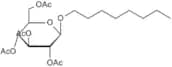
CAS:Octyl 2,3,4,6-tetra-O-acetyl-b-D-glucopyranoside is an analog of 6-(trifluoromethyl)indoxyl beta-D-galactopyranoside. It is a potent antituberculosis agent that inhibits the growth of Mycobacterium tuberculosis and has been shown to be active against other bacteria in vitro. Octyl 2,3,4,6-tetra-O-acetyl-b-D-glucopyranoside inhibits bacterial growth by binding to DNA dependent RNA polymerase and prevents transcription and replication. This compound has been tested for its ability to inhibit neoplastic cell proliferation in humans.Formula:C22H36O10Purezza:(%) Min. 95%Colore e forma:PowderPeso molecolare:460.52 g/mol2-(N-Octylcarboamido)phenyl-2-acetamido-3,4,6-tri-O-acetyl-2-deoxy-b-D-glucopyranoside
2-(N-Octylcarboamido)phenyl-2-acetamido-3,4,6-tri-O-acetyl-2-deoxy-b-D-glucopyranoside is a synthetic compound that is used in the modification of carbohydrates. It is a fluorinated saccharide with an acetamide substituent and an acetyl group on the sugar ring. 2-(N-Octylcarboamido)phenyl-2-acetamido-3,4,6-triOacetyl2deoxybDglucopyranoside has been shown to be useful for glycosylation reactions. This compound may be modified with methyl groups or other modifications such as click chemistry.Formula:C29H42N2O11Purezza:Min. 95%Peso molecolare:594.65 g/mol1-Oxododecyl a-D-glucopyranoside
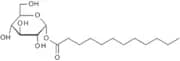
CAS:1-Oxododecyl a-D-glucopyranoside is a synthetic, high purity, and complex carbohydrate that has been synthesized with methylation, saccharide, polysaccharide, click modification and modification. This product is custom synthesized to order for the synthesis of oligosaccharides. 1-Oxododecyl a-D-glucopyranoside is available in CAS No. 64395-91-1 and has been fluorinated for stability and modification.Formula:C18H34O7Purezza:Min. 95%Colore e forma:White To Off-White SolidPeso molecolare:362.46 g/molHeptadecyl 2-acetamido-3,4,6-tri-O-acetyl-2-deoxy-b-D-glucopyranoside
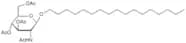
CAS:<p>Heptadecyl 2-acetamido-3,4,6-tri-O-acetyl-2-deoxy-b-D-glucopyranoside is a custom synthesis, fluorinated carbohydrate.</p>Formula:C31H55NO9Purezza:Min. 95%Peso molecolare:585.77 g/mol

![N,N-Bis[3-D-gluconamidopropyl]cholamide](/_next/image/?url=https%3A%2Fstatic.cymitquimica.com%2Fproducts%2FTR%2Fthumb-webp%2FB438500.webp&w=3840&q=75)

![N,N-Bis[3-D-gluconamidopropyl]cholamide](/_next/image/?url=https%3A%2Fstatic.cymitquimica.com%2Fproducts%2F3D%2Fthumb-webp%2FDB18793.webp&w=3840&q=75)