Metalli
Sottocategorie di "Metalli"
Trovati 4492 prodotti di "Metalli"
Ref: IN-DA003S4L
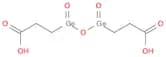
Prodotto fuori produzionePropanoic acid, 3,3'-(1,3-dioxo-1,3-digermoxanediyl)bis-
CAS:Formula:C6H10Ge2O7Purezza:99.95%Colore e forma:SolidPeso molecolare:339.4194Ref: IN-DA000X73
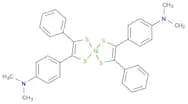
Prodotto fuori produzioneRef: IN-DA00C7WZ
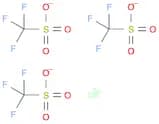
Prodotto fuori produzioneNEODYMIUM(III) TRIFLUOROMETHANESULFONATE
CAS:Formula:C3F9NdO9S3Purezza:98%Colore e forma:SolidPeso molecolare:591.4473Ref: IN-DA000VWK
Prodotto fuori produzioneTETRAKIS(TRIPHENYLACETATO)DIRHODIUM(II)
CAS:Formula:C40H30O4RhPurezza:97%Colore e forma:SolidPeso molecolare:677.5693Ref: IN-DA00FEMF
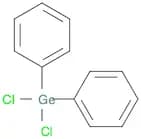
Prodotto fuori produzioneGermane, dichlorodiphenyl-
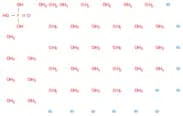
CAS:Formula:C12H10Cl2GePurezza:95%Colore e forma:LiquidPeso molecolare:297.7538Phosphotungstic acid hydrate
CAS:Formula:H77O41PW12Purezza:98%Colore e forma:SolidPeso molecolare:2970.6405Ref: IN-DA000MZZ
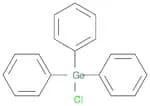
Prodotto fuori produzioneGermane, chlorotriphenyl-
CAS:Formula:C18H15ClGePurezza:98%Colore e forma:SolidPeso molecolare:339.4047DIRHODIUM TETRAKIS[N-PHTHALOYL-(S)-TERT-LEUCINATE] BIS(ETHYL ACETATE) ADDUCT
CAS:Formula:C56H56N4O16Rh2Purezza:98%Colore e forma:SolidPeso molecolare:1246.8720400000007Ref: IN-DA00AE6Y
Prodotto fuori produzione(R)RuCl[(pcymene)(DMBINAP)]Cl
CAS:Formula:C65H71Cl2P2RuPurezza:95%Colore e forma:SolidPeso molecolare:1086.1828Bis(acetylacetonato)dioxomolybdenum(VI)
CAS:Formula:C10H18MoO6Purezza:98%Colore e forma:SolidPeso molecolare:330.2063Nickel,(1-butanamine)[[2,2'-(thio-kS)bis[4-(1,1,3,3-tetramethylbutyl)phenolato-kO]](2-)]-
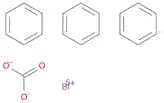
CAS:Formula:C32H50NNiO2SPurezza:98%Colore e forma:SolidPeso molecolare:571.5033TRIPHENYLBISMUTH CARBONATE
CAS:Formula:C19H15BiO3Purezza:98%Colore e forma:SolidPeso molecolare:500.301Carbonylchlorohydrido[bis(2-(diphenylphosphinoethyl)aMino]rutheniuM(II), Min.98% Ru-MACHO
CAS:Formula:C29H30ClNOP2RuPurezza:98%Colore e forma:SolidPeso molecolare:607.0251219999999Ref: IN-DA009F4Q
Prodotto fuori produzioneRef: IN-DA009AIF
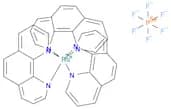
Prodotto fuori produzioneTris(1,10-phenanthroline)ruthenium(II) Bis(hexafluorophosphate)
CAS:Formula:C36H24F12N6P2RuPurezza:98%Colore e forma:SolidPeso molecolare:931.6143RuCl[(S)-daipena][(S)-xylbinap]
CAS:Formula:C71H73ClN2O2P2RuPurezza:98%Colore e forma:SolidPeso molecolare:1184.8220420000007Ref: IN-DA009FI4
Prodotto fuori produzioneSilver Hexafluoroantimonate
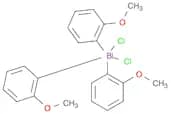
CAS:Formula:AgF6SbPurezza:98%Colore e forma:SolidPeso molecolare:343.6186Bismuth, dichlorotris(2-methoxyphenyl)-
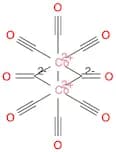
CAS:Formula:C21H21BiCl2O3Purezza:>98.0%(T)Colore e forma:SolidPeso molecolare:601.2760Cobalt, di-μ-carbonylhexacarbonyldi-, (Co-Co)
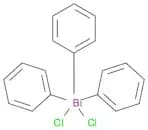
CAS:Formula:C8Co2O8Purezza:98%Colore e forma:SolidPeso molecolare:341.9472Dichlorotriphenyl bismuth
CAS:Formula:C18H15BiCl2Purezza:98%Colore e forma:SolidPeso molecolare:511.1981Ref: IN-DA003PDZ
Prodotto fuori produzioneIr(piq)3, Tris[1-phenylisoquinolinato-C2,N]iridium(III)
CAS:Formula:C45H30IrN3Purezza:98%Colore e forma:SolidPeso molecolare:804.9568Ref: IN-DA00D9P7
Prodotto fuori produzioneTRIS(2-METHOXYPHENYL)BISMUTHINE
CAS:Formula:C21H21BiO3Purezza:97.0%Colore e forma:SolidPeso molecolare:530.37004,7-Bis(5-(trimethylstannyl)thiophen-2-yl)benzo[c][1,2,5]thiadiazole
CAS:Formula:C20H24N2S3Sn2Purezza:97%Colore e forma:SolidPeso molecolare:626.0149600000001Ref: IN-DA0091ZC
Prodotto fuori produzioneRef: IN-DA000ZLJ
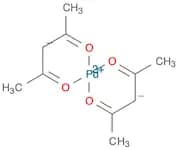
Prodotto fuori produzionePalladium, bis(2,4-pentanedionato-kO,kO')-, (SP-4-1)-
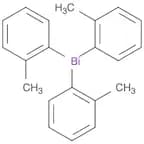
CAS:Formula:C10H14O4PdPurezza:98%Colore e forma:SolidPeso molecolare:304.63575999999995Bismuthine, tris(2-methylphenyl)-
CAS:Formula:C21H21BiPurezza:98%Colore e forma:SolidPeso molecolare:482.3718Palladium, hexakis[m-(acetato-kO:kO')]tri-, cyclo
CAS:Formula:C12H18O12Pd3Purezza:97%Colore e forma:SolidPeso molecolare:673.5241Ref: IN-DA00DFBB
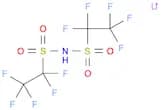
Prodotto fuori produzioneLithium Bis(pentafluoroethanesulfonyl)imide
CAS:Formula:C4F10LiNO4S2Purezza:98%Colore e forma:SolidPeso molecolare:387.1021319999998Ref: IN-DA003OE3
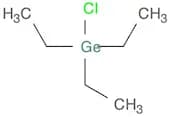
Prodotto fuori produzioneTRIETHYLGERMANIUM CHLORIDE
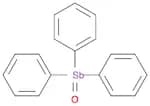
CAS:Formula:C6H15ClGePurezza:>97.0%(GC)Colore e forma:LiquidPeso molecolare:195.2763TRIPHENYLANTIMONY OXIDE
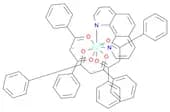
CAS:Formula:C18H17OSbPurezza:95.0%Colore e forma:SolidPeso molecolare:371.0870Tris(1,3-diphenyl-1,3-propanedionato)(1,10-phenanthroline)europium(III)
CAS:Formula:C57H41EuN2O6Purezza:95%Colore e forma:SolidPeso molecolare:1001.9092Chlorobis(dimethylglyoximato)[4-(dimethylamino)pyridine]cobalt(III)
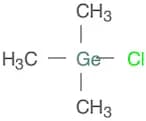
CAS:Formula:C15H24ClCoN6O4Purezza:97%Colore e forma:SolidPeso molecolare:446.7751TRIMETHYLGERMANIUM CHLORIDE
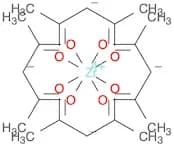
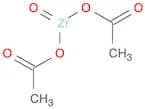
CAS:Formula:C3H9ClGePurezza:98%Colore e forma:LiquidPeso molecolare:153.1966ZIRCONIUM(IV) ACETYLACETONATE
CAS:Formula:C20H28O8ZrPurezza:98%Colore e forma:SolidPeso molecolare:487.6555Ref: IN-DA00AOMB
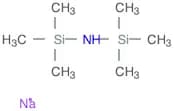
Prodotto fuori produzioneSodium bis(trimethylsilyl)amide
CAS:Formula:C6H18NNaSi2Purezza:95%Colore e forma:LiquidPeso molecolare:183.3746Ref: IN-DA003V9K
Prodotto fuori produzioneRef: IN-DA00DH8D
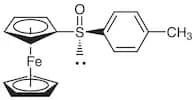
Prodotto fuori produzione(S)-(p-Toluenesulfinyl)ferrocene
CAS:Formula:C17H16FeOSPurezza:>97.0%(T)(HPLC)Colore e forma:Light yellow to Brown powder to crystalPeso molecolare:324.22Copper(l) bromide
CAS:Copper bromide is a chemical compound that contains copper and bromine. It is a salt that has been used to treat bowel disease, and has also been shown to have anti-inflammatory properties. Copper bromide can be synthesized by the reaction of copper chloride with sodium bromide in water. The electrochemical impedance spectroscopy showed that the redox potential of the copper atoms in this compound is 0.07 volts, which makes it an ideal candidate for use as a biological electrode. Copper bromide is soluble in water and reacts with nitrogen atoms, giving it detection sensitivity to nitric oxide. The thermal expansion coefficient of this compound is 5.5 × 10⁻⁶/°C, which means it will contract when heated or expand when cooled.
Formula:BrCuPurezza:Min. 95%Colore e forma:Blue PowderPeso molecolare:143.45 g/molRef: 3D-FC34023
Prodotto fuori produzioneZinc germanium phosphide
CAS:Prodotto controllatoZinc germanium phosphide is a semiconductor material that has been used as an effective cancer therapy. It is created by the reaction of zinc with germanium and phosphorus. This material has a high absorption coefficient in the infrared spectrum, which makes it useful for the treatment of skin cancers due to the cancer cells' increased absorption of infrared radiation. Zinc germanium phosphide can be grown at room temperature and has a constant refractive index over a range of wavelengths. The optical properties are determined by its lattice parameters, which can be changed to meet different needs. Techniques such as optical imaging and optical spectroscopy have been successfully employed to study this material's behavior.
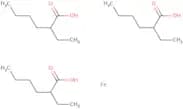
Formula:ZnGeP2Purezza:Min. 95%Iron(III) 2-ethylhexanoate in 1,2,3,4-tetramethylbenzene
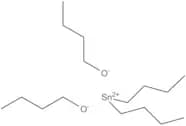
CAS:Iron(III) 2-ethylhexanoate is a ferric salt that is used as an acid catalyst for the synthesis of ethyl esters. It also acts as an oxidant and can be used in organic chemistry as a chemical reagent to produce ethyl esters from carboxylic acids. Iron(III) 2-ethylhexanoate reacts with iron oxide particles to form ferric hydroxide, which is then purified by calcium carbonate. This compound also has potential applications in nanotechnology, where it has been shown to be able to act as a catalyst for the synthesis of nanowires. The adsorption kinetics of this compound have been studied using various solvents and metal hydroxides, showing that the rate of adsorption depends on the type of solvent and metal hydroxide used. Iron(III) 2-ethylhexanoate is synthesized by reacting ethyl linoleate with iron oxide particles and calcium stearateFormula:C24H45FeO6Purezza:Min. 95%Colore e forma:Clear LiquidPeso molecolare:485.47 g/molDI-n-BUTYLDI-n-BUTOXYTIN, 95%
CAS:Formula:C16H36O2SnPurezza:95%Colore e forma:Pale Yellow LiquidPeso molecolare:379.15Ref: 3H-SND3180
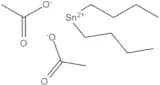
Prodotto fuori produzioneDI-n-BUTYLDIACETOXYTIN, tech
CAS:Formula:C12H24O4SnPurezza:95%Colore e forma:Pale Yellow LiquidPeso molecolare:351.01Ref: 3H-SND3160
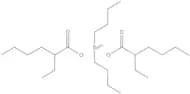
Prodotto fuori produzioneDI-n-BUTYLBIS(2-ETHYLHEXANOATE)TIN, tech
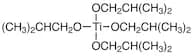
CAS:Formula:C24H48O4SnPurezza:95%Colore e forma:White SolidPeso molecolare:519.34Tetraisobutyl Orthotitanate (contains Isopropoxide)
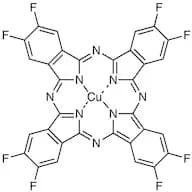
CAS:Formula:C16H36O4TiColore e forma:Colorless to Light orange to Yellow clear liquidPeso molecolare:340.33Copper(II) 2,3,9,10,16,17,23,24-Octafluorophthalocyanine (purified by sublimation)
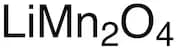
CAS:Formula:C32H8CuF8N8Purezza:>98.0%(T)(N)Colore e forma:Dark red to Dark purple to Dark blue powder to crystalPeso molecolare:720.01Lithium Manganese(III,IV) Oxide (contains ca. 5% Aluminum at maximum as a dopant)
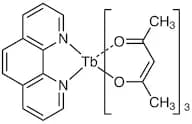
CAS:Formula:LiMn2O4Purezza:>99.5%Colore e forma:Black powder to crystalPeso molecolare:180.81Tris(acetylacetonato)(1,10-phenanthroline)terbium(III)
CAS:Formula:C27H29N2O6TbPurezza:>98.0%(T)Colore e forma:White to Almost white powder to crystalPeso molecolare:636.46Poly[[N-isopropylacrylamide-co-[N-[3-(dodecyldimethylammonio)propyl]acrylamide]-co-(1,3,5-triacryloylhexahydro-1,3,5-triazine)]perruthenate]
Colore e forma:Black powder to crystal[RuCl(p-cymene)((R)-xylbinap)]Cl
CAS:Formula:C62H62Cl2P2RuColore e forma:Light yellow to Brown powder to crystalPeso molecolare:1,041.10Bis[di-tert-butyl(4-dimethylaminophenyl)phosphine]palladium(0)
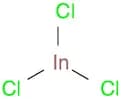
CAS:Formula:C32H56N2P2PdPurezza:>98.0%(T)Colore e forma:Light yellow to Brown powder to crystalPeso molecolare:637.18Indium(I) bromide
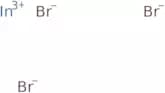
CAS:Indium bromide is a compound that contains a carbonyl group. It is used to form an enolate, which is a reactive intermediate in organic reactions. The reaction mechanism for the formation of the enolate involves nucleophilic attack on the carbonyl carbon by hydroxide ion or water. The nucleophile attacks from the opposite side of the alkene and forms a hydrogen bond with the hydroxyl group. Hydration of indium bromide produces an indium ring that has two terminal alkynes. The stereoselective reaction for this process is entrainment, which means that both products are formed in equal amounts but only one product can be isolated due to its higher boiling point.
Formula:BrInPurezza:Min. 95%Colore e forma:PowderPeso molecolare:194.72 g/molIron (ii) iodide
CAS:Iron (II) iodide is a heterogeneous, alkylated compound that has been used in acetonitrile as an electron donor. Iron (II) iodide is soluble in water and hydrolyzes to form iron hydroxide and hydrogen iodide. It has been shown to reduce chloride ions and desulfurize organic compounds. The crystal x-ray diffraction patterns of iron (II) iodide crystals show the presence of a ligand, which may be due to crystallite aggregation or the presence of cyclic ligands. Iron (II) iodide also exhibits thermochromism, meaning it changes color depending on temperature. Iron (II) iodide is superparamagnetic, which means it can be magnetized by an external magnetic field and then demagnetized by removing the external field.
Formula:FeI2Purezza:Min. 95%Peso molecolare:309.65 g/molIron(II) chloride tetrahydrate
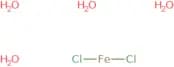
CAS:Iron chloride tetrahydrate is a compound of iron and chloride. It has been shown to be an effective treatment against pellicles and cell cytoplasm in electrochemical impedance spectroscopy. Iron chloride tetrahydrate can also be used to treat traumatic injuries by increasing the rate of wound healing, as seen in fibroblast cells. Iron chloride tetrahydrate has shown magnetic properties that can be used for superparamagnetic iron-based MRI contrast agents and magnetic particles with a variety of applications, including chemical interactions with the cell membrane. The chemical interactions between the compound and the cell membrane may also lead to hybridization studies.
Formula:H8Cl2FeO4Purezza:(Titration) 97.5 To 102.5%Colore e forma:PowderPeso molecolare:198.81 g/molIron phosphide
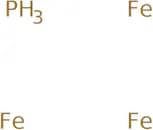
CAS:Please enquire for more information about Iron phosphide including the price, delivery time and more detailed product information at the technical inquiry form on this page
Formula:Fe3PPurezza:Min. 95%Colore e forma:PowderPeso molecolare:198.51 g/molCopper citrate
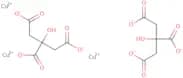
CAS:Copper citrate is a metal chelate that has been used for many purposes. It can be used as an antimicrobial agent, in wastewater treatment, and as a diagnostic tool. The structure of this compound is composed of citric acid, copper ions, and sodium ions. Copper citrate has been shown to inhibit the growth of bacteria. This product is used in the diagnosis of urinary tract infections by binding to copper ions in urine and forming a blue-green color. The structural analysis of the metal chelate was shown using X-ray crystallography with wild-type strains of Escherichia coli and Klebsiella pneumoniae.
Formula:C6H4Cu2O7Purezza:Min. 95%Colore e forma:PowderPeso molecolare:315.18 g/molRef: 3D-AAA86682
Prodotto fuori produzioneZinc oxide nanoparticle ink
Zinc oxide nanoparticle ink is an aqueous dispersion of zinc oxide nanoparticles in the form of an ink. The aqueous dispersion is made from a surfactant and particles, such as zinc oxide nanoparticles. Zinc oxide nanoparticle ink can be used to make electroluminescent devices, which are often used for displays or lighting. The transport of the zinc oxide nanoparticles in the ink is controlled by adjusting parameters such as viscosity and surfactant concentration. The morphology of the particles can be optimized by controlling factors such as particle size and shape.
Formula:ZnOPurezza:Min. 95%Copper(II) selenite dihydrate
CAS:Please enquire for more information about Copper(II) selenite dihydrate including the price, delivery time and more detailed product information at the technical inquiry form on this page
Formula:CuH4O5SePurezza:Min. 95%Colore e forma:PowderPeso molecolare:226.55 g/molLead Dioxide
CAS:Lead dioxide is a compound with the chemical formula PbO. It is used in wastewater treatment and as a pigment in paints and enamels. Lead dioxide is insoluble in water and has a high surface tension, which allows it to be used as an anti-fouling agent by coating the inside of sewage pipes. The solubility of lead dioxide decreases with an increase in temperature, so it precipitates at higher temperatures due to its low solubility. Lead dioxide is thermodynamically stable up to about 400 degrees Celsius. It reacts with water through transfer reactions, where the lead is oxidized to PbO2+ ions. Lead dioxide has a hydrophobic effect, which may be due to its ability to form clathrates with organic molecules. It can also react with other substances such as CO2, HCl and NH3 to form lead salts. Lead dioxide can also be used as an optical sensor or thermometer because of its dependence on temperature for phase transition
Formula:O2PbPurezza:Min. 95%Peso molecolare:239.2 g/molNickel phosphide
CAS:Nickel phosphide is a synthetic chemical compound that has been used as an insecticide. It is prepared by the reaction of nickel oxide with phosphine in an organic solvent at room temperature. Nickel phosphide is used to kill insects that infest stored grain and other agricultural products. The growth of these insects can be inhibited by the presence of nickel phosphide because it inhibits their ability to synthesize proteins and nucleic acids, which are necessary for cell division and development. Nickel phosphide is also effective against mites, but not as toxic to mammals. In addition, this compound can be used in sample preparation for electron microscopic analysis.
Formula:Ni2PColore e forma:Brown PowderPeso molecolare:148.36 g/molLead sulfide StremDots„¢ quantum dot (PbS core - ~3nm), 10 mg/mL in toluene, 1000nm peak emission
CAS:Lead sulfide quantum dots are semiconductor nanocrystals with a typical size of ~3 nm. They have high values for fluorescence, enzyme activities, and metal hydroxides. Lead sulfide quantum dots can be used to measure the activity of toll-like receptor (TLR) as an analytical method. The fluorescence intensity can be measured using electrochemical impedance spectroscopy (EIS). The fluorescence intensity is proportional to the TLR activity. Optical sensors can detect changes in the fluorescence intensity in real time, which is advantageous for applications that require rapid measurements. Lead sulfide quantum dots have high resistance against plasma mass spectrometry and thermal expansion. This means that they can be used to study the kinetics of reactions involving lead sulfide quantum dots and sodium citrate at different temperatures.
Formula:PbSPurezza:Min. 95%Peso molecolare:239.25 g/molRef: 3D-BAA31487
Prodotto fuori produzioneNickel(II) oxalate dihydrate
CAS:Nickel(II) oxalate dihydrate is a white crystalline powder that is soluble in water and has a particle size of 0.3-2.0 mm. This compound can be used to study the optimal reaction temperature for chemical reactions, such as the thermal expansion of nickel oxide, or the energy metabolism of fungi. Nickel(II) oxalate dihydrate is produced by reacting an aryl halide with an inorganic acid. The quantum theory is used to calculate the activation energies for this reaction. Dehydration of nickel(II) oxalate dihydrate takes place at temperatures between 140-160 ˚C and can be monitored using electrochemical impedance spectroscopy (EIS). The morphology of this compound can be observed through electron microscopy (EM).
Formula:NiC2O4·2H2OPurezza:Min. 95%Peso molecolare:182.74 g/molNickel, powder, <50um, 99.7% trace metals basic
CAS:Prodotto controllatoNickel is a transition metal with atomic number 28. It is found in many minerals, such as, nickel sulfide, nickel oxide, niccolite, nickeline and pentlandite, among others; it is used in coins and as a component of stainless steel in metallurgy. Nickel is an important reagent in organic chemistry, being used as catalyst for hydrogenation reactions, also in the form of Ni nanoparticles. Additionally, in the form of organic halides such as NiCl2 or NiBr2, it is useful for cyclization reactions with Grignard reagents. Nickel also has antioxidative properties and can be used to remove harmful substances from water. The flow rate of nickel depends on its crystal structure; it has high bulk density and low light absorption.
Formula:NiColore e forma:Suspension PowderPeso molecolare:58.69 g/molNeodymium(III) sulfate
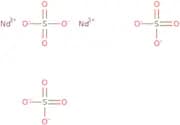
CAS:Neodymium (III) sulfate is a cell culture-based cancer therapy that has been shown to induce apoptotic cell death in human cancer cells. The mechanism of action for neodymium (III) sulfate is not known, but it may be due to the generation of reactive oxygen species and iron oxides. Neodymium (III) sulfate also induces morphological changes in cancer cells, such as polyhedra formation and fluorescence. This compound has a redox potential of +2.3 V and crystallizes with sodium citrate as its counter ion.
Formula:Nd2O12S3Purezza:Min. 95%Peso molecolare:576.67 g/molRef: 3D-NAA47791
Prodotto fuori produzione(1,3-Di-o-tolylimidazolidin-2-ylidene)(2-i-propoxy-5-nitrobenzylidene)dichlororuthenium(II) Nitro-Grela SI-o-Tolyl
(1,3-Di-o-tolylimidazolidin-2-ylidene)(2-i-propoxy-5-nitrobenzylidene)dichlororuthenium(II) Nitro-Grela SI-o-Tolyl
Formula:C27H29Cl2N3O3RuColore e forma:green pwdr.Peso molecolare:615.51


![DIRHODIUM TETRAKIS[N-PHTHALOYL-(S)-TERT-LEUCINATE] BIS(ETHYL ACETATE) ADDUCT](/_next/image/?url=https%3A%2Fstatic.cymitquimica.com%2Fproducts%2FIN%2Fthumb-webp%2FDA00AE6Y.webp&w=3840&q=75)
![(R)RuCl[(pcymene)(DMBINAP)]Cl](/_next/image/?url=https%3A%2Fstatic.cymitquimica.com%2Fproducts%2FIN%2Fthumb-webp%2FDA003C6L.webp&w=3840&q=75)

![Nickel,(1-butanamine)[[2,2'-(thio-kS)bis[4-(1,1,3,3-tetramethylbutyl)phenolato-kO]](2-)]-](/_next/image/?url=https%3A%2Fstatic.cymitquimica.com%2Fproducts%2FIN%2Fthumb-webp%2FDA00IML9.webp&w=3840&q=75)

![Carbonylchlorohydrido[bis(2-(diphenylphosphinoethyl)aMino]rutheniuM(II), Min.98% Ru-MACHO](/_next/image/?url=https%3A%2Fstatic.cymitquimica.com%2Fproducts%2FIN%2Fthumb-webp%2FDA009F4Q.webp&w=3840&q=75)




![Ir(piq)3, Tris[1-phenylisoquinolinato-C2,N]iridium(III)](/_next/image/?url=https%3A%2Fstatic.cymitquimica.com%2Fproducts%2FIN%2Fthumb-webp%2FDA00D9P7.webp&w=3840&q=75)
![4,7-Bis(5-(trimethylstannyl)thiophen-2-yl)benzo[c][1,2,5]thiadiazole](/_next/image/?url=https%3A%2Fstatic.cymitquimica.com%2Fproducts%2FIN%2Fthumb-webp%2FDA0091ZC.webp&w=3840&q=75)
![Palladium, hexakis[m-(acetato-kO:kO')]tri-, cyclo](/_next/image/?url=https%3A%2Fstatic.cymitquimica.com%2Fproducts%2FIN%2Fthumb-webp%2FDA00DFBB.webp&w=3840&q=75)






![Poly[[N-isopropylacrylamide-co-[N-[3-(dodecyldimethylammonio)propyl]acrylamide]-co-(1,3,5-triacryl…](/_next/image/?url=https%3A%2Fstatic.cymitquimica.com%2Fproducts%2F3B%2Fthumb-webp%2FP1698.webp&w=3840&q=75)
![[RuCl(p-cymene)((R)-xylbinap)]Cl](/_next/image/?url=https%3A%2Fstatic.cymitquimica.com%2Fproducts%2F3B%2Fthumb-webp%2FR0150.webp&w=3840&q=75)
![Bis[di-tert-butyl(4-dimethylaminophenyl)phosphine]palladium(0)](/_next/image/?url=https%3A%2Fstatic.cymitquimica.com%2Fproducts%2F3B%2Fthumb-webp%2FB4837.webp&w=3840&q=75)