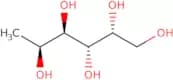
Monosaccaridi
I monosaccaridi sono la forma più semplice dei carboidrati e fungono da blocchi fondamentali per zuccheri più complessi e polisaccaridi. Queste singole molecole di zucchero svolgono ruoli critici nel metabolismo energetico, nella comunicazione cellulare e nei componenti strutturali delle cellule. In questa sezione troverai una vasta gamma di monosaccaridi essenziali per la ricerca in biochimica, biologia molecolare e glicoscienza. Questi composti sono cruciali per studiare le vie metaboliche, i processi di glicosilazione e lo sviluppo di agenti terapeutici. Da CymitQuimica, offriamo monosaccaridi di alta qualità per supportare le tue esigenze di ricerca, garantendo precisione e affidabilità nelle tue indagini scientifiche.
Sottocategorie di "Monosaccaridi"
- Alloses(11 prodotti)
- Arabinosi(21 prodotti)
- Eritrosio(11 prodotti)
- Fruttosio(9 prodotti)
- Fucosio(36 prodotti)
- Galactosamina(41 prodotti)
- Galattosio(261 prodotti)
- Glucosio(365 prodotti)
- Acidi glucuronici(51 prodotti)
- Glicosubstrati per enzima(77 prodotti)
- Gulosio(6 prodotti)
- Idosio(4 prodotti)
- Inositoli(15 prodotti)
- Lixosio(4 prodotti)
- Mannosio(65 prodotti)
- O-Glicani(48 prodotti)
- Psicosi(3 prodotti)
- Rhamnosio(10 prodotti)
- Ribosi(61 prodotti)
- Acidi Sialici(100 prodotti)
- Sorbosio(4 prodotti)
- Zuccheri(173 prodotti)
- Tagatosio(4 prodotti)
- Talosio(8 prodotti)
- Xyloses(20 prodotti)
Mostrare 17 più sottocategorie
Trovati 6090 prodotti di "Monosaccaridi"
Ordinare per
Purezza (%)
0
100
|
0
|
50
|
90
|
95
|
100
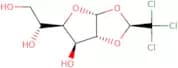
b-Chloralose
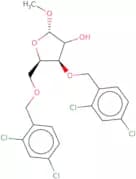
CAS:b-Chloralose is a general anesthetic that is used to induce and maintain anesthesia. It has been shown to decrease the heart rate, respiratory rate, and blood pressure in patients. It also causes a reduction of the glomerular filtration rate and delays the recovery of consciousness. Although b-chloralose has been shown to have negative effects on the cardiovascular system, it can be administered safely in combination with other anesthetics because it does not alter their effects. The use of b-chloralose is limited by its short duration of action and by adverse reactions such as nausea, vomiting, and convulsions.Formula:C8H11Cl3O6Purezza:Min. 95%Colore e forma:PowderPeso molecolare:309.53 g/molMethyl 3,5-di-O-(2,4-dichlorobenzyl)-a-D-ribofuranoside
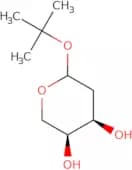
CAS:Methyl 3,5-di-O-(2,4-dichlorobenzyl)-a-D-ribofuranoside is a custom synthesis that has been fluorinated and methylated. This compound is a monosaccharide with an aldehyde group at the C3 position. It is synthetically made and can be modified to form oligosaccharides or polysaccharides. The CAS number for this compound is 168427-35-8.Formula:C20H20Cl4O5Purezza:Min. 90 Area-%Colore e forma:Yellow PowderPeso molecolare:482.18 g/moltert-Butyl 2-deoxy-L-ribopyranoside
CAS:Tert-butyl 2-deoxy-L-ribopyranoside is a synthetic monosaccharide that can be used in the synthesis of polysaccharides and oligosaccharides. It is also used for fluorination reactions, such as click modification. This compound can be custom synthesized to order, and it is available in high purity. Tert-butyl 2-deoxy-L-ribopyranoside can be modified with a variety of different functional groups, including methylation. It has an CAS number of 1032153-57-3.Formula:C9H18O4Purezza:Min. 95%Colore e forma:White to off-white solid.Peso molecolare:190.24 g/molD-Altro-Amide
<p>D-Altro-Amide is a custom synthesis that has been modified by fluorination, methylation, and monosaccharide. The synthesis of D-Altro-Amide is done through modification, click modification, and oligosaccharides. It's CAS number is 69092-57-5. D-Altro-Amide is a polysaccharide made from glycosylation and sugar. Carbohydrates are complex carbohydrates with many saccharides connected together in an ordered manner.</p>Purezza:Min. 95%1,3,4,6-Tetra-O-acetyl-b-D-mannopyranose
CAS:<p>1,3,4,6-Tetra-O-acetyl-b-D-mannopyranose is a radiopharmaceutical that is used to diagnose and evaluate malignant tumors. It is a diagnostic agent for the detection of cancerous cells in patients with suspected cancer. The molecule emits gamma radiation when it decays. This product has been tested in experimental studies on animals and humans with tumors. There are no known side effects or interactions with other drugs. 1,3,4,6-Tetra-O-acetyl-b-D-mannopyranose can be administered intravenously or orally and can be used to detect cancerous cells in the stomach and small intestine.</p>Formula:C14H20O10Purezza:Min. 95%Colore e forma:White PowderPeso molecolare:348.3 g/mol2-Deoxystreptamine dihydrobromide
CAS:<p>Streptamine derivative; antibiotic agent</p>Formula:C6H14N2O3·2HBrPurezza:Min. 95%Colore e forma:PowderPeso molecolare:324.01 g/mol1,2,3,5-Tetra-O-acetyl-β-D-ribofuranose
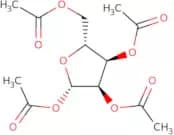
CAS:Important resource for RNA- and DNA-related syntheses including ribosylationFormula:C13H18O9Purezza:Min. 95%Colore e forma:White PowderPeso molecolare:318.28 g/molIsorhamnetin 3-O-galactoside
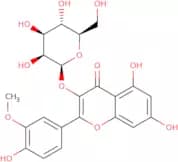
CAS:<p>Isorhamnetin 3-O-galactoside is a flavonoid derivative that is found in plant tissue. It has antioxidant properties and has been shown to inhibit leucaena seed germination, growth, and the production of reactive oxygen species (ROS). Isorhamnetin 3-O-galactoside can be extracted from fruit by using an aqueous solution of potassium hydroxide. It is also used as a dietary supplement for its potent inhibitory activity on ROS. Isorhamnetin 3-O-galactoside is found in plants with other flavonoids such as quercetin and kaempferol. The chemical structure of this compound consists of a hydroxyl group at the C3 position and an O-glycosidic linkage to galactose at the C2 position. This compound can be detected by mass spectrometric methods such as electron ionization or electrospray ionization because it</p>Formula:C22H22O12Purezza:Min. 95%Peso molecolare:478.4 g/mol6-Phospho-D-glucono-1,5-lactone
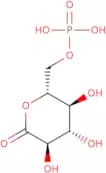
CAS:6-Phospho-D-glucono-1,5-lactone is a metabolite of D-gluconic acid that is formed by the action of a phosphoglucoisomerase. 6PGL has been shown to inhibit the growth of colorectal adenocarcinoma cells and to be effective against infectious diseases such as malaria. It is also involved in energy metabolism and cell division in plants. 6PGL may also have anticancer effects, as it inhibits prostate cancer cells and induces apoptosis through activation of epidermal growth factor receptor (EGFR) and inhibition of EGFR tyrosine kinase activity. It has been shown to act on redox potential, enzyme activities, and oxidative injury in liver cells.Formula:C6H11O9PPurezza:Min. 95%Peso molecolare:258.12 g/mol6-O-Methyl-D-glucose
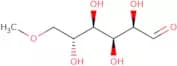
CAS:<p>6-O-Methyl-D-glucose is a non-carbohydrate that can be found in Mycobacterium tuberculosis. It is an electron microscopic study of proton and fatty acid molecules, which has shown that the cell membrane of mycobacterial cells are susceptible to inhibition by fatty acids. 6-O-Methyl-D-glucose is a nucleophilic attack on cellular fatty acids, which may inhibit their synthesis and lead to cell death. 6-O-Methyl-D-glucose has been shown to be synthesized from glucose and glycosylated with hydroxyl groups during biosynthesis. This chemical is also used in the synthesis of oligosaccharides because it has a molecular weight of 180, making it more easily scalable than other carbohydrates.</p>Formula:C7H14O6Purezza:Min. 95%Colore e forma:White Off-White PowderPeso molecolare:194.18 g/mol2,3,4,6-Tetra-O-acetyl-D-glucopyranose
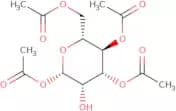
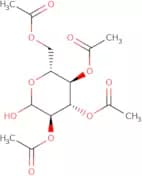
CAS:<p>2,3,4,6-Tetra-O-acetyl-D-glucopyranose is a carbohydrate that is used in the synthesis of besifloxacin. This compound has been studied as an analog for many other natural compounds and its derivatives have shown to be effective against bacteria such as Staphylococcus aureus and Clostridium perfringens. The acetyl groups on this molecule allow it to be easily converted into other compounds with desired properties. This compound has been found to be acidic and can be used as a medicinal preparation or analytical chemistry reagent. The hydroxyl group on the 2 carbon atom allows the molecule to form glycoside derivatives. The halides on this molecule are also important for making new molecules by replacing one of the hydrogen atoms with another halogen atom. The phenylpropanoid glycosides are found in plants and may contain an enantiomeric form of 2,3,4</p>Formula:C14H20O10Purezza:Min. 95%Colore e forma:White PowderPeso molecolare:348.3 g/molN-Acetyl-D-galactosamine-4-O-sulphate sodium
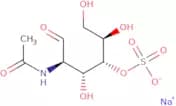
CAS:N-Acetyl-D-galactosamine-4-O-sulphate sodium salt is a carbohydrate, modification. It is a synthetic, custom synthesis, high purity, monosaccharide, glycosylation and methylation product. The CAS number of this product is 660839-03-2.Formula:C8H15NO9S•NaPurezza:Min. 95%Colore e forma:PowderPeso molecolare:324.26 g/molCanagliflozin
CAS:Canagliflozin is a drug that has been approved for the treatment of type 2 diabetes. It is an inhibitor of sodium glucose transporter 2 (SGLT2) and reduces blood glucose levels by increasing urinary glucose excretion. Canagliflozin has been shown to have cardiac effects, which may be due to its ability to increase serum natriuretic peptide levels and decrease heart rate. This drug has also been shown to reduce cardiovascular disease activity in patients with type 2 diabetes. Canagliflozin is not active against c. glabrata, but it does inhibit SGLT1 in this organism.Formula:C24H25FO5SPurezza:Min. 95%Colore e forma:PowderPeso molecolare:444.52 g/mol2,3,4,6-Tetra-O-acetyl linamarin
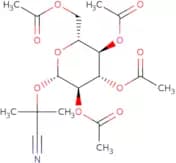
CAS:<p>2,3,4,6-Tetra-O-acetyl linamarin is a carbohydrate that belongs to the group of oligosaccharides. It is a complex carbohydrate that has been modified by fluorination and methylation. This product is custom synthesized and can be produced with high purity. The 2,3,4,6-Tetra-O-acetyl linamarin has been glycosylated and click modified.</p>Formula:C18H25NO10Purezza:Min. 95%Colore e forma:White To Off-White SolidPeso molecolare:415.39 g/molBenzocaine N-b-D-glucoside
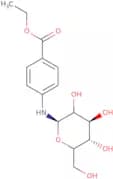
CAS:Benzocaine N-b-D-glucoside is an adjuvant that is used in pharmaceutical products. It has been shown to increase the stability of drugs and prolong their effects. Benzocaine N-b-D-glucoside also enhances the absorption, distribution, and elimination of drugs. This adjuvant has a number of functionalities including being a carbonyl scavenger and having mottling effects on drug particles. Benzocaine N-b-D-glucoside is often used as a pharmaceutical product adjuvant to stabilize formulations and extend the shelf life of medications.Formula:C15H21NO7Purezza:Min. 95%Colore e forma:PowderPeso molecolare:327.33 g/molD-Rhamnose
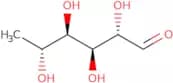
CAS:Chiral-pool sugar used to mirror syntheses based on natural L-RhaFormula:C6H12O5Purezza:Min. 97 Area-%Colore e forma:White PowderPeso molecolare:164.16 g/molL-Ribonic acid-1,4-lactone
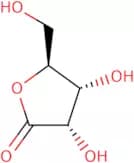
CAS:<p>L-Ribonic acid-1,4-lactone is a synthetic process that is used as an antiviral agent. It is a sugar reactant in the production of riboflavin. L-Ribonic acid-1,4-lactone has been shown to inhibit the synthesis of viral RNA and DNA, which prevents replication of the virus. The mechanism of L-ribonic acid lactone's antiviral activity is not currently known.</p>Formula:C5H8O5Purezza:(%) Min. 90%Colore e forma:PowderPeso molecolare:148.12 g/mol2,3,4,6-Tetra-O-benzyl-1-deoxynojirimycin hydrochloric acid salt
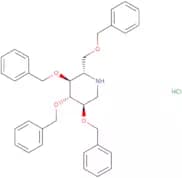
CAS:2,3,4,6-Tetra-O-benzyl-1-deoxynojirimycin hydrochloric acid salt is a synthetic monosaccharide. It was originally synthesized by the methylation of a native oligosaccharide before being subjected to click chemistry. The resulting product is a complex carbohydrate with an aromatic ring in place of the sugar alcohol moiety. 2,3,4,6-Tetra-O-benzyl-1-deoxynojirimycin hydrochloric acid salt has CAS number 72983-76-7 and is soluble in water. This product is also available as a custom synthesis service and can be modified to meet your needs.Formula:C34H38ClNO4Purezza:Min. 95 Area-%Colore e forma:PowderPeso molecolare:560.12 g/molL-Gluconic acid calcium
CAS:<p>L-Gluconic acid calcium salt is a white crystalline powder. It is soluble in water and slightly soluble in alcohol. The structure of this compound has not been fully elucidated, but it is known to be a modification of L-gluconic acid, which is a monosaccharide. This product can be used as a biochemical reagent for the synthesis of oligosaccharides and polysaccharides.</p>Formula:(C6H12O7)2•CaPurezza:Min. 95%Colore e forma:PowderPeso molecolare:432.39 g/molL-Fucitol
CAS:<p>L-Fucitol is a sugar that is found in the form of D-arabinose and D-xylitol. It is used in flow systems for the detection of herpes simplex virus type 1 (HSV1) glycoproteins and can be used to measure xylitol dehydrogenase activity. L-Fucitol has been shown to inhibit the growth of bacteria that are resistant to penicillin, ampicillin, and erythromycin. L-Fucitol also inhibits enzymes such as galactocerebrosidase, which breaks down galactocerebroside, a myelin constituent. This inhibition leads to accumulation of galactitol, an inhibitor of oligosaccharide synthesis. L-Fucitol also inhibits enzyme activities such as glycosidases and glycosyltransferases, which affect metabolic profiles by inhibiting the breakdown or synthesis of sugars. L-Fucitol is a monosac</p>Formula:C6H14O5Purezza:Min. 95%Colore e forma:White Off-White PowderPeso molecolare:166.17 g/mol