Monosaccaridi
Sottocategorie di "Monosaccaridi"
- Alloses(11 prodotti)
- Arabinosi(21 prodotti)
- Eritrosio(11 prodotti)
- Fruttosio(9 prodotti)
- Fucosio(36 prodotti)
- Galactosamina(41 prodotti)
- Galattosio(261 prodotti)
- Glucosio(365 prodotti)
- Acidi glucuronici(52 prodotti)
- Glicosubstrati per enzima(78 prodotti)
- Gulosio(6 prodotti)
- Idosio(4 prodotti)
- Inositoli(15 prodotti)
- Lixosio(4 prodotti)
- Mannosio(65 prodotti)
- O-Glicani(48 prodotti)
- Psicosi(3 prodotti)
- Rhamnosio(10 prodotti)
- Ribosi(60 prodotti)
- Acidi Sialici(100 prodotti)
- Sorbosio(4 prodotti)
- Zuccheri(173 prodotti)
- Tagatosio(4 prodotti)
- Talosio(8 prodotti)
- Xyloses(20 prodotti)
Trovati 6083 prodotti di "Monosaccaridi"
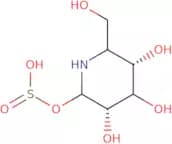
Galactostatin bisulfite
CAS:Inhibitor of β-galactosidase
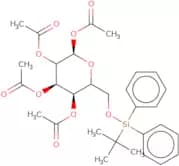
Formula:C6H13NO7SPurezza:Min. 95%Colore e forma:PowderPeso molecolare:243.24 g/mol1,2,3,4-Tetra-O-acetyl-6-O-(tert-butyldiphenylsilyl)-a-D-mannopyranose
CAS:1,2,3,4-Tetra-O-acetyl-6-O-(tert-butyldiphenylsilyl)-a-D-mannopyranose is a custom synthesis that is a complex carbohydrate. It is an Oligosaccharide that is Polysaccharide and can be modified with Methylation and Glycosylation. It has a saccharide with a CAS No. 815589-29-8 and has been fluorinated. This product has high purity and can be synthesized to order.Formula:C30H38O10SiPurezza:Min. 95%Peso molecolare:586.72 g/molD-Gluconic acid manganese salt - USP
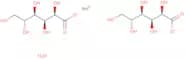
CAS:D-Gluconic acid manganese salt is a wild-type strain that is used to treat infectious diseases. The mechanism of action is not yet fully understood, but it has been shown to inhibit the growth of bacteria by binding to the cell wall and disrupting bacterial enzymes. It also has been shown to bind to calcium ions, which can lead to cardiac problems. The drug can be used in combination with other antimicrobial agents, such as malonic acid, for the treatment of infections caused by methicillin resistant Staphylococcus aureus (MRSA).
Formula:C12H22MnO14Purezza:Min. 95%Peso molecolare:445.23 g/mol5-Amino-3-β-D-ribofuranosylthiazolo[4,5-d]pyrimidin-2,7(3H,6H)-dione
CAS:5-Amino-3-β-D-ribofuranosylthiazolo[4,5-d]pyrimidin-2,7(3H,6H)-dione (ATZ) is a prodrug that is converted to the active drug ATZ. ATZ has been shown to be effective against hepatitis C virus in vitro assays and in vivo in animal models. It inhibits viral replication by inhibiting the protein synthesis of the virus and its ability to replicate. ATZ also has been shown to be effective against infectious diseases such as herpes simplex virus, inflammatory diseases such as rheumatoid arthritis, and cancer. The drug is an oral prodrug that must be activated by intestinal bacteria before it can be absorbed into the bloodstream. It is chemically stable and does not undergo significant metabolism after being absorbed into the body.Formula:C10H12N4O6SPurezza:Min. 95%Colore e forma:PowderPeso molecolare:316.29 g/mol2'-Azidoethyl a-mannopyranoside
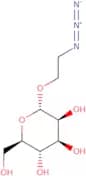
CAS:2'-Azidoethyl a-mannopyranoside is a synthetic monosaccharide that is used as a building block for the synthesis of oligosaccharides and polysaccharides. This product has been custom synthesized for your specific needs. It is an off-white powder with purity greater than 99%. The methylation of this compound can be achieved by reacting it with sodium methoxide in methanol, followed by hydrolysis with sodium hydroxide. The azido group can also be converted to an acetyl group by reaction with acetic anhydride in pyridine.Formula:C8H15N3O6Purezza:Min. 95%Colore e forma:White PowderPeso molecolare:249.22 g/molIsomaltol
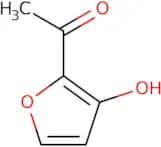
CAS:Isomaltol is a sugar alcohol that is used as a food additive. It is a white, crystalline powder that is soluble in water and has an intense sweet taste. Isomaltol is produced by hydrogenating the reducing ends of sucrose to form maltose, which then undergoes hydrolysis to form maltitol. Isomaltol can be used as a replacement for sugar in foods and drinks. Isomaltol has been shown to inhibit tyrosinase activity, which may be beneficial for skin care products. It also has antimicrobial properties due to its ability to react with aluminium ions.Formula:C6H6O3Purezza:Min. 95%Peso molecolare:126.11 g/mol6-Aminohexyl 2-deoxy-5-O-DMT-a-D-riboside
6-Aminohexyl 2-deoxy-5-O-DMT-a-D-riboside is a glycosylation agent that can be used in synthetic approaches that require the incorporation of oligosaccharides. This product is also useful for fluoroalkylation reactions and methylations involving saccharides. It can be used to synthesize complex carbohydrates, such as polysaccharides or saccharide complexes, with high purity and CAS number. 6-Aminohexyl 2-deoxy-5-O-DMT-a-D-riboside has been modified using Click chemistry for click modification of proteins and peptides.Formula:C32H41N06Purezza:Min. 95%Peso molecolare:509.71 g/mol9,10-Anhydro doxorubicin
CAS:Please enquire for more information about 9,10-Anhydro doxorubicin including the price, delivery time and more detailed product information at the technical inquiry form on this pageFormula:C27H27NO10Peso molecolare:525.5 g/molD-Glucosamine-oxime hydrochloride
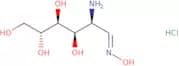
CAS:D-Glucosamine-oxime HCl is a hydrocyanic acid derivative that contains a polyhydroxy group. It can exist as two isomers, D-glucosamine and D-glucosamine-oxime. These isomers are distinguished by the presence or absence of acetyl groups on the nitrogen atoms. D-Glucosamine-oxime HCl functions as a divalent metal ion chelator and sequestering agent that has been shown to be useful in the treatment of lead poisoning. It also has been used in the synthesis of hydrocyanic acid, which is an important chemical for organic synthesis.END>Formula:C6H12N2O5•HClPurezza:Min. 95%Colore e forma:SolidPeso molecolare:228.63 g/mol3-Epialexine
CAS:3-Epialexine is a novel small molecule that inhibits sucrase, the enzyme responsible for cleaving glucose from sucrose. 3-Epialexine binds to the active site of this enzyme, preventing d-glucose from binding and being broken down. This leads to an accumulation of d-glucose in the intestinal lumen and could be used as a lead compound for the development of drugs to treat diabetes. The diversity of microorganisms can be screened for sucrase activity by using 3-epialexine as a lead compound.Purezza:Min. 95%Emodin 8-O-b-D-glucopyranoside
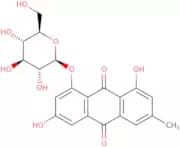
CAS:Emodin is a natural product that can be extracted from the rhizome of Curcuma aromatica, a chinese herb. It has been shown to have neuroprotective effects in animal studies and has been used as an adjuvant in the treatment of cervical cancer. Emodin also inhibits the replication of human immunodeficiency virus type 1 (HIV-1) and herpes simplex virus type 1 (HSV-1). Emodin is also active against microbial infection, including bacterial infections, such as those caused by Staphylococcus aureus, and viral infections, such as influenza A virus. The main mechanism of action of emodin is its inhibition of DNA synthesis by binding to viral dna or bacterial rna polymerase. Emodin has also been found to inhibit protein synthesis by binding to ribosomes. This drug binds to urea nitrogen molecules in bacteria and disrupts their growth by inhibiting protein synthesis.
Formula:C21H20O10Purezza:Min. 95%Colore e forma:PowderPeso molecolare:432.38 g/molD-Galactose non-animal origin
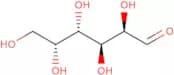
CAS:Galactose from plant origin, animal free productionFormula:C6H12O6Purezza:Min. 99.0 Area-%Colore e forma:White PowderPeso molecolare:180.16 g/mol3,4-Di-O-acetyl-L-fucal
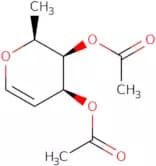
CAS:3,4-Di-O-acetyl-L-fucal is a phosphate derivative that is synthetically derived from ethyl diazoacetate. It has cytotoxic properties and is readily activated by phosphorylation to form the active form. 3,4-Di-O-acetyl-L-fucal has been shown to be effective against leukemia cells in vitro and may be useful as an adjuvant treatment for lymphocytic leukemia. 3,4-Di-O-acetyl-L-fucal also inhibits the growth of staphylococci in vitro, but it is not active against other bacteria such as Escherichia coli or Pseudomonas aeruginosa. The enantiomer of 3,4 Di O acetyl - L - fucal is inactive because it cannot be phosphorylated.Formula:C10H14O5Purezza:Min. 95%Colore e forma:White PowderPeso molecolare:214.22 g/mol3,6-Anhydro-D-galactose
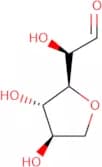
CAS:3,6-Anhydro-D-galactose is a monosaccharide of D-galactose where the 3 and 6 positions are cyclised in an ether link. 3,6-Anhydro-D-galactose is found naturally occurring in Rhodophyta (Red Algae) and is a constituent of the sulphated polysaccharide PLS, which has shown anti-inflammation activity and anti-nociceptive effects. In addition, sulphated polysaccharide is capable of inhibiting the in vitro replication of Herpes simplex virus type 1 (HSV-1) and HIV-1. We also offer this product in 10% aqueous solution (MA07897).Formula:C6H10O5Purezza:Min. 95%Colore e forma:White PowderPeso molecolare:162.14 g/mol3, 5- O-Isopropylidene - D- lyxonic acid γ-lactone
3,5-O-Isopropylidene-D-lyxonic acid gamma-lactone is a sugar that belongs to the group of carbohydrates. It is synthesized by the chemical modification of D-lyxonic acid and has been shown to inhibit the growth of bacteria. 3,5-O-Isopropylidene - D-lyxonic acid gamma-lactone inhibits bacterial growth by binding to the enzyme beta - galactosidase, which is involved in glycosylation and glycosyltransferase activity. This compound also inhibits protein synthesis in bacteria and has been shown to have antiinflammatory properties. 3,5-O-Isopropylidene - D-lyxonic acid gamma-lactone may be used as an alternative sweetener or food additive.Purezza:Min. 95%2-Keto-D-glucose
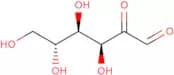
CAS:2-Keto-D-glucose is a substrate molecule that is used in the study of plant physiology, enzyme kinetics, and metabolic regulation. It has been shown to be an important factor in redox potential and the activation of detoxification enzymes. 2-Keto-D-glucose has also been found to be an important factor in energy metabolism, as it can be converted into pyruvate and acetyl CoA. 2-Keto-D-glucose is a common substrate molecule for many enzymes, including glycolytic enzymes, hexokinase, alcohol dehydrogenase, lactate dehydrogenase, and phosphofructokinase. 2-Keto-D-glucose has also been found to play a role in human blood serum biochemistry by acting as a substrate for erythrocyte D glucose transporter protein and glycerol kinase.Formula:C6H10O6Purezza:Min. 98 Area-%Colore e forma:White Beige Yellow PowderPeso molecolare:178.14 g/mol1-Deoxyfuconojirimycin HCl
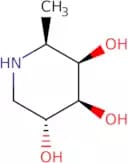
CAS:Specific, potent and competitive inhibitor of α-L-fucosidase with Ki of 10 nM. In human breast cancer cells, it causes increase of fucosylation on cell surface molecules such as Lewis X antigen (CD15) and CD44 glycoprotein. The 1-deoxyfuconojirimycin treatment increases invasiveness of cancer cells.Formula:C6H13NO3·HClPurezza:Min. 95%Colore e forma:Off-White PowderPeso molecolare:183.63 g/mol4,6-O-Benzylidene-D-galactose
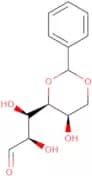
CAS:4,6-O-Benzylidene-D-galactose is an anomer of D-galactose. It is a lectin that has been shown to inhibit the binding of amyloid beta to the cerebroside in the brain tissue. This activity may be due to its ability to form an amide bond with galactose, which is present in amyloid beta. 4,6-O-Benzylidene-D-galactose also has a coronary heart disease prevention effect and can help reduce cholesterol levels. Furthermore, it has been found to have anti-cancer properties and can help prevent the growth of cancerous cells by inhibiting protein synthesis. In addition, 4,6-O-Benzylidene-D-galactose can be used as a cationic surfactant or detergent composition for cleaning or treating surfaces.
Formula:C13H16O6Purezza:Min. 95%Colore e forma:White To Off-White SolidPeso molecolare:268.26 g/molEpilactose
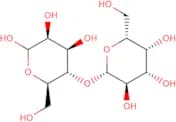
CAS:Epilactose is a monosaccharide with biological properties. It is the 2-epimer of lactulose, and can be synthesized from cellobiose by epimerase. Epilactose has been shown to have beneficial effects on bowel disease in mice, which may be related to its ability to stimulate intestinal motility and improve the intestinal microflora. Epilactose has also been shown to have anti-inflammatory activity in rats with colitis. Epilactose can be used as a structural probe for oligosaccharides, due to its ability to form hydrogen bonds with sugars. In addition, epilactose has been found in marine microalgae such as Chlorella pyrenoidosa, but not in higher plants or animals.Formula:C12H22O11Purezza:Min. 95%Colore e forma:PowderPeso molecolare:342.3 g/molD-Arabinose
CAS:D-Arabinose is a dinucleotide phosphate that is an important metabolic intermediate in the pentose phosphate pathway. It has been shown to have pharmacological effects, such as enzyme inhibition and binding to DNA. D-Arabinose has been used in biochemical studies of energy metabolism and related areas. D-Arabinose is converted to ribitol by ribitol dehydrogenase, which can be oxidized to ribulose 5-phosphate by ribulose 5-phosphate dehydrogenase. The conversion of D-arabinose to ribitol requires NAD(P)H, which provides the reducing power for this reaction. The conversion of ribitol to ribulose 5-phosphate also requires NAD(P)H, but does not produce any reducing power. A redox potential measurement was used to determine the relative reduction potentials of the two reactions and found that they are equal at -0.5 volts (V).
Formula:C5H10O5Peso molecolare:150.13 g/molRef: 3D-A-8200
1kgPrezzo su richiesta5kgPrezzo su richiesta10kgPrezzo su richiesta25kgPrezzo su richiesta2500gPrezzo su richiesta-Unit-kgkgPrezzo su richiesta4-Aminophenyl-α-D-glucopyranoside
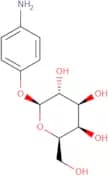
CAS:4-Aminophenyl-alpha-D-glucopyranoside is a natural product that has been found to be an antigen. The compound has been shown to have anticancer activity, which may be due to its ability to inhibit the growth of cells and induce apoptosis. 4-Aminophenyl-alpha-D-glucopyranoside also possesses magnetic properties. The chemical structure of this compound is characterized by an acrylate group, which is a small organic molecule with two carbon atoms and one oxygen atom. This compound is synthesized in a preparative manner using methoxy, ethyl bromoacetate, and mesitylene in the presence of irradiation. NMR spectroscopy can be used for the characterization of this compound as well as other compounds with similar structures that are catalytic in nature.Formula:C12H17NO6Purezza:Min. 98.0 Area-%Peso molecolare:271.27 g/molL-Arabitol
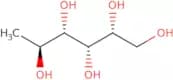
CAS:Used as source of carbon in culture medium.
Formula:C5H12O5Purezza:Min. 98.0 Area-%Peso molecolare:152.15 g/molL-Arabinose
CAS:The aldopentose L-arabinose (Ara) is, after xylose, the second most abundant pentose in nature. It is found in plant cell walls as a component of polysaccharides, including: hemicelluloses, pectin, arabinogalactan-protein complexes and in exudate plant gums, such as: Gum Arabic (Fehér, 2018). L-arabinose is an important component of the mycobacterial cell wall and is involved in the synthesis of arabinogalactan and lipoarabinomannan, which suggests that it can modulate cell wall permeability and drug resistance. Mycobacterium smegmatis is a useful tool for research into Mycobacteria due to it being a "fast grower" and non-pathogenic (Zhou, 2019).Formula:C5H10O5Purezza:Min. 99 Area-%Peso molecolare:150.13 g/molRef: 3D-A-8240
1kgPrezzo su richiesta25gPrezzo su richiesta250gPrezzo su richiesta500gPrezzo su richiesta2500gPrezzo su richiesta-Unit-kgkgPrezzo su richiestaN-Acetyl-D-glucosamine - plant source
CAS:Please enquire for more information about N-Acetyl-D-glucosamine - plant source including the price, delivery time and more detailed product information at the technical inquiry form on this page
Formula:C8H15NO6Purezza:Min. 98 Area-%Peso molecolare:221.21 g/mol3,4-O-Benzylidene-D- ribonic acid γ-lactone
3,4-O-Benzylidene-D-ribonic acid gamma-lactone is a synthetic sugar that has been modified with fluorination and methylation. It is a complex carbohydrate that has been shown to have antiviral activity against influenza A virus. 3,4-O-Benzylidene-D- ribonic acid gamma-lactone has been synthesized using custom synthesis and high purity. The chemical structure of this product is O-(1,2:3,4:6,7:8,9) benzylidene D-ribonolactone.Purezza:Min. 95%N-Acetyl-D-galactosamine-PAP-HSA
CAS:N-Acetyl-D-galactosamine-PAP-HSA is a complex carbohydrate that consists of a sugar, an acetyl group and a phosphate. This product is available in custom synthesis and modification. N-Acetyl-D-galactosamine-PAP-HSA can be used for the treatment of cancer, diabetes, liver disease, kidney disease and other diseases. It has been modified with fluorine groups to create new derivatives with improved properties.Purezza:Min. 95%1,2:3,4-Diacetone-β-D-glucopyranoside
CAS:1,2:3,4-Diacetone-b-D-glucopyranoside is a glycosylation agent that is used in the synthesis of polysaccharides. It reacts with the hydroxyl groups of saccharide molecules to form glycosidic bonds. 1,2:3,4-Diacetone-b-D-glucopyranoside can be modified by methylation and fluorination reactions to produce different derivatives. This product is CAS No. 496879-67-5 and has a purity of >98%.Formula:C12H20O6Purezza:Min. 97 Area-%Colore e forma:PowderPeso molecolare:260.29 g/mol1,2,3,4-Tetra-O-acetyl-D-mannopyranose
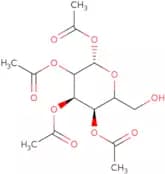
CAS:1,2,3,4-Tetra-O-acetyl-D-mannopyranose is a modified monosaccharide that is synthesized by the Click reaction. This compound has been shown to be useful in the synthesis of oligosaccharides and polysaccharides. It can also be used for protein modification or the fluorination of saccharides. It is also a high purity product that can be used as an intermediate for custom synthesis.Formula:C14H20O10Purezza:Min. 95%Peso molecolare:348.3 g/molXylitol
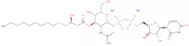
CAS:Xylitol is a sugar alcohol that can be found in some plants, including berries and corn husks. It is also produced by the body during normal metabolism. Xylitol has been shown to have antimicrobial properties against aerobacter aerogenes, a bacterium that inhabits the human gastrointestinal tract. Xylitol inhibits bacterial growth by binding to glucose-6-phosphate dehydrogenase, which prevents the conversion of glucose into energy for cell growth and reproduction. Xylitol also affects the water balance of cells by inhibiting their ability to extract water vapor from their environment. Xylitol is metabolized by a number of bacteria strains, which leads to the production of hydrogen peroxide or xylose as an end product. The biochemical properties of xylitol are still being researched and it is not yet known how this compound interacts with other biological compounds.Formula:C5H12O5Purezza:Min. 98.5 Area-%Peso molecolare:152.15 g/molUDP-3-O-(R-3-hydroxymyristoyl)-GlcNAc disodium
Substrate for UDP-3-O-acyl-N-acetylglucosamine deacetylase (LpxC)
Formula:C31H53N3O19P2•Na2Purezza:Min. 95%Colore e forma:White PowderPeso molecolare:879.67 g/mol3,4,6-Tri-O-acetyl-2-deoxy-2-phthalimido-b-D-glucopyranosyl trichloroacetimidate
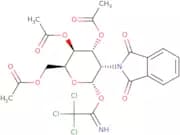
CAS:3,4,6-Tri-O-acetyl-2-deoxy-2-phthalimido-b-D-glucopyranosyl trichloroacetimidate is a custom synthesis that has been modified with fluorine. It is a white powder and is soluble in water. 3,4,6-Tri-O-acetyl-2-deoxy-2-phthalimido-b-D--glucopyranosyl trichloroacetimidate is used for the production of saccharide and carbohydrate derivatives. This product has a CAS number of 871906788 and an ACD/IEC number of P077G10.Formula:C22H21Cl3N2O10Colore e forma:PowderPeso molecolare:579.77 g/mol4-Aminophenyl β-D-galactopyranoside
CAS:4-Aminophenyl-beta-D-galactopyranoside is a substrate for beta-galactosidase. 4-aminophenol is released upon cleavage by beta-galactosidase. 4-aminophenol can be assayed by electro-oxidation to 4-imino quinone while recording changes in potential or current of a galvanic system. 4-Aminophenyl-beta-D-galactopyranoside can be used in affinity chromatography for the isolation of galactose-binding lectins.Formula:C12H17NO6Purezza:Min. 95%Colore e forma:PowderPeso molecolare:271.27 g/mol6-Deoxy-L-glucitol
CAS:6-Deoxy-L-glucitol is a sugar alcohol that is found in the body and has been used as a substitute for sucrose. 6-Deoxy-L-glucitol is metabolized by deamination and reduction to produce lactobionic acid. This reaction can be catalyzed by either an enzyme or by chemical means. 6-Deoxy-L-glucitol can also be partially reduced to form 6-phospho--erythritol, which can be further reduced to form erythritol. Muscle cells contain hexokinases and phosphofructokinase, which are required for the final step in glucose metabolism. These enzymes are important in the regulation of blood sugar levels and energy production. In addition, these enzymes play a role in the metabolism of other sugars such as fructose and galactose.Formula:C6H14O5Purezza:Min. 95%Peso molecolare:166.17 g/molDaunorubicinol-D3
Daunorubicinol-D3 is a synthetic drug that is a fluorinated analogue of daunorubicin. It has been designed to be more stable and resistant to degradation in the body, as well as being resistant to the drug's own metabolism. Daunorubicinol-D3 is used in the treatment of leukemia, lymphoma, and other cancers. This drug is a large molecule that contains many sugars or saccharides including an oligosaccharide and polysaccharide. The modification of this molecule includes methylation, click chemistry modifications, and fluorination. Daunorubicinol-D3 has high purity with a low level of impurities such as monosaccharides, sugars, or synthetic compounds.Purezza:Min. 95%6-O-Tert.butyldimethylsilyl - 2, 3- O- isopropylidene- 5-O tolenesulfonyl-L- gulonic acid γ-lactone
6-O-Tert.butyldimethylsilyl - 2, 3- O- isopropylidene- 5-O tolenesulfonyl-L- gulonic acid gamma-lactone is a Carbohydrate, Modification, saccharide, Oligosaccharide, sugar. It has CAS number 713891–07–4. This product is a synthetic monosaccharide and has been custom synthesized for the customer’s specific need. The purity of this product is >98% with a methylation level of >99%. This product can be used in glycosylation reactions or click chemistry reactions as it contains an amino group at the C6 position.Purezza:Min. 95%6-O-Tert.butyldimethylsilyl - 2, 3- O- isopropylidene-L- gulonic acid γ-lactone
6-O-Tert.butyldimethylsilyl - 2, 3- O- isopropylidene-L- gulonic acid gamma-lactone is a glycosylate of 6-O-tert.butyl dimesitylglycolic acid. It is a monosaccharide with an α--glycosidic linkage that may be used in the synthesis of complex carbohydrates or as a sugar surrogate for saccharide chemistry applications. This product can be custom synthesized to your specifications and has high purity.Purezza:Min. 95%3-O-Benzyl-1,2-O-isopropylidene-6-O-trityl-a-D-glucofuranose
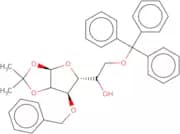
CAS:3-O-Benzyl-1,2-O-isopropylidene-6-O-trityl-a-D-glucofuranose is a synthetic oligosaccharide. It is a glycosylation product of the 6′ position of β-(3,4-)dihydroxybenzoyl α-(1,6)-Dglucopyranosyl bromide with 3,5,-O-(tetraisopropyldisiloxanyl) benzyl alcohol. The molecular weight is 588.8 g/mol and it has the molecular formula C28H31NO14. 3BBIG is soluble in water and methanol, but insoluble in ethanol or ether. This compound can be used for methylation reactions or click chemistry modifications.Formula:C35H36O6Purezza:Min. 95%Peso molecolare:552.66 g/mol2-Iodoethyl α-L-fucopyranoside
2-Iodoethyl a-L-fucopyranoside is an organic compound that belongs to the group of fluorinated saccharides. It is used in the synthesis of oligosaccharides, polysaccharides, and complex carbohydrates. 2-Iodoethyl a-L-fucopyranoside can be modified with click chemistry at the C4 position for the synthesis of monosaccharides or sugar derivatives. This modification leads to high purity and chemical stability.
Formula:C8H15IO5Purezza:Min. 95%Colore e forma:White to off-white solid.Peso molecolare:318.11 g/molAstragalus polysaccharide
CAS:The chemical structure of Astragalus polysaccharide is complex and consists of an α-D-(1,4)-Glc and (1,6)-α-D-Glcp backbone, and a branch point at O-6. The molecular weight is approximately 3.01 × 10⁵ Da from Mongolian Astragalus using low concentration of ethanol for precipitation and gel chromatography for purification. Spectral analysis results of 1H NMR and 13C NMR showed that the polysaccharide backbone has a 1,3-linked β-D-Gal residue and the branched portion has β-Glc, 1,6-linked α-Gal; 1,5-linked β-Xyl; 1,4-linked β-Gal; β-D-Gal, 1,2-linked α-Rha; and 1,2,4-linked α-Rha residues.
Formula:C10H7ClN2O2SPurezza:Min. 95%Colore e forma:Brown PowderPeso molecolare:254.69 g/molBenzyl β-D-glucopyranosiduronic acid
CAS:Benzyl b-D-glucopyranosiduronic acid is a synthetic monosaccharide that is used for the synthesis of oligosaccharides, polysaccharides, and saccharides. It has been shown to be a substrate for methylation reactions and can be modified with fluorination or click chemistry. The CAS number for this compound is 5285-02-9.Formula:C13H16O7Purezza:Min. 95%Colore e forma:Off-White PowderPeso molecolare:284.26 g/mol4-Aminophenyl b-D-lactopyranoside
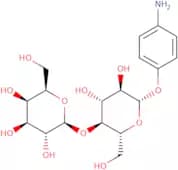
CAS:4-Aminophenyl b-D-lactopyranoside is a chemical compound that has been used to optimize the production of human immunoglobulin. It has been shown to have diagnostic value for several viruses, including Epstein-Barr virus and cytomegalovirus. Electron microscopic studies have revealed organisms agglutinated by 4-aminophenyl b-D-lactopyranoside. The receptor binding properties and antigen concentration of this compound have been determined using agglutinin and lectin techniques. This molecule also has inhibitory potency on the synthesis of polypeptides, which are essential for the growth of certain organisms.
Formula:C18H27NO11Purezza:Min. 95%Colore e forma:Off-White PowderPeso molecolare:433.41 g/mol6-Cyclohexylhexyl-4-O-(a-D-glucopyranosyl)-b-D-glucopyranoside
CAS:The 6-cyclohexylhexyl-4-O-(a-D-glucopyranosyl)-b-D-glucopyranoside is a monoclonal antibody that targets acetylcholine. It binds to nicotinic acetylcholine receptors in the nervous system, preventing the binding of acetylcholine and thereby inhibiting the transmission of nerve impulses. The antibody has been shown to inhibit multidrug resistance in cell culture. This may be due to its ability to bind hydroxyl groups on molecules that are known inhibitors of multidrug resistance. This drug also has an amphipathic nature, which allows it to penetrate lipid bilayers and membranes.Formula:C24H44O11Peso molecolare:508.60 g/molRef: 3D-W-201950
1gPrezzo su richiesta5gPrezzo su richiesta10gPrezzo su richiesta500mgPrezzo su richiesta2500mgPrezzo su richiesta-Unit-ggPrezzo su richiestaHyacinthacine A2
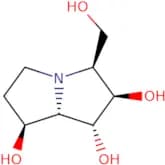
CAS:Hyacinthacine A2 (HA2) is a diastereomer of hyacinthacine A3. It is a radical coupling compound that has been shown to be stereoselective. HA2 selectively reacts with d-arabinose and other sugar molecules, but not with L-arabinose or other sugar molecules, which makes it useful in the synthesis of polyhydroxylated compounds. HA2 has been found to inhibit the growth of bacteria such as Staphylococcus aureus and Clostridium perfringens, making it an antibacterial agent. HA2 also inhibits protein synthesis and cell division by binding to DNA-dependent RNA polymerase, preventing transcription and replication. This inhibition is due to conformational changes in the molecule as well as radical mechanisms.Formula:C8H15NO3Purezza:Min. 95%Peso molecolare:173.21 g/mol5,6-O-Isopropylidene-phlorigidoside B
5,6-O-Isopropylidene-phlorigidoside B is a glycosylation inhibitor that belongs to the class of oligosaccharides and synthetic compounds. This compound has been shown to inhibit the synthesis of complex carbohydrates by reacting with a phosphoryl group on an activated sugar. The 5,6-O-isopropylidene group on the molecule is fluorinated and methylated, which may be used for custom synthesis or modification. 5,6-O-Isopropylidene-phlorigidoside B can also be used as a fluorescent probe in fluorescence microscopy.
Purezza:Min. 95%1,4-Dideoxy-1,4-imino-L-altritol
The compound 1,4-dideoxy-1,4-imino-L-altritol is a synthetic carbohydrate that is made of a monosaccharide and an oligosaccharide. The monosaccharide is a simple sugar with the chemical formula C5H10O5. The oligosaccharide has the chemical formula C2n+1(C3H3O3)n. The monosaccharide has four carbons and one oxygen molecule. The oligosaccharide also has five carbon atoms, but it also has three oxygen molecules. The two sugars are linked by a glycosidic linkage.
The compound was created to be used in the synthesis of complex carbohydrates. It can be modified to have fluorine atoms added to it, methyl groups added to it, or both. It can also be modified to make it into an ester or an amide. It is soluble in water and alcoholPurezza:Min. 95%4-(b-D-Mannopyranosyl)-D-rhamnose
4-(b-D-Mannopyranosyl)-D-rhamnose is a glycosylation agent that can be methylated and fluorinated. It is also capable of being modified with the Click reaction to add polysaccharide or oligosaccharide moieties. 4-(b-D-Mannopyranosyl)-D-rhamnose is an important building block for complex carbohydrates, which are important in many aspects of life. This product is available in custom synthesis, high purity, and CAS No.
Purezza:Min. 95%Chloramphenicol-β-D-galactopyranoside
CAS:Chloramphenicol-beta-D-galactopyranoside is a carbohydrate that can be used in the synthesis of various carbohydrates. This product is fluorinated at the beta-position and has a saccharide modification. It is also an oligosaccharide with a high purity, methylated, glycosylated, and click modified.Formula:C17H22Cl2N2O10Peso molecolare:485.27 g/molRef: 3D-C-3310
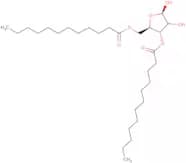
10mgPrezzo su richiesta25mgPrezzo su richiesta50mgPrezzo su richiesta100mgPrezzo su richiesta250mgPrezzo su richiesta-Unit-ggPrezzo su richiesta3,5-Di-O-lauryl-D-xylofuranose
CAS:3,5-Di-O-lauryl-D-xylofuranose is a custom synthesized monosaccharide that is used as a raw material for the synthesis of complex carbohydrates. It has been modified with fluorine and methyl groups to produce 3,5-di-O-lauryl-D-xylofuranose. This compound can be used in the production of polysaccharides or saccharides. The chemical name for this compound is 3,5-di-O-[(9Z)-hexadecenyl]-2-(1E,3E)-dioxaheptalene.
Formula:C29H54O7Purezza:Min. 95%Peso molecolare:514.73 g/mol6-Deoxy-3,5-O-benzylidene-D-gulonolactone
6-Deoxy-3,5-O-benzylidene-D-gulonolactone is a Methylated Oligosaccharide that is custom synthesized for your needs. It has CAS No. and is available in high purity with a Click modification to the sugar as well as Fluorination. This product is also a Carbohydrate, which is a Polysaccharide and Saccharide that can be used in many applications such as medical research, food production, or industrial processes. 6-Deoxy-3,5-O-benzylidene-D-gulonolactone is made from Monosaccharides and Sugars and can be modified to meet your needs.Purezza:Min. 95%α-D-Mannopyranosyl azide
CAS:a-D-Mannopyranosyl azide is a custom synthesis, modification, fluorination, methylation, monosaccharide, synthetic and glycosylation agent. It can be used as a monosaccharide or oligosaccharide for the synthesis of complex carbohydrates.Formula:C6H11N3O5Purezza:Min. 95%Colore e forma:White PowderPeso molecolare:205.17 g/mol

![5-Amino-3-β-D-ribofuranosylthiazolo[4,5-d]pyrimidin-2,7(3H,6H)-dione](/_next/image/?url=https%3A%2Fstatic.cymitquimica.com%2Fproducts%2F3D%2Fthumb-webp%2FXEA97040.webp&w=3840&q=75)