Monosaccaridi
Sottocategorie di "Monosaccaridi"
- Alloses(11 prodotti)
- Arabinosi(21 prodotti)
- Eritrosio(11 prodotti)
- Fruttosio(9 prodotti)
- Fucosio(36 prodotti)
- Galactosamina(41 prodotti)
- Galattosio(261 prodotti)
- Glucosio(365 prodotti)
- Acidi glucuronici(52 prodotti)
- Glicosubstrati per enzima(78 prodotti)
- Gulosio(6 prodotti)
- Idosio(4 prodotti)
- Inositoli(15 prodotti)
- Lixosio(4 prodotti)
- Mannosio(65 prodotti)
- O-Glicani(48 prodotti)
- Psicosi(3 prodotti)
- Rhamnosio(10 prodotti)
- Ribosi(60 prodotti)
- Acidi Sialici(100 prodotti)
- Sorbosio(4 prodotti)
- Zuccheri(173 prodotti)
- Tagatosio(4 prodotti)
- Talosio(8 prodotti)
- Xyloses(20 prodotti)
Trovati 6083 prodotti di "Monosaccaridi"
Phenyl-beta-D-glucopyranoside
CAS:Phenyl-beta-D-glucopyranoside is a phenolic compound that can be found in plant cell walls. It is a monosaccharide with an ester linkage, which is hydrolyzed by esterases to yield protocatechuic acid. Phenyl-beta-D-glucopyranoside is an inhibitor of sugar transport and has been shown to have protective effects on the liver when it is exposed to toxic substances. This sugar also binds to proteins, which may alter the function of these proteins. Phenyl-beta-D-glucopyranoside has been shown to inhibit glycolysis in hepatic tissues and tannins are released from erythrocytes treated with this substance. Phenyl-beta-D-glucopyranoside has been shown to be chemically stable under acidic conditions.
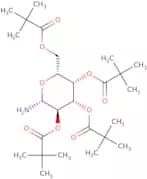
Formula:C12H16O6Peso molecolare:256.26 g/mol2,3,4,6-Tetra-O-pivaloyl-b-D-galactopyranosyl amine
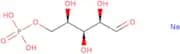
CAS:2,3,4,6-Tetra-O-pivaloyl-b-D-galactopyranosyl amine is a glycosylated monosaccharide with four pivaloyl groups. It is an important component of the glycoconjugate family and has been used in research as a model for glycoprotein synthesis. This compound is synthesized from 2,3,4,6-tetra-O-pivaloylglucose through the use of Click chemistry and fluorination. The 2,3,4,6-Tetra-O-pivaloylglucose can be modified to produce a variety of sugar derivatives including methylated sugars and polysaccharides. This product is custom synthesized to meet customer specifications. 2,3,4,6-Tetra-O-pivaloylglucose can be obtained by reacting 2 equivalents of triacetinFormula:C26H45NO9Purezza:Min. 95%Colore e forma:PowderPeso molecolare:515.64 g/molD-Xylose-5-phosphate disodium
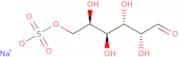
CAS:D-Xylose-5-phosphate disodium salt is a Custom synthesis that has been fluorinated, methylated, and modified with a click reaction. D-Xylose-5-phosphate disodium salt is also an oligosaccharide and polysaccharide. The CAS No. for this compound is 1083083-57-1.Formula:C5H11O8P•Na2Purezza:(%) Min. 80%Colore e forma:White/Off-White SolidPeso molecolare:276.09 g/molD-Galactose-6-O-sulphate sodium
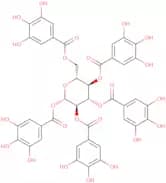
CAS:D-Galactose-6-O-sulphate sodium salt is used as a diagnostic agent to measure the level of galactose in blood and tissues. The enzyme that hydrolyzes D-galactose-6-O-sulphate, galactose oxidase, is present in leukocytes and chorionic villi. The enzymatic assay for this chemical is based on the reaction between D-galactose and sulfite to form D-galactosulfonic acid. This reaction is catalysed by a sulphatase enzyme. A fluorimetric method can be used to measure the formation of D-galactosulfonic acid.Formula:C6H11O9SNaPurezza:Min. 95%Colore e forma:White PowderPeso molecolare:282.2 g/mol1,2,3,4,6-Penta-O-galloyl-β-D-glucopyranose
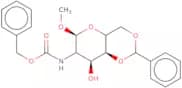
CAS:A gallotannin found in plants, with various biological activities. Its anti-cancer effect has been demonstrated in several cancer cell lines, mediated by inhibition of DNA replication, proliferation and angiogenesis. Elicits anti-inflammatory, antioxidative and anti-diabetic effects. Recently, it has been identified as an inhibitor of c-Myc in hepatocellular carcinoma and multiple myeloma cells.Formula:C41H32O26Purezza:Min. 96 Area-%Colore e forma:PowderPeso molecolare:940.68 g/molMethyl 4,6-O-benzylidene-2-benzyloxycarbonylamino-2-deoxy-a-D-glucopyranose
CAS:Methyl 4,6-O-benzylidene-2-benzyloxycarbonylamino-2-deoxy-a-D-glucopyranose is a custom synthesized compound. It is a polysaccharide that is modified with fluorine and methyl groups. The chemical structure of this compound includes a glucose molecule with an amino group at the C1 position and an acetyl group at the C4 position. This modification increases the solubility and stability of this compound. Methyl 4,6-O-benzylidene-2-benzyloxycarbonylamino-2-deoxy--A D glucopyranose has been used in research as a model for glycosylation.Formula:C22H25NO7Purezza:Min. 95%Peso molecolare:415.44 g/mol2,6-Dideoxy-D-arabino-hexose
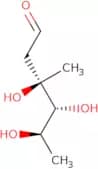
CAS:2,6-Dideoxy-D-arabino-hexose is a hydrogenolysis product of 2,6-dideoxy-D-ribo-hexose. It has been shown to have a solvolytic activity and can be used for the dehalogenation of several halogenated compounds. 2,6-Dideoxy-D-arabino-hexose is also stereoselective and can be used as an estimator in population genetics. This sugar is also regulatory, catalytic, and crystalline. It is found in many carbohydrates, including weighting disaccharides such as sucrose.
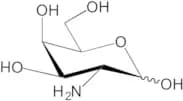
Purezza:Min. 95%D-Galactosamine hydrochloride - Synthetic origin
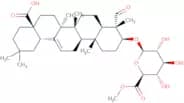
CAS:D-Galactosamine (GalN) is an aldohexose (2-Amino-2-deoxygalactose) in which the hydroxyl group at position 2 is replaced by an amino group (Collins, 2006). Galactosamine (as the N-Acetyl derivative) forms a key part of both N- and O-linked glycoproteins, glycolipids and glycosaminoglycans. Treatment of experimental animals with D-galactosamine / lipopolysaccharide causes lethal liver injury characterized by apoptosis of the hepatocyte and it is used as a laboratory model to study the effect of therapeutic agents (Hirono, 2001).Formula:C6H13NO5·HClPurezza:Min. 98 Area-%Colore e forma:White PowderPeso molecolare:215.63 g/molGypsogenin-3-O-glucuronide
CAS:Gypsogenin-3-O-glucuronide is a saponin found in the roots of Gypsophila paniculata, a plant native to China. It has been shown to have anti-inflammatory and anti-tumor activities. Gypsogenin-3-O-glucuronide has been shown to inhibit tumor growth in mice by inhibiting protein synthesis. The pentasaccharides that make up gypsogenin are present in different proportions, which leads to differences in the biological activity of this compound. This is one of the reasons why saponins have not yet been fully explored for potential use in medicine.Formula:C37H56O10Purezza:Min. 95%Colore e forma:PowderPeso molecolare:660.83 g/mol1-Deoxy-D-ribose
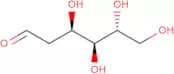
CAS:1-Deoxy-D-ribose is a sugar that is synthesized from the sugar ribose. It can be produced by reductive cleavage of the sugar sulfate adenosine, which gives rise to 1-deoxy-D-ribose and sulfite. This compound also has an important role in DNA synthesis. The natural source of this compound is D-ribose, which can be found in many sources such as yeast extract, pectin, and honey. 1-Deoxy-D-ribose is a nucleoside that has the cyclic form of ribose. This compound was first isolated in 1957 and was originally synthesized in 1891 by Emil Fischer. 1-Deoxy-D-ribose binds to adenosine with a connective bond and forms a cyclic molecule called pyrrolo[2,3]pyrimidine.Formula:C5H10O4Purezza:Min. 95%Colore e forma:PowderPeso molecolare:134.2 g/molThymol-β-D-glucopyranoside
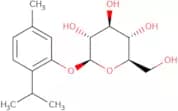
CAS:Thymol-b-D-glucopyranoside is a bactericidal agent that is resistant to encapsulation. It has been shown to be effective against animals and typhimurium in an incubated population and endogenous deaminase inhibitor strategy. The porcine activated food chemistry and abattoir experiments show that thymol-b-D-glucopyranoside has the potential to reduce populations of bacteria in the gastrointestinal tract by inhibiting protein synthesis.Formula:C16H24O6Purezza:Min. 95%Colore e forma:PowderPeso molecolare:312.36 g/mol2-Acetamido-1,3,4,6-tetra-O-benzyl-2-deoxy-a-D-glucopyranoside
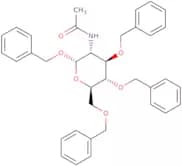
CAS:2-Acetamido-1,3,4,6-tetra-O-benzyl-2-deoxy-a-D-glucopyranoside is a modification of the natural carbohydrate. It is an oligosaccharide synthesized with custom synthesis. The synthetic process involves the methylation and glycosylation of the monosaccharides. Fluorination and saccharide linkages are also used in the production of this compound. 2-Acetamido-1,3,4,6-tetra-O-benzyl-2-deoxyglucopyranoside can be used as a building block for complex carbohydrates or as a research reagent for glycobiology.Formula:C36H39NO6Purezza:Min. 95 Area-%Colore e forma:PowderPeso molecolare:581.7 g/molEthyl 2-acetamido-3,4,6-tri-O-acetyl-2-deoxy-b-D-thioglucopyranoside
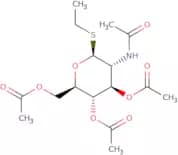
CAS:Ethyl 2-acetamido-3,4,6-tri-O-acetyl-2-deoxy-b-D-thioglucopyranoside is a modified carbohydrate that has been synthesized by the click modification of an acetylated triose. This chemical was synthesized by reacting ethyl 2-(2'-deoxy-(1->4)-beta--D--glucopyranoside) with trimethylsilylacetamide and copper(I) chloride in dry tetrahydrofuran. This product has high purity and is used as a research tool for glycobiology.
Formula:C16H25NO8SPurezza:Min. 95%Colore e forma:White PowderPeso molecolare:391.44 g/molN-Acetyl-D-glucosamine - plant source
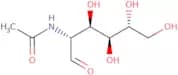
CAS:N-acetyl D-glucosamine (GlcNAc) is an aldohexose (2-acetamido-2-deoxyglucose) in which the hydroxyl group at position 2 is replaced by NHAc (Collins, 2006). N-acetyl D-glucosamine forms the exoskeletons of molluscs and insects as the building block of the polysaccharide chitin (Rudrapatnam, 2003). N-acetyl D-glucosamine is a key component of N- and O-linked glycans, present in glycolipids and the glycosaminoglycan hyaluronic acid (Fallacara, 2018). A recent study has suggested that N-acetyl D-glucosamine may have therapeutic potential for COVID-19 as it affects the spike protein-ACE2 receptor interaction during the infection with SARS-CoV-2 virus (Baysal, 2021).Formula:C8H15NO6Purezza:Min. 98 Area-%Colore e forma:PowderPeso molecolare:221.21 g/mol1-Deoxy-D-tagatose
CAS:1-Deoxy-D-tagatose (1Dt) is a competitive inhibitor of glycolysis, which blocks the conversion of glucose to pyruvate. 1Dt has been shown to inhibit the growth of strain CAEN on media containing l-arabinose and d-xylose as carbon sources. 1Dt also inhibits the activity of dehydrogenase enzymes in C. elegans, leading to inhibition of mitochondrial respiration and impaired locomotion. It has been shown that 1Dt can be used as a substrate for bioproduction, with hydrazone as an intermediate product. Larger molecules are produced after hydrolysis and decarboxylation of 1Dt. The most common products are tagatose, l-fucitol, and l-arabinose. 1Dt has been shown to have anti-inflammatory properties in animal models by inhibiting the production of reactive oxygen species that are generated during inflammationFormula:C6H12O5Purezza:Min. 95%Peso molecolare:164.16 g/mol1,2,3,4,6-Penta-O-acetyl-a-D-glucopyranose
CAS:1,2,3,4,6-Penta-O-acetyl-a-D-glucopyranose is a chemical compound that is an ester of the sugar penta-O-acetyl-a-D-glucopyranose and acetic acid. It has been shown to inhibit the activity of a number of enzymes, including proteins such as phospholipases C and D and fatty acid synthetases. The 1,2,3,4,6-penta-O-acetyl analogues have been shown to be effective in inhibiting model systems for the pathogenesis of inflammatory bowel disease and cancer. The hydroxyl group on the sugar ring may be important for binding to these enzymes.Formula:C16H22O11Purezza:Min. 95%Colore e forma:White PowderPeso molecolare:390.34 g/molMyricitrin
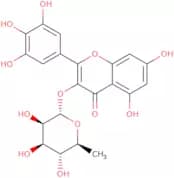
CAS:Myricitrin is a natural compound that is found in the bark of the Myrica tree. It has been shown to have antioxidant effects and pro-apoptotic activities. Myricitrin has been shown to induce apoptosis in HL-60 cells through activation of the caspase-3 pathway, which includes cleavage of poly (ADP-ribose) polymerase and activation of caspases. In addition, myricitrin induces apoptosis by binding to DNA and inhibiting transcription. The physiological effects of myricetin are similar to those of myricitrin due to their structural similarity. However, there is no data available on the anti-inflammatory properties or hypoglycemic effect of myricetin.Formula:C21H20O12Purezza:Min. 95%Colore e forma:White PowderPeso molecolare:464.38 g/molD-Galactose - non-animal origin
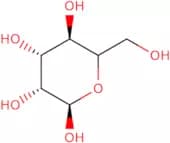
CAS:D-Galactose is a monosaccharide that is found in the form of a white, odorless powder. It has many applications, including as an additive in foods and beverages, as an intermediate in the production of other modified sugars, and as an important component of glycoproteins. D-Galactose is also used to produce glycogen or lactose by modifying it with phosphate or acetate groups. The synthesis of D-galactose is done by methylation of D-glucose followed by glycosylation reactions. This product can be custom synthesized to meet your needs.Formula:C6H12O6Purezza:Min. 99 Area-%Peso molecolare:180.16 g/molRef: 3D-G-1705
5kgPrezzo su richiesta10kgPrezzo su richiesta25kgPrezzo su richiesta2500gPrezzo su richiesta-Unit-kgkgPrezzo su richiesta3,4,6-Tri-O-allyl-D-glucal
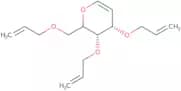
CAS:3,4,6-Tri-O-allyl-D-glucal is a custom synthesis of a complex carbohydrate. It is an Oligosaccharide and Polysaccharide that can be modified by methylation and glycosylation. The product is a Modification of saccharides that has been shown to have Methylation, Glycosylation, Carbohydrate and Click modification. 3,4,6-Tri-O-allyl-D-glucal has CAS No. 434327-45-4 and is available in High purity with Fluorination.Formula:C15H22O4Purezza:Min. 95%Peso molecolare:266.33 g/mol1,2-O-Isopropylidene-a-D-xylofuranose
CAS:Chiral building block for synthesis of carbohydrate and nucleoside derivativesFormula:C8H14O5Purezza:(%) Min. 98%Colore e forma:White PowderPeso molecolare:190.19 g/mol1-Cyano-2-deoxy-3,5-di-O-toluoyl-α-D-ribofuranose
1-Cyano-2-deoxy-3,5-di-O-toluoyl-a-D-ribofuranose is a fluorinated monosaccharide that is synthesized by the glycosylation of 1,2:3,4:6,7:8,9-hexahydrobenzo[e]pyrrolo[1,2a]pyrazinone with 2,6:3',5'-dioxo-[1]benzothiophene. This compound has been shown to be an effective inhibitor of the enzyme glycogen synthase kinase 3β (GSK3β) and may have potential as a therapeutic agent for type II diabetes.Formula:C22H21NO5Purezza:Min. 95%Peso molecolare:379.41 g/mol1-Amino-2,5-anhydro-D-glucitol
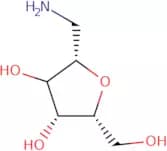
CAS:1-Amino-2,5-anhydro-D-glucitol is a synthetic monosaccharide with the chemical formula C6H12O6. It is often used in custom synthesis and click modification of polysaccharides and oligosaccharides. The fluorination of this compound can be done to obtain a fluorinated 1-amino-2,5-anhydro-D-glucitol. 1AADG can also be modified at its methyl group to produce N,N'-diacetylmethylenecyclohexane carboxamide (CAS No. 2166517-07). This product has been shown to inhibit the growth of bacteria such as Clostridium perfringens and Mycobacterium tuberculosis.Formula:C6H13NO4Purezza:Min. 95%Peso molecolare:163.17 g/mol1,2-O-Isopropylidene-D-mannitol
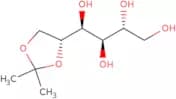
CAS:1,2-O-Isopropylidene-D-mannitol is an alditol that is synthesized by the reaction of 1,2-O-isopropylidene glycerol with sodium sulfide. This product can be further reacted with allylamine to form a thiepane derivative. Thiepane derivatives are polyhydroxylated and have been shown to have antibacterial activity against Staphylococcus aureus, Mycobacterium tuberculosis, and Streptococcus pneumoniae.Formula:C9H18O6Purezza:Min. 95%Colore e forma:PowderPeso molecolare:222.24 g/molN-Amyl β-D-glucopyranoside
CAS:N-Amyl b-D-glucopyranoside is a monosaccharide with a glucose residue at the 1 position and an amyl group at the 2 position. It is a synthetic sugar that can be used as a starting material in glycosylation reactions to modify oligosaccharides, saccharides, and complex carbohydrates. N-Amyl b-D-glucopyranoside can also be fluorinated, methylated, or modified by click chemistry to produce novel compounds. N-Amyl b-D-glucopyranoside is typically obtained by the glycosylation of amylamine with dibenzoyl glucose in the presence of an acid catalyst. This reaction produces a mixture of mono-, di-, tri-, tetra-, penta-, hexa-, hepta-, octa-, nona-, deca-, undeca-, dodeca-, and tetradecasaccharides, whichFormula:C11H22O6Purezza:Min. 95%Colore e forma:White to off-white solid.Peso molecolare:250.29 g/molChloramphenicol glucuronide
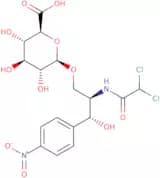
CAS:Chloramphenicol glucuronide is an active metabolite of chloramphenicol. It can be detected in human serum and urine, as well as rat liver microsomes. Chloramphenicol glucuronide binds to the cytosolic protein, cytochrome b5 reductase, which inhibits protein synthesis and cell growth. This compound has been shown to be effective for treating infectious diseases such as typhoid fever, pelvic inflammatory disease, and pneumonia. The chloramphenicol glucuronide group also includes a number of other metabolites that are formed from chloramphenicol by conjugation with glucuronic acid.Formula:C17H20Cl2N2O11Purezza:Min. 95 Area-%Colore e forma:PowderPeso molecolare:499.26 g/molD-Galactose non-animal origin
CAS:D-Galactose is a monosaccharide that is found in the cells of plants and animals. It can be synthesized from D-glucose by adding a D-galactose molecule to the alpha carbon of an existing glucose molecule. The resulting bond is called a glycosidic linkage. This process is called glycosylation. Glycosylation occurs when a sugar molecule reacts with another molecule, such as an amino acid, lipid, or nucleotide, to form what is known as a glycoside linkage. In this case, the sugar is D-galactose and the other molecules are either amino acids or lipids. The reaction between D-galactose and other molecules often results in polysaccharides and complex carbohydrates such as cellulose, chitin, and glycogen.
Methylation of D-galactose can produce methyl galactoside (CAS No. 1881-42-7), whichFormula:C6H12O6Purezza:Min. 98 Area-%Peso molecolare:180.16 g/mol2-Deoxy-D-glucose
CAS:Glycolytic inhibitor; pro-apoptotic; anti-cancer agent
Formula:C6H12O5Purezza:Min. 98 Area-%Colore e forma:White Off-White PowderPeso molecolare:164.16 g/molL-Galactono-1,4-lactone
CAS:L-Galactono-1,4-lactone is a biochemical compound that is found in plants and some living cells. It is an intermediate in the Krebs cycle and can be used as a nutrient solution for plant science research. L-Galactono-1,4-lactone has been shown to have enzyme activities on chronic exposure to sephadex g-100. This compound also has an optimum pH of 5.2 and shows acid formation with titration calorimetry. L-Galactono-1,4-lactone is also used in vitro assays for polymerase chain reactions (PCR).Formula:C6H10O6Purezza:Min. 98%Colore e forma:White Off-White PowderPeso molecolare:178.14 g/mol2,3,5-Tri-O-benzyl-L-ribonic acid-1,4-lactone
2,3,5-Tri-O-benzyl-L-ribonic acid-1,4-lactone (2,3,5-TRBA) is a fluorinated monosaccharide that is synthesized from D-ribose and hexafluoroisopropanol. It is also an oligosaccharide that can be custom synthesized for the synthesis of complex carbohydrates. 2,3,5-TRBA can be modified with methylation or glycosylation to yield a range of desired products. The CAS number for this compound is 103514-06-1. This compound has a purity of >98%.Formula:C26H26O5Purezza:Min. 95%Colore e forma:PowderPeso molecolare:418.48 g/mol2-Amino-2-deoxy-glucitol
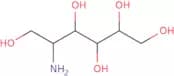
CAS:2-Amino-2-deoxy-glucitol is a kinetic inhibitor of the enzyme glycogen phosphorylase, which catalyzes the rate-limiting step in glycogenolysis. It binds to the enzyme and blocks access to the active site by an amide group, thus inhibiting the phosphorylation of glucose residues. This prevents the breakdown of glycogen and leads to increased levels of blood sugar. 2-Amino-2-deoxy-glucitol is used as a treatment for pertussis (whooping cough) and as an adjunct therapy during insulin shock therapy for diabetic ketoacidosis. The drug has also been shown to bind to histidine residues on the enzyme and inhibit its activity.Formula:C6H15NO5Purezza:Min. 95%Peso molecolare:181.19 g/mol1,2:5,6-Di-O-isopropylidene-a-D-gulofuranose
CAS:Synthetic building blockFormula:C12H20O6Purezza:Min. 98 Area-%Colore e forma:White PowderPeso molecolare:260.28 g/molMethyl 2,3,4-tri-O-benzoyl-α-D-glucopyranoside
CAS:Methyl 2,3,4-tri-O-benzoyl-α-D-glucopyranoside is a glycosylation agent that is used for the synthesis of complex carbohydrates and monosaccharides. This product is also used in Click chemistry as a reactive group. Methyl 2,3,4-tri-O-benzoyl-α-D-glucopyranoside can be fluorinated or saccharified to produce high purity sugars for use in pharmaceuticals. Methyl 2,3,4-tri-O-benzoyl -αD -glucopyranoside has CAS number 52621–71–3. It is synthesized through the reaction of benzaldehyde with glycerol in the presence of sodium hydroxide and potassium carbonate.Formula:C28H26O9Purezza:Min. 95%Colore e forma:PowderPeso molecolare:506.5 g/mol3,4-Di-O-acetyl-1,2-O-isopropylidene-5-O-p-toluenesulfonyl-a-L-sorbopyranose
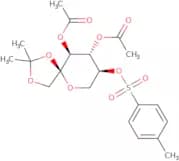
CAS:3,4-Di-O-acetyl-1,2-O-isopropylidene-5-O-p-toluenesulfonyl-a-L-sorbopyranose is a fluorinated glycosylation product with a synthetic route. It is a high purity custom synthesis and can be modified according to customer needs. 3,4-Di-O-acetyl-1,2-O isopropylidene -5 O p toluenesulfonyl A L sorbopyranose has been used in the synthesis of oligosaccharides and saccharides.Formula:C20H26O10SPurezza:Min. 95%Peso molecolare:458.48 g/mol2-Deoxy-2-fluoro-L-fucose
CAS:2-Deoxy-2-fluoro-L-fucose (2FF) is a fluorinated analogue of fucose that can be converted to GDP (Guanosine Diphosphate)-2FF in vitro, a competitive inhibitor of alpha-1,3-fucosyltransferase V. It can also be metabolised inside the cell to a substrate-based inhibitor of fucosyltransferases. 2FF reduces fucosylation of IgG in antibodies, which increases therapeutic efficacies of antibodies that cause antibody-dependent cellular cytotoxicity.Formula:C6H11FO4Purezza:Min. 98.0 Area-%Colore e forma:White PowderPeso molecolare:166.15 g/mol3,5-((R)-Benzylidene)-6-deoxy-L-glucono-1,4-lactone
3,5-((R)-Benzylidene)-6-deoxy-L-glucono-1,4-lactone is a synthesized sugar that can be modified to include fluorination, glycosylation, methylation and other modifications. It is an oligosaccharide with a saccharide backbone made up of glucose units. The monosaccharides are galactose and glucuronic acid. 3,5-(R) Benzylidene)-6-deoxy-L-glucono-1,4-lactone is used in the synthesis of complex carbohydrates for research purposes.Purezza:Min. 95%Methyl 7,8,9-Tri-O-acetyl-5-N,4-O-carbonyl-3,5-dideoxy-2-S-phenyl-2-thio-D-glycero-b-D-galacto-2-nonulopyranosylonate
CAS:Methyl 7,8,9-Tri-O-acetyl-5-N,4-O-carbonyl-3,5-dideoxy-2-S-phenyl-2-thio-D-glycero -b-(1→4)-D-(1→3)-galacto-(1→4)-2-[N-[(1R,2R)-2-(methoxyimino)ethoxy]acetamido]-nonulopyranosylonate is a synthetic carbohydrate. It has been modified with methylation at position 7 and 8 of the sugar and click modification. Methyl 7,8,9 -triacetyl 5 -N, 4 -O carbonyl 3 , 5 -dideoxy 2 -S phenyl 2 -thiophenediol glycero b D galacto 2 nonulopyranoside is a complex carbohydrate.Formula:C23H27NO11SPurezza:Min. 95%Peso molecolare:525.53 g/moltert-Butyl 2-deoxy-L-ribopyranoside
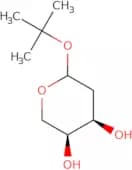
CAS:Tert-butyl 2-deoxy-L-ribopyranoside is a synthetic monosaccharide that can be used in the synthesis of polysaccharides and oligosaccharides. It is also used for fluorination reactions, such as click modification. This compound can be custom synthesized to order, and it is available in high purity. Tert-butyl 2-deoxy-L-ribopyranoside can be modified with a variety of different functional groups, including methylation. It has an CAS number of 1032153-57-3.Formula:C9H18O4Purezza:Min. 95%Colore e forma:White to off-white solid.Peso molecolare:190.24 g/molEthyl 2-acetamido-3,4,6-tri-O-acetyl-2-deoxy-β-D-glucopyranoside
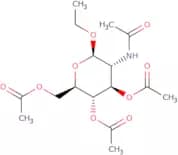
CAS:Ethyl 2-acetamido-3,4,6-tri-O-acetyl-2-deoxy-b-D-glucopyranoside is a compound with a molecular mass of 536.35 Da. It is an inhibitor of the enzyme catalase and has been shown to bind to monoclonal antibodies that are specific for human vascular endothelial growth factor (VEGF). This inhibition prevents the binding of VEGF to its receptor, which blocks the activation of the VEGF pathway. Ethyl 2-acetamido-3,4,6-tri-O-acetyl-2-deoxy--b D glucopyranoside has also been shown to inhibit HIV replication in vitro.Formula:C16H25NO9Purezza:Min. 95%Colore e forma:White To Off-White SolidPeso molecolare:375.37 g/molL-Erythrono-1,4-lactone
CAS:L-Erythrono-1,4-lactone is a dicarboxylic acid that is synthesized from l-threonic acid and d-arabinose. L-Erythrono-1,4-lactone is biosynthesized by the conversion of l-serine to pyruvate and then to erythrose 4-phosphate. This compound is also produced by the oxidation of ascorbic acid and can be used for the synthesis of dermatan sulfates. The accumulation of L-Erythrono-1,4-lactone in high concentrations has been found in patients with dermatan sulfate deficiency.Formula:C4H6O4Purezza:Min. 95%Colore e forma:PowderPeso molecolare:118.09 g/mol2-Formylphenyl 2,3,4,6-tetra-O-acetyl-b-D-glucopyranoside
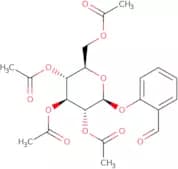
CAS:2-Formylphenyl 2,3,4,6-tetra-O-acetyl-b-D-glucopyranoside is a natural product of the gentisyl family. It is synthesized from benzyl alcohol and acetic anhydride. This compound has been shown to have anticancer properties in animal studies. The acetyl groups are thought to be responsible for the cytotoxicity of this compound. Salireposide is one such analog that has been shown to inhibit protein synthesis and induce apoptosis in cancer cells.Formula:C21H24O11Purezza:Min. 95%Colore e forma:PowderPeso molecolare:452.41 g/mol2-Azido-2-deoxy-3,4-O-isopropylidene-L-idonic acid methyl ester
2-Azido-2-deoxy-3,4-O-isopropylidene-L-idonic acid methyl ester is a custom synthesis that is available in high purity. It is a complex carbohydrate that has been modified with methylation and glycosylation. This product has CAS number 16078-04-1 and is a monosaccharide synthesized from similar compounds.Purezza:Min. 95%4-Chloro-4-deoxy-D-galactitol
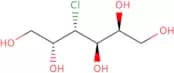
4-Chloro-4-deoxygalactitol is a modified sugar. It is used in the synthesis of saccharides and oligosaccharides. This compound can be used to modify the glycosylation of proteins and polysaccharides. The 4-chloro group can be fluorinated, methylated, or click modified. The 4-deoxy group can also be modified to create 3,6-dideoxy-4-chloro-, 3,6-diiodo-, or 3,6-dimethoxy derivatives. This compound is known by CAS number 1877-19-0 and has a molecular weight of 270.06 g/mol with a melting point of 201 °C (410 °F).Formula:C6H13ClO5Purezza:Min. 95%Peso molecolare:200.62 g/mol1,6-Anhydro-b-D-mannopyranose
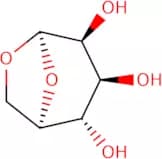
CAS:Organic tracer generated by burning cellulose; used for ageing wines and spiritsFormula:C6H10O5Purezza:Min. 90 Area-%Colore e forma:White Off-White PowderPeso molecolare:162.14 g/molD-Mannuronic acid sodium salt
CAS:D-Mannuronic acid (ManA) is a hexuronic acid having the CH2OH at C5 of mannose replaced by a carboxyl group (Collins, 2006). The major source of D-mannuronic acid is the polysaccharide, alginic acid, found in brown seaweeds (Phaeophyceae). The polysaccharide is a linear glycuronan consisting of (1+4)-linked residues of D-mannuronic acid and L-guluronic acid arranged in a block fashion in the polymer chain, with blocks containing one type of residue being separated by segments in which the two residues aIternate (Percival, 1967). In addition to algal sources, two genera of bacteria have been shown to secrete alginate-like polysaccharides, Pseudomonas and Azotobacter. Most of the research into bacterial alginate biosynthesis has been conducted on the opportunistic human pathogen Pseudomonas aeruginosa or the soil dwelling Azotobacter vinelandii. In both cases, bacterial alginate is partially acetylated (Hay, 2013).Formula:C6H10O7•NaPurezza:Min. 98 Area-%Colore e forma:White PowderPeso molecolare:217.13 g/mol1,2:5,6-Di-O-cyclohexylidene-α-D-glucofuranose
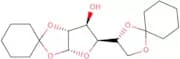
CAS:1,2:5,6-Di-O-cyclohexylidene-a-D-glucofuranose is a synthetic sugar which is used as a starting material for the synthesis of oligosaccharides and polysaccharides. This chemical is also used in the modification of glycosylation and carbohydrate. It can be used to synthesize high purity sugars, including monosaccharides and oligosaccharides. 1,2:5,6-Di-O-cyclohexylidene-a-D-glucofuranose is not fluorescent under UV light.Formula:C18H28O6Purezza:Min. 95%Colore e forma:White PowderPeso molecolare:340.41 g/molCarrageenan
CAS:Carageenan is a mixture of gelling sulphated galactans extracted from red algae (typically Euchuma cottonii, Euchuma spinosum Mastocarpus stellata and Chondrus crispus). The structure of all carrageenans consists of a strictly alternating masked repeating unit of 1,3 linked α-D-galactose and 1,4 linked β-D-galactose with variable proportions of sulphate. The α-linked galactose residue occurs as α-3-6-anhydro-2-sulphate. The images were kindly provided by Prof Mike Guiry from Cork who runs ‘The Seaweed Site’.Colore e forma:White PowderMethyl 2-acetamido-3,4,6-tri-O-acetyl-2-deoxy-β-D-glucopyranoside
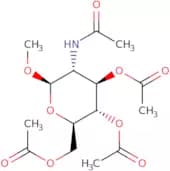
CAS:Methyl 2-acetamido-3,4,6-tri-O-acetyl-2-deoxy-β-D-glucopyranoside is an Oligosaccharide that is used in the preparation of complex carbohydrates. It has a CAS number of 2771-48-4 and can be synthesized using a custom synthesis. This product is available in high purity and monosaccharide form. It has been glycosylated and methylated as well as fluorinated and saccharified.Formula:C15H23NO9Purezza:Min. 95%Colore e forma:White Off-White PowderPeso molecolare:361.34 g/molPhenyl-6-azido-6-deoxy-2,3,4-tris-O-(phenylmethyl)-1-thio-b-D-galactopyranoside
CAS:Phenyl-6-azido-6-deoxy-2,3,4-tris-O-(phenylmethyl)-1-thio-β-D-galactopyranoside is an oligosaccharide that can be used in the synthesis of complex carbohydrates. This compound has a CAS number of 260976-50-9 and a molecular weight of 536. It can be used as a synthetic intermediate in the production of saccharides and sugar derivatives. Phenyl 6 Azido 6 Deoxy 2,3,4 Tris O (phenylmethyl) 1 Thio β D Galactopyranoside is soluble in water and insoluble in organic solvents. It is also stable under acidic conditions and can be easily converted to other compounds with different functional groups.Purezza:Min. 95%4-O-Acetyl-2,5-anhydro-1,3-isopropylidene-D-glucitol
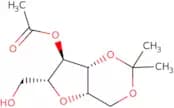
CAS:4-O-Acetyl-2,5-anhydro-1,3-isopropylidene-D-glucitol (4AIG) is a modification of glucose. 4AIG is a white to light yellow crystalline solid that melts with decomposition at 150°C. It is soluble in water and acetone but insoluble in ether. 4AIG can be used as a raw material for the synthesis of oligosaccharides and polysaccharides.Formula:C11H18O6Purezza:Min. 95%Peso molecolare:246.26 g/molPhenyl b-L-thiofucopyranoside
Phenyl b-L-thiofucopyranoside is a custom-synthesized, fluorinated, modified sugar that is used in the synthesis of oligosaccharides and polysaccharides. This compound is an excellent choice for methylation reactions due to its high reactivity and stability under harsh conditions. Phenyl b-L-thiofucopyranoside can be used as a precursor for the synthesis of saccharide derivatives, such as monosaccharides and complex carbohydrates. It has been shown to be stable to heat and pH extremes, making it ideal for use in organic syntheses.Formula:C12H16O4SPurezza:Min. 95%Colore e forma:PowderPeso molecolare:256.32 g/mol