Monosaccaridi
Sottocategorie di "Monosaccaridi"
- Alloses(11 prodotti)
- Arabinosi(21 prodotti)
- Eritrosio(11 prodotti)
- Fruttosio(9 prodotti)
- Fucosio(36 prodotti)
- Galactosamina(41 prodotti)
- Galattosio(261 prodotti)
- Glucosio(365 prodotti)
- Acidi glucuronici(52 prodotti)
- Glicosubstrati per enzima(78 prodotti)
- Gulosio(6 prodotti)
- Idosio(4 prodotti)
- Inositoli(15 prodotti)
- Lixosio(4 prodotti)
- Mannosio(65 prodotti)
- O-Glicani(48 prodotti)
- Psicosi(3 prodotti)
- Rhamnosio(10 prodotti)
- Ribosi(61 prodotti)
- Acidi Sialici(100 prodotti)
- Sorbosio(4 prodotti)
- Zuccheri(173 prodotti)
- Tagatosio(4 prodotti)
- Talosio(8 prodotti)
- Xyloses(20 prodotti)
Trovati 6088 prodotti di "Monosaccaridi"
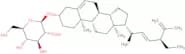
22-Dehydroclerosterol glucoside
CAS:22-Dehydroclerosterol glucoside is a biochemical that has been shown to have antihepatotoxic activity. It has been shown to inhibit the production of glutamate and oxaloacetate in the liver, as well as phosphatase activity, which may be due to its ability to inhibit glutamate oxaloacetate transaminase. 22-Dehydroclerosterol glucoside can be extracted from clerodendrum species or synthesized from 22-dehydrocholesterol. This product is an alkaline substance with a chemical structure similar to that of cholesterol. It is used in parameters for determining glutamic oxaloacetic transaminase (GOT).Purezza:Min. 95%Desmethyl ranolazine b-D-glucuronide
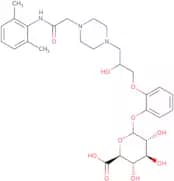
CAS:Desmethyl ranolazine b-D-glucuronide is a complex carbohydrate that is a modification of the sugar, glycosylation and carbohydrate. It is a fluorinated synthetic compound that has been modified with methyl groups, click chemistry and glycosylation. Desmethyl ranolazine b-D-glucuronide is soluble in water and methanol, and insoluble in ethanol. The CAS number for this compound is 172300-93-5.Formula:C29H39N3O10Purezza:Min. 95%Peso molecolare:589.65 g/molMethyl 2,3-O-isopropylidene-5-O-benzyl-b-D-ribofuranoside
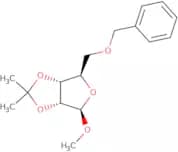
CAS:Methyl 2,3-O-isopropylidene-5-O-benzyl-b-D-ribofuranoside is a modified sugar that is synthesized by the methylation of 5-O-benzyl bromoformate with Methyl 2,3,4,5,-tetraacetoxybromobenzene. This compound is also known as Methyl 2,3,4,5,-tetraacetoxybromobenzene. It has CAS No. 33019-63-5 and molecular weight of 290.Formula:C16H22O5Purezza:Min. 95%Peso molecolare:294.34 g/mol2-Acetamido-4,6-O-benzylidene-2-deoxy-D-gluconhydroximo-1,5-lactone
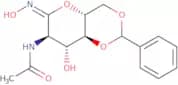
CAS:2-Acetamido-4,6-O-benzylidene-2-deoxy-D-gluconhydroximo-1,5-lactone is a high purity, custom synthesis sugar. This compound has been shown to have click modification, fluorination, glycosylation and methylation. 2-Acetamido-4,6-O-benzylidene-2-deoxy-D-gluconhydroximo 1,5 -lactone is also a synthetic carbohydrate. This compound has been shown to be an oligosaccharide and monosaccharide. It is saccharide with complex carbohydrate properties.Formula:C15H18N2O6Purezza:Min. 95%Peso molecolare:322.31 g/molTri-Lewis x-APE, HSA conjugate
Tri-Lewis x-APE, HSA conjugate is a high purity, custom synthesized tri-Lewis x oligosaccharide with a Click modification. This product is used in the synthesis of glycosylated proteins and polysaccharides. It has been shown to have high purity and can be used for complex carbohydrate synthesis.
Purezza:Min. 95%L-Galactose-6-O-sulphate sodium salt
L-Galactose-6-O-sulphate sodium salt is a modified carbohydrate that is synthesized by modifying the chemical structure of L-galactose. This modification can be accomplished using chemical reactions such as methylation, saccharide, polysaccharide, and click modification. The CAS number for this product is 68891-70-8.
Formula:C6H11O9SNaPurezza:Min. 95%Peso molecolare:282.2 g/mol1-Deoxy-L-erythrulose
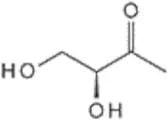
CAS:1-Deoxy-L-erythrulose is an electron acceptor that is a non-essential cofactor for the enzyme reductoisomerase. It binds to the active site of the enzyme and stabilizes its conformation, which leads to the formation of a dianion. 1-Deoxy-L-erythrulose also acts as an activator for phosphite, which is a transition state analog. This activation leads to the formation of ATP and NADPH as products.Formula:C4H8O3Purezza:Min. 95%Peso molecolare:104.1 g/molAnthrose - ethylene diamine-N6-hydroxylhexanoic acid linker
Anthrose is a high purity, custom synthesis, and oligosaccharide. It can be modified with fluorination, glycosylation, and methylation. Anthrose is used for the synthesis of complex carbohydrate.Purezza:Min. 95%Catechol a-D-glucopyranoside
Catechol a-D-glucopyranoside is a synthetic monosaccharide, which can be used as the starting material for the synthesis of polysaccharides and oligosaccharides. It has the same molecular formula as glucose, but with an additional hydroxyl group on carbon 2.
Formula:C12H16O7Purezza:Min. 95%Peso molecolare:272.25 g/mol6-O-Carboxymethyl-D-glucose
CAS:6-O-Carboxymethyl-D-glucose (CMG) is a trityl glucanotransferase substrate that is used in the synthesis of carboxymethylated polysaccharides. This compound can be obtained from glucose by treatment with a glucanotransferase enzyme. CMG has been shown to have an inhibitory effect on pancreatic acinar cells and also inhibits acidic proteases in saliva, which leads to its use as an anti-inflammatory drug.
Formula:C8H14O8Purezza:Min. 95%Colore e forma:White Off-White PowderPeso molecolare:238.19 g/mol4-Deoxy-4-fluoro-a-D-glucopyranose
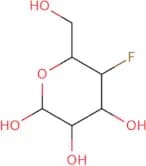
CAS:4-Deoxy-4-fluoro-a-D-glucopyranose is a carbohydrate that belongs to the group of carbohydrates. It has enthalpy and entropy values of -1,865.2 kJ/mol and -3,363.6 J/(mol·K) at 298 K, respectively. This compound has been shown to interact with water molecules in solution phase. 4-Deoxy-4-fluoro-a-D-glucopyranose is soluble in water and interacts with other carbohydrate molecules at an intermolecular level. 4DFA has an extrapolated melting point of about 216 degrees Celsius.
Formula:C6H11FO5Purezza:Min. 95%Peso molecolare:182.15 g/molMethyl 5-deoxy-2,3-O-isopropylidene-a-D-ribofuranoside
Methyl 5-deoxy-2,3-O-isopropylidene-a-D-ribofuranoside is a synthetic modification of the natural sugar ribose. It is used in the synthesis of oligosaccharides and saccharides. Click chemistry has been used to attach a fluorine atom to the carbon at position 2 of the sugar ring, which has led to improved reactivity. Methyl 5-deoxy-2,3-O-isopropylidene-a-D-ribofuranoside is also used in glycosylation reactions and is an important component in the production of complex carbohydrates.Formula:C9H16O4Purezza:Min. 95%Peso molecolare:188.22 g/molBenzyl 2-azido-2-deoxy-a-D-galactopyranoside
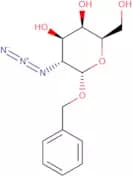
CAS:Benzyl 2-azido-2-deoxy-a-D-galactopyranoside (α-OBn GalN3) is a compound based on the structural features of α-OBn GalNAc. It features an azide functionality at C2 instead of the N-acetyl. α-OBn GalN3 inhibits glycosyltransferases responsible for O-GalNAc-type glycosylation and induces apoptosis in PC/AA/C1/SB10C and HCA7/C29 cells. The compound was tested at 0.5 mM for 4 days with different colorectal cell lines and showed an inhibition of cell growth. α-OBn GalN3 was also used as an intermediate for the total synthesis of (+)-Neocarzinostatin chromophore.
Formula:C13H17N3O5Purezza:Min. 95%Peso molecolare:295.29 g/molBenzyl 2-amino-2-deoxy-a-D-galactopyranoside
CAS:Benzyl 2-amino-2-deoxy-a-D-galactopyranoside is a fluorinated sugar that is used as a building block in the synthesis of oligosaccharides, polysaccharides, and complex carbohydrates. It can be used for the synthesis of saccharides via click chemistry or for modification of saccharides by methylation, monosaccharide, or polysaccharide. Benzyl 2-amino-2-deoxy-a-D-galactopyranoside has high purity.Formula:C13H19NO5Purezza:Min. 95%Peso molecolare:269.29 g/mol1,5-Anhydro-D-galactitol
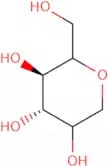
CAS:1,5-Anhydro-D-galactitol is a synthetic compound that is an intermediate in the synthesis of melibiose. It is produced by the reaction of acetyl groups with 1,5-anhydro-D-xylose, which is in turn obtained from xylose by hydrolysis or hydrogenolysis. The reaction proceeds efficiently and selectively because the hydroxyl group on the carbon atom adjacent to the carbonyl group on 1,5-anhydro-D-xylose reacts with acetyl chloride to form an ester. This process has been shown to produce two different isomers: erythritol and threitol. The erythritol can be converted into D-fructose and D-ribulose by a process called reductive amination. NMR spectra have been used to confirm that this synthetic process produces only one type of product with a high yield.BR>BR>Formula:C6H12O5Purezza:Min. 95%Peso molecolare:164.16 g/molMethyl 3,5-di-O-(p-chlorobenzoyl)-2-keto-a-D-ribofuranoside
Methyl 3,5-di-O-(p-chlorobenzoyl)-2-keto-a-D-ribofuranoside is an organic compound that is a modification of an oligosaccharide. It is synthesized by the methylation and glycosylation of an aldose sugar. The modification occurs in the form of a fluorination and saccharide substitution on the original molecule. This compound has been shown to have complex carbohydrate properties, as well as being a monosaccharide and polysaccharide. It has been found to be useful in numerous applications such as drugs, industrial chemicals, and others.Purezza:Min. 95%Ethyl 2,3-di-O-(4-methoxybenzyl)-4,6-O-(4-methoxybenzylidene)-b-D-thiogalactopyranoside S-oxide
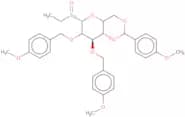
Ethyl 2,3-di-O-(4-methoxybenzyl)-4,6-O-(4-methoxybenzylidene)-b-D-thiogalactopyranoside S-oxide is a modification of an oligosaccharide. The carbohydrate has a molecular weight of 682. It is synthesized by the methylation and glycosylation of the monosaccharide, galactose. It can be used in many different applications including as a starting material for other carbohydrates or as a reagent in polysaccharide synthesis.Formula:C32H38O9SPurezza:Min. 95%Peso molecolare:598.72 g/molMethyl 2,3-di-O-acetyl-4,6-O-benzylidene-α-D-glucopyranoside
CAS:Methyl 2,3-di-O-acetyl-4,6-O-benzylidene-a-D-glucopyranoside is a glycosylation agent that is used to attach sugars to proteins, polysaccharides, and other biological molecules. This compound can be synthesized in custom quantities with high purity. It is often used for the modification of saccharides and oligosaccharides. Methyl 2,3-di-O-acetyl-4,6-O-benzylidene-a -D glucopyranoside has been shown to react with a variety of functional groups including amines, alcohols, carboxylic acids, thiols and sulfhydryls.Formula:C18H22O8Purezza:Min. 95%Peso molecolare:366.37 g/molL-a-Phosphatidyl-(1,2-dipalmitoyl)-D-myo-inositol
CAS:L-a-Phosphatidyl-(1,2-dipalmitoyl)-D-myo-inositol is a phospholipid that is a major component of the cell membrane. It is derived from myo-inositol and palmitic acid. L-a-Phosphatidyl-(1,2-dipalmitoyl)-D-myo-inositol has been shown to have anticoagulant properties. It binds to the thrombin receptor and inhibits the binding of thrombin to this receptor. This inhibitor does not affect the activity of other proteases such as trypsin or chymotrypsin. L-a-Phosphatidyl-(1,2-dipalmitoyl)-D-myo-inositol can also be used for industrial purposes as an emulsifier or polymer conjugate.Formula:C41H79O13PPurezza:Min. 95%Peso molecolare:811.03 g/molPitavastatin 3-O-glucuronide
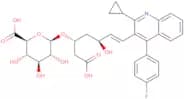
CAS:Pitavastatin 3-O-glucuronide is a synthetic, water soluble glycosylate prodrug of pitavastatin, a third generation HMG-CoA reductase inhibitor. Pitavastatin 3-O-glucuronide has been shown to be effective in lowering serum cholesterol and triglycerides in humans. This drug is metabolized by hydrolysis of the glucuronide moiety and cleavage of the sugar moiety to form active pitavastatin. Pitavastatin 3-O-glucuronide also has an increased stability against oxidation compared to pitavastatin.Formula:C31H31FNO10Purezza:Min. 95%Peso molecolare:596.58 g/mol2-Acetamido-3,4,6-tri-O-acetyl-N',N-cbz-epsilon-aminocaproyl-2-deoxy-b-D-glucopyranosyl amine
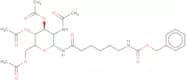
CAS:2-Acetamido-3,4,6-tri-O-acetyl-N',N-cbz-epsilonaminocaproyl-2-deoxy-bDglucopyranosyl amine is a custom synthesis of an oligosaccharide. It is a complex carbohydrate that is synthesized by the modification of an acetamido group on the 2 position and a glycosylation at the 3' position. This product is also fluorinated at the 4' position and has been shown to have high purity with a CAS number of 56146-88-4. The structure of this compound has not been determined due to its complexity.Formula:C28H39N3O11Purezza:Min. 95%Peso molecolare:593.62 g/mol1,2:5,6-Di-O-isopropylidene-L-chiro-inositol
CAS:1,2:5,6-Di-O-isopropylidene-L-chiro-inositol is a custom synthesis that can be modified by fluorination, methylation and click modification. The product is a monosaccharide and an oligosaccharide. It is also a synthetic saccharide and a polysaccharide. The product can be glycosylated or sugar modified with carbohydrates such as complex carbohydrate to form 1,2:5,6-Di-O-isopropylidene-L-chiro-inositol.
Formula:C12H20O6Purezza:Min. 95%Peso molecolare:260.28 g/mol3-Azido-2,3-dideoxy-1-O-(tert-butyldimethylsilyl)-b-D-arabino-hexopyranose
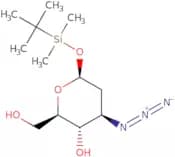
CAS:3-Azido-2,3-dideoxy-1-O-(tert-butyldimethylsilyl)-b-D-arabino-hexopyranose is a synthetic sugar with the chemical formula (C6H11NO5)n. It is a white crystalline solid that is soluble in water and slightly soluble in ethanol. 3-Azido-2,3-dideoxy-1-O-(tert-butyldimethylsilyl)-b-D-arabinohexopyranose has been used as a building block for the synthesis of various carbohydrate derivatives, such as saccharides, oligosaccharides, and polysaccharides. The chemical structure of 3 azido 2,3 dideoxy 1 O tert butyldimethylsilyl b D arabinohexopyranose may be modified using click chemistry to produce new derivatives.Formula:C12H25N3O4SiPurezza:Min. 95%Peso molecolare:303.43 g/mol2,3,4-Tri-O-acetyl-D-xylopyranose
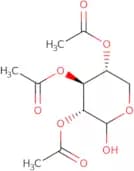
CAS:2,3,4-Tri-O-acetyl-D-xylopyranose is a lactide sugar that is found in the cell walls of many plants. It is synthesized from D-xylose by enzymatic condensation with acetylated L-malic acid and has been shown to be biodegradable. 2,3,4-Tri-O-acetyl-D-xylopyranose has been shown to have physical properties that are similar to those of cellulose, such as crystallization and solubility in water. The compound also has an NMR spectrum that contains peaks at δ = 0.8 (triplet), 1.1 (singlet) and 1.5 ppm (doublet). The hydrophobic group on the molecule is thought to contribute to its hydrophilicity.Formula:C11H16O8Purezza:Min. 95%Peso molecolare:276.24 g/molMethyl 2,3-dideoxy-3-fluoro-5-O-(4-phenylbenzoyl)-beta-D-erythro pentofuranoside
CAS:Methyl 2,3-dideoxy-3-fluoro-5-O-(4-phenylbenzoyl)-beta-D-erythro pentofuranoside is a custom synthesis of an oligosaccharide and polysaccharide. It is a modification of the natural compound 2,3,5,-trihydroxybenzoic acid. It has CAS No. 129468-51-5 and Methylation, Glycosylation, Carbohydrate as its properties. Methyl 2,3-dideoxy-3-fluoro-5-O-(4-phenylbenzoyl)-beta-D-erythro pentofuranoside is a high purity product that contains Fluorination, Synthetic as its properties.Purezza:Min. 95%9,10-Dimethoxy-pterocarpane-3-O-b-D-glucoside
9,10-Dimethoxy-pterocarpane-3-O-b-D-glucoside is a custom synthesis that is a polysaccharide with a complex carbohydrate structure. The chemical name for this compound is 9,10-dimethoxy-pterocarpane-3-O-[4′″-(1″″′′)-b′″'-D-glucopyranosyl]-3′′′,4′″’,6′"’] bibenzyl. This compound has been modified by methylation and glycosylation. It can be used in the treatment of cancer and diabetes due to its high purity and fluorination. 9,10-Dimethoxy pterocarpane 3β O glucoside is a sugar or saccharide that can be found in plants such as the roots of tobacco plants. The modification of this sugar by methylation and glycosylation makes it more
Purezza:Min. 95%Moexiprilat acyl D-glucuronide
Moexiprilat acyl D-glucuronide is a modification of the parent drug moexipril. It is an oligosaccharide that is synthesized by custom synthesis and has a high purity. The CAS number for this substance is 59710-80-0. Moexiprilat acyl D-glucuronide is a modified form of moexipril. It is a carbohydrate that contains glycosyls, saccharides, and other organic compounds with a variety of chemical structures. The name "glycosyl" refers to the sugar at the end of glycosidic linkage. Moexiprilat acyl D-glucuronide can be synthesized by methylation, glycosylation, or fluorination reactions on either monosaccharides or polysaccharides.Purezza:Min. 95%2,3,4-Tri-O-acetyl-a-D-arabinopyranosyl cyanide
2,3,4-Tri-O-acetyl-a-D-arabinopyranosyl cyanide is a synthetic compound that is used to synthesize complex carbohydrates. This product can be customized for customers' needs and has high purity.Purezza:Min. 95%6-O-(4,7-Di-O-methyl-N-acetyl-alpha-neuraminosyl)-D-galactopyranoside
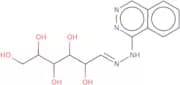
6-O-(4,7-Di-O-methyl-N-acetyl-alpha-neuraminosyl)-D-galactopyranoside is a complex carbohydrate that is used in the synthesis of glycoprotein and saccharide. It has been modified with methylation, Click reaction, and fluorination to provide an improved product for research purposes. This chemical has CAS No. 68450-29-1 and can be custom synthesized to meet your needs.Purezza:Min. 95%Aldehydo-D-glucose phthalazin-1-yl hydrazone
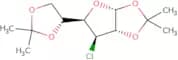
CAS:Aldehydo-D-glucose phthalazin-1-yl hydrazone is a synthetic glycosylation agent that can be used in the synthesis of complex carbohydrates, such as polysaccharides, saccharides and oligosaccharides. It has been shown to be useful for the modification of saccharides and oligosaccharides. This compound can also be used for fluorination reactions, fluoroalkylations, click chemistry reactions, methylations and polymerizations. Aldehydo-D-glucose phthalazin-1-yl hydrazone has not yet been assigned CAS number.Formula:C14H18N4O5Purezza:Min. 95%Peso molecolare:322.32 g/mol3-Chloro-3-deoxy-1,2:5,6-di-O-isopropylidene-a-D-glucofuranose
CAS:3-Chloro-3-deoxy-1,2:5,6-di-O-isopropylidene-a-D-glucofuranose is a monosaccharide that is used as an intermediate in the synthesis of complex carbohydrates. It is synthesized by the Click reaction of 3,4,5,6,-tetrachlorohexanoic acid with 2,3:5,6-diisopropylidene glucose. This product has been modified by fluorination and saccharide modification. Custom synthesis can be performed on this product to produce any desired oligosaccharides or polysaccharides. The purity of this product is >98%.Formula:C12H19ClO5Purezza:Min. 95%Peso molecolare:278.73 g/molAllyl 2,3-di-O-benzyl-b-D-glucopyranoside
CAS:Allyl 2,3-di-O-benzyl-b-D-glucopyranoside is a compound with a molecular weight of 276.2 g/mol and an empirical formula of C12H22O10. It has a white crystalline appearance with a melting point of 220°C. Allyl 2,3-di-O-benzyl-b-D-glucopyranoside is soluble in water and methanol but not in ethanol. It can be used as an additive for plastics and rubber to improve conductivity or as a plasticizer for cellulose acetate.Formula:C23H28O6Purezza:Min. 95%Peso molecolare:400.46 g/mol2,3,6-Tri-O-carboxymethyl-D-glucose
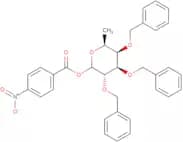
CAS:2,3,6-Tri-O-carboxymethyl-D-glucose (TCMG) is a potent polyelectrolyte that can be used as an additive to cellulose. TCMG is synthesized by the reaction of 2,3,6-tri-O-carboxymethylcellulose with potassium bitartrate in acidic medium. TCMG has been shown to interact with cellulose and form a gel matrix. This reaction is due to the ionic interactions between the carboxyl groups in TCMG and the hydroxyl groups in cellulose. The conductimetric titration measurement shows that TCMGs have a constant value at pH 5.5, indicating that they are anionic polyelectrolytes. Potentiometric titration indicates that TCMGs are nonionic polyelectrolytes and the interaction between these two polymers is due to electrostatic forces.Formula:C12H18O12Purezza:Min. 95%Colore e forma:White To Off-White SolidPeso molecolare:354.26 g/mol2,3,4-Tri-O-benzyl-1-O-(4-nitrobenzoyl)-L-fucopyranose
CAS:2,3,4-Tri-O-benzyl-1-O-(4-nitrobenzoyl)-L-fucopyranose is a methylated, custom synthesized oligosaccharide. It has been modified with fluorination to give it high purity and complex carbohydrates with a saccharide backbone. This product is also a sugar and is synthesized from monosaccharides.
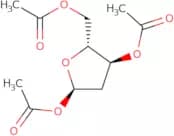
Formula:C34H33NO8Purezza:Min. 95%Peso molecolare:583.63 g/mol1,3,5-Tri-O-acetyl-2-deoxy-a-D-ribofuranose
CAS:1,3,5-Tri-O-acetyl-2-deoxy-a-D-ribofuranose is a monosaccharide with a modified sugar residue that is obtained by the fluorination of 1,3,5-triacetyl-2,6'-dideoxyglucose. It is a complex carbohydrate that can be used as an additive in food and beverage products. The chemical formula for 1,3,5-triacetyl-2,6'-dideoxyglucose is C10H14O8 and the molecular weight is 392.24 g/mol.Formula:C11H16O7Purezza:Min. 95%Peso molecolare:260.24 g/mol2,3,4,6-Tetra-O-acetyl-D-mannopyranosyl trichloroacetimidate
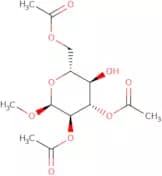
CAS:2,3,4,6-Tetra-O-acetyl-D-mannopyranosyl trichloroacetimidate is a modification of a complex carbohydrate. This compound has been modified with fluorination to give it high purity and allow for the synthesis of monosaccharides. It is synthesized using Click chemistry, which allows for the rapid formation of stable carbon-carbon bonds. 2,3,4,6-Tetra-O-acetyl-D-mannopyranosyl trichloroacetimidate is used in research as an Oligosaccharide and Polysaccharide.Purezza:Min. 95%Methyl 2,3,6-tri-O-acetyl-a-D-glucopyranoside
CAS:Methyl 2,3,6-tri-O-acetyl-a-D-glucopyranoside is a fluorinated monosaccharide that can be used in the synthesis of oligosaccharides, polysaccharides and complex carbohydrates. This product is custom synthesized for customers with specific needs. The modification of Methyl 2,3,6-tri-O-acetyl-a-D-glucopyranoside can also be done to provide desired properties. The purity of this product is high and suitable for various applications.Formula:C13H20O9Purezza:Min. 95%Peso molecolare:320.29 g/mol4,6-O-Benzylidene-D-mannose
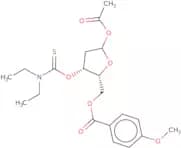
4,6-O-Benzylidene-D-mannose is an aromatic compound that can be used in the synthesis of various sugars. It is a precursor to d-glucose and d-galactose and can be synthesized by deacetylation of mannose with sodium hydride. The hydridization of 4,6-O-benzylidene D-mannose yields 4,6-O-(benzylidene)-D-mannitol.Formula:C13H16O6Purezza:Min. 95%Colore e forma:PowderPeso molecolare:268.26 g/mol1-O-Acetyl-2-deoxy-5-O-p-methoxybenzoyl-3-O-(N,N-diethylthiocarbamoyl)-D-ribofuranose
1-O-Acetyl-2-deoxy-5-O-p-methoxybenzoyl-3-O-(N,N-diethylthiocarbamoyl)-Dribofuranose (1) is a fluorinated monosaccharide that is synthesized from 1,2:5,6:7,8:3',4'-hexamethyleneglucopyranosyl bromide and diethylthiocarbamic acid. This product has been shown to be an efficient glycosylation agent for complex carbohydrates and can be used in the synthesis of oligosaccharides and polysaccharides. It has also been modified by methylation and click chemistry.Formula:C20H27NO7SPurezza:Min. 95%Peso molecolare:425.5 g/mol3-O-Triisopropylsilyl-4,6-O-p-methoxybenzylidene-D-glucal
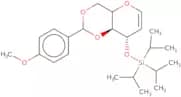
CAS:3-O-Triisopropylsilyl-4,6-O-p-methoxybenzylidene-D-glucal is a glycosylation reagent that is used to modify the carbohydrate chains of proteins. It can be applied in the synthesis of complex carbohydrates and oligosaccharides. This compound has been shown to have high reactivity with a wide range of sugars. 3-O-Triisopropylsilyl-4,6-O-p-methoxybenzylidene-D-glucal can be used for the preparation of saccharides and it's also known for its methylation properties.Formula:C23H36O5SiPurezza:Min. 95%Peso molecolare:420.61 g/molD-Glucose-1,6-diphosphate potassium salt
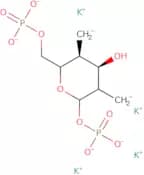
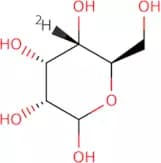
CAS:D-Glucose-1,6-diphosphate potassium salt is a white crystalline powder that has a molecular weight of 594.14 g/mol and a chemical formula of C₁₀H₁₅O₃P. It is used as an intermediate in the synthesis of saccharides. D-Glucose-1,6-diphosphate potassium salt is not known to be toxic to humans or animals.Formula:C6H10K4O12P2Purezza:Min. 95%Peso molecolare:492.48 g/molD-Glucose-4-D
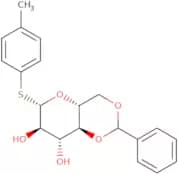
CAS:Prodotto controllatoD-Glucose-4-D is a deuterated form of glucose. It is a halophilic sugar that is used in the biosynthesis of lipids. D-Glucose-4-D can be synthesized chemically or by isotope effect by using d-glucose as the starting material. This compound can be used to study lipid synthesis and lipid metabolism in bacteria, such as E. coli, because it has been shown to inhibit the enzyme glycerol dehydratase, which catalyzes the conversion of glycerol to dihydroxyacetone phosphate, an intermediate in lipid biosynthesis. D-Glucose-4-D also inhibits the enzyme phosphatidate phosphohydrolase, which converts phosphatidic acid to diacylglycerol. These compounds are important for membrane lipid formation and are involved in cellular signalling pathways.Formula:C6H11DO6Purezza:Min. 95%Peso molecolare:181.16 g/mol4-Methylphenyl 4,6-O-benzylidene-b-D-thioglucopyranoside
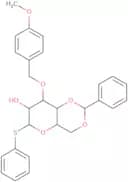
CAS:4-Methylphenyl 4,6-O-benzylidene-b-D-thioglucopyranoside is a synthetic carbohydrate that is an intermediate in the synthesis of saccharides. It is also used to modify saccharides and oligosaccharides. This product is a white solid that can be used as a building block for the preparation of various carbohydrates, including monosaccharides, disaccharides, and polysaccharides. The compound has been shown to react with other compounds through methylation, glycosylation, and click chemistry modifications.Formula:C20H22O5SPurezza:Min. 95%Colore e forma:PowderPeso molecolare:374.45 g/molPhenyl 4,6-O-benzylidene-3-O-(4-methoxybenzyl)-a-D-thiomannopyranoside
CAS:Phenyl 4,6-O-benzylidene-3-O-(4-methoxybenzyl)-a-D-thiomannopyranoside is a custom synthetic sugar with a molecular weight of 514.87 and an empirical formula of C11H12FNO8. It has fluorination at the 2-, 3-, 4-, and 6-positions and methylation at the 2-, 3-, 4-, 5-, and 6-positions. Phenyl 4,6-O-benzylidene-3-O-(4-methoxybenzyl)-a-D-thiomannopyranoside is a modification of the natural product that is used in the synthesis of Oligosaccharides, Glycosylations, and Click modifications. This product is available for sale to qualified buyers.Purezza:Min. 95%Methyl 2,3,6-tri-O-benzoyl-a-D-mannopyranoside
CAS:Methyl 2,3,6-tri-O-benzoyl-a-D-mannopyranoside is a modified mannopyranose sugar that is used as a building block for the synthesis of oligosaccharides and saccharides. This compound can be found in glycosylation reactions. It has been shown to be useful in click chemistry, where it is used as a reactive group. Methyl 2,3,6-tri-O-benzoyl-a-D-mannopyranoside is also used in fluorination and glycosylation reactions. The CAS number for this compound is 3396-68-7.Formula:C28H26O9Purezza:Min. 95%Peso molecolare:506.5 g/mol5-Deoxy-1,2-O-isopropylidene-5-(morpholin-1-yl)-a-D-xylofuranose
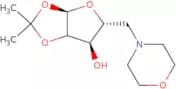
CAS:5-Deoxy-1,2-O-isopropylidene-5-(morpholin-1-yl)-a-D-xylofuranose is a glycosylated monosaccharide. It is also known as 5DIMOF and is a synthetic compound that can be used for the synthesis of oligosaccharides. This compound has been shown to have antiviral, antiparasitic, and anticancer activities.Formula:C12H21NO5Purezza:Min. 95%Peso molecolare:259.3 g/mol4-Chlorophenyl b-D-glucopyranoside
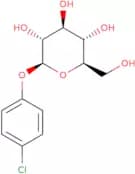
CAS:4-Chlorophenyl b-D-glucopyranoside is a synthetic, high purity, monosaccharide sugar which can be used as a reagent in the synthesis of oligosaccharides and polysaccharides. It is also used as an intermediate for glycosylation and methylation reactions. 4-Chlorophenyl b-D-glucopyranoside has an CAS number of 4756-30-3 and can be fluorinated for use in saccharide chemistry.Formula:C12H15ClO6Purezza:Min. 95%Peso molecolare:290.7 g/molD-Digitalose
CAS:D-Digitalose is a cardenolide glycoside that was first isolated from the plant genus Digitalis. It is a molecule with two epoxide groups, which are chemical transformations of the original steroid glycosides. It has been shown to have cardiac activity and can be used as an ethanol extract in chemotherapy drug treatments. D-Digitalose has also shown to be effective against acuminatum, which is a type of fungus.Formula:C7H14O5Purezza:Min. 95%Peso molecolare:178.18 g/molAllyl 2-deoxy-2-phthalimido-b-D-glucopyranoside
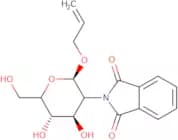
CAS:Allyl 2-deoxy-2-phthalimido-b-D-glucopyranoside is a modification of a sugar. It is an oligosaccharide that is synthesized and modified by methylation and glycosylation. Allyl 2-deoxy-2-phthalimido-b-D-glucopyranoside has high purity and is a monosaccharide. This modification contains fluorine atoms, which are added to the saccharide backbone to increase its stability.Formula:C17H19NO7Purezza:Min. 95%Peso molecolare:349.34 g/mol4-O-Benzyl-D-glucal
CAS:4-O-Benzyl-D-glucal is an organic solvent and a reactive intermediate, which has been used as a reagent for allylic oxidation. It reacts with halogens, such as chlorine or bromine, to form the corresponding halohydrin or halonium salt in high yield. 4-O-Benzyl-D-glucal is soluble in acetonitrile, benzene, and other solvents and can be used as a solvent for organic synthesis. The compound also reacts with oxygen to form solvents such as acetone or acetic acid. END>Formula:C13H16O4Purezza:Min. 95%Peso molecolare:236.26 g/mol