Monosaccaridi
I monosaccaridi sono la forma più semplice dei carboidrati e fungono da blocchi fondamentali per zuccheri più complessi e polisaccaridi. Queste singole molecole di zucchero svolgono ruoli critici nel metabolismo energetico, nella comunicazione cellulare e nei componenti strutturali delle cellule. In questa sezione troverai una vasta gamma di monosaccaridi essenziali per la ricerca in biochimica, biologia molecolare e glicoscienza. Questi composti sono cruciali per studiare le vie metaboliche, i processi di glicosilazione e lo sviluppo di agenti terapeutici. Da CymitQuimica, offriamo monosaccaridi di alta qualità per supportare le tue esigenze di ricerca, garantendo precisione e affidabilità nelle tue indagini scientifiche.
Sottocategorie di "Monosaccaridi"
- Alloses(11 prodotti)
- Arabinosi(21 prodotti)
- Eritrosio(11 prodotti)
- Fruttosio(9 prodotti)
- Fucosio(36 prodotti)
- Galactosamina(41 prodotti)
- Galattosio(261 prodotti)
- Glucosio(365 prodotti)
- Acidi glucuronici(51 prodotti)
- Glicosubstrati per enzima(77 prodotti)
- Gulosio(6 prodotti)
- Idosio(4 prodotti)
- Inositoli(15 prodotti)
- Lixosio(4 prodotti)
- Mannosio(65 prodotti)
- O-Glicani(48 prodotti)
- Psicosi(3 prodotti)
- Rhamnosio(10 prodotti)
- Ribosi(61 prodotti)
- Acidi Sialici(100 prodotti)
- Sorbosio(4 prodotti)
- Zuccheri(173 prodotti)
- Tagatosio(4 prodotti)
- Talosio(8 prodotti)
- Xyloses(20 prodotti)
Mostrare 17 più sottocategorie
Trovati 6090 prodotti di "Monosaccaridi"
Ordinare per
Purezza (%)
0
100
|
0
|
50
|
90
|
95
|
100
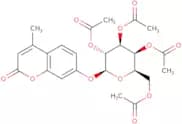
4-Methylumbelliferyl 2,3,4,6-tetra-O-acetyl-b-D-galactopyranoside
CAS:<p>4-Methylumbelliferyl 2,3,4,6-tetra-O-acetyl-b-D-galactopyranoside is a custom synthesis that has been modified with fluorination and methylation. This product is glycosylated and has a complex carbohydrate structure. It can be used for the modification of saccharides or for the synthesis of oligosaccharides and polysaccharides. 4MUF2,3,4,6TetraOAcGalpyr is soluble in water and has a purity of >99%.</p>Formula:C24H26O12Purezza:Min. 95%Peso molecolare:506.46 g/molD-Glucose-6-phosphate barium hepthydrate
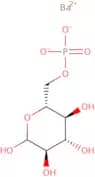
CAS:D-Glucose-6-phosphate barium salt is a custom synthesis that is prepared by modification of D-glucose with phosphoric acid, fluorination, methylation, and monosaccharide. This compound is a synthetic carbohydrate that belongs to the category of oligosaccharides and polysaccharides. It has a molecular weight of 583.12 g/mol and an empirical formula of C7H8O10P2Ba. The CAS number for this compound is 150400-00-3.Formula:C6H11BaO9P•(H2O)7Purezza:Min. 95%Colore e forma:PowderPeso molecolare:521.55 g/molFerulic acid acyl-b-D-glucoside
CAS:Ferulic acid acyl-b-D-glucoside is a flavonoid compound that has been shown to have antioxidant properties. It is found in plants and can be synthesized by the enzyme phenylalanine ammonia-lyase. Ferulic acid acyl-b-D-glucoside is insoluble in water, but soluble in organic solvents such as ethanol and acetone. The chemical composition of ferulic acid acyl-b-D-glucoside is not well understood, but it has been shown to contain chalcone, chlorogenic acids, aldehydes, celosianin, and betanidin.Purezza:Min. 95%2-Acetamido-1,3,6-tri-O-acetyl-2,4-dideoxy-4-fluoro-D-glucopyranose
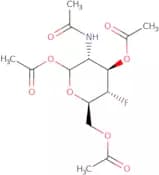
CAS:<p>2-Acetamido-1,3,6-tri-O-acetyl-2,4-dideoxy-4-fluoro-D-glucopyranose is a high purity synthetic glycosylate with a custom synthesis. It is an oligosaccharide that has been modified for fluorination and methylation. This product is used as an intermediate in the production of complex carbohydrates.</p>Formula:C14H20FNO8Purezza:Min. 95%Colore e forma:PowderPeso molecolare:349.31 g/molD-Arabinose-5-phosphate
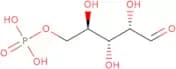
CAS:<p>D-Arabinose-5-phosphate is an intermediate in the pentose phosphate pathway. It is synthesized from D-xylulose-5-phosphate by xylitol dehydrogenase. D-Arabinose-5-phosphate inhibits the enzyme xylitol dehydrogenase, which converts xylulose to d-xylulose, and thus prevents the formation of 5-hydroxyisoxazole phosphate, a precursor to the synthesis of NADPH. In this way, it blocks the synthesis of NADPH, which is essential for aerobic metabolism. This inhibition leads to a decrease in ATP production and consequently cell death.</p>Formula:C5H11O8PPurezza:Min. 95%Peso molecolare:230.11 g/mol2-Acetamido-3,4,6-tri-O-acetyl-1-O-[(N-Cbz-aminoethoxy)ethoxy]-2-deoxy-β-D-galactopyranose
CAS:<p>2-Acetamido-3,4,6-tri-O-acetyl-1-O-[(N-Cbz-aminoethoxy)ethoxy]-2-deoxy-b-D-galactopyranose is a custom synthesis of a complex carbohydrate. It is a polysaccharide that contains fluorine and has been modified with methylation, glycosylation, click modification, and polysaccharide modifications. 2-Acetamido-3,4,6-tri-O -acetyl -1 -O-[(N -Cbz -aminoethoxy)ethoxy] -2 deoxy b D galactopyranose is also known as CAS No. 1261568 35 7 and it's molecular weight is 546.81 g/mol.</p>Formula:C26H36N2O12Purezza:Min. 95%Peso molecolare:568.57 g/molD-Gluconic acid sodium salt
CAS:<p>D-Gluconic acid sodium salt is a glycol ether that is used as an injection solution. It has been shown to have antibacterial efficacy against wild-type strains of bacteria such as Escherichia coli, Pseudomonas aeruginosa, and Staphylococcus aureus. The in vitro antimicrobial action of D-gluconic acid sodium salt was found to be due to its ability to inhibit bacterial growth by interfering with the synthesis of DNA. D-Gluconic acid sodium salt also has been shown to have antihypertensive effects in rats through the inhibition of angiotensin II type 1 receptor (AT1) signaling pathway and erythrocyte proliferation. This drug also has been shown to bind benzalkonium chloride and x-ray diffraction data show that it is crystalline in nature. The analytical method for determining the concentration of D-gluconic acid sodium salt is by electrochemical impedance</p>Formula:C6H11NaO7Purezza:Min. 95%Colore e forma:White PowderPeso molecolare:218.14 g/molNystatin A3
CAS:<p>8,9-Dideoxy-28,29-dihydro-7,10-dihydroxy-35-O-(2,6-dideoxy-L-ribo-hexopyranosyl)amphotericin B is an antifungal drug that belongs to the class of polyene macrolides. It is a potent inhibitor of Candida albicans and Candida glabrata. This compound has been shown to have synergistic effects when used in combination with nystatin against C. albicans. 8,9-Dideoxy-28,29-dihydro-7,10-dihydroxy-35O-(2,6 - dideoxy - L - ribo - hexopyranosyl)amphotericin B also inhibits toll like receptor 4 (TLR4), which is responsible for the induction of inflammatory cytokines such as IL1B and IL8</p>Formula:C53H85NO20Purezza:Min. 95%Peso molecolare:1,056.24 g/molβ-Estradiol 3-(β-D-glucuronide) 17-sulfate dipotassium
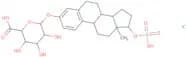
CAS:<p>β-Estradiol 3-(β-D-glucuronide) 17-sulfate dipotassium is a synthetic, nonsteroidal estrogen with a high affinity for the human estrogen receptor. It is used in the treatment of various types of breast cancer and as hormone replacement therapy. β-Estradiol 3-(β-D-glucuronide) 17-sulfate dipotassium is a part of the drug class selective estrogen receptor modulators (SERMs). The compound has been shown to have antiestrogenic activity through its ability to compete with estradiol for binding to the estrogen receptor. This compound also has some antiandrogenic effects and can inhibit sex hormone binding globulin (SHBG), leading to increased levels of free testosterone in blood plasma.</p>Formula:C24H32O11S•K2Purezza:Min. 95%Peso molecolare:606.77 g/molD-Glucosamine-3,4,6-tri-O-sulphate trisodium salt
CAS:<p>D-Glucosamine-3,4,6-tri-O-sulphate trisodium salt is a high purity and custom synthesis of D-glucosamine. It is a sugar with click modification and fluorination. It has CAS No. 157297-03-5 and it is synthesized from glycosylation, methylation, and modification. It has a molecular weight of 517.85 g/mol and the chemical formula C9H14N2O12S3NaO6. Glucosamine is an oligosaccharide that can be found in many complex carbohydrates such as chitin or cellulose.</p>Formula:C6H10NO14S3Na3Purezza:Min. 95%Colore e forma:PowderPeso molecolare:485.31 g/mol6-Chloro-6-deoxy-D-mannose
CAS:<p>6-Chloro-6-deoxy-D-mannose is a naturally occurring sugar that is found in the spermatozoa of many animals. It is a mannose derivative that has been shown to be an inhibitor of the enzyme glyceraldehyde 3-phosphate dehydrogenase, which plays an important role in energy metabolism and isomerization of 6-phosphate to glucose-1 phosphate. This property may be responsible for its contraceptive effects. The drug also inhibits phosphoglucomutase and enhances the transfer of glucose from the liver to other tissues, increasing blood glucose concentrations. 6-Chloro-6 deoxy mannose also has antifertility effects in rats by inhibiting transfer of spermatozoa through the female reproductive tract.</p>Formula:C6H11ClO5Purezza:Min. 95%Colore e forma:White Off-White PowderPeso molecolare:198.6 g/mol2-Acetamido-2-deoxy-D-glucopyranosyl serine
CAS:<p>2-Acetamido-2-deoxy-D-glucopyranosyl serine is a compound that belongs to the class of coumarins and monosaccharides. It contains a nitro group and a heterocycle, making it a unique and versatile molecule. This compound has been studied for its various properties, including its interaction with liver microsomes and its ability to undergo crystallization. Additionally, 2-Acetamido-2-deoxy-D-glucopyranosyl serine has shown promising effects on TGF-beta activation and has been found to inhibit aldehyde formation in trichloroacetic acid solutions. This compound also exhibits interactions with other molecules such as pyrazine, ofloxacin, and famotidine. Its diverse characteristics make it an intriguing compound for further research and potential applications in various fields.</p>Formula:C11H20N2O8Purezza:Min. 95%Colore e forma:White PowderPeso molecolare:308.29 g/molDiosmetin-7-O-b-D-glucopyranoside
CAS:<p>Diosmetin-7-O-b-D-glucopyranoside is a coumarin derivative that is found in the root of the Chinese herb Dioscorea tinctoria. It has been shown to have anti-inflammatory effects by inhibiting the expression of inflammatory genes, and it also has antioxidant properties. The chemical structure of diosmetin has been shown to be similar to protocatechuic acid, an important phenolic acid that can be found in wine and vinegar. Diosmetin has also been shown to inhibit mitochondrial apoptosis, which may contribute to its anti-cancer effects. Diosmetin has been shown to increase postprandial blood glucose levels in rats fed a high fat diet, and this effect may be due to its ability to inhibit peroxisome proliferator-activated receptor gamma (PPARγ) activity.</p>Formula:C22H22O11Purezza:Min. 95%Colore e forma:PowderPeso molecolare:462.4 g/molD-Sedoheptulose
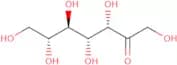
CAS:<p>D-Sedoheptulose is a sugar that is a member of the pentoses. It has been shown to have a ph optimum of 4.5 and oxidizing potential of -0.18 V. It is also an important intermediate in carbohydrate metabolism and can be used as an energy source by cells. D-Sedoheptulose plays a role in transcriptional regulation and cellular physiology, as well as being involved in the production of acyl chains and disulfide bonds for proteins. D-Sedoheptulose has also been found to have synergic effects with other sugars such as glucose, sucrose, or fructose, which may be due to its ability to act as an inducer of reductive enzymes such as glucose-6-phosphate dehydrogenase (G6PD).</p>Formula:C7H14O7Purezza:Min. 95%Colore e forma:PowderPeso molecolare:210.18 g/mol4-Methoxyphenyl β-D-galactopyranoside
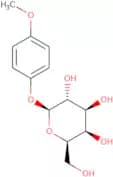
CAS:<p>4-Methoxyphenyl b-D-galactopyranoside is a custom synthesis of a sugar with an active methyl group. It is synthesized by the Click modification of 4-hydroxyphenyl b-D-galactopyranoside and has been fluorinated. The glycosylation process has been carried out using glycone as a precursor to modify the monosaccharide and oligosaccharide. This product has a CAS number of 3150-20-7 and is considered a synthetic compound.</p>Formula:C13H18O7Purezza:Min. 95%Colore e forma:PowderPeso molecolare:286.28 g/molN-Acetyl-D-glucosamine-3-6-di-O-sulfate sodium
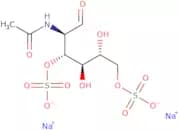
CAS:<p>N-Acetyl-D-glucosamine-3-6-di-O-sulfate sodium salt is a synthetic oligosaccharide. It is a fluorinated glycosylic acid glycosidase, an enzyme that catalyzes the hydrolysis of beta-(1,2)-glycosidic linkages in polysaccharides. This product can be custom synthesized to meet your specifications and can be modified with methylation or click modification for your specific needs.</p>Formula:C8H15NO12S2•Na2Purezza:(13C-Nmr Spectrum) Min. 95%Colore e forma:White PowderPeso molecolare:427.32 g/molL-Lyxosamine HCl
L-Lyxosamine HCl is a synthetic monosaccharide that has been modified to contain a fluorine atom. L-Lyxosamine HCl is a methyl donor in the Methylation reaction and can be used as an intermediate for the synthesis of oligosaccharides and polysaccharides. This product is available in high purity, with an average yield of 97%. The CAS No. for this product is 590-81-6.Formula:C5H11NO4HClPurezza:Min. 95%Peso molecolare:185.61 g/molBenzyl 2,3-O-isopropylidene-α-D-mannofuranoside
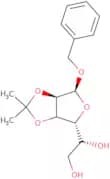
CAS:<p>Benzyl 2,3-O-isopropylidene-a-D-mannofuranoside is a fluorinated monosaccharide that is synthesized using glycosylation and polysaccharide modification. This product has a CAS number of 20689-03-6 and can be used for complex carbohydrate synthesis. It has been shown to have high purity.</p>Formula:C16H22O6Purezza:Min. 95%Colore e forma:PowderPeso molecolare:310.34 g/molN-5-Carboxypentyl-1-deoxygalactonojirimycin
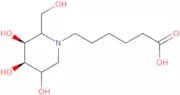
CAS:<p>N-5-Carboxypentyl-1-deoxygalactonojirimycin is an inhibitor of glycolipid hydrolase and a potential drug for the treatment of lysosomal storage disorders. N-5-Carboxypentyl-1-deoxygalactonojirimycin is derived from the natural product galactonojirimycin, which has been shown to inhibit glycolipid hydrolase in vitro. The compound was developed by modifying the peptide sequence to increase its affinity for the enzyme. N-5-Carboxypentyl-1-deoxygalactonojirimycin displays a higher affinity for glycolipid hydrolase than galactonojirimycin, and it also has a greater inhibitory effect on this enzyme.<br>N-5-Carboxypentyl-1-deoxygalactonojirimycin is</p>Formula:C12H23NO6Purezza:Min. 95%Colore e forma:White PowderPeso molecolare:277.31 g/mol2,3,4,6-Tetra-O-benzyl-D-galactono-1,5-lactone
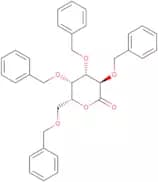
CAS:2,3,4,6-Tetra-O-benzyl-D-galactono-1,5-lactone is an aldehyde that has been synthesized from tert-butyl bromoacetate and ethynyl acetate in the presence of cesium carbonate. It is an exocyclic aldehyde that forms a cyclic ester with glycine. The synthetic pathway was stereoselective because the exocyclic double bond was only formed on one face of the molecule. This product can be used as an intermediate for the synthesis of glycine analogues and glycines.Formula:C34H34O6Purezza:Min. 95%Peso molecolare:538.63 g/mol


![2-Acetamido-3,4,6-tri-O-acetyl-1-O-[(N-Cbz-aminoethoxy)ethoxy]-2-deoxy-β-D-galactopyranose](/_next/image/?url=https%3A%2Fstatic.cymitquimica.com%2Fproducts%2F3D%2Fthumb-webp%2FMA137616.webp&w=3840&q=75)