Monosaccaridi
I monosaccaridi sono la forma più semplice dei carboidrati e fungono da blocchi fondamentali per zuccheri più complessi e polisaccaridi. Queste singole molecole di zucchero svolgono ruoli critici nel metabolismo energetico, nella comunicazione cellulare e nei componenti strutturali delle cellule. In questa sezione troverai una vasta gamma di monosaccaridi essenziali per la ricerca in biochimica, biologia molecolare e glicoscienza. Questi composti sono cruciali per studiare le vie metaboliche, i processi di glicosilazione e lo sviluppo di agenti terapeutici. Da CymitQuimica, offriamo monosaccaridi di alta qualità per supportare le tue esigenze di ricerca, garantendo precisione e affidabilità nelle tue indagini scientifiche.
Sottocategorie di "Monosaccaridi"
- Alloses(11 prodotti)
- Arabinosi(21 prodotti)
- Eritrosio(11 prodotti)
- Fruttosio(9 prodotti)
- Fucosio(36 prodotti)
- Galactosamina(41 prodotti)
- Galattosio(261 prodotti)
- Glucosio(365 prodotti)
- Acidi glucuronici(51 prodotti)
- Glicosubstrati per enzima(77 prodotti)
- Gulosio(6 prodotti)
- Idosio(4 prodotti)
- Inositoli(15 prodotti)
- Lixosio(4 prodotti)
- Mannosio(65 prodotti)
- O-Glicani(48 prodotti)
- Psicosi(3 prodotti)
- Rhamnosio(10 prodotti)
- Ribosi(61 prodotti)
- Acidi Sialici(100 prodotti)
- Sorbosio(4 prodotti)
- Zuccheri(173 prodotti)
- Tagatosio(4 prodotti)
- Talosio(8 prodotti)
- Xyloses(20 prodotti)
Mostrare 17 più sottocategorie
Trovati 6090 prodotti di "Monosaccaridi"
Ordinare per
Purezza (%)
0
100
|
0
|
50
|
90
|
95
|
100
L-Sorbose-1-phosphate disodium
CAS:<p>A sugar phosphate. Typically supplied as the sodium salt.</p>Formula:C6H13O9P•Na2Purezza:Min. 95%Peso molecolare:306.10 g/mol5-(Galactosylhydroxy)-L-lysine
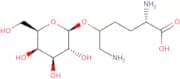
CAS:<p>5-(Galactosylhydroxy)-L-lysine is a metabolite that is found in human urine and serum. It is a basic compound with a hydroxyl group, which can be used as a biomarker for metabolic disorders and pharmacological treatments. 5-(Galactosylhydroxy)-L-lysine has been shown to have the potential to be used as a treatment for protein synthesis disorders. The mechanism of this reaction is still unknown, but it has been found that the optimum pH for this reaction is between 7 and 8.</p>Formula:C12H24N2O8Purezza:Min. 95%Colore e forma:Off-White To Light Brown SolidPeso molecolare:324.33 g/molMethyl a-D-arabinofuranoside
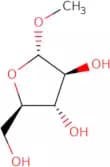
CAS:Methyl a-D-arabinofuranoside is an inhibitor of the enzyme D-arabinonolactate synthase, which is involved in the synthesis of arabinose from D-ribulose. It can be used for the diagnosis and treatment of pediatric patients with high activity index values in their blood. This drug has been shown to inhibit transcriptional regulation in human erythrocytes and to have structural similarities to the natural substrate. Methyl a-D-arabinofuranoside has also been shown to inhibit the activities of enzymes involved in cellular respiration, protein synthesis, and DNA replication. This inhibition leads to cell death by apoptosis or necrosis. The group P2 methyl a-D-arabinofuranoside (MAA) was tested as a potential analytical method for wastewater treatment; it was found that MAA could be used as an effective tool for removing organic matter from wastewater.Formula:C6H12O5Purezza:Min. 98 Area-%Colore e forma:Colorless Clear LiquidPeso molecolare:164.16 g/molFulvestrant 17-b-D-glucuronide
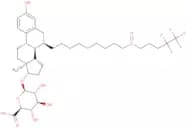
CAS:<p>Fulvestrant 17-b-D-glucuronide is a synthetic, high purity, custom synthesis of fulvestrant. It is modified with click chemistry and contains saccharides and oligosaccharides. Fulvestrant 17-b-D-glucuronide is used in the treatment of hormone receptor positive breast cancer in postmenopausal women who have been previously treated with an aromatase inhibitor.</p>Formula:C38H55F5O9SPurezza:Min. 95%Peso molecolare:782.9 g/molBlumenol C glucoside
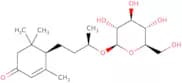
CAS:<p>Blumenol C glucoside is a natural compound that is found in plants. It has been found to have an apoptotic effect on cancer cells and may be used as a chemotherapeutic agent. Blumenol C glucoside has been shown to induce apoptosis in many cell types, including human carcinoma cells, by inhibiting the mitochondrial membrane potential. It also induces apoptosis by down-regulating Bcl-2 and up-regulating Bax proteins. The induction of apoptosis by Blumenol C glucoside is mediated through an increase in the release of cytochrome c from the mitochondria into the cytosol. In addition, it inhibits the expression of proinflammatory cytokines such as IL-1β and IL-6. This compound also induces apoptosis in normal human prostate epithelial cells and mouse colon epithelial cells without affecting normal human lung epithelial cells or mouse lung epithelial cells. A transcriptomic analysis revealed that Blumenol</p>Formula:C19H32O7Purezza:Min. 95%Colore e forma:PowderPeso molecolare:372.45 g/mol2-Methacryloxyethyl D-glucopyranoside - 25-50% in aqueous solution containing 200 ppm MEHQ inhibitor
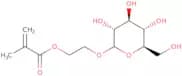
CAS:<p>alpha/beta mixture - ratio of mixture can be variable</p>Formula:C12H20O8Purezza:Min. 95%Colore e forma:Yellow PowderPeso molecolare:292.3 g/mol2,3-O-Isopropylidene-b-D-ribofuranosylamine p-toluenesulphonate salt
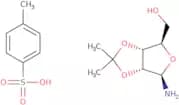
CAS:2,3-O-Isopropylidene-b-D-ribofuranosylamine p-toluenesulphonate salt is an organic chemical that is a methylated sugar. It can be used in the synthesis of saccharides, polysaccharides, and oligosaccharides. This product is available for custom synthesis with a minimum order quantity of 10 grams and purity of >99%. CAS No. 29836-10-0Formula:C8H15NO4·C7H8O3SPurezza:Min. 95%Colore e forma:White PowderPeso molecolare:361.41 g/molLauryl glucoside
CAS:<p>Lauryl glucoside is a cationic surfactant that has been used in pharmaceutical preparations for the treatment of bacterial vaginosis. Lauryl glucoside is a non-irritating, low-toxicity compound that is effective against most Gram-positive and Gram-negative bacteria. It has been shown to be an effective antimicrobial agent with an adsorption mechanism based on hydrogen bonding. This agent also has been shown to have skin cancer prevention properties, as it is able to inhibit the proliferation of human skin cells. Lauryl glucoside can also cause allergic reactions or sensitization in some individuals, while diamine tetraacetic acid (DTA) may be used as a stabilizer in products containing lauryl glucoside.</p>Purezza:Min. 95%1-Amino-1-deoxy-D-mannitol
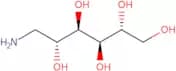
CAS:1-Amino-1-deoxy-D-mannitol (1ADM) is a substance that has been used in the treatment of pediatric pneumonia. 1ADM is an active substance, which can be used for pharmaceutical preparations. It is a matrix polymer with micron size particles and minimal concentration. The reaction mechanism of this substance is not yet clear. Eugenol, hydrogen fluoride, and genes expression are also used for pharmaceutical preparations in the form of eugenol and hydrogen fluoride as raw materials. The average particle diameter of 1ADM is homogeneous catalysts and gene expression.Purezza:Min. 95%1,3,5-Tri-O-benzoyl-2-keto-α-D-ribofuranose
CAS:<p>1,3,5-Tri-O-benzoyl-2-keto-a-D-ribofuranose (TOBR) is a high purity compound that can be custom synthesized to your specifications. The 1,3,5-trioxane ring is an important structural feature of TOBR. This modification has been shown to improve the stability and water solubility of the product. TOBR is an Oligosaccharide with a sugar or saccharide at the end of a Glycosylation chain. It is also classified as a Polysaccharide because it contains more than one saccharide unit and/or more than one type of sugar. To modify this product with Click chemistry, please contact us and we will send you instructions on how to proceed with this modification.</p>Formula:C26H20O8Purezza:Min. 95%Peso molecolare:460.43 g/molb-L-Arabinose-1-phosphate potassium
<p>b-L-Arabinose-1-phosphate potassium is a sugar that is used in the synthesis of oligosaccharides and polysaccharides. It can be used as an anti-inflammatory agent.</p>Formula:C5H9O8P·2KPurezza:Min. 95%Peso molecolare:306.29 g/mol2,4-O-Benzylidene-D-glucitol
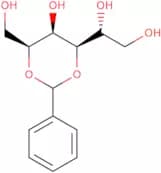
CAS:<p>2,4-O-Benzylidene-D-glucitol is a partially protected glucitol</p>Formula:C13H18O6Purezza:Min. 95%Peso molecolare:270.3 g/mol4-Chloro-4-deoxy-D-galactose
CAS:<p>4-Chloro-4-deoxy-D-galactose is a high resistance carbon source that has been shown to be a more efficient method for the detection of organometallic molecules. 4-Chloro-4-deoxy-D-galactose can be synthesized from deionized water and an organometallic molecule. The compound was found to be effective in detecting liver cancer cells using a chemometric technique. This synthetic molecule also has a high detection limit and is an analytical method for detecting human liver metabolites.</p>Purezza:Min. 95%D-Galactono-1,5-lactone
CAS:<p>D-Galactono-1,5-lactone is a sugar with the chemical formula HOOC-(CHOH)CO-(CHOH)COOH. It is a colorless to white crystalline solid that has a sweet taste. D-Galactono-1,5-lactone is naturally found in some fruits and vegetables such as apples, carrots, potatoes, and pumpkin. D-Galactono-1,5-lactone can be synthesized by reacting glycerol with an acid chloride in the presence of a base. This reaction generates the lactone ring via addition of water to the double bond between carbons 1 and 5 of glycerol. The lactone ring is then opened by hydrolysis to form D-galactonic acid which can be converted into D-galactonolactone by adding an enolate salt generated from an alcohol.</p>Formula:C6H10O6Purezza:Min. 95%Peso molecolare:178.14 g/molCoumaric acid 4-O-glucoside
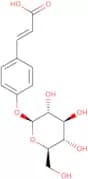
CAS:<p>Coumaric acid 4-O-glucoside is a compound that is found in plants and can be extracted from flaxseed. It has been shown to have antioxidative activity, especially in the prevention of oxidation of fatty acids. Coumaric acid 4-O-glucoside has also been shown to inhibit the synthesis of n-3 fatty acids and secoisolariciresinol, as well as to regulate the biosynthesis of these lipids. The efficient method for preparing this compound is by hydrolysis of coumaroyl ester linkages using hydrochloric acid in methanol. Coumaric acid 4-O-glucoside was synthesized by reacting methyl acetoacetate with sodium hydroxide and hydrochloric acid in methanol at a temperature range of 0°C to 25°C. This reaction was followed by purification using phase liquid chromatography.</p>Formula:C15H18O8Purezza:Min. 95%Peso molecolare:326.3 g/molD-[UL-13C6]cFructose 1-phosphate disodium salt
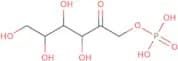
D-[UL-13C6]cFructose 1-phosphate disodium salt is a synthetic compound that can be used for methylation, saccharide, Polysaccharide, Click modification and Modification. It can also be used for Glycosylation and Carbohydrate synthesis. This product is soluble in water and has a purity level of >98%. It is stable against heat and pH changes.Purezza:Min. 95%2,4-O-Benzylidene-L-xylose
CAS:<p>2,4-O-Benzylidene-L-xylose is a white crystalline powder with a melting point of about 125°C. It is an acetate salt that can be used in the synthesis of many natural products. It has been shown to inhibit HMG-CoA reductase and is used in the treatment of hypercholesterolemia. The reaction mechanism for this compound is not well understood, but it is believed to involve an acid catalyst and an organic solvent. The yield for this compound is low and it requires a long reaction time due to its high reactivity.</p>Formula:C12H14O5Purezza:Min. 95%Peso molecolare:238.24 g/molSuberoylanilide hydroxamic acid b-D-glucuronide
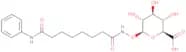
CAS:<p>Suberoylanilide hydroxamic acid b-D-glucuronide (SAHA) is a histone deacetylase inhibitor that is used in the treatment of colorectal adenocarcinoma. It is orally administered and can cross the blood-brain barrier to inhibit HDACs in human liver cells. SAHA has been shown to be effective against a number of cancer cell lines, including colon, prostate, breast, lung, and leukemia cell lines. SAHA has also been shown to have clinical benefits in various cancers and has been found to be safe at doses up to 1g/day when given for 24 months. The most common side effects are thrombocytopenia and anorexia.</p>Formula:C20H28N2O9Purezza:Min. 95%Colore e forma:SolidPeso molecolare:440.44 g/molEthyl D-glucopyranoside
CAS:<p>Ethyl D-glucopyranoside is a reaction product that contains the fatty acid erythritol and inulin. It can be used as a control agent to test for urinary tract infections, as well as being an active enzyme that inhibits microbial growth. Ethyl D-glucopyranoside has been shown to have an inhibitory effect on microbes, with a crystalline cellulose carrier having the best inhibitory effect. This substance is also used in detergent compositions to prevent microbial growth and maintain cleaning efficiency.</p>Formula:C8H16O6Purezza:Min. 95%Peso molecolare:208.21 g/mol
![GDP-L-[1-13C]fucose disodium salt](/_next/image/?url=https%3A%2Fstatic.cymitquimica.com%2Fproducts%2F3D%2Fthumb-webp%2FMG170098.webp&w=3840&q=75)





![D-[UL-13C6]cFructose 1-phosphate disodium salt](/_next/image/?url=https%3A%2Fstatic.cymitquimica.com%2Fproducts%2F3D%2Fthumb-webp%2FMF167930.webp&w=3840&q=75)