


Monosaccaridi
Sottocategorie di "Monosaccaridi"
- Alloses(11 prodotti)
- Arabinosi(21 prodotti)
- Eritrosio(11 prodotti)
- Fruttosio(9 prodotti)
- Fucosio(36 prodotti)
- Galactosamina(41 prodotti)
- Galattosio(262 prodotti)
- Glucosio(365 prodotti)
- Acidi glucuronici(52 prodotti)
- Glicosubstrati per enzima(78 prodotti)
- Gulosio(6 prodotti)
- Idosio(4 prodotti)
- Inositoli(15 prodotti)
- Lixosio(4 prodotti)
- Mannosio(65 prodotti)
- O-Glicani(48 prodotti)
- Psicosi(3 prodotti)
- Rhamnosio(10 prodotti)
- Ribosi(61 prodotti)
- Acidi Sialici(100 prodotti)
- Sorbosio(4 prodotti)
- Zuccheri(174 prodotti)
- Tagatosio(4 prodotti)
- Talosio(8 prodotti)
- Xyloses(20 prodotti)
Trovati 6138 prodotti di "Monosaccaridi"
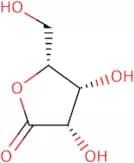
D-Lyxono-1,4-lactone
CAS:D-Lyxono-1,4-lactone is an inhibitor of the enzyme fucosidase. It competitively inhibits the enzyme, but does not inhibit other hydroxamic acids such as enantiomers of D-lyxono-1,4-lactone. D-Lyxono-1,4-lactone has been used to treat HIV and AIDS because it prevents viral replication by blocking the synthesis of glycoproteins in the virus's envelope. It also has inhibitory effects on tumor cells that are not dependent on fucosidase activity. Magnetic resonance spectroscopy (NMR) studies have shown that d-lyxono-1,4-lactone binds to human liver cells and blocks the binding site for cytotoxic molecules in these cells. The molecular modelling study has demonstrated that d-lyxono 1,4 lactone binds to a specific site on human HLA class II molecule and reduces itsFormula:C5H8O5Purezza:(%) Min. 97%Colore e forma:PowderPeso molecolare:148.11 g/molD-myo-Inositol-2,4,5-triphosphate sodium salt
D-myo-Inositol-2,4,5-triphosphate sodium salt is a phosphoinositide that is involved in the process of cell signaling. It mediates the release of intracellular calcium ions from the endoplasmic reticulum and is involved in a number of processes including protein synthesis and efflux. D-myo-Inositol-2,4,5-triphosphate sodium salt can be found in many cells and tissues, including the brain and gastrointestinal tract. The concentration of calcium ions affects the activity of this compound by enhancing or terminating its effects. In cells that are not stimulated by an agonist such as ionomycin, divalent cations can enhance the activity of this compound. When stimulated by an agonist like ionomycin, divalent cations will terminate its effects by binding to it more strongly than to guanosine residues. This dual effect on divalent cations enhances the specificity for DFormula:C6H12O15P3·xNaPurezza:Min. 95%Peso molecolare:417.07 g/mol2-Acetamido-2,6-dideoxy-D-galactose
CAS:2-Acetamido-2,6-dideoxy-D-galactose (2ADG) is a structural analogue of the natural monosaccharide 2,6-dideoxy-D-galactose. It has been shown to have an antimicrobial effect against aerobacter aerogenes in vitro. 2ADG is metabolized by glycosidases and methyl glycosides to form 1,4-anhydro-2,3,4,6 tetraacetamido-2,4,6 dideoxy D galactose. This compound inhibits the growth of bacterial strains that are resistant to polymyxin b., such as Pseudomonas aeruginosa. The inhibition of these bacteria is due to the inhibition of the synthesis of their outer membrane lipopolysaccharides by 2ADG. The antibacterial activity is also attributed to its ability to inhibit the metabolism of glycan molecules in some bacteria
Formula:C8H15NO5Purezza:Min. 95%Colore e forma:White PowderPeso molecolare:205.21 g/mol1,3,4,6-Tetra-O-acetyl-N-azidoacetylmannosamine
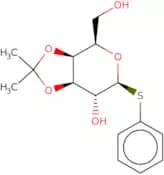
CAS:1,3,4,6-Tetra-O-acetyl-N-azidoacetylmannosamine, also called ManNAz tetraacetate, 1,3,4,6-tetra-O-acetyl-N-azidoacetyl-D-mannosamine and Ac4ManNAz, is an azide-containing metabolic glycoprotein labelling reagent that can be incorporated into the sialic acid biosynthesis pathway. The azide is able to react with an alkyne in a 1,3-dipolar cycloaddition reaction (click chemistry) to enable linking to a fluorescent probe or a biotin.Formula:C16H22N4O10Purezza:Min. 95%Colore e forma:PowderPeso molecolare:430.37 g/molPhenyl 3,4-O-isopropylidene-b-D-thiogalactopyranoside
CAS:Phenyl 3,4-O-isopropylidene-b-D-thiogalactopyranoside is a custom synthesis of the complex carbohydrate Oligosaccharide, Polysaccharide. It belongs to Modification, saccharide, Methylation, Glycosylation, Carbohydrate. Phenyl 3,4-O-isopropylidene-b-D-thiogalactopyranoside can be used for Click modification, sugar and High purity. This compound is Fluorinated and Synthetic.
Formula:C15H20O5SPurezza:Min. 95%Colore e forma:PowderPeso molecolare:312.38 g/molMethyl 3,4,6-tri-O-acetyl-2-deoxy-2-phthalimido-β-D-glucopyranoside
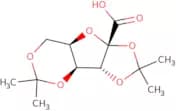
CAS:Methyl 3,4,6-tri-O-acetyl-2-deoxy-2-phthalimido-b-D-glucopyranoside is a high purity natural carbohydrate. It is an oligosaccharide that can be custom synthesized to meet your requirements. Methyl 3,4,6-tri-O-acetyl-2-deoxy-2-phthalimido b D glucopyranoside has many modifications including click and fluorination. Its CAS number is 76101 13 8. This product can be used for modification, glycosylation and fluorination in the synthesis of complex carbohydrates. !-- --> !-- -->Formula:C21H23NO10Purezza:Min. 95%Colore e forma:White to off-white solid.Peso molecolare:449.41 g/mol2,3:4,6-Di-O-isopropylidene-2-keto-L-gulonic acid
CAS:2,3:4,6-Di-O-isopropylidene-2-keto-L-gulonic acid is a mediator that is used in the synthesis of epoxides. It is obtained by the reaction of hydrogen peroxide with 2,3:4,6-di-o-isopropylidene-2-keto-l-gulonic acid monohydrate. This product can be used as an intermediate in organic synthesis to produce chiral epoxides. The stereochemistry of the epoxides depends on the chirality of the substrate and the stereoselectivity for this process is high. The epoxides are then recycled and reused to make more 2,3:4,6--di--isopropylidene--2--keto--l--gulonic acid monohydrate.Purezza:Min. 95%β-D-Glucose-1-phosphate disodium
CAS:b-D-Glucose-1-phosphate disodium salt is a white crystalline powder that is soluble in water, ethanol, and acetone. It is a monosaccharide with the molecular formula C6H12O6P2Na2. It has a molecular weight of 348.08 g/mol.
Formula:C6H13O9P•Na2Purezza:Min. 95%Colore e forma:PowderPeso molecolare:306.12 g/mol2,5-Anhydro-4,6-di-O-benzoyl-D-glucitol
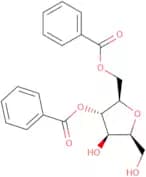
CAS:2,5-Anhydro-4,6-di-O-benzoyl-D-glucitol is a nucleoside analog that has been shown to inhibit the growth of Mycobacterium tuberculosis and other bacterial strains. It inhibits DNA synthesis by binding to the thymine moiety in the helix, which blocks access of thymine to the enzyme DNA polymerase. 2,5-Anhydro-4,6-di-O-benzoyl-D-glucitol also inhibits RNA synthesis by binding to the ribose moiety in nucleotides and blocking access of ribose to enzymes involved in the process. This compound is used as an immunosuppressant for organ transplantation in humans.Formula:C20H20O7Purezza:Min. 95%Peso molecolare:372.38 g/mol3-O-Methanesulfonyl-D-glucopyranose
CAS:3-O-Methanesulfonyl-D-glucopyranose is a high purity, custom synthesis sugar that can be modified with fluorination, glycosylation, methylation and modification. It is also synthesized from glycoaldehyde and methanesulfonic acid in the presence of sodium hydroxide and sodium acetate. 3-O-Methanesulfonyl-D-glucopyranose can be used to synthesize saccharides and oligosaccharides. This compound is soluble in water and has a boiling point of 218°C at 760 mmHg. It is slightly soluble in methanol, ethanol and acetone. 3-O-Methanesulfonyl-D-glucopyranose has a CAS number of 40631-95-6.Formula:C7H14O8SPurezza:Min. 95%Colore e forma:PowderPeso molecolare:258.25 g/molN-(2-Fluorobenzyliden)imino-2,3,4,6-tetra-O-pivaloyl-b-D-glucopyranoside
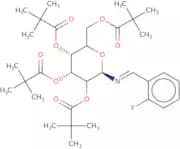
N-(2-Fluorobenzyliden)imino-2,3,4,6-tetra-O-pivaloyl-b-D-glucopyranoside is a custom synthesis of a high purity glycosylated oligosaccharide. It is modified with fluorine and has a methyl group on the 2' position of the sugar. The CAS number for this product is 1093457-52-1.Formula:C33H48FNO9Purezza:Min. 95%Peso molecolare:621.73 g/molD-Glucuronic acid, sodium salt monohydrate
CAS:Chiral D-Glucuronic acid is the most basic building bloc of hyaluronic acid and chondroitin sulfate and precursor of Vitamin C, the chief detoxifying agent in both plants and animals. Humectant in skin care products.
Formula:C6H11NaO8Peso molecolare:234.14 g/molPoly-D-galacturonic acid methyl ester
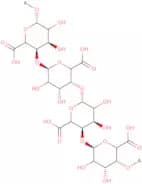
CAS:Poly-D-galacturonic acid methyl ester (PDGME) is a natural compound that has been shown to possess anti-inflammatory and anti-diabetic properties. PDGME has been shown to increase the expression of pro-apoptotic proteins in mouse macrophages, as well as inhibit the activity of toll-like receptor 4, which may be due to its ability to induce caspase-independent cell death. PDGME also inhibits the growth of Clostridium difficile and other bacteria by inhibiting their enzyme activities. PDGME is water soluble and can be used as a reagent for biochemical studies.Purezza:Min. 98 Area-%Colore e forma:White Off-White Powder2-Acetyl-4-tetrahydroxybutyl imidazole
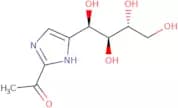
CAS:Inhibitor of sphingosine-1-phosphate lyase; immunosuppressantFormula:C9H14N2O5Purezza:Min. 95%Colore e forma:White PowderPeso molecolare:230.22 g/molD-Sedoheptulose 7-phosphate lithium
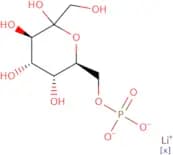
CAS:D-Sedoheptulose 7-phosphate lithium (DSDP) is a substance that is used in the synthesis of ribulose. It provides the carbonyl group for the synthesis of acetyl-CoA and plays an important role in energy metabolism. DSDP has been shown to be effective against streptococcus faecalis, which may be due to its ability to inhibit protein synthesis by binding to ribulose phosphates, thereby preventing the production of ATP. DSDP also inhibits cellular transformation, which may be due to its ability to bind with DNA and block RNA synthesis. In vitro studies have shown that DSDP can inhibit both Streptococcus faecalis and Escherichia coli at concentrations below 10 mM. These effects are likely mediated by enzymatic activities that are involved in bacterial cell physiology.Formula:C7H15O10P•(Li)xPurezza:Min. 95%Colore e forma:PowderPeso molecolare:290.16 g/mol(5R, 8S, 9R) -8- [(4R) - 2, 2-Dimethyl- 1, 3- dioxolan- 4- yl] - 9- hydroxy- 2, 2- dimethyl- 1, 3, 7- trioxaspiro[4.4] nonan- 6- one
(5R, 8S, 9R) -8- [(4R) - 2, 2-Dimethyl- 1, 3- dioxolan- 4- yl] - 9- hydroxy- 2, 2- dimethyl- 1, 3, 7- trioxaspiro[4.4] nonan- 6- one is a monosaccharide that has been synthesized and modified. The synthesis of this compound was achieved by reacting 5-(2-(benzyloxy)ethoxy)-1-(3-(dimethylamino)propoxy)-2-(4-[(2S)-2,2,-dimethylpropanoyl]phenyl)pentaone (1), with the corresponding bromoacetate or chloroacetate in the presence of base to give the desired product (2). This compound has been methylated and glycosylated. It is a white solid that is soluble in water and DMSOPurezza:Min. 95%(1S) -1- [(2S, 3R) - 3-Hydroxy-2- azetidinyl] -1, 2- ethanediol
Glycosylation of azetidinol is a chemical reaction in which a glycosylate group is transferred from an activated sugar to the nitrogen atom of an azetidinone. It can be used for the synthesis of oligosaccharides and polysaccharides by transferring the glycosyl group to their nitrogen atoms. Click modification refers to a type of chemical reaction that was developed by K. Barry Sharpless in 1996, which uses copper-catalyzed azide-alkyne cycloaddition. This type of reaction has been used for the synthesis of complex carbohydrates with high purity and low cost, as well as for modifying sugars with methyl groups or fluorine atoms.
Purezza:Min. 95%(1R) -1- [(2S, 3R,4S) -4-(Acetylamino)methyl-3- hydroxy- 1- azetidinyl] -1, 2- ethanediol
(1R) -1- [(2S, 3R,4S) -4-(Acetylamino)methyl-3- hydroxy- 1- azetidinyl] -1, 2- ethanediol is a custom synthesis. It is a complex carbohydrate that consists of an oligosaccharide with the CAS No. 6056-89-2. This product has been modified by methylation and glycosylation and has been fluorinated in order to improve its stability. The purity of this product is high and it contains a saccharide or sugar which is a polysaccharide as well as a carbonyl group.Purezza:Min. 95%5-Azido-5-deoxy-2,3-O-isopropylidene-1-C-phenyl-L-lyxofuranose
5-Azido-5-deoxy-2,3-O-isopropylidene-1-C-phenyl-L-lyxofuranose is a fluorinated monosaccharide that can be synthesized by the reaction of 5 azidoacetone with 5 deoxyribose in the presence of sodium hydroxide. This compound is used for glycosylation, polysaccharide modification, and click chemistry. It is also used as a sugar source in the preparation of oligosaccharides and complex carbohydrates. 5 Azido-5 deoxy -2,3 O isopropylidene -1 C phenyl L L lyxofuranose has CAS number 8068635-52-8.Purezza:Min. 95%(5R, 8S, 9S) -8- [(4R) - 2, 2- Dimethyl- 1, 3- dioxolan- 4- yl] - 9- hydroxy- 2, 2- dimethyl- 1, 3, 7- trioxaspiro[4.4] nonan- 6- on e
(5R, 8S, 9S) -8- [(4R)-2,2-Dimethyl-1,3-dioxolan-4-yl] -9-hydroxy-2, 2-dimethyl-1,3, 7-trioxaspiro[4.4] nonan-6-on e is a synthetic compound that is used in the synthesis of oligosaccharides and glycosylations. It can be used as a building block for modification of saccharides and polysaccharides with click chemistry and fluorination. This product has high purity and is suitable for custom synthesis.Purezza:Min. 95%







![(5R, 8S, 9R) -8- [(4R) - 2, 2-Dimethyl- 1, 3- dioxolan- 4- yl] - 9- hydroxy- 2, 2- dimethyl- 1, 3,…](/_next/image/?url=https%3A%2Fstatic.cymitquimica.com%2Fproducts%2F3D%2Fthumb-webp%2FMD170672.webp&w=3840&q=75)
![(1S) -1- [(2S, 3R) - 3-Hydroxy-2- azetidinyl] -1, 2- ethanediol](/_next/image/?url=https%3A%2Fstatic.cymitquimica.com%2Fproducts%2F3D%2Fthumb-webp%2FMH163530.webp&w=3840&q=75)
![(1R) -1- [(2S, 3R,4S) -4-(Acetylamino)methyl-3- hydroxy- 1- azetidinyl] -1, 2- ethanediol](/_next/image/?url=https%3A%2Fstatic.cymitquimica.com%2Fproducts%2F3D%2Fthumb-webp%2FMA163403.webp&w=3840&q=75)
![(5R, 8S, 9S) -8- [(4R) - 2, 2- Dimethyl- 1, 3- dioxolan- 4- yl] - 9- hydroxy- 2, 2- dimethyl- 1, 3…](/_next/image/?url=https%3A%2Fstatic.cymitquimica.com%2Fproducts%2F3D%2Fthumb-webp%2FMD170675.webp&w=3840&q=75)