Sali metallici
In questa sezione, puoi trovare vari sali metallici, che sono composti caratterizzati dalla presenza di atomi metallici e non metallici. Essenzialmente, i sali metallici sono composti da cationi che sono uno o più atomi metallici. Questi sali svolgono un ruolo cruciale in numerose reazioni chimiche e applicazioni, servendo come catalizzatori, reagenti o intermedi in vari processi industriali e di ricerca. Da CymitQuimica, offriamo un'ampia selezione di sali metallici di alta qualità per soddisfare le tue esigenze di ricerca e industriali, garantendo prestazioni affidabili ed efficaci nelle tue applicazioni.
Trovati 2870 prodotti di "Sali metallici"
Ordinare per
Purezza (%)
0
100
|
0
|
50
|
90
|
95
|
100
Ruthenium(III) nitrosyl nitrate, soluble in 10% dilute nitric acid
CAS:<p>Please enquire for more information about Ruthenium(III) nitrosyl nitrate, soluble in 10% dilute nitric acid including the price, delivery time and more detailed product information at the technical inquiry form on this page</p>Formula:RuN4O10Purezza:Min. 95%Colore e forma:Clear LiquidPeso molecolare:317.09 g/molRef: 3D-FR57258
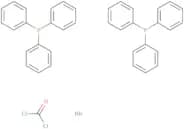
Prodotto fuori produzioneCarbonylbis(triphenylphosphine)rhodium(I) Chloride
CAS:Prodotto controllato<p>Carbonylbis(triphenylphosphine)rhodium(I) Chloride is a carbonyl compound that is prepared by reacting alcohols with diethyl ether in the presence of rhodium chloride. It is used as a reagent for alkylation, recrystallization, and purification of organic compounds. Carbonylbis(triphenylphosphine)rhodium(I) Chloride has been used to synthesize formaldehyde from ethylene glycol and formaldehyde-based resins. It also has been used as a catalyst in the conversion of aliphatic hydrocarbons to alcohols. This compound is insoluble in water and crystallizes yellow when dried.</p>Formula:C37H30ClOP2RhPurezza:Min. 95%Peso molecolare:690.94 g/molRef: 3D-FC60959
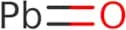
Prodotto fuori produzioneLead(II) oxide
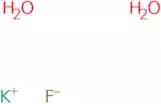
CAS:<p>Lead(II) oxide is a chemical compound that has been shown to have biological properties. It acts as a surface glycoprotein and has been shown to be stable in various environments. Lead(II) oxide is also chemically inert, with redox potentials that are higher than those of many other compounds. When lead(II) oxide is heated, it can react with water to form lead hydroxide and hydrogen gas. Studies show that lead(II) oxide is toxic when inhaled or ingested. Lead(II) oxide has been shown to be effective in wastewater treatment due to its high solubility and low toxicity to microorganisms. Lead(II) oxide is also used in the production of thermometers, which require a material that does not expand or contract significantly with changes in temperature. Lead(II) oxide has been shown to have bioavailability in vivo and transfer reactions have been observed between this compound and other metals such as copper and zinc.</p>Formula:PbOPurezza:Min. 95%Colore e forma:PowderPeso molecolare:223.2 g/molPotassium fluoride dihydrate
CAS:Prodotto controllato<p>Potassium fluoride is an inorganic chemical that is used in the water fluoridation process. It is also used as a source of fluoride ions for the synthesis of hydroxyapatite, a mineral found in teeth and bones. Fluoride ions are also used to treat certain infectious diseases, such as malaria. The asymmetric synthesis of potassium fluoride was first reported by M. S. Kharasch and J. A. Fink in 1943 using plasma mass spectrometry. This method has been widely adopted for commercial production of potassium fluoride because it can be scaled up easily and does not require specialized equipment.<br><br>Potassium fluoride has been shown to inhibit viral replication by hydrogen bonding with the guanine-cytosine base pairs on the viral dsDNA, which prevents the DNA from uncoiling and copying its genetic information into new viral particles. Potassium fluoride has also been shown to be effective against hepatitis B virus (HBV) and mammalian cells infected by HB</p>Formula:KF·2H2OPurezza:Min. 95%Peso molecolare:94.13 g/molRef: 3D-FP34794
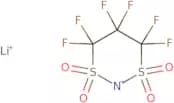
Prodotto fuori produzioneLithium 1,1,2,2,3,3-Hexafluoropropane-1,3-disulfonimide
CAS:<p>Lithium 1,1,2,2,3,3-hexafluoropropane-1,3-disulfonimide is a compound of lithium and fluorine. It is an additive that can be used in the manufacture of polymers and other materials. Lithium 1,1,2,2,3,3-hexafluoropropane-1,3-disulfonimide has been shown to act as a transition metal ion catalyst for the oxidation of fluoride to form hydrogen gas. This compound has also been shown to promote the formation of layered films made up of transition metals such as nickel oxide. Lithium 1,1,2,2,3,3-hexafluoropropane-1</p>Formula:C3F6LiNO4S2Purezza:Min. 95%Peso molecolare:299.1 g/molRef: 3D-FL60528
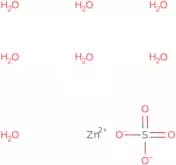
Prodotto fuori produzioneZinc sulfate heptahydrate
CAS:<p>Zinc sulfate heptahydrate is a chemical compound that is used in sample preparation. It is an acid complex with a high degree of chemical stability. Zinc sulfate heptahydrate can be used to prepare fluorescent derivatives for the detection of organic compounds and metal ions. Zinc sulfate heptahydrate has been shown to have controlled-release properties, which may be due to its ability to form microcapsules with anhydrous sodium carbonate, water vapor, and potassium dichromate. Structural analysis has been conducted on zinc sulfate heptahydrate in order to determine the reaction mechanism for this compound. The reaction mechanism involves the formation of zinc oxide and hydrogen peroxide from the decomposition of zinc sulfate heptahydrate. This product also has applications in the treatment of infectious diseases such as malaria and tuberculosis.</p>Formula:ZnSO4·7H2OPurezza:Min. 95%Colore e forma:PowderPeso molecolare:287.55 g/molDichloro(1,1-bis(diphenylphosphino)ferrocene)palladium(II)acetoneadduct
CAS:Prodotto controllato<p>Please enquire for more information about Dichloro(1,1-bis(diphenylphosphino)ferrocene)palladium(II)acetoneadduct including the price, delivery time and more detailed product information at the technical inquiry form on this page</p>Formula:C37H34Cl2FeOP2PdPurezza:Min. 95%Peso molecolare:789.78 g/molRef: 3D-FD152439
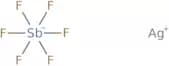
Prodotto fuori produzioneSilver hexafluoroantimonate(V)
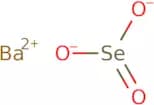
CAS:<p>Silver hexafluoroantimonate is a polymeric matrix that is used for its reaction mechanism. The hydroxyl group on the surface of the silver hexafluoroantimonate reacts with hydrochloric acid to produce hydrogen fluoride and an ionic silver chloride complex. Silver hexafluoroantimonate can also be synthesized by cationic polymerization, which involves a coordination complex between the metal and the nitrogen atoms. This coordination geometry allows for hydrogen bonding interactions.</p>Formula:AgSbF6Purezza:Min. 95%Colore e forma:White PowderPeso molecolare:343.62 g/molBarium selenite
CAS:<p>A barium selenite molecule has a diameter of about 3.5 nm. It is a polyvinyl compound that contains a hydroxyl group and a selenium compound, which is composed of two hydroxy groups (OH-). Barium selenite can be used in the detection and treatment of cancer cells, as well as degenerative diseases. The chemical species may be detected by plasma mass spectrometry. This molecule has an aluminium ion with a redox potential of +1.5 V.</p>Formula:BaO3SePurezza:Min. 95%Peso molecolare:264.29 g/molRhodium 5% on Carbon (wetted with ca. 55% Water)
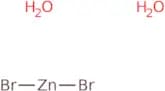
CAS:<p>Rhodium 5% on Carbon (wetted with ca. 55% Water) is a catalyst that has a phase transition temperature of approximately -36 degrees Celsius. This product is used in the reaction of alkanoic acids and also for the preparation of stable complexes with metal hydroxides. Rhodium 5% on Carbon (wetted with ca. 55% Water) has been shown to have beneficial effects on autoimmune diseases, including multiple sclerosis, rheumatoid arthritis, and psoriasis. The metal-carbon bond in this product is covalent, which means it forms strong chemical bonds that are difficult to break. Rhodium 5% on Carbon (wetted with ca. 55% Water) has been shown to be an excellent catalyst for reactions involving water vapor or other molecules containing hydrogen atoms.</p>Formula:RhPurezza:Min. 95%Peso molecolare:102.91 g/molZinc bromide dihydrate
CAS:<p>Zinc bromide dihydrate is a crystalline compound that is used as a catalyst for the conversion of metalloporphyrins to hydroporphyrins. This process is used in the production of vitamin B12. Zinc bromide dihydrate can also be used to inhibit the function of ion pumps, which are proteins that pump ions across membranes. The inhibition of these pumps may lead to a decrease in intracellular calcium levels and an increase in free radicals.<br>Zinc bromide dihydrate has been shown to react with chlorophylls, vinylated heterostructures, and polyvinyl nonmetals. These reactions produce morphology changes in zinc bromide dihydrate crystals</p>Formula:ZnBr2•2H2OPurezza:Min. 95%Colore e forma:PowderPeso molecolare:261.22 g/molIndium - 99.999% trace metals basis
CAS:<p>Indium-99.999% trace metals basis is a radioactive metal whose atomic number is 49, and it is the heaviest element in Group 3 of the periodic table. Indium-99.999% trace metals basis can be used in the treatment of bowel disease, such as inflammatory bowel disease (IBD) and Crohn's disease. It may also be used to diagnose other diseases that are not visible through medical imaging techniques, such as cancer or inflammatory diseases of the bowel. It can be used to measure cell nuclei and nuclear DNA for disease activity, or identify response elements for autologous stem-cell transplantation. It has been shown that this metal can cause long-term toxicity to cells when combined with injury models. This toxicity may be due to its coordination geometry, which causes a disruption in electron flow during oxidation reactions.</p>Formula:InPurezza:Min. 95%Peso molecolare:114.82 g/molRef: 3D-FI158340
Prodotto fuori produzioneTin(IV) oxide
CAS:<p>Tin(IV) oxide is a chemical compound that can be used in the treatment of cancer. It is a white powder with a low melting point and is soluble in water, alcohols, and ethers. Tin(IV) oxide has been used as an additive to microscopy techniques to improve contrast. The compound has also been shown to have anticancer properties by inhibiting the growth of cancer cells. Tin(IV) oxide blocks the formation of chalcones, which are products that are formed when reactions between hydrochloric acid and aluminium take place at high temperatures. This blockage prevents the formation of hydrogen gas, thereby preventing cell death due to dehydration or exposure to infrared radiation from heat sources such as microwaves or lasers. Tin(IV) oxide also has been used in infrared spectroscopy for its ability to produce a characteristic absorption band at 3690 cm-1 and as an alternative material for the production of semiconductors when producing thin films.</p>Formula:SnO2Purezza:95%NmrColore e forma:Off-White To Grey SolidPeso molecolare:150.71 g/mol4-Sulpho-1,8-naphthalic anhydride potassium salt
CAS:<p>4-Sulpho-1,8-naphthalic anhydride potassium salt is a reagent that belongs to the family of sulfonic acids. It is used for recycling purposes in biochemical studies and for the synthesis of other compounds in organic chemistry. The chloride ion can be substituted with bromide or iodide ions to yield 4-bromobenzaldehyde. Studies have also shown that 4-SNAK can act as an electron acceptor in cellular respiration pathways and has been shown to inhibit synaptic transmission.</p>Formula:C12H5KO6SPurezza:Min. 95%Colore e forma:SolidPeso molecolare:316.33 g/molRef: 3D-FS33600
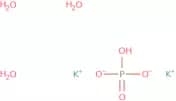
Prodotto fuori produzioneDipotassium hydrogen phosphate trihydrate
CAS:<p>Please enquire for more information about Dipotassium hydrogen phosphate trihydrate including the price, delivery time and more detailed product information at the technical inquiry form on this page</p>Formula:K2HPO4•(H2O)3Peso molecolare:228.22 g/molRef: 3D-FD143178
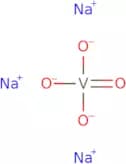
Prodotto fuori produzioneSodium orthovanadate
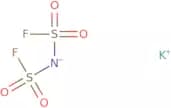
CAS:<p>Sodium orthovanadate is a vanadium compound that is often used as a model system for studying the properties of other transition metal compounds. It has been shown to have hypoglycemic effects in mice, and has also been shown to have synergic effects with other drugs such as clofibrate, troglitazone, and metformin. The coordination geometry of sodium orthovanadate is octahedral, with one vanadium atom at the center and six oxygen atoms around it. It is an ionic compound that dissolves well in water. Sodium orthovanadate can be found in nature as a mineral called meta-vanadinite or vanadic acid. The crystal structure of sodium orthovanadate has been studied using x-ray diffraction data, which revealed that its structure changes from cubic to hexagonal when heated to temperatures above its phase transition temperature (approximately 300°C).</p>Formula:Na3VO4Purezza:Min. 95%Colore e forma:White Off-White PowderPeso molecolare:183.91 g/molPotassium bis(fluorosulfonyl)imide
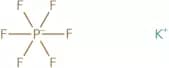
CAS:<p>Potassium bis(fluorosulfonyl)imide (K2FSI) is a reactive chemical that can be used to remove sulfur from petroleum products. It is also used in the manufacturing of ethylene and perovskite solar cells. K2FSI reacts with potassium ions to form potassium hexafluorophosphate (KHF2). This reaction reduces the vapor pressure of KHF2 and increases its solubility in water. The use of K2FSI can reduce the amount of energy needed for desulfurization, as it does not require heating. The following are some uses for potassium bis(fluorosulfonyl)imide: - As a catalyst for production of ethylene - In organic solvent to produce perovskite solar cells - To remove sulfur from petroleum products - To make hydrogen fluoride - For desulfurization</p>Formula:F2NO4S2•KPurezza:Min. 95%Colore e forma:White PowderPeso molecolare:219.23 g/molPotassium hexafluorophosphate
CAS:<p>Potassium hexafluorophosphate is a chemical compound that is used as an antimicrobial agent in the laboratory. It reacts with hydroxyl groups on various surfaces to form potassium hexafluorophosphate and water. The reaction solution can be used to disinfect equipment and surfaces, and is stable at room temperature. Potassium hexafluorophosphate has been shown to have biological properties such as inhibiting the growth of bacteria and fungi, but not viruses. This chemical compound has been shown to be effective against E. coli, Klebsiella pneumoniae, Staphylococcus aureus, Proteus vulgaris, Bacillus subtilis, Pseudomonas aeruginosa, Aspergillus niger, Candida albicans, or Saccharomyces cerevisiae.</p>Formula:KPF6Purezza:Min. 95%Colore e forma:PowderPeso molecolare:184.06 g/molAluminum magnesium silicate
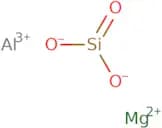
CAS:<p>Magnesium aluminum silicate is a film-forming polymer that can be used in the formulation of skin care products, such as sunscreens. It has been shown to have a thermal expansion coefficient similar to that of human skin and also prevents moisture loss by forming a protective barrier on the surface of the skin. Magnesium aluminum silicate also possesses antioxidant properties and has been shown to inhibit tyrosinase activity in analytical chemistry experiments. This polymer is soluble in water, but is not soluble in organic solvents such as ethanol or acetone. The water solubility can be increased by adding an alkylthio group. Magnesium aluminum silicate is insoluble in water at room temperature and must be heated up to 200°C for dissolution. The viscosity of magnesium aluminum silicate increases with increasing concentration and reaches a maximum at about 2% concentration. This polymer shows uptake of water vapor and will form a gel when exposed to high humidity environments, which makes it useful as</p>Formula:AlMgO3SiPurezza:Min. 95%Colore e forma:PowderPeso molecolare:127.37 g/molAluminumoxide - Partical size 40-50nm
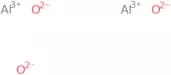
CAS:<p>Aluminum oxide is a non-toxic, inert solid that is used as a catalyst in the production of polymers and plastics. Aluminum oxide is also used for wastewater treatment, as it has high chemical stability. It can be used to remove pollutants such as hydrogen fluoride, hydrochloric acid and heavy metals from water. The particle size of aluminum oxide ranges from 40-50nm. The phase transition temperature of aluminum oxide is typically at 1,000°C which makes it suitable for use in industrial processes with high temperatures. Aluminum oxide has been shown to reduce inflammation, inhibit angiogenesis and increase vascular permeability in inflammatory diseases such as rheumatoid arthritis and asthma. Alumina can also induce apoptosis in cancer cells by disrupting their cell membranes.</p>Formula:Al2O3Purezza:Min. 95%Colore e forma:White SolidPeso molecolare:101.96 g/mol