Standard sugli esteri metilici degli acidi grassi (FAME)
Gli standard di esteri metilici degli acidi grassi (FAME) sono essenziali per l'analisi e l'identificazione degli acidi grassi nei campioni di biodiesel, alimentari e ambientali. Gli standard FAME consentono la calibrazione accurata dei sistemi di gascromatografia utilizzati per quantificare la composizione degli acidi grassi. Presso CymitQuimica, offriamo standard FAME ad alta purezza per garantire risultati precisi e riproducibili nelle vostre applicazioni di ricerca e industriali.
Trovati 605 prodotti di "Standard sugli esteri metilici degli acidi grassi (FAME)"
Ordinare per
Purezza (%)
0
100
|
0
|
50
|
90
|
95
|
100
n-Hexadecane-d34
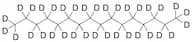
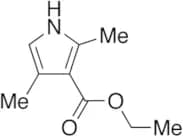
CAS:Prodotto controllato<p>Applications n-Hexadecane-d34 is the labeled compound of Hexadecane(H293630). Hexadecane has been used to prepare emulsions in water. It is also used as a substrate for the bacterial production of biosurfactants.<br>References Rang, M., et al.: J. Colloid Interface Sci., 209, 179 (1999); Hills, B., et al.: Magn. Reson. Imaging, 18, 319 (2000); Noordman, W., et al.: Appl. Environ. Microbiol., 68, 4502 (2002)<br></p>Formula:C162H34Colore e forma:ColourlessPeso molecolare:260.652,4-Dimethyl-1H-pyrrole-3-carboxylic Acid Ethyl Ester
CAS:Prodotto controllato<p>Applications 2,4-Dimethyl-1H-pyrrole-3-carboxylic Acid Ethyl Ester is used in the preparation of blue pyrrole dyes. 2,4-Dimethyl-1H-pyrrole-3-carboxylic Acid Ethyl Ester is also used as an intermediate in the synthesis of receptor tyrosine kinase (RTK) inhibitors and their metabolites.<br>References Treibs, A. et al.: Lieb. Ann. Chem., 2, 289 (1978); Elsinghorst, P. et al.: J. Lab. Comp. Radiopharm., 52, 360 (2009);<br></p>Formula:C9H13NO2Colore e forma:NeatPeso molecolare:167.21Palmitoyl-16,16,16-d3-L-carnitine Hydrochloride
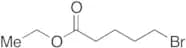
CAS:Prodotto controllato<p>Applications Palmitoyl-16,16,16-d3-L-carnitine Hydrochloride is the isotope labelled analog of Palmitoyl-L-carnitine Hydrochloride (P155050); a long-chain fatty ester of carnitine which is accumulated and released into the circulation in fatty-acid oxidation defects.<br>References Ventura, F., et al.: Clinica Chimica Acta, 281, 1 (1999); Pourfarzam, M., et al.: Clinical Chem,, 40, 2267 (1994); Schaefer, J., et al.: Pediatric Res., 37, 354 (1995)<br></p>Formula:C23H43D3NO4•ClColore e forma:NeatPeso molecolare:439.095-Bromopentanoic Acid Ethyl Ester
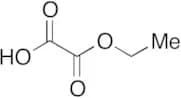
CAS:Prodotto controllato<p>Applications 5-Bromopentanoic Acid Ethyl Ester was used in the preparation of S(γ-Carboxypropyl)-DL-homocysteine and S(δ-Carboxybutyl)-DL-homocysteine. It was also used in the preparation of ethyl 5-azidovalerate.<br>References Awad, W.: J. Biol. Chem., 258, 12790 (1983); Li, Z., et al.: Tetrahedron Lett., 45, 3143 (2004)<br></p>Formula:C7H13BrO2Colore e forma:NeatPeso molecolare:209.08Oxalic Acid Ethyl Ester
CAS:Prodotto controllato<p>Applications Oxalic Acid Ethyl Ester is a useful synthetic intermediate. It is used to synthesize 2-substituted 3-aryl-4(3H)-quinazolinones with anticonvulsant activities. It is also used to prepare nonbenzamidine tetrazole derivatives as factor Xa inhibitors.<br>References Wolfe, J., et al.: J. Med. Chem., 33, 161 (1009); Quan, M., et al.: bioorg. Med. Chem. Lett., 13, 369 (2003)<br></p>Formula:C4H6O4Colore e forma:NeatPeso molecolare:118.09N-Succinimidyl Palmitate
CAS:Prodotto controllato<p>Stability Moisture Sensitive; Store in Freezer, Hygroscopic<br>Applications N-hydroxysuccinimide ester of palmitic acid. Esters of N-hydroxysuccinimide have been used for the preparation of N-acylamino acids, aminoacyl-tRNA, coenzyme A, thioglycolic acid, ceramides, etc.<br>References Lapidot, Y., et al.: J. Lipid Res., 8, 142 (1967); Lapidot, Y., et al.: Biochim. Biophys. Acta, 145, 292 (1967); Al-Arif, A., et al.: J. Lipid Res., 10, 344 (1969); Ong, D.E., and Brady, R.N., J. Lipid Res., 13, 819 (1972)<br></p>Formula:C20H35NO4Colore e forma:NeatPeso molecolare:353.50Propargyl Alcohol
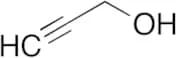
CAS:Prodotto controllato<p>Applications Propargyl Alcohol is used as a corrosion inhibitor, a metal complex solution, a solvent stabilizer and an electroplating brightener additive. It is also used as an intermediate in organic synthesis.<br> Not a dangerous good if item is equal to or less than 1g/ml and there is less than 100g/ml in the package<br>References Zhang, T., et al.: Res. Chem. Interm. (2013); Choudhary, Y., et al.: SPE Product. Operat., 28, 268 (2013); Hed, Y., et al.: J. Mater. Chem. Mater. Bio. Med., 1, 6015 (2013);<br></p>Formula:C3H4OColore e forma:NeatPeso molecolare:56.06N-Hexadecanol-D31
CAS:Prodotto controllato<p>Applications N-Hexadecanol (2,2,3,3...16,16,16-D31, 98%) (cas# 203633-15-2) is a useful research chemical.<br></p>Formula:C16D31H3OColore e forma:NeatPeso molecolare:273.63(9Z)-9-Octadecen-1-ol, 85%
CAS:<p>Applications (9Z)-9-Octadecen-1-ol, is an unsaturated fatty alcohol, that can be used a nonionic surfactant, emulsifier, emollient and thickener in skin creams, lotions and many other cosmetic products.<br>References Linh D.D, et al.: Int. J. Gre. Eng., 8, 748 (2011);<br></p>Formula:C18H36OPurezza:85%Colore e forma:Colourless LiquidPeso molecolare:268.48Ethyl Palmitoleate-d5
CAS:Prodotto controllato<p>Stability Light Sensitive<br>Applications Ethyl Palmitoleate-d5 is the isotope analog of Ethyl Palmitoleate. Ethyl Palmitoleate is used in biological studies for calcium relase-activated calcium channel blockade as a potential tool in antipancreatitis therapy.<br>References Gerasimenko, J.V., et al.: Proc. Natl. Acad. Sci. U.S.A., 110, 13186 (2013)<br></p>Formula:C18H29D5O2Colore e forma:Colourless OilyPeso molecolare:287.49(9Z,12Z,15Z)-Octadeca-9,12,15-trien-1-ol (>90%)
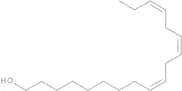
CAS:<p>Stability Light Sensitive<br>Applications (9Z,12Z,15Z)-octadeca-9,12,15-trien-1-ol is an essential oil component of Osmanthus fragrans.<br>References Hu, C., et al.: Huaxue Shiji, 32, 231 (2010); Tian, G., et al.: Anhui Nongye Kexue, 36, 7214 (2008)<br></p>Formula:C18H32OPurezza:>90%Colore e forma:ColourlessPeso molecolare:264.45Hexadecanoic-9,9,10,10,11,11,12,12,13,13,14,14,15,15,16,16,16-d17 Acid
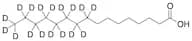
CAS:Prodotto controllato<p>Applications Hexadecanoic-9,9,10,10,11,11,12,12,13,13,14,14,15,15,16,16,16-d17 Acid (CAS# 81462-28-4) is a useful isotopically labeled research compound.<br></p>Formula:C16H15D17O2Colore e forma:White To Off-WhitePeso molecolare:273.53Methyl Palmitoleate
CAS:<p>Applications Methyl Palmitoleate is used as a component in the preparation of a biodiesel fuels.<br>References Luo, H. et al.: Biores. Tech., 140, 337 (2013); Arias-Penaranda, M. et al.: Biores. Tech., 140, 158 (2013);<br></p>Formula:C17H32O2Colore e forma:ColourlessPeso molecolare:268.43Isopropyl Palmitate
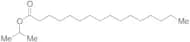
CAS:<p>Applications Isopropyl Palmitate has been used in the preparation of a pseudolatex-membrane for ketoprofen transdermal drug delivery systems.<br>References Suksaeree, J., et. al.: Ind. Eng. Chem. Res., 52, 15847 (2013)<br></p>Formula:C19H38O2Colore e forma:ColourlessPeso molecolare:298.50Hexadecanamide
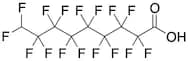
CAS:Prodotto controllato<p>Applications Hexadecanamide (cas# 629-54-9) is a useful research chemical.<br></p>Formula:C16H33NOColore e forma:NeatPeso molecolare:255.459H-Hexadecafluorononanoic Acid
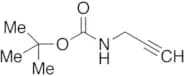
CAS:Prodotto controllato<p>Applications 9H-Hexadecafluorononanoic Acid (cas# 76-21-1) is a useful research chemical.<br></p>Formula:C9H2O2F16Colore e forma:NeatPeso molecolare:446.09N-Boc-propargylamine
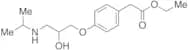
CAS:Prodotto controllato<p>Applications N-Boc-propargylamine is used in the preparation of triazolobenzylidene-thiazolopyrimidines which act as CDC25 phosphatase inhibitors. Also used in the synthesis of β-glucan polysaccharide analogs.<br>References Duval, R. et al.: J. Comb. Chem., 11, 947 (2009); Tanaka, H. et al.: Tetrahedron Lett., 53, 4104 (2012);<br></p>Formula:C8H13NO2Colore e forma:NeatPeso molecolare:155.2Metoprolol Acid Ethyl Ester
CAS:Prodotto controllato<p>Applications Intermediate for the preparation of Metoprolol Acid.<br> Not a dangerous good if item is equal to or less than 1g/ml and there is less than 100g/ml in the package<br></p>Formula:C16H25NO4Colore e forma:NeatPeso molecolare:295.371-Hexadecanol
CAS:<p>Applications 1-Hexadecanol, is used in the cosmetic industry as an opacifier in shampoos, or as an emollient, emulsifier or thickening agent in the manufacture of skin creams and lotions.<br>References Smolinske S. C., et al.: Handbook Food Drug and Cosmetic Exipients, 75 (1992);<br></p>Formula:C16H34OColore e forma:White To Off-WhitePeso molecolare:242.44Butyl Palmitate
CAS:Prodotto controllatoFormula:C20H40O2Colore e forma:ColourlessPeso molecolare:312.53