Materiali a contatto con gli alimenti
I materiali a contatto con gli alimenti sono fondamentali per testare la sicurezza degli imballaggi e di altri materiali che entrano in contatto con gli alimenti. Questi standard sono cruciali per garantire che nessuna sostanza nociva venga trasferita dal materiale agli alimenti. Presso CymitQuimica, offriamo standard certificati per testare i materiali a contatto con gli alimenti, garantendo la conformità alle normative internazionali.
Trovati 1075 prodotti di "Materiali a contatto con gli alimenti"
Ordinare per
Purezza (%)
0
100
|
0
|
50
|
90
|
95
|
100
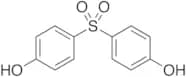
Bis(4-hydroxyphenyl) Sulfone
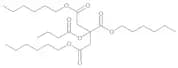
CAS:Prodotto controllato<p>Applications Bis(4-hydroxyphenyl) Sulfone is commonly used as a reactant in epoxy reactions and is also used as a latent thermal catalyst for epoxy resin.<br>References Fu, J.W., et al.: Adv. Mat. Rsch., 266, 1022 (2011); Li, J.X., et al.: Polymers. Adv. Tech., 23, 803 (2012);<br></p>Formula:C12H10O4SColore e forma:WhitePeso molecolare:250.27Trihexyl O-Butyrylcitrate
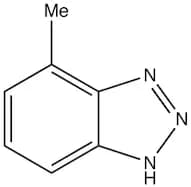
CAS:Prodotto controllatoFormula:C28H50O8Colore e forma:Clear ColourlessPeso molecolare:514.694-Methylbenzotriazole
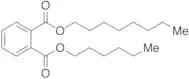
CAS:<p>Applications 4-Methylbenzotriazole is a benzotriazole derivative as corrosion inhibitor.<br>References Gruden, C., et al.: Water Environ. Res., 73, 72 ( 2001), Cancilla, D., et al.: Environ. Toxicol. Chem., 22, 134 (2003), Hart, D., et al.: Microchem. J., 77, 9 (2004), Gruenheid, S., et al.: Water Res., 39, 3219 (2005),<br></p>Formula:C7H7N3Colore e forma:Dark Orange To Dark BrownPeso molecolare:133.15Hexyl Octyl Phthalate
CAS:<p>Applications 1,2-Benzenedicarboxylic Acid Hexyl Octyl Ester is an phthalate esters used as plasticizers and additives. Used in toxiciology studies as well as risk assessment studies of food contamination that occurs via migration of phthalates into foodstuffs from food-contact materials (FCM).<br>References Kumar, R., et al.: Am. Lab., 31, 32 (1999);<br></p>Formula:C22H34O4Colore e forma:NeatPeso molecolare:362.5Bisphenol F Bis(2-chloro-1-propanol) Ether(Mixture of Diastereomers)
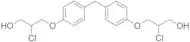
CAS:Prodotto controllato<p>Applications Bisphenol F Bis(2-chloro-1-propanol)ether is a derivative of Bisphenol F Diglycidyl Ether (BFDGE). Bisphenol F Bis(2-chloro-1-propanol)ether is used as a standard for determining toxic monomers released from polymers of the inner coating of cans.<br>References Philo, M., et al.: Food Addit. Contam., 14, 75 (1997), Biles, J., et al.: J. Agric. Food Chem., 1999, 47, 1965 (1999), Hammarling, L., et al.: Food Addit. Contam., 17, 937 (2000),<br></p>Formula:C19H22Cl2O4Colore e forma:White To Off-WhitePeso molecolare:385.281,5-Diaminonaphthalene
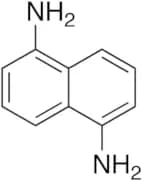
CAS:Prodotto controllato<p>Applications Aromatic amines likely to have high carcinogenic potency. QSARs of aromatic amines.<br> Not a dangerous good if item is equal to or less than 1g/ml and there is less than 100g/ml in the package<br>References Franke, R., et al.: Carcinogenesis, 22, 1561 (2001), Benigni, R., et al.: Chem. Rev., 105, 1767 (2005), Benigni, R., et al.: Environ. Mol. Mutagen., 50, 152 (2009),<br></p>Formula:C10H10N2Colore e forma:Off-WhitePeso molecolare:158.20Bisphenol A (2,3-dihydroxypropyl) Glycidyl Ether
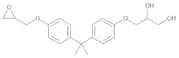
CAS:Prodotto controllato<p>Applications Bisphenol A diglycidyl ether (BADGE) is an epoxide that is used as a starting substance in the manufacturing of can coatings for food-contact applications, pharmaceutial creams and may produce reaction products migration from the coating.<br>References Coulier, L.: J. Agric. Food. Chem., 58, 4873-4882 (2010):0; Soeborg, T.: Dansk Kemi, 87, 24-27 (2006).<br></p>Formula:C21H26O5Colore e forma:White To Off-WhitePeso molecolare:358.42812-Methyl-4,6-bis(octylsulfanylmethyl)phenol
CAS:Prodotto controllato<p>Applications 2-Methyl-4,6-bis(octylsulfanylmethyl)phenol (cas# 110553-27-0) is a useful research chemical.<br></p>Formula:C25H44OS2Colore e forma:Colourless OilyPeso molecolare:424.75N1,N4-Diphenylbenzene-1,4-diamine
CAS:Prodotto controllato<p>Applications N1,N4-Diphenylbenzene-1,4-diamine (cas# 74-31-7) is a useful research chemical.<br></p>Formula:C18H16N2Colore e forma:NeatPeso molecolare:260.33Monooctyl Phthalate-d4
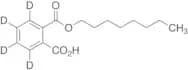
CAS:Prodotto controllato<p>Applications A Phthalate metabolite.<br>References Ye, X., et al.: Environ. Res., 108, 260 (2008), Blair, J., et al.: Environ. Sci. Technol., 43, 6262 (2009), Clewell, R., et al.: Toxicol. n Vitro, 24, 327 (2010),<br></p>Formula:C16H18D4O4Colore e forma:NeatPeso molecolare:282.37Monoisobutyl Phthalate-d4
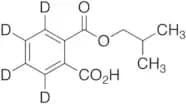
CAS:Prodotto controllato<p>Applications An isotope labelled derivative of Monoisobutyl Phthalate (M547700), a phthalate metabolite.<br>References Sathyanarayana, S., et al.: Environ. Res., 108, 413 (2008), Engel, S., et al.: NeuroToxicol., 30, 522 (2009), Seckin, E., et al.: Toxicol. Lett., 188, 33 (2009),<br></p>Formula:C122H4H10O4Colore e forma:NeatPeso molecolare:226.26Mono(n-pentyl) Terephthalate
CAS:Prodotto controllatoFormula:C13H16O4Colore e forma:NeatPeso molecolare:236.2642,5-Bis(5-tert-butylbenzooxazol-2-yl)thiophene
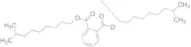
CAS:<p>Applications 2,5-Bis(5-tert-butylbenzooxazol-2-yl)thiophene is a dye. It is used to prepare stable fluorescent silica nanoparticles as DNA carrier. 2,5-Bis(5-tert-butylbenzooxazol-2-yl)thiophene is also used as the emissive layer of electroluminescent devices.<br>References Yang, Y., et al.: Synt. Met., 91, 335 (1997); Lee, K., et al.: J. Nanosci. Nanotechnol., 11, 686 (2011); Yang, J., et al.; Synt. Met., 137,999 (2003)<br></p>Formula:C26H26N2O2SColore e forma:NeatPeso molecolare:430.56Diisodecyl Phthalate (Mixture of Branched chain Isomers) (>80%)
CAS:Formula:C28H46O4Colore e forma:NeatPeso molecolare:446.662-(((4-Methyl-7-oxyooctyl)oxy)carbonyl)(cyclohexane-D8)carboxylic Acid (Mixture of Diastereomers)
CAS:Prodotto controllato<p>Applications 2-(((4-Methyl-7-oxyooctyl)oxy)carbonyl)(cyclohexane-d8)carboxylic Acid is the labeled analogue of 2-(((4-Methyl-7-oxyooctyl)oxy)carbonyl)cyclohexanecarboxylic Acid (M329200), a secondary oxidized metabolite of the di(isononyl)cyclohexane-1,2-dicarboxylate (DINCH) monoester (MINCH) and may be used as biomarkers of DINCH exposure. DINCH is a major substitute for some high molecular weight phthalates that adversely affect reproductive function.<br>References Schutze, A., et. al.: J. Chromatogr. B Analyt. Technol. Biomed. Life Sci., 895, 123 (2012)<br></p>Formula:C17H20D8O5Colore e forma:Colourless To Light YellowPeso molecolare:320.45Bisphenol G
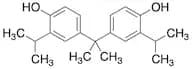
CAS:Prodotto controllato<p>Applications Bisphenol G is used as an analyte in analytical studies of rapid multiresidue determination of bisphenol analogs in soil with online derivatization. Bisphenol G is a derivative of Bisphenol A (B519495).<br>References Nishigori, M., et al.: Toxicol. Lett., 212, 205 (2012); Perez, R. A., et al.: Anal Bioanal Chem, 409, 4571 (2017);<br></p>Formula:C21H28O2Colore e forma:White PowderPeso molecolare:312.45Di-n-octyl Phthalate-d4
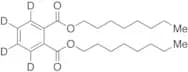
CAS:Prodotto controllato<p>Applications A labelled phthalate ester used as plasticizers and additives. Used in toxiciology studies as well as risk assessment studies of food contamination that occurs via migration of phthalates into foodstuffs from food-contact materials (FCM).<br>References Irvin, E.A. et al.: Chemosphere, 80, 1301 (2010); Petersen, J.H. et al.: Food Add. Contam. Part A Chem. Anal. Cont. Expos. Risk. Assess., 27, 1608 (2010); Kwack, S.J. et al.: Toxicol. Res., 26, 75 (2010);<br></p>Formula:C242H4H34O4Colore e forma:ColourlessPeso molecolare:394.58Mono-(4-methyl-7-oxooctyl)phthalate
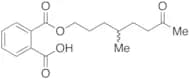
CAS:<p>Applications Mono-(4-methyl-7-oxooctyl)pththalate is a metabolite of oxidized di-iso-nonylphthalates (DINP) molecules that are plasticizers used to improve the various physical characteristics.<br>References Koch, H. et al.: J. Chrom. B. Anal. Tech. Biomed. Life Sci., 847, 114 (2007);<br></p>Formula:C17H22O5Colore e forma:NeatPeso molecolare:306.35361,2,4-Benzenetricarboxylic Acid 4-(2-ethylhexyl) Ester Disodium Salt
CAS:<p>Stability Hygroscopic<br>Applications 1,2,4-Benzenetricarboxylic Acid 4-(2-ethylhexyl) Ester is an analog of Trioctyl Trimellitate (T804400) which is a plasticizer that was evaluated for endocrine disrupting activities through estrogen receptor alpha binding assay.<br>References Riddick, W.: J. Coating. Technol., 55, 57 (1983); Ito, R., et al.: Int. J. Pharma., 360, 91 (2008); Ohashi, A., et al.: J. Artific. Organs., 8, 252 (2005);<br></p>Formula:C17H20Na2O6Colore e forma:White To Off-WhitePeso molecolare:366.32Monoisodecyl Phthalate
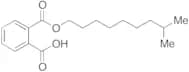
CAS:Prodotto controllatoFormula:C18H26O4Colore e forma:Colourless To Off-WhitePeso molecolare:306.4