


Peptidi
Sottocategorie di "Peptidi"
Trovati 29887 prodotti di "Peptidi"
Thymosin β4 (human, bovine, horse, rat)
CAS:Thymosin β4 (human, bovine, horse, rat) is a naturally occurring therapeutic peptide derived from various mammalian sources, including humans, cattle, horses, and rats. It is a member of the β-thymosin family and is ubiquitously expressed in many tissues. The primary mode of action of Thymosin β4 involves its ability to bind actin, thereby facilitating cell motility, angiogenesis, and wound repair. It plays a crucial role in cell migration and the formation of new blood vessels, which is essential for tissue regeneration.The uses and applications of Thymosin β4 are extensive, particularly in fields such as regenerative medicine and ophthalmology, where it is employed to promote healing and tissue repair. It has been investigated for its potential therapeutic effects in conditions such as myocardial infarction, corneal injuries, and chronic wounds due to its regenerative properties. As an endogenous peptide, Thymosin β4’s ability to enhance cellular repair mechanisms makes it a subject of ongoing research to fully elucidate its potential benefits and applications in clinical therapies.Formula:C212H350N56O78SPurezza:Min. 95%Peso molecolare:4,963.49 g/molRK9, p17 Gag (20-28)
Custom research peptide; min purity 95%.
Formula:C45H86N18O10Purezza:Min. 95%Peso molecolare:1,039.3 g/molMBP (1-11), mouse
Custom research peptide; min purity 95%.
Formula:C53H95N21O18Purezza:Min. 95%Peso molecolare:1,314.48 g/molProtease-Activated Receptor-2, PAR-2 Agonist, amide
Custom research peptide; min purity 95%.
Formula:C28H54N8O7Purezza:Min. 95%Peso molecolare:614.79 g/molSubstance P, Free Acid
Custom research peptide; min purity 95%.
Formula:C63H97N17O14SPurezza:Min. 95%Peso molecolare:1,348.65 g/mol[Lys0]-Bradykinin (Kallidin)
Custom research peptide; min purity 95%.Formula:C56H85N17O12Purezza:Min. 95%Peso molecolare:1,188.41 g/molInfluenza HA (110-119)
Custom research peptide; min purity 95%.Formula:C63H90N14O16Purezza:Min. 95%Peso molecolare:1,299.5 g/molEα (52-68)
Custom research peptide; min purity 95%.Formula:C73H118N20O25Purezza:Min. 95%Peso molecolare:1,675.87 g/molLuteinizing Hormone Releasing Hormone LH-RH
CAS:Custom research peptide; min purity 95%.Formula:C55H75N17O13Purezza:Min. 95%Peso molecolare:1,182.4 g/molSubstance P (5-11)/Hepta- Substance P
Custom research peptide; min purity 95%.
Formula:C41H60N10O9SPurezza:Min. 95%Peso molecolare:869.06 g/molCEA (605-613)
Custom research peptide; min purity 95%.Formula:C43H69N11O14Purezza:Min. 95%Peso molecolare:964.09 g/molMotilin, porcine
Custom research peptide; min purity 95%.Formula:C120H188N34O35SPurezza:Min. 95%Peso molecolare:2,699.1 g/molRFRP-1 (Human)
Custom research peptide; min purity 95%.Formula:C67H101N19O14SPurezza:Min. 95%Peso molecolare:1,428.73 g/molHistone H3 (1-25),amide
Custom research peptide; min purity 95%.Formula:C110H202N42O32Purezza:Min. 95%Peso molecolare:2,625.1 g/mol[D-Ala1] Peptide T, amide
Custom research peptide; min purity 95%.
Formula:C35H56N10O15Purezza:Min. 95%Peso molecolare:856.89 g/molproFIX18
Custom research peptide; min purity 95%.Formula:C95H157N31O27Purezza:Min. 95%Peso molecolare:2,165.5 g/molHBV core (107-115)
Custom research peptide; min purity 95%.Formula:C44H72N12O14SPurezza:Min. 95%Peso molecolare:1,025.19 g/molα-MSH
CAS:Custom research peptide; min purity 95%.Formula:C77H109N21O19SPurezza:Min. 95%Peso molecolare:1,664.9 g/molCEA, CAP-1-6-D, [Asp6]-Carcinoembryonic Antigen
Custom research peptide; min purity 95%.
Formula:C43H68N10O15Purezza:Min. 95%Peso molecolare:965.08 g/molPAR-2 (1-6) (mouse, rat)
Custom research peptide; min purity 95%.Formula:C29H55N9O8Purezza:Min. 95%Peso molecolare:657.82 g/mol[Pro9] Substance P
Custom research peptide; min purity 95%.Formula:C66H102N18O13SPurezza:Min. 95%Peso molecolare:1,387.73 g/molAzido-dPEG®24-TFP ester
Azido-dPEG®24-TFP ester is a PEG compound with two different functional groups (also known as heterobifunctional). Unlike homobifunctional PEG compounds (same functional group on both ends), this type of compounds are more versatile as have two different anchor points. Azido-dPEG®24-TFP ester is used as a linker and spacer to add a PEG moiety, via pegylation (a bioconjugation technique) to proteins, peptides, oligonucleotides, small molecules and nanoparticles.Formula:C33H51F4NO11S2Purezza:Min. 90%Peso molecolare:777.88 g/molHIV-1 gag Protein p24 (65-73) (isolates MAL/U455)
Custom research peptide; min purity 95%.Formula:C44H79N11O14S2Purezza:Min. 95%Peso molecolare:1,050.31 g/molVasoactive Intestinal peptide
CAS:Custom research peptide; min purity 95%.Formula:C147H238N44O42SPurezza:Min. 95%Peso molecolare:3,325.7 g/molCSP
Custom research peptide; min purity 95%.Formula:C103H168N30O24SPurezza:Min. 95%Peso molecolare:2,242.74 g/molACTH (11-24)
Custom research peptide; min purity 95%.Formula:C77H134N24O16Purezza:Min. 95%Peso molecolare:1,652.08 g/molAnti-Flt1 Peptide
Custom research peptide; min purity 95%.
Formula:C37H49N9O9Purezza:Min. 95%Peso molecolare:763.86 g/molPAR-3 (1-6) amide (human)
Custom research peptide; min purity 95%.Formula:C29H46N10O7Purezza:Min. 95%Peso molecolare:646.75 g/molAnti ACTH (21-39) (Rat) Serum
Anti ACTH (21-39) (Rat) Serum is a research tool that can be used to activate, bind, or inhibit the receptor. This product is a monoclonal antibody against the ACTH (21-39) peptide. It binds to the ACTH receptor and blocks calcium channels in cells. Anti ACTH (21-39) (Rat) Serum is suitable for use in cell biology, pharmacology, and peptide research.Purezza:Min. 95%Methionyl-Lysyl-Bradykinin (Human, Bovine)
Methionyl-Lysyl-Bradykinin is a peptide that is used as a research tool to study the interactions of bradykinin, its receptor, and ion channels. This product can be used in the study of pharmacology and cell biology. Methionyl-Lysyl-Bradykinin has been shown to inhibit the activity of ion channels by binding to their receptors. This product may also be used as an antibody or ligand in order to study protein interactions.Formula:C61H94N18O13S•3CH3COOH•2H2OPurezza:Min. 95%Peso molecolare:1,535.79 g/molTentaGel® S AC Resin
TentaGel® S AC Resin is a building block that is used as a synthetic tool to make peptides. TentaGel® S AC Resin is composed of styrene, acrylates, and divinylbenzene, which are all monomers. TentaGel® S AC Resin is used for the synthesis of peptides to be used in various experiments such as proteomics and cell biology.
Purezza:Min. 95%HBB MS Calibrator (25nmol)
HBB MS Calibrator is a research tool that is used to calibrate mass spectrometry. It is an activator of Ligand and Receptor, which are proteins that play a role in cell biology. HBB MS Calibrator binds to ion channels and inhibits the opening of these channels. This leads to a decrease in the flow of ions through the channel, which can affect a number of cellular processes. HBB MS Calibrator also has pharmacological properties that are used for drug discovery and peptide production.
Purezza:Min. 95%IFN b 1a Human
Interferon-beta 1a is a cytokine that is used to treat multiple sclerosis and other diseases. It is the product of human recombinant DNA technology and has been shown to be an effective treatment for MS. Interferon-beta 1a inhibits the growth of neuroblastoma cells by inducing apoptosis, or programmed cell death. The drug also down-regulates the expression of proinflammatory cytokines in sh-sy5y neuroblastoma cells. Interferon-beta 1a has been shown to inhibit the proliferation of CHO (Chinese Hamster Ovarian) cells in vitro and may have therapeutic potential for the treatment of breast cancer, colorectal cancer, and ovarian cancer.Purezza:Min. 95%DOTA-tris(Acid)-Amido-dPEG®24-TFP Ester
DOTA-tris(Acid)-Amido-dPEG®24-TFP Ester is a PEG compound with two different functional groups (also known as heterobifunctional). Unlike homobifunctional PEG compounds (same functional group on both ends), this type of compounds are more versatile as have two different anchor points. DOTA-tris(Acid)-Amido-dPEG®24-TFP Ester is used as a linker and spacer to add a PEG moiety, via pegylation (a bioconjugation technique) to proteins, peptides, oligonucleotides, small molecules and nanoparticles.Purezza:Min. 95%Peso molecolare:1,908.86 g/molLeptin Dog
Leptin is a protein hormone that is produced by fat cells. Leptin regulates appetite and energy use, and it has been shown to be involved in the regulation of body weight. Leptin binds to receptors on the surface of cells, which activates signaling pathways inside the cell. This receptor can be activated by other ligands such as ghrelin, adiponectin, and insulin. Leptin also inhibits ion channels in neurons, resulting in an increase in potassium conductance.
Purezza:Min. 95%Anti Basic-FGF, Human Serum
Anti Basic-FGF, human serum is a peptide that is used as a research tool for studying the activation of protein kinase C. It can be used as an activator or inhibitor, depending on its concentration. Anti Basic-FGF, human serum has been shown to inhibit cell proliferation and migration in vitro. This peptide also binds to the receptor for Basic Fibroblast Growth Factor (bFGF) and interacts with the ligand binding site of the receptor. Anti Basic-FGF, human serum can be used to study protein interactions and signaling pathways involved in cancer cell growth. Anti Basic-FGF, human serum is a highly purified recombinant peptide with an amino acid sequence identical to that of bovine Basic Fibroblast Growth Factor (bFGF). It has been shown to inhibit bovine FGF2 binding to bFGF receptors and reduce cellular proliferation in vitro. This peptide also inhibits angiogenesis induced by bFGF inPurezza:Min. 95%CYP2D6 MS Calibrator (25nmol)
The CYP2D6 MS Calibrator is a peptide that is used for calibrating the mass spectrometer. It is a tryptic peptide and contains an internal standard, which can be used to calculate the concentration of the peptide. The peptides are synthesized using recombinant DNA technology and purified by HPLC.Purezza:Min. 95%Mouse GIP (Active) ELISA (1ea)
Mouse GIP (Active) ELISA (1ea) is a Mouse GIP (Active) ELISA Kit that can be used to measure the levels of active Mouse GIP in serum, plasma or other biological fluids. The assay employs a monoclonal antibody specific for mouse GIP. This antibody captures Mouse GIP from test samples, and a biotinylated polyclonal antibody specific for mouse GIP is then used to measure the captured Mouse GIP by means of a colorimetric reaction. The amount of Mouse GIP in the test sample is inversely proportional to the intensity of the color developed.Purezza:Min. 95%FRETS-25Pro (1 umol) (1umol)
FRETS-25Pro (1 umol) is a peptide that belongs to the group of activator. It has been shown to inhibit ion channels and protein interactions, as well as receptor and ligand. FRETS-25Pro (1 umol) has high purity, which will be useful in research tools such as antibody or cell biology.Purezza:Min. 95%BNP Human, His
BNP Human, His is a recombinant peptide which inhibits the activity of the beta-adrenergic receptors. It is a research tool that can be used to study protein interactions and receptor activation. BNP Human, His has been shown to inhibit the activity of ion channels in cells. This peptide also activates G-protein coupled receptors and is used as a reagent for antibody production.Purezza:Min. 95%FGF 19 Human
FGF-19 is a protein that has been shown to be an activator of the FGF receptor. It also has been shown to act as a ligand for the FGF receptor, which is a cell surface-bound protein. This protein is involved in the regulation of ion channels and other cellular processes that are important for growth and development. Recent studies have demonstrated that FGF-19 can inhibit the binding of peptides to antibodies, which may have an effect on pharmacology and immunology.Purezza:Min. 95%Anti CGRP (Rat) Serum
Anti CGRP (Rat) Serum is a research tool used to study the function of calcitonin gene-related peptide (CGRP) in cell biology. It is an antibody that binds to the CGRP receptor and blocks the activation of ion channels, which are important for pain perception. This serum can be used as a blocking agent in experiments to study the effects of CGRP on cells.Purezza:Min. 95%MAL-dPEG®24-Amido-dPEG®24-TFP Ester
MAL-dPEG®24-Amido-dPEG®24-TFP Ester is a PEG compound with two different functional groups (also known as heterobifunctional). Unlike homobifunctional PEG compounds (same functional group on both ends), this type of compounds are more versatile as have two different anchor points. MAL-dPEG®24-Amido-dPEG®24-TFP Ester is used as a linker and spacer to add a PEG moiety, via pegylation (a bioconjugation technique) to proteins, peptides, oligonucleotides, small molecules and nanoparticles.Formula:C115H209F4N3O54Purezza:Min. 95%Peso molecolare:2,573.87 g/molCIF1
CIF1 is a protein that in humans is encoded by the CIF1 gene. It belongs to the family of ion channels and ligand-gated ion channels. The channel is activated by acetylcholine, a neurotransmitter, and mediates fast synaptic transmission at neuromuscular junctions. CIF1 has been shown to bind to the nicotinic acetylcholine receptor (nAChR) subunit alpha-4/beta-2. This binding leads to inhibition of nAChR function, which may be useful for treatments of conditions such as Parkinson's disease or Alzheimer's disease.
Purezza:Min. 95%Fmoc-Trp-Rink-Amide MBHA Resin
Please enquire for more information about Fmoc-Trp-Rink-Amide MBHA Resin including the price, delivery time and more detailed product information at the technical inquiry form on this page
Purezza:Min. 95%m-dPEG®12-Amido-dPEG®12-TFP Ester
m-dPEG®12-Amido-dPEG®12-TFP Ester is a PEG compound with two different functional groups (also known as heterobifunctional). Unlike homobifunctional PEG compounds (same functional group on both ends), this type of compounds are more versatile as have two different anchor points. m-dPEG®12-Amido-dPEG®12-TFP Ester is used as a linker and spacer to add a PEG moiety, via pegylation (a bioconjugation technique) to proteins, peptides, oligonucleotides, small molecules and nanoparticles.
Formula:C59H105F4NO27Purezza:Min. 95%Peso molecolare:1,336.45 g/molTFF3 Human
TFF3 is a human protein that is encoded by the TFF3 gene. The TFF3 protein binds to the TGF-β1 receptor and activates it, which causes downstream signaling in cells. It is also a ligand for the activator protein 2 (AP-2) transcription factor, which regulates cell proliferation and differentiation. TFF3 has been shown to inhibit ion channels and may play a role in regulating cellular functions such as metabolism, growth, or apoptosis.Purezza:Min. 95%Anti GLP-1 (7-36)-NH₂, Human Serum
Anti GLP-1 (7-36)-NH₂, human serum is a recombinant protein that inhibits the activity of the glucagon-like peptide-1 receptor. It is used as a research tool to study the role of GLP-1 and its receptor in regulating blood glucose levels. Anti GLP-1 (7-36)-NH₂, human serum can be used as a ligand for the isolation of the GLP-1 receptor from cells. The anti GLP-1 (7-36)-NH₂, human serum is also used to study ion channels and antibody binding.Purezza:Min. 95%DBCO-dPEG®24-TFP ester
DBCO-dPEG®24-TFP Ester is a PEG compound with two different functional groups (also known as heterobifunctional). Unlike homobifunctional PEG compounds (same functional group on both ends), this type of compounds are more versatile as have two different anchor points. DBCO-dPEG®24-TFP Ester is used as a linker and spacer to add a PEG moiety, via pegylation (a bioconjugation technique) to proteins, peptides, oligonucleotides, small molecules and nanoparticles.Formula:C77H118F4N2O28Purezza:Min. 95%Peso molecolare:1,595.75 g/molTriosephosphate Isomerase 1 , human, recombinant
Triosephosphate isomerase 1 (TPI1) is a cytosolic enzyme that catalyzes the conversion of dihydroxyacetone phosphate and glyceraldehyde-3-phosphate to erythrose-4-phosphate and phosphoenolpyruvate. TPI1 has been shown to be an important regulator of glycolysis and gluconeogenesis, as well as in the maintenance of cellular redox state. This protein can act as both an inhibitor and activator depending on its interaction with other proteins. TPI1 has been implicated in the development of cancer, diabetes, Alzheimer's disease, Parkinson's disease, and atherosclerosis. TPI1 is also a research tool for studies into ion channels, receptor binding, and antibodies.Purezza:Min. 95%Cbz-N-Amido-dPEG®8-Acid
Cbz-N-Amido-dPEG®8-Acid is a PEG compound with two different functional groups (also known as heterobifunctional). Unlike homobifunctional PEG compounds (same functional group on both ends), this type of compounds are more versatile as have two different anchor points. Cbz-N-Amido-dPEG®8-Acid is used as a linker and spacer to add a PEG moiety, via pegylation (a bioconjugation technique) to proteins, peptides, oligonucleotides, small molecules and nanoparticles.Purezza:Min. 95%Polystyrene AM RAM particle size: 250 - 315 µm
Polystyrene is a resin used in peptide synthesis. Polystyrene AM is a particle size of 250-315 µm. It is a building block for the synthesis of peptides. The polystyrene polymer has a high affinity for the amino acid side chains, which makes it an excellent choice for building blocks in peptide synthesis.Purezza:Min. 95%TentaGel® S SH Resin (90 um)
TentaGel is a gelatinous resin, an important support for solid phase synthesis. TentaGel resins are constructed with a backbone of low crosslinked polystyrene grafted with polyoxyethylene (polyethylene glycol) as shown below. The typical chain length of POE (n) is approximately 68 ethylene oxide units or an average MW of 3000. This long chain creates a spacer that effectively separates the reactive site (X) from the crosslinked backbone matrix. The TentaGel S base resins are available with several different derivative choices. The typical capacity range for our TentaGel base resins is 0.2-0.3 meq/g.
Application: (90 µm)
Substitution Functional Group:-CH2-CH2-SHPurezza:Min. 95%C-Peptide I (Mouse)-EIA Kit (1ea)
C-Peptide I (Mouse)-EIA Kit is a mouse monoclonal antibody specific to the C-terminus of human proinsulin. It is used in ELISA as a sandwich reagent.Purezza:Min. 95%m-dPEG®36-OH
CAS:m-dPEG®36-OH is a PEG polymer categorised as monofunctional (OH-PEG-X). Used as a linker, m-dPEG®36-OH is used to attached PEG to proteins, peptides, oligonucleotides, nanoparticles and small molecules via pegylation, a bioconjugation technique.Formula:C24H47NO12Purezza:Min. 95%Peso molecolare:541.63 g/molAnti EGF (Rat) Serum
Anti EGF (Rat) Serum is a research tool that can be used for the detection of protein-protein interactions and receptor-ligand interactions. This serum has a high purity and can be used in cell biology, pharmacology, and life science. Anti EGF (Rat) Serum is an inhibitor that binds to EGFR. It blocks the activation of EGFR by blocking ligand binding to EGFR or by preventing GPCR from activating downstream signaling pathways.Purezza:Min. 95%Mannose-Binding Lectin 2, human, recombinant
Mannose-binding lectin 2 (MBL2) is a protein that is encoded by the MBL2 gene. It is an activator of the lectin complement pathway, which plays an important role in innate immunity. MBL2 binds to mannose-rich oligosaccharides and activates the lectin complement pathway. This protein also interacts with ion channels, cell surface receptors and other proteins. The recombinant human MBL2 has been expressed in E. coli. The purified protein is supplied at >95% purity and has a CAS number of 80613-62-8.
Purezza:Min. 95%FRETS-25Val (1 umol) (1umol)
FRETS-25Val is a research tool that is used to activate, inhibit, or modulate the function of ion channels. FRETS-25Val is an agonist of G protein-coupled receptors (GPCRs) and ligands for receptor tyrosine kinases (RTKs). It has been shown to bind to Ligand Binding Domains (LBDs) on cell surface receptors. FRETS-25Val binds to antibody Fc regions and also inhibits the binding of peptides to proteins by competing with them for binding sites.Purezza:Min. 95%CBZ-amido-dPEG®24-amido-dPEG®24-Acid
CBZ-amido-dPEG®24-amido-dPEG®24-Acid is a PEG compound with two different functional groups (also known as heterobifunctional). Unlike homobifunctional PEG compounds (same functional group on both ends), this type of compounds are more versatile as have two different anchor points. CBZ-amido-dPEG®24-amido-dPEG®24-Acid is used as a linker and spacer to add a PEG moiety, via pegylation (a bioconjugation technique) to proteins, peptides, oligonucleotides, small molecules and nanoparticles.Formula:C110H210N2O53Purezza:Min. 95%Peso molecolare:2,408.85 g/molβ-Defensin-4, human
β-Defensin-4 is a human defensin that belongs to the class of β-defensins. It has been found in a wide range of tissues, such as the skin and respiratory tract. β-Defensin-4 is a small, cationic peptide with an amphipathic structure. It binds to cell membranes and forms ion channels that allow ions to flow into the cell. The channel formed by β-defensin-4 is selective for monovalent cations such as Na+, K+, and Ca2+. β-Defensin-4 has been shown to be an activator of G protein coupled receptors and may play a role in inflammatory responses.Formula:C180H295N63O52S6Purezza:Min. 95%Peso molecolare:4,366 g/molAmyloid β (1-40)
Amyloid β (1-40) is a peptide that belongs to the group of amyloid proteins. It has been shown to decrease the activity of ion channels and receptors, as well as inhibit ligand binding to these receptors. Amyloid β (1-40) has also been shown to interact with other proteins by binding to them and inhibiting their function. Amyloid β (1-40) is used in research for pharmacology, cell biology, and neuroscience studies. It is purified from natural sources or synthesized in a laboratory, which yields high purity. The CAS number for this product is 43981-14-2.Purezza:Min. 95%Anti Gastrin 17 (G17) (Dog) Serum
Anti Gastrin 17 (G17) is a recombinant peptide that is used to study the gastrin receptor. It is an activator of the gastrin receptor, which belongs to the class of G protein-coupled receptors. The binding of G17 to gastrin receptor induces conformational changes in it and stimulates adenylate cyclase activity. This leads to increased levels of cAMP and activation of protein kinase A (PKA). Anti Gastrin 17 has a high purity, with a yield up to 95%. It can be used as a research tool or as an antibody in Western blot analysis.Purezza:Min. 95%HIV-1 TAT Clade-B Recombinant
HIV-1 TAT Clade-B Recombinant is the recombinant protein that belongs to HIV-1. It is a regulatory protein that binds to the human immunodeficiency virus type 1 (HIV-1) RNA genome and regulates viral replication. HIV-1 TAT Clade-B Recombinant has been shown to be highly infectious and can be used for the study of HIV infection, pathogenesis, and transmission.sequence: MEPVDPRLEP WKHPGSQPKT ACTNCYCKKC CFHCQVCFIT KALGISYGRK KRRQRRRPPQ GSQTHQVSLS KQPTSQSRGD PTGPKE.Purezza:>90% By Sds-Page.Anti EGF, Human Serum
Anti-EGFR (Epidermal Growth Factor Receptor) is a monoclonal antibody that binds to the epidermal growth factor receptor (EGFR). The EGFR is a transmembrane tyrosine kinase receptor that plays an important role in cell proliferation, differentiation, and survival. Anti-EGFR can be used as a research tool for studying protein interactions, such as the interaction of peptides with receptors or ligands. It can also be used for pharmacological studies and can be used to isolate proteins from cells. This product is available in high purity, which means it has been purified by chromatography to have less than 0.1% other proteins than the product. This product is also available in a form of an antibody conjugate, which means that it has been linked to an antibody molecule that recognizes the target antigen specifically. Anti-EGFR is available in CAS No., which stands for Chemical Abstracts Service Number.
Purezza:Min. 95%Big Endothelin-3 (Human, 22-41 Amide) Antiserum
Big Endothelin-3 (Human, 22-41 Amide) Antiserum is an antibody that can be used to inhibit the activity of Big Endothelin-3. It is a monoclonal antibody that has been raised against Big Endothelin-3 and is specific to this protein. The antibody recognizes the epitope on the human form of Big Endothelin-3 which is located between amino acids 22 and 41. This antibody can also be used to detect peptides in cell lysates or tissue sections.Purezza:Min. 95%PLTX-II
A synthetic spider toxin, sourced from the spider, Plectreurys tristes. It can be applied as a presynaptic Ca2+ channel blocker. The disulfide bonds are undetermined.Formula:C208H313N61O70S10Purezza:Min. 95%Peso molecolare:5,108.7 g/molDOTA-tris(Acid)-Amido-dPEG®12-TFP Ester
DOTA-tris(Acid)-Amido-dPEG®12-TFP Ester is a PEG compound with two different functional groups (also known as heterobifunctional). Unlike homobifunctional PEG compounds (same functional group on both ends), this type of compounds are more versatile as have two different anchor points. DOTA-tris(Acid)-Amido-dPEG®12-TFP Ester is used as a linker and spacer to add a PEG moiety, via pegylation (a bioconjugation technique) to proteins, peptides, oligonucleotides, small molecules and nanoparticles.
Purezza:Min. 95%Peso molecolare:1,380.23 g/molsRANKL Mouse
Sostenuto (sRANKL) is a cytokine that binds to the activator of the receptor activator of NF-κB ligand. It is a soluble protein that can activate cells and regulate inflammatory responses. Sostenuto has been shown to be an important regulator in the immune system and can stimulate macrophages, T cells, and B cells by binding to their receptors. It also inhibits neutrophil apoptosis and enhances IL-10 production in macrophages. Sostenuto has been shown to have a regulatory effect on bacterial growth, specifically Escherichia Coli which is found in the gut.Purezza:Min. 95%TentaGel® HL-COOH Resin
Substitution Functional Group:-NH-CO-CH2-CH2-COOHTentaGel; is a gelatinous resin, an important support for solid phase synthesis. TentaGel; resins are constructed with a backbone of low crosslinked polystyrene grafted with polyoxyethylene (polyethylene glycol) as shown below. The typical chain length of POE (n) is approximately 68 ethylene oxide units or an average MW of 3000. This long chain creates a spacer that effectively separates the reactive site (X) from the crosslinked backbone matrix. TentaGel; HL (High Load) (mean particle size 110 μm: capacity 04-06 meq/g)
Purezza:Min. 95%Azido-dPEG®8-OH
Azido-dPEG®8-OH is a PEG polymer categorised as monofunctional (OH-PEG-X). Used as a linker, Aazido-dPEG®8-OH is used to attached PEG to proteins, peptides, oligonucleotides, nanoparticles and small molecules via pegylation, a bioconjugation technique.
Formula:C64H108F4N2O29Purezza:Min. 95%Peso molecolare:1,445.53 g/molNH2-dPEG®4-Glu(OH)-NH-dPEG®4-Glu(OH)-NH-m-dPEG®24
NH2-dPEG®4-Glu(OH)-NH-dPEG®4-Glu(OH)-NH-m-dPEG®24 is a peptide containing polyethylene glycol (PEG) as spacer to alter their pharmacokinetic properties and pharmodynamics.Formula:C97H185N7O48Purezza:Min. 95%Peso molecolare:2,217.52 g/molMAL-dPEG®24-Tris (-dPEG®24-Tris (m-dPEG®24)3)3
MAL-dPEG®24-Tris (-dPEG®24-Tris (m-dPEG®24)3)3 is a PEG compound with two different functional groups (also known as heterobifunctional). Unlike homobifunctional PEG compounds (same functional group on both ends), this type of compounds are more versatile as have two different anchor points. MAL-dPEG®24-Tris (-dPEG®24-Tris (m-dPEG®24)3)3 is used as a linker and spacer to add a PEG moiety, via pegylation (a bioconjugation technique) to proteins, peptides, oligonucleotides, small molecules and nanoparticles.Formula:C704H1386N18O343Purezza:Min. 95%Peso molecolare:15,592.45 g/molBis-Bromoacetamido-dPEG®11
Bis-Bromoacetamido-dPEG®11 is a PEG polymer categorised as homobifunctional PEG (X-PEG X). Used as a linker, bis-bromoacetamido-dPEG®11 is used to attached PEG to proteins, peptides, oligonucleotides, nanoparticles and small molecules via pegylation, a bioconjugation technique.Purezza:Min. 95%Peso molecolare:786.54 g/mol(Des-Asp1-Ile5)angiotensin I trifluoroacetate
CAS:(Des-Asp1-Ile5)angiotensin I trifluoroacetate is an analog of angiotensin I that acts as an inhibitor of kinases. It has been shown to induce apoptosis in human cancer cells and may have potential as an anticancer agent. This compound is derived from Chinese urine and has been found to be effective against a variety of tumors, including those resistant to chloroquine or artesunate treatment. The mechanism by which (Des-Asp1-Ile5)angiotensin I trifluoroacetate exerts its anticancer effects is not fully understood, but it is believed to involve the inhibition of kinase activity and the induction of apoptosis in cancer cells. This compound may hold promise as a novel inhibitor for the treatment of various cancers.Formula:C58H84N16O11•(C2HF3O2)xPurezza:Min. 95%C5 MS Calibrator-5 (25nmol)
C5 MS Calibrator-5 is a tryptic peptide calibration standard for mass spectrometry. It contains a C5, CO5, and protein. The peptide calibrator is useful as a molecular weight marker in proteomics experiments.Purezza:Min. 95%Neuromedin C (Human, Porcine, Canine)
Neuromedin C is a peptide hormone that is involved in the regulation of feeding behavior. It is found in humans, pigs, and dogs. Neuromedin C has been shown to be involved in the regulation of gastric acid secretion and pancreatic secretion. The peptide also plays a role in the regulation of insulin release from the pancreas. In addition, neuromedin C has been shown to be an effective treatment for diabetes-related neuropathy.Formula:C50H73N17O11S•2CH3COOH•5H2OPurezza:Min. 95%Peso molecolare:1,330.49 g/molMAPK1, ERK2, PRKM1, PRKM2 MS Calibrator (25nmol)
The MAPK1, ERK2, PRKM1, PRKM2 MS Calibrator (25nmol) is a kit that contains the peptide sequences of three MAP kinases: MAPK1, ERK2 and PRKM2. The kit is used in the study of protein kinases and can be used as a calibration standard for Western blotting. It contains the tryptic peptides of MAP kinases and their corresponding molecular weight markers.Purezza:Min. 95%FRETS-25His (1 umol) (1umol)
FRETS-25His is a synthetic peptide that can be used as a research tool for studying receptor-ligand interactions. FRETS-25His binds to the extracellular loop of the alpha subunit of the nicotinic acetylcholine receptor and inhibits its activity. This peptide is useful for pharmacology studies, such as those investigating the effect of various drugs on the human body. FRETS-25His is synthesized with high purity and has a CAS number: 90415-01-3. FRETS-25His can be used in cell biology studies to study protein interactions, such as those between ion channels and ligands.Purezza:Min. 95%Big-Endothelin-3 (Rat, 1-41 Amide)
Big Endothelin-3 (Rat, 1-41 Amide) is a precursor molecule of the Endothelin-3 (ET-3) peptide, that belongs to the large family of endothelin peptides which activate the G-protein coupled receptors ETA and ETB. However ET-3 has lower affinity for the ETA receptors compared to Endothelin-1 (ET-1) and Endothelin-2 (ET-2), whereas all three endothelins have similar affinity for ETB receptors. As ETB receptors make up around 90% of the endothelin receptors found in the cerebral cortex in humans, ET-3 can be nicknamed the ‘brain endothelin’. Also through ET-3’s activation of ETB receptors, ET-3 is involved in the development of the enteric nervous system which controls within the gut, blood flow, secretion and intestinal motility. This product has disulfide bonds between Cys1-Cys15 and Cys3-Cys11 and is available as a 0.1mg vial.
Formula:C217H322N58O62S4Purezza:Min. 95%Peso molecolare:4,863.5 g/molProsaposin, human, recombinant
Prosaposin is a human, recombinant secretory protein that is produced by the freeze-drying of a lysosomal extract. It is used to treat cerebrospinal fluid that has been depleted of prosaposin. This protein functions as a linker and interacts with choline, glycosphingolipids, and phospholipids to form the myelin sheath in the central nervous system. Prosaposin can also be reconstituted with deionized water and aliquots containing 1 mg/mL of this protein are available for purchase.
Purezza:Min. 95%PSA (53-92), Human Antiserum
PSA (53-92) is a peptide with the sequence of Gly-Gly-Ala-Pro-Lys. It is an activator of ion channels and can be used as a research tool in pharmacology, cell biology, and biochemistry. PSA (53-92) has been shown to be an inhibitor of the ligand binding domain of the human erythrocyte receptor for pyruvate dehydrogenase complex. The antibody that recognizes PSA (53-92) is also available.Purezza:Min. 95%Anti GRP (Porcine) Serum
GRP is a member of the G protein-coupled receptor family. GRP is an endogenous ligand for the GPCR, with binding affinity to GRP receptors. Activation of GRP receptors results in inhibition of cAMP production and activation of K+ channels. Anti-GRP serum is a research tool that can be used to identify and characterize GRP receptors by blocking their ability to bind endogenous ligands. This inhibitor has been shown to inhibit peptides that are inhibitors for ion channels, such as the nicotinic acetylcholine receptor and the glycine receptor. The anti-GRP serum also binds to antibodies raised against the peptide sequence of GRP, which may be used to identify these proteins in immunoblots or Western blots.Purezza:Min. 95%Endokinin C, human
Endokinin C is a peptide that is an inhibitor of protein interactions. It has a CAS number of 52783-30-4. Endokinin C has been shown to have the ability to inhibit the activity of ion channels, such as potassium channels, sodium channels, and calcium channels. This peptide also activates ligands and receptors in the body, including epidermal growth factor receptor (EGFR), insulin-like growth factor receptor (IGF1R), and nerve growth factor receptor (NGFR). Endokinin C is purified from human urine. It has high purity with a protein content of less than 5%.Formula:C78H123N21O20Purezza:Min. 95%Peso molecolare:1,674.9 g/molCentromere Protein B, human, recombinant
Centromere protein B (CENP-B) is a protein that belongs to the histone H3 family. It is one of the proteins involved in regulating chromosome segregation during mitosis and meiosis. CENP-B has been shown to be involved in the activation of kinetochores, which are structures on the surface of chromosomes that attach to microtubules and help with mitotic chromosome movement. Centromere protein B can also be used as a ligand or receptor, or a tool for cell biology, immunology, and pharmacology research.
Purezza:Min. 95%Cortistatin (Rat)
CAS:Cortistatin is a peptide that belongs to the group of activators. It is a high-purity product with an amino acid sequence identical to cortistatin (rat). Cortistatin activates ion channels, which may be due to its ability to bind to receptors and ligands. This product can be used in life science research or cell biology experiments as an inhibitor or as a tool for protein interactions. The CAS number for this product is 937031-00-0.
Formula:C81H113N19O19S2Purezza:Min. 95%Peso molecolare:1,721 g/molEGF Mouse
Epidermal Growth Factor, Mouse sequence. Produced recombinantly in E.Coli. 53 amino acids (6 kDa) including 3 intramolecular disulfide-bonds.Purezza:Min. 95%FGF 8 Human
FGF 8 is a protein that is involved in the regulation of cell growth, differentiation and survival. It can bind to FGF receptors on cells, which triggers a signal transduction pathway. The activation of this pathway leads to the inhibition of GSK3β activity and the activation of Akt. FGF 8 also binds to FGFR4, which activates phospholipase C (PLC) and increases intracellular Ca2+. This leads to the activation of PKC and calpain, which then activate nitric oxide synthases (NOS). Activation of NOS leads to increased production of nitric oxide, which causes vasodilation.Purezza:Min. 95%GDNF Human
GDNF is a growth factor that was originally identified in the rat brain as a trophic factor for dopaminergic neurons. It has been found to be involved in the regulation of mood and to have acute-phase effects in animals. GDNF is also an antigen that stimulates antibody production and is used as a diagnostic marker for certain diseases. GDNF is a neurotrophic factor that affects neural progenitor cells, promoting their survival and differentiation into neurons. It has been found to have neurotrophic effects on striatal dopaminergic neurons, which may be responsible for its antidepressant effect. GDNF is a member of the family of neurotrophins, which includes nerve growth factor (NGF) and brain-derived neurotrophic factor (BDNF). The gene encoding GDNF contains two exons separated by an intron and encodes a protein with 209 amino acids.Purezza:>95% By Sds-Page And Rp-Hplc.Anti PTHrP (15-34)-NH₂, Human Serum
Anti PTHrP (15-34)-NH₂, humanSerum is a peptide that specifically binds to the receptor of parathyroid hormone related protein (PTHrP). It inhibits the activity of this receptor by binding to it and preventing PTHrP from binding. This peptide is used as a research tool to study the effects of PTHrP on cells in culture.Purezza:Min. 95%Anti NO Synthase I (998-1024), Human Serum
Anti NO Synthase I (998-1024), human Serum is a peptide that is an activator. It has been shown to inhibit the activity of a protein called Nitric oxide synthase I, which catalyzes the production of nitric oxide from L-arginine and oxygen. The antibody for this product can be used for research and cell biology applications, such as investigating protein interactions in living cells or studying ion channels in isolated cells. This product is also useful for pharmacological studies, such as identifying receptor ligands or evaluating inhibitors of protein interactions.Purezza:Min. 95%Bis-dPEG®11-DBCO
Bis-dPEG®11-DBCO is a PEG polymer categorised as homobifunctional PEG (X-PEG X). Used as a linker, bis-dPEG®11-DBCO is used to attached PEG to proteins, peptides, oligonucleotides, nanoparticles and small molecules via pegylation, a bioconjugation technique.Purezza:Min. 95%Peso molecolare:1,147.35 g/molDOTA-tris(Acid)-Amido-dPEG®24-Amido-dPEG®24-DSPE
DOTA-tris(Acid)-Amido-dPEG®24-Amido-dPEG®24-DSPE is a PEG compound with two different functional groups (also known as heterobifunctional). Unlike homobifunctional PEG compounds (same functional group on both ends), this type of compounds are more versatile as have two different anchor points. DOTA-tris(Acid)-Amido-dPEG®24-Amido-dPEG®24-DSPE is used as a linker and spacer to add a PEG moiety, via pegylation (a bioconjugation technique) to proteins, peptides, oligonucleotides, small molecules and nanoparticles.Purezza:Min. 95%Peso molecolare:3,391.14 g/molMAGE-3 Antigen (271-279) (human) trifluoroacetate salt
CAS:ALPHA FACTOR SIGNALING PEPTIDEFormula:C53H79N13O10Purezza:Min. 95%Peso molecolare:1,058.28 g/molRituximab Light chain (41-55)
Rituximab is a chimeric monoclonal antibody used in the treatment of some cancers like CD20 non-Hodgkin's lymphoma and a few autoimmune conditions such as rheumatoid arthritis. However, antibody treatment can lead to generation of neutralising antibodies thus curtailing the efficacy of the therapy. CD 4+ T cells are critical to initiate antibody response so identification of epitopes within molecules using T cell assays can be a vital tool for understanding the immune response and thereby prevent induction of neutralising antibodies. Within rituximab, the variable region of the light chain (41-55) was found to have strong affinity for leukocytes in a specific binding assay, the epitope was also correlated to patients who developed neutralising antibodies. This T cell epitope within rituximab in further immune studies could help design or selection of antibodies without T cell epitopes present for low immunogenicity.
Peso molecolare:1,620.8 g/molAlyteserin-2b
Alyerserin-2b is a C-terminally α-amidated 17 residue cationic anti-microbial peptide (AMP). Anti-microbial peptides (AMPs) are produced by the innate immune system and are expressed when the host is challenged by a pathogen. The Alyerserin family of peptides was first identified in norepinephrine-stimulated skin secretions of the midwife toad-Alytes obstetricans-(Alytidae). Alyteserin-2a, 2b and -2c show some sequence identity with bombinin H6, a peptide from the skins Bombinatoridae family of frogs.Alyteserin-2b is most potent against the Gram-positive bacteria-Staphylococcus aureus and has weak haemolytic activity against human erythrocytes.Alyteserin contain at least 50% hydrophobic amino acids. Hydrophobic residues contribute to the insertion of the peptide into the hydrophobic membrane core which results in membrane disruption and death of the pathogen. Due to their mechanism of action it is thought to be less likely for resistance to develop towards them compared to conventional antibiotics. Alyteserin-2b has a low probability of adopting a helical conformation unlike related Alyteserin-2 peptides.
Colore e forma:PowderPeso molecolare:1,719.1 g/molP12 amide
Interactions between ECM proteins and growth factors were only thought to concentrate growth factors and to enhance their multimerisation for signalling. However, recent studies indicate that binding of growth factors to ECM proteins may enhance interactions between multi-domain ECM proteins, such as fibronectin (FN), with cell surface receptors, mostly integrins. The discovery of P12 amide revealed that a small peptide can mimic the role of FN with PDGF-BB, suggesting that some ECM-growth factor interactions may be less complex. P12 amide can not only bind to PDGF-BB, but also promote cell survival and improve rat skin burns in a dose dependent manner.P12 amide may have a clinical potential, especially in the reduction of cell death after tissue damage.Peso molecolare:1,323.7 g/molPlasmin-[AMC] substrate
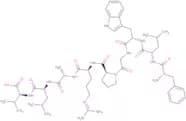
vLK-[AMC], Plasmin fluorogenic substrate. Plasmin is an enzyme that plays a fundamental role in blood clot fibrinolysis. Plasmin acts as a proteolytic factor and is involved in cell migration, tissue remodelling, wound healing, inflammation, angiogenesis, embryogenesis and the degradation of extracellular matrix.Peso molecolare:515.3 g/molUb4ix
The ability to modify ubiquitin chains would be a useful research tool for understanding ubiquitin signalling in health and disease. The initial step in ubiquitin signalling is attachment of a ubiquitin molecule to a lysine residue, further ubiquitins can then be added to the initial monomer creating a chain. The chain length and location can affect the fate of the protein. The most well studied are lysine 48 (K48) linked ubiquitin chains. K48 polyubiquitin chains are recognised by deubiquitinating enzymes (DUBS) and targeted for proteasomal degradation. Macrocyclic peptides are being explored as ubiquitin ligands to better understand ubiquitin signalling.Ub4ix is a macrocyclic peptide that selectively binds to lysine48-linked ubiquitin dimer (K48-Ub2), with much higher affinity than linear counterparts. Importantly, binding of ub4ix to K48-Ub2 prevents recognition by DUBS thus inhibiting protein targeting for proteosomal degradation. This has been shown to promote apoptosis in cancer cells. Therefore, molecules like ub4ix could be a valuable tool in understanding ubiquitin signalling as well as lead to future disease treatments. Potentially, the ubiquitin system in could be a target for cancer therapy to alter the polyubiquitin recognition by interacting proteins, further work with ubi4x could provide vital steps along this path.Peso molecolare:1,766.7 g/molTau (195-209) Light
Amino acids 195-209 of tubulin-associated unit (tau). This region represents a tau tryptic peptide and is part of the core of the tau protein. Tau is a phosphoprotein involved in microtubule (MT) assembly and stability as well as brain development. Tau is phosphorylated at multiple sites by several protein kinases, including cyclic-AMP-dependent protein kinases and casein kinase type-1. Tau phosphorylation causes tau to change shape, negatively regulating its ability to stimulate MT assembly. Tau is also glycosylated, and-O-glycosylation may have a role in its subcellular localisation and degradation.Malfunctioning tau protein contributes to the structural core of the paired helical filaments (PHFs), which make up neurofibrillary tangles (NFTs). NFTs are often observed in neurodegenerative disorders, such as Alzheimer disease and other tauopathies. Tau is expressed from a single gene and is alternatively spliced to yield six different isoforms in the adult central nervous system (CNS).
Peso molecolare:1,392.6 g/mol[FITC]-pCREB (127-134) substrate
The cyclic AMP (cAMP) response element binding protein (CREB) is a transcription factor that regulates the transcription of several genes that mediate important cellular processes. CREB is phosphorylated by several kinases, including PKA- Akt- and CamK I, II, and IV. Phosphorylated pCREB translocates to the nucleus, where it forms homodimers or heterodimers, and recruits p300/CREB binding protein (CBP) to initiate transcription of its target genes. pCREB is an important regulator of apoptosis and is also involved in modulating several immune processes and neuronal plasticity. CREB signalling has a critical role in the formation of memories and may be dysfunctional in the brains of Alzheimer's disease (AD).Peptide is labelled with an N-terminal 5-carboxyfluorescein (5-FAM), a widely used green fluorescent tag.
Peso molecolare:1,572.6 g/mol






![[Lys0]-Bradykinin (Kallidin)](/_next/image/?url=https%3A%2Fstatic.cymitquimica.com%2Fproducts%2F3D%2Fthumb-webp%2FPL16878.webp&w=3840&q=75)








![[D-Ala1] Peptide T, amide](/_next/image/?url=https%3A%2Fstatic.cymitquimica.com%2Fproducts%2F3D%2Fthumb-webp%2FPD16875.webp&w=3840&q=75)



![CEA, CAP-1-6-D, [Asp6]-Carcinoembryonic Antigen](/_next/image/?url=https%3A%2Fstatic.cymitquimica.com%2Fproducts%2F3D%2Fthumb-webp%2FPC16934.webp&w=3840&q=75)

![[Pro9] Substance P](/_next/image/?url=https%3A%2Fstatic.cymitquimica.com%2Fproducts%2F3D%2Fthumb-webp%2FPP16883.webp&w=3840&q=75)











































![Plasmin-[AMC] substrate](/_next/image/?url=https%3A%2Fstatic.cymitquimica.com%2Fproducts%2F3D%2Fthumb-webp%2FCRB1100385.webp&w=3840&q=75)


![[FITC]-pCREB (127-134) substrate](/_next/image/?url=https%3A%2Fstatic.cymitquimica.com%2Fproducts%2F3D%2Fthumb-webp%2FCRB1100419.webp&w=3840&q=75)