Peptidi
Sottocategorie di "Peptidi"
Trovati 29854 prodotti di "Peptidi"
beta-Amyloid (1-14) Biotin
Amino acids 1-14 of β-amyloid peptide (Aβ).Aβ has been identified as the key subunit of the extracellular plaques found in the brains of patients with Alzheimer's disease (AD) and Down's syndrome (DS). Aβ has therefore been extensively studied as a potential target for treatment of AD. Aβ is formed from the cleavage of the large, transmembrane protein- APP (amyloid precursor protein). Cleavage of APP by β- and then γ-secretases results in the formation of Aβ. Aβ can aggregate to produce amyloid-β oligomers, which are thought to be highly neurotoxic. Over time Aβ can further aggregate to produce the characteristic senile plaques present in AD and DS. Aβ can be degraded by enzymes such as neprilysin, insulin degrading enzyme or endothelin converting enzyme. At physiological levels Aβ may be involved in controlling synaptic activity and neuronal survival.Contains a C-terminal biotin tag for easy detection and purification.Peso molecolare:1,965.9 g/molVIP (6-28)
Vasoactive intestinal peptide (VIP) is a neuropeptide found throughout the body and the central nervous system (CNS). VIP is located within cell bodies and nerve endings of the enteric nervous system, brain and pancreas. VIP neurons in the peripheral system fire to regulate blood vessels, and the CNS innervate cerebral vasculature. VIP binds to G protein-coupled receptors VPAC1 and VPAC2. VIP and VPAC2 are detected in circular smooth muscle cells of cerebral arterioles. VIP and VPAC1 are also found in lymphatic tissue. VIP can block inflammation, modify the Th response favouring Th2 and induce regulatory T cells. Overexpression of each receptor has been linked to various cancers.VIP administration leads to pancreatic bicarbonate-rich fluid secretion but not to the same degree stimulated by secretin. VIP stimulates insulin secretion in a glucose-dependent manner and also stimulates glucagon secretion. Studies have found that in morbidly obese patients, VIP levels are lowered and work to slow gastric and duodenal motility but increase gastric emptying. Therefore, decreasing VIP levels in obese patients may increase weight gain by accelerating gastric emptying.VIP has been well studied in pancreatic acini. VIP is a full agonist of amylase secretion and increases cyclic AMP synchronised with an increase in intracellular Ca2+ triggered by stimuli that act through cholecystokinin (CCK) or cholinergic agonists. Most cAMP increases, and amylase secretion appear to be mediated via VPAC1.The discovery of VPAC antagonists can help to understand VIPs roles and may also provide new therapies in VIP dysregulated systems such as cancers. VIP (6-28) is a specific competitive inhibitor of the VIP receptor derived from VIP. VIP-induced vasodilatation was blocked by co-administration of the VIP receptor antagonist VIP (6-28). Using a VIP receptor antagonist has made VIP function easier to study during neuronal injury, inflammation, and heart innervation. The VIP receptor antagonist is being considered for osteoarthritis treatment, an area with no current treatments other than analgesics.
Peso molecolare:898.5 g/molAlyteserin-1c
Alyerserin-1c is a C-terminally α-amidated 23 residue Cationic antimicrobial peptide (AMP) with a net charge of +2. Anti-microbial peptides (AMPs) are produced by the innate immune system and are expressed when the host is challenged by a pathogen. The Alyerserin family of peptides was first identified in norepinephrine-stimulated skin secretions of the midwife toad-Alytes obstetricans-(Alytidae). Alyteserin-1 peptides have limited structural similarity to the ascaphins from the skins of frogs of the Leiopelmatidae family. Alyteserin-1 peptides are selective at inhibiting growth activity of Gram-negative bacteria-such as Escherichia coli and show weak haemolytic activity against human erythrocytes.Alyteserin contain at least 50% hydrophobic amino acids. Hydrophobic residues contribute to the insertion of the peptide into the hydrophobic membrane core which results in membrane disruption and death of the pathogen. Due to their mechanism of action it is less likely for resistance to develop towards such peptides compared to conventional antibiotics.Peso molecolare:2,265.74 g/molClick TP10
TP10 is an amphipathic cell-penetrating peptide (CPP) also known as transportan 10. Its formation involves the use of a lysine residue to form a chimeric linkage between a mastoparan 21-residue peptide, a wasp venon 14-residue peptide and 6-residues derived from the neuropeptide galanin. Structurally TP10 contains only positively charged amino acids along with 4 lysines and an N-terminus. Therefore, it will produce a +5 charge under conditions of a neutral pH. It has been found that TP10 may aid molecules in penetrating through the cell membrane barrier through directly interacting with the lipid bilayer. During these interactions with the membrane TP10 will form an amphipathic α-helix. TP10 can be used in transduction methods.TP10 is provided here with a N-terminal alkyne attachment. Two of the most regularly encountered functional groups for click chemistry are azides and alkynes, and the azide-alkyne cycloaddition has become the most popular click reaction. The use of click chemistry with alkyne-TP10 allows a wide variety of applications particularly for conjugation, modification, and peptide design. Fluorescent labelling of TP10 for drug delivery has been used in vivo.
Colore e forma:PowderPeso molecolare:2,260.4 g/molPNC 27
Membrane-active peptide that binds to HDM-2 expressed in the membranes of solid tissue tumour cells to induce transmembrane pore formation in cancerous, but not normal cells, resulting in tumour cell necrosis independent of p53 activity.
Peso molecolare:4,029.2 g/molHistone H3 (1-8)
Histone H3 (1-8) is derived from Histone 3 (H3) which is one of the four core histones (H2A, H2B, H3 and H4) fundamental in compacting eukaryotic DNA into the nucleosome. The nucleosome arises when 147 base pairs of DNA wrap around a H3-H4 tetramer and two H2A-H2B dimers, forming the histone octamer core. Both H4 and H3 are highly conserved and perform roles in binding to segments of DNA which enter and leave the nucleosome and in chromatin formation. Similar to the other core histone, H3 has a globular domain and a flexible N-terminal domain 'histone tail' which can undergo modifications such as acetylation, methylation, phosphorylation and ubiquitination. Due to histones containing a large number of lysine and arginine residues they have a positive net charge which interacts in an electrostatic manner with the negatively charged phosphate groups in DNA. The transcriptional activation or silencing of the chromatin is controlled by ATP-dependent chromatin remodelling factors and histone modifying enzymes which target histone proteins. Both processes function to alter the positioning of the nucleosome, allowing the DNA it to be either available or inaccessible to the transcription machinery.Peso molecolare:931.05 g/molH-APAMFNIR^-OH
Peptide H-APAMFNIR^-OH is a Research Peptide with significant interest within the field academic and medical research. This peptide is available for purchase at Cymit Quimica in multiple sizes and with a specification of your choice.PTH (13-34) Human
PTH 13-34 is a biologically active fragment of parathyroid hormone (PTH) with hypertensive activities. PTH 13-34 is being trialled as a possible treatment for osteoporosis (to replace the existing recombinant human PTH 1-34 treatment peptide).PTH is an 84-amino-acid polypeptide hormone (PTH 1-84) which is secreted by the parathyroid glands along with its fragments (such as PTH 1-34 and PTH 7-84). PTH increases calcium and decrease phosphate levels in the blood and the abundance of PTH-derived peptides is regulated by blood calcium levels. PTH inhibits the bone growth-promoting activity of osteoblasts and induces osteoclasts to resorb bone and release calcium and phosphate ions into the blood. PTH binds to and activates the receptor parathyroid hormone receptor 1 (PTHR1). PTHR1 is a G-protein-coupled receptor (GPCR) which regulates mineral ion homeostasis, bone turnover and skeletal development.Peso molecolare:2,806.5 g/mol(Cbz-LGR)2-[Rh110]
The protozoan Trypanosoma cruzi that causes South American trypanosomiasis expresses peptidases during its entire parasitic life cycle. Understanding better the function and specificity of the peptidases may lead to new inhibitors and potential therapies. It has been shown this alkaline peptidase has a preference for basic amino acids at position one and position two of the substrate. The sequence Leu-Gly-Arg was shown to have a high Km and high Vmax compared to other peptides tested.Provided here is a fluorogenic peptide substrate for Trypanosoma cruzi alkaline peptidase. In its entire state, this peptide is not fluorescent. However, this peptide is cleaved by T. cruzi alkaline peptidase. Upon rhodamine 110 fluorophore release, fluorescence can then be detected. This peptide, therefore, allows for the quantification of T. cruzi alkaline peptidase activity. Rhodamine 110 is a widely used red fluorescent probe.Peso molecolare:1,250.6 g/mol5Fam-LVEALY-OH
Peptide 5Fam-LVEALY-OH is a Research Peptide with significant interest within the field academic and medical research. This peptide is available for purchase at Cymit Quimica in multiple sizes and with a specification of your choice.
Click pep-1
Pep-1 is a synthetic cell penetrating peptide (CPP) and has been successfully used to deliver a variety of proteins and other biopharmaceutical macromolecules into cells in a non-disruptive manner. It is a CPP with primary amphipathicity, which results from its amino acid sequence as opposed to its folding structure. The primary structure of Pep-1 comprises three main domains: a tryptophan-rich, 'hydrophobic' domain, a hydrophilic domain derived from an NLS (nuclear localisation signal) of SV40 (simian virus 40) large T-antigen, and a spacer.Pep-1 is provided here with a N-terminal alkyne attachment. Two of the most regularly encountered functional groups for click chemistry are azides and alkynes, and the azide-alkyne cycloaddition has become the most popular click reaction. The use of click chemistry with alkyne-Pep1 allows a wide variety of applications particularly for conjugation, modification and peptide design.
Colore e forma:PowderPeso molecolare:2,840.5 g/molRAGE antagonist peptide
RAGE antagonist peptide is an S100P-derived peptide based competitive antagonist for receptor for advanced glycation end product (RAGE). Recent studies have shown it to disrupt the interaction between RAGE and its ligands, such as S100P, S100A4 and HMGB-1 in binding assays and in multiple cancer cell lines. As well as this, it also blocks RAGE-dependent NF-kB activation in MPanc96, MOH and HPAF II tumor cell lines.Systemic administration of RAGE antagonist peptide also diminishes NF-kB signaling in vivo and significantly reduces glioma tumour growth in murine models.
Peso molecolare:1,271.7 g/molSARS-CoV-2 NSP13 (236-250)
The SARS-CoV-2 non-structural protein 13 (NSP13) has been identified as a target for anti-viral therapeutics due to its highly conserved sequence and is essential for viral replication. NSP13 is part of the helicase superfamily 1B. As an NTPase and RNA helicase, NSP13 binds to RNA-dependent RNA polymerase and acts in concert with the replication-transcription complex to stimulate backtracking and further activate NSP13 helicase activity. These factors make NSP13 a good target for developing new antiviral drugs. In addition, the identification of epitopes within the NSP13 sequence can help design more effective SARS-CoV-2 vaccines.Models have predicted epitopes exhibiting antigenicity, stability and interactions with MHC class-I and class-II molecules. NSP13 (236-250) is an epitope candidate with various predicted HLA restrictions. This epitope can be used to better vaccine design for more durable CD4+ and CD8+ T cell responses for long-lasting immunity.
Peso molecolare:1,709.9 g/mol[Cys]-Galanin (1-30) Human
Galanin (1-30) is an endogenous neuropeptide with endocrine, metabolic and behavioural effects. Galanin has a role in intestinal smooth muscle contraction, insulin and somatostatin release, and synaptic neurotransmission.Galanin is widely distributed in the central nervous, peripheral, and endocrine systems. Galanin's overarching function is as an inhibitory, hyper-polarizing neuromodulator for classical neurotransmitters like acetylcholine and serotonin. Galanin interacts with 3 receptor subtypes, GalR1-3 G protein-coupled receptors inserted into the plasma membrane. GalR1 is believed to activate a Gβγ pathway to regulate MAPK activation. GalR2 can also activate the MAPK pathway, but unlike GalR1, there is detectable inositol phosphate production. GalR3 is associated with the G alpha i/o pathway receptor activation leads to a cellular influx of K+. Each receptor has been associated with neurological diseases such as GalR3 and epilepsy.Galanin protects against various physiological insults in vitro, including excitotoxicity and β-amyloid toxicity. Changes in galanin have been widely studied concerning Alzheimer's disease, and galaninergic neurons are spared in late-stage Alzheimer's relative to non-galaninergic neurones.Galanin (1-30) has been used as an agonist for the GalR2 receptor in vitro for calcium mobilisation assays to understand the role Galanin/GalR2 play in multiple sclerosis.An N-terminal cysteine residue has been included on the galanin (1-30) peptide to allow ease of site-specific conjugation to various molecules.Peso molecolare:3,258.6 g/molH-MHVAQPAVVLASSR^-OH
Peptide H-MHVAQPAVVLASSR^-OH is a Research Peptide with significant interest within the field academic and medical research. This peptide is available for purchase at Cymit Quimica in multiple sizes and with a specification of your choice.SARS-CoV-2 Membrane protein (141-158)
SARS-CoV-2 Membrane protein (141-158)Peso molecolare:1,932.1 g/molBiotin-β-Amyloid (1-15) human
β-Amyloid 1-15 (Aβ1-15) is one of many short Aβ species found in vivo and is formed by the cleavage of amyloid β precursor protein by β- and alpha-secretase.Amyloid β-protein (Aβ) has been identified as the key subunit of the extracellular plaques found in the brains of patients with Alzheimer's disease (AD) and Down's syndrome (DS). Aβ has therefore been extensively studied as a potential target for treatment of AD.Aβ is formed from the cleavage of the large, transmembrane protein- APP (amyloid precursor protein). Cleavage of APP by β- and then γ-secretases results in the formation of Aβ. Aβ can aggregate to produce amyloid-β oligomers, which are thought to be highly neurotoxic. Over time Aβ can further aggregate to produce the characteristic senile plaques present in AD and DS. Aβ can be degraded by enzymes such as neprilysin, insulin degrading enzyme or endothelin converting enzyme. At physiological levels Aβ may be involved in controlling synaptic activity and neuronal survival.This peptide contains a covalently attached N-Terminal biotin tag for convenient detection and purification.Peso molecolare:2,052.8 g/mol(Tos-YASR)2-[Rh110]
Optimal peptide substrate for kallikrein-related peptidase 14 (KLK14). In its intact state this peptide is not fluorescent, however when this substrate peptide is cleaved by KLK14, Rhodamine 110 is released and thus fluorescence can then be detected. This peptide therefore allows for the quantification of KLK14 peptidase activity. KLK14 is most abundant in the skin, with lower levels in breast and prostate and may form part of the protease cascade responsible for maintaining the epidermal barrier. Aberrant KLK14 proteolytic activity is linked to several skin pathologies. Overexpression of KLK14 seen in several hormone-dependent cancers, including prostate, colon, ovarian, and breast, correlating with higher risk of disease progression. Therefore KLK14 is a potential point of therapeutic intervention in a variety of pathologies.Contains rhodamine 110 group, a widely used red fluorescent tag. The terminal carboxylic acids in this peptide have been activated by the addition of the p-tosyl moiety, allowing for easy addition of functional groups or further peptide residues.Peso molecolare:1,592.6 g/molT-9 peptide
Duchenne muscular dystrophy is a severe muscle wasting X-linked genetic disease cause by mutations in the gene encoding the muscle structural protein, dystrophin. Exon skipping therapy remains a key approach for treatment of DMD but still requires considerable research to improve efficient and specific delivery of molecules to myofibers. Use of a phage library identified this sequence as having a high affinity for myofibers. Conjugation of this peptide to novel DMD molecules could provide the insights needed in the field.
Peso molecolare:1,343.6 g/molH-Trp(Boc)-2-ClTrt-Resin (100-200 mesh) 1% DVB
H-Trp(Boc)-2-ClTrt-Resin (100-200 mesh) 1% DVB is a resin for the synthesis of peptides. It is used as building blocks in the synthesis of peptide derivatives, such as amines, alcohols, thiols, and other amino acids. This resin has been shown to be stable in aqueous or organic solvents.
Purezza:Min. 95%Ac-SLGR-OH
Peptide Ac-SLGR-OH is a Research Peptide with significant interest within the field academic and medical research. This peptide is available for purchase at Cymit Quimica in multiple sizes and with a specification of your choice.H-RRPHFP^QFSYSASGTA-OH
Peptide H-RRPHFP^QFSYSASGTA-OH is a Research Peptide with significant interest within the field academic and medical research. This peptide is available for purchase at Cymit Quimica in multiple sizes and with a specification of your choice.
Ac-CEVRRIDLVKRDYSR-NH2 PAB-405-1419A
Peptide Ac-CEVRRIDLVKRDYSR-NH2 PAB-405-1419A is a Research Peptide with significant interest within the field academic and medical research. This peptide is available for purchase at Cymit Quimica in multiple sizes and with a specification of your choice.HLA leader peptide LIL
Peptide H-VMAPRTLIL-OH is a Research Peptide with significant interest within the field academic and medical research. This peptide is available for purchase at Cymit Quimica in multiple sizes and with a specification of your choice.
Cyclin-A1 (385-395)
Custom research peptide; min purity 95%. For different specs please use the Peptide Quote ToolN-methylated ERAP1substrate
Non-hydrolysable ERAP1 substrate. An optimized ERAP1 substrate with N-methylation of the first amide bond to prevent its degradation by ERAP1.Endoplasmic reticulum aminopeptidase 1 and 2 (ERAP1 and ERAP2) are ER-resident, interferon-γ inducible, metalloaminopeptidase which critically shape the major histocompatibility complex I (MHC I) immunopeptidome. The ERAPs remove N-terminal residues from antigenic precursor peptides and generate optimal-length peptides (i.e. 8-10-mers) to fit into the MHC class I groove. The immune recognition of surface MHC I/peptide complexes initiates activation of CD8+ T cells as a critical step in the elimination of pathogens.ERAP1 has unique substrate preferences, trimming long peptides while sparing shorter ones as well as sequence preferences. ERAP1 and ERAP2 can form a heterodimer (ERAP1/ERAP2) with distinct functional properties. Allelic variants of ERAP1 have been linked to a number of human diseases, including the autoimmune disease ankylosing spondylitis (AS), diabetes, some forms of cervical cancer, and hypertension.Colore e forma:PowderPeso molecolare:1,035.6 g/molHistone H3 (1-21)
Histone H3 (1-21) is derived from Histone 3 (H3) which is one of the four core histones (H2A, H2B, H3 and H4) fundamental in compacting eukaryotic DNA into a structure known as the nucleosome. The nucleosome arises when 147 base pairs of DNA wrap around a H3-H4 tetramer and two H2A-H2B dimers, forming the histone octamer core. Both H4 and H3 are highly conserved and perform roles in binding to segments of DNA which enter and leave the nucleosome and in chromatin formation. Similar to the other core histone, H3 has a globular domain and a flexible N-terminal domain, 'histone tail' which can undergo modifications such as acetylation, methylation, phosphorylation and ubiquitination. Due to histones containing a large number of lysine and arginine residues they have a positive net charge which interacts in an electrostatic manner with the negatively charged phosphate groups in DNA. The transcriptional activation or silencing of the chromatin is controlled by ATP-dependent chromatin remodelling factors and histone modifying enzymes which target histone proteins. Both processes function to alter the positioning of the nucleosome, allowing the DNA it to be either available or inaccessible to the transcription machinery.Histone H3 (1-21) has been utilised in research as a substrate for methyltransferase (Histone 3 K4 and K9) and acetyltransferase (Histone 3 K9 and K14) assays. Histone H3 (1-21) and these assays have already provided vital insights into the role's modifications play on the core histone functions. However, with so many histone modifications in different conditions still to be characterised the histone H3 (1-21) peptide still has a lot of insight to provide in the field.Peso molecolare:2,253.3 g/molMBP Ac1-9
The acetylated N-terminal peptide of murine myelin basic protein (MBP) (1-9).Colore e forma:PowderPeso molecolare:1,098.22 g/molbeta-Amyloid (35-25)
This peptide represents the reserve sequence of β-amyloid 25-35 (Aβ 25-35) and is used as an inactive control peptide.Aβ has been identified as the key subunit of the extracellular plaques found in the brains of patients with Alzheimer disease (AD) and Down syndrome (DS). Aβ has therefore been extensively studied as a potential target for treatment of AD.Aβ is formed from the cleavage of the large, transmembrane protein- APP (amyloid precursor protein). Cleavage of APP by β- and then γ-secretases results in the formation of Aβ. Aβ can aggregate to produce amyloid-β oligomers, which are thought to be highly neurotoxic. Over time Aβ can further aggregate to produce the characteristic senile plaques present in AD and DS. Aβ can be degraded by enzymes such as neprilysin, insulin degrading enzyme or endothelin converting enzyme. At physiological levels Aβ may be involved in controlling synaptic activity and neuronal survival.
Peso molecolare:1,059.6 g/molSARS-CoV-2 NSP7 (26-40)
SARS-CoV-2 NSP7 is part of the RNA-dependent RNA polymerase heterotetramer for mediating coronavirus RNA synthesis. NSP7 and NSP8 form a channel to confer processivity on RNA polymerase. NSP7 aids in stabilising NSP12 regions involved in RNA binding and is essential for a highly active NSP12 polymerase complex. These factors make NSP7 a good target for developing new antiviral drugs. In addition, the identification of epitopes within the NSP7 sequence can help design more effective SARS-CoV-2 vaccines.Models have predicted epitopes exhibiting antigenicity, stability and interactions with MHC class-I and class-II molecules. NSP7 (26-40) is an epitope candidate with various HLA restrictions. This epitope can be used to better vaccine design for more durable CD4+ and CD8+ T cell responses for long-lasting immunity.
Peso molecolare:1,766.9 g/molH-QLSESQVK^-OH
Peptide H-QLSESQVK^-OH is a Research Peptide with significant interest within the field academic and medical research. This peptide is available for purchase at Cymit Quimica in multiple sizes and with a specification of your choice.Biotin-Axltide Peptide substrate
Axltide-is a substrate peptide for use in kinase assays and is based on the mouse insulin receptor substrate 1 (IRS1) (amino acid 979-989).IRS1 is a membrane-proximal adaptor protein, which binds to, and is phosphorylated by, the insulin receptor (IR) at its tyrosine residue. IRS1 transmits the extracellular signal for insulin to serine/threonine kinases, such as Akt which then deliver the signal into the cell to mediate the various actions of insulin.Contains an N-terminal biotin tag for easy detection and purification.Colore e forma:PowderPeso molecolare:1,854.2 g/molbeta-Amyloid (1-13) Biotin
β-Amyloid 1-13 (Aβ1-13) is one of many short Aβ species found in vivo and is formed by the cleavage of amyloid β precursor protein by β- and α-secretase. Amyloid β-protein (Aβ) has been identified as the key subunit of the extracellular plaques found in the brains of patients with Alzheimer disease (AD) and Down syndrome (DS). Aβ has therefore been extensively studied as a potential target for treatment of AD.Aβ is formed from the cleavage of the large, transmembrane protein- APP (amyloid precursor protein). Cleavage of APP by β- and then α-secretases results in the formation of Aβ. Aβ can aggregate to produce amyloid-β oligomers, which are thought to be highly neurotoxic. Over time Aβ can further aggregate to produce the characteristic senile plaques present in AD and DS. Aβ can be degraded by enzymes such as neprilysin, insulin degrading enzyme or endothelin converting enzyme. At physiological levels Aβ may be involved in controlling synaptic activity and neuronal survival. Biotin is C-terminally linked to the peptide via ethylenediamine for convenient detection and purification. Alternative β-Amyloid fragments and labels are also available, please refer to our peptide catalogue for availability.
Peso molecolare:1,828.8 g/molHXB2 gag NO-36/aa141 - 155
Custom research peptide; min purity 95%. For different specs please use the Peptide Quote Tool
Peso molecolare:1,752 g/mol(Des-octanoyl)-Ghrelin Human
Ghrelin is an orexigenic peptide hormone mainly produced in the stomach as precursor preproghrelin. Cleavage of preproghrelin followed by modification leads to the formation of ghrelin with the addition of a fatty acid to its serine 3 residue- ghrelin is capable of activating the growth hormone release receptor (GHSR). Ghrelin is involved in appetite stimulation and growth hormone release.Most circulating ghrelin is in the non-acylated form (des-octanoyl) ghrelin. (Des-octanoyl)-ghrelin has some distinct functions from ghrelin, the lack of acylation prevents binding to the ghrelin receptor and growth hormone release. However, (des-octanoyl) ghrelin has negative inotropic effects on papillary muscle and cardioprotective function. There is evidence (des-octanoyl) ghrelin inhibits proliferation of certain cancer cell lines, while promoting adipogenesis has been observed in other experiments in vivo.
Colore e forma:PowderPeso molecolare:3,242.8 g/molDuck liver-derived peptide 4
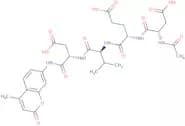
Duck liver-derived peptide 4 is a bioactive peptide with high antioxidant activity. The antioxidant activity is attributed to forming hydrogen bonds between their amino acid residues and free radical molecules. Duck liver-derived peptide 4 increases the activities and mRNA expression levels of intracellular antioxidant enzymes (SOD, CAT, and GSH-Px) in HepG2 oxidative damage cell models. Duck liver-derived peptide 4 can reduce the content of malondialdehyde (MDA) and reactive oxygen species (ROS) accumulation, thereby inhibiting intracellular oxidative damage. Duck liver-derived peptide 4 has the following activity: ACE inhibitor, dipeptidyl peptidase IV inhibitor, antioxidant, and antithrombotic. It may be used in the research for food-derived bioactive peptides for modified-food development.Peso molecolare:943.5 g/molAc-Asp-Glu-Val-Asp-AMC ammonium salt
CAS:Ac-Asp-Glu-Val-Asp-AMC ammonium salt is a small molecule that is used as a tool to study apoptosis in vitro. Ac-Asp-Glu-Val-Asp-AMC ammonium salt induces apoptosis by blocking the mitochondrial membrane potential and inducing the release of cytochrome c from mitochondria into the cytoplasm. This drug also induces activation of caspase 3, which initiates the cascade of events leading to cell death. Ac-Asp-Glu-Val-Asp-AMC ammonium salt has been shown to have an antiangiogenic effect on hl60 cells. This effect may be due to its ability to inhibit expression of survivin, a protein that protects cells from apoptosis. The efficacy of this drug in an experimental model has been shown to be dependent on toll like receptor (TLR) signaling pathways and mitochondrial function.br>Formula:C30H37N5O13•NH3Purezza:Min. 97 Area-%Colore e forma:PowderPeso molecolare:692.67 g/molH-SKIGSTENLK^-OH
Peptide H-SKIGSTENLK^-OH is a Research Peptide with significant interest within the field academic and medical research. This peptide is available for purchase at Cymit Quimica in multiple sizes and with a specification of your choice.Albumin (51-62) Bovine
Albumin (51-62) Bovine is derived from the globular protein Albumin and is found in the blood plasma of humans (known as Human Serum Albumin, HSA) where it serves to maintain plasma pressure and nutritional balance. Another role it carries out is the transportation of bound molecules through the blood. Bovine serum albumin (BSA), composed of 583 amino acids, is very similar to HSA thus allowing BSA to be used as a successful model and a standard protein in laboratory experiments.Although BSA and HAS share homology in their three domains, I, II and III, BSA contains 2 tryptophan whereas HAS only contains 1 tryptophan residue.In agriculture the presence of the albumin protein has been used to assess the health of cows to ensure that a suitable quality of milk and meat are produced. Moreover it is important to detect bovine albumin in food and pharmaceutical products due to it being an allergenic protein.Colore e forma:PowderPeso molecolare:1,510.8 g/molAbz-QPMAVVQSVPQ-EDDnp
Peptide Abz-QPMAVVQSVPQ-EDDnp is a Research Peptide with significant interest within the field academic and medical research. This peptide is available for purchase at Cymit Quimica in multiple sizes and with a specification of your choice.
H-TPDVSSAL^DK-OH
Peptide H-TPDVSSAL^DK-OH is a Research Peptide with significant interest within the field academic and medical research. This peptide is available for purchase at Cymit Quimica in multiple sizes and with a specification of your choice.
H-NITEIADLTQK^-OH
Peptide H-NITEIADLTQK^-OH is a Research Peptide with significant interest within the field academic and medical research. This peptide is available for purchase at Cymit Quimica in multiple sizes and with a specification of your choice.
OVA (323 - 339) amide
Ova (323-339) is an epitope of interest from egg white albumen, which is widely used in allergy research. Ovalbumin is a glycoprotein that is sufficiently large and complex to be mildly immunogenic. It has been demonstrated that ovalbumin contains B-cell epitopes which are recognized by specific IgE antibodies, and CD4 T cell epitopes restricted by the MHC I-Ad molecule in mice and by HLA-D molecule in human.OVA (323-339) can be used to study binding of class II MHC-peptide and T-cell activation in PBMCs by ELISPOT assays. This method quantifies peptide-epitope specificity and IFN-γ releasing effector cells. It has been shown that OVA (323-339) was responsible for 25-35% of T-cell response of isolated BALB/c mouse. An investigation has demonstrated that OVA and OVA (323-339) induced similar lung inflammation and a Th2-like dominant immune response in mouse model.
Peso molecolare:1,771.9 g/molAntennapedia peptide Arg
Identification of cell penetrating conjugates has aided numerous areas of scientific development. The Drosophila transcription factor Antennapedia contains a homeodomain that can be internalised by cells in a receptor-independent mechanism to the cytoplasm and to the nucleus. The key residues for internalisation have been sequenced (RQIKIWFQNRRMKWKK) and used in several studies to aid entry of recombinant proteins into cells.To further the scope of cell penetrating peptides (CPPs), analogues of penetratin have been generated. This arginine rich acid sequence was made and found to be a strong antimicrobial/antifungal agent while also retaining its CPP properties. The activity was tested against the pathogenic strains Candida albicans, Cryptococcus neoformans, Staphylococcus aureus, and Escherichia coli. The degree of arginine content is linked to the rate of cellular uptake and antimicrobial activity.Peso molecolare:2,358.79 g/molKRREILSRRPSYR-acid
Protein kinases are important drug targets for numerous diseases to try and better evaluate the enzyme specificity, affinity, mode of action and identify possible inhibitors. In vitro assays and synthetic substrates provide valuable data about human kinase activity. CREBtide KRREILSRRPSYR is based on the phosphorylation sequence in d-CREB (cAMP response element binding protein) it is a substrate for protein kinase A (PKA)(Km = 3.9 mM). However, it has also been tested as a substrate for other protein kinases, including cAMP-dependent protein kinase (cAK) and protein kinase C (PKC). Immunoblots and autoradiography have been used for CREBtide KRREILSRRPSYR in vitro kinase analysis.Colore e forma:PowderPeso molecolare:1,716 g/molN-formylated PSMalpha3
Pathogenic Staphylococcus aureus strains produce N-formylmethionyl containing peptides. Peptides starting with an N-formylated methionyl group constitute a unique hallmark of bacterial as well as mitochondrial metabolism, and professional phagocytes of our innate immune system recognise this microbial/mitochondrial pattern as a danger signal that guides innate immune cells.All PSMα peptides have the same basic functions and promote virulence through effects on discrete neutrophil functions (i.e. chemotaxis) and by being cytotoxic at higher concentrations. PSMα2 and PSMα3 can both bind to FPR2 and trigger superoxide release in neutrophils at low nanomolar concentrations. In addition, at high nanomolar concentrations they display cytotoxicity selectively on apoptotic neutrophil membranes and this occurs in an FPR2 independent manner.Colore e forma:PowderPeso molecolare:2,633.4 g/molTAT 2-4
TAT 2-4 is derived from human immunodeficiency virus (HIV) transactivator of transcription (TAT) residues 47-58. TAT (47-58) is a cell penetrating cationic peptide derived from the N-terminus of the Tat protein, which is a trans-activator of the transcription protein present in the human immunodeficiency virus (HIV). As a cell penetrating peptide (CPP) TAT aids in the cellular uptake of molecules and hence serves a valuable purpose in transduction methods. TAT 2-4 are residues (47-58) of HIV TAT protein repeated back to back, this dimer of TAT sequences has been shown to be the most efficient oligomer for cell penetration. This TAT dimer has been used in previous studies to deliver a wide variety of cargoes including fluorophores, chelators and DNA to target cells.Colore e forma:PowderPeso molecolare:3,213.9 g/molAngiotensin II (1-8)
Angiotensin II (Ang-II) is a key signalling peptide of the renin angiotensin system (RAS) which is involved in regulating blood pressure, cardiovascular function and energy balance. RAS activity is elevated in obesity and is widely studied in relation to lifestyle-related diseases.Ang-II is produced from angiotensinogen (AGT) via the intermediate angiotensin I (Ang-I). AGT is cleaved by the aspartyl-protease, renin, to produce Ang-I, which is then cleaved by the dicarboxyl-peptidase angiotensin converting enzyme (ACE). ACE removes a histidine and a leucine from the C-terminus of Ang-I to form Ang-II.Ang-II exerts its affect by binding to the G-protein-coupled receptors- Ang II type 1 (AT1) and Ang II type 2 (AT2) receptors. Ang-II plays central roles in glucose metabolism and blood pressure. Increased levels of Ang-II have also been associated with Alzheimer's disease, and certain cancers including oesophageal squamous cell carcinoma (ESCC), brain cancers and breast cancers. The effects of Ang-II appear to be supressed by another branch of the RAS- the ACE2/Ang-(1-7)/Mas pathway.Peso molecolare:1,045.5 g/molUBA3 (59-72) peptide
Peptide derived from the ubiquitin-activating enzyme 3 (UBA3), the catalytic subunit of the NEDD8-activating enzyme (NAE).Colore e forma:PowderPeso molecolare:1,495.8 g/molSRC-1 (676-700)
Steroid Receptor Coactivator - 1 (676-700).
Colore e forma:PowderPeso molecolare:2,797.4 g/molHIV-1 Rev (34-50)
The full Rev is vital in aiding transport of unspliced viral mRNA from the nucleus. Within Rev there are 3 main functional regions - the arginine rich motif (ARM), the oligomerization domain (OD), and nuclear export sequence (NES). The peptide sequence 34-50 aligns to the ARM motif which binds the Rev Response Element (RRE) in RNA to form a complex which ultimately leads to nuclear export. ARM is able to recognise a wide range of RNA sequence to and still bind to form a Rev dimer. The Rev ARM sequence has also been shown to work as a nuclear localisation sequence that can penetrate cells. In research, Rev ARM has been utilised as a cell penetrating peptide (CPP) for its ability to bind RNA due to the arginine residues presenting multiple sides for binding and thus deliver macromolecules into the cell.
Colore e forma:PowderPeso molecolare:2,436.4 g/molInsulin A Chain (A12-21)
Type I diabetes is an autoimmune condition caused by the destruction of insulin-producing β cells. The initiation mechanism is unclear but involves activating autoreactive T cells against the β-cell-specific antigen, insulin.RIP-B7.1 mice express CD80 on pancreatic β cells and are a model for studying de novo induction of diabetogenic CD8 T cells. Immunization of RIP-B7.1 mice with preproinsulin (ppins)-encoding plasmid DNA induces experimental autoimmune diabetes (EAD). EAD is associated with significant induction of CD8 T cells specific for the (A12-21) restricted epitope leading to the destruction of β cells.The Insulin A Chain (A12-21) epitope is recognised by pancreas-infiltrating CD8 T cells isolated from immunized, diabetic RIP-B7.1 mice as shown by flow cytometry. The Insulin A Chain (A12-21) epitope can also be used to stimulate inducible IFN- expression of ppins-primed CD8 T cells ex vivo as determined by flow cytometry. GFP fusion has shown the expression of insulin A chain (A12-21) epitope in HeLa cells.Peso molecolare:1,246.3 g/molTetanus Toxin P2 (830 - 844)
Tetanus Toxin P2 (830 - 844) is a protein that is derived from the single-chain polypeptide neurotoxin produced by Clostridium tetani. The neurotoxins produced by Clostridium tetani are among the most potent molecules known to humankind. Once in the body, the toxin binds to the basal lamina at the neuromuscular junction. From here, the toxin is transported to inhibitory interneurons in the spinal cord, where it prevents the release of neurotransmitters, which causes spastic paralysis.The P2 protein has antigenic properties that are reflective of the neurotoxin released by Clostridium tetani. Therefore, P2 is a suitable epitopes for CD4+ T cells and can be used to stimulate the release of IFNg, which is a cytokine that promotes macrophage activity and coordinates lymphocyte endothelium interactions.
Colore e forma:PowderPeso molecolare:1,724 g/molMBP Ac1-9 (4Y)
This peptide constitutes the acetylated N-terminal region of murine myelin basic protein (MBP) and displays high affinity for major histocompatibility complexes (MHC). This high MHC affinity is due to substitution of the native lysine at position 4 for a tyrosine. Substitution increases the MHC binding affinity of the peptide by around 1 million fold, therefore creating a superagonist ligand. MBP is an integral component of myelin found in the central nervous system (CNS) vital for the development and stability of the myelin sheath where it plays a role in membrane adhesion. MBP may be targeted by auto-antibodies in diseases such as multiple sclerosis. The low affinity of the native lysine containing MBP 1-9 peptide for MCH class II may result in MBP auto-reactive T cells escaping central-tolerance where self reactive T cells are usually eliminated. MBPs constitute an extraordinarily varied collection of splice isoforms which show a myriad of post-translational modifications.
Colore e forma:PowderPeso molecolare:1,133.22 g/molAc-RLR-[AMC] Proteasome Substrate
Fluorogenic substrate peptide to assay trypsin-like activity. In its intact state this peptide is non-fluorescent, however when aminomethylcoumarin (AMC) is released upon hydrolysation, fluorescence can be detected. This peptide is therefore a useful tool for analysing trypsin-like enzyme activity.AMC is a fluorescent dye with excitation maxima at around 360 nm and emission maxima at around 450 nm. AMC can be excited with a mercury lamp and observed using a UV filter set.Peso molecolare:642.4 g/molH-DTDSEEEIR^-OH
Peptide H-DTDSEEEIR^-OH is a Research Peptide with significant interest within the field academic and medical research. This peptide is available for purchase at Cymit Quimica in multiple sizes and with a specification of your choice.
IFNB1 (118-132) Human
Recombinant human interferon-β (IFNB) is a therapeutic for certain stages of multiple sclerosis (MS). However, a significant portion of patients develop neutralising antibodies within 2 years and prevent clinical efficacy of the treatment, this was correlated to a specific rise in IgG. Sequencing of IFNB1 revealed a CD4+ T cell epitope residues (118-132) that contains critical T cell activation residues. The identification of this sequences can now allow it to be manipulated to hopefully provide new interferon treatments that reduces the capacity for induction of neutralising antibodies in MS patients. The IFNB1 (118-132) epitope can be used for immunological investigations such as T cell activation, antibody recognition via immunoassays and immunohistochemistry. This may provide further insights into certain haplotypes correlating to IFNB responses in MS treatment.Peso molecolare:1,906.23 g/molYSA acid
YSA binds to the extracellular domain of ephrin type-A receptor 2 (EphA2) with high affinity and selectivity. YSA binding activates EphA2 and its tumour suppressing downstream signalling pathways (including inhibition of the PI3K/Akt and ERK pathways), and promotes receptor internalisation.EphA2 is highly expressed in many types of solid tumour, and the level of EphA2 expression is positively correlated with malignancy and poor prognosis in some cancer types.YSA has been shown to be an effective targeting peptide of chemotherapeutic drugs to EphA2 expressing tumours. YSA-drug conjugates are able to selectively target EphA2 expressing tumours, both activating tumour supressing downstream signalling pathways, and becoming effectively internalised by cancer cells to further increase the potency of the chemotherapeutic drug. YSA-drug conjugates have been shown to be dramatically more effective at inhibiting tumour growth than chemotherapy alone. Selective tumour targeting with YSA could also reduce the systemic toxicity caused by nonselective and highly toxic chemotherapy agents, and thus reduce adverse side effects of chemotherapy.Peso molecolare:1,346.6 g/molBiotinylated L57
The blood-brain barrier (BBB) is a major obstacle to drug delivery into the central nervous system (CNS), in particular for macromolecules such as peptides and proteins. However, certain macromolecules can reach the CNS via a receptor-mediated transcytosis (RMT) pathway, and low-density lipoprotein receptor-related protein 1 (LRP1) is one of the promising receptors for RMT. Recent studies have shown that biotinylated L57 binds to LRP1 (CL4)-Fc more efficiently than Angiopep-7 (a different LRP1 ligand), which might explain the improved BBB permeability of L57.Peso molecolare:3,110.6 g/molHistone H3 (1-20) pT3, K4Me3-GG-[Lys(5-FAM)]
Histone 3 (H3) is one of the four core histones (H2A, H2B, H3 and H4) fundamental in compacting eukaryotic DNA into the nucleosome. Similar to the other core histone, H3 has a globular domain and a flexible N-terminal domain, 'histone tail' which can undergo modifications such as acetylation, methylation, phosphorylation and ubiquitination. The transcriptional activation or silencing of the chromatin is controlled by ATP-dependent chromatin remodelling factors and histone modifying enzymes which target histone proteins. Both processes function to alter the positioning of the nucleosome, allowing the DNA it to be either available or inaccessible to the transcription machinery.The lysine at position 4 of this peptide has been tri-methylated and it is implicated in studies that this modification may remodel the chromatin so that it is more accessible to transcription factors, which may ultimately increase the level of gene expression. Moreover, the threonine at position 3 has been phosphorylated. It is implicated in recent studies that H3T3 phosphorylation regulates chromosome cohesion and is necessary for chromosomes to be able to align on the metaphase plate.The this peptide is labelled with 5-Carboxyfluorescein (5-FAM), a widely used green fluorescent tag.
Peso molecolare:2,904.5 g/molHXB2 gag NO-57
Custom research peptide; min purity 95%. For different specs please use the Peptide Quote ToolPeso molecolare:1,571.7 g/molH-I^LGGQE-OH
Peptide H-I^LGGQE-OH is a Research Peptide with significant interest within the field academic and medical research. This peptide is available for purchase at Cymit Quimica in multiple sizes and with a specification of your choice.
Hp1404
Antimicrobial peptides (AMP) are proving a lucrative area for antibiotics in the era of bacterial resistance. Of note, the scorpion Heterometrus petersii was found to produce Hp1404, an amphipathic cationic peptide with specific activity against Gram-positive bacteria- Hp1404 was shown to be effective against methicillin-resistant Staphylococcus aureus (MRSA). The mode of action is by membrane penetration and disruption. MRSA did not gain resistance after several exposures to Hp1404 suggesting it may be a key agent against the rise of antibiotic resistance. Importantly, bacterial lethality was maintained with low toxicity to mammalian cells. Hp1404 is being used to generate analogues with reduced toxicity to mammalian cells and improved antimicrobial potency against a wider range of organisms.Colore e forma:PowderPeso molecolare:1,544.9 g/molGRP (18-27) (human, porcine, canine)
Mammalian bombesin-like neuropeptide first isolated from pig spinal cord, which can stimulate rat uterine smooth muscle contraction and gastrin and somatostatin secretion in vitro. Increases blood pressure and pancreatic exocrine secretion in dogs.Colore e forma:PowderPeso molecolare:1,119.5 g/molTP10
TP10 is an amphipathic cell-penetrating peptide (CPPs) also known as transportan 10. Its formation involves the use of a lysine residue to form a chimeric linkage between a mastoparan 21-residue peptide, a wasp venon 14-residue peptide and 6-residues derived from the neuropeptide galanin. Structurally TP10 contains only positively charged amino acids along with 4 lysines and an N-terminus. Therefore it will produce a +5 charge under conditions of a neutral pH. It has been found that TP10 may aid molecules in penetrating through the cell membrane barrier through directly interacting with the lipid bilayer. During these interactions with the membrane TP10 will form an amphipathic alpha-helix. TP10 can be used in transduction methods.
Peso molecolare:2,180.4 g/molInfluenza Virus Nucleoprotein (311 - 325)
The Influenza Virus Nucleoprotein (311 - 325) is a component of the viral ribonucleotide complex, derived from the influenza virus and it is involved in viral replication, RNA packing and nuclear trafficking. As a monomer it contains basic residues which allow it to bind to single stranded RNA and through its flexible tail loop it has the ability to form NP oligomers.Furthermore NP is able to support the viral polymerase structurally, through associating with the two subunits PB1 and PB2, and it allows the viral ribonucleotide complex to be transported in and out of the nucleus due to its nuclear localisation and nuclear export signals.During influenza viral replication messenger RNA, viral genome RNA and complementary positive-sense RNA are produced and NP is crucial for this replication.Inhibitors of NP have potential to be used to prevent the influenza virus in humans.Peso molecolare:1,764.9 g/molSARS-CoV-2 NSP13 (226-240)
The SARS-CoV-2 non-structural protein 13 (NSP13) has been identified as a target for anti-viral therapeutics due to its highly conserved sequence and is essential for viral replication. NSP13 is part of the helicase superfamily 1B. As an NTPase and RNA helicase, NSP13 binds to RNA-dependent RNA polymerase and acts in concert with the replication-transcription complex to stimulate backtracking and further activate NSP13 helicase activity. These factors make NSP13 a good target for developing new antiviral drugs. In addition, the identification of epitopes within the NSP13 sequence can help design more effective SARS-CoV-2 vaccines.Models have predicted epitopes exhibiting antigenicity, stability and interactions with MHC class-I and class-II molecules. NSP13 (226-240) is an epitope candidate with various HLA restrictions. This epitope can be used to better vaccine design for more durable CD4+ and CD8+ T cell responses for long-lasting immunity.Peso molecolare:1,565.9 g/molPep - 1: Chariot
Pep-1 is a synthetic cell-penetrating peptide (CPP), and has been successfully used to deliver a variety of proteins and other biopharmaceutical macromolecules into cells in a non-disruptive manner. It is a CPP with primary amphipathicity, which results from its amino acid sequence as opposed to its folding structure. The primary structure of Pep-1: Chariot comprises three main domains: a tryptophan-rich, hydrophobic domain, and a hydrophilic domain derived from an NLS (nuclear localisation signal) of SV40 (simian virus 40) large T-antigen, and a spacer.
Colore e forma:PowderPeso molecolare:2,846.5 g/molStabilized avi tag peptide
Avi tag is a short 15 amino acid peptide that is capable of biotin modification to the lysine residue without effecting the protein function. The avi tag with biotin is highly specific and stable which makes it an ideal choice for protein interaction studies via purification or detection. Avi tag is more effective than a His tag at protein purification, with these advantages the stabilised version with an N-terminal acetylation is a vital tool in many research fields including drug delivery and DNA-protein interactions.Colore e forma:PowderPeso molecolare:2,042.19 g/molH-VTSGSTSTSR^-OH
Peptide H-VTSGSTSTSR^-OH is a Research Peptide with significant interest within the field academic and medical research. This peptide is available for purchase at Cymit Quimica in multiple sizes and with a specification of your choice.
SARS-CoV-2 NSP13 (551-565)
The SARS-CoV-2 non-structural protein 13 (NSP13) has been identified as a target for anti-viral therapeutics due to its highly conserved sequence and is essential for viral replication. NSP13 is part of the helicase superfamily 1B. As an NTPase and RNA helicase, NSP13 binds to RNA-dependent RNA polymerase and acts in concert with the replication-transcription complex to stimulate backtracking and further activate NSP13 helicase activity. These factors make NSP13 a good target for developing new antiviral drugs. In addition, the identification of epitopes within the NSP13 sequence can help design more effective SARS-CoV-2 vaccines.Models have predicted epitopes exhibiting antigenicity, stability and interactions with MHC class-I and class-II molecules. NSP13 (551-565) is an epitope candidate with various HLA restrictions. This epitope can be used to better vaccine design for more durable CD4+ and CD8+ T cell responses for long-lasting immunity.Peso molecolare:1,673.8 g/mol[Pyr]-Apelin-13
CAS:[Pyr1]-Apelin-13 acts as a ligand for the apelin receptor (APJ) G protein-coupled receptor and is a substrate for angiotensin-converting enzyme 2. Apelin is a member of the adipokine hormone family from adipose tissue. Adipokines are involved in processes such as vascular homeostasis and angiogenesis.Apelin and the apelin receptor are widely distributed throughout the body. Apelin is associated with cardiovascular diseases, obesity, diabetes and cancer. Apelin is expressed in the spinal cord and the human brain. Immunohistochemistry shows that apelin-17 is significantly expressed in the human heart, brain, lungs and endothelial cells. Studies show myocardial infarction apelin mRNA expression is greater during human heart failure than in healthy tissue. Apelin protects against heart failure due to the pyroglutamic form of apelin, [Pyr1]-Apelin-13, which decreases infarct size of myocardial infarctions. Furthermore, rats with hypertension have reduced levels of apelin and APJ. [Pyr1]-Apelin-13 exhibits higher APJ agonist potency than Apelin-13. We also have the alternative available.Formula:C69H108N22O16SColore e forma:PowderPeso molecolare:1,533.8 g/molPantinin-2
Pantinin-2, like other pantinin peptides, has high activity against Gram-positive bacteria yet weak activity against Gram-negative bacteria. Pantinin-2 also displays activity against Candida tropicalis and has relatively mild haemolytic activity against human red blood cells.Colore e forma:PowderPeso molecolare:1,403.8 g/molGIP, human
Gastric inhibitory polypeptide (GIP) is an inhibiting hormone of the secretin family of hormones. While GIP is a weak inhibitor of gastric acid secretion, its main role is to stimulate insulin secretion - in a glucose-dependent mechanism. Therefore, GIP is referred to as a glucose-dependent insulinotropic peptide.GIP is derived from a 153-amino acid pro-protein encoded by the GIP gene and circulates as a biologically active 42-amino acid peptide. It is synthesised by K cells, which are found in the mucosa of the duodenum and the jejunum of the gastrointestinal tract. GIP receptors are seven-transmembrane proteins found on β-cells in the pancreas. These β-cells are those that are able to simultaneously detect glucose and release insulin as a result to GIP binding.The clinical relevance of GIP is related to type 2 diabetes mellitus (T2DM)- studies have found that T2DM diabetics are unresponsive to GIP and have lower levels of GIP secretion after a meal when compared to non-diabetics. In research involving knockout mice, it was found that absence of the GIP receptors correlates with resistance to obesity.Colore e forma:PowderPeso molecolare:4,980.5 g/molDuck liver-derived peptide 2
Duck liver-derived peptide 2 is a novel bioactive peptide with high antioxidant activity. The antioxidant activity is attributed to forming hydrogen bonds between their amino acid residues and free radical molecules. Duck liver-derived peptide 2 increases the activities and mRNA expression levels of intracellular antioxidant enzymes (SOD, CAT, and GSH-Px) in HepG2 oxidative damage cell models. Duck liver-derived peptide 2 can reduce the content of malondialdehyde (MDA) and reactive oxygen species (ROS) accumulation, thereby inhibiting intracellular oxidative damage. Duck liver-derived peptide 2 has the following activity: renin inhibitor, ACE inhibitor, dipeptidyl peptidase IV inhibitor, and antioxidant. This peptide may be used in the research for food-derived bioactive peptides for modified-food development.Peso molecolare:844.5 g/molBiotin-ACTH (1-39) Human
N-terminal biotin adrenocorticotropic hormone (ACTH). ACTH, also known as corticotropin, is a cleavage product from a larger precursor proopiomelanocortin (POMC). This 39 amino acid-peptide hormone is produced in the anterior pituitary gland upon stimulation by the corticotropin releasing hormone from the hypothalamus in response to stress. It stimulates the secretion of steroid hormone, specifically glucocorticoids in the adrenal cortex by acting through a cell membrane receptor (ACTH-R). In mammals, the action of ACTH is limited to those areas of the adrenal cortex in which the glucocorticoid hormones cortisol (hydrocortisone) and corticosterone are formed. ACTH has little control over the secretion of aldosterone, the other major steroid hormone from the adrenal cortex.
Peso molecolare:4,767.36 g/molDecanoyl-RWKFGGFKWR-OH
Peptide Decanoyl-RWKFGGFKWR-OH is a Research Peptide with significant interest within the field academic and medical research. This peptide is available for purchase at Cymit Quimica in multiple sizes and with a specification of your choice.ELA Elabela/Toddler-32
Elabela/Toddler-32 (ELA-32) has been identified as a new endogenous ligand for the apelin G protein coupled receptor (GPCR). Apelin levels have been shown to be reduced in heart failure and pulmonary arterial hypertension (PAH). ELA-32 delivery could be used to supplement the deficit of apelin. It can be cleaved to shorter forms Elabela/Toddler-21, and Elabela/Toddler-11. Apelin and ELA-32 share almost no sequence homology which is unusual for receptor ligands, it suggests a future for apelin receptor biased agonist design.Exogenous administration of ELA-32 to rats has been shown to compensate for the downregulation of apelin seen in PAH. Further research into the potential of this peptide as an endogenous agonist reducing the severity of PAH could provide vital therapeutics in the future for cardiovascular disease.Colore e forma:PowderPeso molecolare:3,965.1 g/molSGS tripeptide
SGS-acid is a tripeptide consisting of a serine residue followed by a glycine and another serine residue. SGS-acid was synthesised from the dipeptide glycyl-L-serine (GS-acid)- the dipeptide GS-acid is also available in our catalogue. SGS-acid has a net charge of 0, it can act as a Bronsted base by accepting a hydron from a donor thus giving it diverse biological and chemical uses.Peso molecolare:249.1 g/molMHV EP™
Post-transmembrane region (PTM) from the envelope protein (E) of the coronavirus- Mouse Hepatitis Virus (MHV). This protein region is involved in direct membrane binding, with the C-terminal hydrophobic residues of this peptide, thought to be most relevant for membrane binding. After replication, coronaviruses (CoVs) assemble on intracellular membranes, the coronavirus envelope protein (E) is involved in virus assembly and release. E proteins have been located in the endoplasmic reticulum Golgi intermediate compartment (ERGIC) and Golgi of infected cells but are not thought to traffic to the cell surface of infected cells. CoV E is a small hydrophobic protein which is conserved between coronaviruses. E consist of a short hydrophilic amino terminal region, a hydrophobic transmembrane region and a carboxy-terminal region. CoV E protein is an integral membrane protein.E has been considered a therapeutic target for SARS-CoV-2.Peso molecolare:1,781 g/molACTH (1-17) Human
Amino acids 1-17 of human adrenocorticotropic hormone (ACTH). ACTH, also known as corticotropin, is a tropic hormone produced and secreted by the anterior pituitary gland and member of the melanocortins peptide family. ACTH is cleaved from the precursor proopiomelanocortin (POMC). ACTH is an important component of the hypothalamic-pituitary-adrenal (HPA) axis and is often produced in response to biological stress. ACTH acts to increase the production and release of cortisol via its interaction with the ACTH receptor- ACTHR, also known as melanocortin type 2 receptor (MC2R). Receptor activation increases the intracellular concentration of cAMP via adenylyl cyclase.Abnormal ACTH levels in the body has been linked to primary adrenal insufficiency/Addison's disease, Cushing's disease and secondary adrenal insufficiency.Peso molecolare:2,093.42 g/molLL-13-37
LL-13-37 is an active fragment of the LL-37 peptide which has been shown to have anti-fungal properties against Candida albicans.LL-37 is a member of the large cationic family of anti-microbial peptides called cathelicidins which have broad-spectrum anti-microbial activity and are expressed in many species. The only cathelicidin found in humans is LL-37- this is produced in epithelial cells, by proteolytic cleavage from the C-terminal of the hCAP-18 protein. LL-37 can be processed into different forms of anti-microbial peptides. As well as its anti-microbial properties LL-37 also has anti-cancer properties and regulates many aspects of the innate immune system- overexpression of LL-37 has been linked to autoimmune diseases such as asthma and psoriasis.Peso molecolare:3,043.57 g/molPro-BNP (47-76)
Pro B-type natriuretic peptide (Pro-BNP) is secreted from cardiac myocytes and cleaved into BNP and the remaining part of the prohormone N-terminal proBNP (NT-proBNP). When the heart fibres become stretched more BNP and NT-proBNP are released to try and compensate for the increased pressure. During heart failure the walls of the atria become over stretched and thus increase the levels of NT-proBNP detectable. NT-proBNP has a longer half-life than BNP and therefore is detectable at higher levels in blood plasma than BNP. NT-pro-BNP is believed to be cleared by renal excretion, but this is not confirmed. As a diagnostic tool, NT-proBNP (47-76) has become very useful in helping diagnose heart failure and provide a prognosis. The measurement of NT-proBNP (47-76) has been incorporated into management and guidelines of clinical settings. As a research tool it still provides valuable data such as symptoms onset in relation to NT-proBNP levels and how inflammation effects the level of BNP as well as the BNP/ NT-proBNP ratio.Peso molecolare:3,463.9 g/molalpha-gliadin (58-73)
α-Gliadin (58-73) is derived from Gliadin peptides, the component of wheat involved in the gastrointestinal symptoms of wheat allergy and Celiac Disease (CD). During wheat allergies histamines and leukotrienes are secreted due to gliadin peptide sequences cross-linking two IgE molecules on mast cells and basophils.The glutamine and proline rich peptides of which Gliadin is composed of are resistant to proteolysis during digestion, leaving them active in the gastrointestinal tract. Subsequently these are deamidated by tissue transglutaminase and can bind to HLA-DQ2 or DQ8. As a result in patients with the autoimmune disease CD, there is a Th1-mediated inflammatory immune response against these gliadin peptides.Gliadin can exert additional effects on the intestinal microbiota and ileal barrier function. It has been found that gut microbiota members such as Bifidobacterium and lactobacillus have the ability to digest and inactivate gliadin peptides hence reducing their inflammatory effects in the gastrointestinal system.Colore e forma:PowderPeso molecolare:1,906 g/molCyclo(RGDfK)
The cyclic pentapeptide cyclo(Arg-Gly-Asp-[D-Phe]-Lys) is a highly potent and selective inhibitor for the alphavβ3 integrin receptor. A related compound, cyclo(Arg-Gly-Asp-[D-Phe]-Val), is a promising anticancer drug candidate- it inhibits angiogenesis and induces apoptosis in vascular cells.Cyclic RGD-containing peptides are selective antagonists of integrins, proteins that play important roles in cell-cell and cell-matrix interactions. In a suitably labelled form, these peptides may serve as useful tools for diagnostic imaging and peptide targeted therapy of some types of cancer.Colore e forma:PowderPeso molecolare:603.3 g/molClick R9F2
R9F2 is a specifically designed arginine-rich cell penetrating peptide (CPP) for delivery of antisense molecules (AMOs). Synthetic AMOs are used to interfere with translation and RNA synthesis however their delivery into leukocytes has been an issue. The creation of CPPs such as R9F2 has allowed a new more effective method of delivering AMOs for altering gene expression. The design of the arginine rich peptide with two phenylalanine to the C-terminus allowed better interaction with cell membrane and improved uptake of the cargo. R9F2 has been effectively tested on murine leukocytes to evaluate its efficacy at altering pre-mRNA splicing.R9F2 is provided here with a N-terminal alkyne attachment. Two of the most regularly encountered functional groups for click chemistry are azides and alkynes, and the azide-alkyne cycloaddition has become the most popular click reaction. The use of click chemistry with alkyne-R9F2 allows a wide variety of applications particularly for conjugation, modification, and peptide design.Colore e forma:PowderPeso molecolare:1,796.1 g/molTPL-2tide
Tumour progression locus 2 (TPL2) is a mitogen-activated protein kinase kinase (MAP3 K) and is critical for the production of tumour necrosis factor alpha (TNFalpha) in innate immune responses and a potential anti-inflammatory drug target. TPL-2 forms a complex with NF-KB1, p105 and ABIN-2.TPL-2tide is phosphorylated by TPL-2, making TPL-2tide a useful tool for use in kinases assays.Colore e forma:PowderPeso molecolare:1,858.8 g/molACTH (7-38) Human
Segment 7-38 of adrenocorticotropic hormone (ACTH). ACTH, also known as corticotropin, is a cleavage product from a larger precursor proopiomelanocortin (POMC). This 39 amino acid-peptide hormone is produced in the anterior pituitary gland upon stimulation by the corticotropin releasing hormone from the hypothalamus in response to stress. It stimulates the secretion of steroid hormone, specifically glucocorticoids in the adrenal cortex by acting through a cell membrane receptor (ACTH-R). In mammals, the action of ACTH is limited to those areas of the adrenal cortex in which the glucocorticoid hormones cortisol (hydrocortisone) and corticosterone are formed. ACTH has little control over the secretion of aldosterone, the other major steroid hormone from the adrenal cortex.Peso molecolare:3,659.11 g/molCRF human, rat
The peptide CRF, also known as the Corticotropin Releasing Factor is a 14 amino acid neuropeptide which is produced by the hypothalamus, within the hypothalamic-pituitary adrenal axis in response to stress stimuli. The CRF family exert their function by binding to Corticotropin-releasing factor receptors 1 and 2. During stress the production of CRF stimulates downstream hormones such as glucocorticoids and adrenocorticotropin (ACTH) through binding to CRF1 in the anterior pituitary gland. A negative feedback look is generated through glucocorticoids thus preventing the further release of CRF from the hypothalamus.Studies have shown CRF to be overproduced in patients with depression and can contribute to symptoms such as, reduced quality of sleep, anxiety, reduced appetite and analgesia. Furthermore higher CRF levels has been associated with immune cell dysfunction through preventing T-cell proliferation.Colore e forma:PowderPeso molecolare:4,754.5 g/molBim BH3, Peptide IV
A 26-residue fragment from BH3 only protein Bim, BH3 only proteins constitute a major proportion of pro-apoptotic members of the B-cell lymphoma 2 (Bcl-2) family of apoptotic regulatory proteins and participate in embryonic development, tissue homeostasis and immunity.Colore e forma:PowderPeso molecolare:3,267.6 g/mola-Gliadin (229-246)
a-Gliadin (229-246) is derived from Gliadin peptides, the component of wheat involved in the gastrointestinal symptoms of wheat allergy and Celiac Disease (CD). During wheat allergies histamines and leukotrienes are secreted due to gliadin peptide sequences cross-linking two IgE molecules on mast cells and basophils.The glutamine and proline rich peptides of which Gliadin is composed of are resistant to proteolysis during digestion, leaving them active in the gastrointestinal tract. Subsequently these are deamidated by tissue transglutaminase and can bind to HLA-DQ2 or DQ8. As a result in patients with the autoimmune disease CD, there is a Th1-mediated inflammatory immune response against these gliadin peptides.Gliadin can exert additional effects on the intestinal microbiota and ileal barrier function. It has been found that gut microbiota members such as Bifidobacterium and lactobacillus have the ability to digest and inactivate gliadin peptides hence reducing their inflammatory effects in the gastrointestinal system.Peso molecolare:2,083.1 g/mol[5-FAM]-PR9
CPPs can transport molecules such as nucleic acids, proteins and imaging agents into cells of inter-est. PR9, Pas non-arginine, is an arginine rich CPP. It is composed of the nona-arginine: R9 and Pas which is a peptide penetrating accelerating sequence and it functions to export molecules out of endocytic vesicles. During a study in which PR9 was in complex with a Quantum dot probe (QD) it was evident that the PR9/QD complex was transported into the cell through endocytosis where it co-localises with actins, lysosomes, early endosomes and the nucleus. Due to the non-toxicity of the PR9/QD complex it can be used as a safe vector for biomedical purposes.It contains 5-Carboxyfluorescein (5-FAM), a widely used green fluorescent tag.Peso molecolare:2,584.01 g/molProlactin-releasing peptide (PrRP20)
Prolactin-releasing peptide (PrRP20) was originally identified for being able to stimulate lactin release. However, that is not considered its function anymore, it is reclassified as a neuropeptide with a role in energy balance, and an inhibitor of appetite. PrRP20 is considered a central neuromodulator found within the A1 and A2 noradrenergic neurons and neurons of the dorsomedial nucleus of the hypothalamus. PrRP20 binds with high affinity to the G protein coupled receptor GPR10. Binding can lead to activation of numerous signalling pathways including activation of mitogen-activated protein kinase/extracellular-regulated kinase (MAPK/ERK1/2) and cAMP response element-binding protein (CREB). Not much is known about the binding mechanism and activation of GPR10. Use of PrRP20 and its analogs have aimed to provide greater insight to the binding and activation of GRP10 to better understand how this effects energy balance. With new links being made between diabetes and obesity with Alzheimer's disease it raises the question of whether PrRP20 and GP10 may be a factor in the disease development due to the colocalization in the same brain regions. Further study may lead to novel therapies for obesity, diabetes, and Alzheimer's disease in the future.Peso molecolare:2,271.2 g/mol

![(Cbz-LGR)2-[Rh110]](/_next/image/?url=https%3A%2Fstatic.cymitquimica.com%2Fproducts%2F3D%2Fthumb-webp%2FCRB1001676.webp&w=3840&q=75)
![[Cys]-Galanin (1-30) Human](/_next/image/?url=https%3A%2Fstatic.cymitquimica.com%2Fproducts%2F3D%2Fthumb-webp%2FCRB1001479.webp&w=3840&q=75)
![(Tos-YASR)2-[Rh110]](/_next/image/?url=https%3A%2Fstatic.cymitquimica.com%2Fproducts%2F3D%2Fthumb-webp%2FCRB1100444.webp&w=3840&q=75)


![Ac-RLR-[AMC] Proteasome Substrate](/_next/image/?url=https%3A%2Fstatic.cymitquimica.com%2Fproducts%2F3D%2Fthumb-webp%2FCRB1100438.webp&w=3840&q=75)
![Histone H3 (1-20) pT3, K4Me3-GG-[Lys(5-FAM)]](/_next/image/?url=https%3A%2Fstatic.cymitquimica.com%2Fproducts%2F3D%2Fthumb-webp%2FCRB1101262.webp&w=3840&q=75)
![[Pyr]-Apelin-13](/_next/image/?url=https%3A%2Fstatic.cymitquimica.com%2Fproducts%2F3D%2Fthumb-webp%2FCRB1000443.webp&w=3840&q=75)
![[5-FAM]-PR9](/_next/image/?url=https%3A%2Fstatic.cymitquimica.com%2Fproducts%2F3D%2Fthumb-webp%2FCRB1100285.webp&w=3840&q=75)