Peptidi
Sottocategorie di "Peptidi"
Trovati 29788 prodotti di "Peptidi"
PACAP38 (Human)
CAS:PACAP38 is a ligand that belongs to the family of peptides. It binds to the PAC1 receptor and activates it. PACAP38 has been shown to inhibit ion channels, such as potassium channels and calcium channels, in neuronal cells. The protein interactions of PACAP38 are not yet fully understood.Formula:C203H331N63O53SPurezza:Min. 95%Peso molecolare:4,534.3 g/molDnp-Arg-Pro-Leu-Ala-Leu-Trp-Arg-Ser-OH
CAS:The enzyme DNP-Arg-Pro-Leu-Ala-Leu-Trp-Arg-Ser (DAPPLE) is a zymogen that is activated by proteolytic cleavage to form an active enzyme. DAPPLE has been shown to cause neuronal death in vitro. The enzyme can be inhibited by the addition of specific inhibitors, such as 4-(2-aminoethyl)benzenesulfonyl fluoride, which blocks the activity of matrix metalloproteinases. DAPPLE has been found in mammalian ovaries and induces the release of growth factors when it is activated by proteolytic cleavage. The optimum pH for DAPPLE activity is 7.5 and it can be inhibited by the addition of certain drugs, such as phenylmethylsulfonyl fluoride or sodium azide.Formula:C52H77N17O14Purezza:Min. 95%Peso molecolare:1,164.3 g/molEDDnp
CAS:EDDnp is a potent and selective inhibitor of the proteolytic enzyme dipeptidyl peptidase IV (DPP-IV). EDDnp binds to the active site of DPP-IV, which prevents it from cleaving peptides at the carboxy terminus. The inhibition of DPP-IV results in an increase of peptide hormones such as glucagon-like peptide 1 (GLP-1) and gastric inhibitory polypeptide (GIP), which are involved in regulating blood glucose levels. In addition, there are high values of EDDnp in human serum and urine, which may be due to its function as a potential biomarker for diabetes. The physiological function of EDDnp is still being investigated.
Formula:C8H10N4O4Purezza:Min. 95%Peso molecolare:226.19 g/molBoc-D-Ser(Bzl)-OH
CAS:Boc-D-Ser(Bzl)-OH is a synthetic molecule that can be used in peptide synthesis. It is a potent inhibitor of galactose and tetrazole, and it inhibits the activities of enzymes involved in the synthesis of proteins, such as methionine synthase. Boc-D-Ser(Bzl)-OH has been shown to inhibit atherosclerotic lesions by blocking secretagogue activity and also inhibits the production of inflammatory mediators. This compound has potent inhibitory effects on piperidine.Formula:C15H21NO5Purezza:Min. 95%Peso molecolare:295.33 g/molLixisenatide
CAS:Lixisenatide is a peptide hormone that belongs to the class of dipeptidyl peptidase-4 inhibitors. It is used in the treatment of type 2 diabetes, including those with a body mass index (BMI) greater than 27 kg/m2 or who have had type 2 diabetes for more than 10 years. Lixisenatide reduces postprandial blood glucose levels by delaying gastric emptying and increasing glucagon-like peptide-1 (GLP-1) release. Lixisenatide has been shown to be effective in reducing cardiovascular events in people with congestive heart failure. Lixisenatide also has water vapor and cardiac effects that are similar to those of GLP-1 agonists.Formula:C215H347N61O65SPurezza:Min. 95%Peso molecolare:4,858.6 g/molFmoc-Asp(OtBu)-OH
CAS:Fmoc-Asp(OtBu)-OH is a chemical compound that belongs to the group of modified amino acids. The synthesis of Fmoc-Asp(OtBu)-OH starts with the reaction of nicotinic acetylcholine, sodium carbonate, and chloride in trifluoroacetic acid. The product is then reacted with a disulfide bond and modified with polymerase chain and saponified. The final modification is achieved by reacting Fmoc-Asp(OtBu)-OH with messenger RNA (mRNA), which produces the desired product. Fmoc-Asp(OtBu)-OH has been shown to have minimal activity, as it does not elute from an ion exchange column under normal conditions. It also has no effect on acetylcholine release in rat hippocampal slices or on morphology when incubated in vitro for 24 hours at 37 degrees Celsius.Formula:C23H25NO6Purezza:Min. 98.0 Area-%Peso molecolare:411.46 g/molH-Ser-Phe-Leu-Leu-Arg-Asn-Pro-Asn-Asp-Lys-Tyr-Glu-Pro-Phe-OH
CAS:Hypertension is a common condition that affects millions of people worldwide. It is characterized by an elevated blood pressure and the subsequent damage to the heart, kidneys, and other tissues. Metyrapone is a drug that inhibits the synthesis of corticosteroids from cholesterol in the adrenal glands. It was shown to reduce blood pressure in vivo by blocking the formation of cytosolic calcium and subsequent release of vasopressin. The use of metyrapone as a hypertension treatment has been limited due to its side effects on the liver. A new model system using basic fibroblasts (BF) instead of liver cells has been developed to study this drug's effects on hypertension without causing liver lesions. This model has proven successful for other drugs with similar biological properties, such as Hytrinol, which also blocks corticosteroid synthesis from cholesterol but does not cause liver lesions. The BF system can be used for testing new drugs that are selective for PAR1 receptors, which are
Formula:C81H118N20O23Purezza:Min. 95%Peso molecolare:1,739.96 g/molFmoc-Ser(tBu)-Gly-OH
CAS:Fmoc-Ser(tBu)-Gly-OH is a building block for the synthesis of dipeptides. It contains a free amino group and can be used to synthesize peptides containing serine and glycine. This reagent can also be used in the synthesis of other dipeptides, such as Fmoc-Leu-OH, Fmoc-Phe-OH, and Fmoc-Ile-OH.Formula:C24H28N2O6Purezza:Min. 95%Peso molecolare:440.49 g/molUroguanylin (Human)
CAS:Uroguanylin (Human) product containing the disulfide bonds: Cys4-Cys12 and Cys7-Cys15 and avaialable in the trifluoroacetate salt form. Uroguanylin is a peptide hormone that is involved in the regulation of fluid and electrolyte balance in the body. It is produced in the intestinal tract, specifically in the lining of the small intestine and colon.
Uroguanylin belongs to a family of peptides that includes guanylin and the heat-stable enterotoxins (STs).These peptides all share a similar structure and function, as they bind to and activate the guanylate cyclase-C (GC-C) receptor in intestinal cells.
Activation of GC-C by uroguanylin leads to an increase in cyclic GMP (cGMP) levels, which in turn activates a variety of downstream signaling pathways. This leads to an increase in chloride and bicarbonate secretion in the intestine, as well as an increase in intestinal fluid secretion. Uroguanylin also stimulates sodium and water reabsorption in the kidneys, leading to an increase in urine output.
Uroguanylin has been studied for its potential therapeutic applications, particularly in the treatment of gastrointestinal disorders. For example, synthetic analogs of uroguanylin are being developed as potential treatments for constipation and other disorders of intestinal motility. Additionally, uroguanylin has been shown to have anti-inflammatory properties and may be useful in the treatment of inflammatory bowel disease.Formula:C64H102N18O26S4Purezza:Min. 95%Peso molecolare:1,667.89 g/molFmoc-Glu(OtBu)-OH•H2O
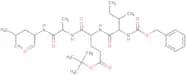
CAS:Please enquire for more information about Fmoc-Glu(OtBu)-OH•H2O including the price, delivery time and more detailed product information at the technical inquiry form on this pageFormula:C24H27NO6•H2OPurezza:Min. 98.0 Area-%Peso molecolare:443.51 g/molZ-Ile-Glu(OtBu)-Ala-Leu-H (aldehyde)
CAS:inhibitor of chymotrypsin-like activity of the multicatalytic proteinase complex in HT4 cells. Causes accumulation of ubiquitinylated proteins in neuronal cells.Formula:C32H50N4O8Purezza:Min. 95%Peso molecolare:618.76 g/molH-TLQALEFHTVPFQLLAR^-OH
Peptide H-TLQALEFHTVPFQLLAR^-OH is a Research Peptide with significant interest within the field academic and medical research. This peptide is available for purchase at Cymit Quimica in multiple sizes and with a specification of your choice.
H-Gly-Tyr-Pro-Gly-Lys-Phe-NH2
CAS:This is a synthetic peptide that mimics the endogenous human epidermal growth factor (EGF) and binds to the toll-like receptor. It has been shown to stimulate physiological function in experimental models of bowel disease and cardiac disease, as well as cancer tissues. The peptide also binds to the guanine nucleotide-binding protein, polymerase chain reaction, and inflammatory bowel disease genes. In vivo studies have confirmed that this peptide enhances the production of EGF in maternal blood and stimulates squamous carcinoma growth in an animal model.Formula:C33H46N8O7Purezza:Min. 95%Peso molecolare:666.78 g/molPancreastatin (Dephosphorylated Porcine)
CAS:Pancreatastatin is a peptide hormone that inhibits energy metabolism. Pancreatastatin is a biologically active peptide that has been isolated from the pancreas and shown to have effects on the endocrine system, including regulation of feeding behavior. Pancreatastatin is also known as somatostatin and is found in both animals and humans. Pancreatastatin has been shown to inhibit cellular proliferation and decrease tumor size in animal models of cancer, as well as to regulate blood sugar levels in diabetic patients. Pancreatastatin is also used for treating bowel diseases such as colitis.Formula:C214H330N68O76SPurezza:Min. 95%Peso molecolare:5,103.49 g/molAc-Arg-Gly-Lys-MCA
CAS:Ac-Arg-Gly-Lys-MCA is a histone deacetylase inhibitor that belongs to the class of peptides. This drug has been shown to inhibit the activity of histone deacetylases and can be used for the treatment of diabetes. Ac-Arg-Gly-Lys-MCA is an enzyme substrate, which means it is not active when taken orally. It must be administered intravenously or intraperitoneally in order to be metabolized by enzymes in the body.Formula:C26H38N8O6Purezza:Min. 95%Peso molecolare:558.63 g/molFibronectin Adhesion-Promoting Peptide
CAS:Fibronectin Adhesion-Promoting Peptide is a polyclonal antibody that recognizes fibronectin, a glycoprotein found in the extracellular matrix. Fibronectin promotes cell adhesion and proliferation by binding to collagen. This antibody can be used to detect fibronectin in tissues from patients with cancer. It may also be used as a tool for identifying cancer cells that have metastasized to other sites in the body.Formula:C47H74N16O10Purezza:Min. 95%Peso molecolare:1,023.22 g/molCaloxin 2A1
CAS:Caloxin 2A1 is a peptide that has been shown to activate the receptor for bradykinin, a peptide hormone that causes vasodilation. The activation of this receptor by Caloxin 2A1 leads to the opening of ion channels in the cell membrane, which causes an influx of calcium ions into the cell. This influx activates enzymes that break down proteins and increases the permeability of blood vessels. Caloxin 2A1 also inhibits ligand-induced activation of phospholipase C. Caloxin 2A1 binds to an antibody against bradykinin, which can be used as a research tool or as a means to measure levels of bradykinin in blood plasma. Caloxin 2A1 has a molecular weight of 543 g/mol and CAS number 350670-85-8.Formula:C64H91N19O22Purezza:Min. 95%Peso molecolare:1,478.5 g/molH-GAHWQFNAL^-OH
Peptide H-GAHWQFNAL^-OH is a Research Peptide with significant interest within the field academic and medical research. This peptide is available for purchase at Cymit Quimica in multiple sizes and with a specification of your choice.LCBiot-PKYVKQNTLKLAT-OH
Peptide LCBiot-PKYVKQNTLKLAT-OH is a Research Peptide with significant interest within the field academic and medical research. This peptide is available for purchase at Cymit Quimica in multiple sizes and with a specification of your choice.
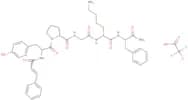
trans-Cinnamoyl-Tyr-Pro-Gly-Lys-Phe-NH2
CAS:Trans-Cinnamoyl-Tyr-Pro-Gly-Lys-Phe-NH2 is a cardiac peptide that belongs to the class of PAR4 and PAR1 receptor agonists. It has been shown to be an endogenous agonist of both PAR4 and PAR1 receptors, which are involved in blood pressure regulation. Trans-Cinnamoyl-Tyr-Pro-Gly-Lys-Phe-NH2 has been shown to activate these receptors in vivo, leading to increased blood pressure. Additionally, it has been shown to have a cardioprotective effect by decreasing myocardial infarct size in rats.Formula:C40H49N7O7Purezza:Min. 95%Peso molecolare:739.88 g/mol