Peptidi
Sottocategorie di "Peptidi"
Trovati 29605 prodotti di "Peptidi"
(Cbz-LGR)2-[Rh110]
The protozoan Trypanosoma cruzi that causes South American trypanosomiasis expresses peptidases during its entire parasitic life cycle. Understanding better the function and specificity of the peptidases may lead to new inhibitors and potential therapies. It has been shown this alkaline peptidase has a preference for basic amino acids at position one and position two of the substrate. The sequence Leu-Gly-Arg was shown to have a high Km and high Vmax compared to other peptides tested.Provided here is a fluorogenic peptide substrate for Trypanosoma cruzi alkaline peptidase. In its entire state, this peptide is not fluorescent. However, this peptide is cleaved by T. cruzi alkaline peptidase. Upon rhodamine 110 fluorophore release, fluorescence can then be detected. This peptide, therefore, allows for the quantification of T. cruzi alkaline peptidase activity. Rhodamine 110 is a widely used red fluorescent probe.Peso molecolare:1,250.6 g/molHistone H3 (1-21)
Histone H3 (1-21) is derived from Histone 3 (H3) which is one of the four core histones (H2A, H2B, H3 and H4) fundamental in compacting eukaryotic DNA into a structure known as the nucleosome. The nucleosome arises when 147 base pairs of DNA wrap around a H3-H4 tetramer and two H2A-H2B dimers, forming the histone octamer core. Both H4 and H3 are highly conserved and perform roles in binding to segments of DNA which enter and leave the nucleosome and in chromatin formation. Similar to the other core histone, H3 has a globular domain and a flexible N-terminal domain, 'histone tail' which can undergo modifications such as acetylation, methylation, phosphorylation and ubiquitination. Due to histones containing a large number of lysine and arginine residues they have a positive net charge which interacts in an electrostatic manner with the negatively charged phosphate groups in DNA. The transcriptional activation or silencing of the chromatin is controlled by ATP-dependent chromatin remodelling factors and histone modifying enzymes which target histone proteins. Both processes function to alter the positioning of the nucleosome, allowing the DNA it to be either available or inaccessible to the transcription machinery.Histone H3 (1-21) has been utilised in research as a substrate for methyltransferase (Histone 3 K4 and K9) and acetyltransferase (Histone 3 K9 and K14) assays. Histone H3 (1-21) and these assays have already provided vital insights into the role's modifications play on the core histone functions. However, with so many histone modifications in different conditions still to be characterised the histone H3 (1-21) peptide still has a lot of insight to provide in the field.Peso molecolare:2,253.3 g/molT-9 peptide
Duchenne muscular dystrophy is a severe muscle wasting X-linked genetic disease cause by mutations in the gene encoding the muscle structural protein, dystrophin. Exon skipping therapy remains a key approach for treatment of DMD but still requires considerable research to improve efficient and specific delivery of molecules to myofibers. Use of a phage library identified this sequence as having a high affinity for myofibers. Conjugation of this peptide to novel DMD molecules could provide the insights needed in the field.
Peso molecolare:1,343.6 g/molSARS-CoV-2 Membrane protein (141-158)
SARS-CoV-2 Membrane protein (141-158)Peso molecolare:1,932.1 g/molSARS-CoV-2 Spike (236-250)
The SARS-CoV-2 spike protein is present on the outside of the virus particles and can bind to angiotensin-converting enzyme II (ACE2) present on the host cells. The C-terminal receptor binding domain (RBD) of the spike protein binds to the N-terminal peptidase M2 domain of ACE2. This receptor binding results in the internalisation of the virus-receptor complex and is, therefore the mechanism of entry of SARS-CoV-2 into host cells.The spike protein residues TRFQTLLALHRSYLT (236-250) from C have been identified as a T-cell epitope with a predicted HLA restriction. Immune targeting of confirmed epitopes may potentially offer protection against SARS-CoV-2 and help the development of vaccines for long-lasting immunity.Peso molecolare:1,819 g/molAlbumin (51-62) Bovine
Albumin (51-62) Bovine is derived from the globular protein Albumin and is found in the blood plasma of humans (known as Human Serum Albumin, HSA) where it serves to maintain plasma pressure and nutritional balance. Another role it carries out is the transportation of bound molecules through the blood. Bovine serum albumin (BSA), composed of 583 amino acids, is very similar to HSA thus allowing BSA to be used as a successful model and a standard protein in laboratory experiments.Although BSA and HAS share homology in their three domains, I, II and III, BSA contains 2 tryptophan whereas HAS only contains 1 tryptophan residue.In agriculture the presence of the albumin protein has been used to assess the health of cows to ensure that a suitable quality of milk and meat are produced. Moreover it is important to detect bovine albumin in food and pharmaceutical products due to it being an allergenic protein.Colore e forma:PowderPeso molecolare:1,510.8 g/molBiotinylated L57
The blood-brain barrier (BBB) is a major obstacle to drug delivery into the central nervous system (CNS), in particular for macromolecules such as peptides and proteins. However, certain macromolecules can reach the CNS via a receptor-mediated transcytosis (RMT) pathway, and low-density lipoprotein receptor-related protein 1 (LRP1) is one of the promising receptors for RMT. Recent studies have shown that biotinylated L57 binds to LRP1 (CL4)-Fc more efficiently than Angiopep-7 (a different LRP1 ligand), which might explain the improved BBB permeability of L57.Peso molecolare:3,110.6 g/molTAT 2-4
TAT 2-4 is derived from human immunodeficiency virus (HIV) transactivator of transcription (TAT) residues 47-58. TAT (47-58) is a cell penetrating cationic peptide derived from the N-terminus of the Tat protein, which is a trans-activator of the transcription protein present in the human immunodeficiency virus (HIV). As a cell penetrating peptide (CPP) TAT aids in the cellular uptake of molecules and hence serves a valuable purpose in transduction methods. TAT 2-4 are residues (47-58) of HIV TAT protein repeated back to back, this dimer of TAT sequences has been shown to be the most efficient oligomer for cell penetration. This TAT dimer has been used in previous studies to deliver a wide variety of cargoes including fluorophores, chelators and DNA to target cells.Colore e forma:PowderPeso molecolare:3,213.9 g/molMethyltetrazine-AGYLLGKINLKALAALAKKIL-NH2
Peptide Methyltetrazine-AGYLLGKINLKALAALAKKIL-NH2 is a Research Peptide with significant interest within the field academic and medical research. This peptide is available for purchase at Cymit Quimica in multiple sizes and with a specification of your choice.KRREILSRRPSYR-acid
Protein kinases are important drug targets for numerous diseases to try and better evaluate the enzyme specificity, affinity, mode of action and identify possible inhibitors. In vitro assays and synthetic substrates provide valuable data about human kinase activity. CREBtide KRREILSRRPSYR is based on the phosphorylation sequence in d-CREB (cAMP response element binding protein) it is a substrate for protein kinase A (PKA)(Km = 3.9 mM). However, it has also been tested as a substrate for other protein kinases, including cAMP-dependent protein kinase (cAK) and protein kinase C (PKC). Immunoblots and autoradiography have been used for CREBtide KRREILSRRPSYR in vitro kinase analysis.Colore e forma:PowderPeso molecolare:1,716 g/molN-formylated PSMalpha3
Pathogenic Staphylococcus aureus strains produce N-formylmethionyl containing peptides. Peptides starting with an N-formylated methionyl group constitute a unique hallmark of bacterial as well as mitochondrial metabolism, and professional phagocytes of our innate immune system recognise this microbial/mitochondrial pattern as a danger signal that guides innate immune cells.All PSMα peptides have the same basic functions and promote virulence through effects on discrete neutrophil functions (i.e. chemotaxis) and by being cytotoxic at higher concentrations. PSMα2 and PSMα3 can both bind to FPR2 and trigger superoxide release in neutrophils at low nanomolar concentrations. In addition, at high nanomolar concentrations they display cytotoxicity selectively on apoptotic neutrophil membranes and this occurs in an FPR2 independent manner.Colore e forma:PowderPeso molecolare:2,633.4 g/molOxyntomodulin, Glucagon-37 (Human, Mouse, Rat)
CAS:Oxyntomodulin, Glucagon-37 (Human, Mouse, Rat) is an inhibitor of gastric acid secretion and pancreatic enzyme secretion and has been shown to reduce food intake and increase energy expenditure in humans. This product is available in the trifluoroacetate salt form. One letter code: HSQGTFTSDYSKYLDSRRAQDFVQWLMNTKRNRNNIAFormula:C192H295N61O60SPurezza:Min. 95%Peso molecolare:4,449.93 g/molFmoc-11-aminoundecanoic acid
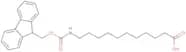
CAS:Fmoc-11-Aminoundecanoic Acid is a molecular modeling reagent that interacts with other elements to form Building Blocks. Fmoc-11-Aminoundecanoic Acid has been shown to have cancer interacting properties, elucidating the molecular interactions of peptides and proteins. It has been used in research as an active analog for growth factors. Fmoc-11-Aminoundecanoic Acid interacts with other molecules, including peptides and proteins, by proteolysis to produce new molecules. The chemical structure of this molecule can be altered through reactions with other molecules such as amino acids or nucleotides.
Formula:C26H33NO4Purezza:Min. 98.0 Area-%Peso molecolare:423.56 g/molSRC-1 (676-700)
Steroid Receptor Coactivator - 1 (676-700).
Colore e forma:PowderPeso molecolare:2,797.4 g/molFmoc-D-His(Trt)-OH
CAS:Fmoc-D-His(Trt)-OH is a chiral building block that is used in peptide synthesis. It can be used to synthesize an enantiomer or homologue of the original amino acid. Fmoc-D-His(Trt)-OH has been postulated to exist as two stereoisomers, 1R,2S and 2R,1S. The 1R,2S enantiomer is the naturally occurring form of this compound and is produced with a shift of +6 ppm in the proton NMR spectrum. The 2R,1S enantiomer has also been observed in the solid state but not in solution and it exhibits a shift of -6 ppm in the proton NMR spectrum. Fmoc-D-His(Trt)-OH is soluble in solvents such as DMSO and DMF. It has also been shown to be a potent inhibitor of organophosphate and reFormula:C40H33N3O4Purezza:Min. 95%Peso molecolare:619.73 g/molAngiotensin II (1-8)
Angiotensin II (Ang-II) is a key signalling peptide of the renin angiotensin system (RAS) which is involved in regulating blood pressure, cardiovascular function and energy balance. RAS activity is elevated in obesity and is widely studied in relation to lifestyle-related diseases.Ang-II is produced from angiotensinogen (AGT) via the intermediate angiotensin I (Ang-I). AGT is cleaved by the aspartyl-protease, renin, to produce Ang-I, which is then cleaved by the dicarboxyl-peptidase angiotensin converting enzyme (ACE). ACE removes a histidine and a leucine from the C-terminus of Ang-I to form Ang-II.Ang-II exerts its affect by binding to the G-protein-coupled receptors- Ang II type 1 (AT1) and Ang II type 2 (AT2) receptors. Ang-II plays central roles in glucose metabolism and blood pressure. Increased levels of Ang-II have also been associated with Alzheimer's disease, and certain cancers including oesophageal squamous cell carcinoma (ESCC), brain cancers and breast cancers. The effects of Ang-II appear to be supressed by another branch of the RAS- the ACE2/Ang-(1-7)/Mas pathway.Peso molecolare:1,045.5 g/molCrotonic-FYWHCLDE-OH
Peptide Crotonic-FYWHCLDE-OH is a Research Peptide with significant interest within the field academic and medical research. This peptide is available for purchase at Cymit Quimica in multiple sizes and with a specification of your choice.
Hepcidin-25 (human) trifluoroacetate salt
CAS:Please enquire for more information about Hepcidin-25 (human) trifluoroacetate salt including the price, delivery time and more detailed product information at the technical inquiry form on this pageFormula:C113H170N34O31S9·C2HF3O2Purezza:Min. 95 Area-%Colore e forma:PowderPeso molecolare:2,903.38 g/molUBA3 (59-72) peptide
Peptide derived from the ubiquitin-activating enzyme 3 (UBA3), the catalytic subunit of the NEDD8-activating enzyme (NAE).Colore e forma:PowderPeso molecolare:1,495.8 g/mol
![(Cbz-LGR)2-[Rh110]](/_next/image/?url=https%3A%2Fstatic.cymitquimica.com%2Fproducts%2F3D%2Fthumb-webp%2FCRB1001676.webp&w=3840&q=75)