Peptidi
Sottocategorie di "Peptidi"
Trovati 29635 prodotti di "Peptidi"
Thrombin Receptor Antagonist
Thrombin is the main effector of the coagulation cascade- it is a serine protease. Thrombin binds to active protease activated receptor 1 (PAR-1) which belongs to a subfamily of G-protein coupled receptors (GPCR). However, thrombin generated during cardiopulmonary bypass can activate PAR-1 leading to platelet dysfunction and unwanted bleeding. FLLRN is found to be a potent PAR-1 antagonist. Use of FLLRN and variants has aided the study of platelet aggregation dynamics. Further study may provide a suitable clinical application.Peso molecolare:661.4 g/mol[5-FAM]/[Lys(Dabcyl)]-CoV Main Protease (Mpro) Substrate
FRET peptide substrate for the severe acute respiratory syndrome coronavirus main protease (SARS-CoV Mpro). The substrate sequence is derived from residues P4-P5' of the SARS-CoV Mpro N-terminal autoprocessing site which has the sequence AVLQSGFRK. SARS-CoV Mpro is a key antiviral target.This peptide contains an N-terminal 5-Carboxyfluorescein (5-FAM), a widely used green fluorescent tag and the Dabcyl fluorescence quencher. When the peptide is intact, fluorescence is undetectable due to the proximity of the Dabcyl quencher to the 5-FAM fluorophore. However upon cleavage of the peptide by SARS-CoV Mpro, the 5-FAM group and the Dabcyl quencher are separated and fluorescence can be detected. This therefore represents a useful tool for investigating SARS-CoV Mpro activity.Colore e forma:PowderPeso molecolare:1,740.8 g/mol[5-FAM]-VGB4
Antagonist peptide of VEGF-A and VEGF-B reproducing two binding regions of VEGF-B (loop 1 and loop3) linked together by a receptor binding region of VEGF-A (loop3). Binds to both VEGFR1 and VEGFR2 and inhibits VEGF-A driven proliferation, migration and tube formation in HUVECs. It contains 5-carboxyfluorescein (5-FAM), a widely used green fluorescent tag.Peso molecolare:3,066.5 g/molLasioglossin-III
Lasioglossin-III (Lasio-III) is a naturally-occurring salt-resistant anti-microbial peptide (AMP) found in-Lasioglossum laticeps-(broad-faced furrow bee). Lasioglossin-III has broad spectrum anti-microbial activity and anti-biofilm properties against Gram negative and Gram positive bacteria, including strong anti-microbial activity against-E. coli,-S. aureus, and-P aeruginosa-under physiological salt concentration, with low toxicity.AMPs form an important part of the innate immune system in plants, animals and insects-and are reported to be effective even against several antibiotic resistant strains due to differing modes of pathogen killing from those of conventional antibiotics. Lasio-III has a membranolytic mode of action. It can bind both the outer and inner membranes of bacteria. Lasio-III possesses a fast killing ability toward both Gram positive and negative bacteria compared to many other active AMPs.Peso molecolare:1,764.2 g/mol[Aurora™ Fluor 647]-RGD peptide
The RGD motif has been found in wide range of eukaryotic proteins allowing cell adhesion to the ECM. The tripeptide RGD is the primary domain to bind integrin found in extracellular matrix (ECM) proteins including fibronectin, fibrinogen and osteopontin. It has been shown to effectively adhere various cell types to a wide range of biomaterials. This is a key research tool in the flourishing area of tissue engineering and wound healing using synthetic peptides that are either inert or can be potentially beneficial. RGD is a suitable ligand for targeting nanomolecules and cancer drugs to specific tissues due to its biocompatibility and safety.This RGD peptide is supplied with an Aurora Fluor 647 fluorophore attached and produced to research grade quality. Aurora Fluor 647 excitation suited to 594nm and emission peaked at 671nm. The Molecular Probes Alexa Fluor dyes provide a number of benefits including: more intense fluorescence than other spectrally similar conjugates better photostability, allowing more time for image capture availability of conjugates in an array of distinct fluorescent colours from blue to infrared- and pH insensitivity that enables the dyes to remain highly fluorescent over a broad pH range and high water solubility.Colore e forma:PowderTKD (450-463)
Heat shock proteins (Hsps) are highly conserved and stress inducible. Hsp70 has been found in tumour cell lines to be highly expressed with a higher plasma membrane localisation. This is correlated to the cell sensitivity to natural killer (NK) cell-mediated lysis. Investigation identified that Hsp70 N-terminal extended peptide TKD (450-463) was critical for this to occur. TKD (450-463) with low dose interleukin (IL-2) has the same capacity to induce NK cell proliferation and activity as the full-length protein Hsp70. Excess of Hsp70 and TKD (450-463) both inhibit cytolytic activity by NK cells. Other related sequences tested did not lead to NK cell-mediated lysis. Further study with the TKD (450-463) epitope could elucidate how NK cells are activated by Hsp70s as the mechanism remains unclear.Peso molecolare:1,562.8 g/molHistone H3 (1-21) K4Me2
Histone H3 (1-21) K4Me2 is derived from Histone 3 (H3) which is one of the four core histones (H2A, H2B, H3 and H4) fundamental in compacting eukaryotic DNA into the nucleosome. The nucleosome arises when 147 base pairs of DNA wrap around a H3-H4 tetramer and two H2A-H2B dimers, forming the histone octamer core. Both H4 and H3 are highly conserved and perform roles in binding to segments of DNA which enter and leave the nucleosome and in chromatin formation. Similar to the other core histone, H3 has a globular domain and a flexible N-terminal domain, 'histone tail' which can undergo modifications such as acetylation, methylation, phosphorylation and ubiquitination. Due to histones containing a large number of lysine and arginine residues they have a positive net charge which interacts in an electrostatic manner with the negatively charged phosphate groups in DNA. The transcriptional activation or silencing of the chromatin is controlled by ATP-dependent chromatin remodelling factors and histone modifying enzymes which target histone proteins. Both processes function to alter to change the positioning of the nucleosome, allowing the DNA it to be either available to the transcription machinery or inaccessible.The Histone H3 (1-21) lysine 4 has been dimethylated.Peso molecolare:2,281.3 g/molCMVpp65 - 96 (YRHTWDRHDEGAAQG)
Custom research peptide; min purity 95%. For different specs please use the Peptide Quote Tool
Peso molecolare:1,798.9 g/molHistone H3 (22-30) K27Me3
The Histone H3 (22-30)-K27Me3 is derived from Histone 3 (H3) which is one of the four core histones (H2A, H2B, H3 and H4) fundamental in compacting eukaryotic DNA into the nucleosome. The nucleosome arises when 147 base pairs of DNA wrap around a H3-H4 tetramer and two H2A-H2B dimers, forming the histone octamer core. Both H4 and H3 are highly conserved and perform roles in binding to segments of DNA which enter and leave the nucleosome and in chromatin formation. Similar to the other core histone, H3 has a globular domain and a flexible N-terminal domain, 'histone tail' which can undergo modifications such as acetylation, methylation, phosphorylation and ubiquitination. Due to histones containing a large number of lysine and arginine residues they have a positive net charge which interacts in an electrostatic manner with the negatively charged phosphate groups in DNA. The transcriptional activation or silencing of the chromatin is controlled by ATP-dependent chromatin remodelling factors and histone modifying enzymes which target histone proteins. Both processes function to alter to change the positioning of the nucleosome, allowing the DNA it to be either available to the transcription machinery or inaccessible.The Histone H3 (20-36) lysine 27 has been trimethylated which is usually a marker of repressive chromatin. H3K27 trimethylation also prevents H3 from interacting with SET1-like complexes, thus inhibiting the trimethylation of H3K4.
Colore e forma:PowderPeso molecolare:1,012.6 g/molSARS-CoV-2 Spike (991-1000)
The SARS-CoV-2 spike protein is present on the outside of the virus particles and can bind to angiotensin-converting enzyme II (ACE2) present on the host cells. The C-terminal receptor binding domain (RBD) of the spike protein binds to the N-terminal peptidase M2 domain of ACE2. This receptor binding results in the internalisation of the virus-receptor complex and is, therefore the mechanism of entry of SARS-CoV-2 into host cells.The spike protein residues VQIDRLITGR (991-1000) from SARS-CoV-2 have been identified as a T-cell epitope with a predicted HLA restriction. Immune targeting of confirmed epitopes may potentially offer protection against SARS-CoV-2 and help the development of vaccines for long-lasting immunity.
Peso molecolare:1,170 g/molInsulin B (9-23)
This insulin B-chain peptide binds to a class II histocompatibility complex (MHC) allele called I-Ag7. A number of autoimmune diseases has been linked to class II proteins encoded by the MHC. Type 1 diabetes, or insulin-dependent diabetes mellitus, is a T cell-mediated disease that results in autoimmune destruction of pancreatic ß cells leading to hyperglycemia. This insulin β peptide may be a self-antigen candidate that could initiate the disease. Immunisation with this peptide in mice led to autoantibodies and insulitis. In the non-obese diabetic (NOD) mouse model, this peptide represents the dominant insulin peptide driving disease initiation.Insulin is a polypeptide composed of two peptide chains referred to as the alpha chain and β chain. Insulin is normally secreted rapidly from the β-cells of the pancreatic islets in response to nutrients absorbed after a meal. In type 1 diabetes mellitus, there may be an absolute insulin deficiency as a consequence of autoimmune destruction of the β-cells.Colore e forma:PowderPeso molecolare:1,644.8 g/molDystrophin (50-61)
Forms of inherited muscular dystrophy such as Duchenne muscular dystrophy (DMD) and Becker muscular dystrophy (BMD) result from mutations targeting the dystrophin gene. These disorders are X-linked, progressive, and cause the gradual weakening of the muscles leading to respiratory failure and ultimately reduces the patient lifespan.In DMD, mutations lead to the production of premature stop codons and hence the truncated dystrophin protein product is vulnerable to nonsense mediated decay and degradation. Therefore, dystrophin production in muscle cells is reduced. On the other hand, nonsense mutations which also contribute to DMD, cause exon skipping in BMD and result in an internally truncated protein product which are partially functional. The symptoms of BMD are later onset compared with DMD which develop in patients between 2 to 7 years.Treatments of dystrophin disorders are in clinical trials including antisense oligonucleotide exon skipping and gene therapy. However, the efficacies of these treatments are not easily quantified. Currently levels of muscular dystrophin are quantified by western blot which can be unreliable. The peptide provided here, aligning residues dystrophin (50-61), has been used to try and create a quantifiable method that is reproducible. The method used was not successful, but dystrophin (50-61) remains a useful tool to create a potential quantification method for diagnosis and progress of dystrophin disorders as it was effectively detected by mass spectrometry and Western blot. Within our catalogue we also have other peptides tested for dystrophin quantification available plus the full-length dystrophin protein.
H-TTPPVLDSDGSFFLYSK-OH
Peptide H-TTPPVLDSDGSFFLYSK-OH is a Research Peptide with significant interest within the field academic and medical research. This peptide is available for purchase at Cymit Quimica in multiple sizes and with a specification of your choice.
Ac-YLGR-OH
Peptide Ac-YLGR-OH is a Research Peptide with significant interest within the field academic and medical research. This peptide is available for purchase at Cymit Quimica in multiple sizes and with a specification of your choice.
H-QNLLAPQNAVSSEETNDFK^-OH
Peptide H-QNLLAPQNAVSSEETNDFK^-OH is a Research Peptide with significant interest within the field academic and medical research. This peptide is available for purchase at Cymit Quimica in multiple sizes and with a specification of your choice.C-terminal Sortagging-[Cys(Sulfocyanine3)]
This C-terminal Sortagging peptide acts as a (oligo)glycine nucleophile in the final steps of a sortagging protein labelling reaction. This reaction results in the fluorescent moiety being attached to the C-terminus of the target protein or peptide.A substrate peptide containing the LPXTG motif is recognised and cleaved by the enzyme Sortase A (SrtA) from Staphylococcus aureus. The catalytic cysteine residue in the active site of SrtA, serves as a nucleophile to cleave the peptide bond between threonine and glycine of the substrate peptide. Cleavage results in the formation of a thioacyl intermediate between the substrate peptide and SrtA. This intermediate is then resolved by the N-terminus of this (oligo)glycine nucleophile peptide, resulting in the creation of a new peptide bond that links the substrate peptide to this peptide and its fluorescent dye. This method of protein labelling is known as sortagging.This peptide contains Sulfocyanine3, which is a fluorescent yellow dye.Colore e forma:PowderPeso molecolare:1,029.3 g/molPeripheral Myelin Protein P0 (180-199)
Myelin protein zero (MPZ- also termed P0), together with myelin basic protein (MBP- previously termed P1), mediates adhesion between adjacent extracellular membrane surfaces in order to compact the myelin membranes. Myelin protein zero (P0) is the most abundant myelin protein in the peripheral nervous system (PNS), where it is believed to be adhesive on both sides of the membrane through its extracellular and intracellular domains. The extracellular domain of P0 comprises a single Ig domain, whereas the cytoplasmic end is highly positively charged and not predicted to fold into a globular domain.Peso molecolare:2,288.2 g/molPAR-1 Antagonist
YFLLRNP works as a partial PAR-1 agonist that induces platelet shape change without calcium mobilization via the galpha12/13 signalling cascade. Full activation of platelets is only achieved at higher concentrations. YFLLRNP may therefore be useful for differentiating between several possible activation states of the platelet thrombin receptor. YFLLRNP is an antagonist to thrombin.Protease activated receptors (PARs) are a distinctive four-member family of seven transmembrane G protein-coupled receptors (GPCRs) widely expressed in inflammatory cells. PARs are cleaved by certain serine proteases to expose a tethered ligand domain, this ligand domain then binds to and activates the receptors to initiate multiple signalling cascades.Colore e forma:PowderPeso molecolare:921.5 g/molAlyteserin-2Mb
Synthetic anti-microbial peptide originally identified and isolated form the skin secretions of the midwife toad,-Alytes maurus. Alyteserin-2Mb has 82% homology to alyteserin-2, from the closely related midwife toad-Alytes obstetricans.Alyteserin-2Mb has strong activity against Gram-positive-bacteria such as Staphylococcus aureus and weak activity against gram negative bacteria such as Escherichia coli and fungi such as Candida albicans.Peso molecolare:1,615.04 g/molParasin I
CAS:A potent antimicrobial peptide produced by the catfish Parasilurus asotus in response to epidermal injury. Parasin I is a derivative of catfish histone H2A.Formula:C82H154N34O24Colore e forma:PowderPeso molecolare:1,999 g/molPanx-1 mimetic inhibitory peptide
CAS:Panx-1 mimetic inhibitory peptide that blocks pannexin-1 gap junctions. Inhibits P2X7-mediated dye uptake, ATP-mediated IL-1β release and caspase-1 activation without altering membrane current in macrophages. It can also block activation of NMDA receptor secondary currents.
Formula:C58H79N15O16Colore e forma:PowderPeso molecolare:1,242.34 g/molDAG peptide
Cyclic DAG peptide targets connective tissue growth factor (CTGF/CCN2), present in the extracellular matrix, endothelial cells and overexpressed in several brain diseases. CTGF is a matricellular protein that acts as a regulator of several cellular functions, including cell adhesion, migration, mitogenesis, differentiation, and survival. CTGF is up regulated in Alzheimer's disease, Parkinson's disease, brain injury, glioblastoma, and cerebral infarction.DAG peptide has been shown to home to the brain in mouse models of glioblastoma, traumatic brain injury, and Parkinson's disease when exogenously delivered, making it an attractive target for the treatment of glioblastoma. DAG may be of use as a tool to enhance delivery of therapeutics and imaging agents to sites of brain diseases.Peso molecolare:1,005.4 g/molLL-37 acid
LL-37, also known as CAP-18 for Cathelicidin antimicrobial peptide 18, is a 37 amino acid cationic peptide. LL-37 is also a typical linear antimicrobial peptide which can eliminate a wide range of pathogenes, including bacteria, viruses, fungi, and parasites. LL-37 is the only human cathelicidin peptide reported yet, found in lysosomes of macrophages and leukocytes. LL-37 plays an important role in the first act of defense against local infection and systemic invasion of pathogens at sites of inflammation. LL-37 shows cytotoxicity against bacterial and normal eukaryotic cells and is significantly resistant to proteolytic degradation. Besides its antimicrobial functions, LL-37 also has immunomodulatory roles. LL-37 suppresses the production of pro-inflammatory cytokines, TNF-α and IL-6 in infected monocytes. LL-37 increases cytokine and chemokine liberation from local cells and leucocytes and has chemotactic effects on a large number of immune cells.Peso molecolare:4,490.6 g/molClickBMVgag7-25
Brome mosaic virus (BMV) Gag peptide (7-25) has been utilised as a cell penetrating peptide (CPP). Translocation across the cell membrane with a cargo molecule varies in effectiveness depending on the CPP. BMV Gag (7-25) has a very high efficiency of internalisation which has been linked to the high percentage of arginine residues present.BMV Gag (7-25) is provided here with a N-terminal alkyne attachment. Two of the most regularly encountered functional groups for click chemistry are azides and alkynes, and the azide-alkyne cycloaddition has become the most popular click reaction. The use of click chemistry with alkyne-BMV Gag (7-25) allows a wide variety of applications particularly for conjugation, modification, and peptide design.Colore e forma:PowderSARS-CoV-2 NSP13 (476-490)
The SARS-CoV-2 non-structural protein 13 (NSP13) has been identified as a target for anti-viral therapeutics due to its highly conserved sequence and is essential for viral replication. NSP13 is part of the helicase superfamily 1B. As an NTPase and RNA helicase, NSP13 binds to RNA-dependent RNA polymerase and acts in concert with the replication-transcription complex to stimulate backtracking and further activate NSP13 helicase activity. These factors make NSP13 a good target for developing new antiviral drugs. In addition, the identification of epitopes within the NSP13 sequence can help design more effective SARS-CoV-2 vaccines.Models have predicted epitopes exhibiting antigenicity, stability and interactions with MHC class-I and class-II molecules. NSP13 (476-490) is an epitope candidate with various predicted HLA restrictions. This epitope can be used to better vaccine design for more durable CD4+ and CD8+ T cell responses for long-lasting immunity.Peso molecolare:1,658.9 g/molH-Met-Leu-AMC·TFA
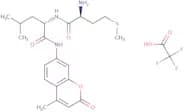
CAS:H-Met-Leu-AMC·TFA is a fine chemical that is useful as a building block in the synthesis of other chemicals. It is also used as a reagent in research, and it can be used as a speciality chemical. H-Met-Leu-AMC·TFA has been shown to be an excellent reaction component in the synthesis of complex compounds, and it can be used as an intermediate in the synthesis of pharmaceuticals. This chemical is soluble in organic solvents such as dichloromethane or chloroform, but it is insoluble in water. H-Met-Leu-AMC·TFA has been assigned CAS number 1926163-55-4.
Formula:C21H29N3O4S·C2HF3O2Purezza:Min. 95 Area-%Colore e forma:PowderPeso molecolare:533.56 g/molSARS-CoV-2 NSP13 (221-235)
The SARS-CoV-2 non-structural protein 13 (NSP13) has been identified as a target for anti-viral therapeutics due to its highly conserved sequence and is essential for viral replication. NSP13 is part of the helicase superfamily 1B. As an NTPase and RNA helicase, NSP13 binds to RNA-dependent RNA polymerase and acts in concert with the replication-transcription complex to stimulate backtracking and further activate NSP13 helicase activity. These factors make NSP13 a good target for developing new antiviral drugs. In addition, the identification of epitopes within the NSP13 sequence can help design more effective SARS-CoV-2 vaccines.Models have predicted epitopes exhibiting antigenicity, stability and interactions with MHC class-I and class-II molecules. NSP13 (221-235) is an epitope candidate with various HLA restrictions. This epitope can be used to better vaccine design for more durable CD4+ and CD8+ T cell responses for long-lasting immunity.Peso molecolare:1,677.8 g/molKisspeptin 10 human
The biologically active C-terminal region of human Kisspeptin. Kisspeptin, is cleaved from a 145 amino acid precursor to a 54 amino acid peptide in humans and a 52 amino acid peptide in mice. Smaller isoforms of 14, 13 and 10 amino acids have also been isolated, each sharing the common C-terminal sequence. Kisspeptin-10 (KP-10) is the most potent member of the kisspeptin family and the plasma half-life of is approximately 6 fold shorter than KP-54. KP-10 is produced by the trophoblast cells in the first trimester of pregnancy and inhibits cell migration primary trophoblasts which is essential for placental invasion.Kisspeptin, a product of the KISS1 gene, is a hypothalamic neuropeptide that stimulates gonadotropin-releasing hormone (GNRH) neurons and drives fertility. Kisspeptin binds specifically to the G-protein-coupled receptor-54, now known as Kiss1r, which is expressed in almost all GNRH neurons. Kiss1r is also expressed in other areas of the brain and periphery, highlighting other possible roles for kisspeptin outside of reproduction.
Peso molecolare:1,302.4 g/mol[Cys]-Exendin 4
Originally identified in Gila monster lizard (Heloderma suspectum), Exendin-4 is an incretin mimetic, an analog of glucagon-like-peptide-1 (GLP-1), it stimulates insulin secretion and modulates gastric emptying to slow the entry of ingested sugars into the bloodstream. Exendin-4 is resistant to cleavage by plasma DPP-IV unlike GLP-1. This gives it a longer half-life and duration of action than GLP-1, as well as greater potency in vivo. Exendin-4 increases insulin sensitivity and improves glucose tolerance and is currently used for the treatment of Type 2 diabetes mellitus in its synthetic form Exenatide.Exendin-4 also promotes the production and proliferation of β-cells leading to regeneration of the pancreas. It is a ligand to the exendin receptor and increases pancreatic acinar cell cAMP levels. However, the GLP-1 analog was found to have a toxic effect by inducing hypotension due to relaxation of the cardiac smooth muscle.This exendin-4 peptide is provided with an N-terminal cysteine residue for conjugation reactions.Peso molecolare:4,287 g/molSARS-CoV 3C-like protease (3CLpro) substrate (C-terminal KK-acid)
3CLpro are the key enzymes required by coronaviruses to replicate. They cleave polyproteins to form replicase. This makes 3CLpro a drug target for protease inhibitors with particular interest to COVID-19. For, example Paxlovid®- has been brought to market as a 3CLpro inhibitor that can be administered orally to reduce coronavirus disease 19 (COVID-19) hospitalisation. Aiming to expand on such advances, synthesis of more substrates for 3CLpro are being generated and tested for their ability to inhibit the protease activity and thus replication cycle of coronaviruses. This product is the natural substrate for 3CLpro, this makes it a useful tool as a control but also for structural manipulation to design inhibitors.
SMAP-18
SMAP -18 is a truncated form of sheep myeloid anti-microbial peptide-29 (SMAP-29). SMAP-29 displays extremely high anti-microbial activity against fungi and gram-negative bacteria including Pseudomonas strains and multidrug-resistant pathogens, however it also has high cytotoxic activity to human cells. The carboxyl terminal is more hydrophobic and may be responsible for higher hemolytic activity of SMAP-29, whereas the anti-microbial activity has been attributed to the N-terminal amphipathic alpha-helix region (residues 1-18). SMAP-18 displays much higher cell selectivity as compared to parental SMAP-29 because of their decreased hemolytic activity and retained anti-microbial activity.The cathelicidins are a large family of structurally diverse host defence peptide (HDP- formerly called antimicrobial peptides) found in mammalian species including humans. All members of the cathelicidin family contain an N-terminal cathelin domain and a C-terminal domain of varied structure that displays anti-microbial activity.Peso molecolare:2,063.3 g/molBraftide
BRAF dimers are a core component of the MAPK cascade to pass extracellular stimulus signalling to the nucleus. However, BRAF is also the most often mutated kinase in human cancers resulting in hyperactivation of signalling. BRAF inhibitors are thus a target for cancer therapy treatments.Braftide is a decamer of BRAF sequence found in the dimer interface. It binds allosterically to BRAF preventing kinase activity of mono/dimeric forms. It also leads to the degradation of BRAF and downregulation of MAPK signalling. This creates an ideal dual function inhibitor of a key kinase in cancers such as metastatic melanoma.Peso molecolare:1,241.7 g/mol[5-FAM]-CADY
Amphipathic helical peptide derived from the chimeric PPTG1 peptide and labelled at the N-terminus with fluorescein.Peso molecolare:3,038.6 g/mol[BDP630/650]3-halphaCGRP (calcitonin gene-related peptide)
[BDP630/650]3-halphaCGRP (calcitonin gene-related peptide)Peso molecolare:4,299.1 g/molSARS-CoV-2 Membrane protein (141-158)
SARS-CoV-2 Membrane protein (141-158)Peso molecolare:1,932.1 g/molT-9 peptide
Duchenne muscular dystrophy is a severe muscle wasting X-linked genetic disease cause by mutations in the gene encoding the muscle structural protein, dystrophin. Exon skipping therapy remains a key approach for treatment of DMD but still requires considerable research to improve efficient and specific delivery of molecules to myofibers. Use of a phage library identified this sequence as having a high affinity for myofibers. Conjugation of this peptide to novel DMD molecules could provide the insights needed in the field.
Peso molecolare:1,343.6 g/molHistone H3 (1-21)
Histone H3 (1-21) is derived from Histone 3 (H3) which is one of the four core histones (H2A, H2B, H3 and H4) fundamental in compacting eukaryotic DNA into a structure known as the nucleosome. The nucleosome arises when 147 base pairs of DNA wrap around a H3-H4 tetramer and two H2A-H2B dimers, forming the histone octamer core. Both H4 and H3 are highly conserved and perform roles in binding to segments of DNA which enter and leave the nucleosome and in chromatin formation. Similar to the other core histone, H3 has a globular domain and a flexible N-terminal domain, 'histone tail' which can undergo modifications such as acetylation, methylation, phosphorylation and ubiquitination. Due to histones containing a large number of lysine and arginine residues they have a positive net charge which interacts in an electrostatic manner with the negatively charged phosphate groups in DNA. The transcriptional activation or silencing of the chromatin is controlled by ATP-dependent chromatin remodelling factors and histone modifying enzymes which target histone proteins. Both processes function to alter the positioning of the nucleosome, allowing the DNA it to be either available or inaccessible to the transcription machinery.Histone H3 (1-21) has been utilised in research as a substrate for methyltransferase (Histone 3 K4 and K9) and acetyltransferase (Histone 3 K9 and K14) assays. Histone H3 (1-21) and these assays have already provided vital insights into the role's modifications play on the core histone functions. However, with so many histone modifications in different conditions still to be characterised the histone H3 (1-21) peptide still has a lot of insight to provide in the field.Peso molecolare:2,253.3 g/mol(Cbz-LGR)2-[Rh110]
The protozoan Trypanosoma cruzi that causes South American trypanosomiasis expresses peptidases during its entire parasitic life cycle. Understanding better the function and specificity of the peptidases may lead to new inhibitors and potential therapies. It has been shown this alkaline peptidase has a preference for basic amino acids at position one and position two of the substrate. The sequence Leu-Gly-Arg was shown to have a high Km and high Vmax compared to other peptides tested.Provided here is a fluorogenic peptide substrate for Trypanosoma cruzi alkaline peptidase. In its entire state, this peptide is not fluorescent. However, this peptide is cleaved by T. cruzi alkaline peptidase. Upon rhodamine 110 fluorophore release, fluorescence can then be detected. This peptide, therefore, allows for the quantification of T. cruzi alkaline peptidase activity. Rhodamine 110 is a widely used red fluorescent probe.Peso molecolare:1,250.6 g/molPTH (13-34) Human
PTH 13-34 is a biologically active fragment of parathyroid hormone (PTH) with hypertensive activities. PTH 13-34 is being trialled as a possible treatment for osteoporosis (to replace the existing recombinant human PTH 1-34 treatment peptide).PTH is an 84-amino-acid polypeptide hormone (PTH 1-84) which is secreted by the parathyroid glands along with its fragments (such as PTH 1-34 and PTH 7-84). PTH increases calcium and decrease phosphate levels in the blood and the abundance of PTH-derived peptides is regulated by blood calcium levels. PTH inhibits the bone growth-promoting activity of osteoblasts and induces osteoclasts to resorb bone and release calcium and phosphate ions into the blood. PTH binds to and activates the receptor parathyroid hormone receptor 1 (PTHR1). PTHR1 is a G-protein-coupled receptor (GPCR) which regulates mineral ion homeostasis, bone turnover and skeletal development.Peso molecolare:2,806.5 g/molRAGE antagonist peptide
RAGE antagonist peptide is an S100P-derived peptide based competitive antagonist for receptor for advanced glycation end product (RAGE). Recent studies have shown it to disrupt the interaction between RAGE and its ligands, such as S100P, S100A4 and HMGB-1 in binding assays and in multiple cancer cell lines. As well as this, it also blocks RAGE-dependent NF-kB activation in MPanc96, MOH and HPAF II tumor cell lines.Systemic administration of RAGE antagonist peptide also diminishes NF-kB signaling in vivo and significantly reduces glioma tumour growth in murine models.
Peso molecolare:1,271.7 g/molIRBP (1-20)
IRBP (1-20) is derived from the interphotoreceptor retinoid-binding protein (IRBP), present in the interphotoreceptor matrix and is expressed by cone and rod photoreceptors in the eye. IRBP is involved in retinoid delivery and protects retinal cells from oxidative stress.In retinitis pigmentosa patients, IRBP can be subjected to mutations resulting in a non-secreted form of IRBP to be produced. Furthermore IRBP gene mutations have been associated with high myopia and retinal dystrophy.The expression of IRBP is reduced in diabetes patients which may lead to visual cycle misfunction and the photoreceptors can be vulnerable to damage.
Peso molecolare:2,193.2 g/molClick TP10
TP10 is an amphipathic cell-penetrating peptide (CPP) also known as transportan 10. Its formation involves the use of a lysine residue to form a chimeric linkage between a mastoparan 21-residue peptide, a wasp venon 14-residue peptide and 6-residues derived from the neuropeptide galanin. Structurally TP10 contains only positively charged amino acids along with 4 lysines and an N-terminus. Therefore, it will produce a +5 charge under conditions of a neutral pH. It has been found that TP10 may aid molecules in penetrating through the cell membrane barrier through directly interacting with the lipid bilayer. During these interactions with the membrane TP10 will form an amphipathic α-helix. TP10 can be used in transduction methods.TP10 is provided here with a N-terminal alkyne attachment. Two of the most regularly encountered functional groups for click chemistry are azides and alkynes, and the azide-alkyne cycloaddition has become the most popular click reaction. The use of click chemistry with alkyne-TP10 allows a wide variety of applications particularly for conjugation, modification, and peptide design. Fluorescent labelling of TP10 for drug delivery has been used in vivo.
Colore e forma:PowderPeso molecolare:2,260.4 g/molAlyteserin-1c
Alyerserin-1c is a C-terminally α-amidated 23 residue Cationic antimicrobial peptide (AMP) with a net charge of +2. Anti-microbial peptides (AMPs) are produced by the innate immune system and are expressed when the host is challenged by a pathogen. The Alyerserin family of peptides was first identified in norepinephrine-stimulated skin secretions of the midwife toad-Alytes obstetricans-(Alytidae). Alyteserin-1 peptides have limited structural similarity to the ascaphins from the skins of frogs of the Leiopelmatidae family. Alyteserin-1 peptides are selective at inhibiting growth activity of Gram-negative bacteria-such as Escherichia coli and show weak haemolytic activity against human erythrocytes.Alyteserin contain at least 50% hydrophobic amino acids. Hydrophobic residues contribute to the insertion of the peptide into the hydrophobic membrane core which results in membrane disruption and death of the pathogen. Due to their mechanism of action it is less likely for resistance to develop towards such peptides compared to conventional antibiotics.Peso molecolare:2,265.74 g/molPNC 27
Membrane-active peptide that binds to HDM-2 expressed in the membranes of solid tissue tumour cells to induce transmembrane pore formation in cancerous, but not normal cells, resulting in tumour cell necrosis independent of p53 activity.
Peso molecolare:4,029.2 g/molH-K^GAIIGLMVGGVV-OH
Peptide H-K^GAIIGLMVGGVV-OH is a Research Peptide with significant interest within the field academic and medical research. This peptide is available for purchase at Cymit Quimica in multiple sizes and with a specification of your choice.
LCBiot-MGSSHHHHHHSSGLVPRGSH-OH
Peptide LCBiot-MGSSHHHHHHSSGLVPRGSH-OH is a Research Peptide with significant interest within the field academic and medical research. This peptide is available for purchase at Cymit Quimica in multiple sizes and with a specification of your choice.Myelin Basic Protein (MBP) (68-82), guinea pig
The 14 amino acid fragment of myelin basic protein (MBP) (68-82) can induce experimental allergic encephalomyelitis (EAE) in Lewis rats. EAE is the most used experimental model for studying the human inflammatory demyelinating diseases, such as multiple sclerosis (MS).MBP is an integral component of myelin found in the central nervous system (CNS). MBP is considered vital for the development and stability of the myelin sheath where it plays a role in membrane adhesion. MPBs constitute an extraordinarily varied collection of splice isoforms which show a myriad of post-translational modifications. MBP may be targeted by auto-antibodies in diseases such as MS. Use of MBP fragments in immunology assays are helping to answer this. The low affinity of MBP (1-9) peptide for major histocompatibility complex (MHC) class II molecules may result in MBP autoreactive T cells escaping central-tolerance, where self-reactive T cells are usually eliminated. The activity induced by MBP (68-82) suggests it can cause EAE but other EAE MBP peptides were found to induce a stronger response. The MBP (68-82) and others available in our catalogue may help to understand the nature of demyelinating diseases and find the target autoantigens of conditions such as MS.Colore e forma:PowderPeso molecolare:1,735.8 g/mol



![[5-FAM]/[Lys(Dabcyl)]-CoV Main Protease (Mpro) Substrate](/_next/image/?url=https%3A%2Fstatic.cymitquimica.com%2Fproducts%2F3D%2Fthumb-webp%2FCRB1101508.webp&w=3840&q=75)
![[5-FAM]-VGB4](/_next/image/?url=https%3A%2Fstatic.cymitquimica.com%2Fproducts%2F3D%2Fthumb-webp%2FCRB1101542.webp&w=3840&q=75)

![[Aurora™ Fluor 647]-RGD peptide](/_next/image/?url=https%3A%2Fstatic.cymitquimica.com%2Fproducts%2F3D%2Fthumb-webp%2FCRB1101636.webp&w=3840&q=75)










![C-terminal Sortagging-[Cys(Sulfocyanine3)]](/_next/image/?url=https%3A%2Fstatic.cymitquimica.com%2Fproducts%2F3D%2Fthumb-webp%2FCRB1101488.webp&w=3840&q=75)











![[Cys]-Exendin 4](/_next/image/?url=https%3A%2Fstatic.cymitquimica.com%2Fproducts%2F3D%2Fthumb-webp%2FCRB1000606.webp&w=3840&q=75)




![[5-FAM]-CADY](/_next/image/?url=https%3A%2Fstatic.cymitquimica.com%2Fproducts%2F3D%2Fthumb-webp%2FCRB1100288.webp&w=3840&q=75)
![[BDP630/650]3-halphaCGRP (calcitonin gene-related peptide)](/_next/image/?url=https%3A%2Fstatic.cymitquimica.com%2Fproducts%2F3D%2Fthumb-webp%2FCRB1101752.webp&w=3840&q=75)



![(Cbz-LGR)2-[Rh110]](/_next/image/?url=https%3A%2Fstatic.cymitquimica.com%2Fproducts%2F3D%2Fthumb-webp%2FCRB1001676.webp&w=3840&q=75)