Peptidi
I peptidi sono catene corte di amminoacidi legate da legami peptidici, che svolgono ruoli chiave come molecole biologiche importanti nei processi cellulari. Funzionano come ormoni, neurotrasmettitori e molecole di segnalazione, e sono ampiamente utilizzati in applicazioni terapeutiche e diagnostiche. I peptidi sono anche cruciali nella ricerca per lo studio delle interazioni proteiche, delle attività enzimatiche e dei percorsi di segnalazione cellulare. Presso CymitQuimica, offriamo una vasta selezione di peptidi di alta qualità per supportare le vostre esigenze di ricerca e sviluppo in biotecnologia e farmacologia.
Sottocategorie di "Peptidi"
Trovati 30372 prodotti di "Peptidi"
Ordinare per
Purezza (%)
0
100
|
0
|
50
|
90
|
95
|
100
AMC
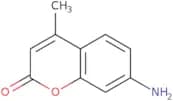
CAS:<p>AMC is a peptide that acts as an activator of the nicotinic acetylcholine receptor. AMC is a high-purity, ion channel ligand with a CAS No. 26093-31-2. It is used in life science research to study cell biology and pharmacology. AMC has been shown to be an inhibitor of the enzyme acetylcholinesterase (AChE) in rat brain slices and it has been reported that it can inhibit the proliferation of human leukemia cells.END></p>Formula:C10H9NO2Purezza:Min. 95%Peso molecolare:175.18 g/molBig Endothelin-1 (Human, 1-38)
CAS:<p>This product has disulfide bonds between Cys1-Cys15 and Cys3-Cys11 and is available as a 0.1mg vial. Big Endothelin-1 (Human, 1-38) is part of the full lengthed 29 amino acid peptide Big Endothlin-1 which is a precursor peptide of the vasoconstrictorEndothelin-1 (ET-1). ET-1 exhibits vasoconstrictive properties and is an activator of endothelin G-protein coupled receptors. Furthermore ET-1 is produced when inflammation, vascular stress or hypoxia occurs. In vivo Big Endothelin-1 has a greater half life compared to ET-1 and therefore makes it useful to study secretory activity in the endothelial system.<br>Overall Big Endothelin-1 (Human, 1-38) can be used as a research tool for studying protein interactions, receptor activation and function, and ligand binding. This peptide is also used in pharmacology to study the effects of therapeutic agents on receptor activity and expression.</p>Formula:C189H282N48O56S5Purezza:Min. 95%Peso molecolare:4,282.9 g/molSLC29A2 Blocking Peptide
<p>A synthetic peptide for use as a blocking control in assays to test for specificity of SLC29A2 antibody, catalog no. 70R-7165</p>Purezza:Min. 95%Insulin, human
<p>Insulin is a peptide hormone that is produced by beta cells in the pancreas. Insulin has several important functions, including regulation of blood sugar levels, lipid metabolism and protein synthesis. It is also involved in the regulation of cellular growth and proliferation. Insulin binds to insulin receptors on the surface of cells, activating them and allowing for the uptake of glucose into cells and storage as glycogen. Insulin is a ligand for the insulin receptor. It can also bind to other receptors, such as IGF1R, which causes activation of PI3K/AKT pathway. Insulin is an antibody that can be used as research tool or cell biology reagent.<br>INSULIN CAN BE USED TO:<br>- Measure blood sugar levels<br>- Monitor diabetes<br>- Treat diabetes<br>- Control weight gain<br>- Improve muscle mass</p>Ref: 3D-AA-24
Prodotto fuori produzioneTentaGel® TOPPA
<p>TentaGel based resin for protected peptide amides; particle size: 90 µmcapacity: 0.18 - 0.25 mmol/g</p>Purezza:Min. 95%Ref: 3D-PH16986
Prodotto fuori produzioneANP (Rat, 3-28)
CAS:<p>ANP (Rat, 3-28) is a peptide that is a potent inhibitor of protein interactions. This peptide binds to the ligand-binding domain of the receptor and blocks the binding of the ligand. ANP (Rat, 3-28) also has high purity and can be used as a research tool or an antibody in life science studies.</p>Formula:C119H189N43O36S2Purezza:Min. 95%Peso molecolare:2,862.2 g/molCysteine
<p>Cysteine peptide (Ac RFAAKAA COOH) is used in combination with Lysinepeptide (Ac RFAACAA COOH) in the Direct Peptide Reactivity Assay (DPRA) test.<br>Direct Peptide Reactivity Assay is used in cosmetic applications for the characterization of the skin sensitizing potential of a substance, framed by OECD Guideline no 442.<br>The molecular initiating event (MIE) in skin sensitization is a binding between epidermal proteins and the sensitizing chemical substance. MIE is part of the adverse outcome pathway (AOP) of skin sensitization.<br>It is thanks to the properties of Lysine peptide and Cysteine peptide that the chemical binding will be able to take place, so these synthetic heptapeptides will mimic the reaction of a skin exposed to a substance.<br>Binding between nucleophilic proteins and electrophile substance will be measured by High Performance Liquid Chromatography (HPLC). Therefore, the decrease in Lysine peptide and Cysteine peptide levels will be a sign of sensitizing event. Depending on the rate of depletion, the sensitizing character of a molecule will be determined (see table at the bottom of the page).<br>In chemico DPRA test also has wider applications such as hazard classification in cosmetics, but also for pharmaceuticals and biocides. It is a good alternative to animal experimentation.</p>Formula:C32H50O9N10S1Peso molecolare:750.87 g/molHuman GIP (Total) ELISA (1ea)
<p>This ELISA kit is designed for the quantitative measurement of human GIP (total) in serum, plasma and cell culture supernatant. It is a colorimetric competitive immunoassay with a sensitivity of 0.1 ng/mL. This assay has been designed to measure human GIP (total) from mouse, rat, monkey and human samples. The kit contains all the necessary reagents required for the complete assay, including calibrators and controls, along with detailed instructions and protocols.</p>Purezza:Min. 95%H-MEVGWYRPPFSRVVHLYRNGK-OH
<p>MOG(35-55) human corresponds to amino acids 35 to 55 of the human myelin oligodendrocyte glycoprotein (MOG). It can be used in multiple sclerosis research to induce experimental autoimmune encephalomyelitis (EAE) in mouse and rat models.</p>Ref: 3D-PP46795
Prodotto fuori produzioneMethoxytrityl-S-dPEG®4 Acid
CAS:<p>Methoxytrityl-S-dPEG®4 Acid is a PEG compound with two different functional groups (also known as heterobifunctional). Unlike homobifunctional PEG compounds (same functional group on both ends), this type of compounds are more versatile as have two different anchor points. Methoxytrityl-S-dPEG®4 Acid is used as a linker and spacer to add a PEG moiety, via pegylation (a bioconjugation technique) to proteins, peptides, oligonucleotides, small molecules and nanoparticles.</p>Purezza:Min. 95%Peso molecolare:554.7 g/molAngiotensin II (3-8), human
<p>Custom research peptide; min purity 95%.</p>Formula:C40H54N8O8Purezza:Min. 95%Peso molecolare:774.93 g/molRef: 3D-PA16905
Prodotto fuori produzioneAzido-dPEG®3-Amine
CAS:<p>Azido-dPEG®3-Amine is a PEG compound with two different functional groups (also known as heterobifunctional). Unlike homobifunctional PEG compounds (same functional group on both ends), this type of compounds are more versatile as have two different anchor points. Azido-dPEG®3-Amine is used as a linker and spacer to add a PEG moiety, via pegylation (a bioconjugation technique) to proteins, peptides, oligonucleotides, small molecules and nanoparticles.</p>Purezza:Min. 95%Peso molecolare:218.25 g/molAlpha-Conotoxin SI
CAS:<p>Sourced from the marine snail, conus striatus, this synthetic cone snail toxin is a nicotinic acetylcholine receptor blocker. This product has disulfide bonds between Cys2-Cys7 and Cys3-Cys7.</p>Formula:C55H84N16O16S4Purezza:Min. 95%Peso molecolare:1,353.6 g/molIL 1 α Human
<p>IL-1α is a cytokine protein that has been shown to be involved in the immune system. IL-1α is an activator of the receptor and is also a ligand for it. The protein has been shown to activate ion channels, which are proteins that allow ions to pass through either by diffusion or by facilitated transport. This activation causes cells to produce more hydrogen ions, which leads to an increase in the acidity of the cell. IL-1α has also been shown to inhibit cell proliferation and induce apoptosis.</p>Purezza:Min. 95%CJC-1295
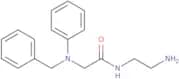
CAS:<p>CJC-1295 is a synthetic peptide, which is an analogue of growth hormone-releasing hormone (GHRH). It is synthesized through recombinant DNA technology, which allows for precise control over its sequence and length. This particular peptide is designed to bind to GHRH receptors in the pituitary gland. By activating these receptors, CJC-1295 stimulates the release of growth hormone (GH) into the bloodstream.The primary function of CJC-1295 is to influence the endocrine system, particularly enhancing the release of endogenous growth hormone. It achieves this by increasing the amplitude and frequency of GH pulses without affecting the natural negative feedback mechanisms that regulate GH production. This mode of action distinguishes CJC-1295 from other growth hormone therapies, as it promotes a more physiological pattern of hormone secretion.CJC-1295 is used in various scientific contexts, primarily in research focusing on growth hormone deficiencies, muscle wasting conditions, and certain metabolic disorders. Its ability to increase GH release also makes it a subject of interest in studies related to aging, tissue repair, and regeneration. The longer half-life of CJC-1295 compared to natural GHRH peptides further enhances its applications in research, allowing for more sustained and controlled experimentation.</p>Purezza:Min. 95%N-(2-Amino-ethyl)-2-(benzyl-phenyl-amino)-acetamide
CAS:<p>Please enquire for more information about N-(2-Amino-ethyl)-2-(benzyl-phenyl-amino)-acetamide including the price, delivery time and more detailed product information at the technical inquiry form on this page</p>Formula:C17H21N3OPurezza:Min. 95%Colore e forma:White PowderPeso molecolare:283.37 g/molRef: 3D-FA111189
Prodotto fuori produzioneMyelin Oligodendrocyte Glycoprotein (35-55) (mouse, rat) trifluoroacetate
CAS:<p>Myelin oligodendrocyte glycoprotein (MOG) is a myelin protein found in the central nervous system. MOG is a ligand for CD200, which is an inhibitory receptor expressed by astrocytes. It has been shown that MOG can induce the proliferation and differentiation of primary cultures of rat astrocytes in vitro. MOG induces the production of reactive oxygen species in mitochondria and increases the expression of acid-binding protein, which are both important factors in the demyelination process. MOG has also been implicated as a potential factor in the development of multiple sclerosis. Further research into this protein may lead to new treatments or cures for disorders such as encephalomyelitis, nervous system diseases, or even cancer.</p>Formula:C118H177N35O29S•C2HO2F3Purezza:Min. 95%Colore e forma:PowderPeso molecolare:2,695.98 g/molRef: 3D-FM109206
Prodotto fuori produzioneHead activator
<p>Catalogue peptide; min. 95% purity</p>Formula:C54H84N12O14Peso molecolare:1,125.36 g/molRef: 3D-VAC-00194
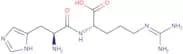
Prodotto fuori produzioneH-His-Arg-OH
CAS:<p>H-His-Arg-OH is a synthetic peptide that has been shown to have cytotoxic effects on mammalian cells. The H-His-Arg-OH peptide can be used for the treatment of heart disease and autoimmune diseases, such as rheumatoid arthritis. This peptide has been found to be resistant to congestive heart failure, which is caused by a number of factors, including hypertension and valvular stenosis. It has also been shown to have an immunoglobulin G1 (IgG1) genotype.</p>Formula:C12H21N7O3Purezza:Min. 95%Peso molecolare:311.34 g/molRef: 3D-VAC-00499
Prodotto fuori produzione