


Peptidi
I peptidi sono catene corte di amminoacidi legate da legami peptidici, che svolgono ruoli chiave come molecole biologiche importanti nei processi cellulari. Funzionano come ormoni, neurotrasmettitori e molecole di segnalazione, e sono ampiamente utilizzati in applicazioni terapeutiche e diagnostiche. I peptidi sono anche cruciali nella ricerca per lo studio delle interazioni proteiche, delle attività enzimatiche e dei percorsi di segnalazione cellulare. Presso CymitQuimica, offriamo una vasta selezione di peptidi di alta qualità per supportare le vostre esigenze di ricerca e sviluppo in biotecnologia e farmacologia.
Sottocategorie di "Peptidi"
Trovati 30473 prodotti di "Peptidi"
Ordinare per
Purezza (%)
0
100
|
0
|
50
|
90
|
95
|
100
Melanocyte Protein PMEL 17 (256-264) (human, bovine, mouse)
<p>Custom research peptide; min purity 95%.</p>Formula:C44H67N9O14Purezza:Min. 95%Peso molecolare:946.08 g/molRef: 3D-PM17049
Prodotto fuori produzioneRef: 3D-PP48543
Prodotto fuori produzioneAngiotensin II (3-8), human
<p>Custom research peptide; min purity 95%.</p>Formula:C40H54N8O8Purezza:Min. 95%Peso molecolare:774.93 g/molRef: 3D-PA16905
Prodotto fuori produzioneGlucagon (Human, Rat, Mouse)-EIA Kit (1ea)
<p>The Glucagon (Human, Rat, Mouse)-EIA Kit is a competitive enzyme immunoassay for the quantitative measurement of human glucagon in urine. The kit provides a competitive binding assay format that is designed to measure the concentration of glucagon in urine samples and provides a quantitative result.</p>Purezza:Min. 95%P2RX2 Blocking Peptide
<p>A synthetic peptide for use as a blocking control in assays to test for specificity of P2RX2 antibody, catalog no. 70R-5171</p>Purezza:Min. 95%Peptide YY(3-36), PYY, human
<p>Custom research peptide; min purity 95%.</p>Formula:C180H279N53O54Purezza:Min. 95%Peso molecolare:4,049.55 g/molRef: 3D-PP17072
Prodotto fuori produzioneNeurokinin A (Human, Porcine, Rat, Mouse)
<p>Neurokinin A is a peptide that is derived from the precursor protein, preprotachykinin A, and has been found to be an endogenous ligand for the NK-1 receptor. It is involved in a wide range of physiological processes such as neurotransmission and regulation of blood pressure. Neurokinin A has been shown to inhibit adenylate cyclase activity in guanethidine-sensitive tissues and ionophores-resistant cells. The effects of Neurokinin A are not due to its ability to bind to the NK-1 receptor but rather through other mechanisms. The amino acid sequence of this peptide was first determined by cloning methods in 1984 and it has since been used extensively as a tool for studying the function of this receptor. Neurokinin A also inhibits cell proliferation in glioma cells and has been shown to have an inhibitory effect on Ca2+ concentration during electrical nerve stimulation.</p>Formula:C50H80N14O14S•2CH3COOH•5H2OPurezza:Min. 95%Peso molecolare:1,343.48 g/molKRAS Blocking Peptide
<p>A synthetic peptide for use as a blocking control in assays to test for specificity of KRAS antibody, catalog no. 70R-5673</p>Purezza:Min. 95%Big Endothelin-1 (Human, 1-38)
CAS:<p>This product has disulfide bonds between Cys1-Cys15 and Cys3-Cys11 and is available as a 0.1mg vial. Big Endothelin-1 (Human, 1-38) is part of the full lengthed 29 amino acid peptide Big Endothlin-1 which is a precursor peptide of the vasoconstrictorEndothelin-1 (ET-1). ET-1 exhibits vasoconstrictive properties and is an activator of endothelin G-protein coupled receptors. Furthermore ET-1 is produced when inflammation, vascular stress or hypoxia occurs. In vivo Big Endothelin-1 has a greater half life compared to ET-1 and therefore makes it useful to study secretory activity in the endothelial system.<br>Overall Big Endothelin-1 (Human, 1-38) can be used as a research tool for studying protein interactions, receptor activation and function, and ligand binding. This peptide is also used in pharmacology to study the effects of therapeutic agents on receptor activity and expression.</p>Formula:C189H282N48O56S5Purezza:Min. 95%Peso molecolare:4,282.9 g/molAzido-dPEG®3-Amine
CAS:<p>Azido-dPEG®3-Amine is a PEG compound with two different functional groups (also known as heterobifunctional). Unlike homobifunctional PEG compounds (same functional group on both ends), this type of compounds are more versatile as have two different anchor points. Azido-dPEG®3-Amine is used as a linker and spacer to add a PEG moiety, via pegylation (a bioconjugation technique) to proteins, peptides, oligonucleotides, small molecules and nanoparticles.</p>Purezza:Min. 95%Peso molecolare:218.25 g/molAMC
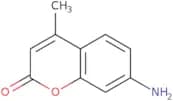
CAS:<p>AMC is a peptide that acts as an activator of the nicotinic acetylcholine receptor. AMC is a high-purity, ion channel ligand with a CAS No. 26093-31-2. It is used in life science research to study cell biology and pharmacology. AMC has been shown to be an inhibitor of the enzyme acetylcholinesterase (AChE) in rat brain slices and it has been reported that it can inhibit the proliferation of human leukemia cells.END></p>Formula:C10H9NO2Purezza:Min. 95%Peso molecolare:175.18 g/molCEA, CAP-1-6-D, [Asp6]-Carcinoembryonic Antigen
<p>Custom research peptide; min purity 95%.</p>Formula:C43H68N10O15Purezza:Min. 95%Peso molecolare:965.08 g/molRef: 3D-PC16934
Prodotto fuori produzioneNeutrophil Gelatinase Associated Lipocalin/Lipocalin-2, human, recombinant
<p>Neutrophil Gelatinase Associated Lipocalin (NGAL) is a lipocalin protein that is involved in many physiological and pathophysiological processes. NGAL binds to bacterial products, such as lipopolysaccharide, and can be used as a biomarker for inflammation or infection. NGAL has been shown to be elevated in the urine of patients with urinary tract infections. Additionally, NGAL has been shown to be associated with neurological diseases, such as Alzheimer's disease and Parkinson's disease. The recombinant human form of this protein can be used for research purposes or for the development of diagnostic tools. Neutrophil Gelatinase Associated Lipocalin (NGAL) is a lipocalin protein that is involved in many physiological and pathophysiological processes. It binds to bacterial products, such as lipopolysaccharide, and can be used as a biomarker for inflammation or infection. NGAL has been shown to be elevated in the urine of patients</p>Purezza:Min. 95%Rituximab Light chain (41-55)
<p>Rituximab is a chimeric monoclonal antibody used in the treatment of some cancers like CD20 non-Hodgkin's lymphoma and a few autoimmune conditions such as rheumatoid arthritis. However, antibody treatment can lead to generation of neutralising antibodies thus curtailing the efficacy of the therapy. CD 4+ T cells are critical to initiate antibody response so identification of epitopes within molecules using T cell assays can be a vital tool for understanding the immune response and thereby prevent induction of neutralising antibodies. Within rituximab, the variable region of the light chain (41-55) was found to have strong affinity for leukocytes in a specific binding assay, the epitope was also correlated to patients who developed neutralising antibodies. This T cell epitope within rituximab in further immune studies could help design or selection of antibodies without T cell epitopes present for low immunogenicity.</p>Peso molecolare:1,620.8 g/molInsulin, human
<p>Insulin is a peptide hormone that is produced by beta cells in the pancreas. Insulin has several important functions, including regulation of blood sugar levels, lipid metabolism and protein synthesis. It is also involved in the regulation of cellular growth and proliferation. Insulin binds to insulin receptors on the surface of cells, activating them and allowing for the uptake of glucose into cells and storage as glycogen. Insulin is a ligand for the insulin receptor. It can also bind to other receptors, such as IGF1R, which causes activation of PI3K/AKT pathway. Insulin is an antibody that can be used as research tool or cell biology reagent.<br>INSULIN CAN BE USED TO:<br>- Measure blood sugar levels<br>- Monitor diabetes<br>- Treat diabetes<br>- Control weight gain<br>- Improve muscle mass</p>Ref: 3D-AA-24
Prodotto fuori produzioneRef: 3D-PH16986
Prodotto fuori produzioneC1ORF131 Blocking Peptide
<p>A synthetic peptide for use as a blocking control in assays to test for specificity of C1orf131 antibody, catalog no. 70R-4090</p>Purezza:Min. 95%Prolactin Releasing Peptide (1-31), bovine
<p>Catalogue peptide; min. 95% purity</p>Formula:C157H244N54O41SPeso molecolare:3,576.01 g/molRef: 3D-VAC-00741
Prodotto fuori produzioneMyelin Oligodendrocyte Glycoprotein (35-55) (mouse, rat) trifluoroacetate
CAS:<p>Myelin oligodendrocyte glycoprotein (MOG) is a myelin protein found in the central nervous system. MOG is a ligand for CD200, which is an inhibitory receptor expressed by astrocytes. It has been shown that MOG can induce the proliferation and differentiation of primary cultures of rat astrocytes in vitro. MOG induces the production of reactive oxygen species in mitochondria and increases the expression of acid-binding protein, which are both important factors in the demyelination process. MOG has also been implicated as a potential factor in the development of multiple sclerosis. Further research into this protein may lead to new treatments or cures for disorders such as encephalomyelitis, nervous system diseases, or even cancer.</p>Formula:C118H177N35O29S•C2HO2F3Purezza:Min. 95%Colore e forma:PowderPeso molecolare:2,695.98 g/molRef: 3D-FM109206
Prodotto fuori produzioneH-His-Arg-OH
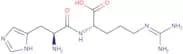
CAS:<p>H-His-Arg-OH is a synthetic peptide that has been shown to have cytotoxic effects on mammalian cells. The H-His-Arg-OH peptide can be used for the treatment of heart disease and autoimmune diseases, such as rheumatoid arthritis. This peptide has been found to be resistant to congestive heart failure, which is caused by a number of factors, including hypertension and valvular stenosis. It has also been shown to have an immunoglobulin G1 (IgG1) genotype.</p>Formula:C12H21N7O3Purezza:Min. 95%Peso molecolare:311.34 g/molHead activator
<p>Catalogue peptide; min. 95% purity</p>Formula:C54H84N12O14Peso molecolare:1,125.36 g/molRef: 3D-VAC-00194
Prodotto fuori produzioneCJC-1295
CAS:<p>CJC-1295 is a synthetic peptide, which is an analogue of growth hormone-releasing hormone (GHRH). It is synthesized through recombinant DNA technology, which allows for precise control over its sequence and length. This particular peptide is designed to bind to GHRH receptors in the pituitary gland. By activating these receptors, CJC-1295 stimulates the release of growth hormone (GH) into the bloodstream.The primary function of CJC-1295 is to influence the endocrine system, particularly enhancing the release of endogenous growth hormone. It achieves this by increasing the amplitude and frequency of GH pulses without affecting the natural negative feedback mechanisms that regulate GH production. This mode of action distinguishes CJC-1295 from other growth hormone therapies, as it promotes a more physiological pattern of hormone secretion.CJC-1295 is used in various scientific contexts, primarily in research focusing on growth hormone deficiencies, muscle wasting conditions, and certain metabolic disorders. Its ability to increase GH release also makes it a subject of interest in studies related to aging, tissue repair, and regeneration. The longer half-life of CJC-1295 compared to natural GHRH peptides further enhances its applications in research, allowing for more sustained and controlled experimentation.</p>Purezza:Min. 95%[Ala81]-MBP (74-85)
<p>Catalogue peptide; min. 95% purity</p>Formula:C55H94N20O21Peso molecolare:1,371.48 g/molRef: 3D-VAC-00644
Prodotto fuori produzione









![CEA, CAP-1-6-D, [Asp6]-Carcinoembryonic Antigen](/_next/image/?url=https%3A%2Fstatic.cymitquimica.com%2Fproducts%2F3D%2Fthumb-webp%2FPC16934.webp&w=3840&q=75)









![[Ala81]-MBP (74-85)](/_next/image/?url=https%3A%2Fstatic.cymitquimica.com%2Fproducts%2F3D%2Fthumb-webp%2FVAC-00644.webp&w=3840&q=75)