Peptidi
Sottocategorie di "Peptidi"
Trovati 29595 prodotti di "Peptidi"
(E)-2,3,3-Trimethyl-4-nonene
CAS:Prodotto controllatoFormula:C12H24Colore e forma:NeatPeso molecolare:168.319Amino-PEG3-C2-Azido
CAS:Prodotto controllatoStability Light Sensitive
Applications A PEG derivative, which contains a free amine that can be conjugated to biological molecules directly by an amide linkage (or via the corresponding isothiocyanate) and an azide that can be reduced to an amine for conjugation to other molecules. PEG derivatives are water soluble. Bifunctional water soluble compounds with flexible dimensions allow for conjugation of small molecules to proteins or molecular probes. 1-amino-11-azido-3,6,9-trioxaundecane can be reacted with small organic molecules for the synthesis of heterobifunctional compounds. It has been used to synthesize a mannose-fluorescein conjugate for the study of cell-surface mannose-specific lectins.
Not a dangerous good if item is equal to or less than 1g/ml and there is less than 100g/ml in the package
References Aslan, K., et al.: J. Fluoresc., 14, 391 (2004), Gole, A., et al.: Langmuir, 20, 7117 (2004), Cavalcante, A., et al.: Biochem. Eng. J., 29, 258 (2006),Formula:C8H18N4O3Colore e forma:NeatPeso molecolare:218.25Z-VAL-MET-OH
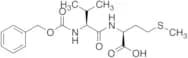
CAS:Prodotto controllatoApplications Z-VAL-MET-OH (cas# 108543-82-4) is a useful research chemical.
Formula:C18H26N2O5SColore e forma:White To Off-WhitePeso molecolare:382.474(3S,4R,5R,6S)-6-Ethynyltetrahydro-2H-pyran-2,3,4,5-tetrayl Tetraacetate
CAS:Prodotto controllatoFormula:C15H18O9Colore e forma:NeatPeso molecolare:342.298Poly(ethylene Glycol) ~200
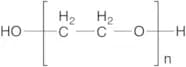
CAS:Prodotto controllatoApplications Poly(ethylene Glycol) molecules of an average molecular mass of 200. Poly(ethylene Glycol) is used in various applications from industrial chemistry to biological chemistry. Recent research has shown PEG maintains the ability to aid the spinal cord injury recovery process, helping the nerve impulse conduction process in animals. In rats, it has been shown to aid in the repair of severed sciatic axons, helping with nerve damage recovery. It is industrially produced as a lubricating substance for various surfaces to reduce friction. PEG is also used in the preparation of vesicle transport systems in with application towards diagnostic procedures or drug delivery methods.
References Borgens, R. et al.: J. Neurosci. Res., 66, 1179 (2001); Stavisky, R. et al.: Neurosci. Lett., 376, 98 (2005); Nalam, P. et al.: Tribiol. Lett., 37, 541 (2010); Steinmetz, N. et al.: J. Am. Chem. Soc., 131, 17093 (2009); Li, X. et al.: J. Am. Chem. Soc., 133, 11147 (2011); Li, L. et al.: Int. J. Pharm., 447, 192 (2013);Formula:H2O(C2H4O)nColore e forma:ColourlessPeso molecolare:62.07MG 132
CAS:Stability Hygroscopic
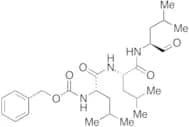
Applications MG 132 is a potent, membrane-permeable proteasome inhibitor. It induces neurite outgrowth in PC12 cells. Neuroprotective product.
References Lee, D., et al.: Trends in Cell Biol., 8, 397 (1998); Tsubuki, S., et al.: J. Biochem., 119., 572 (1996); Grimm, L., et al.: EMBO J., 15, 3835 (1996)Formula:C26H41N3O5Colore e forma:NeatPeso molecolare:475.62n-Octyl-oligo-oxyethylene
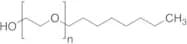
CAS:Prodotto controllatoApplications n-Octyl-oligo-oxyethylene is a detergent for useful solubilization, purification and crystallization of proteins.
Not a dangerous good if item is equal to or less than 1g/ml and there is less than 100g/ml in the packageFormula:(C2H4O)nC8H18OColore e forma:NeatPeso molecolare:174.28Poly(ethylene Glycol) ~40,000
CAS:Applications Poly(ethylene Glycol) molecules of an average molecular mass of 40,000. Poly(ethylene Glycol) is used in various applications from industrial chemistry to biological chemistry. Recent research has shown PEG maintains the ability to aid the spinal cord injury recovery process, helping the nerve impulse conduction process in animals. In rats, it has been shown to aid in the repair of severed sciatic axons, helping with nerve damage recovery. It is industrially produced as a lubricating substance for various surfaces to reduce friction. PEG is also used in the preparation of vesicle transport systems in with application towards diagnostic procedures or drug delivery methods.
References Borgens, R. et al.: J. Neurosci. Res., 66, 1179 (2001); Stavisky, R. et al.: Neurosci. Lett., 376, 98 (2005); Nalam, P. et al.: Tribiol. Lett., 37, 541 (2010); Steinmetz, N. et al.: J. Am. Chem. Soc., 131, 17093 (2009); Li, X. et al.: J. Am. Chem. Soc., 133, 11147 (2011); Li, L. et al.: Int. J. Pharm., 447, 192 (2013);Formula:H2O(C2H4O)nColore e forma:White To Off-WhitePeso molecolare:62.07PACRG Blocking Peptide
A synthetic peptide for use as a blocking control in assays to test for specificity of PACRG antibody, catalog no. 70R-2550Purezza:Min. 95%SHMT1 Blocking Peptide
A synthetic peptide for use as a blocking control in assays to test for specificity of SHMT1 antibody, catalog no. 70R-2935
Purezza:Min. 95%FGF 21 Mouse
FGF21 is a protein that in humans is encoded by the FGF21 gene. It is a member of the fibroblast growth factor (FGF) family and was originally identified as an anti-diabetic hormone that regulates glucose homeostasis. FGF21 also has roles in lipid metabolism and regulation of energy homeostasis, such as through its interactions with PPARs, RXRs, LXRs, and other nuclear receptors. The receptor for FGF21 is FGFR1c and it acts as a high-affinity agonist of this receptor. The ligand for FGFR1c is FGF19.
Purezza:Min. 95%TRAPPC6B Blocking Peptide
A synthetic peptide for use as a blocking control in assays to test for specificity of TRAPPC6B antibody, catalog no. 70R-3155Purezza:Min. 95%hCG_1646157 Blocking Peptide
A synthetic peptide for use as a blocking control in assays to test for specificity of hCG_1646157 antibody, catalog no. 70R-9034
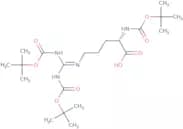
Purezza:Min. 95%Boc-Arg(Boc)2-OH
CAS:Boc-Arg(Boc)2-OH is a protected derivative of the amino acid arginine. The Boc (tert-butyloxycarbonyl) groups shield both the amino group and the side chain's guanidine functionality. This protection scheme allows for its selective incorporation during peptide synthesis while offering stability under various reaction conditions. Boc-Arg(Boc)2-OH has been also used in the synthesis of amino acid prodrugs of cytotoxic anthraquinones, demonstrating its potential utility in developing targeted cancer therapies.Formula:C21H38N4O8Purezza:Min. 95%Colore e forma:PowderPeso molecolare:474.55 g/molDAAM1 Blocking Peptide
A synthetic peptide for use as a blocking control in assays to test for specificity of DAAM1 antibody, catalog no. 70R-2236
Purezza:Min. 95%Cytokeratin 84 Blocking Peptide
A synthetic peptide for use as a blocking control in assays to test for specificity of KRT84 antibody, catalog no. 70R-3002
Purezza:Min. 95%TIPARP Blocking Peptide
A synthetic peptide for use as a blocking control in assays to test for specificity of TIPARP antibody, catalog no. 70R-3180Purezza:Min. 95%ZNF547 Blocking Peptide
A synthetic peptide for use as a blocking control in assays to test for specificity of ZNF547 antibody, catalog no. 20R-1098Purezza:Min. 95%PGM2L1 Blocking Peptide
A synthetic peptide for use as a blocking control in assays to test for specificity of PGM2L1 antibody, catalog no. 70R-3547Purezza:Min. 95%WBP2NL Blocking Peptide
A synthetic peptide for use as a blocking control in assays to test for specificity of WBP2NL antibody, catalog no. 70R-2017Purezza:Min. 95%TFAM Blocking Peptide
A synthetic peptide for use as a blocking control in assays to test for specificity of Tfam antibody, catalog no. 70R-1948Purezza:Min. 95%monobiotin INSL3
Monobiotin is a small molecule that is an activator of the L3 receptor. It has been shown to be a ligand for the L3 receptor and to activate this receptor in cells. Monobiotin activates cell membrane ion channels by binding to the L3 receptor and has been used as a research tool to study protein interactions. Monobiotin is also an inhibitor of voltage-gated potassium channels, which are important in regulating excitability in nerve cells, and can serve as a pharmacological tool for studying ion channel function.
Purezza:Min. 95%CACNB2 Blocking Peptide
A synthetic peptide for use as a blocking control in assays to test for specificity of LHPP antibody, catalog no. 70R-4027Purezza:Min. 95%KCND2 Blocking Peptide
A synthetic peptide for use as a blocking control in assays to test for specificity of KCND2 antibody, catalog no. 70R-5109
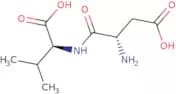
Purezza:Min. 95%H-Asp-Val-OH
CAS:Please enquire for more information about H-Asp-Val-OH including the price, delivery time and more detailed product information at the technical inquiry form on this pageFormula:C9H16N2O5Purezza:Min. 95 Area-%Colore e forma:PowderPeso molecolare:232.23 g/molTNKS1BP1 Blocking Peptide
A synthetic peptide for use as a blocking control in assays to test for specificity of TNKS1BP1 antibody, catalog no. 70R-2291Purezza:Min. 95%MAP2K3 Blocking Peptide
A synthetic peptide for use as a blocking control in assays to test for specificity of MAP2K3 antibody, catalog no. 70R-2684Purezza:Min. 95%EMID2 Blocking Peptide
A synthetic peptide for use as a blocking control in assays to test for specificity of EMID2 antibody, catalog no. 70R-7507Purezza:Min. 95%HSF1 Blocking Peptide
A synthetic peptide for use as a blocking control in assays to test for specificity of HSF1 antibody, catalog no. 70R-8193Purezza:Min. 95%ZNF284 Blocking Peptide
A synthetic peptide for use as a blocking control in assays to test for specificity of ZNF284 antibody, catalog no. 70R-8896Purezza:Min. 95%CITED4 Blocking Peptide
A synthetic peptide for use as a blocking control in assays to test for specificity of CITED4 antibody, catalog no. 20R-1141
Purezza:Min. 95%ZNF256 Blocking Peptide
A synthetic peptide for use as a blocking control in assays to test for specificity of ZNF256 antibody, catalog no. 70R-8717Purezza:Min. 95%KHDRBS1 Blocking Peptide
A synthetic peptide for use as a blocking control in assays to test for specificity of KHDRBS1 antibody, catalog no. 20R-1132
Purezza:Min. 95%VGF Blocking Peptide
A synthetic peptide for use as a blocking control in assays to test for specificity of VGF antibody, catalog no. 70R-6218
Purezza:Min. 95%IGFBP2 Blocking Peptide
A synthetic peptide for use as a blocking control in assays to test for specificity of IGFBP2 antibody, catalog no. 70R-5304Purezza:Min. 95%ABAT Blocking Peptide
A synthetic peptide for use as a blocking control in assays to test for specificity of ABAT antibody, catalog no. 70R-2214LZTS2 Blocking Peptide
A synthetic peptide for use as a blocking control in assays to test for specificity of LZTS2 antibody, catalog no. 70R-5687
Purezza:Min. 95%MAL-dPEG®12-t-boc-Hydrazide
CAS:MAL-dPEG®12-t-boc-Hydrazide is a PEG compound with two different functional groups (also known as heterobifunctional). Unlike homobifunctional PEG compounds (same functional group on both ends), this type of compounds are more versatile as have two different anchor points. MAL-dPEG®12-t-boc-Hydrazide is used as a linker and spacer to add a PEG moiety, via pegylation (a bioconjugation technique) to proteins, peptides, oligonucleotides, small molecules and nanoparticles.Formula:C39H70N4O18Purezza:Min. 95%Peso molecolare:882.99 g/molOxytocin Human
Oxytocin is a hormone and neurotransmitter that is produced in the hypothalamus. It is released by the pituitary gland during labor to help with uterine contractions, and it stimulates milk production in the mammary glands. Oxytocin may be used to stimulate lactation or to assist in childbirth. The molecular mass of oxytocin is approximately 3,500 Da, which can be determined using chromatography with a retention time of 8-10 minutes and a peak at 3.5 minutes on reverse phase high performance liquid chromatography (RP-Hplc). Oxytocin has been synthesized chemically and freeze dried for use in research settings. Reconstitute with sterile water for injections before use. Oxytocin may also be used as an additive in food products as a flavor enhancer or preservative.Purezza:Min. 95%SERPINA3 Blocking Peptide
A synthetic peptide for use as a blocking control in assays to test for specificity of SERPINA3 antibody, catalog no. 70R-5915Purezza:Min. 95%Tmed1 Blocking Peptide
A synthetic peptide for use as a blocking control in assays to test for specificity of Tmed1 antibody, catalog no. 70R-8661Purezza:Min. 95%CLECL1 Blocking Peptide
A synthetic peptide for use as a blocking control in assays to test for specificity of CLECL1 antibody, catalog no. 70R-2614Purezza:Min. 95%EVI1 Blocking Peptide
A synthetic peptide for use as a blocking control in assays to test for specificity of EVI1 antibody, catalog no. 70R-4757Purezza:Min. 95%TGIF1 Blocking Peptide
A synthetic peptide for use as a blocking control in assays to test for specificity of TGIF1 antibody, catalog no. 70R-2282Purezza:Min. 95%VHL Blocking Peptide
A synthetic peptide for use as a blocking control in assays to test for specificity of VHL antibody, catalog no. 70R-9757Purezza:Min. 95%DMBX1 Blocking Peptide
A synthetic peptide for use as a blocking control in assays to test for specificity of DMBX1 antibody, catalog no. 70R-8205
Purezza:Min. 95%PLOD2 Blocking Peptide
A synthetic peptide for use as a blocking control in assays to test for specificity of PLOD2 antibody, catalog no. 70R-5438Purezza:Min. 95%Copine I Blocking Peptide
A synthetic peptide for use as a blocking control in assays to test for specificity of CPNE1 antibody, catalog no. 70R-1407Purezza:Min. 95%ATE1 Blocking Peptide
A synthetic peptide for use as a blocking control in assays to test for specificity of ATE1 antibody, catalog no. 70R-2256Purezza:Min. 95%LP-PLA2 Light Tryptic Peptide Standard (4nmol)
Lipoprotein-associated phospholipase A2 (LP-PLA2) light tryptic peptide standard for protein identification and quantitation studies. LP-PLA2 is a phospholipase A2 enzyme known as platelet-activating factor acetylhydrolase and it is largely associated with low density lipoprotein in the blood.Purezza:Min. 95%