Peptidi
Sottocategorie di "Peptidi"
Trovati 29610 prodotti di "Peptidi"
Bis-Bromoacetamido-dPEG®11
Bis-Bromoacetamido-dPEG®11 is a PEG polymer categorised as homobifunctional PEG (X-PEG X). Used as a linker, bis-bromoacetamido-dPEG®11 is used to attached PEG to proteins, peptides, oligonucleotides, nanoparticles and small molecules via pegylation, a bioconjugation technique.Purezza:Min. 95%Peso molecolare:786.54 g/mol(Des-Asp1-Ile5)angiotensin I trifluoroacetate
CAS:(Des-Asp1-Ile5)angiotensin I trifluoroacetate is an analog of angiotensin I that acts as an inhibitor of kinases. It has been shown to induce apoptosis in human cancer cells and may have potential as an anticancer agent. This compound is derived from Chinese urine and has been found to be effective against a variety of tumors, including those resistant to chloroquine or artesunate treatment. The mechanism by which (Des-Asp1-Ile5)angiotensin I trifluoroacetate exerts its anticancer effects is not fully understood, but it is believed to involve the inhibition of kinase activity and the induction of apoptosis in cancer cells. This compound may hold promise as a novel inhibitor for the treatment of various cancers.Formula:C58H84N16O11•(C2HF3O2)xPurezza:Min. 95%[Ser(PO3H2)65]-Ubiquitin
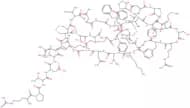
[Ser(PO3H2)65]-Ubiquitin is a peptide that binds to the ubiquitin receptor, which is a protein that regulates the degradation of proteins. It has been shown to be an activator of ion channels and ligands for antibodies. This product is used as a research tool in Cell Biology and other life sciences. [Ser(PO3H2)65]-Ubiquitin may also be used as an inhibitor in pharmacology. This peptide has high purity and is CAS No. 544-81-4.Purezza:Min. 95%INSL6
Insulin-like 6 (INSL6) is a growth factor that belongs to the insulin family. The physiological function of INSL6 is unknown, but it has been found in spermatocytes and testicular cells. It has been shown to induce the production of creatine kinase and other peptide hormones in these cells. INSL6 also has been shown to have an anti-inflammatory effect on pro-inflammatory cytokines, which may be due to its ability to increase the permeability of the blood-brain barrier. This protein also has been found in various autoimmune diseases and cancerous tissues, including breast cancer and melanoma. Insulin-like 6 proteins are expressed in various cell types, including monocytes, T lymphocytes, fibroblasts, osteoblasts, erythrocytes, endometrial cells, and vascular endothelial cells. INSL6 is involved with the synthesis of insulin-like growth factor 1 (IGF1), which plays aPurezza:Min. 95%Chikungunya E2 Recombinant
Chikungunya E2 Recombinant is a peptide that activates the ion channels. It is derived from the Chikungunya virus, and has been shown to inhibit the binding of ligands to their receptors. The recombinant protein can be used as a research tool in cell biology and pharmacology. Chikungunya E2 Recombinant also binds to antibodies and can be used in immunohistochemistry, Western blotting, and ELISA.Purezza:Min. 95%IL 12 Human
IL-12 is a proinflammatory cytokine that is produced by activated T cells and natural killer (NK) cells. IL-12 activates macrophages, which then produce tumor necrosis factor alpha (TNFα), inducible nitric oxide synthase (iNOS), and other inflammatory mediators. IL-12 has also been shown to increase the expression of major histocompatibility complex class II molecules on antigen presenting cells, which may be important for activating CD4+ T helper cells. IL-12 is a receptor activator that binds to its receptor with high affinity and specificity. It has been found to inhibit voltage-gated ion channels, ligand binding, and antibody binding in vitro.Purezza:Min. 95%Anti Basic-FGF (1-9), human Serum
Anti Basic-FGF (1-9) is a peptide that has been shown to inhibit the growth of cancer cells in vitro. It is an activator of the receptor tyrosine kinase FGF receptor and has been used as a research tool for studying the interactions between proteins. The antibody against Anti Basic-FGF (1-9) can be used in immunohistochemistry and Western blot analysis to identify this peptide in tissue samples. This peptide is also an inhibitor of the ion channel protein, TRPM4, and has been shown to block its activity at low concentrations.Purezza:Min. 95%TentaGel® HL-NH2 Resin
TentaGel® is a gelatinous resin, an important support for solid phase synthesis. TentaGel® resins are constructed with a backbone of low crosslinked polystyrene grafted with polyoxyethylene (polyethylene glycol). The typical chain length of POE (n) is approximately 68 ethylene oxide units or an average MW of 3000. This long chain creates a spacer that effectively separates the reactive site (X) from the crosslinked backbone matrix. TentaGel® HL (High Load) (mean particle size 75 µm: capacity 04-06 meq/g) Substitution Functional Group: -O-CH2-CH2-NH2TentaGel®Purezza:Min. 95%Midkine (Human, 60-121)
Midkine belongs to the group of peptides and is found in human brain, bone marrow, and peripheral blood. It is an activator of ion channels and has a high affinity for receptors. Midkine is a ligand that binds to receptors on cells. This protein may be used as a research tool to study the function of ion channels or as an antibody in cell biology experiments.Formula:C292H483N91O87S4Purezza:Min. 95%Peso molecolare:6,788.8 g/molSuc-Ala-pNA
CAS:Suc-Ala-pNA is a molecule that is composed of alendronic acid, which is a prodrug that has been conjugated to polyethylene glycol and polyaspartic acid. The pNA moiety in the molecule is capable of penetrating the mucosal membrane and can be cleaved by aminopeptidase and peptidase to release active alendronic acid. The mucoadhesive polymers increase the permeability of the molecule, while the spacer group increases its stability. Suc-Ala-pNA has been shown to have a high affinity for bone mineralization, as it reacts with bone mineral surfaces to form a covalent bond. This reaction mechanism leads to increased bone mineralization, which may help treat osteoporosis.Formula:C13H15N3O6Purezza:Min. 95%Peso molecolare:309.27 g/molAnti G-Protein: Galpha olf (23-38), Human Serum
Anti G-Protein: Galpha olf (23-38), humanSerum is a research tool that is used to study protein interactions. It can be used for the investigation of ion channels, cell biology, and pharmacology. The antibody reacts with the specific antigen for which it was raised. The antibody may be used in immunohistochemistry on tissue sections or in ELISA as a detection tool.
Purezza:Min. 95%[Sar1,Ala8]-Angiotensin II
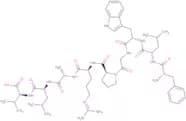
Sar1,Ala8]-Angiotensin II is a peptide that has been shown to bind to the angiotensin receptor and activate it. This peptide is a research tool for studying ion channels, ligand-receptor interactions, and protein interactions. The peptide can be used to study the pharmacology of the angiotensin receptor, as well as its role in cell biology and other biological processes. Sar1,Ala8]-Angiotensin II binds to the angiotensin receptor with high affinity, making it an excellent candidate for use in antibody production against this receptor.Formula:C43H67N13O10Purezza:Min. 95%Peso molecolare:926.07 g/molGalanin (Rat) Antiserum
Galanin is a peptide that is involved in the regulation of many physiological processes, including the regulation of food intake, water balance, and pain perception. The rat galanin antiserum reacts with both human and rat galanin. Galanin is a member of the family of G protein-coupled receptors (GPCRs).Purezza:Min. 95%MAL-dPEG®4-Glu(OH)-NH-m-dPEG®24
MAL-dPEG®4-Glu(OH)-NH-m-dPEG®24 is a peptide containing polyethylene glycol (PEG) as spacer to alter their pharmacokinetic properties and pharmodynamics.
Formula:C72H134N4O35Purezza:Min. 95%Peso molecolare:1,615.84 g/molAnti NO Synthase I (998-1024), Human Serum
Anti NO Synthase I (998-1024), human Serum is a peptide that is an activator. It has been shown to inhibit the activity of a protein called Nitric oxide synthase I, which catalyzes the production of nitric oxide from L-arginine and oxygen. The antibody for this product can be used for research and cell biology applications, such as investigating protein interactions in living cells or studying ion channels in isolated cells. This product is also useful for pharmacological studies, such as identifying receptor ligands or evaluating inhibitors of protein interactions.Purezza:Min. 95%Bis-dPEG®11-DBCO
Bis-dPEG®11-DBCO is a PEG polymer categorised as homobifunctional PEG (X-PEG X). Used as a linker, bis-dPEG®11-DBCO is used to attached PEG to proteins, peptides, oligonucleotides, nanoparticles and small molecules via pegylation, a bioconjugation technique.Purezza:Min. 95%Peso molecolare:1,147.35 g/molDOTA-tris(Acid)-Amido-dPEG®24-Amido-dPEG®24-DSPE
DOTA-tris(Acid)-Amido-dPEG®24-Amido-dPEG®24-DSPE is a PEG compound with two different functional groups (also known as heterobifunctional). Unlike homobifunctional PEG compounds (same functional group on both ends), this type of compounds are more versatile as have two different anchor points. DOTA-tris(Acid)-Amido-dPEG®24-Amido-dPEG®24-DSPE is used as a linker and spacer to add a PEG moiety, via pegylation (a bioconjugation technique) to proteins, peptides, oligonucleotides, small molecules and nanoparticles.Purezza:Min. 95%Peso molecolare:3,391.14 g/molMAGE-3 Antigen (271-279) (human) trifluoroacetate salt
CAS:ALPHA FACTOR SIGNALING PEPTIDEFormula:C53H79N13O10Purezza:Min. 95%Peso molecolare:1,058.28 g/molUb4ix
The ability to modify ubiquitin chains would be a useful research tool for understanding ubiquitin signalling in health and disease. The initial step in ubiquitin signalling is attachment of a ubiquitin molecule to a lysine residue, further ubiquitins can then be added to the initial monomer creating a chain. The chain length and location can affect the fate of the protein. The most well studied are lysine 48 (K48) linked ubiquitin chains. K48 polyubiquitin chains are recognised by deubiquitinating enzymes (DUBS) and targeted for proteasomal degradation. Macrocyclic peptides are being explored as ubiquitin ligands to better understand ubiquitin signalling.Ub4ix is a macrocyclic peptide that selectively binds to lysine48-linked ubiquitin dimer (K48-Ub2), with much higher affinity than linear counterparts. Importantly, binding of ub4ix to K48-Ub2 prevents recognition by DUBS thus inhibiting protein targeting for proteosomal degradation. This has been shown to promote apoptosis in cancer cells. Therefore, molecules like ub4ix could be a valuable tool in understanding ubiquitin signalling as well as lead to future disease treatments. Potentially, the ubiquitin system in could be a target for cancer therapy to alter the polyubiquitin recognition by interacting proteins, further work with ubi4x could provide vital steps along this path.Peso molecolare:1,766.7 g/molSARS-CoV-2 Nucleoprotein 1 (56-70)
The coronavirus (CoV) nucleoprotein is the major component of CoV structural proteins. Also known as the nucleocapsid protein, it is an abundant RNA-binding protein critical for viral genome packaging. These factors make nucleoprotein a good target for developing new antiviral drugs. In addition, the identification of epitopes within the nucleoprotein sequence can help design more effective SARS-CoV-2 vaccines.Models have predicted epitopes exhibiting antigenicity, stability and interactions with MHC class-I and class-II molecules. Nucleoprotein (56-70) is an epitope candidate with various HLA restrictions. This epitope can be used to better vaccine design for more durable CD4+ and CD8+ T cell responses for long-lasting immunity.Peso molecolare:1,752.9 g/molFlt3 Ligand Mouse
Flt3 ligand is a peptide that functions as an inhibitor of the receptor tyrosine kinase, Flt3. It is used in cell biology research to study protein interactions and receptor signaling pathways. Flt3 ligand binds to the extracellular domain of Flt3 and can activate the receptor by binding to it. This activation leads to phosphorylation of a number of proteins that regulate cellular processes such as ion channels, transcription factors, and other protein kinases.Purezza:Min. 95%Anti TGF-Alpha, Human Serum
Anti TGF-Alpha, humanSerum is a recombinant antibody that specifically binds to the ligand of the Transforming Growth Factor-alpha receptor. It is used as a research tool for protein interactions, pharmacology and cell biology.Formula:C33H52N8O7Purezza:Min. 95%Peso molecolare:672.82 g/molMALEIMIDE-ACTIVATED BSA (Bovine Serum Albumin)
Maleimide-activated BSA (BSA-M) is a maleimide-activated form of Bovine Serum Albumin (BSA). It is a peptide that can be used for immunization, as well as in biochemistry experiments. BSA-M has been shown to stimulate antibody production and can be used in the development of new vaccines.
Purezza:Min. 95%H-Trp-2-ClTrt-Resin (200-400 mesh) 1% DVB
H-Trp-2-ClTrt-Resin is a resin that has been used for the synthesis of peptides. It can be used as a building block for peptides, or as a building block in the synthesis of other compounds. H-Trp-2-ClTrt-Resin is available in two mesh sizes: 200 mesh and 400 mesh. The resin is soluble in ethyl acetate and alcohols, but insoluble in water.Purezza:Min. 95%Big Gastrin, human
CAS:Big Gastrin, is a hormone which exerts its effects through activating the G-protein coupled receptor CCK2R and plays a role in gastric acid secretion. Big Gastrin can be used in research applications such as pharmacology and cell biology. This product is also a potential growth factor in some cancer tumors, including prostate cancer. It is available as an ammonium salt and as a 0.1mg vial.Formula:C176H251N43O53SPurezza:Min. 95%Peso molecolare:3,849.2 g/molDns-Glu(Cys-Gly)
Dns-Glu(Cys-Gly) is a peptide that is reactive and can be used as a biochemical. It has been shown to have both reactive metabolites and biologically active peptides.
Formula:C22H28N4O8S2Purezza:Min. 95%Peso molecolare:540.61 g/molInsulin-ELISA Kit (1ea)
The ELISA (enzyme-linked immunosorbent assay) is a powerful and sensitive technique to detect and quantify antigens of interest in biological samples. The Insulin ELISA kit from Specialty Products and Technologies contains the reagents necessary for in vitro measurement of human insulin in serum, plasma, or urine. This kit utilizes a monoclonal antibody specific for human insulin as the detection antibody. The Insulin ELISA Kit is designed to measure human insulin concentrations in range 0.5-25 ng/mL with an accuracy of ±15%.Purezza:Min. 95%Matrix Metalloproteinase-1 , human, recombinant
Matrix Metalloproteinase-1 is a recombinant human protein that is used as a research tool to study the function of matrix metalloproteinases. It has been shown to bind to peptides and activate them, which may lead to new insights into their function. Matrix Metalloproteinase-1 also binds to ion channels and ligands, which may be useful for understanding the role of these molecules in diseases such as cancer.Purezza:Min. 95%Leptin (Rat)-HS ELISA Kit (1ea)
The leptin (RAT)-HS ELISA Kit is a sandwich enzyme-linked immunosorbent assay kit for the quantitative measurement of rat leptin in serum or plasma. Rat leptin is a protein hormone that regulates body weight, food intake, and energy expenditure. Leptin is synthesized and secreted by adipose tissue in proportion to fat mass. The human form of this hormone is called human leptin.
Purezza:Min. 95%Anti PACAP38, Human Serum
Anti PACAP38, humanSerum is a research tool that can be used to study the role of PACAP in various biological processes. The antibody is generated against human PACAP38 and has been shown to inhibit the activity of this peptide. The antibody also binds to the receptor for this peptide, which is a G protein-coupled receptor. This antibody can be used as an inhibitor of PACAP and its receptor in various cell types.Purezza:Min. 95%TentaGel® Macrobead PHB Resin
TentaGel Macrobead PHB Resin is a polymer resin which is used for the synthesis of peptides. The resin can be used as a building block in peptide synthesis, as well as being mixed with other resins for use in other applications. TentaGel Macrobead PHB Resin is supplied in particles that are made up of polystyrene beads and hydroxypropyl-b-cyclodextrin (PHB) groups. The PHB groups are designed to bind to peptides during the synthesis process, while the polystyrene bead provide a support matrix. This product is primarily used by researchers who are interested in using it for the study of protein structure and function.Purezza:Min. 95%m-dPEG®12-Propionaldehyde
m-dPEG®12-Propionaldehyde is a PEG compound with two different functional groups (also known as heterobifunctional). Unlike homobifunctional PEG compounds (same functional group on both ends), this type of compounds are more versatile as have two different anchor points. m-dPEG®12-Propionaldehyde is used as a linker and spacer to add a PEG moiety, via pegylation (a bioconjugation technique) to proteins, peptides, oligonucleotides, small molecules and nanoparticles.Formula:C374H726N18O178Purezza:Min. 95%Peso molecolare:8,323.87 g/molAnti Galanin (9-30), Human Serum
Anti Galanin (9-30), humanSerum is a peptide that inhibits the activity of galanin, which is a neuropeptide. It has been shown to have an effect on ion channels and receptors in the central nervous system. Anti Galanin (9-30), humanSerum binds to the receptor for galanin and blocks the binding of galanin molecules to these receptors, preventing activation of these cells. Anti Galanin (9-30), humanSerum is used as a research tool for studying protein interactions and as a pharmacological inhibitor for studying ion channels and receptors in the central nervous system.
Purezza:Min. 95%ANP (Human, 5-28)
CAS:ANP (human, 5-28) is a peptide that is used as a research tool for studying the function of ion channels. It is also an antibody that can be used to measure protein interactions. ANP (human, 5-28) has been shown to inhibit protein interactions with the receptor and ligand. This peptide has been shown to act as an activator at high concentrations and an inhibitor at low concentrations.Formula:C106H163N35O34S3Purezza:Min. 95%Peso molecolare:2,567.8 g/molAtosiban
Atosiban is a drug that is used to prevent preterm labor in pregnant women. It works by inhibiting the release of oxytocin from the hypothalamus, which decreases contractions and relaxes the uterus. Atosiban has been shown to be effective in decreasing the incidence of preterm birth in women with bacterial vaginosis who are at high risk for preterm delivery (e.g., those with a history of preterm labor). Clinical trials have shown that it may also be useful as an adjunct therapy in treating women with unexplained infertility and recurrent pregnancy loss. The drug binds to receptors on cells, which inhibits the release of intracellular calcium, thus preventing contraction of uterine muscle cells. This effect can be reversed by administration of estradiol benzoate or other drugs that affect receptor activity. It is not known whether atosiban affects fetal development during pregnancy or if it causes any effects on the mother's heart rate or body mass index after childbirth.
Formula:C43H67N11O12S2Purezza:Min. 95%Bis-dPEG®4-Acid
Bis-dPEG®4-Acid is a PEG polymer categorised as homobifunctional PEG (X-PEG X). Used as a linker, bis-dPEG®4-Acid is used to attached PEG to proteins, peptides, oligonucleotides, nanoparticles and small molecules via pegylation, a bioconjugation technique.Purezza:Min. 95%Bromoacetamido-dPEG®4-Amido-DBCO
Bromoacetamido-dPEG®4-Amido-DBCO is a PEG compound with two different functional groups (also known as heterobifunctional). Unlike homobifunctional PEG compounds (same functional group on both ends), this type of compounds are more versatile as have two different anchor points. Bromoacetamido-dPEG®4-Amido-DBCO is used as a linker and spacer to add a PEG moiety, via pegylation (a bioconjugation technique) to proteins, peptides, oligonucleotides, small molecules and nanoparticles.Purezza:Min. 95%Peso molecolare:644.55 g/molIL 1 beta Human, HEK
IL-1 beta is a cytokine, which belongs to the IL-1 family of cytokines. It is a proinflammatory cytokine that induces fever and pain, and stimulates the immune system. IL-1 beta binds to the IL-1 receptor, which is a member of the class 1 cytokine receptor family. The binding activates phospholipase A2 and protein kinase C, which leads to an increase in prostaglandin production by cyclooxygenase 2. IL-1 beta also has been shown to inhibit ion channel activity and calcium uptake in cells.
Purezza:Min. 95%ATIII Heavy Tryptic Peptide Standard (4nmol)
Antithrombin III heavy tryptic peptide standard for protein identification and quantitation studies. Antithrombin III is a glycoprotein found in blood plasma and is involved in the regulation of the coagulation process.
Purezza:Min. 95%Bekm 1
CAS:Bekm 1 is a peptide that binds to the nicotinic acetylcholine receptor and activates it. This receptor is found on the post-synaptic membrane of neurons, which are responsible for transmitting messages from one nerve cell to another. Bekm 1 is an agonist at this receptor, which means that it binds to the receptor and triggers a response. The activation of these receptors has been shown to inhibit neuronal activity.
Formula:C174H261N51O52S6Purezza:Min. 95%Peso molecolare:4,092 g/molAnti Preprorenin (21-64), Human Serum
Anti-Preprorenin (21-64) is a peptide inhibitor of renin. It has been shown to inhibit the activity of renin, an enzyme that plays a key role in regulating blood pressure. Renin cleaves a prohormone called angiotensinogen into angiotensin I, which is then converted to angiotensin II by the angiotensin-converting enzyme. Angiotensin II causes vasoconstriction and stimulates the secretion of aldosterone from the adrenal glands. Anti-Preprorenin (21-64) inhibits renin by binding to its active site and preventing it from converting angiotensinogen to angiotensin I. This product can be used in research as an activator or ligand for receptor or antibody studies.Purezza:Min. 95%ABCB6 Blocking Peptide
A synthetic peptide for use as a blocking control in assays to test for specificity of ABCB6 antibody, catalog no. 70R-4529
Purezza:Min. 95%FBXL5 Blocking Peptide
A synthetic peptide for use as a blocking control in assays to test for specificity of FBXL5 antibody, catalog no. 70R-2735Purezza:Min. 95%C2ORF55 Blocking Peptide
A synthetic peptide for use as a blocking control in assays to test for specificity of C2orf55 antibody, catalog no. 70R-4287
Purezza:Min. 95%MSI2 Blocking Peptide
A synthetic peptide for use as a blocking control in assays to test for specificity of MSI2 antibody, catalog no. 70R-1394
Purezza:Min. 95%GPRC5B Blocking Peptide
A synthetic peptide for use as a blocking control in assays to test for specificity of GPRC5B antibody, catalog no. 70R-9894Purezza:Min. 95%Leptin Blocking Peptide
A synthetic peptide for use as a blocking control in assays to test for specificity of LEP antibody, catalog no. 70R-6221Purezza:Min. 95%LYVE1 Blocking Peptide
A synthetic peptide for use as a blocking control in assays to test for specificity of LYVE1 antibody, catalog no. 70R-6181
Purezza:Min. 95%CTF1 Blocking Peptide
A synthetic peptide for use as a blocking control in assays to test for specificity of CTF1 antibody, catalog no. 70R-9132Purezza:Min. 95%



![[Ser(PO3H2)65]-Ubiquitin](/_next/image/?url=https%3A%2Fstatic.cymitquimica.com%2Fproducts%2F3D%2Fthumb-webp%2FIUB-4486-V.webp&w=3840&q=75)


![[Sar1,Ala8]-Angiotensin II](/_next/image/?url=https%3A%2Fstatic.cymitquimica.com%2Fproducts%2F3D%2Fthumb-webp%2FPAN-4035-V.webp&w=3840&q=75)