Peptidi
Sottocategorie di "Peptidi"
Trovati 29603 prodotti di "Peptidi"
TentaGel® HL HMBA Resin
TentaGel® HL HMBA Resin is a polystyrene-based solid support that is used for peptide synthesis and building blocks. It provides reactive sites for the attachment of side chains and has an average particle size of 3.5 µm. TentaGel® HL HMBA Resin can be used in crosslinked or non-crosslinked form.Purezza:Min. 95%SLC36A3 Blocking Peptide
A synthetic peptide for use as a blocking control in assays to test for specificity of SLC36A3 antibody, catalog no. 70R-1801
Purezza:Min. 95%HER-2 Heavy Tryptic Peptide Standard (4nmol)
This HER-2 Heavy Tryptic Peptide standard can be applied to protein identification and quantitation studies. HER-2 is the human epidermal growth factor receptor 2, which has tyrosine kinase activity and is involved the control of epithelial cell growth and differentiation. The overexpression of HER2 has been implicated with adenocarcinomas such as cervix, lung, ovary and breast.Purezza:Min. 95%ProNGF Human
ProNGF is a recombinant protein that is designed to be used as a research tool. It has been shown to activate the NGF receptor, which leads to various biological effects such as ion channel activation and cell proliferation. ProNGF can be used in antibody-based research or other high-throughput screening techniques. ProNGF is not an inhibitor of any ion channels, but it does have the capability of binding with other proteins, such as receptors and ion channels. This protein is purified from E. coli and has a purity of >98% by SDS-PAGE analysis.Purezza:Min. 95%T4 DNA Ligase (recombinant)
T4 DNA Ligase is a recombinant protein that catalyzes the formation of DNA molecules from complementary single-stranded DNA. T4 DNA Ligase is used as a research tool in cell biology and biochemistry to study the interactions between proteins and peptides. It is also used to produce recombinant proteins, such as antibodies. T4 DNA Ligase binds to its substrate by an ionic interaction with adenosine triphosphate (ATP) and to the complementary strand by hydrogen bonding. The enzyme cleaves the phosphate backbone of both strands at the junction point, forming two new phosphodiester bonds. This enzyme has been shown to bind to other proteins and peptides, such as receptor tyrosine kinases, which are involved in signal transduction pathways that regulate cell growth and differentiation.Purezza:Min. 95%[Ser(PO3H2)65]-Ubiquitin
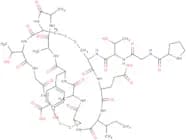
[Ser(PO3H2)65]-Ubiquitin is a peptide that binds to the ubiquitin receptor, which is a protein that regulates the degradation of proteins. It has been shown to be an activator of ion channels and ligands for antibodies. This product is used as a research tool in Cell Biology and other life sciences. [Ser(PO3H2)65]-Ubiquitin may also be used as an inhibitor in pharmacology. This peptide has high purity and is CAS No. 544-81-4.Purezza:Min. 95%C10ORF96 Blocking Peptide
A synthetic peptide for use as a blocking control in assays to test for specificity of C10orf96 antibody, catalog no. 70R-3232
Purezza:Min. 95%MFAP4 Blocking Peptide
A synthetic peptide for use as a blocking control in assays to test for specificity of MFAP4 antibody, catalog no. 70R-6069Purezza:Min. 95%Peptide YY (Human)-EIA Kit (1ea)
Peptide YY (Human)-EIA Kit (1ea) is an EIA kit for the quantitative analysis of human peptide YY. Peptide YY is a neuropeptide with a role in the regulation of food intake and energy expenditure. The kit contains one vial each of peptide YY antiserum, peptide YY antibody, and standard reference material. The assay can be used to detect the level of peptide YY in tissue samples or cell culture supernatants.
Purezza:Min. 95%Chikungunya E2 Recombinant
Chikungunya E2 Recombinant is a peptide that activates the ion channels. It is derived from the Chikungunya virus, and has been shown to inhibit the binding of ligands to their receptors. The recombinant protein can be used as a research tool in cell biology and pharmacology. Chikungunya E2 Recombinant also binds to antibodies and can be used in immunohistochemistry, Western blotting, and ELISA.Purezza:Min. 95%IL 12 Human
IL-12 is a proinflammatory cytokine that is produced by activated T cells and natural killer (NK) cells. IL-12 activates macrophages, which then produce tumor necrosis factor alpha (TNFα), inducible nitric oxide synthase (iNOS), and other inflammatory mediators. IL-12 has also been shown to increase the expression of major histocompatibility complex class II molecules on antigen presenting cells, which may be important for activating CD4+ T helper cells. IL-12 is a receptor activator that binds to its receptor with high affinity and specificity. It has been found to inhibit voltage-gated ion channels, ligand binding, and antibody binding in vitro.Purezza:Min. 95%Methoxytrityl-S-dPEG®12-Acid
CAS:Please enquire for more information about Methoxytrityl-S-dPEG®12-Acid including the price, delivery time and more detailed product information at the technical inquiry form on this pageFormula:C47H70O15SPurezza:Min. 95%Peso molecolare:907.11 g/molZNF486 Blocking Peptide
A synthetic peptide for use as a blocking control in assays to test for specificity of ZNF486 antibody, catalog no. 70R-9106
Purezza:Min. 95%NH2-dPEG®4-Glu(OH)-NH-m-dPEG®24
NH2-dPEG®4-Glu(OH)-NH-m-dPEG®24 is a peptide containing polyethylene glycol (PEG) as spacer to alter their pharmacokinetic properties and pharmodynamics.Formula:C65H129N3O32Purezza:Min. 95%Peso molecolare:1,464.72 g/molFRETS-25Trp (1 umol) (1umol)
FRETS-25Trp is a peptide that is used as a research tool for the study of protein interactions. It is an activator of ion channels and has been shown to bind to the receptor site of protein. FRETS-25Trp has also been shown to inhibit the interaction between ligands and receptors, which may be due to its ability to mimic the natural ligand or compete with it for binding sites. FRETS-25Trp is synthesized by solid phase peptide synthesis on a resin, which provides high purity and yields of up to 1 umol per reaction. FRETS-25Trp (1 umol) (1umol) is CAS No. 120106-03-5 and Reagent No. F2204.Purezza:Min. 95%TentaGel® H RAM
TentaGel H RAM is a building block for peptide synthesis and a resin for peptide synthesis. It is made of 3-hydroxypropyl methacrylate (HPM) and bis-acrylamide (BAM) in a ratio of 1:1. TentaGel H RAM is used as an alternative to polystyrene, which has been used as the base resin for peptide synthesis.Purezza:Min. 95%TentaGel® R NH2 Resin (90 um)
This resin is specially designed for difficult and long sequences. TentaGel is a gelatinous resin, an important support for solid phase synthesis. TentaGel resins are constructed with a backbone of low crosslinked polystyrene grafted with polyoxyethylene (polyethylene glycol) as shown below. The typical chain length of POE (n) is approximately 68 ethylene oxide units or an average MW of 3000. This long chain creates a spacer that effectively separates the reactive site (X) from the crosslinked backbone matrix. Particle size 90 µm; capacity: 0.18-0.22 meq/g. Substiution Functional Group: -O-CH2-CH2-NH2Purezza:Min. 95%Pyr-Pro-Val-pNA
CAS:Pyr-Pro-Val-pNA is a research tool that can be used to study protein interactions. It is an activator ligand that binds to the receptor and can activate ion channels. Pyr-Pro-Val-pNA has been shown to inhibit the binding of antibodies to their antigen. This ligand can be used as a pharmacological agent for the treatment of various diseases, including cancer.Formula:C21H27N5O6Purezza:Min. 95%Peso molecolare:445.47 g/molAK1 Blocking Peptide
A synthetic peptide for use as a blocking control in assays to test for specificity of AK1 antibody, catalog no. 70R-2540Purezza:Min. 95%Porcine Follicle Stimulating Hormone
Porcine follicle stimulating hormone (FSH) is a peptide hormone that belongs to the group of gonadotropin hormones. It is produced in the anterior pituitary gland and stimulates ovarian activity, as well as follicular growth in females. FSH has been shown to stimulate cell factor, an enzyme involved in erythropoiesis, through a dinucleotide phosphate-dependent polymerase chain reaction. FSH also has been shown to increase estradiol benzoate levels and disulfide bond formation. Porcine FSH can be used for in vitro fertilization by stimulating the growth of human egg cells in culture with human serum or sephadex g-100.Purezza:Min. 95%BTF3L1 Blocking Peptide
A synthetic peptide for use as a blocking control in assays to test for specificity of BTF3L1 antibody, catalog no. 70R-8077Purezza:Min. 95%Endokinin C, human
Endokinin C is a peptide that is an inhibitor of protein interactions. It has a CAS number of 52783-30-4. Endokinin C has been shown to have the ability to inhibit the activity of ion channels, such as potassium channels, sodium channels, and calcium channels. This peptide also activates ligands and receptors in the body, including epidermal growth factor receptor (EGFR), insulin-like growth factor receptor (IGF1R), and nerve growth factor receptor (NGFR). Endokinin C is purified from human urine. It has high purity with a protein content of less than 5%.Formula:C78H123N21O20Purezza:Min. 95%Peso molecolare:1,674.9 g/molCA-125 Heavy Tryptic Peptide Standard (4nmol)
Cancer antigen 125 (CA 125) heavy tryptic peptide standard for proteomics studies. CA 125 is an antigenic tumor marker which can be used to diagnose epithelial ovarian cancers. It is expressed by epithelial ovarian neoplasms and cells lining the fallopian tubes, endometrium, pericardium, peritoneum and pleura.Purezza:Min. 95%INSL4
Insulin-like 4 (INSL4) is a growth factor that promotes the proliferation and differentiation of primary cells, including decidual cells. It has been shown to enhance the expression of matrix metalloproteinase (MMP), an enzyme that breaks down extracellular matrix proteins. INSL4 also reduces the production of IGFBP-2, a protein that inhibits insulin-like growth factor 1 (IGF1). INSL4 has been shown to inhibit cancer cell proliferation in transfection experiments and clinical data. It has also been shown to have an inhibitory effect on cancer cells expressing insulin-like growth factor type 3 receptor.Purezza:Min. 95%Biotin-dPEG®23-Lipoamide
Biotin-dPEG®23-Lipoamide is a PEG compound with two different functional groups (also known as heterobifunctional). Unlike homobifunctional PEG compounds (same functional group on both ends), this type of compounds are more versatile as have two different anchor points. Biotin-dPEG®23-Lipoamide is used as a linker and spacer to add a PEG moiety, via pegylation (a bioconjugation technique) to proteins, peptides, oligonucleotides, small molecules and nanoparticles.Formula:C66H126N4O26S3Purezza:Min. 95%Peso molecolare:1,487.92 g/molSuc-Ala-pNA
CAS:Suc-Ala-pNA is a molecule that is composed of alendronic acid, which is a prodrug that has been conjugated to polyethylene glycol and polyaspartic acid. The pNA moiety in the molecule is capable of penetrating the mucosal membrane and can be cleaved by aminopeptidase and peptidase to release active alendronic acid. The mucoadhesive polymers increase the permeability of the molecule, while the spacer group increases its stability. Suc-Ala-pNA has been shown to have a high affinity for bone mineralization, as it reacts with bone mineral surfaces to form a covalent bond. This reaction mechanism leads to increased bone mineralization, which may help treat osteoporosis.Formula:C13H15N3O6Purezza:Min. 95%Peso molecolare:309.27 g/molKCNK13 Blocking Peptide
A synthetic peptide for use as a blocking control in assays to test for specificity of KCNK13 antibody, catalog no. 70R-5226Purezza:Min. 95%Anti G-Protein: Galpha olf (23-38), Human Serum
Anti G-Protein: Galpha olf (23-38), humanSerum is a research tool that is used to study protein interactions. It can be used for the investigation of ion channels, cell biology, and pharmacology. The antibody reacts with the specific antigen for which it was raised. The antibody may be used in immunohistochemistry on tissue sections or in ELISA as a detection tool.
Purezza:Min. 95%[Sar1,Ala8]-Angiotensin II
Sar1,Ala8]-Angiotensin II is a peptide that has been shown to bind to the angiotensin receptor and activate it. This peptide is a research tool for studying ion channels, ligand-receptor interactions, and protein interactions. The peptide can be used to study the pharmacology of the angiotensin receptor, as well as its role in cell biology and other biological processes. Sar1,Ala8]-Angiotensin II binds to the angiotensin receptor with high affinity, making it an excellent candidate for use in antibody production against this receptor.Formula:C43H67N13O10Purezza:Min. 95%Peso molecolare:926.07 g/molCarboxyl-dPEG®4-(m-dPEG®11)3
Carboxyl-dPEG®4-(m-dPEG®11)3 is a PEG compound with two different functional groups (also known as heterobifunctional). Unlike homobifunctional PEG compounds (same functional group on both ends), this type of compounds are more versatile as have two different anchor points. Carboxyl-dPEG®4-(m-dPEG®11)3 is used as a linker and spacer to add a PEG moiety, via pegylation (a bioconjugation technique) to proteins, peptides, oligonucleotides, small molecules and nanoparticles.Formula:C98H191F4N5O47Purezza:Min. 95%Peso molecolare:2,191.57 g/molFGF 8 Human
FGF 8 is a protein that is involved in the regulation of cell growth, differentiation and survival. It can bind to FGF receptors on cells, which triggers a signal transduction pathway. The activation of this pathway leads to the inhibition of GSK3β activity and the activation of Akt. FGF 8 also binds to FGFR4, which activates phospholipase C (PLC) and increases intracellular Ca2+. This leads to the activation of PKC and calpain, which then activate nitric oxide synthases (NOS). Activation of NOS leads to increased production of nitric oxide, which causes vasodilation.Purezza:Min. 95%MOCAc-Asp-Glu-Val-Asp-Ala-Pro-Lys(Dnp)-NH₂
MOCAc-Asp-Glu-Val-Asp-Ala-Pro-Lys(Dnp)-NH₂ is a peptide that can be used as a research tool to study protein interactions and receptor function. MOCAc-Asp-Glu-Val-Asp-Ala-Pro-Lys(Dnp)-NH₂ inhibits the ion channels, which are involved in the transmission of nerve impulses. The peptide has been shown to bind with high affinity to the nicotinic acetylcholine receptor (nAChR) and may be used as a ligand for this receptor.Formula:C50H63N11O21Purezza:Min. 95%Peso molecolare:1,154.1 g/molGDNF Human
GDNF is a growth factor that was originally identified in the rat brain as a trophic factor for dopaminergic neurons. It has been found to be involved in the regulation of mood and to have acute-phase effects in animals. GDNF is also an antigen that stimulates antibody production and is used as a diagnostic marker for certain diseases. GDNF is a neurotrophic factor that affects neural progenitor cells, promoting their survival and differentiation into neurons. It has been found to have neurotrophic effects on striatal dopaminergic neurons, which may be responsible for its antidepressant effect. GDNF is a member of the family of neurotrophins, which includes nerve growth factor (NGF) and brain-derived neurotrophic factor (BDNF). The gene encoding GDNF contains two exons separated by an intron and encodes a protein with 209 amino acids.Purezza:>95% By Sds-Page And Rp-Hplc.Anti PTHrP (15-34)-NH₂, Human Serum
Anti PTHrP (15-34)-NH₂, humanSerum is a peptide that specifically binds to the receptor of parathyroid hormone related protein (PTHrP). It inhibits the activity of this receptor by binding to it and preventing PTHrP from binding. This peptide is used as a research tool to study the effects of PTHrP on cells in culture.Purezza:Min. 95%NDRG2 Blocking Peptide
A synthetic peptide for use as a blocking control in assays to test for specificity of NDRG2 antibody, catalog no. 70R-3773Purezza:Min. 95%Albumin Light Tryptic Peptide Standard (4nmol)
Albumin light tryptic peptide standard for use in protein identification and quantitation studies. Albumin is a globular protein found in plasma and is produced by liver hepatocytes. Serum albumin plays an important role in the regulation of plasma oncotic pressure.Purezza:Min. 95%Anti NO Synthase I (998-1024), Human Serum
Anti NO Synthase I (998-1024), human Serum is a peptide that is an activator. It has been shown to inhibit the activity of a protein called Nitric oxide synthase I, which catalyzes the production of nitric oxide from L-arginine and oxygen. The antibody for this product can be used for research and cell biology applications, such as investigating protein interactions in living cells or studying ion channels in isolated cells. This product is also useful for pharmacological studies, such as identifying receptor ligands or evaluating inhibitors of protein interactions.Purezza:Min. 95%Bis-dPEG®11-DBCO
Bis-dPEG®11-DBCO is a PEG polymer categorised as homobifunctional PEG (X-PEG X). Used as a linker, bis-dPEG®11-DBCO is used to attached PEG to proteins, peptides, oligonucleotides, nanoparticles and small molecules via pegylation, a bioconjugation technique.Purezza:Min. 95%Peso molecolare:1,147.35 g/molDOTA-tris(Acid)-Amido-dPEG®24-Amido-dPEG®24-DSPE
DOTA-tris(Acid)-Amido-dPEG®24-Amido-dPEG®24-DSPE is a PEG compound with two different functional groups (also known as heterobifunctional). Unlike homobifunctional PEG compounds (same functional group on both ends), this type of compounds are more versatile as have two different anchor points. DOTA-tris(Acid)-Amido-dPEG®24-Amido-dPEG®24-DSPE is used as a linker and spacer to add a PEG moiety, via pegylation (a bioconjugation technique) to proteins, peptides, oligonucleotides, small molecules and nanoparticles.Purezza:Min. 95%Peso molecolare:3,391.14 g/molCBX3 Blocking Peptide
A synthetic peptide for use as a blocking control in assays to test for specificity of CBX3 antibody, catalog no. 70R-8049Purezza:Min. 95%Leucine-Enkephalin (Human, Porcine, Bovine, Rat, Mouse)
CAS:Leucine-Enkephalin is a peptide that is composed of the amino acids leucine and enkephalin. It functions as an endogenous opioid with effects on the brain that include analgesia, sedation, and appetite suppression. Leucine-Enkephalin stimulates κ-opioid receptors in the brain and has been shown to reduce neuronal death caused by energy metabolism deficiency or cerebral ischemia. This peptide also causes autophagy and neurokinin-1 receptor activation, which can lead to significant interactions with physiological effects such as symptoms of anxiety, depression, or addiction.Formula:C28H37N5O7•H2OPurezza:Min. 95%Peso molecolare:573.64 g/molNXT1 Blocking Peptide
A synthetic peptide for use as a blocking control in assays to test for specificity of NXT1 antibody, catalog no. 70R-9292Purezza:Min. 95%PRKRA Blocking Peptide
A synthetic peptide for use as a blocking control in assays to test for specificity of PRKRA antibody, catalog no. 70R-5897Purezza:Min. 95%Guanylin (Human)
CAS:Guanylin is a human gastrointestinal hormone which can be used to activate the transmembrane receptor Guanylate Cyclase C on the intestinal epithelial cells surface. This product contains disulfide bonds between Cys4-Cys12 and Cys7-Cys15 and is available as a 0.1mg vial.Formula:C58H87N15O21S4Purezza:Min. 95%Peso molecolare:1,458.7 g/molDAZ1 Blocking Peptide
A synthetic peptide for use as a blocking control in assays to test for specificity of DAZ1 antibody, catalog no. 70R-4634Purezza:Min. 95%SLC22A18 Blocking Peptide
A synthetic peptide for use as a blocking control in assays to test for specificity of SLC25A11 antibody, catalog no. 70R-6506Purezza:Min. 95%Amyloid Beta-Protein (Human, 1-43)
CAS:Amyloid beta (Aβ) is a peptide that is associated with the development of Alzheimer's disease. It is used as a research tool in cell biology, pharmacology and neuroscience. Amyloid beta-protein has been shown to activate certain receptors on the surface of cells, including ion channels. This protein also binds to antibodies that are specific for Aβ and can be used in immunohistochemistry experiments.
Formula:C207H318N56O62SPurezza:Min. 95%Peso molecolare:4,615.1 g/molRituximab Light chain (41-55)
Rituximab is a chimeric monoclonal antibody used in the treatment of some cancers like CD20 non-Hodgkin's lymphoma and a few autoimmune conditions such as rheumatoid arthritis. However, antibody treatment can lead to generation of neutralising antibodies thus curtailing the efficacy of the therapy. CD 4+ T cells are critical to initiate antibody response so identification of epitopes within molecules using T cell assays can be a vital tool for understanding the immune response and thereby prevent induction of neutralising antibodies. Within rituximab, the variable region of the light chain (41-55) was found to have strong affinity for leukocytes in a specific binding assay, the epitope was also correlated to patients who developed neutralising antibodies. This T cell epitope within rituximab in further immune studies could help design or selection of antibodies without T cell epitopes present for low immunogenicity.
Peso molecolare:1,620.8 g/molAlyteserin-2b
Alyerserin-2b is a C-terminally α-amidated 17 residue cationic anti-microbial peptide (AMP). Anti-microbial peptides (AMPs) are produced by the innate immune system and are expressed when the host is challenged by a pathogen. The Alyerserin family of peptides was first identified in norepinephrine-stimulated skin secretions of the midwife toad-Alytes obstetricans-(Alytidae). Alyteserin-2a, 2b and -2c show some sequence identity with bombinin H6, a peptide from the skins Bombinatoridae family of frogs.Alyteserin-2b is most potent against the Gram-positive bacteria-Staphylococcus aureus and has weak haemolytic activity against human erythrocytes.Alyteserin contain at least 50% hydrophobic amino acids. Hydrophobic residues contribute to the insertion of the peptide into the hydrophobic membrane core which results in membrane disruption and death of the pathogen. Due to their mechanism of action it is thought to be less likely for resistance to develop towards them compared to conventional antibiotics. Alyteserin-2b has a low probability of adopting a helical conformation unlike related Alyteserin-2 peptides.
Colore e forma:PowderPeso molecolare:1,719.1 g/mol





![[Ser(PO3H2)65]-Ubiquitin](/_next/image/?url=https%3A%2Fstatic.cymitquimica.com%2Fproducts%2F3D%2Fthumb-webp%2FIUB-4486-V.webp&w=3840&q=75)













![[Sar1,Ala8]-Angiotensin II](/_next/image/?url=https%3A%2Fstatic.cymitquimica.com%2Fproducts%2F3D%2Fthumb-webp%2FPAN-4035-V.webp&w=3840&q=75)