Peptidi
I peptidi sono catene corte di amminoacidi legate da legami peptidici, che svolgono ruoli chiave come molecole biologiche importanti nei processi cellulari. Funzionano come ormoni, neurotrasmettitori e molecole di segnalazione, e sono ampiamente utilizzati in applicazioni terapeutiche e diagnostiche. I peptidi sono anche cruciali nella ricerca per lo studio delle interazioni proteiche, delle attività enzimatiche e dei percorsi di segnalazione cellulare. Presso CymitQuimica, offriamo una vasta selezione di peptidi di alta qualità per supportare le vostre esigenze di ricerca e sviluppo in biotecnologia e farmacologia.
Sottocategorie di "Peptidi"
Trovati 30332 prodotti di "Peptidi"
Ordinare per
Purezza (%)
0
100
|
0
|
50
|
90
|
95
|
100
IL 1 α Human
<p>IL-1α is a cytokine protein that has been shown to be involved in the immune system. IL-1α is an activator of the receptor and is also a ligand for it. The protein has been shown to activate ion channels, which are proteins that allow ions to pass through either by diffusion or by facilitated transport. This activation causes cells to produce more hydrogen ions, which leads to an increase in the acidity of the cell. IL-1α has also been shown to inhibit cell proliferation and induce apoptosis.</p>Purezza:Min. 95%Bovine Serum Albumin
CAS:<p>Bovine Serum Albumin (BSA) is a protein that is used in the pharmaceutical industry as a research tool and an immunological reagent. BSA can be used to bind, stabilize, and prevent denaturation of other proteins in the laboratory. It has been shown to inhibit ion channels and ligand-gated ion channels, which are important for membrane potentials. BSA is also an activator of receptor tyrosine kinases, which are involved in cell signaling pathways.</p>Purezza:Min. 95%ANP (Rat, 3-28)
CAS:<p>ANP (Rat, 3-28) is a peptide that is a potent inhibitor of protein interactions. This peptide binds to the ligand-binding domain of the receptor and blocks the binding of the ligand. ANP (Rat, 3-28) also has high purity and can be used as a research tool or an antibody in life science studies.</p>Formula:C119H189N43O36S2Purezza:Min. 95%Peso molecolare:2,862.2 g/molCysteine
<p>Cysteine peptide (Ac RFAAKAA COOH) is used in combination with Lysinepeptide (Ac RFAACAA COOH) in the Direct Peptide Reactivity Assay (DPRA) test.<br>Direct Peptide Reactivity Assay is used in cosmetic applications for the characterization of the skin sensitizing potential of a substance, framed by OECD Guideline no 442.<br>The molecular initiating event (MIE) in skin sensitization is a binding between epidermal proteins and the sensitizing chemical substance. MIE is part of the adverse outcome pathway (AOP) of skin sensitization.<br>It is thanks to the properties of Lysine peptide and Cysteine peptide that the chemical binding will be able to take place, so these synthetic heptapeptides will mimic the reaction of a skin exposed to a substance.<br>Binding between nucleophilic proteins and electrophile substance will be measured by High Performance Liquid Chromatography (HPLC). Therefore, the decrease in Lysine peptide and Cysteine peptide levels will be a sign of sensitizing event. Depending on the rate of depletion, the sensitizing character of a molecule will be determined (see table at the bottom of the page).<br>In chemico DPRA test also has wider applications such as hazard classification in cosmetics, but also for pharmaceuticals and biocides. It is a good alternative to animal experimentation.</p>Formula:C32H50O9N10S1Peso molecolare:750.87 g/molTentaGel® TOPPA
<p>TentaGel based resin for protected peptide amides; particle size: 90 µmcapacity: 0.18 - 0.25 mmol/g</p>Purezza:Min. 95%Val-His-Leu-Thr-Pro-Glu
<p>Please enquire for more information about Val-His-Leu-Thr-Pro-Glu including the price, delivery time and more detailed product information at the technical inquiry form on this page</p>Formula:C31H50N8O10Purezza:Min. 95%Peso molecolare:694.78 g/molInsulin, human
<p>Insulin is a peptide hormone that is produced by beta cells in the pancreas. Insulin has several important functions, including regulation of blood sugar levels, lipid metabolism and protein synthesis. It is also involved in the regulation of cellular growth and proliferation. Insulin binds to insulin receptors on the surface of cells, activating them and allowing for the uptake of glucose into cells and storage as glycogen. Insulin is a ligand for the insulin receptor. It can also bind to other receptors, such as IGF1R, which causes activation of PI3K/AKT pathway. Insulin is an antibody that can be used as research tool or cell biology reagent.<br>INSULIN CAN BE USED TO:<br>- Measure blood sugar levels<br>- Monitor diabetes<br>- Treat diabetes<br>- Control weight gain<br>- Improve muscle mass</p>Ref: 3D-AA-24
Prodotto fuori produzioneKisspeptin-10 (Rat) / Metastin (Rat, 43-52)
CAS:Prodotto controllato<p>Kisspeptin-10 (Rat) / Metastin (Rat, 43-52) is a Research Tool that belongs to the group of Activators and Ligands. It is an agonist for G protein coupled receptor 54 (GPR54). Kisspeptin-10 (Rat) / Metastin (Rat, 43-52) has been shown to inhibit ion channels and act as a potent inhibitor of phosphoinositide 3-kinase. This compound has high purity and can be used in pharmacological research.</p>Formula:C63H83N17O15Purezza:Min. 95%Peso molecolare:1,318.4 g/molMethionine-Enkephalin (Human, Porcine, Bovine, Rat, Mouse)
CAS:<p>Methionine-Enkephalin (ME) is a peptide that has been shown to bind to the opioid receptor and inhibit the production of pro-inflammatory cytokines. ME has been shown to have an inhibitory effect on human liver cells, as well as on cultured human epidermal cells. ME may also have a role in epidermal growth factor receptors, which could be related to its anti-inflammatory effects.</p>Formula:C27H35N5O7S•H2OPurezza:Min. 95%Peso molecolare:591.68 g/molLys-Ala-AMC
CAS:<p>Lys-Ala-AMC is an activator of ion channels and a ligand for receptors. It is used in research as a tool to study protein interactions, receptor pharmacology, and ion channel pharmacology. Lys-Ala-AMC binds to the α-subunit of voltage gated calcium channels and can activate these channels by increasing the rate of opening. This peptide also inhibits receptor binding by competing with the natural ligand. It has been shown to be an antagonist at the NMDA receptor and can inhibit the binding of glycine to this receptor.</p>Formula:C19H26N4O4Purezza:Min. 95%Peso molecolare:374.43 g/molAzido-dPEG®3-Amine
CAS:<p>Azido-dPEG®3-Amine is a PEG compound with two different functional groups (also known as heterobifunctional). Unlike homobifunctional PEG compounds (same functional group on both ends), this type of compounds are more versatile as have two different anchor points. Azido-dPEG®3-Amine is used as a linker and spacer to add a PEG moiety, via pegylation (a bioconjugation technique) to proteins, peptides, oligonucleotides, small molecules and nanoparticles.</p>Purezza:Min. 95%Peso molecolare:218.25 g/molSLC29A2 Blocking Peptide
<p>A synthetic peptide for use as a blocking control in assays to test for specificity of SLC29A2 antibody, catalog no. 70R-7165</p>Purezza:Min. 95%Alpha-Conotoxin SI
CAS:<p>Sourced from the marine snail, conus striatus, this synthetic cone snail toxin is a nicotinic acetylcholine receptor blocker. This product has disulfide bonds between Cys2-Cys7 and Cys3-Cys7.</p>Formula:C55H84N16O16S4Purezza:Min. 95%Peso molecolare:1,353.6 g/molCholesterol ester transfer protein Heavy Tryptic Peptide Standard (4nmol)
<p>A Cholesterol Ester Transfer Protein (CETP) heavy tryptic peptide standard responsible for use in protein identification and quantitation studies. CETP is an enzyme which moves cholesterol esters from high density lipoproteins (HDL) to apolioprotein B-containing particles. This action lowers the amount of HDL which may increase the risk of the disease atherosclerosis.</p>Purezza:Min. 95%Angiotensin II (3-8), human
<p>Custom research peptide; min purity 95%.</p>Formula:C40H54N8O8Purezza:Min. 95%Peso molecolare:774.93 g/molRef: 3D-PA16905
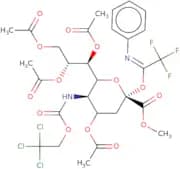
Prodotto fuori produzione4,7,8,9-Ac4-Neu5Troc(2→O)-O-C(CF3)=NPh Methyl Ester
CAS:<p>4,7,8,9-Ac4-Neu5Troc(2→O)-O-C(CF3)=NPh Methyl Ester is a glycosylated peptide that is conjugated with an acetate ester. This compound is a member of the Acetyl Neu5Ac family of glycoconjugates that are found on the surface of cells and are involved in cell-cell interactions and immune responses. 4,7,8,9-Ac4-Neu5Troc(2→O)-O-C(CF3)=NPh Methyl Ester has been shown to inhibit bacterial growth by interfering with the synthesis of bacterial cell walls.</p>Formula:C29H32N2O14Cl3F3Purezza:Min. 95%Peso molecolare:795.92 g/molAMC
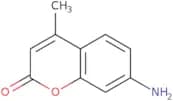
CAS:<p>AMC is a peptide that acts as an activator of the nicotinic acetylcholine receptor. AMC is a high-purity, ion channel ligand with a CAS No. 26093-31-2. It is used in life science research to study cell biology and pharmacology. AMC has been shown to be an inhibitor of the enzyme acetylcholinesterase (AChE) in rat brain slices and it has been reported that it can inhibit the proliferation of human leukemia cells.END></p>Formula:C10H9NO2Purezza:Min. 95%Peso molecolare:175.18 g/molBig Endothelin-1 (Human, 1-38)
CAS:<p>This product has disulfide bonds between Cys1-Cys15 and Cys3-Cys11 and is available as a 0.1mg vial. Big Endothelin-1 (Human, 1-38) is part of the full lengthed 29 amino acid peptide Big Endothlin-1 which is a precursor peptide of the vasoconstrictorEndothelin-1 (ET-1). ET-1 exhibits vasoconstrictive properties and is an activator of endothelin G-protein coupled receptors. Furthermore ET-1 is produced when inflammation, vascular stress or hypoxia occurs. In vivo Big Endothelin-1 has a greater half life compared to ET-1 and therefore makes it useful to study secretory activity in the endothelial system.<br>Overall Big Endothelin-1 (Human, 1-38) can be used as a research tool for studying protein interactions, receptor activation and function, and ligand binding. This peptide is also used in pharmacology to study the effects of therapeutic agents on receptor activity and expression.</p>Formula:C189H282N48O56S5Purezza:Min. 95%Peso molecolare:4,282.9 g/molNHS-dPEG®4-( m-dPEG®24)3-Ester
CAS:<p>NHS-dPEG®4-( m-dPEG®24)3-Ester is a PEG compound with two different functional groups (also known as heterobifunctional). Unlike homobifunctional PEG compounds (same functional group on both ends), this type of compounds are more versatile as have two different anchor points. NHS-dPEG®4-( m-dPEG®24)3-Ester is used as a linker and spacer to add a PEG moiety, via pegylation (a bioconjugation technique) to proteins, peptides, oligonucleotides, small molecules and nanoparticles.</p>Formula:C15H24N4O8Purezza:Min. 95%Peso molecolare:388.37 g/mol