Substrati enzimatici
I substrati enzimatici sono molecole su cui agiscono gli enzimi per catalizzare reazioni chimiche. Il substrato si lega al sito attivo dell'enzima, dove subisce una trasformazione specifica per formare il prodotto della reazione. I substrati enzimatici sono strumenti essenziali nella ricerca per studiare la cinetica enzimatica, la specificità e il meccanismo d'azione. Sono utilizzati anche in saggi diagnostici e studi biochimici. Presso CymitQuimica, offriamo una selezione diversificata di substrati enzimatici di alta qualità per supportare le vostre ricerche in enzimologia e biochimica.
Sottocategorie di "Substrati enzimatici"
Trovati 1527 prodotti di "Substrati enzimatici"
Ordinare per
Purezza (%)
0
100
|
0
|
50
|
90
|
95
|
100
D-Luciferin Firefly, sodium salt monohydrate
CAS:<p>Water soluble substrate for firefly luciferase.</p>Formula:C11H9N2NaO4S2Purezza:Min. 99.0 Area-%Peso molecolare:320.32 g/mol6-(b-D-Galactopyranosyloxy)-9-(4-methoxy-2-methylphenyl)-3H-xanthen-3-one
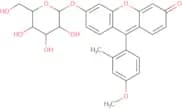
CAS:<p>6-(b-D-Galactopyranosyloxy)-9-(4-methoxy-2-methylphenyl)-3H-xanthen-3-one (MGBG) is a hydrophilic activatable fluorescence probe that has been shown to be effective in photodynamic therapy. MGBG is activated by light and has a high affinity for esterases, which are found in many tissues. The fluorescence of the MGBG is quenched by the esterase enzymes, but when it is exposed to light and oxygen, the probe becomes activated and its fluorescence increases. MGBG can be used as a fluorescent probe for intraperitoneal tumor resection or as a fluorescent imaging agent in optical microscopy.</p>Purezza:Min. 95%Peso molecolare:494.49 g/molLuc-Enterobacteria Na
<p>Luc-Enterobacteria Na is a fluorogenic substrate that can be used for the detection of Enterobacteriaceae. This product has been shown to have high purity and a CAS number. Luc-Enterobacteria Na is also conjugated with an enzyme substrate, making it suitable for detecting the presence of bacterial colonies in culture media.</p>Purezza:Min. 95%Aldol® 515 acetate, Biosynth Patent: EP 2427431 and US 8940909
CAS:<p>Aldol® 515 acetate is a chromogenic and fluorogenic substrate, used for detection of esterase activity. The colorless product is cleaved by purified esterase, or esterase secreted by microorganisms in liquid or solid media, yielding a red color and red fluorescence signal when Aldol® 355 fluorescence enhancer or a suitable matrix is present. Aldol® 515 acetate can be used under aerobic and anaerobic conditions. Well detectable color/fluorescence of bacterial colonies or liquid cultures is obtained within 16-48 h. In the presence of a purified esterase, color and fluorescence develops within minutes to few hours.</p>Formula:C25H22N2O3Purezza:Min. 95.0 Area-%Peso molecolare:398.45 g/mol4-Methylumbelliferyl b-D-galactopyranoside-6-sulphate sodium salt - Moscerdam™ biochemical purity
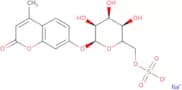
CAS:4-MU-Gal-6S (M4A) is a fluorogenic substrate of galactose-6-sulfate sulfatase (GALNS), used for the diagnosis of Mucopolysaccharidosis IV type A (MPS IV A). MPS IV, also known as Morquio syndrome, is a rare metabolic disorder in which the human body cannot process glycosaminoglycans (GAGs). MPS IV A is caused by the deficiency of the enzyme N-acetyl-galactosamine-6-sulfatase resulting in accumulation of keratan and chondroitin sulfate in tissues. M4A is used as the GALNS substrate in the anti-lysosomal enzyme antibody assay for the treatments of lysosomal storage disorders (LSDs) with enzyme replacement therapies (ERTs).Formula:C16H17NaO11SPurezza:Min. 97 Area-%Colore e forma:White PowderPeso molecolare:440.36 g/mol2-Naphthyl caprylate
CAS:<p>2-Naphthyl caprylate is a substrate that is employed in an assays for carboxylesterase and lipase and when hydrolyzed, produces 2-naphthol, a compound that can also be identified via fluorescence analysis. By combining it with a diazonium salt, the formation of the corresponding azo dye occurs. In particular, this substrate is used to detect the extracellular lipase of Pseudomonas fluorescens B52.</p>Formula:C18H22O2Purezza:Min. 95%Colore e forma:White PowderPeso molecolare:270.37 g/mol5-Bromo-4-chloro-3-indolyl a-L-rhamnoside
<p>5-Bromo-4-chloro-3-indolyl a-L-rhamnoside is a chromogenic substrate used to detect the specific enzymatic activity of alpha-L-rhamnosidase. After cleavage, 5-bromo-4-chloro-indoxyl is released, resulting in a blue to blue-green color change in bacterial colonies or media. 5-Bromo-4-chloro-3-indolyl a-L-rhamnoside is used in bacterial rhamnose metabolism studies (e.g. E. coli).</p>Formula:C14H15BrClNO5Purezza:Min. 95%Colore e forma:SolidPeso molecolare:392.63 g/mol4-Methylumbelliferyl-β-D-galactopyranoside
CAS:<p>Fluorogenic substrate for β-D-galactosidase yielding a blue fluorescent solution upon cleavage.</p>Formula:C16H18O8Purezza:Min. 98.0 Area-%Peso molecolare:338.32 g/mol5-Bromo-4-chloro-3-indoxyl-N-acetyl-β-D-galactosaminide
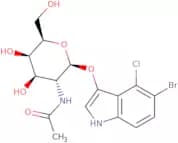
CAS:<p>5-Bromo-4-Chloro-3-Indoxyl-N-Acetyl-Beta-D-Galactosaminide is a chromogenic substrate for detecting beta-galactosidase and GalNAc-transferase enzymes. Upon hydrolysis by the enzyme, it produces a blue-green colored compound that can be detected visually or measured spectrophotometrically. This substrate is useful in characterizing the activity of Beta-Galactosidase and GalNAc-transferase enzymes involved in glycobiology research and diagnostic applications.</p>Formula:C16H18BrClN2O6Purezza:Min. 98 Area-%Colore e forma:Crystalline PowderPeso molecolare:449.68 g/mol4-Methylumbelliferyl 3-deoxy-D-glycero-a-D-galacto-2-nonulosonic acid sodium salt
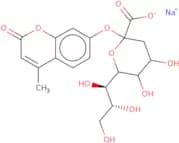
CAS:<p>4-Methylumbelliferyl 3-deoxy-D-glycero-a-D-galacto-2-nonulosonic acid sodium salt is a fluorogenic substrate that can be used to detect enzyme activity. It reacts with the enzyme β-galactosidase, which hydrolyzes lactose in the presence of oxygen and hydrogen peroxide. The product is 4methylumbelliferone, which emits light in the presence of luciferin and an oxidizing agent. This product is used for diagnostics, food testing, and environmental testing. CAS No. 123269-95-4</p>Purezza:Min. 95%Peso molecolare:489.41 g/mol5-Bromo-6-chloro-3-indolyl a-D-galactopyranoside
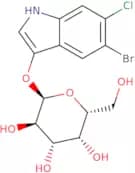
CAS:<p>5-Bromo-6-chloro-3-indolyl a-D-galactopyranoside is a chromogenic substrate that yields a magenta-colored product after cleavage. The chromophore 5-bromo-6-chloro-indoxyl is released, generating the observable color. It is used in glycolipid metabolism studies.</p>Formula:C14H15BrClNO6Colore e forma:White to off-white solid.Peso molecolare:408.63 g/mol2-Naphthyl-β-D-Glucuronide Sodium Salt
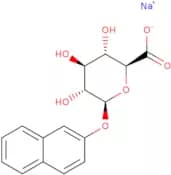
CAS:<p>2-Naphthyl-beta-D-glucuronide sodium salt is an enzyme substrate to detect beta-glucuronidase. The enzyme cleaves the glycosidic bond in 2-naphthyl-beta-D-glucuronide to release 2-naphtol and glucuronic acid. Beta-glucuronidase activity assays are important in many fields such as cancer research, as the enzyme is expressed in some tumors and its activity can be targeted for cancer therapy. The enzyme has also an important role in drug metabolism as it recognizes and binds to drug glucuronide conjugate (as 2-naphthyl-beta-D-glucuronide) facilitating its hydrolysis to release the active part. 2-Naphthyl-beta-D-glucuronide sodium salt has a higher solubility as it is in its salt form.</p>Formula:C16H15NaO7Purezza:Min. 95%Colore e forma:PowderPeso molecolare:342.28 g/mol2-Nitrophenyl-N-acetyl-β-D-glucosaminide
CAS:<p>Chromogenic β-Glucosaminidase substrate yielding a yellow absorbent solution upon cleavage.</p>Formula:C14H18N2O8Purezza:Min. 99 Area-%Peso molecolare:342.31 g/molAldol® 470 choline phosphate, Biosynth Patent: EP 2427431 and US 8940909
CAS:<p>Aldol® 470 choline phosphate is a chromogenic and fluorogenic enzyme substrate used for detection of phosphatidyl-choline specific phospholipase C (PC-PLC, EC 3.1.4.3) activity. The colorless product is cleaved by PC-PLC positive microorganisms in liquid or solid media, yielding a yellow color and green fluorescence. Aldol® 470 choline phosphate therefore, enables the detection and identification of PC-PLC positive pathogenic bacteria, such as, Clostridium perfringens, Pseudomonas aeruginosa, Helicobacter pylori, Legionella pneumophila, Bacillus cereus, Bacillus anthracis, Listeria monocytogenes, and others. Aldol® 470 choline phosphate can be used under aerobic and anaerobic conditions.</p>Formula:C28H31N2O7PPurezza:Min. 95%Colore e forma:PowderPeso molecolare:538.53 g/mol6-Chloro-3-indoxyl-3-acetate
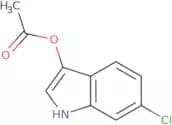
CAS:<p>6-Chloro-3-indoxyl-3-acetate is a chromogenic substrate for carboxylesterase yielding a salmon colored precipitate upon cleavage. Mainly used in histochemistry.</p>Purezza:Min. 95%Colore e forma:White PowderPeso molecolare:209.63 g/molAquaSpark® β-D-glucuronide, 10 mM in DMSO, Ramot at Tel-Aviv University Ltd. Patent family WO 2017/130191
CAS:<p>For use in bacterial detection</p>Formula:C34H37ClO13Purezza:Min. 95%Colore e forma:Clear LiquidPeso molecolare:688.19 g/mol4-Methylumbelliferyl-β-D-glucopyranoside
CAS:<p>Fluorogenic substrate for beta-glucosidase yielding a blue fluorescent solution. Used for the detection of beta-glucosidase as an indicator of Enterococci.</p>Formula:C16H18O8Purezza:Min. 99 Area-%Peso molecolare:338.32 g/mol4-Methylumbelliferyl-β-L-fucopyranoside
CAS:<p>4-Methylumbelliferyl-beta-L-fucopyranoside is a fluorogenic substrate that is used in food testing. It also has uses as a chromogenic substrate and a ligand for biological studies. 4-Methylumbelliferyl-beta-L-fucopyranoside is a conjugate of 4-methylumbelliferone and beta-D-fucopyranosyl ester, which is an enzyme substrate for the detection of phosphatases. This product can be used to detect the activity of phosphatase enzymes in various media, including culture media, environmental testing, and staining. 4MUFBPY also has chemiluminescent properties that can be used for bioluminescence assays.</p>Formula:C16H18O7Peso molecolare:322.31 g/molRef: 3D-M-5541
1gPrezzo su richiesta5gPrezzo su richiesta250mgPrezzo su richiesta500mgPrezzo su richiesta2500mgPrezzo su richiesta-Unit-ggPrezzo su richiesta4-Chloro-3-Indoxyl-1,3-diacetate
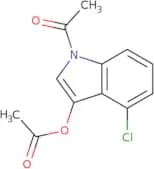
CAS:<p>4-Chloro-3-indoxyl-1,3-diacetate is a fluorogenic or chromogenic substrate used in food testing. It is also an enzyme substrate that can be used to detect the presence of bioluminescence. 4-Chloro-3-indoxyl-1,3-diacetate has been shown to have high purity and high quality for use in diagnostic kits. 4-Chloro-3-indoxyl-1,3-diacetate is a ligand that is conjugated with other molecules to form complexes for use in fluorescence and chemiluminescence experiments.</p>Purezza:Min. 95%Peso molecolare:251.67 g/molL-Lysyl-L-alanine 7-amido-4-methylcoumarin dihydrochloride
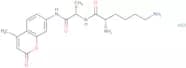
CAS:<p>L-Lysyl-L-alanine 7-amido-4-methylcoumarin dihydrochloride is a fluorogenic peptide substrate for aminopeptidase. This AMC peptide substrate is normally used to rapidly profile the N-terminal specificity of proteases.</p>Purezza:Min. 98.0 Area-%Colore e forma:Powder