Substrati enzimatici
I substrati enzimatici sono molecole su cui agiscono gli enzimi per catalizzare reazioni chimiche. Il substrato si lega al sito attivo dell'enzima, dove subisce una trasformazione specifica per formare il prodotto della reazione. I substrati enzimatici sono strumenti essenziali nella ricerca per studiare la cinetica enzimatica, la specificità e il meccanismo d'azione. Sono utilizzati anche in saggi diagnostici e studi biochimici. Presso CymitQuimica, offriamo una selezione diversificata di substrati enzimatici di alta qualità per supportare le vostre ricerche in enzimologia e biochimica.
Sottocategorie di "Substrati enzimatici"
Trovati 1527 prodotti di "Substrati enzimatici"
Ordinare per
Purezza (%)
0
100
|
0
|
50
|
90
|
95
|
100
Bis(4-methylumbelliferyl)phosphate
CAS:<p>Bis(4-methylumbelliferyl)phosphate is a fluorescent probe that can be used for the diagnosis of β-glucosidase. It has a phosphate group and can be used to study phosphodiesterases and phosphodiesters. Bis(4-methylumbelliferyl)phosphate is also a liposomal probe that can be used in kinetic studies. This compound has been shown to inhibit β-glucosidase, which is an enzyme found in human saliva and pancreatic juice, at high concentrations. The inhibition of this enzyme leads to the accumulation of glucose and galactose in the blood, which can lead to diabetes mellitus or cancer.</p>Formula:C20H15O8PPeso molecolare:414.31 g/molAquaSpark® Alkaline Phosphatase Substrate, 2 mM in DMSO, Ramot at Tel-Aviv University Ltd. Patent family WO 2017/130191
CAS:<p>AquaSpark® Alkaline Phosphatase Substrate is a chemiluminescent substrate for alkaline phosphatase (AP) detection in immunoassays, in particular in ELISA. AquaSpark® Alkaline Phosphatase Substrate is also a suitable substrate for protein (Western) blotting or nucleic acid blotting procedures using AP-conjugated antibodies. AquaSpark® probes offer unique advantages as they can work as single agents, they have ahigher efficiency and sensitivity over currently existing probes.</p>Formula:C21H24NaO9PPeso molecolare:474.38 g/molAquaSpark® α-D-galactoside, 10 mM in DMSO, Ramot at Tel-Aviv University Ltd. Patent family WO 2017/130191
CAS:<p>AquaSpark™ α-D-galactoside is a dioxetane-based substrate for the luminescence detection of α-galactosidase activity. It is the first single-compound chemiluminescent substrate commercially available for the detection of α-galactosidase activity. α-galactosidase assays are used in molecular biology to monitor the transcriptional activity of the GLA gene that is correlated with metabolic diseases or gene mutations. In microbiology the α-galactosidase activity is used to detect specific bacteria such as α-galactosidase positive Salmonella strains (Salmonella Enteritidis RKI 05/07992).</p>Formula:C34H39ClO12Peso molecolare:675.12 g/mol6-Chloro-3-indoxyl palmitate
CAS:<p>6-Chloro-3-indoxyl palmitate is a high quality, pure chemical reagent that can be used as a substrate for enzyme activity. It is a chromogenic substrate that is used in the detection of esterase activity. 6-Chloro-3-indoxyl palmitate is also used as a fluorogenic substrate in the presence of horseradish peroxidase and hydrogen peroxide to produce chemiluminescence. 6-Chloro-3-indoxyl palmitate has been shown to be an effective bioluminescent substrate for luciferase enzymes, such as firefly luciferase and Renilla luciferase.</p>Formula:C24H36ClNO2Purezza:Min. 98 Area-%Peso molecolare:406.01 g/molAquaSpark® 515 Singlet Oxygen Probe, Ramot at Tel-Aviv University Ltd. Patent family WO 2017/130191
CAS:<p>The AquaSpark® 515 Singlet Oxygen Probe (SOCL) is a highly selective and sensitive chemiluminescence probe for the detection of singlet oxygen (1O2). The SOCL probe reacts specifically with 1O2 to form an intermediate dioxetane that spontaneously decomposes to emit green light with extraordinary intensity</p>Formula:C21H23ClO4Purezza:Min. 95.0 Area-%Peso molecolare:374.13 g/molRef: 3D-A-8165_P00
5mgPrezzo su richiesta10mgPrezzo su richiesta25mgPrezzo su richiesta50mgPrezzo su richiesta2500µgPrezzo su richiesta-Unit-mgmgPrezzo su richiestaAquaSpark® Alkaline Phosphatase Detection Solution, Ramot at Tel-Aviv University Ltd. Patent family WO 2017/130191
CAS:<p>Alkaline phosphatase (AP) is a widely used marker enzyme in ELISA as the enzyme is easily conjugated with antibodies, is extremely stable, has high catalytic activity and a broad substrate spectrum. Highly sensitive sensing of alkaline phosphatase activity is therefore of great significance for the development of AP-based ELISA platforms. Our AquaSpark® phosphatase substrate is designed for the most sensitive ELISA and Western blot detection methods. AquaSpark® -based substrates work as single reagent without the need for enhancers, co-substrates or any additional reagent as opposite to traditional dioxetanes. In ELISA procedures the AquaSpark® phosphatase substrate solution is applied to the test at the last step of the procedure. Green light is emitted immediately if AP-conjugated (secondary) antibody is bound to its corresponding detecting (first) antibody.</p>Formula:C21H24NaO9PPeso molecolare:474.37 g/molAquaSpark® Broad Range Phosphatase Substrate, Ramot at Tel-Aviv University Ltd. Patent family WO 2017/130191
CAS:Chemiluminescence phosphatase substrate, broad pH range 6 - 10Formula:C28H30ClO10PPurezza:Min. 80 Area-%Peso molecolare:592.13 g/molRef: 3D-A-8197_P00
5mgPrezzo su richiesta10mgPrezzo su richiesta25mgPrezzo su richiesta50mgPrezzo su richiesta2500µgPrezzo su richiesta-Unit-mgmgPrezzo su richiesta5-Bromo-4-chloro-3-indoxyl phosphate, disodium salt sesquihydrate
CAS:Water soluble, chromogenic substrate for visualizing alkaline phosphatase activity. Produces a blueinsoluble end product that is detected visually when used together with nitroblue tetrazolium. The substrate system is versatile and functions in a variety of applications, including Northern, Southern, and Western blotting, in situhybridization, ELISAs and immunohistochemistry.Formula:C8H4BrClNNa2O4P·5(H2O)Purezza:Min. 98.0 Area-%Peso molecolare:397.45 g/molAldol® 514 inositol-phosphate, ammonium salt, Biosynth Patent: EP 2427431 and US 8940909
CAS:<p>Aldol® 514 inositol-phosphate is a chromogenic enzyme substrate used for detection of phosphatidylinositol specific phospholipase C (PI-PLC, EC 4.6.1.13). The colorless enzyme substrate is cleaved by PI-PLC positive microorganisms, yielding a red-orange color. The substrate thus enables the detection and identification of various bacteria, such as, pathogenic strains of Listeria, Clostridium, Bacillus, and Staphylococcus. Aldol® 514 inositol-phosphate is suitable for use under aerobic and anaerobic conditions.</p>Formula:C26H28BrClN3O10PPurezza:Min. 95.0 Area-%Peso molecolare:688.85 g/molAquaSpark® β-D-galactoside, lyophilized, Ramot at Tel-Aviv University Ltd. Patent family WO 2017/130191
Chemiluminescence beta-galactosidase substrateFormula:C34H39ClO12Peso molecolare:675.12 g/mol6-Bromo-2-naphthyl-alpha-D-galactopyranoside
CAS:<p>6-Bromo-2-naphthyl-alpha-D-galactopyranoside is a bioluminescent substrate for the enzyme luciferase that has been shown to be useful in detection of phenazines, antibiotics and other compounds in environmental testing. 6-Bromo-2-naphthyl-alpha-D-galactopyranoside can also be used for measurements of total microbial counts and for the measurement of the activity of enzymes such as beta galactosidase. It is also a ligand for the peroxidase enzyme, which makes it useful in staining techniques. 6BARG can be used as a fluorogenic substrate or as an indicator in chromogenic substrates. It is an important reagent for chemiluminescence and can also be used to measure the concentration of various substances.</p>Formula:C16H17BrO6Purezza:Min. 98 Area-%Peso molecolare:385.22 g/mol3,4-Cyclohexenoesculetine phosphate disodium
<p>Please enquire for more information about 3,4-Cyclohexenoesculetine phosphate disodium including the price, delivery time and more detailed product information at the technical inquiry form on this page</p>5-Bromo-4-chloro-3-indoxyl-beta-D-glucuronic acid, cyclohexylammonium salt monohydrate
CAS:<p>Chromogenic substrate for β-glucuronidase (GUS) yieldinga blue precipitate. It is used for detection of GUS+ bacterial colonies and has been reported as chromogenic substrate in a number of chromogenic E. coli / coliform culture media. About 95% of common E. coli possess β-D-glucuronidase activity. Such chromogenic culture media are used for detection and enumeration of E. coli in food samples such as meat, dairy products, shellfish and have clinical applications in the assessment of urinary infections. It has gained international acceptance as highly accurate test for the presence of E. coli in drinking water samples. It is also used for the detection of the expression of GUS (E. coli β-glucuronidase) gene fusion marker constructs in plants.</p>Formula:C20H28BrClN2O8Purezza:Min. 99.0 Area-%Peso molecolare:539.81 g/mol5-Bromo-6-chloro-3-indoxyl choline phosphate
CAS:<p>Please enquire for more information about 5-Bromo-6-chloro-3-indoxyl choline phosphate including the price, delivery time and more detailed product information at the technical inquiry form on this page</p>Formula:C13H17BrClN2O4PPurezza:Min. 99 Area-%Peso molecolare:411.63 g/molRef: 3D-B-7118
1gPrezzo su richiesta5gPrezzo su richiesta10gPrezzo su richiesta2500mgPrezzo su richiesta-Unit-ggPrezzo su richiesta3,4-Cyclohexenoesculetine-N-acetyl-glucosamine
<p>Please enquire for more information about 3,4-Cyclohexenoesculetine-N-acetyl-glucosamine including the price, delivery time and more detailed product information at the technical inquiry form on this page</p>Bronze-Gal
<p>Bronze-Gal (Bronze-beta-D-galactopyranoside) is a chromogenic indicator for beta-galactosidase activity. The colorless product is cleaved by lactose-utilizing bacteria in liquid media or on agar plates and yields a bronze colored precipitate. Bronze-Gal can also be used as detecting agent for beta-galactosidase activity in reporter gene assays or for identification of positive transformants on agar plates when using the α-complementation approach. Read more in the Application Notes.</p>Peso molecolare:443.57 g/mol6-Chloro-3-indoxyl butyrate
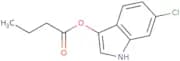
CAS:<p>6-Chloro-3-indoxyl butyrate is a chemiluminescent substrate that is used in diagnostics and research. It has been shown to be an excellent ligand for the detection of DNA and protein. 6-Chloro-3-indoxyl butyrate can also be used as a chromogenic substrate for the detection of alkaline phosphatase, acid phosphatase, or beta-galactosidase. This product is also used in food testing, enzyme substrates, and fluorogenic substrates.</p>Formula:C12H12ClNO2Purezza:Min. 99.0 Area-%Peso molecolare:237.69 g/molAquaSpark® caprylate, 10 mM in DMSO, Ramot at Tel-Aviv University Ltd. Patent family WO 2017/130191
CAS:<p>Esterases and lipases enzymes are widespread in all living cells, serving as important players in energy metabolism and in the recycling of cellular components. In microbiology C8-esterase activity can be used to detect Salmonella strains and more specifically, it also allows to distinguish them from other enteric bacteria. Likewise, Pseudomonas species can be detected as these organisms produce extracellular lipases. AquaSpark™ caprylate is a dioxetane-based chemiluminescent substrate forC8-esterase (C8E) and lipase activity. Upon hydrolytic cleavage byC8-esterase or lipase, AquaSpark™ caprylate spontaneously emits a strong green light. AquaSpark™ caprylate (A-8167_P00) is the firstsingle-compound chemiluminescent substrate commercially available for highly sensitive esterase and lipase assays in vitro and in vivo. The AquaSpark™ probes are superior probes for research and diagnostic applications. They offer unique advantages as they can work as single agents, they have a higher efficiency and sensitivity, and they do not need expensive additive when used in water.</p>Formula:C36H43ClO8Peso molecolare:639.18 g/molFLsharp™ - Phosphate, disodium salt
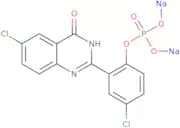
CAS:<p>FLsharp™ - Phosphate, disodium salt is a fluorogenic water soluble substrate for phosphatase enzymes. After cleavage of the substrate by phosphatase activity an insoluble product is formed that is highly fluorescent in the solid state. Upon UV irradiation this very stable fluorophore emits green light in the 530 nm range for an extended period of time. FLsharp™ - Phosphate is a unique substrate - optimized for the detection of phosphatase activity in solid matrices such as agar media, tissuesections or microscopic preparations. FLsharp™ - Phosphate, disodium salt is used in microbiology as asubstrate for bacterial phosphatases. The substrate is suitable to detect the specific phosphatase activity of S. aureus or C. perfringensin food samples or clinical samples. Colonies growing on plating media supplemented with FLsharp™ emit green light upon UV light excitation(Excitation max: 365 nm; emission max: 530 nm). The enzyme product formed from FLsharp™ in agar plating media enables high precision for the localization of the relevant colonies on the plate. As a result small bacteria colonies of phosphatase-positive bacteria can be detected already after a short incubation time. In cytochemical and histochemical imaging FLsharp™ - Phosphate, disodiumsalt can be used as a substrate for Alkaline Phosphatase (AP)-coupled antibodies. The fluorophore that is released from FLsharp™ - Phosphateby phosphatase activity will precipitate. This insoluble fluorophoreen ables a precise localization of the antibody-bound epitope in cells or tissues under a fluorescence microscope or fluorescence imaging system. The green fluorescence of FLsharp™ can be clearly differentiated from autofluorescence or counterstainings such as (blue) DAPI or (red) Alexafluorophores.</p>Formula:C14H7Cl2N2Na2O5PPurezza:Min. 95.0 Area-%Peso molecolare:431.08 g/mol4-(Hydroxymethyl)phenyl-α-D-galactopyranoside tetraacetate
CAS:<p>4-(Hydroxymethyl)phenyl-alpha-D-galactopyranoside tetraacetate is a substrate for enzymes that catalyze the hydroxylation of carbohydrates. It can be used as a substrate for peroxidase and beta-glucosidase, which are important in the production of natural products such as resveratrol, catechins, and lignin. 4-(Hydroxymethyl)phenyl-alpha-D-galactopyranoside tetraacetate is also a chromogenic substrate for chemiluminescence reactions. The product is available as a powder and can be used in diagnostic kits to detect the presence of enzymes or other substances in food or environmental samples.</p>Formula:C21H26O11Peso molecolare:454.43 g/mol