Substrati enzimatici
Sottocategorie di "Substrati enzimatici"
Trovati 1528 prodotti di "Substrati enzimatici"
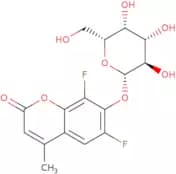
6,8-Difluoro-4-methylumbelliferyl β-D-galactopyranoside
CAS:6,8-Difluoro-4-methylumbelliferyl b-D-galactopyranoside, commonly known as DiFMUG, is a fluorogenic substrate to detect beta-galactosidase. It has higher sensitivity than the common MUG (4-methylumbelliferyl beta-D-galactopyranoside) subtrate.Formula:C16H16F2O8Purezza:Min. 95%Colore e forma:PowderPeso molecolare:374.29 g/molCrimson-Gal
Crimson-Gal (Crimson-beta-D-galactopyranoside) is a chromogenic indicator for beta-galactosidase activity. The colorless product is cleaved by lactose-utilizing bacteria in liquid media or on agar plates and yields a crimson colored precipitate. Crimson-Gal can also be used as detecting agent for beta-galactosidase activity in reporter gene assays or for identification of positive transformants on agar plates when using the α-complementation approach. Read more in the Application Notes.
Purezza:Min. 95%Bis(4-methylumbelliferyl)phosphate
CAS:Bis(4-methylumbelliferyl)phosphate is a fluorescent probe that can be used for the diagnosis of β-glucosidase. It has a phosphate group and can be used to study phosphodiesterases and phosphodiesters. Bis(4-methylumbelliferyl)phosphate is also a liposomal probe that can be used in kinetic studies. This compound has been shown to inhibit β-glucosidase, which is an enzyme found in human saliva and pancreatic juice, at high concentrations. The inhibition of this enzyme leads to the accumulation of glucose and galactose in the blood, which can lead to diabetes mellitus or cancer.
Formula:C20H15O8PPeso molecolare:414.31 g/molRef: 3D-B-3500
Prodotto fuori produzioneAquaSpark® α-D-galactoside, 10 mM in DMSO, Ramot at Tel-Aviv University Ltd. Patent family WO 2017/130191
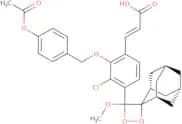
CAS:AquaSpark™ α-D-galactoside is a dioxetane-based substrate for the luminescence detection of α-galactosidase activity. It is the first single-compound chemiluminescent substrate commercially available for the detection of α-galactosidase activity. α-galactosidase assays are used in molecular biology to monitor the transcriptional activity of the GLA gene that is correlated with metabolic diseases or gene mutations. In microbiology the α-galactosidase activity is used to detect specific bacteria such as α-galactosidase positive Salmonella strains (Salmonella Enteritidis RKI 05/07992).
Formula:C34H39ClO12Peso molecolare:675.12 g/mol1-Naphthyl b-D-glucuronide sodium salt
CAS:1-Naphthyl b-D-glucuronide sodium salt is a chromogenic substrate commonly used to assay the activity of beta-glucuronidase enzymes. It is hydrolyzed by beta-glucuronidase to yield a yellow-colored product, 1-naphthol, which can be quantified spectrophotometrically. This substrate is widely used in diagnostic tests for detection of beta-glucuronidase activity, particularly in clinical microbiology for the identification of E. coli and other enteric bacteria. With its sodium salt form, it boasts increased solubility in aqueous solutions, ensuring seamless integration into various experimental settings.
Formula:C16H15NaO7Purezza:Min. 95%Colore e forma:PowderPeso molecolare:342.28 g/mol6-Chloro-3-indoxyl palmitate
CAS:6-Chloro-3-indoxyl palmitate is a high quality, pure chemical reagent that can be used as a substrate for enzyme activity. It is a chromogenic substrate that is used in the detection of esterase activity. 6-Chloro-3-indoxyl palmitate is also used as a fluorogenic substrate in the presence of horseradish peroxidase and hydrogen peroxide to produce chemiluminescence. 6-Chloro-3-indoxyl palmitate has been shown to be an effective bioluminescent substrate for luciferase enzymes, such as firefly luciferase and Renilla luciferase.
Formula:C24H36ClNO2Purezza:Min. 98 Area-%Peso molecolare:406.01 g/molAquaSpark® 515 Singlet Oxygen Probe, Ramot at Tel-Aviv University Ltd. Patent family WO 2017/130191
CAS:The AquaSpark® 515 Singlet Oxygen Probe (SOCL) is a highly selective and sensitive chemiluminescence probe for the detection of singlet oxygen (1O2). The SOCL probe reacts specifically with 1O2 to form an intermediate dioxetane that spontaneously decomposes to emit green light with extraordinary intensity
Formula:C21H23ClO4Purezza:Min. 95.0 Area-%Peso molecolare:374.13 g/molD-Luciferin-6-O b-D-galactopyranoside
CAS:Chemiluminescent substrate for b-galactosidase
Formula:C17H18N2O8S2Purezza:Min. 95 Area-%Colore e forma:Beige PowderPeso molecolare:442.47 g/molRef: 3D-EL28834
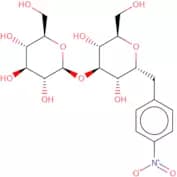
Prodotto fuori produzione4-Nitrophenyl 3-O-(β-D-glucopyranosyl)-α-D-glucopyranoside
4-Nitrophenyl 3-O-(beta-D-glucopyranosyl)-alpha-D-glucopyranoside is a chromogenic substrate for alpha-glucosidase. Upon hydrolysis, para-nitrophenol is released yielding a yellowish colour. 4-Nitrophenyl 3-O-(beta-D-glucopyranosyl)-alpha-D-glucopyranoside is used in different applications such as the Gaucher disease screening, carbohydrate metabolism studies
Formula:C18H25NO13Purezza:Min. 95%Peso molecolare:463.39 g/molRef: 3D-EN04815
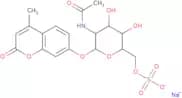
Prodotto fuori produzione4-Methylumbelliferyl 2-acetamido-2-deoxy-a-D-glucopyranoside-6-sulfate sodium salt - Moscerdam™ biochemical purity
CAS:A substrate used for the diagnosis of Sanfilippo disease type D (MPS IIID).
Formula:C18H20NNaO11SPurezza:Min. 95%Colore e forma:White PowderPeso molecolare:481.41 g/molRef: 3D-EM31027
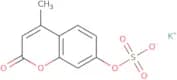
Prodotto fuori produzione4-Methylumbelliferyl sulfate potassium salt
CAS:4-Methylumbelliferyl sulfate potassium salt serves as a superior fluorogenic substrate in enzyme detection assays. Upon enzymatic hydrolysis, it releases a highly fluorescent 4-methylumbelliferone moiety, enabling real-time analysis and quantification of enzyme activities. This product is ideal for a variety of biological assay applications, including in vitro diagnostics, drug discovery, and research purposes. Its excellent sensitivity, specificity, and performance ensure accurate and consistent results every time.Formula:C10H7KO6SPurezza:Min. 98 Area-%Colore e forma:White PowderPeso molecolare:294.32 g/molLuc-Enterobacteria Na
Luc-Enterobacteria Na is a fluorogenic substrate that can be used for the detection of Enterobacteriaceae. This product has been shown to have high purity and a CAS number. Luc-Enterobacteria Na is also conjugated with an enzyme substrate, making it suitable for detecting the presence of bacterial colonies in culture media.
Purezza:Min. 95%Ref: 3D-EL175445
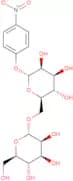
Prodotto fuori produzione4-Nitrophenyl 6-O-(a-D-mannopyranosyl)-a-D-mannopyranoside
CAS:4-Nitrophenyl 6-O-(alpha-D-mannopyranosyl)-alpha-D-mannopyranoside is a chromogenic substrate for alpha-mannosidase. Upon hydrolysis, para-nitrophenol is released yielding a yellowish colour. 4-Nitrophenyl 6-O-(alpha-D-mannopyranosyl)-alpha-D-mannopyranoside is used in different applications such as the Lysosomal storage disorder diagnosis (e.g., alpha-mannosidosis)
Purezza:Min. 95%Colore e forma:PowderPeso molecolare:463.39 g/molRef: 3D-EN06126
Prodotto fuori produzioneAquaSpark® 510 acetate, 10 mM in DMSO, Ramot at Tel-Aviv University Ltd. Patent family WO 2017/130191
CAS:Chemiluminescence substrate for C2-esterase (acetyl esterase)
Formula:C30H31ClO8Purezza:Min. 95%Colore e forma:Clear LiquidPeso molecolare:554.17 g/mol4-Methylumbelliferyl a-D-mannopyranoside
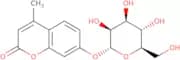
CAS:4-Methylumbelliferyl alpha-D-mannopyranoside (4-MU-a-D-Man) is a fluorogenic substrate used in activity assays for alpha-mannosidase. When it is hydrolyzed by alpha-mannosidase, it produces a fluorescent compound, 4-methylumbelliferone (4-MU). 4-MU-a-D-Man is often used in medical research to monitor the activity of alpha-mannosidase, which is important in lysosomal storage diseases. In addition, 4-Methylumbelliferyl alpha-D-mannopyranoside has been used to study the the activity of concanavalin A, a lectin that specifically binds to alpha-D-mannopyranosyl and alpha-D-glucopyranosyl residues on various glycoproteins. The use of this fluorogenic enzyme substrate permits study the degree of alpha-D-mannosidic linkage cleavage by the enzyme.Formula:C16H18O8Purezza:Min. 98 Area-%Colore e forma:White Off-White PowderPeso molecolare:338.31 g/mol4-Nitrophenyl β-D-xylobioside
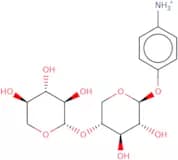
CAS:4-Nitrophenyl beta-D-xylobioside is a chromogenic substrate for xylanase. Upon hydrolysis, para-nitrophenol is released yielding a yellowish colour. 4-Nitrophenyl beta-D-xylobioside is used in different applications such as the Xylan degradation studies, paper/pulp industry applicationsFormula:C16H21NO11Purezza:Min. 95%Colore e forma:White PowderPeso molecolare:403.34 g/molRef: 3D-EN15454
Prodotto fuori produzione4-Methylumbelliferyl a-D-mannopyranoside 6-sulfate sodium salt
4-Methylumbelliferyl alpha-D-mannopyranoside 6-sulfate sodium salt is a fluorogenic substrate for sulfatase. After enzymatic cleaveage, free 4-methylumbelliferone (also known as hymecromone) is released, exhibiting blue fluorescence upon excitation with UV light. The strongest fluorescence of 4-methylumbelliferone requires deprotonation of the hydroxyl group (thus requires alkaline pH), with a maximal fluorescence intensity obtained with excitation at 350 to 370 nm and emission at 440 to 470 nm. The use of 4-methylumbelliferyl alpha-D-mannopyranoside 6-sulfate sodium saltas a substrate for measuring the sulfatase activity is used for Mucopolysaccharidosis (MPS) screening and other lysosomal storage disorder diagnosis.
Formula:C16H17O11SNaPurezza:Min. 98 Area-%Colore e forma:White PowderPeso molecolare:440.36 g/mol2-Amino-5-pyridyl 2-acetamido-3,4,6-tri-O-acetyl-2-deoxy-a-D-galactopyranose
2-Amino-5-pyridyl 2-acetamido-3,4,6-tri-O-acetyl-2-deoxy-a-D-galactopyranose is a chromogenic substrate for the enzyme β galactosidase. It is used to detect the presence of β galactosidase in bacterial cultures. The substrate is soluble in water and has a long shelf life. 2APAAG can be used for food testing and environmental testing as it produces a bioluminescent signal when cleaved by β galactosidase.
Purezza:Min. 95%2-Chloro-4-nitrophenyl-β-D-cellotetraoside
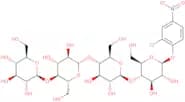
CAS:2-chloro-4-nitrophenyl-beta-D-cellotetraoside is a chromogenic substrate for measuring cellulase activity and other glycosyl hydrolases. The release of 2-chloro-4-nitrophenol can be detected at 405 nm.Formula:C30H44ClNO23Purezza:Min. 95%Colore e forma:PowderPeso molecolare:822.12 g/molL-Pro-PAB-Resorufin
L-Pro-PAB-Resorufin is a highly sensitive chromogenic and fluorogenic indicator for L-proline aminopeptidase activity and related enzymes occurring in prokaryotic as well as eukaryotic organisms. After removal of the L-proline amide substructure by enzymatic hydrolysis and spontaneous elimination of the para-amino-benzyl (PAB) spacer, the initially orange colored compound yields an intense pink color. In addition, the released chromophor is an excellent fluorophor showing red fluorescence at an emission wavelength of 580 to 600 nm when excited at 560 to 570 nm.
Formula:C24H21N3O4Purezza:Min. 70 Area-%Colore e forma:PowderPeso molecolare:415 g/molRef: 3D-FP181502
Prodotto fuori produzioneBis-(4-methylumbelliferyl)phosphate
CAS:Bis-(4-methylumbelliferyl)phosphate, or bis-4MU-phopshate, is a fluorogenic substrate used to study phosphatase activity, particularly in enzyme-linked immunosorbent assays (ELISAs).
Formula:C20H15O8PPurezza:Min. 95 Area-%Colore e forma:White PowderPeso molecolare:414.3 g/mol5-Bromo-6-chloro-3-indoxyl choline phosphate
CAS:Please enquire for more information about 5-Bromo-6-chloro-3-indoxyl choline phosphate including the price, delivery time and more detailed product information at the technical inquiry form on this page
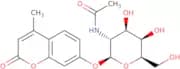
Formula:C13H17BrClN2O4PPurezza:Min. 99 Area-%Peso molecolare:411.63 g/mol4-Methylumbelliferyl 2-acetamido-2-deoxy-b-D-galactopyranoside
CAS:Please enquire for more information about 4-Methylumbelliferyl 2-acetamido-2-deoxy-b-D-galactopyranoside including the price, delivery time and more detailed product information at the technical inquiry form on this page
Formula:C18H21NO8Purezza:Min. 98 Area-%Colore e forma:White PowderPeso molecolare:379.36 g/molRef: 3D-EM06390
Prodotto fuori produzione5-Cyano-3-indolyl-β-D-galactopyranoside
5-Cyano-3-indolyl-b-D-galactopyranoside is a chemiluminescent substrate that can be used to measure the activity of esterases and other enzymes. It has been shown to be a potent inhibitor of human erythrocyte esterase. The compound is also a potent inducer of bioluminescence in bacteria, which can be used for diagnostic applications. 5-Cyano-3-indolyl-b-D-galactopyranoside is a fluorogenic substrate that can be used to measure the activity of phosphatases and other enzymes. This product has an enzyme substrate function, which can be used for enzyme assays. 5CIGP is useful for measuring high levels of enzyme activity in the presence of strong inhibitors such as phenylmethylsulfonyl fluoride (PMSF).
Formula:C15H16N2O6Purezza:Min. 95%Colore e forma:PowderPeso molecolare:320.3 g/mol2-Nitrophenyl b-D-cellobioside
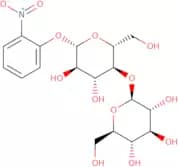
CAS:Chromogenic substrate targeting cellulases
Formula:C18H25NO14Purezza:Min. 98 Area-%Colore e forma:White PowderPeso molecolare:463.39 g/molRef: 3D-EN03286
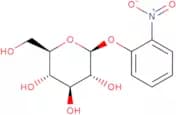
Prodotto fuori produzione2-Nitrophenyl b-D-glucopyranoside
CAS:Chromogenic substrate for beta-glucosidase
Formula:C12H15NO8Purezza:Min. 99 Area-%Colore e forma:Off-White Yellow PowderPeso molecolare:301.25 g/mol3,4-Cyclohexenoesculetine-N-acetyl-glucosamine
Please enquire for more information about 3,4-Cyclohexenoesculetine-N-acetyl-glucosamine including the price, delivery time and more detailed product information at the technical inquiry form on this page
Bronze-Gal
Bronze-Gal (Bronze-beta-D-galactopyranoside) is a chromogenic indicator for beta-galactosidase activity. The colorless product is cleaved by lactose-utilizing bacteria in liquid media or on agar plates and yields a bronze colored precipitate. Bronze-Gal can also be used as detecting agent for beta-galactosidase activity in reporter gene assays or for identification of positive transformants on agar plates when using the α-complementation approach. Read more in the Application Notes.
Peso molecolare:443.57 g/molRef: 3D-B-8935
Prodotto fuori produzione4-Trifluoromethylumbelliferyl b-D-glucuronide potassium salt
CAS:4-Trifluoromethylumbelliferyl b-D-glucuronide potassium salt is a fluorogenic substrate for beta-glucuronidase. Upon hydrolysis, the fluorogenic moiety (blueish) 4-trifluoromethylumbelliferone (also known as TFMU) is released. 4-Trifluoromethylumbelliferyl b-D-glucuronide potassium salt is commonly used in bacterial detection and for drug metabolism studies as well as lysosomal storage disorder screening.Formula:C16H12F3O9KPurezza:Min. 95 Area-%Colore e forma:White PowderPeso molecolare:444.35 g/molRef: 3D-ET11032
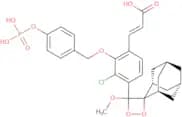
Prodotto fuori produzioneAquaSpark® Broad Range Phosphatase Substrate, 2 mM in DMSO, Ramot at Tel-Aviv University Ltd. Patent family WO 2017/130191
CAS:Chemiluminescent phosphatase substrate in a wide pH range (pH 6 - 10)
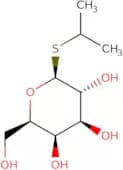
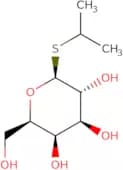
Formula:C28H30ClO10PColore e forma:Clear LiquidPeso molecolare:592.96 g/molIsopropyl-beta-D-thiogalactopyranoside, approx. 15.0% dioxane
CAS:A non-metabolizable allolactose analogue, widely used in molecular biology for overexpression of recombinant proteins from inducible systems under the control of lac promoter. IPTG binds to the LacI repressor and causes its release from the lac operator, allowing gene expression to take place. Present in vectors of pGEX, pGEM-T, pET, pRSET, pMAL class and others.Formula:C9H18O5SPurezza:Min. 95%Colore e forma:PowderPeso molecolare:238.30 g/molRef: 3D-EI172355
Prodotto fuori produzione4-Methylumbelliferyl α-L-idopyranosiduronic acid 2-sulfate disodium salt
CAS:4-Methylumbelliferyl alpha-L-idopyranosiduronic acid 2-sulfate disodium salt is a chromogenic substrate that is used in the detection of glycosidases. It reacts with enzymes such as alpha-amylase, beta-galactosidase, and beta-glucosidase to produce a fluorescent product. This product can be detected using a fluorometer or spectrophotometer. The CAS number for 4-methylumbelliferyl alpha-L-idopyranosiduronic acid 2-sulfate disodium salt is 1045020-74-3.
Formula:C16H14Na2O12SPurezza:Min. 99.0 Area-%Peso molecolare:476.32 g/mol5-Bromo-4-chloro-3-indolyl a-L-rhamnoside
5-Bromo-4-chloro-3-indolyl a-L-rhamnoside is a chromogenic substrate used to detect the specific enzymatic activity of alpha-L-rhamnosidase. After cleavage, 5-bromo-4-chloro-indoxyl is released, resulting in a blue to blue-green color change in bacterial colonies or media. 5-Bromo-4-chloro-3-indolyl a-L-rhamnoside is used in bacterial rhamnose metabolism studies (e.g. E. coli).
Formula:C14H15BrClNO5Purezza:Min. 95%Colore e forma:SolidPeso molecolare:392.63 g/molRef: 3D-EB170531
Prodotto fuori produzione4-Nitrophenyl decanoate
CAS:4-Nitrophenyl decanoate is a chromogenic substrate for lipase. Upon hydrolysis, para-nitrophenol is released yielding a yellowish colour. 4-Nitrophenyl decanoate is used in different applications such as the Pancreatic insufficiency diagnosis, lipid metabolism studies
Formula:C16H23NO4Purezza:Min. 97 Area-%Colore e forma:PowderPeso molecolare:293.36 g/molRef: 3D-EN29174
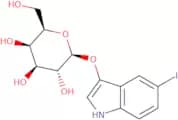
Prodotto fuori produzione5-Iodo-3-indolyl b-D-galactopyranoside
CAS:5-Iodo-3-indolyl b-D-galactopyranoside is a chromogenic substrate used for beta-galactosidase. It is incorporated into media or detection kits for rapid and direct identification of microorganisms.
Formula:C14H16INO6Purezza:Min. 98 Area-%Colore e forma:PowderPeso molecolare:421.18 g/mol4-Methylumbelliferyl butyrate
CAS:Methylumbelliferyl butyrate is structurally based on 4-methylumbelliferone and is a MOSCERDAM® substrate. It targets the esterase enzyme.
Formula:C14H14O4Purezza:Min. 95%Colore e forma:White PowderPeso molecolare:246.26 g/molFluorescein di-β-D-glucopyranoside
CAS:Fluorogenic substrate targeting beta-glucosidase
Formula:C32H32O15Purezza:Min. 95%Colore e forma:PowderPeso molecolare:656.59 g/molRef: 3D-EF04417
Prodotto fuori produzione5-Bromo-4-chloro-3-indoxyl-alpha-D-galactopyranoside
CAS:Chromogenic substrate for α-galactosidase yielding a blue precipitate. Used for species differentiation within the family Enterobacteriaceae and differentiation of Bifido bacteria species from Lactobacillus species.
Formula:C14H15BrClNO6Purezza:Min. 99 Area-%Peso molecolare:408.64 g/mol4-Chloro-1-naphthol
CAS:4-Chloro-1-naphthol is a chemical compound that has been used in clinical pathology to identify human immunoglobulin. It is also used as a potential biomarker for the diagnosis of Alzheimer's disease. 4-Chloro-1-naphthol binds to the amyloid fibrils and has anti-angiogenic effects in the hippocampus, which may be due to its ability to inhibit the formation of new blood vessels. This chemical compound can be used as a substrate molecule for electrochemical impedance spectroscopy and is used in wastewater treatment.
Formula:C10H7ClOPurezza:Min. 97.0 Area-%Peso molecolare:178.62 g/mol[2-(2-Thiazolylazo)-4-cresyl]-β-D-galactopyranoside
CAS:Please enquire for more information about [2-(2-Thiazolylazo)-4-cresyl]-β-D-galactopyranoside including the price, delivery time and more detailed product information at the technical inquiry form on this page
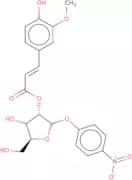
Formula:C16H19N3SO6Purezza:Min. 95%Colore e forma:PowderPeso molecolare:381.41 g/mol4-Nitrophenyl 2-O-trans-feruloyl-a-L-arabinofuranoside
CAS:4-Nitrophenyl 2-O-trans-feruloyl-alpha-L-arabinofuranoside is a chromogenic substrate for alpha-L-arabinofuranosidase. Upon hydrolysis, para-nitrophenol is released yielding a yellowish colour. 4-Nitrophenyl 2-O-trans-feruloyl-alpha-L-arabinofuranoside is used in different applications such as the Plant biomass analysis, bacterial arabinan degradation assays
Formula:C21H21NO10Purezza:Min. 95%Colore e forma:PowderPeso molecolare:447.39 g/molResorufin b-D-glucopyranoside
CAS:Resorufin b-D-glucopyranoside is a stable red fluorogenic galactosidase substrate.
Purezza:Min. 95%Colore e forma:Orange PowderPeso molecolare:375.33 g/molRef: 3D-ER05181
Prodotto fuori produzioneAquaSpark® Alkaline Phosphatase Substrate, 2 mM in DMSO, Ramot at Tel-Aviv University Ltd. Patent family WO 2017/130191
CAS:Chemiluminescence substrate for AP detection
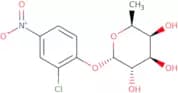
Formula:C21H24NaO9PColore e forma:Clear LiquidPeso molecolare:474.37 g/mol2-Chloro-4-nitrophenyl-alpha-L-fucopyranoside
CAS:Alternative chromogenic substrate for alpha-D-galactosidase
Formula:C12H14ClNO7Purezza:Min. 98 Area-%Colore e forma:White PowderPeso molecolare:319.69 g/molBCM® Staphylococcus aureus Plating medium
Please enquire for more information about BCM® Staphylococcus aureus Plating medium including the price, delivery time and more detailed product information at the technical inquiry form on this page
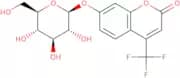
4-Trifluoromethylumbelliferyl b-D-glucopyranoside
CAS:4-Trifluoromethylumbelliferyl b-D-glucopyranoside is a fluorogenic substrate for beta-glucosidase. Upon hydrolysis, the fluorogenic moiety (blueish) 4-trifluoromethylumbelliferone (also known as TFMU) is released. 4-Trifluoromethylumbelliferyl b-D-glucopyranoside is commonly used in bacterial detection and in Gaucher disease diagnosis.
Purezza:Min. 95%Colore e forma:White To Off-White SolidPeso molecolare:392.28 g/molRef: 3D-ET04970
Prodotto fuori produzioneIPTG
CAS:Isopropyl-beta-D-thiogalactopyranoside (IPTG) is a non-metabolizable allolactose analogue, widely used in molecular biology for overexpression of recombinant proteins from inducible systems under the control of lac promoter. IPTG binds to the LacI repressor and causes its release from the lac operator, allowing gene expression of lac operon to take place. IPTG is present in vectors of pGEX, pGEM-T, pET, pRSET, pMAL class and others.
Formula:C9H18O5SPurezza:Min. 99 Area-%Colore e forma:White PowderPeso molecolare:238.3 g/molRef: 3D-EI07011
Prodotto fuori produzione4-Methylumbelliferyl-β-D-xylopyranoside
CAS:4-Methylumbelliferyl-β-D-xylopyranoside is a fluorescent probe that has been used to visualize the enzyme activities of glycosidases, such as endoglycosidase H and α-amylase. It is also used as a tool in structural analysis of oligosaccharides. 4-Methylumbelliferyl-β-D-xylopyranoside has been shown to inhibit collagenase activity in mice, which may be due to its ability to inhibit protein synthesis and cell division.
Formula:C15H16O7Purezza:Min. 99.0 Area-%Peso molecolare:308.29 g/mol5-Amino-3-indoxyl-β-D-galactopyranoside
5-Amino-3-indoxyl-b-D-galactopyranoside is a chromogenic substrate for the enzyme galactosidase. 5-Amino-3-indoxyl-b-D-galactopyranoside is used in diagnostic tests to identify the presence of lactose intolerance. It can also be used to detect traces of blood in food, water, and other substances. This product has a high purity that makes it suitable for conjugation applications.
Formula:C14H18N2O6Purezza:Min. 95%Peso molecolare:310.31 g/mol













![[2-(2-Thiazolylazo)-4-cresyl]-β-D-galactopyranoside](/_next/image/?url=https%3A%2Fstatic.cymitquimica.com%2Fproducts%2F3D%2Fthumb-webp%2FFT172198.webp&w=3840&q=75)