Substrati enzimatici
Sottocategorie di "Substrati enzimatici"
Trovati 1525 prodotti di "Substrati enzimatici"
4-Chloro-3-indoxyl-1,3-diacetate
CAS:4-Chloro-3-indoxyl-1,3-diacetate is a chromogenic substrate used in the identification of bile acids. It reacts with 4-chlorophenol to form a red dye. This compound is also used as a ligand for metal ions.
Formula:C12H10ClNO3Peso molecolare:251.67 g/molPhenytoin sodium
CAS:Prodotto controllatoPlease enquire for more information about Phenytoin sodium including the price, delivery time and more detailed product information at the technical inquiry form on this page
Formula:C15H11N2O2NaPeso molecolare:274.25 g/molRef: 3D-Q-201564
Prodotto fuori produzionePhenylethyl 2-acetamido-2-deoxy-b-D-glucopyranoside
CAS:Phenylethyl 2-acetamido-2-deoxy-b-D-glucopyranoside can be used to inhibit the growth of bacteria, yeast, and fungi. It is a yellow powder that has been shown to cause regression in tumor xenografts in mice. Phenylethyl 2-acetamido-2-deoxy-b-D-glucopyranoside inhibits cellular proliferation by blocking the synthesis of proteins and nucleic acids. This compound also has been shown to have an effect on the environment because it inhibits the growth of phytoplankton. Phenylethyl 2-acetamido-2-deoxy-b-D-glucopyranoside was found to disrupt bacterial gene expression profiles, which may be due to its ability to inhibit protein synthesis at the ribosome level.Purezza:Min. 95%Peso molecolare:325.36 g/mol2-Dodecylresorufin
CAS:2-Dodecylresorufin is a fluorescent probe that reacts with the hydroxyl radicals in the cell, which are generated by the enzyme superoxide dismutase. 2-Dodecylresorufin can be used to measure reactive oxygen species (ROS) and ROS-induced cellular damage. It is also used to study oxidative stress in vitro. The chemical structure of 2-dodecylresorufin contains a linker arm that provides a reversible linkage to the cell surface, allowing for extracellular measurements of reactive oxygen species (ROS). This compound has been shown to have high reactivity, making it useful for studying population dynamics and fluorescent techniques.
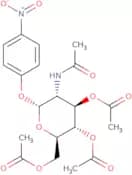
Purezza:Min. 95%Peso molecolare:381.51 g/mol4-Nitrophenyl 2-acetamido-3,4,6-tri-O-acetyl-2-deoxy-a-D-glucopyranoside
CAS:4-Nitrophenyl 2-acetamido-3,4,6-tri-O-acetyl-2-deoxy-a-D-glucopyranoside is a synthetic compound with the ability to inhibit the enzyme glutamicum. It is a radionuclide that can be used as a focusing agent for gamma cameras and has been shown to be effective against corynebacterium glutamicum and other organisms. 4NP2AG was synthesized by reacting nitrophenol with acetamide in the presence of an acid catalyst and hydrogenating the product. The synthesis employs precession chemistry, which involves rotating a molecule around its axis at high speed to increase its concentration in one area. This treatment leads to a higher yield of desired product. 4NP2AG contains two acetamido groups on the glucopyranoside moiety, which are esterified with nitrophenol and acetic acid respectively. These moieties are
Purezza:Min. 95%Peso molecolare:468.41 g/molRef: 3D-EN06131
Prodotto fuori produzioneLuciferin-β-D-glucoside, potassium salt
Luciferin-beta-D-glucoside, potassium salt is a conjugate of luciferin and beta-D-glucose. This compound is a substrate for enzymes that catalyze the oxidation of luciferin to generate light. It can be used in diagnostic tests as a chromogenic or fluorogenic substrate to detect specific substances, such as metals and microbes.
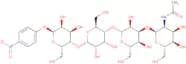
Formula:C17H17KN2O8S2Purezza:Min. 94 Area-%Peso molecolare:464.47 g/mol4-Nitrophenyl D-maltopentaoside
CAS:Chromogenic substrate targeting amylase and maltase
Formula:C36H55NO28Purezza:Min. 95%Peso molecolare:949.81 g/molLuc-Enterobacteria K
Please enquire for more information about Luc-Enterobacteria K including the price, delivery time and more detailed product information at the technical inquiry form on this page
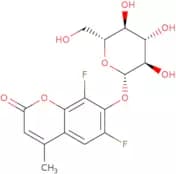
Formula:C17H17KN2O8S2Purezza:Min. 94 Area-%Peso molecolare:480.55 g/mol6,8-Difluoro-4-methylumbelliferyl b-D-glucopyranoside
CAS:6,8-Difluoro-4-methylumbelliferyl b-D-glucopyranoside is a versatile fluorogenic substrate suitable for the measurement of various glycosidase enzymes. Its unique structure allows for enhanced sensitivity and selectivity in enzyme assays, making it ideal for studying enzyme kinetics and screening of potential enzyme inhibitors.
Purezza:Min. 95%Peso molecolare:374.29 g/molRef: 3D-ED04972
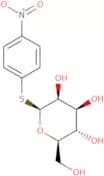
Prodotto fuori produzione4-Nitrophenyl b-D-thiomannopyranoside
CAS:4-Nitrophenyl b-D-thiomannopyranoside acts as a substrate for β-mannosidase and thioglycoligase. Upon enzymatic cleavage, these substrates release 4-nitrophenol, a yellow chromophore that can be detected spectrophotometrically at 405 nm, facilitating quantitative measurements of enzymatic activity. Consequently, these substrates are widely used in biochemical research, clinical diagnostics, and drug discovery for evaluating the function of specific enzymes in various biological processes.
Purezza:Min. 95%Peso molecolare:317.32 g/mol4-Nitrophenyl lacto-N-tetraoside
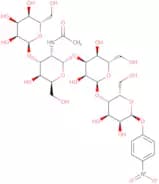
CAS:4-Nitrophenyl lacto-N-tetraoside is a chromogenic substrate for enzymes that cleave lactose-specific linkages, such as beta-galactosidases. Upon enzyme cleavage, the pNP group is released, resulting in a yellow-colored solution that can be spectrophotometrically quantified at 405 nm. This substrate is commonly used in detecting lactose hydrolysis activity, such as in dairy industry for production optimization studies, or in microbiology for bacterial lactose fermentation assays. Its tetrasaccharide structure resembles that of lactose and makes it a specific substrate for lactose-utilizing enzymes. The properties of 4-nitrophenyl lacto-N-tetraoside make it a useful tool in enzyme kinetics studies and screening of new lactose-utilizing microorganisms.
Purezza:Min. 95%Peso molecolare:828.72 g/molRef: 3D-EN44927
Prodotto fuori produzione4-Methylumbelliferyl 2-acetamido-2-deoxy-3-O-(a-L-fucopyranosyl)-b-D-glucopyranoside
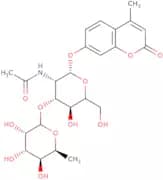
CAS:4-Methylumbelliferyl 2-acetamido-2-deoxy-3-O-(alpha-L-fucopyranosyl)-beta-D-glucopyranoside is a fluorogenic substrate for alpha-L-fucosidase. After enzymatic cleaveage, free 4-methylumbelliferone (also known as hymecromone) is released, exhibiting blue fluorescence upon excitation with UV light. The strongest fluorescence of 4-methylumbelliferone requires deprotonation of the hydroxyl group (thus requires alkaline pH), with a maximal fluorescence intensity obtained with excitation at 350 to 370 nm and emission at 440 to 470 nm. The use of 4-methylumbelliferyl 2-acetamido-2-deoxy-3-O-(alpha-L-fucopyranosyl)-beta-D-glucopyranosideas a substrate for measuring the alpha-L-fucosidase activity is used for fucosidosis diagnosis (deficiency of the enzyme alpha-L-fucosidase) and lysosomal storage disorder screening.Formula:C24H31NO12Purezza:Min. 95 Area-%Colore e forma:White PowderPeso molecolare:525.5 g/molRef: 3D-EM04792
Prodotto fuori produzione2,4-Dinitrophenyl 2-deoxy-2-fluoro-b-D-xylopyranoside
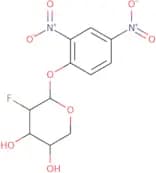
CAS:2,4-Dinitrophenyl 2-deoxy-2-fluoro-b-D-xylopyranoside (DNFX) is a transglycosylation reagent that can be used to inactivate enzymes that catalyze the synthesis of xylosides. DNFX undergoes a covalent reaction with these enzymes and inhibits them by binding to the active site. DNFX catalyses the reaction between xylose and nucleophiles such as hydroxide ions, thiols, or amines. DNFX also has a catalytic effect on electrospray ionization and can be used for the detection of nucleophile activity.Purezza:Min. 95%Colore e forma:White PowderPeso molecolare:318.21 g/mol2-Nitrophenyl 2-acetamido-2-deoxy-b-D-galactopyranoside
CAS:2-Nitrophenyl 2-acetamido-2-deoxy-b-D-galactopyranoside is a carboxymethyl derivative of the natural substrate of β-galactosidase, which is used as a substrate for the production of recombinant proteins in the corynebacterium glutamicum. The enzyme β-galactosidase hydrolyzes this substrate to produce an acid molecule and a sugar molecule. This product can be used in biotechnological processes for the production of recombinant proteins or other bioactive molecules. It can also be used in the isolation of nucleic acid from bacteria or fungi, or to study bacterial membrane transport systems. 2NPGAG can be expressed as a recombinant protein with expression vectors such as pET21a and pET24a. It has been shown that this product inhibits transport through membranes by binding to cellulose, which may be useful for studies on cellulose biosynthesis
Purezza:Min. 95%Peso molecolare:342.3 g/mol4-Nitrophenyl b-D-cellohexaoside
CAS:4-Nitrophenyl b-D-cellohexaoside is a substrate for many enzymes and can be used to detect the presence of these enzymes in biological samples. It can also be used to detect the presence of bacteria, fungi, parasites, and viruses. 4-Nitrophenyl b-D-cellohexaoside is an excellent substrate for enzyme reactions that produce a chromogenic or fluorogenic product. This product is often conjugated with other compounds such as antibodies or antigens to form an immunoassay. 4-Nitrophenyl b-D-cellohexaoside is made from a high purity chemical by a process called nitration with sodium nitrate and sulfuric acid.
Purezza:Min. 95%Peso molecolare:1,111.95 g/mol5-Octanoylaminofluoroscein di-b-D-glactopyranoside
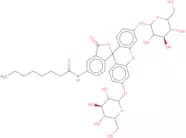
5-Octanoylaminofluoroscein di-b-D-glactopyranoside is a chemiluminescent substrate that can be used for the detection of peroxidase activity. It is a bifunctional substrate, which means it has two reactive groups: one at the 5 position and one at the 8 position. The 5-octanoylaminofluorescein reacts with hydrogen peroxide in a 1:1 ratio, emitting light at 490 nm. The 8-position amine reacts with 2,2'-azino-bis(3-ethylbenzthiazoline)6 sulphonic acid (ABTS) to produce an orange color product that acts as a chromogen. The substrate can be used in diagnostics, food testing, and enzyme substrates.
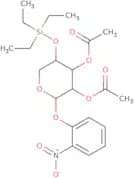
Purezza:Min. 95%Peso molecolare:797.8 g/mol2-Nitrophenyl 2,3-di-O-acetyl-4-O-triethylsilyl-b-D-xylopyranoside
CAS:2-Nitrophenyl 2,3-di-O-acetyl-4-O-triethylsilyl-b-D-xylopyranoside is a chromogenic substrate for enzmatic assays to measure xylosidase activity. It is a derivative of xylose that can be hydrolyzed by xylosidase to release the yellow-colored 2-nitrophenyl group, which can be detected spectrophotometrically. By modifying the xylose molecule with acetyl and triethylsilyl groups, the enzyme substrate becomes more stable and resistant to degradation. This substrate is commonly used in the study of plant biomass degradation and in the detection of xylosidase activity in microorganisms.
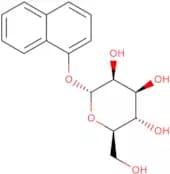
Purezza:Min. 95%Peso molecolare:469.56 g/mol1-Naphthyl-α-D-mannopyranoside
CAS:1-Naphthyl-alpha-D-mannopyranoside is a chromogenic substrate. It is used in diagnostics and as a reagent for enzymatic analysis of alpha-mannosidase activity in culture media, food testing, and environmental testing.
Formula:C16H18O6Purezza:Min. 95%Colore e forma:PowderPeso molecolare:306.31 g/molRef: 3D-EN66033
Prodotto fuori produzioneLuciferin-β-D-glucuronide, dipotassium salt
Luciferin-beta-D-glucuronide, dipotassium salt, is a bioluminescent substrate for beta-glucuronidase (GUS). It is used in various fields, including biomedical research, diagnostics, and imaging.
Formula:C17H14K2N2O9S2Purezza:Min. 95%Colore e forma:PowderPeso molecolare:531.94149Ref: 3D-EL175427
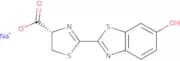
Prodotto fuori produzioneD-Luciferin Firefly, potassium salt - white
CAS:Water soluble substrate for firefly luciferase. Used for imaging the expression of the LUC marker gene and luciferase-fusion conjugates in living cells, tissues and organisms. Extensively utilized in reporter gene assays, immunoassays and hygiene monitoring. Endotoxin free product.
Formula:C11H7KN2O3S2Purezza:Min. 95%Colore e forma:PowderPeso molecolare:318.42 g/molRef: 3D-EL175434
Prodotto fuori produzioneD-Luciferin Firefly, sodium salt monohydrate - Endotoxin-free
CAS:Water soluble substrate for firefly luciferase, with low endotoxin.
Formula:C11H9N2NaO4S2Purezza:Min. 95%Peso molecolare:320.3 g/mol4-Nitrophenyl b-globo-N-tetraoside
CAS:4-Nitrophenyl beta-galactoside (pNP-Gal) is a chromogenic substrate commonly used in enzymatic assays to detect and quantify the presence of beta-galactosidase. It is hydrolyzed by the enzyme to release 4-nitrophenol, which produces a yellow color that can be measured spectrophotometrically. Similarly, 4-Nitrophenyl beta-glucoside (pNP-Glc) can be used to assay beta-glucosidase activity. 4-Nitrophenyl beta-globotrioside (pNP-Glo) is a similar compound that has been designed as a substrate for glycosidases that cleave terminal beta-galactosyl-(1->3)-N-acetylgalactosamine residues. In these assays, the release of 4-nitrophenol can be measured to determine the activity of the enzyme under study. The use of chromogenic substrates like pNP-Glo allows for the rapid and reliable detection of glycosidase activity in a variety of biological samples.
Purezza:Min. 95%Colore e forma:PowderPeso molecolare:828.72 g/molRef: 3D-EN44929
Prodotto fuori produzione4-Nitrophenyl-myo-inositol-1-yl phosphate
CAS:4-Nitrophenyl-myo-inositol-1-yl phosphate is a highly specific chromogenic substrate used for the detection, quantification, and characterization of phosphoinositide phosphatases. When cleaved by the target enzyme, it generates a highly absorbing 4-nitrophenyl moiety, producing a yellow color that can be measured spectrophotometrically. This versatile substrate is valuable in examining phosphoinositide phosphatase activity, enzyme kinetics, substrate specificity, and inhibition studies in various cellular processes, including signal transduction, lipid metabolism, and membrane trafficking.
Purezza:Min. 95%Peso molecolare:381.23 g/molLuciferin-beta-D-glucuronide, dipotassium salt
Luciferin-beta-D-glucuronide, dipotassium salt is a fluorescent compound that is used as a diagnostic tool. It can be used to detect the presence of enzymes, such as beta-galactosidase and beta-glucuronidase, in culture media or biological fluids. Luciferin-beta-D-glucuronide, dipotassium salt is also used for food testing and environmental testing.
Formula:C17H14K2N2O9S2Purezza:Min. 94.0 Area-%Peso molecolare:532.63 g/mol6-Hexanoylamino-4-methylumbelliferyl b-D-galactopyranoside
6-Hexanoylamino-4-methylumbelliferyl b-D-galactopyranoside is a chromogenic substrate for beta-galactosidase.Purezza:Min. 95%