Substrati enzimatici
Sottocategorie di "Substrati enzimatici"
Trovati 1525 prodotti di "Substrati enzimatici"
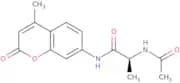
Acetyl-L-alanine 7-amido-4-methylcoumarin
CAS:Acetyl-L-alanine 7-amido-4-methylcoumarin is a fluorogenic substrate for aminopeptidase. The enzyme cleaves the N-terminal amino acids, yielding a blue fluorescent solution.
Formula:C15H16N2O4Purezza:Min. 98 Area-%Colore e forma:PowderPeso molecolare:288.3 g/mol4-Methylumbelliferyl-2-O-(α-L-fucopyranosyl)-β-L-fucopyranoside
4-Methylumbelliferyl-2-O-(alpha-L-fucopyranosyl)-beta-L-fucopyranoside is a fluorogenic substrate for alpha-L-fucosidase. After enzymatic cleaveage, free 4-methylumbelliferone (also known as hymecromone) is released, exhibiting blue fluorescence upon excitation with UV light. The strongest fluorescence of 4-methylumbelliferone requires deprotonation of the hydroxyl group (thus requires alkaline pH), with a maximal fluorescence intensity obtained with excitation at 350 to 370 nm and emission at 440 to 470 nm. The use of 4-methylumbelliferyl-2-O-(alpha-L-fucopyranosyl)-beta-L-fucopyranosideas a substrate for measuring the alpha-L-fucosidase activity is used for diagnosis of fucosidosis (defficiency of L-fucosidase).Purezza:Min. 95%Colore e forma:White/Off-White SolidPeso molecolare:468.45 g/molGlycyl-glycine 7-amido-4-methylcoumarin hydrochloride
CAS:Glycyl-glycine 7-amido-4-methylcoumarin hydrochloride is a synthetic peptide substrate used as a fluorogenic substrate for aminopeptidase.Formula:C14H16ClN3O4Purezza:Min. 95%Colore e forma:PowderPeso molecolare:325.75 g/mol5-Bromo-4-chloro-3-indoxyl-α-D-N-acetylneuraminic acid, cyclohexylammonium salt
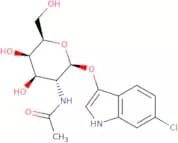
5-Bromo-4-chloro-3-indoxyl-alpha-D-N-acetylneuraminic acid, cyclohexylammonium salt is a Fluorogenic substrate used for the detection of an enzyme that converts sialic acid to fluorescein. This product has a high quality and purity with a CAS number. It is used in Culture media as a conjugate, Enzyme substrate, Food testing, High purity, Diagnostics, ligand, Chromogenic substrate, Environmental testing. The product has been tested and found to be safe for use with animals and humans.Formula:C25H35BrClN3O9Purezza:Min. 99.5 Area-%Peso molecolare:636.92 g/mol6-Chloro-3-indoxyl-N-acetyl-β-D-galactosaminide
CAS:Chromogenic substrate for N-Acetyl-β-D-galactosaminidase yielding a salmon-colored precipitate.Formula:C16H19ClN2O6Purezza:Min. 98.0 Area-%Peso molecolare:370.79 g/molRef: 3D-C-4762
1gPrezzo su richiesta50mgPrezzo su richiesta100mgPrezzo su richiesta250mgPrezzo su richiesta500mgPrezzo su richiesta-Unit-ggPrezzo su richiestaN-Acetyl-3,7-dihydroxyphenoxazine
CAS:N-Acetyl-3,7-dihydroxyphenoxazine is a fluorescent probe, which is synthesized from chemical precursors and used primarily in biochemical research. This compound acts by undergoing a chemical reaction with hydrogen peroxide, resulting in the formation of resorufin, a highly fluorescent compound. The distinctive property of this probe is its capacity to produce a measurable fluorescent signal upon interaction with hydrogen peroxide, making it an invaluable tool for detecting and quantifying this reactive oxygen species.
Formula:C14H11NO4Peso molecolare:257.24 g/molRef: 3D-J-100008
1gPrezzo su richiesta5gPrezzo su richiesta250mgPrezzo su richiesta500mgPrezzo su richiesta2500mgPrezzo su richiesta-Unit-ggPrezzo su richiestaAldol® 484 beta-D-galactopyranoside, Biosynth Patent: EP 2427431 and US 8940909
CAS:Aldol® 484 beta-D-galactopyranoside is a chromogenic enzyme substrate for beta-galactosidase activity. The colorless product is cleaved by lactose-utilizing bacteria in liquid or solid media, yielding intense red color. Aldol® 484 beta-D-galacto-pyranoside can also be used in beta-gal reporter gene assays or for identification of beta-gal positive transformants on agar. Aldol® 484 beta-D-galactopyranoside can be used under aerobic and anaerobic conditions.Formula:C26H24ClFN2O7Purezza:Min. 95%Colore e forma:PowderPeso molecolare:530.93 g/molCoelenterazine e
CAS:Coelenterazine e is a synthetic, fluorescent amino acid that can be used to measure calcium ion concentration. It binds to calcium ions and emits light when excited with blue light. Coelenterazine e is an analog of coelenteramide, which is a luminescent protein found in jellyfish. Coelenterazine e has been shown to emit fluorescence when it interacts with calcium ions, while coelenteramide emits bioluminescence instead. The emission of light from coelenterazine e is due to the stabilization of the molecule by calcium ions.Formula:C28H23N3O3Purezza:Min. 90.0 Area-%Peso molecolare:449.51 g/molRef: 3D-C-7020
5mgPrezzo su richiesta10mgPrezzo su richiesta25mgPrezzo su richiesta50mgPrezzo su richiesta100mgPrezzo su richiesta-Unit-mgmgPrezzo su richiesta4-Nitrophenyl b-L-arabinopyranoside
CAS:4-Nitrophenyl beta-L-arabinopyranoside is a chromogenic substrate for beta-L-arabinosidase. Upon hydrolysis, para-nitrophenol is released yielding a yellowish colour. 4-Nitrophenyl beta-L-arabinopyranoside is used in different applications such as the Bacterial arabinan degradation assays, gut microbiome analysis
Formula:C11H13NO7Purezza:Min. 98 Area-%Colore e forma:White PowderPeso molecolare:271.22 g/mol6-Bromo-2-naphthyl b-D-glucuronide
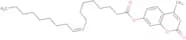
CAS:6-Bromo-2-naphthyl beta-D-glucuronide is a substrate for beta-glucuronidase, an enzyme involved in detoxification and bacterial metabolism. Upon enzymatic hydrolysis, it releases 6-bromo-2-naphthol, which forms a detectable dye when reacted with diazonium salts. This compound is widely used in microbiology to detecting E. coli in water testing and histochemical staining. 6-Bromo-2-naphthyl beta-D-glucuronide is also been used in cancer research studies. It has been found that some tumors are related to a high activity of beta-glucuronidase, responsible to reactivate the carcinogens and promote tumor progression, developing a drug resistance to chemotherapy.Formula:C16H15BrO7Purezza:Min 97%Colore e forma:White Off-White PowderPeso molecolare:399.2 g/mol4-Methylumbelliferyl oleate
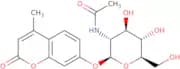
CAS:Methylumbelliferyl oleate is a MOSCERDAM® substrate targeting the lipase enzymeFormula:C28H40O4Purezza:Min. 90 Area-%Colore e forma:White PowderPeso molecolare:440.61 g/mol4-Methylumbelliferyl-N-acetyl-β-D-glucosaminide
CAS:Fluorogenic substrate for N-Acetyl-β-D-glucosaminidase yielding a blue fluorescent solution. Used for rapid identification of Salmonella species.Formula:C18H21NO8Purezza:Min. 99 Area-%Peso molecolare:379.37 g/molRef: 3D-M-5504
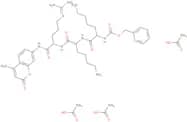
5gPrezzo su richiesta10gPrezzo su richiesta25gPrezzo su richiesta50gPrezzo su richiesta2500mgPrezzo su richiesta-Unit-ggPrezzo su richiestaN-CBZ-L-Lysyl-L-lysyl-L-arginine 7-amido-4-methylcoumarin triacetate
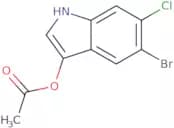
CAS:Prodotto controllatoN-CBZ-L-Lysyl-L-lysyl-L-arginine 7-amido-4-methylcoumarin triacetate is a synthetic peptide substrate used as a fluorogenic substrate for aminopeptidase.Formula:C35H51N9O7•(C2H4O2)3Purezza:Min. 95%Colore e forma:PowderPeso molecolare:903.03 g/mol5-Bromo-6-chloro-3-indolyl acetate
CAS:5-Bromo-6-chloro-3-indolyl acetate is a chromogenic substrate that yields a magenta-colored product after cleavage. The chromophore 5-bromo-6-chloro-indoxyl is released, generating the observable color. It is used in bacterial esterase detection (e.g. Staphylococcus spp.).
Formula:C10H7BrClNO2Purezza:Min. 98 Area-%Colore e forma:PowderPeso molecolare:288.52 g/mol4-Methylumbelliferyl-β-D-ribofuranoside
CAS:4-Methylumbelliferyl-beta-D-ribofuranoside is a chemical compound that belongs to the class of phenols. It has been found in Australian plants and animals. 4-Methylumbelliferyl-beta-D-ribofuranoside is used as a corrosion inhibitor. This chemical has been shown to be effective against corrosion in mammals.br>br> 4-Methylumbelliferyl-beta-D-ribofuranoside can also be used as a fluorescent probe for studying cell membrane activity.Formula:C15H16O7Purezza:Min. 99 Area-%Peso molecolare:308.29 g/molRef: 3D-M-6190
1gPrezzo su richiesta5gPrezzo su richiesta250mgPrezzo su richiesta500mgPrezzo su richiesta2500mgPrezzo su richiesta-Unit-ggPrezzo su richiesta4-Methylumbelliferyl 4-O-(α-L-fucopyranosyl)-β-D-galactopyranoside
CAS:4-Methylumbelliferyl 4-O-(alpha-L-fucopyranosyl)-beta-D-galactopyranoside is a fluorogenic substrate for alpha-L-fucosidase. After enzymatic cleaveage, free 4-methylumbelliferone (also known as hymecromone) is released, exhibiting blue fluorescence upon excitation with UV light. The strongest fluorescence of 4-methylumbelliferone requires deprotonation of the hydroxyl group (thus requires alkaline pH), with a maximal fluorescence intensity obtained with excitation at 350 to 370 nm and emission at 440 to 470 nm. The use of 4-methylumbelliferyl 4-O-(alpha-L-fucopyranosyl)-beta-D-galactopyranosideas a substrate for measuring the alpha-L-fucosidase activity is used for fucosidosis diagnosis and in screening studies of glycoprotein metabolism disorders.Formula:C22H28O12Purezza:Min. 95 Area-%Colore e forma:PowderPeso molecolare:484.45 g/mol4-Nitrophenyl 2-acetamido-2-deoxy-a-D-glucopyranoside
CAS:4-Nitrophenyl 2-acetamido-2-deoxy-a-D-glucopyranoside is a chromogenic pNP substrate specifically designed for the analysis of N-acetylglucosaminidase activity. Upon enzyme action, the substrate releases 4-nitrophenol, a yellow compound that can be detected by spectrophotometric methods, providing a reliable and sensitive means of quantifying enzyme activity. This versatile substrate is widely used in biochemical studies, disease diagnostics, and the enzyme production industry.Formula:C14H18N2O8Colore e forma:White Off-White PowderPeso molecolare:342.3 g/mol6-Chloro-3-indoxyl choline phosphate
CAS:6-Chloro-3-indoxyl choline phosphate is a chromogenic substrate for phosphatidylcholine-specific phospholipase C (PC-PLC) for the detection of mibrobial metabolites. The use of this specific substrate permits monitoring the activity of PC-PLC. This an important enzyme for the regulation of steady-state levels of phosphatidylcholine (PC) and diacylglycerol (DAG). Abnormally high levels of PC-PLC activity in various tissues have been linked to many disease progressions.Formula:C13H18ClN2O4PPurezza:Min. 99 Area-%Colore e forma:PowderPeso molecolare:332.72 g/mol4-Methylumbelliferyl sulfate, potassium salt
CAS:4-Methylumbelliferyl sulfate, potassium salt is a metabolite of 4-methylumbelliferone and has been used as a human serum marker. This molecule is conjugated with glucuronide and p-hydroxybenzoic acid to form the sulfate, glucuronide conjugate. The reaction mechanism of this compound is not known, but it is thought that the metabolism may involve oxidation at the methyl group. The analytical method for this compound can be performed using liquid chromatography coupled with tandem mass spectrometry (LC-MS/MS). This method can also be used in vitro to test antimicrobial activity against bacteria such as Escherichia coli, Staphylococcus aureus and Pseudomonas aeruginosa.Formula:C10H7KO6SPurezza:Min. 99.0 Area-%Peso molecolare:294.33 g/molRef: 3D-M-6200
5gPrezzo su richiesta10gPrezzo su richiesta25gPrezzo su richiesta50gPrezzo su richiesta100gPrezzo su richiesta-Unit-ggPrezzo su richiesta3-(7-Hydroxycoumarin-3-carboxamido)propyl 4-O-(b-D-galactopyranosyl)-b-D-glucopyranoside
3-(7-Hydroxycoumarin-3-carboxamido)propyl 4-O-(b-D-galactopyranosyl)-b-D-glucopyranoside is a fluorogenic substrate that is used for the detection of beta-galactosidase. It has been shown to be an efficient substrate for the enzyme beta galactosidase and can be used to detect this enzyme in cell culture media and other diagnostic applications. 3-(7-Hydroxycoumarin-3-carboxamido)propyl 4-O-(b-D-galactopyranosyl)-b-D-glucopyranoside can also be used as a chromogenic substrate, which is added to a reaction mixture containing beta galactosidase, where it is hydrolyzed by the enzyme to produce a blue color. This product also has food testing and environmental testing applications.Purezza:Min. 95%