Substrati enzimatici
Sottocategorie di "Substrati enzimatici"
Trovati 1526 prodotti di "Substrati enzimatici"
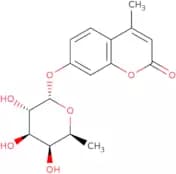
4-Methylumbelliferyl-α-L-fucopyranoside
CAS:Fluorogenic substrate for α-L-Fucosidase yielding a blue fluorescent solution upon cleavage.
Formula:C16H18O7Peso molecolare:322.32 g/molRef: 3D-M-5539
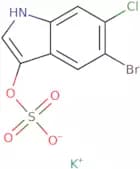
50mgPrezzo su richiesta100mgPrezzo su richiesta250mgPrezzo su richiesta-Unit-mgmgPrezzo su richiesta5-Bromo-6-chloro-3-indolyl sulfate potassium salt
CAS:5-Bromo-6-chloro-3-indolyl sulfate potassium salt is a fluorogenic substrate that can be used for food testing. It is a conjugate of 5-bromo-6-chloroindolylsulfate and potassium, which is dissolved in buffer solution. This product can also be used as a chromogenic substrate in environmental testing, an enzyme substrate in diagnostics, and a ligand for bioluminescence. It has high purity and quality, and can be used for chemiluminescence or bioluminescence. The CAS number for this product is 6581-24-4.Formula:C8H4BrClNO4S·KPurezza:Min. 95%Colore e forma:PowderPeso molecolare:364.64 g/mol1-Naphthyl β-D-mannopyranoside
CAS:1-Naphthyl β-D-mannopyranoside is a chromogenic (also fluorogenic) substrate. After cleavage, 1-naphthol is released and is used to quantify beta-mannosidase activity.Formula:C16H18O6Purezza:Min. 95%Colore e forma:PowderPeso molecolare:306.31 g/mol2-Chloro-4-nitrophenyl a-D-maltotrioside
CAS:2-Chloro-4-nitrophenyl a-D-maltotrioside (2CNP) is a potent hypoglycemic agent that has been shown to decrease postprandial blood glucose levels in humans. 2CNP is a white crystalline solid that is soluble in water and ethanol. The transfer reactions of 2CNP are enhanced by benzalkonium chloride, which forms an organic complex with the drug. The optimum concentration for the hypoglycemic effect of 2CNP is determined to be 10 μM, which can be detected using an optical sensor. This compound also inhibits α-amylase and other enzymes involved in carbohydrate metabolism, leading to the accumulation of glycogen and lowering the blood glucose level.
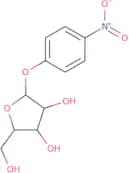
Formula:C24H34CiNO18Purezza:Min. 95%Colore e forma:Off-White Yellow PowderPeso molecolare:659.98 g/mol4-Nitrophenyl b-L-arabinofuranoside
CAS:Chromogenic substrate targeting alpha-L-arabinofuranosidase
Purezza:Min. 95%Colore e forma:White/Off-White SolidPeso molecolare:271.22 g/mol3-Indolyl β-D-galactopyranoside
CAS:Chromogenic substrate for β-D-galactosidase, yielding a blue precipitate upon cleavage.Formula:C14H17NO6Purezza:Min. 95%Colore e forma:PowderPeso molecolare:295.29 g/molL-Luciferin, potassium salt
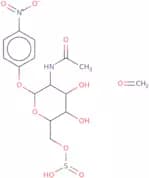
CAS:L-Luciferin is an enzyme substrate that is used in the detection of bioluminescence. It is a fluorogenic substrate that can be used to detect the presence of glucose in urine. L-Luciferin is also a chemiluminescent substrate that can be used to detect ATP, which is required for cell metabolism. L-Luciferin has been shown to be stable at pH levels ranging from 2.5 to 9 and can be stored for up to 3 years when stored at 4°C with no light or oxygen exposure. This product has CAS No. 754978-59-1, indicating high purity and quality. L-Luciferin will not stain or react with other compounds, making it highly suitable for use as a conjugate in diagnostic tests or as a ligand in fluorescent staining reactions.Formula:C11H7KN2O3S2Purezza:Min. 98.0 Area-%Peso molecolare:318.42 g/mol4-Nitrophenyl 2-acetamido-2-deoxy-b-D-glucopyranoside-6-sulfate
4-Nitrophenyl 2-acetamido-2-deoxy-b-D-glucopyranoside is a chemiluminescent substrate that can be used in the detection of various enzymes. This product has been tested for sterility and purity, and it has passed all tests. It is also free of any detectable levels of heavy metals or other contaminants. 4NP2AG6S is a high quality bioluminescent substrate with CAS No. 71498-92-5. It is a fluorescent compound that reacts with an enzyme to produce light. The reaction can be detected by measuring the emitted light intensity at 680 nm (max).Purezza:Min. 95%N-α-CBZ-L-Arginine 7-amido-4-methylcoumarin hydrochloride
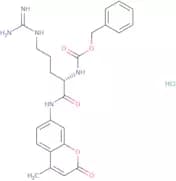
CAS:N-alpha-CBZ-L-Arginine 7-amido-4-methylcoumarin hydrochloride is a high quality and highly purified substrate for enzymes that catalyze the release of light when they react with their specific substrates. It is used in a variety of applications, including diagnostics and food testing. NACBZLAMC hydrochloride is an excellent ligand for chemiluminescence reactions and can be used to detect the presence of various analytes. It can also be used as a staining agent to detect proteins on Western blots or to stain bacterial cultures for identification. This product has been shown to be effective against numerous bacteria, including Staphylococcus aureus and Pseudomonas aeruginosa, as well as fungi like Candida albicans.Formula:C24H28ClN5O5Purezza:Min. 99 Area-%Peso molecolare:501.97 g/molRef: 3D-C-2100
1gPrezzo su richiesta5gPrezzo su richiesta10gPrezzo su richiesta500mgPrezzo su richiesta2500mgPrezzo su richiesta-Unit-ggPrezzo su richiesta2-Chloro-4-nitrophenyl β-D-glucopyranoside
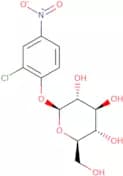
CAS:2-Chloro-4-nitrophenyl β-D-glucopyranoside is a chromogenic substrate for beta-glucosidases. In biochemical enzyme assays and in vitro diagnostics analysis, the substrate is used to monitor the glycosyltransferase activity. When 2-chloro-4-nitrophenyl β-D-glucopyranoside is cleaved by beta-glucosidase, 2-chloro-4-nitrophenol is released and quantified.Formula:C12H14ClNO8Purezza:Min. 95%Colore e forma:White PowderPeso molecolare:335.69 g/mol6-Chloro-3-indoxyl nonanoate
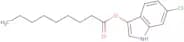
CAS:6-Chloro-3-indoxyl nonanoate is a fluorescent substrate that is used in the detection of beta-galactosidase activity. It has been used to detect the enzyme levels in various culture media and as a high quality, food testing, and environmental testing. The product is also used as a ligand for enzyme inhibition studies. 6-Chloro-3-indoxyl nonanoate has shown to be an excellent fluoroquinolone substrate for chemiluminescence assays. This product is CAS No. 133950-72-8 and is of high purity and high quality.
Purezza:Min. 95%Peso molecolare:307.81 g/mol4-Chloro-3-indolyl β-D-galactopyranoside
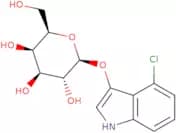
CAS:2-Chloro-4-nitrophenyl b-D-lactoside is a chromogenic enzyme substrate used to study the activity of enzymes. It produces a color when hydrolyzed, which makes it a valuable tool in screening for enzyme activity and studying enzyme kinetics.Formula:C14H16ClNO6Purezza:Min. 95%Colore e forma:SolidPeso molecolare:329.73 g/molLuc-Salmonella
Luc-Salmonella is a conjugate of the enzyme luciferase and the substrate 5-bromo-4-chloro-3-indolyl phosphate. Luc-Salmonella has been used for diagnostic purposes in the detection of bacteria in culture media, as well as in environmental and food testing. Luc-Salmonella can be used to detect Salmonella, which is a bacterium that can cause gastrointestinal disease. Luminescence is measured using a luminometer or fluorimeter with an excitation wavelength of 485 nm and emission wavelengths at 510 nm. Luminescence from Luc-Salmonella is typically measured after 1 hour incubation with bacterial cells.
Luc-Salmonella has been shown to have high purity and quality due to its unique composition of enzyme substrate. This product has been tested for contamination by sensitive assays such as chemiluminescence, bioluminescence, or fluorescence. The purity level of Luc-SalPurezza:Min. 96 Area-%Ref: 3D-L-8281
5mgPrezzo su richiesta10mgPrezzo su richiesta25mgPrezzo su richiesta50mgPrezzo su richiesta100mgPrezzo su richiesta-Unit-mgmgPrezzo su richiestaN,N,N',N'-Tetramethyl-p-phenylenediamine dihydrochloride
CAS:Reducing co-substrate for heme peroxidases; test reagent in microbiologyFormula:C10H16N2·2HClPurezza:Min. 95%Colore e forma:White PowderPeso molecolare:237.17 g/molIsopropyl-β-D-thiogalactopyranoside
CAS:A non-metabolizable allolactose analogue, widely used in molecular biology for overexpression of recombinant proteins from inducible systems under the control of lac promoter. IPTG binds to the LacI repressor and causes its release from the lac operator, allowing gene expression to take place. Present in vectors of pGEX, pGEM-T, pET, pRSET, pMAL class and others.Formula:C9H18O5SPurezza:Min. 99 Area-%Peso molecolare:238.3 g/molRef: 3D-I-8020
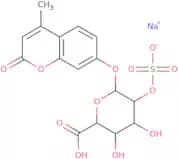
25gPrezzo su richiesta50gPrezzo su richiesta100gPrezzo su richiesta250gPrezzo su richiesta500gPrezzo su richiesta-Unit-ggPrezzo su richiesta4-Methylumbelliferyl a-L-idopyranosiduronic acid 2-sulphate disodium salt - Moscerdam™ biochemical purity
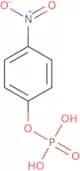
CAS:PAIRED PRODUCT AVAILABLE: alpha-L-iduronidase Enzyme, FI1793834MU-alpha-L-iduronide-2-sulphate (M2) is a fluorogenic substrate of iduronate-2-sulphatase (IDS), used in a 2-step assay coupled with alpha-L-iduronidase. The assay is used in biochemical testing for Hunter syndrome (mucopolysaccharidosis II / MPS II). In a first step, IDS from biological samples cleaves the sulphate group from M2. In a second step, exogeneous alpha-L-iduronidase which cleaves the 4-MU moiety is added to the reaction, resulting in release of a fluorescent signal (Ex 360 nm / Em 455 nm). The reaction is stopped by the addition of sodium carbonate.Formula:C16H14Na2O12SPurezza:Min. 99 Area-%Colore e forma:White PowderPeso molecolare:476.32 g/molPhosphoric acid, mono(4-nitrophenyl) ester
CAS:Phosphatase substrate
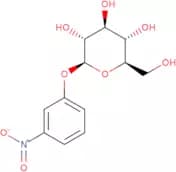
Formula:C6H6NO6PPurezza:Min. 95%Colore e forma:White PowderPeso molecolare:219.09 g/mol3-Nitrophenyl β-D-glucopyranoside
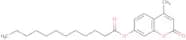
CAS:3-Nitrophenyl beta-D-glucopyranoside is a chromogenic enzyme substrate commonly used to assay for beta-glucosidase activity. Upon hydrolysis by the enzyme, it produces a yellow product that can be easily detected by spectrophotometry. This substrate is often used in the field of carbohydrate chemistry and biochemistry to study enzyme kinetics and inhibition in both in vitro and in vivo systems.Formula:C12H15NO8Purezza:Min. 95%Colore e forma:White Yellow PowderPeso molecolare:301.25 g/mol4-Methylumbelliferyl dodecanoate
CAS:4-Methylumbelliferyl dodecanoate is a fluorogenic substrate for lipase. After enzymatic cleaveage, free 4-methylumbelliferone (also known as hymecromone) is released, exhibiting blue fluorescence upon excitation with UV light. The strongest fluorescence of 4-methylumbelliferone requires deprotonation of the hydroxyl group (thus requires alkaline pH), with a maximal fluorescence intensity obtained with excitation at 350 to 370 nm and emission at 440 to 470 nm. The use of 4-methylumbelliferyl dodecanoateas a substrate for measuring the lipase activity is used for detecting pancreatic insufficiency in diagnosis assays as well as the screening of lipase deficiency.Formula:C22H30O4Purezza:Min. 95%Colore e forma:PowderPeso molecolare:358.47 g/mol4-Methylumbelliferyl cholin phosphate
CAS:4-Methylumbelliferyl phosphocholine, commonly known as 4-MUPC, is a synthetic phosphodiester used as an enzyme substrate for phospholipase enzymes. 4-MUPC is used as a fluorogenic substrate to measure the activity of phopholipases, which are important mediators of cell signalling.Formula:C15H20NO6PPurezza:Min. 99.0 Area-%Peso molecolare:341.30 g/mol