Substrati enzimatici
Sottocategorie di "Substrati enzimatici"
Trovati 1526 prodotti di "Substrati enzimatici"
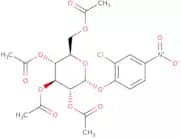
2-Chloro-4-nitrophenyl 2,3,4,6-tetra-O-acetyl-a-D-glucopyranoside
CAS:2-Chloro-4-nitrophenyl 2,3,4,6-tetra-O-acetyl-a-D-glucopyranoside is a chromogenic substrate used to characterize enzymes in biochemical assays. The substrate is cleaved by enzymes, such as esterases and glycosidases, releasing the chromogenic group, which can be detected by its yellow color.Purezza:Min. 95%Peso molecolare:503.84 g/molTetrabutylphosphonium p-toluenesulfonate
CAS:Tetrabutylphosphonium p-toluenesulfonate is a fluorogenic substrate that is used in the diagnosis of cytochrome P450 enzymes. It is a ligand that binds to metal ions, such as copper and zinc. This compound is also used for the preparation of bioluminescent substrates for use in diagnostics and research.Formula:C16H36P•C7H7O3SPurezza:Min. 95%Peso molecolare:430.63 g/mol4-Chloro-2-nitrophenyl b-D-galactopyranoside
4-Chloro-2-nitrophenyl b-D-galactopyranoside is a fluorogenic substrate that is used in diagnostic testing, such as food and environmental testing. 4-Chloro-2-nitrophenyl b-D-galactopyranoside is an enzyme substrate that can be used to measure the activity of beta galactosidase. This substrate is also chromogenic, which means that it will change color when exposed to the enzyme. 4CNPGalA has been shown to be an excellent ligand for beta galactosidase and can be used in conjugation reactions with other molecules.Purezza:Min. 95%Peso molecolare:335.69 g/mol4-Nitrophenyl 2,3,4,6-tetra-O-acetyl-a-D-galactopyranoside
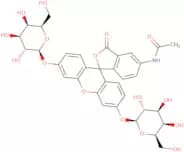
CAS:4-Nitrophenyl 2,3,4,6-tetra-O-acetyl-a-D-galactopyranoside is a chemiluminescent substrate that is used as a fluorescence indicator for the detection of β-galactosidase activities. This substrate has been shown to be useful for the detection of β-galactosidase in various types of samples such as culture media, environmental testing and food testing. 4NPTAG can also be used to detect β-galactosidase activity using fluorogenic substrates or chromogenic substrates. The enzyme activity can be detected by measuring the change in absorbance at 410 nm and the increase in luminescence at 460 nm.Formula:C20H23NO12Purezza:Min. 95%Colore e forma:PowderPeso molecolare:469.4 g/mol5-Acetamidofluorescein-di-(b-D-galactopyranoside)
CAS:5-Acetamidofluorescein-di-(b-D-galactopyranoside), also known as C2FDG, is a fluorogenic substrate for beta-galactosidase that generates a green fluorescence after cleavage (Em ~520 nm). It is used in enzyme activity assays and in flow cytometry in animal, bacterial, and yeast cells.Formula:C34H35NO16Purezza:Min. 95%Colore e forma:Yellow PowderPeso molecolare:713.65 g/mol4-Nitrophenyl b-D-galactopyranosiduronic acid
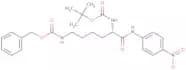
CAS:4-Nitrophenyl b-D-galactopyranosiduronic acid is a chemiluminescent substrate for the detection of β-galactosidase. It is used for the determination of α-galactosidase activity in urine, feces, and blood. This product can be used as a chromogenic substrate for the detection of β-galactosidase in tissue culture medium. 4-Nitrophenyl b-D-galactopyranosiduronic acid is also a fluorogenic substrate which can be conjugated to an enzyme such as horseradish peroxidase or alkaline phosphatase.Purezza:Min. 95%Peso molecolare:315.23 g/molN-a-Boc-N-epsilon-cbz-L-lysine 4-nitroanilide
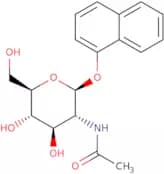
CAS:N-a-Boc-N-epsilon-cbz-L-lysine 4-nitroanilide is a compound that has been shown to regulate the production of angiotensin. It also acts as an inhibitor for the production of fibronectin, which is key in the regulation of inflammation and wound healing. N-a-Boc-N-epsilon-cbz-L-lysine 4 nitroanilide has been shown to be a trifunctional molecule and can yield three different products: oxychlorides, hydrated and solvates. This molecule also regulates phosphorus levels. There are many functions that this molecule performs, including binding with amino acids and regulating their function, which is why it is so important to study this molecule more closely.Purezza:Min. 95%Peso molecolare:500.54 g/mol1-Naphthyl 2-acetamido-2-deoxy-b-D-glucopyranoside
CAS:1-Naphthyl 2-acetamido-2-deoxy-b-D-glucopyranoside is a chromogenic substrate commonly used to assay the activity of enzymes that cleave N-acetyl-beta-D-glucosaminide, such as beta-N-acetylglucosaminidase. Upon cleavage by the enzyme of interest, the substrate releases a yellow-colored 1-naphthylamine, which can be measured spectrophotometrically. This substrate is widely used in biomedical research and drug discovery for studying lysosomal storage disorders, bacterial infections, and neurological diseases.
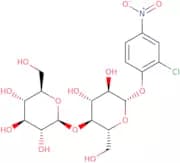
Purezza:Min. 95%Peso molecolare:347.36 g/mol2-Chloro-4-nitrophenyl b-D-cellobioside
CAS:2-Chloro-4-nitrophenyl b-D-cellobioside (CNPG) is a chromogenic enzyme substrate that is commonly used to detect and measure the activity of β-glucosidases. CNPG is cleaved by the enzyme into the chromogenic product, which can be detected spectrophotometrically. β-glucosidases are important enzymes in the breakdown of cellulose, and CNPG is a widely used substrate for the detection and quantification of these enzymes in various research studies.Purezza:Min. 95%Colore e forma:PowderPeso molecolare:497.83 g/molAldol® 515 palmitate, Biosynth Patent: EP 2427431 and US 8940909
CAS:Aldol® 515 palmitate is a high quality, non-toxic and water soluble chromogenic substrate for enzymes. It is used to detect the presence of lipase activity due to yielding a red color.
Formula:C39H50N2O3Purezza:Min. 95%Colore e forma:PowderPeso molecolare:594.83 g/mol6-Chloro-1H-indol-3-yl b-D-mannopyranoside
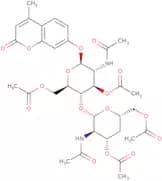
CAS:6-Chloro-1H-indol-3-yl b-D-mannopyranoside is an enzyme substrate that is used in the fluorogenic and chromogenic assays for detecting indoleamines. This compound has a conjugate, which is a fluorescent molecule that can be attached to an antibody to target specific proteins or cells. 6-Chloro-1H-indol-3-yl b-D-mannopyranoside is used as a diagnostic agent in the detection of bacterial and fungal infections. It is also used as an indicator of cell growth in culture media.Purezza:Min. 95%Peso molecolare:329.73 g/mol4-Methylumbelliferyl 4-deoxy-b-D-chitobiose peracetate
CAS:4-Methylumbelliferyl 4-deoxy-b-D-chitobiose peracetate is a chromogenic substrate used for the detection of β-galactosidase activity. It is an analog of 4-methylumbelliferone that can be hydrolyzed by β-galactosidase to produce fluorescence. This product is supplied as a white crystalline solid and can be stored at room temperature. This substrate has been shown to work well in culture media, food testing, and environmental testing.
Purezza:Min. 95%Colore e forma:Off-White PowderPeso molecolare:734.7 g/mol5-Bromo-4-chloro-3-indolyl a-L-arabinopyranoside
This product is a fluorogenic substrate that reacts with the enzyme beta-galactosidase to produce a fluorescent product. It can be used in food testing, environmental testing, and diagnostics. The CAS number for this product is 609-33-2. This product is available in high purity and high quality.
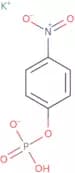
Formula:C13H13BrClNO5Colore e forma:PowderPeso molecolare:378.6 g/mol4-Nitrophenyl phosphate potassium salt
CAS:4-Nitrophenyl phosphate potassium salt is a high quality, non-radioactive chemiluminescence substrate that is used in the detection of oxidase activity. This product can be used to measure the activity of peroxidase and catalase enzymes, as well as the accumulation of hydrogen peroxide. It also has been shown to be a ligand for some sulfhydryl groups and an inhibitor of phosphatases. 4-Nitrophenyl phosphate potassium salt has been tested for its ability to inhibit bacterial growth and fluorescence by staining cells. This product has also been shown to have bioluminescent properties and can be used for diagnostics or culture media.Purezza:Min. 95%Peso molecolare:257.18 g/mol5-Bromo-3-indolyl β-D-glucuronide cyclohexylammonium
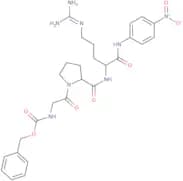
CAS:chromogenic substrate for beta-glucuronidaseFormula:C14H14BrNO7•C6H13NPurezza:Min. 95%Colore e forma:PowderPeso molecolare:487.34 g/molZ-Gly-Pro-Arg-pNA acetate
CAS:Z-Gly-Pro-Arg-pnaacetate is a substrate commonly used in enzyme research, particularly in the study of proteases. Proteases are enzymes responsible for catalyzing the hydrolysis of peptide bonds in proteins. In a study investigating the activation of protein C in blood plasma by a protease from Aspergillus ochraceus, the enzyme activity was qualitatively assessed using chromogenic peptide substrates, such as pGlu-Pro-Arg-pNA.Formula:C27H34N8O7Purezza:Min. 95%Peso molecolare:582.6 g/mol4-Nitrophenyl 4-O-(b-D-mannopyranosyl)-b-D-glucopyranoside
4-Nitrophenyl 4-O-(b-D-mannopyranosyl)-b-D-glucopyranoside is a fluorogenic substrate that can be used for the detection of β-glucosidase activity in biological samples. It is an excellent substrate for the enzyme β-glucosidase, which catalyzes the hydrolysis of ester bonds in glycosides with release of glucose and formation of a phenolic product. The 4-nitrophenol group reacts with oxygen to produce light, making it useful as a chemiluminescent or bioluminescent substrate. The conjugate may also be used to detect β-glucosidase activity in culture media by adding the substrate to the culture medium and measuring its fluorescence. 4NP4OBG has been shown to have high purity, with only trace amounts of impurities detected such as benzaldehyde and 2,6-dinitroPurezza:Min. 95%Peso molecolare:463.39 g/mol4-Nitrophenyl 2,3-di-O-(b-D-glucopyranosyl)-b-D-glucopyranoside
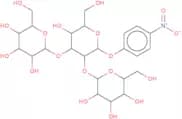
4-Nitrophenyl 2,3-di-O-(b-D-glucopyranosyl)-b-D-glucopyranoside is a chromogenic substrate that can be used to detect the presence of β-glucuronidase in human and animal tissue. The compound is also a fluoroquinolone substrate for the detection of β-lactamase activity. 4NPBG is used in diagnostics as well as food testing, due to its ability to detect bacteria in both food and water samples. 4NPBG is a chemiluminescent substrate that emits light upon hydrolysis by β-glucuronidase or β-lactamase. The compound has been shown to be an excellent ligand for binding to protein A or protein G and can be used for immunoassays such as ELISA or Western blotting.Purezza:Min. 95%Peso molecolare:625.53 g/mol3-Nitrophenyl 2-acetamido-2-deoxy-b-D-glucopyranoside
CAS:3-Nitrophenyl 2-acetamido-2-deoxy-b-D-glucopyranoside is a chemiluminescent substrate that is used for the detection of glycosidases. It has been shown to be a good ligand for the study of nucleic acid hybridization, and it can also be used in enzyme assays. 3NPPAG is available in high purity and high quality. This product has been tested for use in culture media, environmental testing, bioluminescence, staining, fluorogenic substrate, CAS No. 61894-63-1, diagnostics, chromogenic substrate, enzyme substrate, food testing and conjugate applications.Purezza:Min. 95%Phosphoric acid, mono(4-nitrophenyl) ester
CAS:Phosphoric acid, mono(4-nitrophenyl) ester is an inhibitor that binds to the human serum albumin (HSA), thereby preventing it from binding to the transcriptional regulatory protein. This leads to a decrease in the activity of this protein and consequently less inhibition of gene expression. The structural analysis of this inhibitor has shown that it forms hydrogen bonding interactions with basic proteins, while its reactivity is mainly dependent on Michaelis–Menten kinetics. The inhibitor also inhibits enzyme activities by binding to their active sites, reducing the enzyme's ability to catalyze reactions.Formula:C6H6NO6PPeso molecolare:219.09 g/molRef: 3D-P-6460
1kgPrezzo su richiesta50gPrezzo su richiesta100gPrezzo su richiesta250gPrezzo su richiesta500gPrezzo su richiesta-Unit-kgkgPrezzo su richiesta