Substrati enzimatici
Sottocategorie di "Substrati enzimatici"
Trovati 1525 prodotti di "Substrati enzimatici"
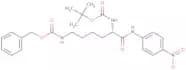
N-a-Boc-N-epsilon-cbz-L-lysine 4-nitroanilide
CAS:N-a-Boc-N-epsilon-cbz-L-lysine 4-nitroanilide is a compound that has been shown to regulate the production of angiotensin. It also acts as an inhibitor for the production of fibronectin, which is key in the regulation of inflammation and wound healing. N-a-Boc-N-epsilon-cbz-L-lysine 4 nitroanilide has been shown to be a trifunctional molecule and can yield three different products: oxychlorides, hydrated and solvates. This molecule also regulates phosphorus levels. There are many functions that this molecule performs, including binding with amino acids and regulating their function, which is why it is so important to study this molecule more closely.Purezza:Min. 95%Peso molecolare:500.54 g/mol5-Bromo-6-chloro-1H-indol-3-yl-a-D-mannopyranoside
CAS:5-Bromo-6-chloro-1H-indol-3-yl-a-D-mannopyranoside is a chromogenic substrate that yields a magenta-colored product after cleavage. The chromophore 5-bromo-6-chloro-indoxyl is released, generating the observable color. It is used in lysosomal storage disorder screening.
Formula:C14H15BrClNO6Purezza:Min. 95 Area-%Colore e forma:White Off-White PowderPeso molecolare:408.63 g/molAldol® 470 L-alanine ester, hydrochloride, Biosynth Patent: EP 2427431 and US 8940909
CAS:Prodotto controllatoAldol® 470 L-alanine ester, hydrochloride is a chromogenic substrate that is used as a food testing reagent and enzyme substrate in diagnostics. It is also used to detect the presence of ligands in an environment. Aldol® 470 L-alanine ester, hydrochloride is used in chemiluminescence and bioluminescence reactions.Formula:C26H25ClN2O5Purezza:Min. 95.0 Area-%Peso molecolare:480.95 g/molRef: 3D-A-4709_P00
1gPrezzo su richiesta5gPrezzo su richiesta10gPrezzo su richiesta2500mgPrezzo su richiesta-Unit-ggPrezzo su richiestaAldol® 495 phosphate, disodium salt, Biosynth Patent: EP 2427431 and US 8940909
CAS:Aldol® 495 phosphate is a chromogenic and fluorogenic enzyme substrate used for detection of phosphatase activity. The colorless enzyme substrate is cleaved by acid and alkaline phosphatases secreted by bacteria in liquid or solid media, yielding orange color and green fluorescence. Aldol® 495 phosphate can also be used in Western blots and other immunoassay applications with phosphatase-coupled secondary antibodies. Aldol® 495 phosphate can be used under aerobic and anaerobic conditions.Formula:C20H14ClN2Na2O5PPurezza:Min. 98.0 Area-%Peso molecolare:474.74 g/molRef: 3D-A-4704_P00
1gPrezzo su richiesta5gPrezzo su richiesta10gPrezzo su richiesta2500mgPrezzo su richiesta-Unit-ggPrezzo su richiesta4-Nitrophenyl 2-acetamido-3-O-(2-O-a-L-fucopyranosyl-b-D-galactopyranosyl)-2-deoxy-a-D-galactopyranoside
CAS:4-Nitrophenyl 2-acetamido-3-O-(2-O-a-L-fucopyranosyl-b-D-galactopyranosyl)-2,6,8,10,12-pentaoxoheptaacetic acid is a chemiluminescent substrate that is used for the detection of peroxidase and other enzymes. The reaction product is a yellow fluorescent product which can be measured using a fluorometer. It is sold as an aqueous solution at 1mg/mL in phosphate buffer at pH 7.4.
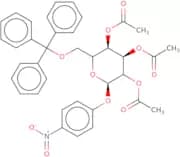
Purezza:Min. 95%Peso molecolare:650.58 g/mol4-Nitrophenyl 2,3,4-tri-O-acetyl-6-O-trityl-a-D-glucopyranoside
4-Nitrophenyl 2,3,4-tri-O-acetyl-6-O-trityl-a-D-glucopyranoside is a substrate for chemiluminescent assays. It is a high quality chemical that can be used in environmental testing, staining, ligand binding and bioluminescence. 4NP2T6AODG is used as a chromogenic substrate or fluorogenic substrate to detect the presence of enzymes in diagnostics and food testing. This product has CAS No. 67794-14-0 and can be purchased at high purity.Purezza:Min. 95%Peso molecolare:669.67 g/mol4-Nitrophenyl 2-acetamido-2-deoxy-3,6-di-O-benzoyl-b-D-galactopyranoside
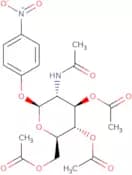
CAS:4-Nitrophenyl 2-acetamido-2-deoxy-3,6-di-O-benzoyl-b-D-galactopyranoside is an advanced pNP-based enzyme substrate designed for the detection and measurement of glycosidase activity in biological samples. This synthetic compound offers high specificity and sensitivity for b-galactosidase enzymes, enabling accurate determination of enzymatic hydrolysis rates in a variety of research applications, including diagnostics, drug development, and discovery of novel enzymes. Its chromogenic properties ensure easy analysis of the results and make it suitable for high-throughput screening.Purezza:Min. 95%Peso molecolare:550.51 g/mol4-Nitrophenyl 2-acetamido-3,4,6-tri-O-acetyl-2-deoxy-b-D-glucopyranoside
CAS:4-Nitrophenyl 2-acetamido-3,4,6-tri-O-acetyl-2-deoxy-b-D-glucopyranoside is an extracellular nucleic acid molecule that is produced by the bacterium Corynebacterium glutamicum. This compound has been shown to inhibit cancer cells by blocking the transport of glucose through the cell membrane and may be a potential drug target for cancer treatment. 4NPTAPG has also been shown to have diagnostic properties and can identify corynebacterium glutamicum strains. It is a fluorescent molecule that can be used to detect the presence of this bacterium in culture media.Purezza:Min. 95%Peso molecolare:468.41 g/mol4-Nitrophenyl 2,3,4,6-tetra-O-acetyl-a-D-glucopyranoside
CAS:4-Nitrophenyl 2,3,4,6-tetra-O-acetyl-a-D-glucopyranoside is a useful substrate for enzymatic assays. This high-sensitivity chromogenic pNP substrate offers enhanced selectivity and increased detection ability, allowing for a broad range of applications in the field of glycosidase research. Featuring rapid colorimetric readouts with easily detectable endpoint determination, this substrate delivers clear and accurate results every time.
Purezza:Min. 95%Peso molecolare:469.4 g/mol4-Nitrophenyl b-D-galactopyranosiduronic acid
CAS:4-Nitrophenyl b-D-galactopyranosiduronic acid is a chemiluminescent substrate for the detection of β-galactosidase. It is used for the determination of α-galactosidase activity in urine, feces, and blood. This product can be used as a chromogenic substrate for the detection of β-galactosidase in tissue culture medium. 4-Nitrophenyl b-D-galactopyranosiduronic acid is also a fluorogenic substrate which can be conjugated to an enzyme such as horseradish peroxidase or alkaline phosphatase.Purezza:Min. 95%Peso molecolare:315.23 g/molLuciferin-myo-inositol-1-phosphate, sodium salt
Luciferin-myo-inositol-1-phosphate, sodium salt is a conjugate of luciferin and myo-inositol. It is used as a substrate for certain enzymes, such as the enzyme that catalyzes the oxidation of luciferin to oxyluciferin. This product can be used in environmental testing, food testing, and diagnostics. Luciferin-myo-inositol-1-phosphate, sodium salt is available in high purity and high quality.Formula:C17H18N2NaO11PS2Purezza:Min. 94 Area-%Peso molecolare:544.42 g/molRef: 3D-L-8120
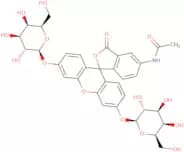
5mgPrezzo su richiesta10mgPrezzo su richiesta25mgPrezzo su richiesta50mgPrezzo su richiesta100mgPrezzo su richiesta5-Acetamidofluorescein-di-(b-D-galactopyranoside)
CAS:5-Acetamidofluorescein-di-(b-D-galactopyranoside), also known as C2FDG, is a fluorogenic substrate for beta-galactosidase that generates a green fluorescence after cleavage (Em ~520 nm). It is used in enzyme activity assays and in flow cytometry in animal, bacterial, and yeast cells.Formula:C34H35NO16Purezza:Min. 95%Colore e forma:Yellow PowderPeso molecolare:713.65 g/mol4-Nitrophenyl 2,3,4,6-tetra-O-acetyl-a-D-galactopyranoside
CAS:4-Nitrophenyl 2,3,4,6-tetra-O-acetyl-a-D-galactopyranoside is a chemiluminescent substrate that is used as a fluorescence indicator for the detection of β-galactosidase activities. This substrate has been shown to be useful for the detection of β-galactosidase in various types of samples such as culture media, environmental testing and food testing. 4NPTAG can also be used to detect β-galactosidase activity using fluorogenic substrates or chromogenic substrates. The enzyme activity can be detected by measuring the change in absorbance at 410 nm and the increase in luminescence at 460 nm.Formula:C20H23NO12Purezza:Min. 95%Colore e forma:PowderPeso molecolare:469.4 g/mol4-Chloro-2-nitrophenyl b-D-galactopyranoside
4-Chloro-2-nitrophenyl b-D-galactopyranoside is a fluorogenic substrate that is used in diagnostic testing, such as food and environmental testing. 4-Chloro-2-nitrophenyl b-D-galactopyranoside is an enzyme substrate that can be used to measure the activity of beta galactosidase. This substrate is also chromogenic, which means that it will change color when exposed to the enzyme. 4CNPGalA has been shown to be an excellent ligand for beta galactosidase and can be used in conjugation reactions with other molecules.Purezza:Min. 95%Peso molecolare:335.69 g/molTetrabutylphosphonium p-toluenesulfonate
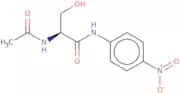
CAS:Tetrabutylphosphonium p-toluenesulfonate is a fluorogenic substrate that is used in the diagnosis of cytochrome P450 enzymes. It is a ligand that binds to metal ions, such as copper and zinc. This compound is also used for the preparation of bioluminescent substrates for use in diagnostics and research.Formula:C16H36P•C7H7O3SPurezza:Min. 95%Peso molecolare:430.63 g/molN-Acetyl-L-serine p-nitroanilide
N-Acetyl-L-serine p-nitroanilide is a fluorescent probe used for the detection of glucose in urine. It has a high purity and is suitable for use as a substrate for many enzymes, including alkaline phosphatase, β-galactosidase, and peroxidase. N-Acetyl-L-serine p-nitroanilide has been shown to be an excellent indicator of bacterial growth in culture media.
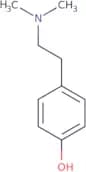
Formula:C11H12N2O6Purezza:Min. 95%Colore e forma:White powder.Peso molecolare:268.22 g/molHordenine
CAS:Produces a fluorogenic signal in the presence of peroxidaseFormula:C10H15NOPurezza:Min. 95%Colore e forma:Brown PowderPeso molecolare:165.23 g/molIsoluminol
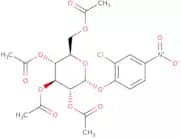
CAS:Isoluminol is a chromogenic molecule with a hydrophilic nature due to the location of the amino group in the phthalate ring, making it impermeable to cell membranes. It is used as a chemiluminescent probe to specifically detect extracellular reactive oxygen species (ROS) metabolites, which are known to be toxic for intra-erythrocytic parasites. Isoluminol-enhanced chemiluminescence has been employed as a sensitive method to study the release of superoxide anion from human neutrophils. Additionally, isoluminol has been utilized to measure extracellular ROS, distinguishing it from luminol, which is used to measure total ROS. Furthermore, isoluminol is suggested to detect mainly extracellular production of ROS, providing a lower chemiluminescence signal compared to luminol. Isoluminol is used as a chemiluminescence amplifier with pronounced affinity to oxidants outside polymorphonuclear leukocytes (PMNLs). It has been reported that isoluminol is less able to traverse biological membranes, making it suitable for detecting the release of NADPH oxidase-derived superoxide ions. Moreover, isoluminol is more hydrophilic and polar than luminol, as indicated by its lower capacity to form intramolecular hydrogen bridges. The molecule's impermeability ensures that only extracellularly excreted ROS are detected in the assay. In analytical chemistry, isoluminol is used as a chemiluminescence probe for labeling proteins and biomolecules, and its chemiluminescent oxidation is enhanced in the presence of certain catalysts. Isoluminol is also employed in open-tubular capillary chromatography systems for the elution of labeled biomolecules. Additionally, isoluminol has been used in microchip chromatography for the analysis of biomolecules.Formula:C8H7N3O2Purezza:Min. 95%Peso molecolare:177.053832-Chloro-4-nitrophenyl 2,3,4,6-tetra-O-acetyl-a-D-glucopyranoside
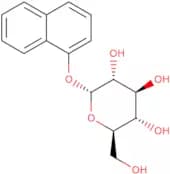
CAS:2-Chloro-4-nitrophenyl 2,3,4,6-tetra-O-acetyl-a-D-glucopyranoside is a chromogenic substrate used to characterize enzymes in biochemical assays. The substrate is cleaved by enzymes, such as esterases and glycosidases, releasing the chromogenic group, which can be detected by its yellow color.Purezza:Min. 95%Peso molecolare:503.84 g/mol1-Naphthyl a-D-glucopyranoside
CAS:1-Naphthyl a-D-glucopyranoside is a chromogenic substrate used to detect the presence of enzymes that catalyze the hydrolysis of glycosidic bonds, such as alpha-glucosidase. When the substrate is cleaved by the enzyme, it produces a colored product that can be visualized and quantified.Purezza:Min. 95%Peso molecolare:306.31 g/mol