Substrati cromogenici
Trovati 712 prodotti di "Substrati cromogenici"
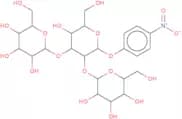
4-Nitrophenyl b-D-celloheptaoside
CAS:Chromogenic substrate targeting cellulasePurezza:Min. 95%Peso molecolare:1,274.09 g/molAldol® 470 L-pyroglutamic acid amide, Biosynth Patent: EP 2427431 and US 8940909
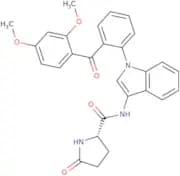
CAS:Prodotto controllatoAldol® 470 L-pyroglutamic acid amide is a chromogenic and fluorogenic enzyme substrate used for detection of pyrrolidonyl peptidase (PYRase) activity. The colorless enzyme substrate is cleaved by PYRase-producing bacteria grown in liquid or solid media, yielding orange color. In addition, green fluorescence is generated when a suitable matrix is present, such as, the surface of cellulose acetate filters, polypropylene tubes or microplates, and polyethylene vials. Aldol® 470 L-pyroglutamic acid amide is suitable for use under aerobic and anaerobic conditions.
Formula:C28H25N3O5Purezza:Min. 95.0 Area-%Peso molecolare:483.52 g/molRef: 3D-A-4723_P00
1gPrezzo su richiesta5gPrezzo su richiesta10gPrezzo su richiesta2500mgPrezzo su richiestaAldol® 457 β-D-galactopyranoside, Biosynth Patent: EP 2427431 and US 8940909
CAS:Aldol 457 Beta-D-galactopyranoside is a chromogenic substrate for beta-galactosidase, which is an enzyme that catalyzes the hydrolysis of the terminal galactose residue in D-galactose to form D-galactitol and D-glucose. Aldol 457 Beta-D-galactopyranoside is used as a reagent for the detection of beta-galactosidase activity in biological samples, such as cultured cells or tissues, and has been shown to be a ligand in binding studies with Galectin 1. This product is also used in diagnostic applications such as food testing, culture media, fluorogenic substrates, environmental testing and more.Formula:C24H28N2O8Purezza:Min. 95.0 Area-%Peso molecolare:472.49 g/molRef: 3D-A-4726_P00
1gPrezzo su richiesta5gPrezzo su richiesta10gPrezzo su richiesta2500mgPrezzo su richiesta-Unit-ggPrezzo su richiesta4-Nitrophenyl 2-acetamido-4-O-(2-acetamido-3,4,6-tri-O-acetyl-2-deoxy-b-D-glucopyranosyl)-3,6-di-O-acetyl-2-deoxy-b-D-glucopyranosid e
CAS:4-Nitrophenyl 2-acetamido-4-O-(2-acetamido-3,4,6-tri-O-acetyl-2-deoxy-b-D-glucopyranosyl)-3,6-di-O -acetyl2 deoxy b D glucopyranosid e is a chemiluminescence substrate that reacts with hydrogen peroxide to produce light. It is used in diagnostics for the detection of bacterial and fungal cultures. The reaction between 4NPAA and hydrogen peroxide generates light at 540 nm. This product has been tested for purity and quality using various methods including culture media, environmental testing, bioluminescence, staining, fluorogenic substrate, enzyme substrate, food testing and conjugate.Purezza:Min. 95%Peso molecolare:755.68 g/mol6-Chloro-1H-indol-3-yl b-D-mannopyranoside
CAS:6-Chloro-1H-indol-3-yl b-D-mannopyranoside is an enzyme substrate that is used in the fluorogenic and chromogenic assays for detecting indoleamines. This compound has a conjugate, which is a fluorescent molecule that can be attached to an antibody to target specific proteins or cells. 6-Chloro-1H-indol-3-yl b-D-mannopyranoside is used as a diagnostic agent in the detection of bacterial and fungal infections. It is also used as an indicator of cell growth in culture media.Purezza:Min. 95%Peso molecolare:329.73 g/mol5-Bromo-4-chloro-3-indoxyl nonanoate
CAS:5-Bromo-4-chloro-3-indoxyl nonanoate (5BCNI) is a chromogenic substrate for the detection of alkaline phosphatase. It is soluble in most organic solvents and is stable at room temperature for up to 30 days. 5BCNI has been shown to be a high quality, sensitive and specific substrate for the detection of alkaline phosphatase in culture media, diagnostics, conjugates, environmental testing and chemiluminescence. It has also been used as an enzyme substrate in bioluminescence studies. The CAS number for 5BCNI is 133950-77-3.Formula:C17H21BrClNO2Peso molecolare:386.72 g/molRef: 3D-B-7410
5gPrezzo su richiesta10gPrezzo su richiesta25gPrezzo su richiesta-Unit-ggPrezzo su richiesta3-Indolyl b-D-cellotetraoside
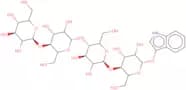
3-Indolyl b-D-cellotetraoside is a chemiluminescent substrate that is used as an indicator in the detection of aminoglycosides. The ligand is a cell wall component that has been shown to bind specifically to the active site of bacterial β-lactamases, which are enzymes that catalyze the hydrolysis of β-lactam antibiotics. 3-Indolyl b-D-cellotetraoside can be used for bacterial identification and enumeration, food testing, and enzyme substrate for diagnostics. It fluoresces in response to electron excitation with a wavelength of about 590 nm.Purezza:Min. 95%Peso molecolare:781.71 g/mol4-Nitrophenyl 3-O-(2,3,4,6-tetra-O-acetyl-b-D-glucopyranosyl)-b-D-glucopyranoside
4-Nitrophenyl 3-O-(2,3,4,6-tetra-O-acetyl-b-D-glucopyranosyl)-b-D-glucopyranoside is a chromogenic substrate that is used to test for the presence of an enzyme. It reacts with the enzyme to produce a light signal that can be detected by a spectrophotometer. The CAS number for this compound is 832476-41-8. This compound has been tested and found to be of high quality and purity. 4NP3OBG is also suitable for use in culture media, food testing, and as a fluorogenic substrate.Purezza:Min. 95%Peso molecolare:631.54 g/mol4-Nitrophenyl 2-O-(a-L-fucopyranosyl)-a-D-galactopyranoside
CAS:4-Nitrophenyl 2-O-(a-L-fucopyranosyl)-a-D-galactopyranoside is a chromogenic pNP enzyme substrate consisting of a fucose and galactose moieties. Upon enzymatic hydrolysis by specific fucosidases or galactosidases, it releases the highly chromogenic molecule 4-nitrophenol, which exhibits a distinct yellow color that can be monitored spectrophotometrically. This substrate is frequently used to study enzyme specificity, kinetics, and inhibition, and it plays a critical role in the investigation of carbohydrate active enzymes (CAZymes), the screening of enzyme inhibitors, and the development of novel analytical methods for the detection and quantitation of enzyme activities.Purezza:Min. 95%Peso molecolare:447.39 g/molAldol® 496 acetate, Biosynth Patent: EP 2427431 and US 8940909
CAS:Aldol 496 acetate is a chromogenic substrate for the enzyme Aldolase. It is also used as a ligand to detect the presence of Aldolase in biological fluids and tissues. This product is designed for Food testing, Diagnostics, Chromogenic substrate, Staining, Enzyme substrate, Bioluminescence, Fluorogenic substrate, Chemiluminescence, and Culture media. Aldol 496 acetate is an organic chemical with high purity and high quality.Formula:C27H24N2O4Purezza:Min. 95.0 Area-%Peso molecolare:440.49 g/molRef: 3D-A-4746_P00
1gPrezzo su richiesta5gPrezzo su richiesta10gPrezzo su richiesta2500mgPrezzo su richiesta-Unit-ggPrezzo su richiesta5-Bromo-3-indolyl a-D-galactopyranoside
5-Bromo-3-indolyl a-D-galactopyranoside is a fluorogenic substrate that can be used for the detection of beta-galactosidase activity. It is also used as an enzyme substrate in diagnostics and research, as well as a chromogenic substrate in staining. 5-Bromo-3-indolyl a-D-galactopyranoside has been shown to be an excellent conjugate for proteins, nucleic acids, and other biomolecules. This product can also be used in culture media for the cultivation of bacteria and yeast.
Formula:C14H16BrNO6Purezza:Min. 95%Peso molecolare:374.18 g/mol2-Chloro-4-nitrophenyl 2,3,4,6-tetra-O-acetyl-a-D-glucopyranoside
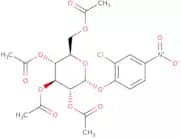
CAS:2-Chloro-4-nitrophenyl 2,3,4,6-tetra-O-acetyl-a-D-glucopyranoside is a chromogenic substrate used to characterize enzymes in biochemical assays. The substrate is cleaved by enzymes, such as esterases and glycosidases, releasing the chromogenic group, which can be detected by its yellow color.Purezza:Min. 95%Peso molecolare:503.84 g/mol4-Nitrophenyl b-D-cellobioside heptaacetate
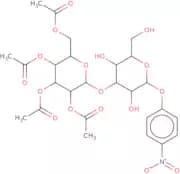
4-Nitrophenyl b-D-cellobioside heptaacetate is a chromogenic substrate for enzymes that catalyze the hydrolysis of glycosidic bonds. This product is used as a diagnostic tool for identifying and characterizing glycosidases and other enzymes that degrade glycosidic bonds. 4-Nitrophenyl b-D-cellobioside heptaacetate is also used in culture media to measure the activity of cellulase enzymes by measuring the release of reducing sugars. The color change of this substrate can be detected at 405 nm, 490 nm, or 550 nm.Purezza:Min. 95%Peso molecolare:757.65 g/mol4-Nitrophenyl 2,3-di-O-(b-D-glucopyranosyl)-b-D-glucopyranoside
4-Nitrophenyl 2,3-di-O-(b-D-glucopyranosyl)-b-D-glucopyranoside is a chromogenic substrate that can be used to detect the presence of β-glucuronidase in human and animal tissue. The compound is also a fluoroquinolone substrate for the detection of β-lactamase activity. 4NPBG is used in diagnostics as well as food testing, due to its ability to detect bacteria in both food and water samples. 4NPBG is a chemiluminescent substrate that emits light upon hydrolysis by β-glucuronidase or β-lactamase. The compound has been shown to be an excellent ligand for binding to protein A or protein G and can be used for immunoassays such as ELISA or Western blotting.Purezza:Min. 95%Peso molecolare:625.53 g/molAldol® 484 acetate, Biosynth Patent: EP 2427431 and US 8940909
CAS:Prodotto controllatoAldol® 484 acetate is a chromogenic substrate for carboxylesterases yielding a red precipitate. In contrast to classical indoxyl substrates, Aldol substrates work not only under aerobic but also under anaerobic conditionsFormula:C22H16ClFN2O3Purezza:Min. 95.0 Area-%Peso molecolare:410.83 g/molRef: 3D-A-4695_P00
1gPrezzo su richiesta5gPrezzo su richiesta10gPrezzo su richiesta2500mgPrezzo su richiesta-Unit-ggPrezzo su richiesta4-Nitrophenyl 3-O-(2,3,4,6-tetra-O-acetyl-a-D-mannopyranosyl)-2-O-benzoyl-a-D-mannopyranoside
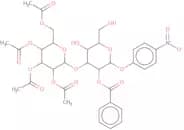
CAS:4-Nitrophenyl 2,3,4,6-tetra-O-acetyl-b-D-glucopyranoside enzyme substrate is a versatile and reliable reagent for measuring glucosidase activity. It is an ideal substrate for use in assays to detect β-glucosidase activity in a variety of applications, including for in vitro and in vivo studies, and it has been widely used in the pharmaceutical and biotechnology industries. This chromogenic pNP enzyme substrate is designed for effective and precise analysis with good sensitivity and low background signals.Purezza:Min. 95%Peso molecolare:735.64 g/mol2-Nitrophenyl 2,3,4-tri-O-acetyl-b-D-galactopyranoside
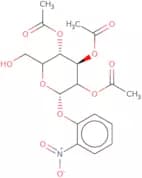
CAS:2-Nitrophenyl 2,3,4-tri-O-acetyl-b-D-galactopyranoside is a fluorogenic substrate that can be used to detect β-galactosidase activity. This specific substrate is one of the most commonly used substrates for detecting β-galactosidase activity in diagnostic assays. It reacts with the enzyme to produce a blue color and has a fluorescence emission maximum at about 480 nm. The product is available in high purity and high quality and it is also an enzyme substrate.Purezza:Min. 95%Peso molecolare:427.36 g/mol6-Chloro-1H-indol-3-yl b-D-glucuronide
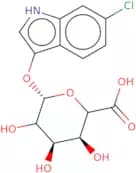
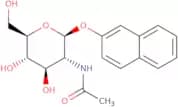
CAS:6-Chloro-1H-indol-3-yl b-D-glucuronide is a chemiluminescence substrate that can be used in immunoassays and other biochemical analyses. 6CIG is a highly purified, high quality product with a CAS No. 138182-19-1. This product has been tested for bacterial contamination and found to be free of detectable levels of mycoplasma, yeast, mold, or other microbial agents. It has also been tested for its ability to support the growth of various types of cells and found to be suitable for cell culture media. This chemical has been shown to produce an intense blue chemiluminescent reaction when reacted with horseradish peroxidase enzyme and hydrogen peroxide.Purezza:Min. 95%Peso molecolare:343.72 g/mol2-Naphthyl 2-acetamido-2-deoxy-β-D-glucopyranoside
CAS:2-Naphthyl 2-acetamido-2-deoxy-b-D-glucopyranoside is a chromogenic substrate used for staining and diagnostic purposes. It is a ligand that has been shown to bind to certain enzymes and can be used for the detection of those enzymes. This product is also a chemiluminescence substrate, which can be used in bioluminescent reactions. This product has been shown to have high purity and quality, as well as being a conjugate.Formula:C18H21NO6Purezza:Min. 95%Peso molecolare:347.36 g/mol3-Nitrophenyl 2-acetamido-2-deoxy-b-D-glucopyranoside
CAS:3-Nitrophenyl 2-acetamido-2-deoxy-b-D-glucopyranoside is a chemiluminescent substrate that is used for the detection of glycosidases. It has been shown to be a good ligand for the study of nucleic acid hybridization, and it can also be used in enzyme assays. 3NPPAG is available in high purity and high quality. This product has been tested for use in culture media, environmental testing, bioluminescence, staining, fluorogenic substrate, CAS No. 61894-63-1, diagnostics, chromogenic substrate, enzyme substrate, food testing and conjugate applications.Purezza:Min. 95%