3D-FC151306 - 3-chloro-2-methylphenyl-methylsulfide | 82961-52-2
Spiacenti, non è stato trovato nessun prodotto con riferimento 3D-FC151306, ma La invitiamo a verificare i seguenti prodotti simili:
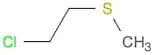
2-Chloroethyl methyl sulfide
CAS:Formula:C3H7ClSPurezza:98%Colore e forma:LiquidPeso molecolare:110.6057Ref: IN-DA00339B
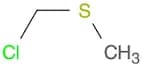
1g25,00€5g49,00€10g65,00€1kgPrezzo su richiesta25g118,00€50g206,00€100g255,00€500g501,00€CHLOROMETHYL METHYL SULFIDE
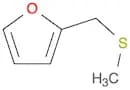
CAS:Formula:C2H5ClSPurezza:97%Colore e forma:LiquidPeso molecolare:96.57912-(Methylsulfanylmethyl)furan
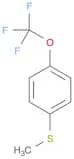
CAS:Formula:C6H8OSPurezza:97%Colore e forma:LiquidPeso molecolare:128.19214-Trifluoromethoxythioanisole
CAS:Formula:C8H7F3OSPurezza:98%Colore e forma:LiquidPeso molecolare:208.2008Silane, [[(chloromethyl)thio]methyl]trimethyl-
CAS:Formula:C5H13ClSSiPurezza:90%Peso molecolare:168.7602CALLERY™ Dimethylsulfide borane, min. 93%
CAS:Borane, dimethylsulfide complex (contains 5-6% excess dimethylsulfide)
Formula:(CH3)2SBH3Purezza:min. 93%Colore e forma:colorless to slightly yellow liq.Peso molecolare:75.972,6-Dimethyl-4-hydroxybenzonitrile
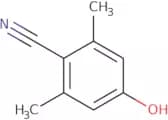
CAS:2,6-Dimethyl-4-hydroxybenzonitrile is a chemical compound that belongs to the group of organic compounds. It has a chemical formula CH3C6H2OCH2CH2OH. This compound is also known as methylsulfide. 2,6-Dimethyl-4-hydroxybenzonitrile is an alkylating agent that can be used in the synthesis of other organic compounds. In addition, it has been shown to have some acidic properties. This chemical compound has been studied by molecular modeling and regression analysis to determine its structure and reactivity. It was found that the polarizability constant of 2,6-dimethyl-4-hydroxybenzonitrile was 0.058 D from an experiment using potassium t-butoxide as a solvent with a constant of 1 Molar (M). The interpretable stepwise regression model for this chemical had an R value of 0.87 with a F value ofFormula:C9H9NOPurezza:Min. 95%Peso molecolare:147.17 g/molTris(ethylthio)methane
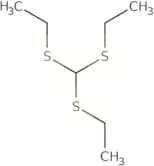
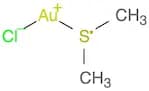
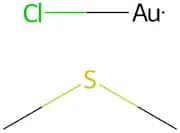
CAS:Tris(ethylthio)methane (TETM) is an antibacterial agent that is a chloride derivative of ethyl formate. It has the ability to cleave peptide bonds, producing amino acid fragments. TETM is a nucleophile and reacts with 7-aminocephalosporanic acid to produce methylsulfide and methyl alcohol. The inhibition constant for TETM against bacteria is 2.0×10 M. The bond cleavage reactions are a result of the electronic interaction between the methylene group (-CH2-) and the sulfur atom in the thiomethyl group (-S-CH3). This reaction is reversible, meaning that TETM can be reduced back to its original form by reducing agents such as sodium borohydride or sodium dithionite.Formula:C7H16S3Purezza:Min. 95%Peso molecolare:196.4 g/molChloro(dimethylsulfide)gold(I)
CAS:Formula:C2H6AuClSPurezza:>97.0%(T)Colore e forma:White to Light yellow powder to crystalPeso molecolare:294.55Copper(I) bromide, 98%
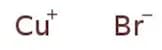
CAS:It finds many applications in organic synthesis, as a catalyst and a reagent. It is used as a catalyst in Sandmeyer reaction for preparing aryl bromides from arylamines through diazonium salts. It forms complexes with Lewis bases, such as dimethylsulfide, which is a precursor to organocopper reageFormula:BrCuPurezza:98%Colore e forma:Green, PowderPeso molecolare:143.45Chloro(dimethylsulfide)gold(I), min. 97%
CAS:Chloro(dimethylsulfide)gold(I), min. 97%
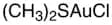
Formula:(CH3)2SAuClPurezza:min. 97%Colore e forma:white to off-white solidPeso molecolare:294.55OXOTRICHLORO(DIMETHYLSULFIDE)TRIPHENYLPHOSPHINE OXIDE)RHENIUM(V)
CAS:Formula:C20H21Cl3O2PReSPurezza:97%Peso molecolare:648.9843(DIMETHYLSULFIDE)GOLD(I) CHLORIDE
CAS:Formula:C2H6AuClSPurezza:98%Colore e forma:SolidPeso molecolare:294.5536Chloro(Dimethylsulfide)Gold(I)
CAS:Chloro(Dimethylsulfide)Gold(I)Purezza:98%,Au≥66.9%Peso molecolare:294.55g/molDimethylpropiothetin hydrochloride
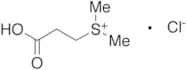
CAS:Dimethylpropiothetin hydrochloride (s,s-Dimethyl-β-propionic acid thetine) represents the hydrochloride variant of dimethylpropiothetin. This compound is extractable from marine algae and serves as a precursor to dimethylsulfide (DMS). Additionally, it plays a role in the osmoregulation processes within Hymenomonas carterae.Formula:C5H11ClO2SColore e forma:SolidPeso molecolare:170.66(2-Carboxyethyl)dimethylsulfonium Chloride
CAS:Prodotto controllatoApplications (2-Carboxyethyl)dimethylsulfonium Chloride is the hydrochloride salt of Dimethylsulfoniopropionate (D479360), a metabolite produced primarily by marine phytoplankton and is the main precursor to the climatically important gas dimethylsulfide (DMS).
References Reisch, C.R. et al.: Front. Microb. Physiol. Metab., 1, 172 (2011); Groene, T. et al.: J. Plant Physiol., 138, 85 (1991); Tocher, C.S. et al.: Can. J. Biochem. Physiol., 44, 519 (1966);Formula:C5H11O2S·ClColore e forma:NeatPeso molecolare:170.66Octyl b-D-thiomaltopyranoside
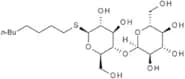
CAS:Octyl b-D-thiomaltopyranoside is a colorless to yellow liquid with a sweet, malty odor. It is soluble in alcohol and ether. This product has been used as an analytical reagent in the analysis of sulfur compounds for GC/MS and LC/MS. It can be used to determine the concentration of dimethylsulfide (DMS) in marine systems. Octyl b-D-thiomaltopyranoside has also been used as a cycling agent for column chromatography, as well as an additive for animal injection compositions. Octyl b-D-thiomaltopyranoside is not toxic to animals at concentrations up to 2000 mg/kg body weight.Formula:C20H38O10SPurezza:Min. 95%Peso molecolare:470.58 g/molChloro(dimethylsulfide)gold(I)
CAS:Formula:C2H6AuClSPurezza:95%Colore e forma:Crystalline Powder,PowderPeso molecolare:294.55


![Silane, [[(chloromethyl)thio]methyl]trimethyl-](/_next/image/?url=https%3A%2Fstatic.cymitquimica.com%2Fproducts%2FIN%2Fthumb-webp%2FDA00HAPY.webp&w=3840&q=75)