3D-FF77091 - 1-fluoropropane
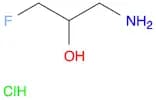
1-amino-3-fluoropropan-2-olhydrochloride-A28629
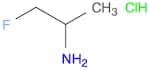
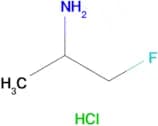
CAS:Formula:C3H9ClFNOPurezza:95%Colore e forma:SolidPeso molecolare:129.56111-Fluoropropan-2-Amine Hydrochloride
CAS:Formula:C3H9ClFNPurezza:97%Colore e forma:SolidPeso molecolare:113.56171-(3-(BENZYLTHIO)PYRIDIN-2-YL)-2-FLUOROPROPAN-1-ONE
CAS:Formula:C15H14FNOSPurezza:95%Colore e forma:SolidPeso molecolare:275.34122-Methylpropan-2-amine(E)-3-(1-(5-(2-fluoropropan-2-yl)-3-(2,4,6-trichlorophenyl)isoxazole-4-carbonyl)-3-methyl-1H-indol-4-yl)acrylate
CAS:Formula:C29H29Cl3FN3O4Purezza:98%Peso molecolare:608.91571-Chloro-1,2-dibromo-2-fluoropropane
CAS:1-Chloro-1,2-dibromo-2-fluoropropanePurezza:97%Peso molecolare:254.32g/mol2-Methylpropan-2-Amine (E)-3-(1-(5-(2-Fluoropropan-2-Yl)-3-(2,4,6-Trichlorophenyl)Isoxazole-4-Carbonyl)-3-Methyl-1H-Indol-4-Yl)Acrylate
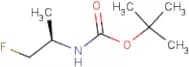
CAS:2-Methylpropan-2-Amine (E)-3-(1-(5-(2-Fluoropropan-2-Yl)-3-(2,4,6-Trichlorophenyl)Isoxazole-4-Carbonyl)-3-Methyl-1H-Indol-4-Yl)AcrylatePurezza:99%Peso molecolare:608.92g/moltert-Butyl (R)-(1-fluoropropan-2-yl)carbamate
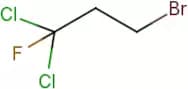
CAS:tert-Butyl (R)-(1-fluoropropan-2-yl)carbamateFormula:C8H16FNO2Purezza:95%Colore e forma: white. tiny crystalsPeso molecolare:177.22g/mol3-Bromo-1,1-dichloro-1-fluoropropane
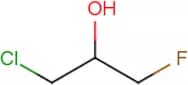
CAS:3-Bromo-1,1-dichloro-1-fluoropropanePurezza:≥95%Peso molecolare:209.87226g/mol1-Chloro-3-fluoropropan-2-ol
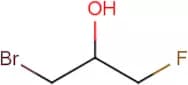
CAS:1-Chloro-3-fluoropropan-2-olFormula:C3H6ClFOPurezza:96%Colore e forma: clear liquidPeso molecolare:112.53g/mol1-Bromo-3-fluoropropan-2-ol
CAS:1-Bromo-3-fluoropropan-2-olPurezza:95%Colore e forma:LiquidPeso molecolare:156.98g/moltert-Butyl (S)-(1-fluoropropan-2-yl)carbamate
CAS:tert-Butyl (S)-(1-fluoropropan-2-yl)carbamateFormula:C8H16FNO2Purezza:95%Colore e forma: white. fluffy crystalline powderPeso molecolare:177.22g/mol1-Fluoropropan-2-ol
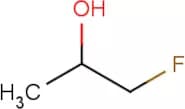
CAS:1-Fluoropropan-2-ol
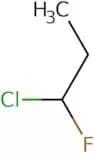
Formula:C3H7FOPurezza:97%Colore e forma: clear. faint yellow liquidPeso molecolare:78.09g/mol1-Chloro-1-fluoropropane
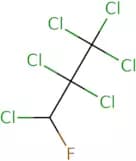
CAS:Prodotto controllato1-Chloro-1-fluoropropane is a fluorinated hydrocarbon that can be used as a refrigerant. It has the chemical formula CHClF (Cl = chlorine, H = hydrogen). 1-Chloro-1-fluoropropane is produced by the chlorination of propylene. It can also be synthesized through the reaction of ethylene with hydrogen chloride and hydrochloric acid. This process is catalyzed by magnesium oxide. The product is then distilled to remove any water or other compounds that may have formed during synthesis. 1-Chloro-1-fluoropropane is used as an alternative to chlorofluorocarbons (CFCs) and hydrochlorofluorocarbons (HCFCs), which are ozone depleting substances. It has an evaporation energy efficiency of approximately 2,500 BTU/lb, compared to 4,000 BTU/lb for CFCsFormula:C3H6ClFPurezza:Min. 95%Peso molecolare:96.53 g/mol1,1,1,2,2,3-Hexachloro-3-fluoropropane
CAS:Prodotto controllato1,1,1,2,2,3-Hexachloro-3-fluoropropane is a chemical compound that is used as a solvent and as a volatile agent in the process of vaporization. It has been shown to be toxic to the environment and has been classified as hazardous by the Environmental Protection Agency (EPA). The EPA estimates that 1,1,1,2,2,3-Hexachloro-3-fluoropropane emits about 100 million pounds per year into the atmosphere. This chemical compound is also used as an ingredient in certain pesticides.Formula:C3HCl6FPurezza:Min. 95%Peso molecolare:268.75 g/mol1,1,1,2,2,3,3-Heptachloro-3-Fluoropropane
CAS:Prodotto controllato1,1,1,2,2,3,3-Heptachloro-3-Fluoropropane (HFC-227ea) is a synthetic chlorofluorocarbon that was developed as an environmentally friendly substitute for chlorodifluoromethane. HFC-227ea is used in refrigeration and air conditioning systems due to its high heat capacity. This chemical has been shown to inhibit serotonin reuptake and may play a role in the control of moods. HFC-227ea can also be used as a solvent for organic materials that cannot be dissolved by other chemicals. It is reactive with water and may react with other chemicals or cause fires if exposed to open flames. HFC 227ea has been shown to have toxic effects on the nervous system when injected into rats. The LD50 (the dose at which 50% of animals die) for this chemical is between 2 and 6 milligrams per kilogram of body weightFormula:C3Cl7FPurezza:Min. 95%Peso molecolare:303.2 g/mol1,1,1,2,3-Pentachloro-2-fluoropropane
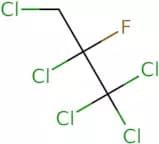
CAS:Prodotto controllato1,1,1,2,3-Pentachloro-2-fluoropropane is a chlorofluorocarbon (CFC) that is a colorless gas with a sweet odor. It is used as an industrial solvent for degreasing metal parts and dissolves fats and oils. 1,1,1,2,3-Pentachloro-2-fluoropropane also has the ability to solubilize inorganic salts such as calcium fluoride. This chemical has been shown to be toxic to humans when inhaled or ingested. When this chemical is released into the environment it reacts with hydrogen fluoride to form products such as hydrochloric acid and hydrogen fluoride.
Formula:C3H2Cl5FPurezza:Min. 95%Peso molecolare:234.31 g/mol1,1,2,3-Tetrachloro-1-fluoropropane
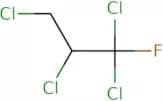
CAS:Prodotto controllato1,1,2,3-Tetrachloro-1-fluoropropane is a solvent that can be used to solvate organic compounds. It is volatile and has a boiling point of -78°C. This compound is used in the chlorination of methane and ethane, which produces 1,1,2-trichloroethane and 1,2-dichloroethane respectively. Hydrogen fluoride is also produced as an unwanted byproduct. The chlorine produced by this process is then catalyzed to form fluorine gas. This gas can be vaporized or depletes depending on the reaction conditions and the temperature of the reactor. Fluorine gas reacts with atmospheric water vapor to produce hydrofluoric acid (HF). When HF comes into contact with moist surfaces it will corrode them and produce hydrogen ions that react with metal oxides to produce metal salts and water. The emission of HF from chlorofluorocarbons
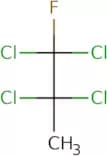
Formula:C3H3Cl4FPurezza:Min. 95%Peso molecolare:199.87 g/mol1,1,3,3-Tetrachloro-1-Fluoropropane
CAS:Prodotto controllato1,1,3,3-Tetrachloro-1-fluoropropane is an efficient fluorinating agent with azeotropic properties. It is an intermediate in the production of fluorine compounds such as hydrogen fluoride and 1,1,2-trichloroethane. 1,1,3,3-Tetrachloro-1-fluoropropane can be used to efficiently fluorinate other compounds.Formula:C3H3Cl4FPurezza:Min. 95%Peso molecolare:199.87 g/mol