AC-18875 - methyllithium-16m-sol-in-diethyl-ether-5-wv-acrosealtm | 60-29-7
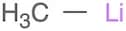
Methyllithium, 1.6M in diethyl ether, packaged under Nitrogen in resealable AcroSeal™ bottles
CAS:This Thermo Scientific Chemicals brand product was originally part of the Alfa Aesar product portfolio. Some documentation and label information may refer to the legacy brand. The original Alfa Aesar product / item code or SKU reference has not changed as a part of the brand transition to Thermo Sci
Formula:CH3LiColore e forma:Liquid, Clear to turbid colorless to yellowPeso molecolare:21.98Methyllithium, complexed with lithium bromide in ethyl ether (1.5M)
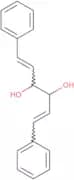
CAS:Formula:CH3LiLiBrColore e forma:colorless solutionPeso molecolare:21.98 (108.82)Hydrocinnamoin
CAS:Hydrocinnamaldehyde is a reactive aldehyde that is used for the synthesis of other compounds. It can be obtained by catalyzing the oxidative cleavage of cinnamyl alcohol. Hydrocinnamaldehyde is also found in marine environments, where it reacts with oxygen to form an unstable compound called hydrocinnamic acid. Hydrocinnamic acid then undergoes an oxidation-reduction process that converts it to hydrocinnamaldehyde. Hydrocinnamaldehyde is one of two carbene precursors used in the Grubbs reaction, which allows for the selective formation of C-C bonds from alkenes and alkynes. The other carbene precursor, methyllithium, is commercially unavailable and has been replaced by hydrocinnamaldehyde as a more economical alternative in this reaction.
Hydrocinnamaldehyde can also be used to synthesize palytoxin, which is a toxic compound found in shellfish such as oysters and clamsFormula:C18H18O2Purezza:Min. 95%Colore e forma:PowderPeso molecolare:266.33 g/mol(Trimethylsilyl)acetic acid
CAS:(Trimethylsilyl)acetic acid is an organosilicon compound that has a hydroxyl group and three methyl groups. It is a metastable substance with a boiling point of about 130 degrees Celsius. (Trimethylsilyl)acetic acid can be synthesized by reacting bromoacetic acid with methyllithium or trimethylsilyl chloride. This compound has been shown to have kinetic properties such as molecular ions, kinetic energy, and inorganic acids. It also has functional groups that are able to interact with detergent compositions.
Formula:C5H12O2SiPurezza:Min. 95%Peso molecolare:132.23 g/mol(R)-3-Hydroxyisobutyric acid methyl ester
CAS:(R)-3-Hydroxyisobutyric acid methyl ester is a retronecine analogue that can be synthesized by hydrozirconation of an (R)-3-hydroxyisobutyryl chloride. The synthesis starts with the stereoselective formation of an acid lactone from a chiral intramolecular Diels-Alder reaction between a cyclic enol ether and a butenolide. This lactone is then converted to the desired product by lactonization followed by anion formation and mismatch elimination. The final step involves alkylation of the olefin with methyllithium, followed by acid hydrolysis to give the desired product.Formula:C5H10O3Purezza:Min. 95%Peso molecolare:118.13 g/molMethyl 3-methyl-2-oxocyclopentane-1-carboxylate
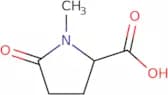
CAS:Methyl 3-methyl-2-oxocyclopentane-1-carboxylate (MECCP) is a fungicide that is used in horticulture. It inhibits the growth of fungi by inhibiting the synthesis of ergosterol, which is an important component of fungal cell membranes. MECCP is synthesized by reacting cyclopentanone with acid methyl ester and sodium hydride in methanol. The product can be hydrolyzed to metconazole, which has fungicidal properties. Methyl 3-methyl-2-oxocyclopentane-1-carboxylate can also be synthesized from methyl 2-oxocyclopentane carboxylate ethyl ester and methyllithium. This compound has a high yield and can be used as a substitute for other compounds such as pentachlorophenol, which have been banned due to their toxicity to humans and animals.Formula:C8H12O3Purezza:Min. 95%Peso molecolare:156.18 g/mol1-Methyl-5-oxopyrrolidine-2-carboxylic acid
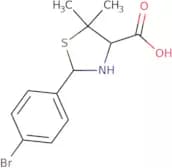
CAS:1-Methyl-5-oxopyrrolidine-2-carboxylic acid is a pyroglutamate derivative that is synthesized by the reaction of methyllithium with a ketone. It is used as a reagent for the synthesis of esters and organolithium compounds. Racemization occurs when this compound reacts with an alcohol or phenol to form an ester or ether, respectively. The Grignard reagents are not reactive in the presence of air, but react readily in the presence of water or alcohol. Methyllithium (MeLi) and aryllithium (ArLi) are both organolithium reagents that react with alkyl halides to form organometallic compounds.Formula:C6H9NO3Purezza:Min. 95%Peso molecolare:143.14 g/mol2-(4-Bromophenyl)-5,5-dimethyl-1,3-thiazolidine-4-carboxylic acid
CAS:2-(4-Bromophenyl)-5,5-dimethyl-1,3-thiazolidine-4-carboxylic acid is a fine chemical that can be used as a building block for research chemicals. It can also be used as an intermediate in the synthesis of complex compounds. 2-(4-Bromophenyl)-5,5-dimethyl-1,3-thiazolidine-4-carboxylic acid has been shown to react with various groups including hydroxyls and amines, making it a versatile compound. This compound is synthesized by condensation of 4 bromobenzene with 5,5 dimethyllithium and the subsequent reaction with thiourea. The product is purified by recrystallization from ethanol.Formula:C12H14BrNO2SPurezza:Min. 95%Colore e forma:PowderPeso molecolare:316.21 g/mol