


CymitQuimica ha oltre 25 partner, tra i quali spicca il fornitore TargetMol
We have reached an agreement with TargetMol: CymitQuimica clients will benefit for a 20% discount on all TargetMol products until the end of the year.On our website you can find the products offered by this partner, which has become one of the world's most recognised compound libraries and small molecule inhibitors supplier. TargetMol offers approximately 120 compound libraries and a wide range of chemical products and kits for life sciences.
Finisce il 31 dic( 12 giorni restanti )
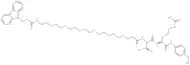
Fmoc-PEG6-Val-Cit-PAB-OH
CAS:<p>Fmoc-PEG6-Val-Cit-PAB-OH is a cleavable ADC linker featuring a Boc-protected amine, a hydrophilic PEG spacer, and a Val-Cit-PAB dipeptide. The benzyl alcohol on PAB can be utilized to attach reactive groups (e.g., PNP) for drug payload conjugation. The Fmoc protecting group is removable with piperidine, revealing a primary amine for amide bond formation in conjugation reactions. The Val-Cit-PAB segment is cleaved by cellular proteases, enabling efficient payload release into cells.</p>Formula:C48H68N6O13Colore e forma:SolidPeso molecolare:937.086OSI-413 free base
CAS:<p>OSI-413 (free base) (CP 373413) is the primary metabolite of Erlotinib. Erlotinib (CP-358774) acts as a direct EGFR tyrosine kinase inhibitor with an IC50 of 2 nM against human EGFR.</p>Formula:C21H21N3O4Colore e forma:SolidPeso molecolare:379.409Mal-amide-PEG8-Val-Cit-PAB-PNP
CAS:<p>Mal-amide-PEG8-Val-Cit-PAB-PNP is a cleavable ADC linker comprising a maleimide group, a PEG spacer, a Val-Cit dipeptide, PAB, and a PNP carbonate. The maleimide serves as a thiol-specific covalent connector for labeling cysteine residues in proteins, whereas the PNP group acts as a highly reactive leaving group. The Val-Cit linker is cleaved by cytoplasmic peptidases.</p>Formula:C51H74N8O20Colore e forma:SolidPeso molecolare:1119.18Mc-d-Val-d-Cit-PAB-PNP
CAS:<p>Mc-d-Val-d-Cit-PAB-PNP is a cleavable (cleavable) ADC linker employed in the synthesis of antibody-drug conjugates (ADCs).</p>Formula:C35H43N7O11Colore e forma:SolidPeso molecolare:737.756Mal-amide-PEG8-Val-Cit-PAB-OH
CAS:<p>Mal-amide-PEG8-Val-Cit-PAB-OH is a cleavable ADC linker, featuring a maleimide group, a hydrophilic PEG spacer, a Val-Cit dipeptide, and a PAB moiety. The maleimide group allows covalent bonding to free thiols on cysteine residues of proteins. The Val-Cit dipeptide is cleaved intracellularly by cathepsins to facilitate payload delivery via the PAB structure.</p>Formula:C44H71N7O16Colore e forma:SolidPeso molecolare:954.072Fmoc-PEG2-Val-Cit-PAB-OH
CAS:<p>Fmoc-PEG2-Val-Cit-PAB-OH is a cleavable ADC linker that features a Boc-protected amine, hydrophilic PEG spacer, and a Val-Cit-PAB dipeptide. The benzyl alcohol on the PAB can be used for conjugating reactive groups (e.g., PNP) to attach a payload. The Fmoc protecting group is removable with piperidine, revealing a primary amine for amide bond formation in conjugation reactions. The Val-Cit-PAB segment is cleaved by cellular proteases to efficiently release the payload inside cells.</p>Formula:C40H52N6O9Colore e forma:SolidPeso molecolare:760.876Buspirone N-oxide
CAS:<p>Buspirone N-oxide (Bu N-oxide) is a metabolite of Buspirone. Buspirone is an orally active 5-HT1A receptor agonist and a dopamine D2 (dopamine D2) autoreceptor antagonist. It is an anxiolytic agent used for research in generalized anxiety disorder.</p>Formula:C21H31N5O3Colore e forma:SolidPeso molecolare:401.5037-Hydroxyrisperidone
CAS:<p>7-Hydroxyrisperidone (7-RispOH) is a metabolite of Risperidone. Risperidone acts as a 5-HT2 receptor blocker, an inhibitor of P-glycoprotein (P-Glycoprotein), and an antagonist of the dopamine D2 receptor.</p>Formula:C23H27FN4O3Colore e forma:SolidPeso molecolare:426.484NH2-PEG3-Val-Cit-PAB-OH
CAS:<p>NH2-PEG3-Val-Cit-PAB-OH is a cleavable ADC (antibody-drug conjugate) linker characterized by a primary amine, a hydrophilic PEG spacer, a Val-Cit dipeptide, and a PAB group. The benzyl alcohol on PAB facilitates conjugation with reactive groups like PNP, enabling attachment to drug payloads. The primary amine readily participates in various reactions such as coupling with carboxylic acids, reductive amination with ketones or aldehydes, and other specialized applications like SNAr reactions or heterocyclic chemistry. The Val-Cit dipeptide is cleaved by intracellular proteases, allowing efficient payload delivery through an elimination mechanism within the PAB structure.</p>Formula:C27H46N6O8Colore e forma:SolidPeso molecolare:582.69Boc-Gly-Gly-Gly-Gly-Gly
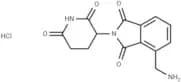
CAS:<p>Boc-Gly-Gly-Gly-Gly-Gly is a protease-cleavable ADC linker with a Boc group at the N-terminus, utilized in the development of antibody-drug conjugates (ADC). The Boc group can be deprotected under mild acidic conditions, resulting in a free amine.</p>Formula:C15H25N5O8Colore e forma:SolidPeso molecolare:403.388Thalidomide-CH2NH2 hydrochloride
CAS:<p>Thalidomide-CH2NH2 hydrochloride is an analog of Thalidomide, characterized by a primary amine group. This primary amine is a versatile functional group that can participate in numerous reactions.</p>Formula:C14H14ClN3O4Colore e forma:SolidPeso molecolare:323.732Mal-amido-PEG8-val-gly
CAS:<p>Mal-amido-PEG8-Val-Gly is an ADC linker containing a maleimide moiety.</p>Formula:C33H56N4O15Colore e forma:SolidPeso molecolare:748.815Boc-PEG2-Val-Cit-PAB-OH
CAS:<p>Boc-PEG2-Val-Cit-PAB-OH is an enzymatically cleavable ADC linker featuring a Boc-protected amine, a hydrophilic PEG spacer, and a Val-Cit-PAB dipeptide. The benzyl alcohol on PAB can be utilized for attachment to reactive groups (such as PNP) to connect with a drug payload. The Boc protecting group can be removed with acid, revealing a primary amine that serves for coupling reactions to form an amide. The Val-Cit-PAB segment is cleaved by cellular proteases, facilitating the effective release of the payload inside the cell.</p>Formula:C30H50N6O9Colore e forma:SolidPeso molecolare:638.753PD-224378
CAS:<p>PD-224378 is the lactam form of glycamine (β-isomer), produced through a Maillard reaction between pregabalin and lactose.</p>Formula:C20H35NO11Colore e forma:SolidPeso molecolare:465.492t-Boc-N-amido-PEG4-Val-Cit
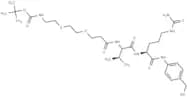
CAS:<p>t-Boc-N-amido-PEG4-Val-Cit is a protease-cleavable ADC linker, featuring a Boc-protected amine, a hydrophilic PEG spacer, and a Val-Cit dipeptide. The Val-Cit dipeptide is susceptible to cleavage by cellular proteases and contains a free carboxylic acid that can couple with amines to form amides. The Boc group can be removed under acidic conditions to reveal a free primary amine, which is useful for various reactions, such as conjugation or reductive amination.</p>Formula:C27H51N5O11Colore e forma:SolidPeso molecolare:621.721Rivaroxaban diol
CAS:<p>Rivaroxabandiol is a metabolite of Rivaroxaban, which is a potent and selective direct inhibitor of coagulation factor Xa (FXa) with an IC50 of 0.7 nM and a Ki of 0.4 nM.</p>Formula:C19H20ClN3O6SColore e forma:SolidPeso molecolare:453.897PSI-7410
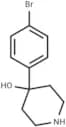
CAS:<p>PSI-7410 is a metabolite of PSI-7851. PSI-7851 acts as an inhibitor of the HCV non-structural protein 5B (NS5B) and exhibits antiviral properties.</p>Formula:C10H15FN2O11P2Colore e forma:SolidPeso molecolare:420.1794-(4-Bromophenyl)-4-hydroxypiperidine
CAS:<p>4-(4-Bromophenyl)-4-hydroxypiperidine (BPHP) is a metabolite of Bromperidol (BRO), produced through the N-dealkylation of BRO.</p>Formula:C11H14BrNOColore e forma:SolidPeso molecolare:256.139(Rac)-8-Hydroxy-efavirenz
CAS:<p>(Rac)-8-Hydroxy-efavirenz is a metabolite of Efavirenz, a non-nucleoside reverse transcriptase inhibitor (NNRTI) used in the treatment of HIV-1.</p>Formula:C14H9ClF3NO3Colore e forma:SolidPeso molecolare:331.674DOSPA (hydrochlorid)
CAS:<p>DOSPA hydrochloride is a cationic lipid utilized in the formation of lipid nanoparticles.</p>Formula:C54H115Cl5N6O3Colore e forma:SolidPeso molecolare:1073.79Benzyl N1-[PEG1-NHS]-N6-(t-Boc)-L-lysinate
CAS:<p>Benzyl N1-[PEG1-NHS]-N6-(t-Boc)-L-lysinate is a versatile ADC linker composed of a terminal benzyl group, a PEG unit, an NHS ester, and L-lysine protected with a t-Boc group. It is frequently utilized in research and development for bioconjugation and chemical modification.</p>Formula:C26H35N3O10Colore e forma:SolidPeso molecolare:549.57NH2-PEG4-Val-Cit-PAB-OH
CAS:<p>NH2-PEG4-Val-Cit-PAB-OH is a cleavable ADC linker that features a primary amine, a hydrophilic PEG spacer, a Val-Cit dipeptide, and a PAB group. The benzyl alcohol on the PAB component is suitable for attaching reactive groups (such as PNP) to facilitate binding with drug payloads. The primary amine is versatile for reactions such as coupling with carboxylic acids, reductive amination with ketones or aldehydes, or other specialized applications like SNAr reactions or heterocyclic chemistry. The Val-Cit dipeptide is cleaved by intracellular cathepsins, allowing efficient payload delivery via an elimination mechanism through the PAB structure.</p>Formula:C29H50N6O9Colore e forma:SolidPeso molecolare:626.74211-Mercaptoundecanoate-NHS
CAS:<p>11-Mercaptoundecanoate-NHS is a lipid utilized in the synthesis of Linkers.</p>Formula:C15H25NO4SColore e forma:SolidPeso molecolare:315.428MC-val-ala-nhs ester
CAS:<p>MC-Val-Ala-NHS ester is a cleavable ADC linker featuring maleimide and NHS ester groups. The Val-Ala linker is susceptible to cleavage by cathepsin B. The maleimide group can react with thiol groups, as can the MC component. The NHS ester reacts specifically and efficiently with amines (such as lysine residue side chains or aminosilane-coated surfaces) under neutral or mildly alkaline conditions, forming covalent bonds. Reagent grade, intended for research use only.</p>Formula:C22H30N4O8Colore e forma:SolidPeso molecolare:478.496(S)-MCOPPB
CAS:<p>(S)-MCOPPB is the S-enantiomer of MCOPPB, an orally active selective agonist for the Nociceptin/Orphanin FQ-Receptor. It inhibits signal transduction in mouse brain NOP receptors and is utilized in anxiety disorder research.</p>Formula:C26H40N4Colore e forma:SolidPeso molecolare:408.6233-Cl-Pyridine-amide-acrylaldehyde-piperazine
<p>3-Cl-Pyridine-amide-acrylaldehyde-piperazine serves as a synthetic intermediate for LO-4-25. LO-4-25 is a ligand for the androgen receptor (AR) DNA binding domain and is linked to a truncated fumaramide handle via a connector. In 22Rv1 cells, LO-4-25 demonstrates potent degradation of both AR and AR-V7.</p>Colore e forma:Odour Solid7-APB hydrochloride
CAS:<p>7-APB hydrochloride is a benzofuran compound and serves as a metabolite of 7-MAPB.</p>Formula:C11H14ClNOColore e forma:SolidPeso molecolare:211.688BrAc-Val-Ala
<p>BrAc-Val-Ala is an ADC linker, utilized for synthesizing antibody-drug conjugates (ADC) such as ABBV-969.</p>Colore e forma:Odour Solid5-Carboxy-2′-deoxycytidine
CAS:<p>5-Carboxy-2′-deoxycytidine is a metabolite of Trifluridine.</p>Formula:C10H13N3O6Colore e forma:SolidPeso molecolare:271.227Propofol sulfate sodium
CAS:<p>Propofolsulfate (sodium) is a metabolite of Propofol.</p>Formula:C12H17NaO4SColore e forma:SolidPeso molecolare:280.316Mal((3S,3aR,6S,6aR)-Hexahydrofuro[3,2-b]furan-3,6-diamine-PEG12)-β-Glu-PAB
<p>Mal((3S,3aR,6S,6aR)-Hexahydrofuro[3,2-b]furan-3,6-diamine-PEG12)-β-Glu-PAB is an ADC linker characterized by its reactivity with interchain cysteine through maleimide and cleavability by β-glucuronidase. It is utilized in the synthesis of antibody-drug conjugates (ADCs), such as AZD0516.</p>Colore e forma:Odour SolidEtoricoxib N1'-oxide
CAS:<p>EtoricoxibN1'-oxide is a metabolite of Etoricoxib. It does not inhibit COX-1 and does not significantly inhibit COX-2.</p>Formula:C18H15ClN2O3SColore e forma:SolidPeso molecolare:374.841(R)-Zevaquenabant
<p>(R)-Zevaquenabant ((R)-MRI-1867) is the enantiomer of Zevaquenabant. Zevaquenabant ((S)-MRI-1867) is a peripherally restricted, orally bioavailable dual antagonist of the cannabinoid CB1 receptor and inducible nitric oxide synthase (iNOS). It is beneficial in improving chronic kidney disease (CKD) caused by obesity.</p>Colore e forma:Odour SolidCIT-ALD
CAS:<p>CIT-ALD is an aldehyde intermediate formed during the metabolism of Citalopram. It has potential applications in the research of neurological disorders.</p>Formula:C18H14FNO2Peso molecolare:295.31N-Methyl-N-[(3-methyldithio)-1-oxopropyl]-L-alanine
CAS:<p>N-Methyl-N-[(3-methyldithio)-1-oxopropyl]-L-alanine serves as a PEGn linker for antibody-drug conjugates (ADC).</p>Formula:C8H15NO3S2Colore e forma:SolidPeso molecolare:237.34Desmonomethylpromazine
CAS:<p>Desmonomethylpromazine is a demethylated metabolite of Promazine that can penetrate the brain. It enters red blood cells and tissues via passive diffusion and is distributed in organs such as the lungs, liver, and kidneys in rats.</p>Formula:C16H18N2SColore e forma:SolidPeso molecolare:270.39MC-VC-PAB-O-Gemcitabine
CAS:<p>MC-VC-PAB-O-Gemcitabine is a linker-antibiotic intermediate that forms part of the antibody-antibiotic conjugate (AAC) molecule. It is synthesized by conjugating the linker with the antibiotic Gemcitabine. This compound is useful in studying the immunotherapy of bacterial infections and developing novel antibacterial drugs.</p>Formula:C38H49F2N9O12Colore e forma:SolidPeso molecolare:861.85(R)-KMH-233
CAS:<p>(R)-KMH-233 is an isomer of KMH-233, which can serve as a reference compound in experiments. KMH-233 functions as a potent, reversible, and selective inhibitor of L-type amino acid transporter 1 (LAT1), effectively hindering the uptake of LAT1 substrate, l-leucine (IC50=18 μM), and also inhibiting cell growth. Even at a low concentration of 25 μM, KMH-233 significantly enhances the efficacy of Bestatin and cisplatin.</p>Formula:C32H25N7O5Peso molecolare:587.58Boc-L-Cys(Propargyl)-OH (DCHA)
<p>Boc-L-Cys(Propargyl)-OH (DCHA) is a reagent utilized in click chemistry and can be applied in various biochemical studies.</p>Formula:C23H40N2O4SPeso molecolare:440.27088(2R,4S)-Boc-D-Pro(4-N3)-OH (DCHA)
(2R,4S)-Boc-D-Pro(4-N3)-OH (DCHA) is a click chemistry reagent containing azide groups. It can undergo copper-catalyzed azide-alkyne cycloaddition (CuAAC) reactions with molecules that have alkyne groups. Additionally, it can partake in strain-promoted alkyne-azide cycloaddition (SPAAC) reactions with molecules containing DBCO or BCN groups.Formula:C23H43N5O4Peso molecolare:453.3315Boc-Ser(O-propargyl)-OH (DCHA)
<p>Boc-Ser(O-propargyl)-OH (DCHA) is a click chemistry reagent containing a propargyl group.</p>Formula:C23H40N2O5Peso molecolare:424.29372(S)-N3-HABA (DCHA)
<p>(S)-N3-HABA (DCHA) is a reagent used in click chemistry, notable for its application in bonding nucleic acids, lipids, proteins, and other molecules due to its high yield, specificity, and simplicity. This compound contains an Azide group, enabling a copper-catalyzed Azide-Alkyne Cycloaddition (CuAAC) with molecules that have an Alkyne group, as well as a Strain-Promoted Azide-Alkyne Cycloaddition (SPAAC) with molecules containing DBCO or BCN groups.</p>Formula:C16H30N4O3Peso molecolare:326.23179DAPOA (DCHA)
DAPOA DCHA, a compound containing azide groups, serves as a pivotal chemical reagent. It is utilized in peptide synthesis as a linker and can be further modified via the Staudinger ligation or click chemistry on azide groups. This compound acts as a building block for dendritic structures. It engages in copper-catalyzed azide-alkyne cycloaddition reactions (CuAAc) with molecules containing alkyne groups and undergoes strain-promoted alkyne-azide cycloaddition (SPAAC) with molecules bearing DBCO or BCN groups.Formula:C17H31N7O3Peso molecolare:381.24884H-L-Dbu(N3)-OH hydrochloride
<p>H-L-Dbu(N3)-OH is a click chemistry reagent that contains an azide group. Click chemistry has significant potential for applications in the coupling of nucleic acids, lipids, proteins, and other molecules due to its beneficial features such as high yield, high specificity, and simplicity. This compound can react with molecules containing alkyne groups via copper-catalyzed azide-alkyne cycloaddition (CuAAC). It is also capable of undergoing strain-promoted alkyne-azide cycloaddition (SPAAC) with molecules that have DBCO or BCN groups.</p>Formula:C4H9ClN4O2Peso molecolare:180.0414MeO-PEG-alkyne (MW 750Da)
<p>MeO-PEG-alkyne (MW 750Da) is a click chemistry reagent that includes an alkyne group. It possesses an azide group, allowing for copper-catalyzed azide-alkyne cycloaddition (CuAAc) with alkyne-containing molecules. Additionally, it can undergo strain-promoted azide-alkyne cycloaddition (SPAAC) with molecules containing DBCO or BCN groups.</p>Me-PMeOx(100)-N3 (MW 8.5kDa)
<p>Me-PMeOx(100)-N3 (MW 8.5kDa) is a reagent utilized in click chemistry, which offers significant potential for joining nucleic acids, lipids, proteins, and other molecules. Valued for its high yield, specificity, and simplicity, it sees widespread application in various research fields. Equipped with an Azide group, it can undergo copper-catalyzed azide-alkyne cycloaddition (CuAAc) with molecules containing an Alkyne group. Additionally, it participates in strain-promoted azide-alkyne cycloaddition (SPAAC) with molecules containing DBCO or BCN groups.</p>Adenosine 5′-O-1-thiotriphosphate (disodium)
<p>Adenosine 5′-O-(1-thiotriphosphate) (disodium) is an adenosine nucleotide modified at the alpha-phosphate.</p>Formula:C10H14N5Na2O12P3SPeso molecolare:566.93679pppApA sodium
<p>pppApA sodium is a linear dinucleotide intermediate involved in the enzymatic production of bacterial signaling nucleotide c-diAMP. It is formed by the linkage of two ATP molecules.</p>Formula:C20H26N10Na2O19P4Peso molecolare:880.01216Carbonic anhydrase inhibitor 19
CAS:<p>Carbonic anhydrase inhibitor19 (compound 26a) targets glaucoma-associated isozymes hCA II and hCA XII, with inhibition constants (Kis) of 9.4 nM and 6.7 nM, respectively. This compound is effective in reducing intraocular pressure.</p>Formula:C23H25N3O6S2Peso molecolare:503.59Carbonic anhydrase inhibitor 18
<p>Carbonic anhydrase inhibitor18 (Compound 9) is an inhibitor of human carbonic anhydrase (hCA) isozymes, with Ki values of 604.8 nM for hCA I, 333.6 nM for hCA II, 1.9 nM for hCA IX, and 6.7 nM for hCA XII. Carbonic anhydrase inhibitor18 is applicable in cancer research.</p>Formula:C26H28N4O6S2Peso molecolare:556.14503hCAIX/XII-IN-11
<p>hCAIX/XII-IN-11 (Compound 6c) is an inhibitor of hCA IX and hCA XII, exhibiting Ki values of 0.7 μM for both isoforms. This compound is applicable in cancer research.</p>Formula:C13H10FN3O4Peso molecolare:291.06553Butyryl-Coenzyme A trisodium
Butyryl-Coenzyme A (trisodium) is a microbial metabolite that can be synthesized into butyric acid or butyrate.Formula:C25H39N7Na3O17P3SPeso molecolare:903.10291Plant 14-3-3-IN-1
Plant 14-3-3-IN-1 (Compound 2) is an inhibitor of the Arabidopsis thaliana 14-3-3 protein, with an IC50 of 1.21 μM. It exhibits varying inhibitory activity against different 14-3-3 isoforms and promotes the closure of leaf stomata.Formula:C22H19NO7SPeso molecolare:441.08822Aripiprazole N,N-Dioxide
CAS:AripiprazoleN,N-Dioxide is a metabolite of the atypical antipsychotic drug aripiprazole, formed through its oxidation.Formula:C23H27Cl2N3O4Peso molecolare:480.38







![Benzyl N1-[PEG1-NHS]-N6-(t-Boc)-L-lysinate](/_next/image/?url=https%3A%2Fstatic.cymitquimica.com%2Fproducts%2FTM%2Fthumb-webp%2FTYD-02051.webp&w=3840&q=75)


![N-Methyl-N-[(3-methyldithio)-1-oxopropyl]-L-alanine](/_next/image/?url=https%3A%2Fstatic.cymitquimica.com%2Fproducts%2FTM%2Fthumb-webp%2FTYD-02268.webp&w=3840&q=75)

