ELK Promotion
Take advantage of an exclusive 20% discount when purchasing three ELK ELISA kits from their extensive range of over 8,000 assays validated for species like mouse, rat, human, and more. With ISO 9001 and CE-certified quality and high sensitivity and specificity in immunoassays, ELK kits help you achieve reliable and consistent results every time.
Finisce il 31 dic( 2 ore restanti )
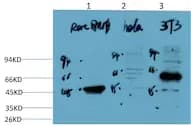
ATG5 Rabbit pAb
Autophagy is generally activated by conditions of nutrient deprivation but has also been associated with a number of physiological processes including development, differentiation, neurodegeneration, infection, and cancer. Formation of the autophagosome involves a ubiquitin-like conjugation system in which Atg12 is covalently bound to Atg5 and targeted to autophagosome vesicles. This conjugation reaction is mediated by the ubiquitin E1-like enzyme Atg7 and the E2-like enzyme Atg10.ATG7 Rabbit pAb
The molecular machinery of autophagy was largely discovered in yeast and referred to as autophagy-related (Atg) genes. Formation of the autophagosome involves a ubiquitin-like conjugation system in which Atg12 is covalently bound to Atg5 and targeted to autophagosome vesicles. This conjugation reaction is mediated by the ubiquitin E1-like enzyme Atg7 and the E2-like enzyme Atg10.ATG13 Rabbit pAb
Atg13 was identified as a constitutively expressed protein that was genetically linked to Atg1/Apg1, a protein kinase required for autophagy. Overexpression of Atg1 suppresses the defects in autophagy observed in Atg13 mutants. Autophagy requires a direct association between Atg1 and Atg13, and is inhibited by TOR-dependent phosphorylation of Atg13 under high-nutrient conditions.ATG14L Rabbit pAb
ATG14 is a autophage-related protein. The serine/threonine kinase ULK1 phosphorylates Atg14 at Ser29 to promote autophagosome formation.c-Abl Rabbit pAb
c-Abl protein is distributed in both the nucleus and the cytoplasm of cells. It is implicated in regulating cell proliferation, apoptosis, differentiation, cell adhesion, and stress responses.NBR1 Rabbit pAb
NBR1 protein is known for its encoding gene proximity to the BRCA1 tumor suppressor gene. N-terminal Phox and Bem1p (PB1) domains of NBR1 mediate its interaction with muscle specific titin kinase and scaffolding protein p62. NBR1 plays a role in autophagy by facilitating the autophagosomal degradation of ubiquitinated proteins independently and also in concert with p62.WIPI2 Rabbit pAb
WIPI2 is the mammalian homolog of Atg18, not Atg21, along with the closely related protein, WIPI1. WD40 repeat proteins regulate the assembly of multiprotein complexes by presenting a beta-propeller platform for simultaneous and reversible protein-protein interactions. Members of the WIPI subfamily of WD40 repeat proteins, such as WIPI2, have a 7-bladed propeller structure and contain a conserved motif for interaction with phospholipids.FAK Rabbit pAb
FAK is a widely expressed cytoplasmic protein tyrosine kinase involved in integrin-mediated signal transduction. It plays an important role in the control of several biological processes, including cell spreading, migration, and survival.Gab1 Rabbit pAb
The Gab1 protein is a member of the IRS1-like multisubstrate docking protein family. It is an important mediator of branching tubulogenesis and plays a central role in cellular growth response, transformation and apoptosisERK1 Rabbit pAb
Mitogen-activated protein kinases (MAPKs) are a widely conserved family of serine/threonine protein kinases involved in many cellular programs such as cell proliferation, differentiation, motility, and death. The p44/42 MAPK (Erk1/2) signaling pathway can be activated in response to a diverse range of extracellular stimuli including mitogens, growth factors, and cytokines and is an important target in the diagnosis and treatment of cancer.MEK4 (F194)Rabbit pAb
SAPK/Erk kinase (SEK1), also known as MEK4 or MKK4 or Jun kinase kinase (JNKK), activates the MAP kinase homologues SAPK and JNK in response to various cellular stresses and inflammatory cytokines . Activation of SEK1 occurs through MEKK phosphorylation of serine and threonine residues at positions 257 and 261, respectively. Like MEK, SEK is a dual-specificity protein kinase that phosphorylates SAPK/JNK at a conserved T*PY* site in its activation loop . Phosphorylation by Akt at Ser80 inhibits SEK1 and suppresses stress-activated signal transduction .Bmi-1 (F270)Rabbit pAb
Bmi1 is a component of the PRC1 complex, which together with Ring1 strongly enhances the E3 ubiquitin ligase activity of the Ring2 catalytic subunit . Bmi1 plays an important role in the regulation of cell proliferation and senescence through repression of the p16 INK4A and p19 ARF genes and is required for maintenance of adult hematopoietic and neural stem cells .PI3 Kinase P85 Rabbit pAb
Phosphatidylinositol-4,5-bisphosphate 3-kinase (also called phosphatidylinositide 3-kinases, phosphatidylinositol-3-kinases, PI 3-kinases, PI(3)Ks, PI-3Ks or by the HUGO official stem symbol for the gene family, PI3K(s)) are a family of enzymes involved in cellular functions such as cell growth, proliferation, differentiation, motility, survival and intracellular trafficking, which in turn are involved in cancer.PGP9.5 (UCHL-1)Rabbit pAb
UCHL1, UCHL3, UCHL5/UCH37, and BRCA-1-associated protein-1 (BAP1) belong to the UCH family of DUBs, which all posses a conserved catalytic domain (UCH domain) of about 230 amino acids. UCHL1 is abundantly expressed in neuronal tissues and testes.Calreticulin Rabbit pAb
Calcium is a universal signaling molecule involved in many cellular functions such as cell motility, metabolism, protein modification, protein folding, and apoptosis. Calcium is stored in the endoplasmic reticulum (ER), where it is buffered by calcium binding chaperones such as calnexin and calreticulin, and is released via the IP3 Receptor channel . Calreticulin also functions as an ER chaperone that ensures proper folding and quality control of newly synthesized glycoproteins. As such, calreticulin presumably does not alter protein folding but regulates proper timing for efficient folding and subunit assembly. Furthermore, calreticulin retains proteins in non-native conformation within the ER and targets them for degradation .Kininogen 1 Rabbit pAb
Kininogens are inhibitors of thiol proteases; HMW-kininogen plays an important role in blood coagulation by helping to position optimally prekallikrein and factor XI next to factor XII; HMW-kininogen inhibits the thrombin- and plasmin-induced aggregation of thrombocytes; the active peptide bradykinin that is released from HMW-kininogen shows a variety of physiological effects. LMW-kininogen inhibits the aggregation of thrombocytes; LMW-kininogen is in contrast to HMW-kininogen not involved in blood clottingUCHL1, UCHL3, UCHL5/UCH37, and BRCA-1-associated protein-1 (BAP1) belong to the UCH family of DUBs, which all posses a conserved catalytic domain (UCH domain) of about 230 amino acids. UCHL1 is abundantly expressed in neuronal tissues and testes.Human SARS-CoV-2 Nucleocapsid ELISA Kit
The test principle applied in this kit is Sandwich enzyme immunoassay. The microtiter plate provided in this kit has been pre-coated with an antibody specific to Human SARS-CoV-2 Nucleocapsid. Standards or samples are added to the appropriate microtiter plate wells then with a biotin-conjugated antibody specific to Human SARS-CoV-2 Nucleocapsid. Next, Avidin conjugated to Horseradish Peroxidase (HRP) is added to each microplate well and incubated. After TMB substrate solution is added, only those wells that contain Human SARS-CoV-2 Nucleocapsid, biotin-conjugated antibody and enzyme-conjugated Avidin will exhibit a change in color. The enzyme-substrate reaction is terminated by the addition of sulphuric acid solution and the color change is measured spectrophotometrically at a wavelength of 450nm ± 10nm. The concentration of Human SARS-CoV-2 Nucleocapsid in the samples is then determined by comparing the OD of the samples to the standard curve.Colore e forma:Colourless TransparentliquidMouse SREBP2(Sterol Regulatory Element-binding Protein 2) ELISA Kit
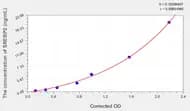
The test principle applied in this kit is Sandwich enzyme immunoassay. The microtiter plate provided in this kit has been pre-coated with an antibody specific to Mouse SREBP2. Standards or samples are added to the appropriate microtiter plate wells then with a biotin-conjugated antibody specific to Mouse SREBP2. Next, Avidin conjugated to Horseradish Peroxidase (HRP) is added to each microplate well and incubated. After TMB substrate solution is added, only those wells that contain Mouse SREBP2, biotin-conjugated antibody and enzyme-conjugated Avidin will exhibit a change in color. The enzyme-substrate reaction is terminated by the addition of sulphuric acid solution and the color change is measured spectrophotometrically at a wavelength of 450nm ± 10nm. The concentration of Mouse SREBP2 in the samples is then determined by comparing the OD of the samples to the standard curve.Colore e forma:Colourless TransparentliquidHuman IKBKE(Inhibitor of Nuclear Factor κ-B Kinase Subunit ε) ELISA Kit
The test principle applied in this kit is Sandwich enzyme immunoassay. The microtiter plate provided in this kit has been pre-coated with an antibody specific to Human IKBKE. Standards or samples are added to the appropriate microtiter plate wells then with a biotin-conjugated antibody specific to Human IKBKE. Next, Avidin conjugated to Horseradish Peroxidase (HRP) is added to each microplate well and incubated. After TMB substrate solution is added, only those wells that contain Human IKBKE, biotin-conjugated antibody and enzyme-conjugated Avidin will exhibit a change in color. The enzyme-substrate reaction is terminated by the addition of sulphuric acid solution and the color change is measured spectrophotometrically at a wavelength of 450nm ± 10nm. The concentration of Human IKBKE in the samples is then determined by comparing the OD of the samples to the standard curve.Colore e forma:Colourless TransparentliquidGoat OC(Osteocalcin) ELISA Kit
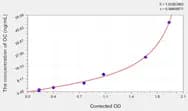
The test principle applied in this kit is Sandwich enzyme immunoassay. The microtiter plate provided in this kit has been pre-coated with an antibody specific to Goat OC. Standards or samples are added to the appropriate microtiter plate wells then with a biotin-conjugated antibody specific to Goat OC. Next, Avidin conjugated to Horseradish Peroxidase (HRP) is added to each microplate well and incubated. After TMB substrate solution is added, only those wells that contain Goat OC, biotin-conjugated antibody and enzyme-conjugated Avidin will exhibit a change in color. The enzyme-substrate reaction is terminated by the addition of sulphuric acid solution and the color change is measured spectrophotometrically at a wavelength of 450nm ± 10nm. The concentration of Goat OC in the samples is then determined by comparing the OD of the samples to the standard curve.Colore e forma:Colourless Transparentliquid