TR-D228925 - 7-dehydrocholesterol-palmitoleate | 142159-52-2
Sorry, no product with reference TR-D228925 been found, but please check out the following similar products:
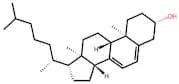
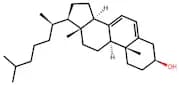
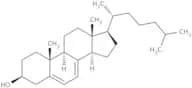
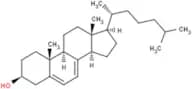
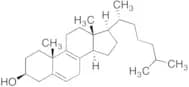
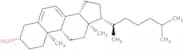
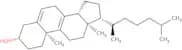
7-Dehydrocholesterol ((3S,9S,10R,13R,14R,17R)-10,13-dimethyl-17-((R)-6-methylheptan-2-yl)-2,3,4,9,10,11,12,13,14,15,16,17-dodecahydro-1H-cyclopenta[a]phenanthren-3-ol)
CAS:ProvitaminsFormula:C27H44OColor and Shape:Off-White SolidMolecular weight:384.339227-Dehydrocholesterol
CAS:Formula:C27H44OPurity:≥ 95.0% (dried basis)Color and Shape:White, off-white or faint yellow powder or crystalsMolecular weight:384.647-Dehydrocholesterol
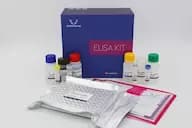
CAS:<p>7-Dehydrocholesterol (Provitamin D3) down-regulates cholesterol biosynthesis in cultured Smith-Lemi-Opitz syndrome skin fibroblasts.</p>Formula:C27H44OPurity:99.23%Color and Shape:SolidMolecular weight:384.64Human DHCR7(7-Dehydrocholesterol Reductase) ELISA Kit
<p>The test principle applied in this kit is Sandwich enzyme immunoassay. The microtiter plate provided in this kit has been pre-coated with an antibody specific to Human DHCR7. Standards or samples are added to the appropriate microtiter plate wells then with a biotin-conjugated antibody specific to Human DHCR7. Next, Avidin conjugated to Horseradish Peroxidase (HRP) is added to each microplate well and incubated. After TMB substrate solution is added, only those wells that contain Human DHCR7, biotin-conjugated antibody and enzyme-conjugated Avidin will exhibit a change in color. The enzyme-substrate reaction is terminated by the addition of sulphuric acid solution and the color change is measured spectrophotometrically at a wavelength of 450nm ± 10nm. The concentration of Human DHCR7 in the samples is then determined by comparing the OD of the samples to the standard curve.</p>Color and Shape:Colourless Transparentliquid8-Dehydrocholesterol
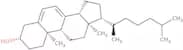
CAS:<p>Applications 8-Dehydrocholesterol is an intermediate in the synthesis of Zymostenol, which is the derivative of Zymosterol (Z701520), an sterol intermediate in the biosynthesis of cholesterol (C432501).<br>References Roland, E.D., et al.: J. Am. Chem. Soc., 111, 278 (1989); Echevarria, F., et al.: J. Biol. Chem., 265, 8484 (1990); Baranovskii, A.V., et al.: Russian. J. Bioorg. Chem., 28, 250 (2002); Schoenheimer, et al.: J. Biol. Chem., 105, 355 (1934);<br></p>Formula:C27H44OColor and Shape:NeatMolecular weight:384.647-Dehydrocholesterol - min 95%
CAS:Controlled Product<p>7-Dehydrocholesterol is a cholesterol precursor that is synthesized in the skin and liver. It is also found in other tissues, including the brain, where it is converted to cholesterol. 7-Dehydrocholesterol can be used as an indicator of sterol metabolism because its concentration reflects the rate of cholesterol production by the body. The kinetics of 7-dehydrocholesterol are similar to those of cholesterol, and it has been used as a marker for measuring cholesterol synthesis rates in humans. Skin cells contain 7-dehydrocholesterol, which may be important for skin cancer prevention. 7-Dehydrocholesterol has also been shown to be effective in reducing autoimmune diseases such as lupus erythematodes and bowel diseases such as Crohn's disease, although further research is needed.</p>Formula:C27H44OPurity:Min. 95%Color and Shape:PowderMolecular weight:384.64 g/mol7-Dehydrocholesterol acetate
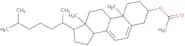
CAS:Controlled Product<p>7-Dehydrocholesterol acetate is a vitamin D analog that is used in the treatment of hypervitaminosis D. It has been shown to be effective for the prevention and treatment of osteoporosis, hypocalcemia, and hyperparathyroidism. 7-Dehydrocholesterol acetate is also used as a feed additive in livestock production to prevent the vitamin D deficiency that can occur with high dietary concentrations of hydrogen bond donors such as carbonyl groups. The mechanism of action is not yet known, but it has been hypothesized that this drug acts by activation of vitamin D receptors on cell surfaces. This drug has also been shown to have anticancer activity and may be useful for treating various types of cancer.</p>Formula:C29H46O2Purity:Min. 95 Area-%Color and Shape:PowderMolecular weight:426.67 g/mol7-Dehydrocholesterol
CAS:Controlled Product<p>7-Dehydrocholesterol is a sterol found in cells. It is the immediate precursor of cholesterol, which is synthesized from 7-dehydrocholesterol by the enzyme 7-dehydrocholesterol reductase. This compound has been shown to be an important regulator of mitochondrial membrane potential and ATP synthesis in neuro2a cells. Furthermore, 7-dehydrocholesterol has been shown to have therapeutic effects on metabolic disorders, skin cancer, and polymerase chain reactions. It also has receptor activity and enzyme activities that are not yet well understood. The untreated group had higher levels of 7-dehydrocholesterol than the treated group.</p>Formula:C27H44OPurity:Min. 95%Color and Shape:PowderMolecular weight:384.64 g/mol8(9)-dehydrocholesterol
CAS:Controlled Product<p>8(9)-dehydrocholesterol is a cholesterol precursor that can be synthesized by the liver. It is an intermediate in the synthesis of cholesterol and bile acids. 8(9)-Dehydrocholesterol has been found to have high levels of activity against cerebrotendinous xanthomatosis, which is a rare genetic disorder that causes neurological problems and skin lesions. 8(9)-Dehydrocholesterol is also used as a diagnostic marker for this disease. This molecule has been shown to have some biochemical abnormalities, such as high values of creatine kinase, which are associated with fatty acid oxidation disorders.</p>Formula:C27H44OPurity:Min. 95%Color and Shape:PowderMolecular weight:384.64 g/mol7-Dehydrocholesterol Oleate
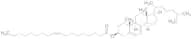
CAS:Controlled Product<p>Stability Light Sensitive<br>Applications 7-Dehydrocholesterol Oleate is a sterol ester from the green alga Chlorella kessleri and the yeast Saccharomyces cerevisiae.<br>References Rezanka, T., et al.: J. Chromatogr., 598, 219 (1992)<br></p>Formula:C45H76O2Color and Shape:NeatMolecular weight:649.087-Dehydrocholesterol-d6
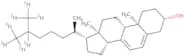
Controlled ProductFormula:C27H38D6OColor and Shape:NeatMolecular weight:390.687-dehydrocholesterol-d7
CAS:Controlled Product<p>7-dehydrocholesterol-d7 is a radioactive form of cholesterol that can be used to study the biosynthesis of cholesterol in the prothoracic gland. The synthesis of 7-dehydrocholesterol-d7 in the prothoracic gland was studied by incubating female cockroaches with labeled cholic acid, which is converted to 7-dehydrocholesterol. This process was followed by isolation and purification of the product, which was then analyzed for radioactivity and identified as 7-dehydrocholesterol-d7. The synthesis of 7-dehydrocholesterol in prothoracic glands has been shown to be dependent on dietary intake and cellular metabolism.</p>Formula:C27H37D7OPurity:Min. 95%Molecular weight:391.68 g/molCholecalciferol
CAS:Formula:C27H44OPurity:>98.0%(HPLC)Color and Shape:White to Almost white powder to crystalMolecular weight:384.65(3β)-Cholesta-5,7-dien-3-ol
CAS:Formula:C27H44OPurity:95%Color and Shape:SolidMolecular weight:384.6377