Apoptose
Os inibidores da apoptose são compostos que previnem ou retardam o processo de morte celular programada, conhecido como apoptose. Esses inibidores são vitais no estudo dos mecanismos de sobrevivência celular e são usados para investigar doenças onde a apoptose é desregulada, como câncer, distúrbios neurodegenerativos e doenças autoimunes. Ao modular a apoptose, esses inibidores podem ajudar no desenvolvimento de terapias destinadas a controlar a morte celular. Na CymitQuimica, oferecemos uma ampla seleção de inibidores da apoptose de alta qualidade para apoiar sua pesquisa em biologia celular, oncologia e áreas relacionadas.
Subcategorias de "Apoptose"
- ASK(6 produtos)
- BCL(11 produtos)
- Caspase(125 produtos)
- FOXO1(3 produtos)
- IAP(66 produtos)
- Mdm2(12 produtos)
- PD-1/PD-L1(125 produtos)
- PDK(9 produtos)
- PERK(25 produtos)
- Serina/treonina quinase(15 produtos)
- Survivina(13 produtos)
- TNF(92 produtos)
- c-RET(51 produtos)
- p53(62 produtos)
Exibir 6 mais subcategorias
Foram encontrados 5592 produtos de "Apoptose"
Ordenar por
Pureza (%)
0
100
|
0
|
50
|
90
|
95
|
100
[Au(L4)(CyJohnPhos)]SbF6
<p>[Au(L4)(CyJohnPhos)]SbF6 is a gold-containing compound that exhibits inhibitory effects on cyclooxygenase-1/2 (COX-1/2), suppresses the proliferation of colon cancer cells Caco2-/TC7 with an IC50 of 0.98 μM, and induces cell apoptosis (apoptosis). Additionally, [Au(L4)(CyJohnPhos)]SbF6 acts as an inhibitor of thioredoxin reductase (TrxR) and demonstrates antioxidative activity by modulating ROS levels.</p>Fórmula:C44H56AuF6NO4PSSbCor e Forma:SolidPeso molecular:1158.68KP1019
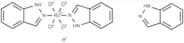
CAS:<p>KP1019 is now discontinued.</p>Fórmula:C21H19Cl4N6RuCor e Forma:SolidPeso molecular:598.30ECDD-S18
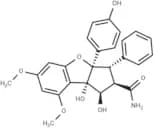
<p>ECDD-S18 (compound ECDD-S18) induces apoptosis in a dose-dependent manner, effectively targeting the vacuolar ATPase (V-ATPase) and impairing lysosomal acidification.</p>Fórmula:C35H31BrO12Cor e Forma:SolidPeso molecular:723.52Tubulin polymerization-IN-70
<p>Tubulin polymerization-IN-70 (compound Q19) is an effective inhibitor of tubulin polymerization. This compound exerts antiproliferative properties by targeting the colchicine binding site on tubulin, thereby inhibiting its polymerization. Tubulin polymerization-IN-70 also induces apoptosis and cell cycle arrest at the G2/M phase. Additionally, it triggers a decrease in mitochondrial membrane potential and elevates levels of reactive oxygen species (ROS). Moreover, Tubulin polymerization-IN-70 possesses anti-angiogenic and anticancer activities.</p>Fórmula:C25H23N3O2Cor e Forma:SolidPeso molecular:397.47eIF4A3-IN-7
CAS:<p>eIF4A3-IN-7: Potent eIF4A3 inhibitor, potential cancer/dysproliferation research (WO2019161345A1, Compound 8).</p>Fórmula:C26H25NO7Cor e Forma:SolidPeso molecular:463.486Apoptosis inducer 30
<p>Apoptosisinducer 30 (Compound 15a) acts as an anticancer agent. It induces apoptosis in MCF-7 cells through the mitochondrial pathway. This compound elevates intracellular levels of reactive oxygen species (ROS), decreases mitochondrial membrane potential, and arrests the cell cycle at the G0/G1 phase. Apoptosisinducer 30 inhibits cell growth, with an IC50 value of 0.32 μM against MCF-7 cells, and suppresses tumor growth in a mouse breast cancer model.</p>Fórmula:C52H69BrNO4PCor e Forma:SolidPeso molecular:882.99Quercetin-d3
<p>Quercetin-d3 hydrate, a deuterated form of Quercetin hydrate, acts as a flavonoid that stimulates recombinant SIRT1 and serves as a PI3K inhibitor. The compound specifically exhibits IC50 values of 2.4 μM, 3.0 μM, and 5.4 μM against PI3Kγ, PI3Kδ, and PI3Kβ, respectively.</p>Fórmula:C15H9D3O8Cor e Forma:SolidPeso molecular:323.27Lactoferrin (17-41)
CAS:<p>Amino acids 17-41 of lactoferrin, lactoferricin B, enhance anti-fungal effects, targeting Candida Albicans.</p>Fórmula:C141H224N46O29S3Pureza:98%Cor e Forma:SolidPeso molecular:3123.77CQ-ER
<p>CQ-ER is a Coumarin-quinazolinone-based photosensitizer targeting the endoplasmic reticulum (ER). It induces ferroptosis, thereby enhancing photodynamic therapy (PDT).</p>Fórmula:C33H33N7O6SCor e Forma:SolidPeso molecular:655.72PRMT5-IN-45
<p>PRMT5-IN-45 (compound 36) is a potent and selective inhibitor of PRMT5, exhibiting an IC50 value of 3 nM. This compound effectively reduces the levels of symmetrical dimethylarginine (sDMA) and inhibits the proliferation of the MOLM-13 cell line by inducing apoptosis and causing cell cycle arrest.</p>Fórmula:C26H31N7O2Cor e Forma:SolidPeso molecular:473.57Angiogenesis inhibitor 3
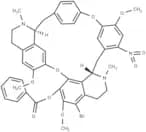
CAS:<p>Angiogenesis Inhibitor 3 (compound 8) is a potent anti-cancer agent, blocking HUVEC/HCT-15 cell growth and inducing apoptosis.</p>Fórmula:C44H42BrN3O9Cor e Forma:SolidPeso molecular:836.72EGFR-IN-131
<p>EGFR-IN-131 (compound 3a) is an efficacious EGFR inhibitor capable of crossing the blood-brain barrier, with an IC50 value of 272.9 nM. This compound exhibits anti-proliferative activity, induces cellular apoptosis (apoptosis), and causes cell cycle arrest in the G0/G1 phase. Additionally, EGFR-IN-131 reduces the protein expression of p-EGFR.</p>Fórmula:C26H23FN4O2SCor e Forma:SolidPeso molecular:474.55Asaretoclax
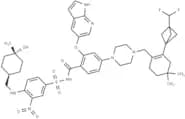
CAS:<p>Asaretoclax is an effective inhibitor of B-cell lymphoma 2 (Bcl-2), demonstrating potential for use in cancer research.</p>Fórmula:C47H57F2N7O7SCor e Forma:SolidPeso molecular:902.06PLD-IN-1
<p>PLD-IN-1 (Compound 3r) is an orally effective inhibitor of phospholipase D (phospholipaseD) with an IC50 of 1.97 μM. It reduces the expression of CD24, CD47, and PD-L1 while enhancing the expression of calreticulin, thereby modulating the immune evasion mechanisms of lung cancer cells by promoting the phagocytosis of cancer cells by macrophages. PLD-IN-1 inhibits the viability of lung cancer cell lines A549, HCC44, H460, and HCC15 with IC50 values of 18.44, 22.31, 24.85, and 21.45 μM, respectively. It induces apoptosis (apoptosis) in A549 cells and inhibits cell migration. Additionally, PLD-IN-1 increases pro-inflammatory M1 macrophage levels and decreases anti-inflammatory M2 macrophage levels, exhibiting anti-tumor activity in mouse models.</p>Fórmula:C19H14F6N2OCor e Forma:SolidPeso molecular:400.32hCAIX-IN-13
CAS:<p>hCAIX-IN-13 (Pt2) inhibits CAIX with 6.57 μM IC50, curbs cancer cell growth, and induces apoptosis for cancer research.</p>Fórmula:C37H33F3N6O7PtS2Cor e Forma:SolidPeso molecular:989.9LL-K9-3
CAS:<p>LL-K9-3, a selective hydrophobic tagging technology (HyT)-based degrader, specifically targets the CDK9-cyclin T1 complex, displaying DC50 values of 589 nM for</p>Fórmula:C31H49N5O6S3Cor e Forma:SolidPeso molecular:683.94BODIPY FL thalidomide
CAS:<p>BODIPY FL thalidomide is a fluorescent probe that binds human cereblon protein with high affinity, exhibiting a dissociation constant (Kd) of 3.6 nM [1].</p>Fórmula:C37H43BF2N6O7Cor e Forma:SolidPeso molecular:732.58fac-[Re(CO)3(L3)(H2O)][NO3]
<p>Fac-[Re(CO)3(L3)(H2O)][NO3] (Compound 3), a rhenium(I) tricarbonyl aqua complex, acts as an anticancer agent through the induction of mitochondrial dysfunction.</p>Fórmula:C25H17N6O8ReCor e Forma:SolidPeso molecular:715.64Thalidomide-Piperazine 5-fluoride hydrochloride
CAS:<p>Thalidomide-Piperazine 5-fluoride hydrochloride, a derivative of the cereblon (CRBN) inhibitor Thalidomide, serves as a ligand for E3 ubiquitin ligase (Ligands for E3 Ligase), facilitating the synthesis of PROTACs [1].</p>Fórmula:C17H18ClFN4O4Cor e Forma:SolidPeso molecular:396.8JNK-1-IN-3
CAS:<p>JNK-1-IN-3 (Compound 9e) downregulates JNK1 and phosphorylated JNK1, reduces c-Jun and c-Fos expression in tumours, and restores p53 activity.</p>Fórmula:C19H17FN4O3Pureza:97.551%Cor e Forma:SolidPeso molecular:368.36