Apoptose
Os inibidores da apoptose são compostos que previnem ou retardam o processo de morte celular programada, conhecido como apoptose. Esses inibidores são vitais no estudo dos mecanismos de sobrevivência celular e são usados para investigar doenças onde a apoptose é desregulada, como câncer, distúrbios neurodegenerativos e doenças autoimunes. Ao modular a apoptose, esses inibidores podem ajudar no desenvolvimento de terapias destinadas a controlar a morte celular. Na CymitQuimica, oferecemos uma ampla seleção de inibidores da apoptose de alta qualidade para apoiar sua pesquisa em biologia celular, oncologia e áreas relacionadas.
Subcategorias de "Apoptose"
- ASK(6 produtos)
- BCL(11 produtos)
- Caspase(125 produtos)
- FOXO1(3 produtos)
- IAP(66 produtos)
- Mdm2(12 produtos)
- PD-1/PD-L1(125 produtos)
- PDK(9 produtos)
- PERK(25 produtos)
- Serina/treonina quinase(15 produtos)
- Survivina(13 produtos)
- TNF(92 produtos)
- c-RET(51 produtos)
- p53(62 produtos)
Exibir 6 mais subcategorias
Foram encontrados 5592 produtos de "Apoptose"
Ordenar por
Pureza (%)
0
100
|
0
|
50
|
90
|
95
|
100
NCA029
<p>NCA029 is a potent activator of human caseinolytic protease P (HsClpP) with an EC50 of 0.15 μM. It targets HsClpPP and triggers an ATF3-dependent integrated stress response, resulting in the death of colon cancer cells.</p>Fórmula:C22H20F3N3OPeso molecular:399.15585Thalidomide-O-C7-acid
CAS:<p>Thalidomide-O-C7-acid: A cereblon ligand from Thalidomide linked via a PROTAC-used linker.</p>Fórmula:C21H24N2O7Cor e Forma:SolidPeso molecular:416.43Ru-Poma
<p>Ru-Poma is an Ru(II)-based photosensitizer designed to enhance the efficacy of photodynamic therapy (PDT) against tumors resistant to Cisplatin. It targets Pomalidomide to partially degrade CRBN, inducing ferroptosis by increasing lipid peroxides and downregulating GPX4 and GAPDH expression. In A549 cells, Ru-Poma exhibits cytotoxicity with IC50 values of 18.46 μM in the dark and 0.37 μM under illumination.</p>Fórmula:C89H75Cl2N11O11Ru·7H2OEGFR/BRAFV600E-IN-3
<p>EGFR/BRAFV600E-IN-3 is an inhibitor targeting EGFR, BRAFV600E, and EGFRT790M with IC50 values of 57 nM, 68 nM, and 9.70 nM, respectively.</p>Fórmula:C25H18N4O3Pureza:98%Cor e Forma:SolidPeso molecular:422.44DAPK Substrate Peptide
CAS:<p>DAPK Substrate Peptide is a synthetic peptide substrate for death-associated protein kinase (DAPK) (Km = 9 μM).</p>Fórmula:C70H115N25O17Pureza:98%Cor e Forma:SolidPeso molecular:1578.82PROTAC AR Degrader-8
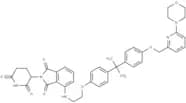
CAS:<p>PROTAC AR Degrader-8 (Compound NP18) functions as a PROTAC degrader targeting the androgen receptor (AR) and effectively degrades AR-FL in both 22Rv1 and LNCaP cells with DC50 values of 0.018 μM and 0.14 μM, respectively. It also degrades AR-V7 in 22Rv1 cells with a DC50 of 0.026 μM. Additionally, PROTAC AR Degrader-8 inhibits the proliferation of 22Rv1 and LNCaP cancer cells, exhibiting IC50 values of 0.038 μM and 1.11 μM. It induces cell cycle arrest at the G2/M phase and triggers apoptosis in 22Rv1 cells (apoptosis). Demonstrating anticancer efficacy, PROTAC AR Degrader-8 shows activity in both mouse and zebrafish models. [Pink: ligand for target protein AR ligand-33; Black: linker; Blue: ligand for E3 ligase Cereblon]</p>Fórmula:C40H41N5O7Cor e Forma:SolidPeso molecular:703.783Antitumor agent-201
<p>Antitumor agent-201 (Compound 10) is a Golgi apparatus-targeting chloride ion transport activator with an EC50 for promoting transmembrane chloride ion transport of 1.53 mol% and an IC50 against HepG2 cells of 7.13 μM. By selectively acting on the Golgi apparatus, Antitumor agent-201 disrupts chloride ion homeostasis, decreases the expression of key proteins such as GM130 and GRASP55, and alters Golgi structure and function. This process induces Golgi apparatus autophagy, triggers apoptosis in cancer cells, and causes cell cycle arrest at the G2/M phase, thereby exhibiting anticancer activity. Antitumor agent-201 is applicable for research in the field of cancer-related diseases.</p>Cor e Forma:Odour SolidThalidomide-O-PEG4-azide
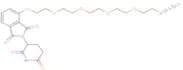
CAS:<p>Thalidomide-O-PEG4-azide is a PEG-based PROTAC linker that can be used in the synthesis of PROTACs[1].</p>Fórmula:C23H29N5O9Pureza:98%Cor e Forma:SolidPeso molecular:519.5Biotin-PEG6-Thalidomide
CAS:<p>Biotin-PEG6-Thalidomide is a PROTAC linker based on PEG.</p>Fórmula:C37H53N5O12SPureza:98%Cor e Forma:SolidPeso molecular:791.91S2/IAPinh
<p>S2/IAPinh is a conjugate composed of an inhibitor of apoptosis proteins inhibitor (IAPinh) and a ligand of sigma 2 SW43. It demonstrates anti-proliferative and apoptosis-inducing activity by degrading inhibitor of apoptosis proteins (clAP-1).</p>Fórmula:C52H75Cl2FN6O6SPeso molecular:1000.48299155H1
<p>155H1 (Compound 11) is a stapled peptide that covalently binds to hMcl1 (172-323) with an IC50 of 18 nM.</p>Fórmula:C79H120FN19O23SPeso molecular:1753.85092VEGFR2/HDAC1-IN-1
<p>VEGFR2/HDAC1-IN-1 (compound 13) is a potent dual inhibitor of VEGFR-2 and HDAC, with IC50 values of 57.83 nM for VEGFR-2 and 9.82 nM for HDAC.</p>Pureza:98%Cor e Forma:Odour SolidHQY1428
<p>HQY1428 is an orally active CDK12 inhibitor. It impedes DNA replication, causing cell cycle arrest at the G2/M phase in SKOV3 cells, and induces DNA double-strand breaks as well as apoptosis. In the SKOV3 xenograft mouse model, HQY1428 demonstrates antitumor activity. Additionally, when combined with the HER2 inhibitor Lapatinib in the NCI-N87 xenograft mouse model, HQY1428 produces a synergistic therapeutic effect.</p>Fórmula:C25H28ClFN6O3SCor e Forma:SolidPeso molecular:546.16162Gemcitabine monophosphate sodium salt hydrate
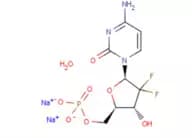
CAS:<p>Gemcitabine monophosphate disodium salt is a monophosphate derivative of Gemcitabine.</p>Fórmula:C9H12F2N3Na2O8PPureza:98%Cor e Forma:SolidPeso molecular:405.16PROTAC RIPK degrader-6
CAS:<p>PROTAC RIPK degrader-6 (example 1) is a PROTAC designed for the targeted degradation of RIP Kinase, featuring a RIP2 kinase inhibitor connected through a linker</p>Fórmula:C43H48N6O11S2Cor e Forma:SolidPeso molecular:889.01HDSI-18
<p>HDSI-18 is an orally active selective inhibitor of HDAC6 with an IC50 of 1.6 nM. It exhibits cytotoxic effects against K562, MV4-11, MOLM-13, THP-1, and Jurkat cells with IC50 values of 0.48, 0.58, 0.91, 1.79, and 4.31 μM, respectively. HDSI-18 can activate Caspase-3, induce mitochondrial depolarization, and trigger apoptosis (Apoptosis), demonstrating antitumor activity.</p>Fórmula:C28H28N4O5Cor e Forma:SolidPeso molecular:500.20597CYP51/PD-L1-IN-1
<p>CYP51/PD-L1-IN-1 (compound L11), a quinazoline with antifungal properties, simultaneously inhibits CYP51 (IC50: 0.884 μM) and PD-L1 (IC50: 0.083 μM).</p>Fórmula:C20H15N5O2Cor e Forma:SolidPeso molecular:357.37Tasisulam sodium
CAS:<p>Tasisulam triggers apoptosis, halts mitosis, and normalizes blood vessels to combat cancer.</p>Fórmula:C11H5BrCl2NNaO3S2Cor e Forma:SolidPeso molecular:437.09WK369
<p>WK369 is an innovative small molecule inhibitor of BCL6, demonstrating remarkable bioactivity against ovarian cancer by inducing cell cycle arrest and triggering apoptosis. It binds directly to the BCL6-BTB domain, obstructing the interaction between BCL6 and SMRT, which results in the reactivation of p53, ATR, and CDKN1A.</p>Fórmula:C19H20FN5O2Peso molecular:369.1601(E)-C-HDMAPP (ammonium salt)
CAS:<p>Alkyl phosphates like (E)-C-HDMAPP activate γδ-T cells, resist hydrolysis, and boost TNF-α synthesis and γδ-T cell count in vivo.</p>Fórmula:C6H23N3O7P2Cor e Forma:SolidPeso molecular:311.21RET-IN-26
<p>RET-IN-26 (compound D5) is a kinase inhibitor that selectively targets the RET protein with an IC50 value of 0.33 μM [1].</p>Cor e Forma:Odour SolidPamlectabart
<p>Pamlectabart is a humanised antibody targeting TNFRSF17/BCMA, (ADC) Pamlectabart tismanitin multiple myeloma.</p>Pureza:95%Cor e Forma:Odour LiquidNauclefine
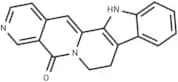
CAS:<p>Nauclefine, a plant alkaloid, triggers cancer cell death through PDE3A-SLFN12, binding but not inhibiting PDE3A.</p>Fórmula:C18H13N3OPureza:99.92%Cor e Forma:SolidPeso molecular:287.32WEE1-IN-7
<p>WEE1-IN-7 (compound 12h) is a potent, orally active WEE1 inhibitor with an IC50 value of 2.1 nM. This compound induces apoptosis and causes cell cycle arrest in the S phase, demonstrating antitumor activity.</p>PD-1/PD-L1-IN-39
<p>PD-1/PD-L1-IN-39 (X 14) is an orally active PD-1/PD-L1 inhibitor with an IC50 value of 15.73 nM. It exhibits strong binding affinity to human and mouse PD-L1, with KD values of 14.62 and 392 nM, respectively. PD-1/PD-L1-IN-39 also demonstrates antitumor activity.</p>Fórmula:C23H20ClFN2O3Peso molecular:426.11465BRD4 Inhibitor-39
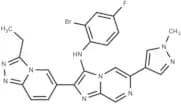
<p>BRD4 Inhibitor-39 (compound 12m) is an orally active inhibitor of BRD4 with an IC50 of 0.02 μM. It can induce apoptosis and demonstrates antitumor activity.</p>Fórmula:C24H19BrFN9Cor e Forma:SolidPeso molecular:532.37(-)-Rasfonin
CAS:<p>Rasfonin, a fungal metabolite from T. terrophilus, halts mouse splenocyte growth; IC50: 0.7 μg/ml (ConA), 0.5 μg/ml (LPS).</p>Fórmula:C25H38O6Cor e Forma:SolidPeso molecular:434.57Manelimab
CAS:<p>Manelimab is a monoclonal antibody that inhibits programmed death-ligand 1 ( PD-L1 ) [1] .</p>Cor e Forma:LiquidDB0614
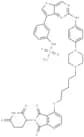
CAS:<p>DB0614 degrades 26 kinases including AAK1 and CDK6, targeting aberrant activity in disease research.</p>Fórmula:C41H42N8O7S2Cor e Forma:SolidPeso molecular:822.95BRD4 Inhibitor-38
<p>BRD4 Inhibitor-38 (Compound 25) is an orally active BRD4 inhibitor, exhibiting IC50 values of 3.64 μM for BRD4 BD1 and 0.12 μM for BRD4 BD2. It also demonstrates anti-inflammatory properties, with an IC50 value of 1.98 μM for nitric oxide (NO) production.</p>Fórmula:C19H18N2O4Cor e Forma:SolidPeso molecular:338.357PPA-904 FA
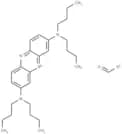
<p>PPA-904 FA is a cationic photosensitizer with antimicrobial activity that can be used to study chronic leg ulcers and diabetic foot ulcers.</p>Fórmula:C29H43N3O2SPureza:98%Cor e Forma:SolidPeso molecular:497.74Diazepinomicin
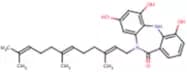
CAS:<p>Diazepinomicin, from Micromonospora, blocks EGF-Ras-ERK pathway and induces apoptosis; an anti-tumor agent for K-Ras mutants.</p>Fórmula:C28H34N2O4Pureza:98%Cor e Forma:SolidPeso molecular:462.58Antitumor agent-150
<p>Antitumor agent-150 (V10) is a breast cancer treatment that functions as a PROTAC degrader of MDM2.</p>Fórmula:C70H106N8O14SPeso molecular:1314.75492TAS-117
CAS:<p>TAS-117, a PKB/Akt inhibitor, is used potentially for the treatment of solid tumors.</p>Fórmula:C26H24N4O2Cor e Forma:SolidPeso molecular:424.49Thalidomide-5-NH-PEG2-NH2 hydrochloride
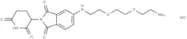
CAS:<p>Thalidomide-5-NH-PEG2-NH2 hydrochloride is a cereblon ligand based on Thalidomide, designed to recruit CRBN proteins. It has the capability to be linked with target protein ligands via a linker, facilitating the formation of PROTAC molecules, such as THAL-SNS-032.</p>Fórmula:C19H25ClN4O6Cor e Forma:SolidPeso molecular:440.88Anticancer agent 104
<p>Anticancer agent 104 has anticancer activity, and induces cancer cell apoptosis [1] .</p>Fórmula:C34H47F3N2O2S2Cor e Forma:SolidPeso molecular:636.87Apoptosis inducer 26
<p>Apoptosisinducer 26 (compound [AgCl(dap2SH)(PPh3)2]) is a mononuclear Ag(I) ligand-based autophagy inducer that exhibits antibacterial and anticancer activities against various bacterial strains and cancer cell lines. This compound facilitates the accumulation of Ag(I) ions in the periphery of bacteria, effectively inhibiting the growth of both Gram-positive (+) and Gram-negative (-) bacteria. Additionally, Apoptosisinducer 26 can intercalate between the base pairs of CT DNA, inducing apoptosis in A549 cells. It also possesses radical scavenging properties, which helps prevent oxidative stress.</p>Fórmula:C40H36AgClN4P2SCor e Forma:SolidPeso molecular:810.07Nrf2 activator 19
<p>Nrf2 activator 19 is a compound capable of crossing the blood-brain barrier and acts as an NRF2/HO-1 activator, offering potent antioxidant and neuroprotective effects. It effectively reduces brain damage and minimizes the accumulation of Reactive Oxygen Species (ROS). Additionally, Nrf2 activator 19 inhibits neuronal apoptosis, aiding in the recovery of neural function and motor skills. It has demonstrated significant potential in ischemic stroke research.</p>Cor e Forma:Odour SolidFLT3-IN-21
<p>FLT3-IN-21 (compound LC-3), a potent FLT3 inhibitor with an IC50 value of 8.4 nM, induces apoptosis and arrests the cell cycle in the G1 phase.</p>Fórmula:C20H22FN5O2Cor e Forma:SolidPeso molecular:383.42PRMT5-IN-33
<p>PRMT5-IN-33 (compound A8) is a selective inhibitor of PRMT5 that competes with SAM, exhibiting an IC50 of 10.9 nM. It induces apoptosis and inhibits the proliferation of Z-138 and MOLM-13 cells, demonstrating antitumor activity.</p>Fórmula:C25H24BrN5O3SPeso molecular:553.07832LS-106
<p>LS-106 is an orally active, effective epidermal growth factor receptor (EGFR) inhibitor displaying antitumor activity both in vitro and in vivo. It inhibits the kinase activities of EGFR19del/T790M/C797S and EGFRL858R/T790M/C797S, with IC50 values of 2.4 nmol/L and 3.1 nmol/L, respectively, demonstrating stronger inhibition than Osimertinib. LS-106 induces cell apoptosis (Apoptosis), suppresses the proliferation of tumor cells carrying EGFR19del/T790M/C797S, and results in significant tumor reduction in a C797S mutant xenograft model.</p>Fórmula:C24H28BrClN5OPCor e Forma:SolidPeso molecular:548.84DiPT-4
<p>DiPT-4, a dual TOP1/PARP1 inhibitor, effectively induces DNA double-strand breaks (DSBs), cell cycle arrest, and apoptosis in cancer cells, with potential to</p>Fórmula:C32H22FN5O4SPureza:98%Cor e Forma:SolidPeso molecular:591.61Enpp/Carbonic anhydrase-IN-1
CAS:<p>Enpp/Carbonic anhydrase-IN-1 (compound 1e) is a potent inhibitor of Enpp and carbonic anhydrase.</p>Fórmula:C23H25NO4SPureza:99.96%Cor e Forma:SoildPeso molecular:411.51Thalidomide-O-amido-C6-NH2
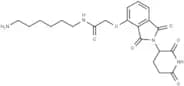
CAS:<p>Thalidomide-O-amido-C6-NH2 is a synthetic E3 ligase used for PROTAC creation, containing cereblon ligand and linker.</p>Fórmula:C21H26N4O6Cor e Forma:SolidPeso molecular:430.45Chaetoglobosin A
CAS:<p>Chaetoglobosin A, the active compound extracted of Penicillium aquamarinium, is a member of the cytochalasan family. It preferentially induces apoptosis.</p>Fórmula:C32H36N2O5Pureza:98%Cor e Forma:SolidPeso molecular:528.649ZX782
<p>ZX782 acts as a GPX4 protein degrader and an inducer of ferroptosis (Ferroptosis), targeting GPX4 for destruction via both the ubiquitin-proteasome system and the autophagy-lysosome pathway. Following the degradation of GPX4 induced by ZX782, there is a significant increase in the accumulation of lipid reactive oxygen species (ROS) in HT1080 cells.</p>Fórmula:C39H48ClN5O8Cor e Forma:SolidPeso molecular:750.28Chalcones A-N-5
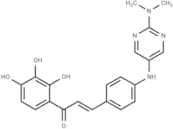
CAS:<p>Chalcones A-N-5, a non-cytotoxic trihydroxy chalcone, aids cell growth & neuroprotection, inhibits ferroptosis, and targets AD research.</p>Fórmula:C21H20N4O4Cor e Forma:SolidPeso molecular:392.41Sandalore
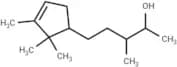
CAS:<p>Sandalore boosts hair growth, reduces cell death, and raises IGF-1, acting on olfactory receptor OR2AT4.</p>Fórmula:C14H26OPureza:97.96%Cor e Forma:Light Yellow Viscous LiquidPeso molecular:210.36RIP1 kinase inhibitor 9
<p>RIP1 kinase inhibitor 9 (compound SY-1) is a selective inhibitor of RIP kinase. It effectively reduces central inflammatory responses caused by seizures. RIP1 kinase inhibitor 9 also obstructs Z-VAD-FMK-induced necroptosis in HT-29 cells, with an EC50 of 7.04 nM.</p>Fórmula:C25H21N3O3Peso molecular:411.15829DS-5272
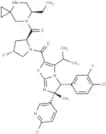
CAS:<p>DS-5272 is a potent and orally active inhibitor of p53-MDM2 interaction.</p>Fórmula:C34H38Cl2F2N6O2SCor e Forma:SolidPeso molecular:703.67