Building Blocks
Esta seção contém produtos fundamentais para a síntese de compostos orgânicos e biológicos. Building blocks são os materiais de partida essenciais usados para construir moléculas complexas através de várias reações químicas. Eles desempenham um papel crítico na descoberta de medicamentos, ciência dos materiais e pesquisa química. Na CymitQuimica, oferecemos uma ampla gama de building blocks de alta qualidade para apoiar suas pesquisas inovadoras e projetos industriais, garantindo que você tenha os componentes essenciais para uma síntese bem-sucedida.
Subcategorias de "Building Blocks"
- Ácidos Borónicos e Derivados de Ácido Borónico(5.756 produtos)
- Building Blocks Quirais(1.242 produtos)
- Building Blocks Hidrocarbonetos(6.093 produtos)
- Building Blocks orgânicos(60.534 produtos)
Foram encontrados 195534 produtos de "Building Blocks"
Ordenar por
Pureza (%)
0
100
|
0
|
50
|
90
|
95
|
100
N-Methyl-N-[2-(methylamino)ethyl]aniline
CAS:<p>Versatile small molecule scaffold</p>Fórmula:C10H16N2Pureza:Min. 95%Peso molecular:164.25 g/mol1-Methyl-3,4-dihydroisoquinoline
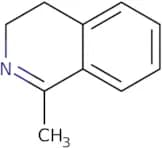
CAS:<p>1-Methyl-3,4-dihydroisoquinoline is a chemical compound that is used in the synthesis of 1-methyl-3,4-dihydroisoquinoline N-oxide. 1,2-Dihydroisoquinolines are amine derivatives that are important for their physiological properties. The asymmetric synthesis of 1,2-dihydroisoquinolines is important for the development of new drugs and pharmaceuticals. This reaction scheme includes two steps: the first step involves the condensation of an imine with a catecholamine to form an imine; the second step involves cyclization of this imine to form a 1,2 dihydroisoquinoline. The use of additives such as sodium methoxide or dimethylsulfate can increase selectivity and yield by stabilizing one enantiomer over another. The products from this reaction are methylated with methyl iodide in the presence of potassium</p>Fórmula:C10H11NPureza:Min. 95%Peso molecular:145.2 g/mol1-(3-Bromophenyl)-2-methylpropan-1-one
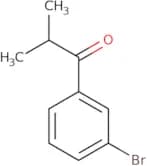
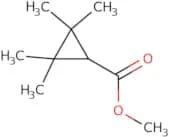
CAS:<p>Versatile small molecule scaffold</p>Fórmula:C10H11BrOPureza:Min. 95%Peso molecular:227.1 g/molMethyl 2,2,3,3-tetramethylcyclopropane-1-carboxylate
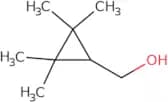
CAS:<p>Versatile small molecule scaffold</p>Fórmula:C9H16O2Pureza:Min. 95%Peso molecular:156.22 g/mol(2,2,3,3-Tetramethylcyclopropyl)methanol
CAS:<p>2,2,3,3-Tetramethylcyclopropyl)methanol is a reagent that is used in the synthesis of insecticides and in the preparation of other organic compounds. It is prepared by reacting phosphorus with chlorinating agents such as thionyl chloride or phosphoryl chloride. This chemical can also be synthesized from halogenated alkanes by catalytic chlorination. 2,2,3,3-Tetramethylcyclopropyl)methanol has been employed as a Grignard reagent and Wittig reaction catalyst.</p>Fórmula:C8H16OPureza:Min. 95%Peso molecular:128.21 g/mol1-Isopropyl-1H-benzo[d]imidazole-2-thiol
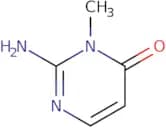
CAS:<p>Versatile small molecule scaffold</p>Fórmula:C10H12N2SPureza:Min. 95%Peso molecular:192.28 g/mol2-Amino-3-methyl-3,4-dihydropyrimidin-4-one
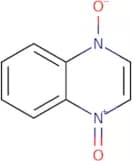
CAS:<p>2-Amino-3-methyl-3,4-dihydropyrimidin-4-one is a compound that belongs to the group of imines. It can exist as two isomers: an enamine and a ketimine. The enamine of 2-amino-3,4-dihydropyrimidin-4-one has been found to be a transition state analogue for ammonolysis reactions. The ketimine form of this compound has been shown to have tautomeric properties that are analogous to those of acetaldehyde. Chemists use spectroscopy to study the magnetic properties, dichroism, and spectra of the compound in order to learn more about its structure and reactivity.</p>Fórmula:C5H7N3OPureza:Min. 95%Peso molecular:125.13 g/molQuinoxaline-1,4-diium-1,4-bis(olate)
CAS:<p>Quinoxaline-1,4-diium-1,4-bis(olate) is a genotoxic agent that has been shown to cause DNA damage and mutations. In vitro assays have shown that this substance is reactive with human serum in a photochemical reaction, which generates malonic acid and oxidative DNA. It also inhibits bacterial growth by binding to the bacterial 16S ribosomal RNA molecule, thereby inhibiting protein synthesis. This substance has been shown to be active against solid tumours in vivo. The structure of quinoxaline-1,4-diium-1,4-bis(olate) contains a chlorine atom at position 1 and 4 of the aromatic ring system. This chlorine atom can be displaced by an n-oxide group or reduced to form a quinone methide species. These reactions are thought to be responsible for the biological properties of this compound.</p>Fórmula:C8H6N2O2Pureza:Min. 95%Peso molecular:162.15 g/mol2,6-Dimethyl-4-nitrophenol
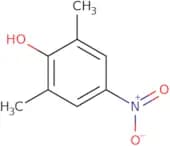
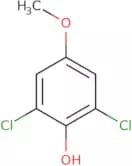
CAS:<p>2,6-Dimethyl-4-nitrophenol is a chemical with the potential to inhibit anions. It has been shown to be active against some medicines and has been used as a reagent in chemical ionization. 2,6-Dimethyl-4-nitrophenol has been found in phosphoric acid solutions that were used to treat blood pressure problems. It also inhibits the production of human estrogen receptors by binding to them and preventing their activation. This inhibition can lead to changes in cellular function that are associated with cancer.</p>Fórmula:C8H9NO3Pureza:Min. 95%Peso molecular:167.16 g/mol2,6-Dichloro-4-methoxyphenol
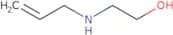
CAS:<p>Versatile small molecule scaffold</p>Fórmula:C7H6Cl2O2Pureza:Min. 95%Peso molecular:193.02 g/mol2-(Allylamino)ethan-1-ol
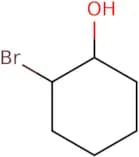
CAS:<p>Versatile small molecule scaffold</p>Fórmula:C5H11NOPureza:Min. 95%Peso molecular:101.15 g/molrac-(1R,2R)-2-Bromocyclohexan-1-ol
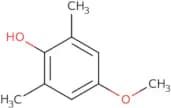
CAS:<p>Racemic 2-bromocyclohexanol is a cyclopentyl compound that has been shown to have experimental and theoretical studies of conformational changes in the hydroxyl group cavity. Racemic 2-bromocyclohexanol has axial stereochemistry and its bromohydrins are alicyclic isomers with different conformations. The population of each conformer depends on the isotopic effects, which can be experimentally determined using molecular simulations.</p>Fórmula:C6H11BrOPureza:Min. 95%Peso molecular:179.05 g/mol4-Methoxy-2,6-dimethylphenol
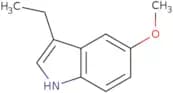
CAS:<p>4-Methoxy-2,6-dimethylphenol is a phenolic compound that has been studied using magnetic resonance spectroscopy and other techniques. The compound can be found in a variety of plants, such as the leaves of the tea plant Camellia sinensis. It is used in some natural products for its antioxidant and antimicrobial properties. 4-Methoxy-2,6-dimethylphenol has been shown to have an effect on cell proliferation by inhibiting mitochondrial respiration and electron transport. This may lead to cancer prevention.</p>Fórmula:C9H12O2Pureza:Min. 95%Peso molecular:152.19 g/mol3-Ethyl-5-methoxy-1H-indole
CAS:<p>Versatile small molecule scaffold</p>Fórmula:C11H13NOPureza:Min. 95%Peso molecular:175.23 g/mol6-Amino-1-[2-(diethylamino)ethyl]-1,2,3,4-tetrahydropyrimidine-2,4-dione
CAS:<p>Versatile small molecule scaffold</p>Fórmula:C10H18N4O2Pureza:Min. 95%Peso molecular:226.3 g/mol4-Phenyl-4H-1,2,4-triazol-3-amine
CAS:<p>Versatile small molecule scaffold</p>Fórmula:C8H8N4Pureza:Min. 95%Peso molecular:160.18 g/mol5-hydroxynaphthalene-1-carboxylic acid
CAS:<p>5-Hydroxynaphthalene-1-carboxylic acid is a natural product that inhibits the growth of bacteria. It was first isolated from Streptomyces lividans, an actinobacterium, and was shown to be effective against gram positive and gram negative bacteria. 5-Hydroxynaphthalene-1-carboxylic acid has been used to study the molecular structure of benzene derivatives, including biphenyls, which are responsible for the degradation of polychlorinated biphenyls (PCBs). The skeleton structures found in 5-hydroxynaphthalene-1-carboxylic acid were determined to be monosubstituted by substituent effects. This natural product also has antiinflammatory properties.</p>Fórmula:C11H8O3Pureza:Min. 95%Peso molecular:188.18 g/mol2-Isopropyl-5-methylaniline
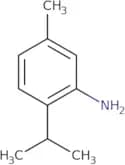
CAS:<p>Versatile small molecule scaffold</p>Fórmula:C10H15NPureza:Min. 95%Peso molecular:149.23 g/mol2,3,5-Trimethylbenzoic acid
CAS:<p>Versatile small molecule scaffold</p>Fórmula:C10H12O2Pureza:Min. 95%Peso molecular:164.2 g/molcyclohexanesulfonamide
CAS:<p>Cyclohexanesulfonamide is a synthetic high-potency sweetener that has been shown to have the same sweetness as sucrose in water. Cyclohexanesulfonamide can be used as a functional sweetener in foods and beverages. The compound has been shown to inhibit inflammation, which may be due to its ability to bind to the receptor for inflammatory mediators. Cyclohexanesulfonamide has also been shown to have antidepressant properties and may be useful for treating depression, hyperproliferative diseases, and other conditions involving inflammation.</p>Fórmula:C6H13NO2SPureza:Min. 95%Peso molecular:163.23 g/mol
![N-Methyl-N-[2-(methylamino)ethyl]aniline](/_next/image/?url=https%3A%2Fstatic.cymitquimica.com%2Fproducts%2F3D%2Fthumb-webp%2FCAA41249.webp&w=3840&q=75)

![1-Isopropyl-1H-benzo[d]imidazole-2-thiol](/_next/image/?url=https%3A%2Fstatic.cymitquimica.com%2Fproducts%2F3D%2Fthumb-webp%2FCAA41665.webp&w=3840&q=75)
![6-Amino-1-[2-(diethylamino)ethyl]-1,2,3,4-tetrahydropyrimidine-2,4-dione](/_next/image/?url=https%3A%2Fstatic.cymitquimica.com%2Fproducts%2F3D%2Fthumb-webp%2FCAA43444.webp&w=3840&q=75)