


Building Blocks
Esta seção contém produtos fundamentais para a síntese de compostos orgânicos e biológicos. Building blocks são os materiais de partida essenciais usados para construir moléculas complexas através de várias reações químicas. Eles desempenham um papel crítico na descoberta de medicamentos, ciência dos materiais e pesquisa química. Na CymitQuimica, oferecemos uma ampla gama de building blocks de alta qualidade para apoiar suas pesquisas inovadoras e projetos industriais, garantindo que você tenha os componentes essenciais para uma síntese bem-sucedida.
Subcategorias de "Building Blocks"
- Ácidos Borónicos e Derivados de Ácido Borónico(5.756 produtos)
- Building Blocks Quirais(1.242 produtos)
- Building Blocks Hidrocarbonetos(6.093 produtos)
- Building Blocks orgânicos(60.534 produtos)
Foram encontrados 195534 produtos de "Building Blocks"
Ordenar por
Pureza (%)
0
100
|
0
|
50
|
90
|
95
|
100
2-Oxo-2-{4,7,7-trimethyl-3-oxobicyclo[2.2.1]heptan-2-yl}acetic acid
CAS:<p>Versatile small molecule scaffold</p>Fórmula:C12H16O4Pureza:Min. 95%Peso molecular:224.25 g/mol({1,7,7-Trimethylbicyclo[2.2.1]heptan-2-ylidene}amino)urea
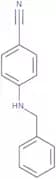
CAS:<p>Versatile small molecule scaffold</p>Fórmula:C11H19N3OPureza:Min. 95%Peso molecular:209.29 g/mol4-(Benzylamino)benzonitrile
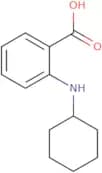
CAS:<p>Versatile small molecule scaffold</p>Fórmula:C14H12N2Pureza:Min. 95%Peso molecular:208.26 g/mol2-(Cyclohexylamino)benzoic acid
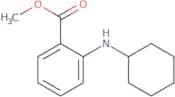
CAS:<p>2-(Cyclohexylamino)benzoic acid is a chemical compound that reacts with aryl halides to form cyclic amines. The reaction proceeds by the formation of an intermediate, which is then hydrolyzed and decarboxylated to form the product. This reaction can be used for the synthesis of amines from either aromatic or aliphatic aryl chlorides. This process is often used in screening experiments because it has been shown to be selective for aryl halides and yields high yields. The addition of cross-coupling reactions can also yield high yields and produce desired products with good chemo- and regioselectivity. 2-(Cyclohexylamino)benzoic acid is also useful for the synthesis of hyperpolarized molecules for imaging studies, as well as in ultrafast experiments where transfer rates are important.</p>Fórmula:C13H17NO2Pureza:Min. 95%Peso molecular:219.28 g/molMethyl 2-(cyclohexylamino)benzoate
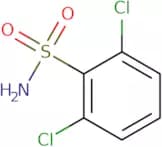
CAS:<p>Versatile small molecule scaffold</p>Fórmula:C14H19NO2Pureza:Min. 95%Peso molecular:233.31 g/mol2,6-Dichlorobenzenesulfonamide
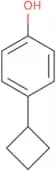
CAS:<p>Versatile small molecule scaffold</p>Fórmula:C6H5Cl2NO2SPureza:Min. 95%Peso molecular:226.08 g/mol4-Cyclobutylphenol
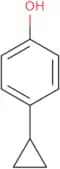
CAS:<p>Versatile small molecule scaffold</p>Fórmula:C10H12OPureza:Min. 95%Peso molecular:148.2 g/mol4-Cyclopropylphenol
CAS:<p>4-Cyclopropylphenol is an antimicrobial agent that belongs to the group of phenols. It has been shown to have mutagenic properties and is used in chemical studies. 4-Cyclopropylphenol is activated by reaction with a benzene molecule, which binds to the functional groups on the phenol, forming a covalent bond. This activation process requires an input of energy in order to break the benzene ring and form the reactive species. The elimination of 4-cyclopropylfhenol from solution also requires energy input as it leaves as a gas. The mutagenic properties of 4-cyclopropylfhenol are due to its ability for interaction with DNA, which is based on thermodynamic and kinetic theory.</p>Fórmula:C9H10OPureza:Min. 95%Peso molecular:134.18 g/mol1-Chlorohex-5-en-2-ol
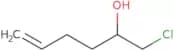
CAS:<p>Versatile small molecule scaffold</p>Fórmula:C6H11ClOPureza:Min. 95%Peso molecular:134.6 g/mol3-Chloro-5-nitroisoquinoline
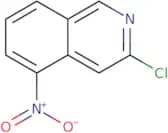
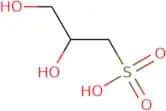
CAS:<p>3-Chloro-5-nitroisoquinoline is a heterocyclic compound that belongs to the isoquinoline class. It can be synthesized by reacting 3,4,5-trichlorobenzaldehyde with ammonia and sodium nitrite in an aqueous solution. The synthesis of this compound has been shown to produce two isomers, thiazolo and thiazole. Spectroscopic data for this compound have been obtained in the solid state and in solution. The spectra show strong absorptions at about 250 nm and at about 590 nm. The heterocyclic ring has a nitrogen atom as one of its members, which is responsible for the absorption at around 250 nm. The absorption at 590 nm is due to the presence of an aromatic ring system.</p>Fórmula:C9H5ClN2O2Pureza:Min. 95%Peso molecular:208.6 g/mol2,3-Dihydroxypropane-1-sulfonic acid
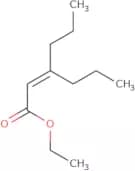
CAS:<p>2,3-Dihydroxypropane-1-sulfonic acid is a hydrophilic monomer that is used to produce polyesters. It has an allyl group that reacts with triphosgene to form a conjugate acid. This acid reacts with the hydroxyl groups on the polyester to create ester bonds. 2,3-Dihydroxypropane-1-sulfonic acid is copolymerized with other hydrophilic monomers such as ethylene glycol to produce a water resistant coating for metal surfaces or plastics. 2,3-Dihydroxypropane-1-sulfonic acid also has emulsifying properties and can be used in conjunction with sodium salts to create emulsions in paints and coatings. The hydrogen elimination reaction of 2,3-dihydroxypropane-1-sulfonic acid produces cyclic sulfamic acid and its derivative, which are used as radiation</p>Fórmula:C3H8O5SPureza:Min. 95%Peso molecular:156.16 g/molEthyl 3-propylhex-2-enoate
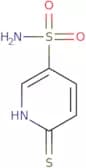
CAS:<p>Ethyl 3-propylhex-2-enoate is an allylic alcohol that is used as a building block in organic synthesis. It is obtained by the Wittig reaction of allyl bromide with a terminal alkyne. The wittig reaction first produces the allylic acetal, which then reacts with dimethyl acetal to produce ethyl 3-propylhex-2-enoate. Ethyl 3-propylhex-2-enoate may be used in the production of carbonyl compounds, carbonyl, and acetals.</p>Fórmula:C11H20O2Pureza:Min. 95%Peso molecular:184.27 g/mol6-Sulfanylpyridine-3-sulfonamide
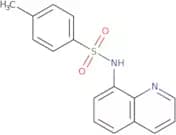
CAS:<p>Versatile small molecule scaffold</p>Fórmula:C5H6N2O2S2Pureza:Min. 95%Peso molecular:190.2 g/mol8-(Tosylamino)quinoline
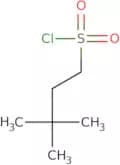
CAS:<p>8-(Tosylamino)quinoline is a quinoline derivative that inhibits the production of tumor necrosis factor-α (TNF-α) and other inflammatory mediators. 8-(Tosylamino)quinoline has been shown to inhibit the proliferation of muscle cells, which may be due to its anti-inflammatory properties. This drug also suppresses genes that are involved in cell growth and signaling, such as suppressor genes. 8-(Tosylamino)quinoline binds copper ions, which prevents the formation of reactive oxygen species and blocks the activation of nuclear factor kappa beta (NFκB), which regulates immune responses. It also inhibits autophagy, a process by which cells destroy their own intracellular contents during periods of starvation or stress.</p>Fórmula:C16H14N2O2SPureza:Min. 95%Peso molecular:298.36 g/mol3,3-Dimethylbutane-1-sulfonyl chloride
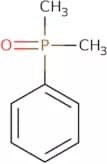
CAS:<p>Versatile small molecule scaffold</p>Fórmula:C6H13ClO2SPureza:Min. 95%Peso molecular:184.69 g/mol(Dimethylphosphoryl)benzene
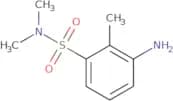
CAS:<p>Dimethylphosphorylbenzene is an inorganic compound that is a phosphine, a class of organometallic compounds. It has been shown to have a catalytic effect on the reaction between acyl halides and carbon disulphide. Dimethylphosphorylbenzene has also been studied for its use as a polymerization initiator in lithography. Its light-emitting properties are due to the presence of a hydroxyl group and its ability to undergo photochemical reactions following exposure to light.</p>Fórmula:C8H11OPPureza:Min. 95%Peso molecular:154.15 g/mol3-Amino-N,N,2-trimethylbenzene-1-sulfonamide
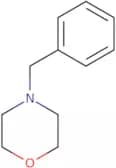
CAS:<p>Versatile small molecule scaffold</p>Fórmula:C9H14N2O2SPureza:Min. 95%Peso molecular:214.29 g/mol4-Benzylmorpholine
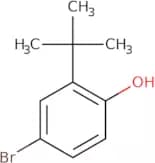
CAS:<p>4-Benzylmorpholine is a solvent that is used in organic chemistry as a reactant and as a chemical intermediate. It has been shown to inhibit the activity of cytochrome P450 enzymes in human liver microsomes, which are enzymes that metabolize xenobiotics. 4-Benzylmorpholine binds to the heme moiety of these enzymes, preventing them from carrying out their function. This inhibition of p-450 enzymes leads to an increase in the levels of reactive oxygen species and lipid peroxidation, which may be responsible for its toxicity. The binding site for 4-benzylmorpholine on p-450 enzymes has been identified using kinetic analysis and NMR spectroscopy as a hydrogen bond between the amine group and the hydroxyl group at C3 on the ring.</p>Fórmula:C11H15NOPureza:Min. 95%Peso molecular:177.25 g/mol4-Bromo-2-tert-butylphenol
CAS:<p>4-Bromo-2-tert-butylphenol is a fungicide that has been shown to have fungistatic activity against Aspergillus and other fungi. It has been shown to be effective for the elimination of fungal growth on plant material, such as fruit and vegetables. 4-Bromo-2-tert-butylphenol inhibits the growth of fungi by altering the pH levels in the environment, which results in a decrease in fungal growth. Fungi are killed by methylation when they come into contact with this chemical. This compound is also volatile and can be used as an organic solvent or formamide.</p>Fórmula:C10H13BrOPureza:Min. 95%Peso molecular:229.12 g/mol[1,3]Oxazolo[5,4-d]pyrimidin-7-amine
CAS:<p>Versatile small molecule scaffold</p>Fórmula:C5H4N4OPureza:Min. 95%Peso molecular:136.11 g/mol
![2-Oxo-2-{4,7,7-trimethyl-3-oxobicyclo[2.2.1]heptan-2-yl}acetic acid](/_next/image/?url=https%3A%2Fstatic.cymitquimica.com%2Fproducts%2F3D%2Fthumb-webp%2FKAA27734.webp&w=3840&q=75)

![({1,7,7-Trimethylbicyclo[2.2.1]heptan-2-ylidene}amino)urea](/_next/image/?url=https%3A%2Fstatic.cymitquimica.com%2Fproducts%2F3D%2Fthumb-webp%2FKAA28141.webp&w=3840&q=75)
![[1,3]Oxazolo[5,4-d]pyrimidin-7-amine](/_next/image/?url=https%3A%2Fstatic.cymitquimica.com%2Fproducts%2F3D%2Fthumb-webp%2FKAA32561.webp&w=3840&q=75)