Ciano-, Nitrilo-
Os compostos ciano e nitrilo são moléculas orgânicas que contêm grupos ciano (C≡N) ou nitrilo em sua estrutura, caracterizadas pela presença de nitrogênio. Esses grupos desempenham papéis importantes em várias reações químicas e aplicações industriais. Nesta categoria, você encontrará uma ampla gama de compostos ciano e nitrilo, variando de estruturas simples a complexas. Na CymitQuimica, oferecemos compostos ciano e nitrilo de alta qualidade adaptados para atender às necessidades de pesquisa e industriais. Nossos compostos são adequados para uma variedade de aplicações de síntese e análise.
Foram encontrados 9618 produtos de "Ciano-, Nitrilo-"
Ordenar por
Pureza (%)
0
100
|
0
|
50
|
90
|
95
|
100
Potassium tetracyanoplatinate(II)trihydrate
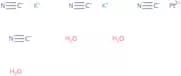
CAS:Produto Controlado<p>Potassium tetracyanoplatinate(II)trihydrate (KTP) is a nanomaterial that is made of metal ions, such as ruthenium and copper, and organic molecules. It has the ability to absorb electrons from water, which are then transferred to carbon sources. This process can be used to remove proton in the water, thereby creating an acidic solution. The KTP particles have been shown to produce cavitation when exposed to ultrasound waves or other high-frequency sound waves. Cavitation occurs when bubbles form and rapidly collapse within a liquid. The resulting shockwaves can break down the cell membrane of microorganisms.</p>Fórmula:C4H6K2N4O3PtPureza:Min. 95%Peso molecular:431.4 g/mol3-Cyano-1-azetidinesulfonyl chloride
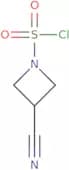
CAS:<p>Please enquire for more information about 3-Cyano-1-azetidinesulfonyl chloride including the price, delivery time and more detailed product information at the technical inquiry form on this page</p>Fórmula:C4H5ClN2O2SPureza:Min. 95%Peso molecular:180.61 g/mola-Acetylphenylacetonitrile
CAS:Produto Controlado<p>a-Acetylphenylacetonitrile is a bifunctional molecule that can be used in the synthesis of new compounds, such as pharmaceuticals, dyes, and perfumes. It is an analytical technique for measuring the concentrations of cyanides in wastewater. The fluorescence properties of this compound are helpful in detecting the presence of phenylacetone by using a kinetic assay. This compound can also be used to synthesize other organic compounds with high enantiopurity.</p>Fórmula:C10H9NOPureza:Min. 95%Peso molecular:159.18 g/molPotassium dicyanoargenate
CAS:Produto Controlado<p>Potassium dicyanoargenate is an organic acid that is a precursor to silver nanoparticles. This compound is typically used in the production of cellulose derivatives, and for the activation of polymerization reactions. Potassium dicyanoargenate can also be used to produce insoluble polymers and cationic surfactants by combining it with a metal ion, such as sodium carbonate or hydroxyl groups.</p>Fórmula:C2AgKN2Pureza:Min. 95%Peso molecular:199 g/mol(4-Fluoro-3-Nitrophenyl)Acetonitrile
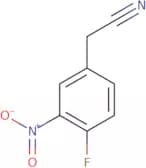
CAS:<p>4-Fluoro-3-nitrophenylacetonitrile is a monomer that can be synthesised from the reaction of carbamic acid and diphenyl ether. It is chiral, stereoselective and nucleophilic. 4-Fluoro-3-nitrophenylacetonitrile can also be synthesised by reacting fluoroacetamide with sodium cyanide in water, forming the corresponding amide, which reacts with acetonitrile to form the nitro compound. The anti-cancer properties of 4-fluoro-3 nitrophenylacetonitrile have been studied in vitro and in vivo. This substance has been shown to inhibit growth of cancer cells and induce apoptosis. In addition, this substance has been used as a synthetic strategy for dihydroisoquinolines, which are important for their anti-cancer properties.</p>Fórmula:C8H5FN2O2Pureza:Min. 95%Peso molecular:180.14 g/molEthyl cyanoformate
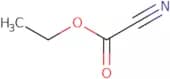
CAS:<p>Ethyl cyanoformate is a reactive compound that is used in organic synthesis. It has been shown to cause muscle cell proliferation and inhibit the production of gamma-aminobutyric acid, which is responsible for regulating neurotransmitter release. Ethyl cyanoformate also has antimicrobial properties due to its ability to form an oxygenated n-oxide tautomer. The reaction mechanism of ethyl cyanoformate involves the formation of a covalent bond with the sulfhydryl group on the enzyme gamma-aminobutyric acid receptor. This prevents the binding of GABA, inhibiting nerve impulses and reducing inflammation in the bowel.</p>Fórmula:C4H5NO2Pureza:Min. 95%Cor e Forma:Clear LiquidPeso molecular:99.09 g/mol2-Fluoro-4-iodobenzonitrile
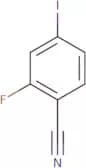
CAS:<p>2-fluoro-4-iodobenzonitrile is a potent inhibitor of the functions of VEGFR receptors. It inhibits the proliferation and migration of cancer cells by binding to VEGFR receptors, which are tyrosine kinases that regulate cell growth and differentiation. 2-Fluoro-4-iodobenzonitrile has been shown to inhibit angiogenesis, or the formation of new blood vessels, in vitro. This drug also has potent inhibitory activity against tumor growth in vivo. Clinical trials have shown that 2-fluoro-4-iodobenzonitrile can be used to treat various types of cancers, including breast cancer and colon cancer.</p>Fórmula:C7H3FINPureza:Min. 95%Cor e Forma:PowderPeso molecular:247.01 g/molBromodichloroacetonitrile
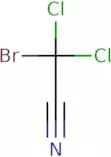
CAS:<p>Bromodichloroacetonitrile (BCN) is a chemical with disinfectant properties. It is used in wastewater treatment, as it is able to destroy bacteria and viruses. BCN also has been shown to be effective against the Covid-19 pandemic. BCN can be used as an analytical reagent for the analysis of chloride ions in deionized water. The carcinogenic potential of BCN in humans is unknown, but it has been shown to cause bladder cancer in rats.</p>Fórmula:C2BrCl2NPureza:Min. 95%Cor e Forma:Colorless PowderPeso molecular:188.84 g/molThiophene-3-acetonitrile
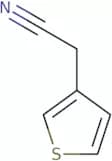
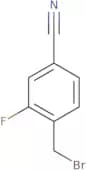
CAS:<p>Thiophene-3-acetonitrile is a reactive intermediate that is used in the synthesis of active enzymes. It has been shown to be an efficient method for the synthesis of antitubercular agents, such as rifamycins and other drugs. Thiophene-3-acetonitrile is an electron acceptor and can be used to generate active enzymes, such as those involved in DNA replication and transcription. This compound also has a variety of functional groups, which can be used for a number of techniques, including coordination geometry studies.</p>Fórmula:C6H5NSPureza:Min. 95%Cor e Forma:Clear LiquidPeso molecular:123.18 g/mol4-Cyano-2-fluorobenzyl bromide
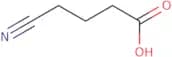
CAS:<p>4-Cyano-2-fluorobenzyl bromide is a methyl ester that can be used as a reagent for the synthesis of chiral α-amino acids. It can also be used as an enantioselective methylating agent for the synthesis of γ-secretase inhibitors. The methodology for the convergent synthesis of this compound includes alkylation with glycine followed by an enantioselective hydrolysis, which results in optically pure 4-cyano-2-fluorobenzyl bromide.</p>Fórmula:C8H5BrFNPureza:Min. 95%Cor e Forma:PowderPeso molecular:214.03 g/mol4-Cyanobutanoic acid
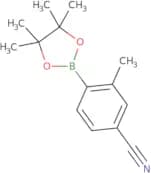
CAS:<p>4-Cyanobutanoic acid is a colorless organic solvent that is not soluble in water or polar organic solvents. It can be used for the immobilization of proteins, as well as for the desymmetrization and chlorination of aromatic compounds. One of its most common uses is in biocatalysis, where it acts as a substrate binding agent to help catalyze reactions. 4-Cyanobutanoic acid has also been shown to inhibit the growth of bacteria by acting as an electron acceptor during metabolism. This compound can be degraded through hydrolysis with hydrochloric acid or biodegradation.</p>Fórmula:C5H7NO2Pureza:Min. 95%Cor e Forma:PowderPeso molecular:113.11 g/mol4-Cyano-2-methylphenylboronic acid, pinacol ester
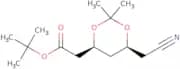
CAS:<p>Please enquire for more information about 4-Cyano-2-methylphenylboronic acid, pinacol ester including the price, delivery time and more detailed product information at the technical inquiry form on this page</p>Fórmula:C14H18BNO2Pureza:Min. 95%Peso molecular:243.11 g/mol(4S,6S)-6-(Cyanomethyl)-2,2-dimethyl-1,3-dioxane-4-acetic acid tert-butyl ester
CAS:<p>Please enquire for more information about (4S,6S)-6-(Cyanomethyl)-2,2-dimethyl-1,3-dioxane-4-acetic acid tert-butyl ester including the price, delivery time and more detailed product information at the technical inquiry form on this page</p>Fórmula:C14H23NO4Pureza:Min. 95%Peso molecular:269.34 g/molDicyclohexylamine 2-cyanoacrylate
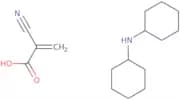
CAS:Produto Controlado<p>Please enquire for more information about Dicyclohexylamine 2-cyanoacrylate including the price, delivery time and more detailed product information at the technical inquiry form on this page</p>Fórmula:C16H26N2O2Pureza:Min. 95%Peso molecular:278.39 g/molDiethyl cyanophosphonate
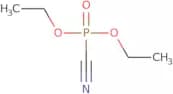
CAS:<p>Diethyl cyanophosphonate is a compound that is used as a fluorescence probe for amides and pyrazole rings. It binds to the ester form of the amide, which can then be detected with a fluorescence detector. The chemical reaction between diethyl cyanophosphonate and the ester form is reversible, so it can be used as a hypoglycemic agent. Diethyl cyanophosphonate has potent antitumor activity and binds to nerve cells, causing them to become electrically active.</p>Fórmula:C5H10NO3PPureza:Min. 95%Cor e Forma:PowderPeso molecular:163.11 g/molPotassium tetracyanoaurate(III)
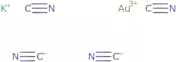
CAS:Produto Controlado<p>Potassium tetracyanoaurate(III) (K[AuCl4]) is a crystalline, intermetallic compound that has been used in the production of coatings, spherical particles, and electrochemical materials. The pentahydrate form has a diameter of 4.8-5.2 Å and a melting point of ~115°C. K[AuCl4] is stable in air and water but reacts with strong acids to form potassium chloride and potassium tetracyanocuprate(II). This substance also has an optimal pH range of 6-7 and an average solubility range of 0.05-0.1g/100mL at 20°C. The microstructure of K[AuCl4] is not well understood because it is difficult to isolate from other compounds during synthesis.</p>Fórmula:C4AuN4KPureza:Min. 95%Cor e Forma:PowderPeso molecular:340.13 g/mol2-Cyano-5-fluoropyridine
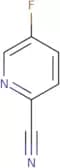
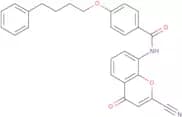
CAS:<p>2-Cyano-5-fluoropyridine is a potential antitubercular agent that has shown penetrability in the central nervous system and activity against Mycobacterium tuberculosis. It is orally active at low doses, and has been shown to be an effective inhibitor of mycobacterial growth and lipid synthesis. In addition, this compound also has antimycobacterial activity against M. avium complex and M. ulcerans, and is a potent inhibitor of β-amyloid aggregation.</p>Fórmula:C6H3FN2Pureza:Min. 95%Peso molecular:122.1 g/molN-(2-Cyano-4-oxo-4H-1-benzopyran-8-yl)-4-(4-phenylbutoxy)benzamide
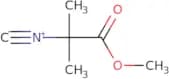
CAS:<p>Please enquire for more information about N-(2-Cyano-4-oxo-4H-1-benzopyran-8-yl)-4-(4-phenylbutoxy)benzamide including the price, delivery time and more detailed product information at the technical inquiry form on this page</p>Fórmula:C27H22N2O4Pureza:Min. 95%Peso molecular:438.47 g/molMethyl-2-isocyanoisobutyrate
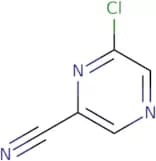
CAS:<p>Please enquire for more information about Methyl-2-isocyanoisobutyrate including the price, delivery time and more detailed product information at the technical inquiry form on this page</p>Fórmula:C9H9NO2Pureza:Min. 95%Peso molecular:127.14 g/mol2-Chloro-6-cyanopyrazine
CAS:<p>2-Chloro-6-cyanopyrazine is a compound that has been shown to have antimycobacterial activity against Mycobacterium avium. It may also have tuberculostatic activity and be useful for the treatment of tuberculosis. 2-Chloro-6-cyanopyrazine inhibits bacterial growth by binding to DNA, RNA, and protein synthesis in mycobacteria. The antibacterial effect is due to its ability to inhibit amidation and alkylation reactions, as well as its nucleophilic properties. 2-Chloro-6-cyanopyrazine is an acidic compound with a pKa of 3.2, which makes it more soluble in water than hydrophobic compounds such as alkanoic acids.</p>Fórmula:C5H2ClN3Pureza:Min. 95%Peso molecular:139.54 g/mol