Ciano-, Nitrilo-
Os compostos ciano e nitrilo são moléculas orgânicas que contêm grupos ciano (C≡N) ou nitrilo em sua estrutura, caracterizadas pela presença de nitrogênio. Esses grupos desempenham papéis importantes em várias reações químicas e aplicações industriais. Nesta categoria, você encontrará uma ampla gama de compostos ciano e nitrilo, variando de estruturas simples a complexas. Na CymitQuimica, oferecemos compostos ciano e nitrilo de alta qualidade adaptados para atender às necessidades de pesquisa e industriais. Nossos compostos são adequados para uma variedade de aplicações de síntese e análise.
Foram encontrados 9618 produtos de "Ciano-, Nitrilo-"
Ordenar por
Pureza (%)
0
100
|
0
|
50
|
90
|
95
|
100
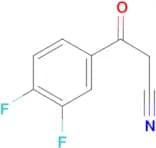
3,4-Difluorobenzoylacetonitrile
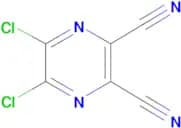
CAS:Fórmula:C9H5F2NOPureza:97%Cor e Forma:SolidPeso molecular:181.1425,6-Dichloro-2,3-dicyanopyrazine
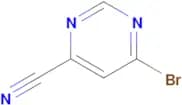
CAS:Fórmula:C6Cl2N4Pureza:97%Cor e Forma:Solid, White to pale reddish yellow powderPeso molecular:198.996-Bromopyrimidine-4-carbonitrile
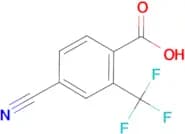
CAS:Fórmula:C5H2BrN3Pureza:95%Cor e Forma:No data available.Peso molecular:183.9964-Cyano-2-(trifluoromethyl)benzoic acid
CAS:Fórmula:C9H4F3NO2Pureza:97%Cor e Forma:SolidPeso molecular:215.1312-Bromo-4-(2-hydroxy-ethoxy)-5-methoxy-benzonitrile
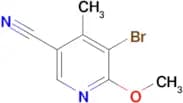
CAS:Fórmula:C10H10BrNO3Pureza:97.0%Peso molecular:272.0985-bromo-6-methoxy-4-methylpyridine-3-carbonitrile
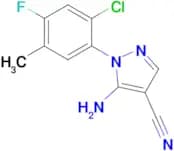
CAS:Fórmula:C8H7BrN2OPureza:95.0%Peso molecular:227.0615-Amino-1-(2-chloro-4-fluoro-5-methyl-phenyl)-1H-pyrazole-4-carbonitrile
Fórmula:C11H8ClFN4Pureza:95.0%Peso molecular:250.66(S)-2-(((Benzyloxy)carbonyl)amino)-3-(4-cyanophenyl)propanoic acid
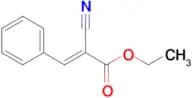
CAS:Fórmula:C18H16N2O4Pureza:95.0%Peso molecular:324.336Ethyl 2-cyano-3-phenylacrylate
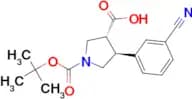
CAS:Fórmula:C12H11NO2Pureza:95%Cor e Forma:SolidPeso molecular:201.225(3R,4S)-1-(tert-Butoxycarbonyl)-4-(3-cyanophenyl)pyrrolidine-3-carboxylic acid
CAS:Fórmula:C17H20N2O4Pureza:95.0%Peso molecular:316.3575-Amino-2-hydroxybenzonitrile
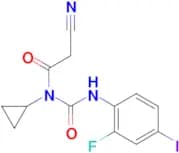
CAS:Fórmula:C7H6N2OPureza:97%Cor e Forma:Solid, White powderPeso molecular:134.1382-Cyano-N-cyclopropyl-N-((2-fluoro-4-iodophenyl)carbamoyl)acetamide
CAS:Pureza:98%(LC-MS);RGPeso molecular:387.15301514-(Trifluoromethoxy)benzenesulphonylacetonitrile
CAS:<p>Please enquire for more information about 4-(Trifluoromethoxy)benzenesulphonylacetonitrile including the price, delivery time and more detailed product information at the technical inquiry form on this page</p>Fórmula:C9H6F3NO3SPureza:Min. 95%Cor e Forma:PowderPeso molecular:265.21 g/mol4-Isopropylbenzenesulphonylacetonitrile
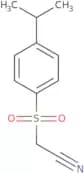
CAS:<p>Please enquire for more information about 4-Isopropylbenzenesulphonylacetonitrile including the price, delivery time and more detailed product information at the technical inquiry form on this page</p>Fórmula:C11H13NO2SPureza:Min. 95%Cor e Forma:PowderPeso molecular:223.29 g/molN-(4-Cyanophenyl)-2-chloropropanamide
CAS:<p>Please enquire for more information about N-(4-Cyanophenyl)-2-chloropropanamide including the price, delivery time and more detailed product information at the technical inquiry form on this page</p>Pureza:Min. 95%ethyl 2-cyano-3-[3-(trifluoromethyl)phenyl]acrylate
CAS:<p>Please enquire for more information about ethyl 2-cyano-3-[3-(trifluoromethyl)phenyl]acrylate including the price, delivery time and more detailed product information at the technical inquiry form on this page</p>Pureza:Min. 95%2-(Aminomethylene)phenylsulphonyl acetonitrile
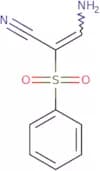
CAS:<p>2-(Aminomethylene)phenylsulphonyl acetonitrile is an allylating agent. It reacts with hydrochloric acid to form allyl isothiocyanate, which can be used for the synthesis of thiazoline derivatives. 2-(Aminomethylene)phenylsulphonyl acetonitrile is a reagent that has been used in multicenter trials to study the effects of allylation on cancerous cells.</p>Fórmula:C9H8N2O2SPureza:Min. 95%Cor e Forma:PowderPeso molecular:208.24 g/mol2-((4-(tert-butyl)phenyl)sulfonyl)acetonitrile
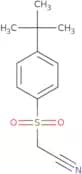
CAS:<p>Please enquire for more information about 2-((4-(tert-butyl)phenyl)sulfonyl)acetonitrile including the price, delivery time and more detailed product information at the technical inquiry form on this page</p>Pureza:Min. 95%2,4-Dichlorobenzenesulphonylacetonitrile
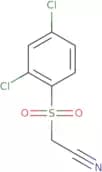
CAS:<p>Please enquire for more information about 2,4-Dichlorobenzenesulphonylacetonitrile including the price, delivery time and more detailed product information at the technical inquiry form on this page</p>Pureza:Min. 95%2-(4-Fluorophenoxy)-Acetonitrile
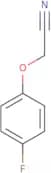
CAS:<p>Please enquire for more information about 2-(4-Fluorophenoxy)-Acetonitrile including the price, delivery time and more detailed product information at the technical inquiry form on this page</p>Fórmula:C8H6FNOPureza:Min. 95%Peso molecular:151.14 g/mol4-Bromobenzenesulphonylacetonitrile
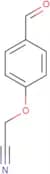
CAS:<p>Please enquire for more information about 4-Bromobenzenesulphonylacetonitrile including the price, delivery time and more detailed product information at the technical inquiry form on this page</p>Fórmula:C8H6BrNO2SPureza:Min. 95%Cor e Forma:PowderPeso molecular:260.11 g/mol(4-Formylphenoxy)acetonitrile
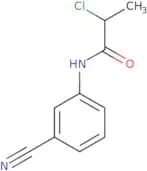
CAS:<p>Please enquire for more information about (4-Formylphenoxy)acetonitrile including the price, delivery time and more detailed product information at the technical inquiry form on this page</p>Fórmula:C9H7NO2Pureza:Min. 95%Peso molecular:161.16 g/molN-(3-Cyanophenyl)-2-chloropropanamide
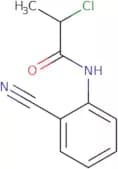
CAS:<p>Please enquire for more information about N-(3-Cyanophenyl)-2-chloropropanamide including the price, delivery time and more detailed product information at the technical inquiry form on this page</p>Pureza:Min. 95%N-(2-Cyanophenyl)-2-chloropropanamide
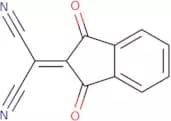
CAS:<p>Please enquire for more information about N-(2-Cyanophenyl)-2-chloropropanamide including the price, delivery time and more detailed product information at the technical inquiry form on this page</p>Pureza:Min. 95%2-(Dicyanomethylene)indan-1,3-dione
CAS:<p>2-(Dicyanomethylene)indan-1,3-dione is a zwitterion that can be used as an acceptor in organic synthesis. It reacts with nucleophiles (e.g., amines) to form the corresponding adducts and is reversibly hydrolyzed by water or alkali. 2-(Dicyanomethylene)indan-1,3-dione is also known for its ability to undergo nucleophilic attack of the carbonyl group and react with anilines to form the corresponding azine derivatives. This molecule has been shown to be a good candidate for use in uv irradiation due to its high absorption coefficient at 260 nm.</p>Fórmula:C12H4N2O2Pureza:Min. 95%Cor e Forma:PowderPeso molecular:208.17 g/mol2-Chloro-N-(4-(cyanomethyl)phenyl)propanamide
<p>Please enquire for more information about 2-Chloro-N-(4-(cyanomethyl)phenyl)propanamide including the price, delivery time and more detailed product information at the technical inquiry form on this page</p>Pureza:Min. 95%2-Chloro-N-(3-chloro-4-cyanophenyl)propanamide
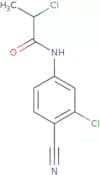
CAS:<p>Please enquire for more information about 2-Chloro-N-(3-chloro-4-cyanophenyl)propanamide including the price, delivery time and more detailed product information at the technical inquiry form on this page</p>Pureza:Min. 95%2-(4-Chlorobenzenesulphonyl)acetonitrile
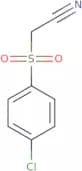
CAS:<p>2-(4-Chlorobenzenesulphonyl)acetonitrile is a reactive chemical that is synthesized from chloroform and acetonitrile. It can be used to synthesize various medicines such as analgesics, muscle relaxants, and x-ray contrast agents. 2-(4-Chlorobenzenesulphonyl)acetonitrile has minimal effects on the human body and is not known to cause any major health problems. It is metabolized in the liver by oxidation of the methyl group to form 4-chlorobenzene sulfonic acid, which is excreted through urine. The chlorine atom in this molecule has a trigonal bipyramidal geometry with a bond length of 1.82 Å, which can be seen in x-ray crystallography studies.</p>Fórmula:C8H6ClNO2SPureza:Min. 95%Cor e Forma:PowderPeso molecular:215.66 g/molEthyl (2-chlorophenyl)cyanoacetate
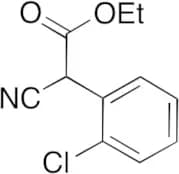
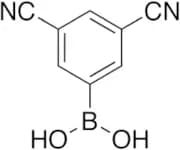
CAS:Produto ControladoFórmula:C11H10ClNO2Cor e Forma:NeatPeso molecular:223.6563,5-Dicyanophenylboronic Acid
CAS:Produto ControladoFórmula:C8H5BN2O2Cor e Forma:NeatPeso molecular:171.948




![[1,1′-Biphenyl]-4-carboxylic acid, 4′-cyano-3′-fluoro-](/_next/image/?url=https%3A%2Fstatic.cymitquimica.com%2Fproducts%2F10%2Fthumb-webp%2FF861678.webp&w=3840&q=75)

![Spiro[2.2]pentane-1-carbonitrile](/_next/image/?url=https%3A%2Fstatic.cymitquimica.com%2Fproducts%2F10%2Fthumb-webp%2FF610048.webp&w=3840&q=75)




![ethyl 2-cyano-3-[3-(trifluoromethyl)phenyl]acrylate](/_next/image/?url=https%3A%2Fstatic.cymitquimica.com%2Fproducts%2F3D%2Fthumb-webp%2FFE168860.webp&w=3840&q=75)