Outros
Foram encontrados 6274 produtos de "Outros"
Ordenar por
Pureza (%)
0
100
|
0
|
50
|
90
|
95
|
100
4-Chloro-1-naphthol
CAS:<p>Substrate for horseradish peroxidase (HRP). HRP catalyzes oxidation of 4-chloro-1-naphthol in the presence of peroxide to the blue insoluble product 4-chloro-1-naphthon. It is used for both blotting and immunohistochemical staining but is less sensitive than other precipitating HRP substrates.</p>Fórmula:C10H7ClOPureza:Min. 97.0 Area-%Peso molecular:178.62 g/molRef: 3D-C-5180
1kgA consultar100gA consultar250gA consultar500gA consultar2500gA consultar-Unit-ggA consultarMemantine impurity IV
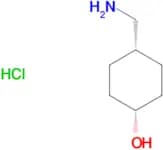
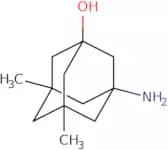
CAS:<p>Memantine impurity IV is a hydrolysis product of memantine. It appears as a white to off-white powder and has a molecular weight of 198.1 g/mol. Memantine impurity IV is an intermediate in the production of memantine and is therefore not used for any other purpose. The compound contains hydroxy groups, hydroxy, alcohols, and bridgehead groups which are efficient at hydrolyzing to form amino acids.</p>Fórmula:C12H21NO·HClPureza:Min. 95%Cor e Forma:White PowderPeso molecular:231.76 g/mol5-Bromo-3-indolyl phosphate disodium salt
CAS:<p>5-Bromo-3-indolyl phosphate disodium salt is a chemiluminescent substrate that is used for the detection of bacterial activity. It reacts with oxygen to produce light, which can be measured using a luminometer. It is also used as a chromogenic substrate for detection of bacterial activity in culture media. The enzyme reaction produces an intense blue fluorescence and is used for diagnostic purposes in food testing and medical diagnostics. 5-Bromo-3-indolyl phosphate disodium salt has been shown to be effective against many bacteria and fungi, including Staphylococcus aureus, Streptococcus pyogenes, Escherichia coli, Pseudomonas aeruginosa, Candida albicans and Aspergillus niger. This product is chemically stable at room temperature but should be stored at 4°C or below.</p>Fórmula:C8H5BrNO4PNa2Pureza:Min. 95%Cor e Forma:PowderPeso molecular:335.99 g/mol5-Nitro-3-indoxyl-β-D-galactopyranoside
<p>Please enquire for more information about 5-Nitro-3-indoxyl-β-D-galactopyranoside including the price, delivery time and more detailed product information at the technical inquiry form on this page</p>Fórmula:C14H16N2O8Pureza:Min. 95%Peso molecular:340.29 g/mol4-Chloro-3-indoxyl-β-D-galactopyranoside
CAS:<p>Chromogenic substrate for β-D-galactosidase yielding a precipitate. Mostly used in histochemistry.</p>Fórmula:C14H16ClNO6Peso molecular:329.74 g/molAldol® 495 nonanoate, Biosynth Patent: EP 2427431 and US 8940909
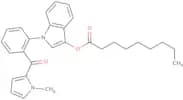
CAS:Produto Controlado<p>Aldol 495 nonanoate is a bioluminescent substrate that can be used to measure the activity of Aldolase, which is an enzyme that catalyzes the conversion of glyceraldehyde-3-phosphate and dihydroxyacetone phosphate to D-glyceraldehyde. This substrate is used in various diagnostic assays, including food testing and staining. Aldol 495 nonanoate was developed by Cymit Quimica Pharmaceuticals and has been patented by EP 2427431 and US 8940909.</p>Fórmula:C29H31ClN2O3Pureza:Min. 95.0 Area-%Peso molecular:491.02 g/mol5-Bromo-4-chloro-3-indoxyl butyrate
CAS:<p>Chromogenic substrate for carboxylesterase yielding a blue precipitate upon cleavage. It has been proposed for the rapid detection of Branhamella catarrhalis in a strip test because unlike most other members of the family Neisseriaceae, Branhamella catarrhalis produces a butyrateesterase.</p>Fórmula:C12H11BrClNO2Pureza:Min. 98.0 Area-%Peso molecular:316.59 g/mol5-Bromo-4-chloro-3-indoxyl-1-acetate
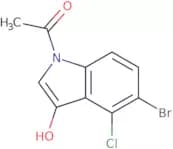
CAS:<p>5-Bromo-4-chloro-3-indoxyl-1-acetate is a chromogenic substrate used to detect the specific enzymatic activity of esterase. After cleavage, 5-bromo-4-chloro-indoxyl is released, resulting in a blue to blue-green color change in bacterial colonies or media. 5-Bromo-4-chloro-3-indoxyl-1-acetate is used in bacterial esterase activity assays (e.g. Pseudomonas spp.).</p>Pureza:Min. 95%Cor e Forma:PowderPeso molecular:288.52 g/mol2-Chloro-4-nitrophenyl b-D-galactopyranoside
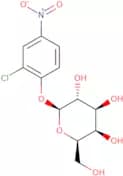
CAS:<p>2-Chloro-4-nitrophenyl-beta-D-galactopyranoside is a chromogenic substrate used to test enzyme activities. It is commonly used in molecular biology research for the detection and measurement of beta-galactosidase activity.</p>Fórmula:C12H14ClNO8Pureza:Min. 95%Cor e Forma:White PowderPeso molecular:335.69 g/molβ-Naphthyl stearate
CAS:<p>Beta-naphthyl stearate is a chromogenic substrate for measuring enzymatic activity.</p>Pureza:Min. 95%Cor e Forma:PowderPeso molecular:410.63 g/mol5-Bromo-3-indoxyl caprylate
CAS:<p>5-Bromo-3-indoxyl caprylate is a fluorogenic substrate that can be used for the detection of β-galactosidase. It is an enzyme substrate that can be used to measure β-galactosidase activity in cell culture media. It has a high purity and high quality. 5-Bromo-3-indoxyl caprylate is also used as a chromogenic substrate for the detection of β-galactosidase. This product has a CAS number of 133950-69-3.</p>Fórmula:C16H20BrNO2Pureza:Min. 99 Area-%Peso molecular:338.24 g/mol4-Nitrophenyl a-L-arabinopyranoside
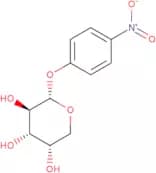
CAS:<p>Substrate for a-L-arabinopyranosidase</p>Fórmula:C11H13NO7Pureza:Min. 98 Area-%Cor e Forma:White PowderPeso molecular:271.22 g/mol6-Chloro-3-indolyl butyrate
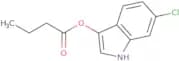
CAS:<p>6-Chloro-3-indolyl butyrate is a chromogenic substrate for lipases. Use in lipid digestion and metabolism studies, it produces a salmon-pink color when 6-chloro-3-indolyl is released after enzymatic cleavage.</p>Fórmula:C12H12ClNO2Pureza:Min. 95%Cor e Forma:PowderPeso molecular:237.68 g/molPhenolphthalein b-D-glucuronide sodium salt monohydrate
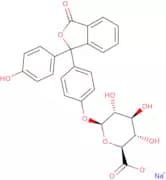
CAS:<p>Monohydrate; beta-glucuronidase substrate; yellow/pink color<br>Beta-glucuronidase activity can be measured in a colorimetric assay with phenolphthalein beta-D-glucuronide as substrate. Starting assay conditions can include 30 µg of enzyme-containing material, 0.6 mM phenolphthalein beta-D-glucuronide in 100 mM sodium phosphate buffer in a total volume of 100 µL and monitoring absorbance changes at 540 nm. Temperature incubation can be used to promote the enzymatic activity (Galindo, 2012).</p>Fórmula:C26H23NaO11Pureza:Min. 95%Cor e Forma:Off-White PowderPeso molecular:534.45 g/molIPTG
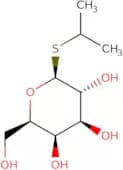
CAS:<p>Isopropyl-beta-D-thiogalactopyranoside (IPTG) is a non-metabolizable allolactose analogue, widely used in molecular biology for overexpression of recombinant proteins from inducible systems under the control of lac promoter. IPTG binds to the LacI repressor and causes its release from the lac operator, allowing gene expression of lac operon to take place. IPTG is present in vectors of pGEX, pGEM-T, pET, pRSET, pMAL class and others.</p>Fórmula:C9H18O5SPureza:Min. 99 Area-%Cor e Forma:White PowderPeso molecular:238.3 g/molN-Acetylmemantine
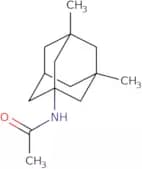
CAS:<p>N-Acetylmemantine is a drug that inhibits the activity of acetylcholinesterase in the brain. It has been shown to inhibit cancer cell growth and induce apoptosis, as well as inhibit the reaction of hydrolysis of acetonitrile with hydrochloric acid in an organic solvent. N-Acetylmemantine is synthesized by heating ethylene in the presence of hydrochloric acid. The synthesis yields a white solid that consists mainly of N-acetylmethamphetamine. This drug interacts with cellular membranes, which may be due to its ability to react with cholesterol or phospholipids. The interaction leads to changes in membrane permeability, which can result in apoptosis.</p>Fórmula:C14H23NOPureza:Min. 95%Cor e Forma:White PowderPeso molecular:221.34 g/mol3,4-Cyclohexenoesculetine phosphate disodium
<p>Chromogenic substrate for phosphatase</p>Pureza:Min. 95%3-Indoxyl-β-D-glucopyranoside anhydrous
CAS:<p>The maunfacturing of blue jeans started 150 years ago as workwear, and are found nowadays in almost every wardrobe. Their renowned indigo color tone is truly unique; nevertheless, the high demand for the dye poses serious sustainability and environmental problems connected with its manufacturing process. Recently, a group of scientists presented an alternative indigo dyeing method inspired by the indoxyl glucoconjugate present in the plant P.tinctorium. The researchers proposed as an alternative approach a biocatalytic process using recombinant E.coli to access water soluble β-gluco-indoxyl (indican). At the point of coloring, indican gets hydrolyzed by β-glucosidase enzymes forming indoxyl, which suddenly undergoes oxidation to leucoindigo and further crystallizes to indigo giving the typical blue denim its signature character.</p>Fórmula:C14H17NO6Pureza:Min. 99.0 Area-%Peso molecular:295.29 g/mol5-Bromo-3-indoxyl-β-D-galactopyranoside
CAS:<p>Chromogenic substrate for beta-D-galactosidase yielding a lapis colored precipitate. 5-Bromo-3-indoxyl-beta-D-galactopyranoside can be used in conjunction with isopropyl-beta-D-thiogalactopyranoside as an alternative to 5-bromo-4-chloro-3-indolyl-beta-D-galactopyranoside (X-gal), producing a darker blue color for detection of beta-galactosidase activity in bacterial colonies in a colorimetric assay to detect recombinants (white) from non-recombinants (blue). 5-Bromo-3-indoxyl-beta-D-galactopyranoside is also used in histochemistry to demonstrate beta-galactosidase activity in tissues.</p>Fórmula:C14H16BrNO6Pureza:Min. 99.0 Area-%Peso molecular:374.20 g/mol5-Bromo-4-chloro-3-indolyl α-D-fucopyranoside
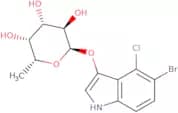
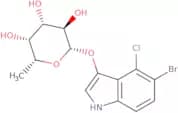
CAS:<p>This powerful chromogenic substrate is designed specifically for the assay and detection of a-L-fucosidase enzyme activity. With a unique combination of bromo, chloro, and indolyl moieties, it offers enhanced stability and promotes color development that is unparalleled in clarity and intensity. Ideal for biochemistry, molecular biology, and related life sciences applications, this substrate provides unmatched performance and reliability for all your a-L-fucosidase enzyme research needs.</p>Fórmula:C14H15BrClNO5Pureza:Min. 95%Cor e Forma:PowderPeso molecular:392.63 g/mol6-Chloro-3-indoxyl-β-D-galactopyranoside, plant origin
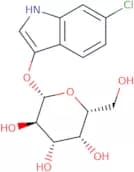
CAS:<p>6-Chloro-3-indoxyl-beta-D-galactopyranoside is a chromogenic substrate for beta-galactosidase that yields a salmon or rose-coloured precipitate and hence is also known as Salmon-Gal. It can be used in conjunction with isopropyl-beta-D-thiogalactopyranoside (IPTG) as an alternative to the chromogenic substrate 5-bromo-4-chloro-3-indolyl beta-D-galactopyranoside (X-Gal) for detection of beta-galactosidase activity in bacterial colonies in colorimetric assays. Where beta-galactosidase expressed from a reporter gene in molecular biology experiments, recombinant colonies on growth plates are salmon-coloured while non-recombinants appear as white. Use of nitroblue tetrazolium salt (NBT) with Salmon-Gal may provide faster results, yielding a clear, purple precipitate, than for Salmon-Gal alone. In conjunction with 5-bromo-4-chloro-3-indolyl-beta-D-glucoside (X-Glc), Salmon-Gal is useful for simultaneous detection of GUS and Lac activities in the same medium.</p>Fórmula:C14H16ClNO6Pureza:Min. 98.0 Area-%Peso molecular:329.74 g/mol2-Naphthyl-α-D-glucopyranoside
CAS:<p>2-Naphthyl-α-D-glucopyranoside is a substrate for α-glucosidase. 2-Naphthol is released upon hydrolyzation. By simultaneous coupling with a suitable staining reagent, such as hexazonium p-rosaniline, the corresponding reddish-brown azo-dye is formed. Naphthols can also be detected by fluorescence analysis.</p>Fórmula:C16H18O6Pureza:Min. 98.0 Area-%Peso molecular:306.32 g/mol4-Nitrophenyl N,N'-diacetyl-b-D-chitobioside
CAS:<p>4-Nitrophenyl N,N'-diacetyl-beta-D-chitobioside is a chromogenic substrate for chitinase. Upon hydrolysis, para-nitrophenol is released yielding a yellowish colour. 4-Nitrophenyl N,N'-diacetyl-beta-D-chitobioside is used in different applications such as the Fungal infection detection, chitin degradation assays</p>Pureza:Min. 95%Cor e Forma:PowderPeso molecular:545.49 g/molPhosphoric acid, mono(4-nitrophenyl) ester
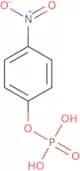
CAS:<p>Phosphatase substrate</p>Fórmula:C6H6NO6PPureza:Min. 95%Cor e Forma:White PowderPeso molecular:219.09 g/mol1-Methyl 2-(4-methyl-2-oxo-2H-1-benzopyran-7-yl)ethanedioate
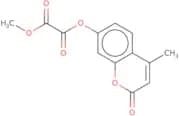
CAS:<p>Inorganic phosphate targeted colorimetric probe</p>Fórmula:C13H10O6Pureza:Min. 95%Peso molecular:822.35 g/mol5-Iodo-3-indoxyl-β-D-galactopyranoside
CAS:<p>5-Iodo-3-indoxyl-beta-D-galactopyranoside is a chromogenic substrate for beta-galactosidase.</p>Fórmula:C14H16INO6Pureza:Min. 99 Area-%Peso molecular:421.19 g/mol4-Nitrophenyl 2-acetamido-6-O-(2-acetamido-2-deoxy-b-D-glucopyranosyl)-3-O-(b-D-galactopyranosyl)-2-deoxy-a-D-galactopyranoside
CAS:<p>4-Nitrophenyl 2-acetamido-6-O-(2-acetamido-2-deoxy-b-D-glucopyranosyl)-3-O-(b-D-galactopyranosyl)-2-deoxy-a-D-galactopyranoside is a specific chromogenic substrate designed for the highly sensitive and accurate detection of glycosidase enzyme activity. Glycosidases are responsible for the cleavage of glycosidic bonds between saccharide units in various carbohydrates. The hydrolysis of this substrate by glycosidase enzymes produces 4-nitrophenol, a yellow-colored compound that can be easily monitored through spectrophotometric measurements due to its strong absorbance at 405 nm. This chromogenic substrate is widely used in the analysis of glycosidase activity in various biological samples, including bacterial, fungal, and plant tissues, as well as in environmental samples and biotechnological applications.</p>Fórmula:C28H41N3O18Pureza:Min. 95 Area-%Cor e Forma:White PowderPeso molecular:707.63 g/mol5-Bromo-6-chloro-3-indoxyl choline phosphate
CAS:<p>Please enquire for more information about 5-Bromo-6-chloro-3-indoxyl choline phosphate including the price, delivery time and more detailed product information at the technical inquiry form on this page</p>Fórmula:C13H17BrClN2O4PPureza:Min. 99 Area-%Peso molecular:411.63 g/mol4-Nitrophenyl α-L-fucopyranoside
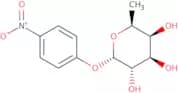
CAS:<p>Chromogenic substrate for alpha-L-fucosidase</p>Fórmula:C12H15NO7Pureza:(%) Min. 98.0%Cor e Forma:PowderPeso molecular:285.25 g/mol3,4-Cyclohexenoesculetine-N-acetyl-glucosamine
<p>Please enquire for more information about 3,4-Cyclohexenoesculetine-N-acetyl-glucosamine including the price, delivery time and more detailed product information at the technical inquiry form on this page</p>Pureza:Min. 95%Aldol® 515 β-D-xylopyranoside, Biosynth Patent: EP 2427431 and US 8940909
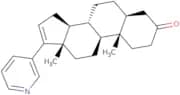
CAS:<p>Aldol® 515 beta-D-xylopyranoside is a chemiluminescent ligand that can be used for the detection of beta-xylosidase activity to yield a red color.</p>Fórmula:C28H34N2O6Pureza:Min. 95%Cor e Forma:PowderPeso molecular:494.59 g/mol(5α)-17-(3-Pyridinyl)androst-16-en-3-one
CAS:Produto Controlado<p>(5α)-17-(3-Pyridinyl)androst-16-en-3-one is a natural metabolite of testosterone that is produced in the liver. It has been identified as an impurity in API, which can be found in drugs used for the treatment of high blood pressure and prostate cancer. (5α)-17-(3-Pyridinyl)androst-16-en-3-one is not active as a drug itself, but it can be used as a standard to study the metabolism of testosterone and other steroids.</p>Fórmula:C24H31NOPureza:Min. 98 Area-%Cor e Forma:White PowderPeso molecular:349.51 g/mol5-Bromo-4-chloro-3-indoxyl phosphate, p-toluidine salt, high grade
CAS:<p>A substrate for visualising alkaline phosphatase activity. It produces a purple insoluble end product that is detected visually, when used together with nitroblue tetrazolium. The substrate system is versatile and has functions in a variety of applications, including Northern, Southern, and Western blotting, in situ hybridization, ELISAs, microarray and immunohistochemistry. DMF soluble.</p>Fórmula:C15H15BrClN2O4PPureza:Min. 98.0 Area-%Peso molecular:433.63 g/molAldol® 518 α-D-glucopyranoside, Biosynth Patent: EP 2427431 and US 8940909
CAS:<p>Aldol® 518 alpha-D-glucopyranoside is a fluorogenic enzyme substrate used for detection of alpha-D-glucosidase activity. The colorless enzyme substrate is cleaved by alpha-D-glucosidase, generating red fluorescent signal and in some conditions, an orange colour in the visible spectrum can get formed, staining bacterial colonies in faint orange coloration. Aldol® 518 alpha-D-glucopyranoside can be used under aerobic and anaerobic conditions.</p>Fórmula:C29H29ClN2O7Pureza:Min. 95.0 Area-%Peso molecular:553 g/mol4-Nitrophenyl palmitate
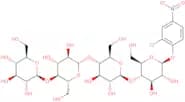
CAS:<p>4-Nitrophenyl palmitate is a lipase-sensitive chromogenic substrate commonly used in the study of lipase and esterase activity. Its hydrolysis by lipases produces a yellow 4-nitrophenol, which can be easily detected spectrophotometrically, offering a quantitative measure of enzyme activity. This substrate is widely utilized in the screening of lipase-producing microorganisms and the optimization of enzyme-catalyzed reactions in various fields, including biotechnology and pharmaceutical research.</p>Fórmula:C22H35NO4Pureza:Min. 95%Cor e Forma:Off-White PowderPeso molecular:377.52 g/mol2-Chloro-4-nitrophenyl-β-D-cellotetraoside
CAS:<p>2-chloro-4-nitrophenyl-beta-D-cellotetraoside is a chromogenic substrate for measuring cellulase activity and other glycosyl hydrolases. The release of 2-chloro-4-nitrophenol can be detected at 405 nm.</p>Fórmula:C30H44ClNO23Pureza:Min. 95%Cor e Forma:PowderPeso molecular:822.12 g/molNaphthol AS-BI N-acetyl-β-D-glucosaminide
CAS:<p>Naphthol AS-BI N-acetyl-beta-D-glucosaminide is a fluorogenic substrate for the pararosaniline-glyoxalase (PG) reaction. This substrate is used to study enzymatic activity in two human isoenzymes of PG, PG I and PG II. The conversion of this substrate by PG I or PG II results in a color change from yellow to red. Naphthol AS-BI N-acetyl-beta-D-glucosaminide may be used as an experimental tool to measure the activity of these enzymes and to study the effect of inhibitors on their activity. It can also be used as a marker for studying enzyme transfer between cells.</p>Fórmula:C26H27BrN2O8Pureza:Min. 97.0 Area-%Peso molecular:575.42 g/mol5-Bromo-4-chloro-3-indoxyl-N-acetyl-β-D-glucosaminide
CAS:<p>Chromogenic substrate for N-acetyl-β-D-glucosaminidase yielding a blue precipitate. Contained in certain mycological culture media. Used in histochemistry.</p>Fórmula:C16H18BrClN2O6Pureza:Min. 99.5 Area-%Peso molecular:449.69 g/molAldol® 515 palmitate, Biosynth Patent: EP 2427431 and US 8940909
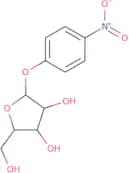
CAS:<p>Aldol® 515 palmitate is a chromogenic substrate that is used in food testing, diagnostics, and other applications. It has a high purity and is conjugated to various ligands for specific applications. Aldol® 515 palmitate is an excellent chemiluminescent substrate for the detection of ATP and other nucleotides. It also has high bioluminescence activity for the detection of adenosine-5'-triphosphate (ATP) or luciferin as well as enzyme substrates to measure β-galactosidase or β-glucuronidase activity.</p>Fórmula:C39H50N2O3Pureza:Min. 95.0 Area-%Peso molecular:594.83 g/mol4-Nitrophenyl b-L-arabinofuranoside
CAS:<p>Chromogenic substrate targeting alpha-L-arabinofuranosidase</p>Pureza:Min. 95%Cor e Forma:White/Off-White SolidPeso molecular:271.22 g/mol4-Nitrophenyl 6-O-(a-D-mannopyranosyl)-a-D-mannopyranoside
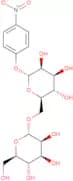
CAS:<p>4-Nitrophenyl 6-O-(alpha-D-mannopyranosyl)-alpha-D-mannopyranoside is a chromogenic substrate for alpha-mannosidase. Upon hydrolysis, para-nitrophenol is released yielding a yellowish colour. 4-Nitrophenyl 6-O-(alpha-D-mannopyranosyl)-alpha-D-mannopyranoside is used in different applications such as the Lysosomal storage disorder diagnosis (e.g., alpha-mannosidosis)</p>Pureza:Min. 95%Cor e Forma:PowderPeso molecular:463.39 g/molOstazin brilliant red H-3B starch
<p>Ostazin Brilliant Red H-3B is a water soluble, non-toxic, and non-hazardous substrate for enzymes that catalyze reactions involving the cleavage of β-D-glucosides. It is used as a chromogenic or fluorogenic substrate in diagnostic tests. Ostazin Brilliant Red H-3B can also be used in bioluminescence reaction with luciferase to measure ATP levels in living cells.</p>Pureza:Min. 95%Naphthol AS nonanoate
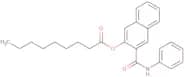
CAS:<p>Modified naphtol AS substrate used in histochemical and cytochemical staining</p>Fórmula:C26H29NO3Pureza:Min. 95%Cor e Forma:PowderPeso molecular:403.51 g/mol5-Bromo-4-chloro-3-indoxyl-β-D-xylopyranoside
CAS:<p>5-Bromo-4-chloro-3-indoxyl-beta-D-xylopyranoside is a fluorogenic substrate that can be used to measure the activity of bacterial esterases. The enzyme cleaves the xylose moiety from 5-bromo-4-chloro-3-indoxyl, yielding indoxyl as an intermediate product. This reaction can be catalyzed by esterases found in bacteria, which hydrolyze esters containing a single hydroxyl group at one end and a carboxylic acid or alcohol at the other end. Indoxyl is fluorescent and can be detected using a fluorimeter. 5BX is also chromogenic, so it can be used as an enzyme substrate for detecting beta galactosidase activity in bacteria such as Mycobacterium smegmatis or Escherichia coli.<br>5BX is also used to detect chemilumines</p>Fórmula:C13H13BrClNO5Peso molecular:378.61 g/molRef: 3D-B-7750
1gA consultar5gA consultar10gA consultar500mgA consultar2500mgA consultar-Unit-ggA consultar5-Bromo-4-chloro-3-indoxyl myristate
CAS:<p>5-Bromo-4-chloro-3-indoxyl myristate is a chemiluminescent substrate that can be used in the detection of peroxide. It reacts with hydrogen peroxide to emit light, which can be detected using a luminometer. 5-Bromo-4-chloro-3-indoxyl myristate is also used for the detection of bacteria, such as Staphylococcus aureus and Escherichia coli, by staining. The compound is also used for diagnostic tests to identify diseases such as tuberculosis. 5-Bromo-4-chloro-3 indoxyl myristate is soluble in organic solvents and water, not toxic, and has a high purity level.</p>Fórmula:C22H31BrClNO2Pureza:Min. 98 Area-%Peso molecular:456.86 g/molRef: 3D-B-7408
1gA consultar5gA consultar10gA consultar25gA consultar2500mgA consultar-Unit-ggA consultar5-Bromo-3-indoxyl phosphate, disodium salt
CAS:<p>5-Bromo-3-indoxyl phosphate, disodium salt is an enzyme substrate that is used for environmental testing, bioluminescence, culture media, chemiluminescence, fluorogenic substrate and food testing. It is also used as a ligand for diagnostic purposes. 5-Bromo-3-indoxyl phosphate, disodium salt has CAS number 16036-59-2 and it is soluble in water. This product has high quality and purity with a conjugate of 5% phenol red. 5-Bromo-3-indoxyl phosphate, disodium salt reacts with the enzyme horseradish peroxidase to produce a red color. This product can be used to detect hydrogen peroxide in the presence of an oxidizing agent such as hydrogen peroxide or potassium permanganate. The reaction produces a blue color when the solution is viewed in daylight or under ultraviolet light.</p>Fórmula:C8H5BrNNa2O4PPureza:98.0 To 100.0 Area-%Peso molecular:335.99 g/mol5-Bromo-6-chloro-3-indoxyl phosphate, p-toluidine salt
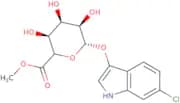
CAS:<p>Substrate for visualizing alkaline phosphatase activity. Produces a magenta colored insoluble end product that is detected visually, when used together with Nitroblue tetrazolium. The substrate system is versatile and functions in a variety of applications, including Northern, Southern, and Western blotting, in situ hybridization, ELISAs and immunohistochemistry. DMF soluble.</p>Fórmula:C15H15BrClN2O4PPureza:Min. 98.0 Area-%Peso molecular:433.63 g/mol6-Chloro-3-indoxyl-β-D-glucuronic acid methyl ester, Biosynth Patent: EP 2718458 and US 9127303
<p>6-Chloro-3-indoxyl-beta-D-glucuronic acid methyl ester is a chromogenic substrate that can be used for the detection of indoxyl glucuronide in urine and other biological fluids. 6-Chloro-3-indoxyl-beta-D-glucuronic acid methyl ester is a white or light yellow crystalline solid that is soluble in water. It has a melting point of about 80°C and is stable at pH levels ranging from 2 to 12. The CAS number for this compound is 13982-87-6.</p>Fórmula:C15H16ClNO7Pureza:Min. 97.0 Area-%Peso molecular:357.74 g/mol3-Indoxyl-β-D-galactopyranoside
CAS:<p>Chromogenic substrate for β-D-galactosidase, yielding a blue precipitate upon cleavage.</p>Fórmula:C14H17NO6Pureza:Min. 98 Area-%Peso molecular:295.29 g/molRef: 3D-I-6000
5gA consultar10gA consultar25gA consultar50gA consultar100gA consultar-Unit-ggA consultar5-Bromo-4-chloro-3-indoxyl-α-D-mannopyranoside
CAS:<p>Chromogenic substrate specific for α-D-mannosidase. Yields a blue precipitate upon cleavage. Identification of Listeria species.</p>Fórmula:C14H15BrClNO6Pureza:Min. 99 Area-%Peso molecular:408.64 g/molRef: 3D-B-7409
1gA consultar5gA consultar10gA consultar25gA consultar2500mgA consultar-Unit-ggA consultarAldol® 470 choline phosphate, Biosynth Patent: EP 2427431 and US 8940909
CAS:<p>Aldol® 470 choline phosphate is a chromogenic and fluorogenic enzyme substrate used for detection of phosphatidyl-choline specific phospholipase C (PC-PLC, EC 3.1.4.3) activity. The colorless product is cleaved by PC-PLC positive microorganisms in liquid or solid media, yielding a yellow color and green fluorescence. Aldol® 470 choline phosphate therefore, enables the detection and identification of PC-PLC positive pathogenic bacteria, such as, Clostridium perfringens, Pseudomonas aeruginosa, Helicobacter pylori, Legionella pneumophila, Bacillus cereus, Bacillus anthracis, Listeria monocytogenes, and others. Aldol® 470 choline phosphate can be used under aerobic and anaerobic conditions.</p>Fórmula:C28H31N2O7PPureza:Min. 95 Area-%Peso molecular:538.53 g/molAldol® 470 L-alanine ester, hydrochloride, Biosynth Patent: EP 2427431 and US 8940909
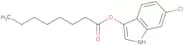
CAS:Produto Controlado<p>Aldol® 470 L-alanine ester, hydrochloride is a fluorescent chemiluminescent substrate. It is a ligand with high purity and high quality, which has been patented in the European Patent Office (EP 2427431) and the United States Patent and Trademark Office (US 8940909). The product can be used for chemiluminescence, staining, fluorescence, bioluminescence, enzyme substrate and food testing. Aldol® 470 L-alanine ester, hydrochloride is an excellent fluorescent chemiluminescent substrate that can be used for conjugation to enzymes or antibodies.</p>Fórmula:C26H25ClN2O5Pureza:Min. 95%Cor e Forma:PowderPeso molecular:480.95 g/mol6-Chloro-1H-indol-3-yl octanoate
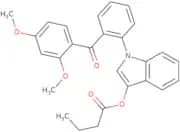
CAS:<p>6-Chloro-1H-indol-3-yl octanoate is a fluorogenic substrate that can be used to detect enzymes such as phosphatases, lipases, esterases, and proteases. 6-Chloro-1H-indol-3-yl octanoate is a ligand for metal ions such as Cu(II), Ni(II) and Zn(II). This product has high purity and quality. It is an enzyme substrate for many enzymes such as phosphatases, lipases, esterases, and proteases. This product can be used in diagnostics of various substances including food testing, environmental testing and staining. 6CIO is a chromogenic substrate that can be used to detect bioluminescence reactions.<br>6CIO is CAS No. 159954-35-5.</p>Pureza:Min. 95%Peso molecular:293.79 g/molAldol® 470 butyrate, Biosynth Patent: EP 2427431 and US 8940909
CAS:Produto Controlado<p>Aldol 470 butyrate is a chromogenic substrate for the enzyme aldolase. It can be used in diagnostics, food testing and culture media. Aldol 470 butyrate has been shown to be useful in detecting the presence of a number of different substances, including alcohols, organic acids, ketones, amines and amino acids. Aldol 470 butyrate is also an excellent ligand for determination of protein-ligand interactions. The conjugation of this product with other molecules provides an excellent tool for chemiluminescence assays. This product is also used as a fluorogenic substrate in environmental testing.</p>Fórmula:C27H25NO5Pureza:Min. 95.0 Area-%Peso molecular:443.5 g/mol5-Bromo-4-chloro-3-indoxyl-β-D-fucopyranoside
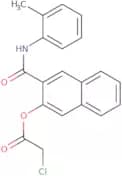
CAS:<p>Chromogenic substrate for β-D-fucosidase yielding a blue precipitate.</p>Fórmula:C14H15BrClNO5Pureza:Min. 99.0 Area-%Peso molecular:392.64 g/molNaphthol AS-D chloroacetate
CAS:<p>Histochemical substrate for esterase</p>Fórmula:C20H16ClNO3Pureza:Min. 98 Area-%Cor e Forma:PowderPeso molecular:353.8 g/mol2-Naphthyl caprylate
CAS:<p>Chromogenic substrate for carboxylesterase and lipase. 2-naphthol is released upon hydrolyzation. By simultaneous coupling with a diazonium salt, the corresponding azo-dye is formed. Naphthols can also be detected by fluorescence analysis. Used in an colorimetric assay for the extracellular lipase of Pseudomonas fluorescens B52.</p>Fórmula:C18H22O2Pureza:Min. 98.0 Area-%Peso molecular:270.37 g/molRef: 3D-N-2220
1gA consultar5gA consultar250mgA consultar500mgA consultar2500mgA consultar-Unit-ggA consultar5-Bromo-6-chloro-3-indoxyl-β-D-glucopyranoside
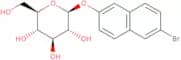
CAS:<p>Chromogenic substrate for β-D-glucosidase yielding a magenta precipitate. Differentiation of Salmonella spp. (negative) from other Enterobacteriaceae.</p>Fórmula:C14H15BrClNO6Pureza:Min. 99 Area-%Peso molecular:408.64 g/mol6-Bromo-2-naphthyl b-D-glucopyranoside
CAS:<p>6-Bromo-2-naphthyl b-D-glucopyranoside is an enzyme substrate used in chromogenic assays with beta-glucosidases. It has been used in culture media for the identification of Legionella pneumophila.</p>Fórmula:C16H17BrO6Pureza:Min. 98 Area-%Cor e Forma:PowderPeso molecular:385.21 g/mol2-Chloro-4-nitrophenyl b-D-maltoside
<p>2-Chloro-4-nitrophenyl b-D-maltoside is a fluorescent substrate used in diagnostic kits. It is used to detect the presence of beta-glucuronidase enzymes, which are found in many bacteria and fungi. 2-Chloro-4-nitrophenyl b-D-maltoside has been shown to be a superior substrate for beta-glucuronidase as it can be used at lower concentrations and is more stable than other substrates. The enzyme hydrolyzes the 2,4 nitrophenyl ester bond and releases the fluorogenic product 4-(2'-hydroxyethyl)benzene diazonium chloride (HED). This product emits light under ultraviolet light, making it ideal for use in Bioluminescence Assays.</p>Pureza:Min. 95%3-Indoxyl choline phosphate
CAS:<p>Please enquire for more information about 3-Indoxyl choline phosphate including the price, delivery time and more detailed product information at the technical inquiry form on this page</p>Fórmula:C13H19N2O4PPureza:Min. 99 Area-%Peso molecular:298.28 g/molRef: 3D-I-5696
1gA consultar5gA consultar10gA consultar500mgA consultar2500mgA consultar-Unit-ggA consultar3,4-Cyclohexenoesculetine phosphate disodium
<p>Please enquire for more information about 3,4-Cyclohexenoesculetine phosphate disodium including the price, delivery time and more detailed product information at the technical inquiry form on this page</p>4-Nitrophenyl-N-acetyl-β-D-galactosaminide
CAS:<p>4-Nitrophenyl-N-acetyl-beta-D-galactosaminide is a synthetic substrate that is used in enzyme kinetics. It is a beta-galactosidase substrate that reacts with the enzyme to form a product. The rate of reaction can be measured by following the change in absorbance over time. This product will react with an acceptor, such as chondroitin sulfate, to produce an observable reaction product. 4NPBGA has been shown to be an effective carbon source for plant physiology studies and has been shown to have optimal activity at pH 6.5.</p>Fórmula:C14H18N2O8Pureza:Min. 98 Area-%Peso molecular:342.31 g/molAldol® 455 α-D-maltopyranoside, Biosynth Patent: EP 2427431 and US 8940909
<p>Aldol® 455 alpha-D-maltopyranoside is a chromogenic substrate developed by Cymit Quimica, designed for the detection of maltosidases.</p>Fórmula:C33H34ClNO12Pureza:Min. 95.0 Area-%Peso molecular:672.08 g/mol5-Nitro-3-indoxyl-β-D-galactopyranoside
<p>For the detection of beta-galactosidase activity</p>Fórmula:C14H16N2O8Peso molecular:340.29 g/mol8-Hydroxyquinoline-beta-D-glucuronic acid, sodium salt
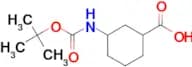
CAS:<p>8-Hydroxyquinoline-beta-D-glucuronic acid, sodium salt is a fluorogenic substrate that can be used for enzymatic detection of peroxidase. The substrate is available in a variety of forms, including powder and liquid. This product has been tested for environmental and bioluminescence activity, as well as food safety. It has also been shown to be a useful ligand in immunoassays.</p>Fórmula:C15H14NNaO7Pureza:Min. 98 Area-%Cor e Forma:White PowderPeso molecular:343.26 g/mol3-((tert-Butoxycarbonyl)amino)cyclohexanecarboxylic acid
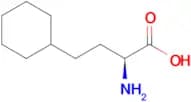
CAS:Fórmula:C12H21NO4Pureza:95%Cor e Forma:No data available.Peso molecular:243.303(S)-2-AMINO-4-CYCLOHEXYL BUTANOIC ACID
CAS:Fórmula:C10H19NO2Pureza:97%Cor e Forma:Liquid, No data available.Peso molecular:185.267Ref: 10-F069093
1g13,00€5g29,00€10g57,00€25g124,00€50g228,00€100g379,00€250g811,00€500g1.514,00€250mg9,00€1,3-Dicyclohexyl-1H-benzo[d]imidazol-3-ium chloride
CAS:Fórmula:C19H27ClN2Pureza:98%Peso molecular:318.89methyl 4-(aminomethyl)cyclohexanecarboxylate hydrochloride
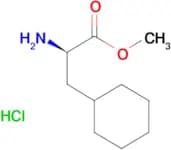
CAS:Fórmula:C9H18ClNO2Pureza:96%Cor e Forma:White to almost white powderPeso molecular:207.7(R)-Methyl 2-amino-3-cyclohexylpropanoatehydrochloride
CAS:Fórmula:C10H20ClNO2Pureza:97%Cor e Forma:SolidPeso molecular:221.73Cyclohexylacetic acid
CAS:Fórmula:C8H14O2Pureza:98%Cor e Forma:White solidified mass or fragmentsPeso molecular:142.198N-[(1R,2R)-2-[Bis(phenylmethyl)amino]cyclohexyl]-N’-[3,5-bis(trifluoromethyl)phenyl]thiourea
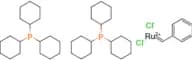
CAS:Pureza:97%Cor e Forma:SolidPeso molecular:565.6199951Benzylidenebis(tricyclohexylphosphine)dichlororuthenium
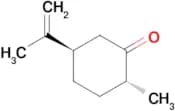
CAS:Fórmula:C43H72Cl2P2RuPureza:95%Cor e Forma:Solid, Violet powderPeso molecular:822.97(2R,5R)-2-Methyl-5-(prop-1-en-2-yl)cyclohexanone
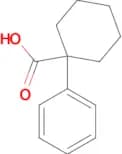
CAS:Fórmula:C10H16OPureza:95%Cor e Forma:LiquidPeso molecular:152.2371-Phenylcyclohexanecarboxylic acid
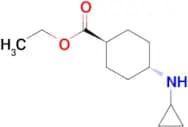
CAS:Fórmula:C13H16O2Pureza:98%Cor e Forma:SolidPeso molecular:204.269trans-Ethyl (1R,4R)-4-(cyclopropylamino)cyclohexane-1-carboxylate
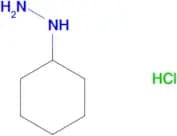
CAS:Pureza:95%Peso molecular:211.305Cyclohexylhydrazine hydrochloride
CAS:Fórmula:C6H15ClN2Pureza:95%Cor e Forma:Solid, NeedlesPeso molecular:150.65(1R,3S)-Cyclohexane-1,3-diamine dihydrochloride
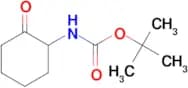
CAS:Fórmula:C6H16Cl2N2Pureza:95%Peso molecular:187.11(2-Oxo-cyclohexyl)-carbamic acidtert-butylester
CAS:Fórmula:C11H19NO3Pureza:96%Cor e Forma:SolidPeso molecular:213.277(R)-1-[(Sp)-2-(Diphenylphosphino)ferrocenyl]ethyl dicyclohexylphosphine
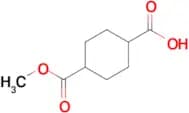
CAS:Pureza:95%Cor e Forma:SolidPeso molecular:594.234-(Methoxycarbonyl)cyclohexanecarboxylic acid
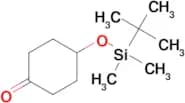
CAS:Fórmula:C9H14O4Pureza:97%Cor e Forma:SolidPeso molecular:186.2074-((tert-Butyldimethylsilyl)oxy)cyclohexanone
CAS:Fórmula:C12H24O2SiPureza:95%Cor e Forma:LiquidPeso molecular:228.407





























![1,3-Dicyclohexyl-1H-benzo[d]imidazol-3-ium chloride](/_next/image/?url=https%3A%2Fstatic.cymitquimica.com%2Fproducts%2F10%2Fthumb-webp%2FF547444.webp&w=3840&q=75)



![N-[(1R,2R)-2-[Bis(phenylmethyl)amino]cyclohexyl]-N’-[3,5-bis(trifluoromethyl)phenyl]thiourea](/_next/image/?url=https%3A%2Fstatic.cymitquimica.com%2Fproducts%2F10%2Fthumb-webp%2FF616119.webp&w=3840&q=75)



![(R)-1-[(Sp)-2-(Diphenylphosphino)ferrocenyl]ethyl dicyclohexylphosphine](/_next/image/?url=https%3A%2Fstatic.cymitquimica.com%2Fproducts%2F10%2Fthumb-webp%2FF996227.webp&w=3840&q=75)