Outros
Foram encontrados 6270 produtos de "Outros"
Ordenar por
Pureza (%)
0
100
|
0
|
50
|
90
|
95
|
100
Aldol® 450 acetate, Biosynth Patent: EP 2427431 and US 8940909
CAS:<p>Aldol® 450 acetate is an enzyme substrate that is used in the detection of aldolase activity. Aldol® 450 acetate has been shown to be a useful alternative to the traditional bioluminescence and chemiluminescence methods for detecting aldolase activity. It has also been shown to be effective as a fluorogenic substrate for detecting aldolase activity in food products. Aldol® 450 acetate can be conjugated with other compounds, such as ligands and dyes, to enable it to detect different enzymes.<br>Aldol® 450 acetate has an absorption maximum at 450 nm and fluoresces blue-green under longwave UV light excitation. It is soluble in water and exhibits excellent stability at high temperatures (up to 50°C) and pH (1-14).</p>Fórmula:C27H19NO3Pureza:Min. 95.0 Area-%Peso molecular:405.44 g/mol4-Nitrophenyl 3-O-(2,3,4,6-tetra-O-acetyl-a-D-mannopyranosyl)-2-O-benzoyl-4,6-O-benzylidene-a-D-mannopyranoside
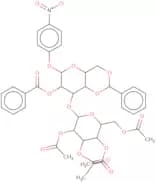
<p>4-Nitrophenyl 3-O-(2,3,4,6-tetra-O-acetyl-a-D-mannopyranosyl)-2-O-benzoyl-4,6-O-benzylidene a -D-mannopyranoside is a synthetic substrate for glycosidases that can be used as an alternative to other substrates. It can be used in the detection of enzyme activity and in the diagnosis of diseases such as diabetes mellitus and Gaucher's disease. 4NP3ODABAB has been shown to have high quality and purity. This substrate has not been evaluated by CAS yet.</p>Pureza:Min. 95%Peso molecular:823.75 g/mol4-Nitrophenyl phosphate bis(tris) salt
CAS:<p>Please enquire for more information about 4-Nitrophenyl phosphate bis(tris) salt including the price, delivery time and more detailed product information at the technical inquiry form on this page</p>Fórmula:C14H28N3O12PPeso molecular:461.36 g/molN-Acetyl-L-serine p-nitroanilide
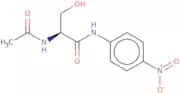
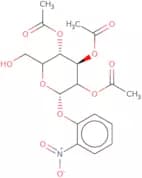
<p>N-Acetyl-L-serine p-nitroanilide is a fluorescent probe used for the detection of glucose in urine. It has a high purity and is suitable for use as a substrate for many enzymes, including alkaline phosphatase, β-galactosidase, and peroxidase. N-Acetyl-L-serine p-nitroanilide has been shown to be an excellent indicator of bacterial growth in culture media.</p>Fórmula:C11H12N2O6Pureza:Min. 95%Cor e Forma:White powder.Peso molecular:268.22 g/mol2-Nitrophenyl 2,3,4-tri-O-acetyl-b-D-galactopyranoside
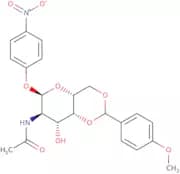
CAS:<p>2-Nitrophenyl 2,3,4-tri-O-acetyl-b-D-galactopyranoside is a fluorogenic substrate that can be used to detect β-galactosidase activity. This specific substrate is one of the most commonly used substrates for detecting β-galactosidase activity in diagnostic assays. It reacts with the enzyme to produce a blue color and has a fluorescence emission maximum at about 480 nm. The product is available in high purity and high quality and it is also an enzyme substrate.</p>Pureza:Min. 95%Peso molecular:427.36 g/mol4-Nitrophenyl 2-acetamido-2-deoxy-4,6-O-p-methoxybenzylidene-a-D-galactopyranoside
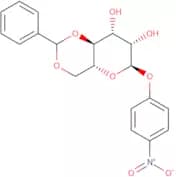
CAS:<p>4-Nitrophenyl 2-acetamido-2-deoxy-4,6-O-p-methoxybenzylidene-a-D-galactopyranoside is a chromogenic substrate designed for the detection and quantification of enzyme activity. This methoxybenzylidene-protected compound is specifically designed to be cleaved by enzymes, releasing a yellow 4-nitrophenol product that can be easily measured spectrophotometrically. This allows for accurate and sensitive analysis of enzyme kinetics, inhibition studies, and substrate specificity determination in various applications.</p>Pureza:Min. 95%Peso molecular:460.43 g/mol4-Nitrophenyl 4,6-O-benzylidene-a-D-mannopyranoside
CAS:<p>4-Nitrophenyl 4,6-O-benzylidene-a-D-mannopyranoside is a chromogenic substrate for alpha-mannosidase and beta-glucosidase. It is used as a diagnostic tool for identifying the presence of these enzymes in certain bacteria. This product is also used in food testing, environmental testing, and bioluminescence.</p>Pureza:Min. 95%Peso molecular:389.36 g/mol4-Nitrophenyl 2-acetamido-3-O-[2-O-(2,3,4-tri-O-benzoyl-a-L-fucopyranosyl)-3,4,6-tri-O-acetyl-2-deoxy-D-galactopyranosyl]-b-D-glucop yranoside
<p>4-Nitrophenyl 2-acetamido-3-O-[2-O-(2,3,4-tri-O-benzoyl-a-L-fucopyranosyl)-3,4,6-tri-O-acetyl-2 deoxy -D-galactopyranosyl]-b D glucopyranoside is a fluorescent substrate for the enzyme β galactosidase. It can be used to test for β galactosidase activity in food products, environmental samples and diagnostics. 4NPFAPG is a conjugate of 4 nitrophenol and 2 acetamido 3 O-[2 O-(2,3,4 tri O benzoyl a L fucopyranosyl) 3,4 6 tri O acetyl 2 deoxy D galactopyranosyl] b D glucopyranose. 4NPFAPG is water soluble and has</p>Pureza:Min. 95%Peso molecular:1,089.01 g/molEspresso-Gal
<p>Espresso-Gal (Espresso-beta-D-galactopyranoside) is a chromogenic indicator for beta-galactosidase activity. The colorless product is cleaved by lactose-utilizing bacteria in liquid media or on agar plates and yields an espresso brown colored precipitate. Espresso-Gal can also be used as detecting agent for beta-galactosidase activity in reporter gene assays or for identification of positive transformants on agar plates when using the α-complementation approach. Read more in the Application Notes.</p>Peso molecular:495.6 g/mol[2-Methoxy-4-(2-nitrovinyl)phenyl] b-D-glucopyranoside
CAS:<p>[2-Methoxy-4-(2-nitrovinyl)phenyl] beta-D-galactopyranoside is a chromogenic substrate (505 nm) for β-glucosidase.</p>Pureza:Min. 95%Peso molecular:357.31 g/mol2-Nitrophenyl 2,3,4-tri-O-acetyl-β-D-xylopyranoside
CAS:<p>2-Nitrophenyl 2,3,4-tri-O-acetyl-beta-D-xylopyranoside is a chromogenic substrate used to detect the enzymatic activity of xylosidase. After cleavage, the nitrophenyl moiety is released exhibiting a light yellowish color. 2-Nitrophenyl 2,3,4-tri-O-acetyl-beta-D-xylopyranoside is used in bacterial hemicellulose metabolism assays.</p>Fórmula:C17H19NO10Pureza:Min. 95%Cor e Forma:PowderPeso molecular:397.33 g/mol4-Nitrophenyl 4,6-benzylidene-2-O-(2,3,4,6-tetra-O-[4-methoxybenzyl]-a-D-glucopyranosyl)-a-D-glucopyranoside
<p>4-Nitrophenyl 4,6-benzylidene-2-O-(2,3,4,6-tetra-O-[4-methoxybenzyl]-a-D-glucopyranosyl)-a-D-glucopyranoside is a fluorogenic substrate that is used in diagnostic assays to measure the activity of enzymes such as β–galactosidase and β–glucuronidase. It is also an enzyme substrate for culture media and chemiluminescence. This product has a CAS number of 57316-92-8.</p>Pureza:Min. 95%Peso molecular:1,088.02 g/molAldol® 496 acetate, Biosynth Patent: EP 2427431 and US 8940909
CAS:<p>Aldol 496 acetate is a chromogenic substrate for the enzyme Aldolase. It is also used as a ligand to detect the presence of Aldolase in biological fluids and tissues. This product is designed for Food testing, Diagnostics, Chromogenic substrate, Staining, Enzyme substrate, Bioluminescence, Fluorogenic substrate, Chemiluminescence, and Culture media. Aldol 496 acetate is an organic chemical with high purity and high quality.</p>Fórmula:C27H24N2O4Pureza:Min. 95.0 Area-%Peso molecular:440.49 g/mol4-Nitrophenyl 2-O-(α-L-fucopyranosyl)-β-D-galactopyranoside
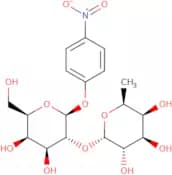
CAS:<p>4-Nitrophenyl 2-O-(α-L-fucopyranosyl)-β-D-galactopyranoside is a chromogenic enzymatic substrate for the detection and quantification of glycosidases, such as fucosidases and galactosidases. Upon enzymatic cleavage, the substrate releases the p-nitrophenol chromophore, which can be quantified via colorimetric analysis. This pNP-conjugated compound enables the rapid, sensitive, and high-throughput detection of enzyme activity in various applications, including enzymatic assays, inhibitor screening, and mechanistic studies. Its precise specificity for α-L-fucopyranosyl and β-D-galactopyranoside moieties makes it an excellent tool for advancing research in glycobiology and related fields.</p>Fórmula:C18H25NO12Pureza:Min. 95%Cor e Forma:White Off-White PowderPeso molecular:447.39 g/mol4-Nitrophenyl β-D-maltotrioside
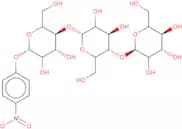
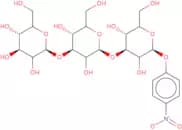
CAS:<p>Chromogenic substrate targeting amylase</p>Fórmula:C24H35NO18Pureza:Min. 95%Cor e Forma:PowderPeso molecular:625.53 g/mol5-Bromo-3-indolyl a-D-mannopyranoside
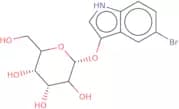
<p>5-Bromo-3-indolyl a-D-mannopyranoside is a chromogenic substrate that is used as an enzyme substrate for various spectrophotometric, fluorometric, or chemiluminescent assays. The 5-bromo group of the dye reacts with the active site of an enzyme to form a product that can be measured by spectrophotometry. This product can also be used as a fluorescent indicator in the presence of luciferase and ATP. 5-Bromo-3-indolyl a-D-mannopyranoside is also used to estimate bacterial counts during culture media preparation and it has been shown to inhibit the growth of Gram negative bacteria such as E. coli and Pseudomonas aeruginosa. This compound does not contain any heavy metals or toxic substances and it is highly soluble in water. It has been found to have no adverse effects on humans and other animals at concentrations up to 100</p>Fórmula:C14H16BrNO6Pureza:Min. 95%Peso molecular:374.18 g/mol4-Nitrophenyl 2,3,4,6-tetra-O-acetyl-b-D-glucopyranoside
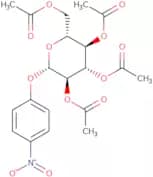
CAS:<p>4-Nitrophenyl 2,3,4,6-tetra-O-acetyl-β-D-glucopyranoside is a versatile chromogenic substrate designed for the detection and quantification of various glycosidase enzymes. This substrate is widely used in enzyme assays, producing a yellow color upon cleavage by target enzymes. The 4-Nitrophenol released in this reaction can be easily monitored spectrophotometrically, allowing for rapid and accurate enzyme analysis. This high-quality substrate provides a convenient and reliable tool for researchers in biochemistry, enzymology, and related fields.</p>Fórmula:C20H23NO12Pureza:Min. 95 Area-%Cor e Forma:PowderPeso molecular:469.4 g/molAldol® 515 L-proline amide, hydrochloride, Biosynth Patent: EP 2427431 and US 8940909
CAS:<p>Aldol® 515 L-proline amide is a chromogenic and fluorogenic enzyme substrate used for detection of L-proline aminopeptidase activity. The colorless enzyme substrate is cleaved by L-proline aminopeptidase produced by microorganisms grown in liquid or solid media, yielding red-orange color. In addition, red fluorescence signals are generated when a fluorescence enhancer or a suitable matrix is present. Aldol® 515 L-proline amide is suitable for use under aerobic and anaerobic conditions.</p>Fórmula:C28H29ClN4O2Pureza:Min. 95.0 Area-%Peso molecular:489.02 g/mol5-Bromo-3-indoxyl-β-D-galactopyranoside-6-sulfate sodium salt
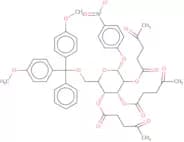
CAS:<p>5-Bromo-3-indoxyl-beta-D-galactopyranoside (5BIG) is a fluorogenic substrate that has been shown to be an effective enzyme substrate. It is used in the chemiluminescence, bioluminescence, and fluorescence detection of enzymes. 5BIG is also a chromogenic substrate for nucleic acid staining and can be used in food testing as well as diagnostics. 5BIG is highly pure and high quality with a CAS number of 1301706-59-1.</p>Fórmula:C14H15BrNNaO9SPureza:Min. 98 Area-%Peso molecular:476.24 g/mol4-Nitrophenyl 6-O-DMT-2,3,4-tri-O-levulinoyl-a-D-mannopyranoside
<p>4-Nitrophenyl 6-O-DMT-2,3,4-tri-O-levulinoyl-a-D-mannopyranoside is a fluorogenic substrate that can be used for the detection of DMT (dihydroxyacetone) in food products. It has been shown to be an excellent alternative to the more commonly used 4,5′,6,7,8,-Tetrabromoindoxyl 3′,5′,6′,-tetraacetic acid (TBA). This product is also used as a chromogenic substrate for the determination of phenols in environmental testing and as a ligand conjugate for immunohistochemistry staining. The purity of this product is guaranteed and it has been tested extensively.</p>Pureza:Min. 95%Peso molecular:897.92 g/mol5-Bromo-4-chloro-3-indoxyl sulfate p-toluidine salt
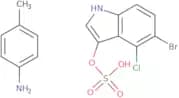
CAS:<p>5-Bromo-4-chloro-3-indoxyl sulfate p-toluidine salt is a staining agent used for the detection of glucose in urine and tissues. It is also an enzyme substrate that can be used to detect the presence of lipases, amylases, esterases, phosphatases, and proteases. This product has a CAS number of 6581-23-3 and comes in high quality.</p>Pureza:Min. 95%Peso molecular:433.71 g/mol4-Nitrophenyl 2,3,4-tri-O-acetyl-6-O-(a-D-glucopyranosyl)-a-D-glucopyranoside
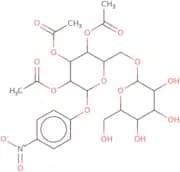
<p>The 4-Nitrophenyl 2,3,4-tri-O-acetyl-6-O-(a-D-glucopyranosyl)-a-D-glucopyranoside is a fluorogenic substrate for β-galactosidase. This product has high purity and quality and is an enzyme substrate for β-galactosidase. The 4NPG2,3,4TRA can be used as a diagnostic tool in the diagnosis of bacterial infections. It is also used in the food testing industry and environmental testing industry. This product has CAS No.: 51743-71-1. This product is also a ligand that reacts with the enzyme β-galactosidase to produce light in chemiluminescence reactions. This product can be used for staining or bioluminescence applications.</p>Pureza:Min. 95%Peso molecular:589.51 g/molAbiraterone dimer impurity
CAS:Produto Controlado<p>Abiraterone dimer impurity is a drug product that is used as an analytical standard for HPLC, as well as in research and development of drugs. It is also a metabolite of abiraterone and has been detected in the urine of patients receiving the drug. Abiraterone dimer impurity is found in trace amounts in abiraterone acetate but its pharmacological significance is not known. This impurity has been detected in the urine of patients receiving abiraterone acetate therapy.</p>Fórmula:C43H57NO2Pureza:Min. 95%Peso molecular:619.92 g/molVerapamil
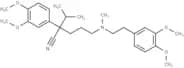
CAS:<p>Verapamil (CP-16533-1), an oral calcium channel blocker, inhibits P-gp and CYP3A4, used for hypertension, arrhythmias, and angina research.</p>Fórmula:C27H38N2O4Pureza:99.61% - 99.93%Cor e Forma:OilPeso molecular:454.64-Nitrophenyl 2-acetamido-2-deoxy-3,6-di-O-benzoyl-b-D-galactopyranoside
CAS:<p>4-Nitrophenyl 2-acetamido-2-deoxy-3,6-di-O-benzoyl-b-D-galactopyranoside is an advanced pNP-based enzyme substrate designed for the detection and measurement of glycosidase activity in biological samples. This synthetic compound offers high specificity and sensitivity for b-galactosidase enzymes, enabling accurate determination of enzymatic hydrolysis rates in a variety of research applications, including diagnostics, drug development, and discovery of novel enzymes. Its chromogenic properties ensure easy analysis of the results and make it suitable for high-throughput screening.</p>Pureza:Min. 95%Peso molecular:550.51 g/mol2,4-Dinitrophenyl 2-deoxy-2-fluoro-b-xylobioside
CAS:<p>2,4-Dinitrophenyl 2-deoxy-2-fluoro-beta-xylobioside, also known as DNFPX, is a substrate to study the activity of glycosidases. It is a derivative of xylobiose, which is a disaccharide composed of two xylose units. The 2-deoxy-2-fluoro modification on one of the xylose units makes the compound resistant to further hydrolysis by the enzyme, allowing it to be used as a reporter of enzyme activity. The 2,4-Dinitrophenyl group is used as a chromogenic group that enables rapid detection and measurement of the enzyme activity that can be quantitatively measured by monitoring the appearance of the yellow 2,4-dinitrophenyl group when cleavage of the glycosidic bond.</p>Pureza:Min. 95%Peso molecular:450.33 g/mol2,4-Dinitrophenyl 2-acetamido-2-deoxy-b-D-glucopyranoside
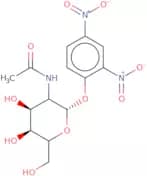
<p>2,4-Dinitrophenyl 2-acetamido-2-deoxy-b-D-glucopyranoside is a fluorogenic substrate for use in diagnostic testing. It reacts with the enzyme β -galactosidase to produce a blue color. This product is used as an indicator of β -galactosidase activity in bacterial cultures or as an indicator of the presence of this enzyme in food or other materials. It can be used to detect and measure the level of β -galactosidase in a sample. The reaction can be monitored by measuring light emission at 450 nm.<br>2,4-Dinitrophenyl 2 acetamido 2 deoxy b D glucopyranoside has a CAS number of 47868-87-0 and is available in high purity (>97%).</p>Pureza:Min. 95%Peso molecular:387.31 g/mol4-Nitrophenyl 6-O-(2,3,4,6-tetra-O-acetyl-a-D-mannopyranosyl)-2,3,4-tri-O-levulinoyl-a-D-mannopyranoside
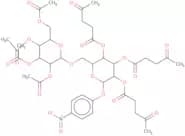
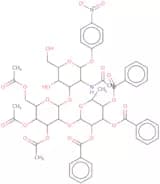
<p>4-Nitrophenyl 6-O-(2,3,4,6-tetra-O-acetyl-a-D-mannopyranosyl)-2,3,4-tri-O-levulinoyl-a-D-mannopyranoside is a fluorogenic substrate that is used in assays for detecting nitrates. This compound reacts with 4-(methylnitrosamino)pyridine (MNAP) to produce an intense light that can be detected by a luminometer. It has been shown to react with the enzyme nitrate reductase and is used in food testing and environmental testing as a means of measuring the amount of nitrates present.</p>Pureza:Min. 95%Peso molecular:925.84 g/mol4-Nitrophenyl 2-acetamido-3,6-di-O-acetyl-4-O-[2-O-(2,3,4-tri-O-benzoyl-a-L-fucopyranosyl)-3,4,6-tri-O-acetyl-b-D-galactopyranosyl]- 2-deoxy-b-D-glucopyranoside
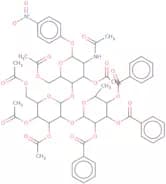
<p>This chemical is a ligand that can bind to the enzyme luciferase. In a bioluminescence reaction, this chemical reacts with oxygen and ATP to produce light. This product has been tested for purity and quality and is suitable for use in culture media, environmental testing, or diagnostics. It has also been shown to be an excellent fluorescent substrate for fluorogenic or chromogenic substrates in enzyme substrate assays.</p>Pureza:Min. 95%Peso molecular:1,173.08 g/molAldol® 518 myo-inositol-1-phosphate, Biosynth Patent: EP 2427431 and US 8940909
CAS:<p>Aldol® 518 myo-inositol-1-phosphate is a chromogenic and fluorogenic enzyme substrate used for detection of phosphatidyl-inositol specific phospholipase C activity (PI-PLC, EC 4.6.1.13). The colorless enzyme substrate is cleaved by PI-PLC or PI-PLC-positive microorganisms grown in liquid or solid media, yielding an intense red coloration. In combination with Aldol® 355 fluorescence enhancer, red fluorescence can also obtained. Aldol® 518 myo-inositol-1-phosphate is suitable for use in liquid and solid media, under aerobic as well as anaerobic conditions.</p>Fórmula:C29H30ClN2O10PPureza:Min. 95.0 Area-%Peso molecular:632.98 g/mol2-Chloro-4-nitrophenyl b-D-xylobioside
<p>2-Chloro-4-nitrophenyl b-D-xylobioside is a chemiluminescent substrate that is used as a diagnostic agent. It has been used in the identification of gram positive and gram negative bacteria, which are differentiated by the color of the reaction. This substrate has also been used to detect the presence of certain enzymes produced by bacteria. 2-Chloro-4-nitrophenyl b-D-xylobioside has shown to be an effective enzyme substrate for detecting bacterial growth in culture media and is often used as a fluorogenic substrate in food testing.</p>Pureza:Min. 95%4-Nitrophenyl O-(N-acetyl-a-neuraminosyl)-(2-3)-b-D-galactopyranosyl-(1-4)-b-D-glucopyranoside
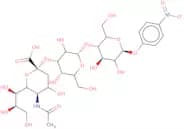
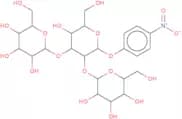
CAS:<p>4-Nitrophenyl O-(N-acetyl-a-neuraminosyl)-(2-3)-b-D-galactopyranosyl-(1-4)-b-D-glucopyranoside is a fluorescent substrate that can be used for the detection of β-galactosidase. It fluoresces when cleaved by β-galactosidase, which is an enzyme that catalyzes the hydrolysis of terminal galactose residues in the glycosidic linkage of β-galactosides. This product is an excellent substrate for use in chemiluminescence and bioluminescence assays. 4NPBG has been used to detect β-galactosidase activity in diverse environments, such as food testing, staining, fluorogenic substrate, environmental testing, chromogenic substrate, and conjugate. It is also used in diagnostics, ligand binding assays,</p>Pureza:Min. 95%Peso molecular:754.64 g/mol4-Nitrophenyl 2,3-di-O-(b-D-glucopyranosyl)-b-D-glucopyranoside
<p>4-Nitrophenyl 2,3-di-O-(b-D-glucopyranosyl)-b-D-glucopyranoside is a chromogenic substrate that can be used to detect the presence of β-glucuronidase in human and animal tissue. The compound is also a fluoroquinolone substrate for the detection of β-lactamase activity. 4NPBG is used in diagnostics as well as food testing, due to its ability to detect bacteria in both food and water samples. 4NPBG is a chemiluminescent substrate that emits light upon hydrolysis by β-glucuronidase or β-lactamase. The compound has been shown to be an excellent ligand for binding to protein A or protein G and can be used for immunoassays such as ELISA or Western blotting.</p>Pureza:Min. 95%Peso molecular:625.53 g/mol4-Nitrophenyl 2-azido-2-deoxy-a-D-galactopyranoside
CAS:<p>4-Nitrophenyl 2-azido-2-deoxy-a-D-galactopyranoside is a superior chromogenic substrate for the precise determination of alpha-D-galactosidase enzyme activity. This substrate features a unique 2-azido moiety providing enhanced sensitivity and specificity in biochemical assays. Upon enzymatic cleavage, it releases the highly fluorescent compound 4-nitrophenol, which simplifies quantification and tracking of enzyme activity in applications such as drug discovery, genetic studies, and enzyme inhibition assays.</p>Pureza:Min. 95%Cor e Forma:White PowderPeso molecular:326.26 g/mol3-Nitrophenyl 2-acetamido-2-deoxy-b-D-glucopyranoside
CAS:<p>3-Nitrophenyl 2-acetamido-2-deoxy-b-D-glucopyranoside is a chemiluminescent substrate that is used for the detection of glycosidases. It has been shown to be a good ligand for the study of nucleic acid hybridization, and it can also be used in enzyme assays. 3NPPAG is available in high purity and high quality. This product has been tested for use in culture media, environmental testing, bioluminescence, staining, fluorogenic substrate, CAS No. 61894-63-1, diagnostics, chromogenic substrate, enzyme substrate, food testing and conjugate applications.</p>Pureza:Min. 95%Aldol® 458 phosphate, disodium salt, Biosynth Patent: EP 2427431 and US 8940909
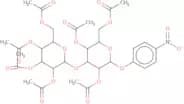
CAS:<p>Aldol® 458 phosphate is a chromogenic and fluorogenic enzyme substrate used for detection of phosphatase activity. The colorless enzyme substrate is cleaved by phosphatases secreted by bacteria grown in liquid media, yielding yellow color and green fluorescence. Aldol® 458 phosphate can also be used in assays involving phosphatase-coupled antibodies in immunoassay applications (ELISA). Aldol® 458 phosphate can be used under aerobic and anaerobic conditions.</p>Fórmula:C16H12NNa2O6PPureza:Min. 95.0 Area-%Peso molecular:391.22 g/mol4-Nitrophenyl 2,4,6-tri-O-acetyl-3-O (2,3,4,6-tetra-O-acetyl-b-D-glucopyranosyl)-a-D-glucopyranoside
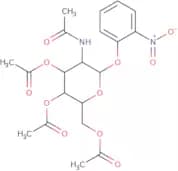
<p>4-Nitrophenyl 2,4,6-tri-O-acetyl-3-O (2,3,4,6-tetra-O-acetyl-b-D-glucopyranosyl)-a-D-glucopyranoside is a chemiluminescent substrate that can be used for the detection of aminoglycosides in biological fluids. It is a high purity and high quality product with CAS No. 482743. The product has been tested for safety and purity using culture media and environmental testing. This product may be used as a bioluminescence substrate to detect the presence of aminoglycosides in samples such as urine, serum or plasma. 4NTPAGDG is also useful as a fluorogenic substrate for diagnostics and enzyme substrates for food testing.</p>Pureza:Min. 95%Peso molecular:757.65 g/mol2-Nitrophenyl 2-acetamido-3,4,6-tri-O-acetyl-2-deoxy-b-D-galactopyranoside
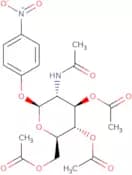
CAS:<p>2-Nitrophenyl 2-acetamido-3,4,6-tri-O-acetyl-2-deoxy-b-D-galactopyranoside is a chemiluminescent substrate for the detection of beta galactosidase. It is a white to light yellow powder with a molecular weight of 564.87 and an assay of ≥ 98% by HPLC. This product has been shown to be stable when stored at 4°C for up to three months.</p>Pureza:Min. 95%Peso molecular:468.41 g/mol4-Nitrophenyl 2-acetamido-3,4,6-tri-O-acetyl-2-deoxy-b-D-glucopyranoside
CAS:<p>4-Nitrophenyl 2-acetamido-3,4,6-tri-O-acetyl-2-deoxy-b-D-glucopyranoside is an extracellular nucleic acid molecule that is produced by the bacterium Corynebacterium glutamicum. This compound has been shown to inhibit cancer cells by blocking the transport of glucose through the cell membrane and may be a potential drug target for cancer treatment. 4NPTAPG has also been shown to have diagnostic properties and can identify corynebacterium glutamicum strains. It is a fluorescent molecule that can be used to detect the presence of this bacterium in culture media.</p>Pureza:Min. 95%Peso molecular:468.41 g/mol4-Nitrophenyl 2,3,4,6-tetra-O-acetyl-b-D-thiogalactopyranoside
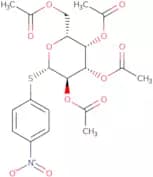
CAS:<p>4-Nitrophenyl 2,3,4,6-tetra-O-acetyl-b-D-thiogalactopyranoside (NPG) is a fluorogenic substrate that can be used in the detection of beta-galactosidase activity. It reacts with 4-nitrophenol to form an orange product at pH 6.0. The fluorescence intensity increases with increasing concentrations of the substrate and enzyme. The reaction is inhibited by borax, which competes for the enzyme active site. This product has been used as a chromogenic substrate for beta-galactosidase and as an enzyme substrate for beta-galactosidase in diagnostic tests for galactosemia and other carbohydrate metabolism disorders. NPG has also been used in chemiluminescent assays to detect beta-galactosidase activity in culture media and as a bioluminescence substrate in the detection of bacterial</p>Pureza:Min. 95%Peso molecular:485.47 g/mol4-Nitrophenyl 4,6-cyclohexylidene-b-D-mannopyranoside
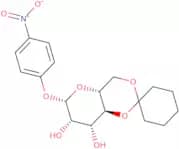
CAS:<p>4-Nitrophenyl 4,6-cyclohexylidene-b-D-mannopyranoside is a fluorogenic substrate that can be used for the detection of β-glucosidase activity. It is a high purity product with a ligand that binds specifically to β-glucosidase. 4NPPM is an enzyme substrate that can be used in diagnostics for the detection of β-glucosidase activity and conjugate for chemiluminescence and bioluminescence. This product has been shown to react with glucose in the presence of hydrogen peroxide and luminol, emitting light when excited by ultraviolet light at 365 nm. 4NPPM also reacts with glucose oxidase to produce hydrogen peroxide, which then reacts with luminol, producing light. The CAS number for this compound is 102717-16-8.</p>Pureza:Min. 95%Peso molecular:381.38 g/mol3-Indolyl b-D-cellotetraoside
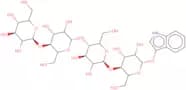
<p>3-Indolyl b-D-cellotetraoside is a chemiluminescent substrate that is used as an indicator in the detection of aminoglycosides. The ligand is a cell wall component that has been shown to bind specifically to the active site of bacterial β-lactamases, which are enzymes that catalyze the hydrolysis of β-lactam antibiotics. 3-Indolyl b-D-cellotetraoside can be used for bacterial identification and enumeration, food testing, and enzyme substrate for diagnostics. It fluoresces in response to electron excitation with a wavelength of about 590 nm.</p>Pureza:Min. 95%Peso molecular:781.71 g/mol2-Naphthyl 2,3,4,6-tetra-O-acetyl-b-D-glucopyranoside
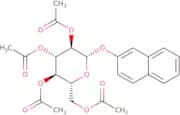
CAS:<p>2-Naphthyl 2,3,4,6-tetra-O-acetyl-b-D-glucopyranoside (NAG tetra acetate) is a chromogenic enzyme substrate commonly used in the detection of β-galactosidase activity. Upon hydrolysis by the enzyme, it produces a yellow product that can be detected by spectrophotometry or visually. It is frequently used in bacterial assays to monitor gene expression or as a tool for screening potential inhibitors of the enzyme.</p>Pureza:Min. 95%Peso molecular:474.47 g/mol4-Nitrophenyl b-D-galactopyranosiduronic acid
CAS:<p>4-Nitrophenyl b-D-galactopyranosiduronic acid is a chemiluminescent substrate for the detection of β-galactosidase. It is used for the determination of α-galactosidase activity in urine, feces, and blood. This product can be used as a chromogenic substrate for the detection of β-galactosidase in tissue culture medium. 4-Nitrophenyl b-D-galactopyranosiduronic acid is also a fluorogenic substrate which can be conjugated to an enzyme such as horseradish peroxidase or alkaline phosphatase.</p>Pureza:Min. 95%Peso molecular:315.23 g/mol4-Nitrophenyl b-laminaritrioside
CAS:<p>4-Nitrophenyl b-laminaritrioside is a chemiluminescent substrate that reacts with hydrogen peroxide to produce light. It is used in the detection of bacteria and other microorganisms in culture media, food testing, and diagnostics. 4-Nitrophenyl b-laminaritrioside is also used as a chromogenic or fluorogenic substrate in enzyme assays.</p>Pureza:Min. 95%Peso molecular:625.53 g/molAldol® 491 acetate, Biosynth Patent: EP 2427431 and US 8940909
CAS:<p>Aldol 491 acetate is a food and environmental testing chemical, which can be used for the detection of bacteria. Aldol 491 acetate provides a chromogenic substrate for the detection of enzymes and can be used as a substrate in enzyme-linked immunosorbent assay (ELISA) procedures. Aldol 491 acetate also has chemiluminescent properties and can be used as a fluorogenic substrate.</p>Fórmula:C22H17NO4Pureza:Min. 95 Area-%Peso molecular:359.37 g/mol5-Bromo-6-chloro-1H-indol-3-yl-a-D-mannopyranoside
CAS:<p>5-Bromo-6-chloro-1H-indol-3-yl-a-D-mannopyranoside is a chromogenic substrate that yields a magenta-colored product after cleavage. The chromophore 5-bromo-6-chloro-indoxyl is released, generating the observable color. It is used in lysosomal storage disorder screening.</p>Fórmula:C14H15BrClNO6Pureza:Min. 95 Area-%Cor e Forma:White Off-White PowderPeso molecular:408.63 g/mol2-Nitrophenyl caprylate
CAS:<p>2-Nitrophenyl caprylate is a potent inhibitor of gram-negative bacteria. It has been shown to inhibit the enzymatic activity of certain bacterial enzymes, such as the modification of cellular fatty acids. 2-Nitrophenyl caprylate has also been shown to inhibit in vitro growth of various gram-negative bacteria, including E. coli and Salmonella enterica serovar Typhimurium, through detergent compositions and enzymatic reactions (e.g., aminopeptidases). 2-Nitrophenyl caprylate may be useful for the treatment of pancreatitis due to its inhibition of pancreatic secretions and inhibition of pancreatic lipase activity. Transposable sequences have been found in the 2-nitrophenyl caprylate gene cluster, which may be related to its regulatory properties.</p>Pureza:Min. 95%Cor e Forma:PowderPeso molecular:265.31 g/mol4-Nitrophenyl 2-acetamido-2-deoxy-3-O-(2,3,4,6-tetra-O-acetyl-β-D-galactopyranosyl)-α-D-galactopyranoside
CAS:<p>4-Nitrophenyl 2-acetamido-2-deoxy-3-O-(2,3,4,6-tetra-O-acetyl-β-D-galactopyranosyl)-α-D-galactopyranoside is a chemiluminescent substrate that has been used in the detection of bacterial activity. It is used in the detection of bacterial activity through chemiluminescence and can be conjugated to an enzyme or protein for increased sensitivity. This product has been shown to have high purity and quality and is suitable for use in diagnostic applications.</p>Fórmula:C28H36N2O17Pureza:Min. 95%Cor e Forma:PowderPeso molecular:672.59 g/mol6-Chloro-4-(2-chlorophenyl)-2-quinazolinecarboxylic acid
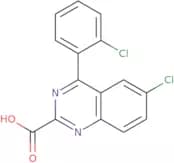
CAS:<p>6-Chloro-4-(2-chlorophenyl)-2-quinazolinecarboxylic acid (CA) is an impurity found in the drug lorazepam. It is a chemical intermediate that is not active as a pharmaceutical agent, but has been studied for use in treating epilepsy and other neurological disorders. CA is an excipient used to manufacture other drugs such as salicylic acid and the surfactant sodium lauryl sulfate. It has been shown to have acidic properties and can be used as a surfactant, which is helpful in chromatographic methods to separate molecules by size. CA also binds to chloride ions, which are necessary for the proper functioning of many cellular processes. CA's molecular weight is 322 daltons and it exhibits no pharmacological activity.</p>Fórmula:C15H8Cl2N2O2Pureza:Min. 95%Cor e Forma:White PowderPeso molecular:319.14 g/mol




![[2-Methoxy-4-(2-nitrovinyl)phenyl] b-D-glucopyranoside](/_next/image/?url=https%3A%2Fstatic.cymitquimica.com%2Fproducts%2F3D%2Fthumb-webp%2FEM06789.webp&w=3840&q=75)

![4-Nitrophenyl 4,6-benzylidene-2-O-(2,3,4,6-tetra-O-[4-methoxybenzyl]-a-D-glucopyranosyl)-a-D-gluco…](/_next/image/?url=https%3A%2Fstatic.cymitquimica.com%2Fproducts%2F3D%2Fthumb-webp%2FEN04828.webp&w=3840&q=75)